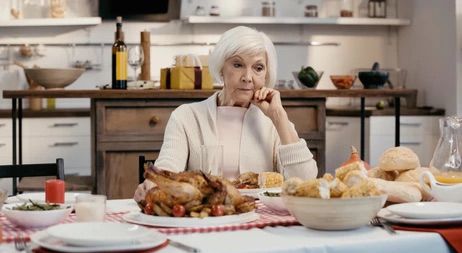
The House on Maple Street
The morning air bit cold as I pulled into Rachel’s driveway, earlier than I should have been. It was Thanksgiving, and the sky over Portland hung low and gray, the kind of November morning where you could smell rain coming even if it hadn’t started yet. I had a sweet-potato casserole balanced on one arm and a dish of green beans in the other, both still warm from my oven. My daughter had asked for help with the holiday meal, and I’d felt that quiet flutter of being needed—of still mattering in the small, practical ways mothers do.
I’m Dorothy Harrison. Most people call me Dot. I’ll be sixty-eight come February, though I still forget sometimes and say sixty-five. The years have a way of slipping past when you’re not paying attention. I’ve been widowed now for four years, and I’ve lived in the same house on Maple Street for more than four decades. Frank and I bought it when the girls were small, back when the neighborhood was full of young families and the maple trees were still skinny saplings that barely gave shade.
The front door at Rachel’s was unlocked when I arrived, which wasn’t unusual. She’s always been casual that way, trusting. I nudged it open with my hip and called out a soft hello into the quiet house. The kitchen smelled exactly right—roasting turkey, cinnamon, the faint sweetness of pie crust baking. Everything felt warm and normal.
But no one answered.
I set the dishes down on the counter, smoothing my hands over my jeans, listening. The house wasn’t empty—I could hear voices, muffled and distant. Not from upstairs. Not from the living room. From somewhere in the back.
I walked slowly down the hallway, my shoes silent on the hardwood, and that’s when I saw it: the garage door, just barely ajar. A thin sliver of light cutting across the floor. The voices were clearer now, and I recognized them instantly.
Kim and Rachel. My daughters.
I meant to call out. I meant to push the door open and say something light, something easy. But then I heard my name—or rather, I heard the street I’d lived on for forty-two years.
“How long before she finally lets go of Maple Street?”
It was Kim’s voice. Sharp. Impatient. My younger daughter, the one who’d inherited Frank’s restlessness.
“She’s almost seventy, Rach. She doesn’t need a three-bedroom house.”
I froze. My hand hovered near the doorframe, but I didn’t move. I didn’t breathe.
Rachel’s voice came next, and it wasn’t defensive. It wasn’t shocked or uncomfortable. It was weary. Familiar. Like this conversation had happened before.
“I know,” she said quietly. “But you can’t just push her.”
“I’m not pushing. I’m being realistic.” Kim’s tone sharpened. “That house could sell for six hundred thousand, maybe more. Do you know what that would mean for us? For our kids?”
There was a pause. I heard the clink of glass, maybe a wine bottle being set down.
“We’d split it,” Kim continued. “Half and half. I could pay off the mortgage. You could finally do the kitchen remodel. It’s just sitting there, Rach. She barely uses two of the rooms.”
My heart was pounding now, a dull thud in my chest that made my hands feel cold. I stood there in the hallway of my daughter’s house, holding a casserole that was no longer warm, listening to my children divide up my life like it was already over.
Rachel sighed. “What do you want me to do, Kim? Walk in and tell her to sell?”
“No. But we could start talking about it. Gently. Plant the idea. She listens to you.”
“She listens to both of us.”
“Not the same way.”
Another pause. Longer this time.
“Once she’s gone,” Kim said, and my stomach dropped, “that house is ours. We just have to wait.”
I didn’t wait to hear more.
I turned and walked back down the hallway, my legs moving automatically, my mind somewhere far away. I slid the green beans into Rachel’s refrigerator, set the casserole on the counter, and found myself standing in front of the kitchen island with a rolling pin in my hand and a bowl of pie dough I didn’t remember taking out.
I rolled the dough. Slowly. Methodically. The way my mother taught me when I was nine years old. I focused on the rhythm, the pressure, the way the dough flattened and stretched beneath my hands. I didn’t think. I didn’t cry. I didn’t let myself feel anything at all.
Twenty minutes later, Rachel came into the kitchen, her face bright and easy.
“Mom! I didn’t hear you come in.” She kissed my cheek, smelling like perfume and wine. “You’re early.”
“I thought you might need help,” I said, and my voice sounded normal. Calm. Like nothing had shifted.
Kim appeared a moment later, her smile wide, her hug tight. “Happy Thanksgiving, Mama.”
I hugged her back. I smiled. I asked about the kids, about dinner, about whether they needed me to start the gravy. I moved through the kitchen like I always did, steady and capable, while my daughters laughed and talked around me.
We cooked for hours. I mashed potatoes. I basted the turkey. I set the table with Rachel’s good china and folded napkins into neat triangles. I listened to stories about school and work and holiday plans, and I nodded in all the right places. I even laughed when Kim told a story about her son’s science project going catastrophically wrong.
But the whole time, I felt like I was watching myself from somewhere far away. Like I was standing in that hallway again, listening to my life get parceled out in dollar amounts and possibilities.
When dinner was over and the dishes were done, I kissed my grandchildren goodnight, hugged my daughters, and told them I was tired. No one questioned it. I was sixty-seven, after all. Fatigue was expected.
I drove home to Maple Street in the dark, the streets slick with rain that had finally started to fall. The house was quiet when I walked in, the way it always was now. I turned on the kitchen light, poured myself a glass of the wine Frank and I had been saving for something special, and sat down at the table with my laptop.
I didn’t cry. I didn’t rage. I felt something else entirely—something cold and clear and sharp.
I felt awake.
The next morning, I called Susan.
Susan and I had worked together years ago, back when I was still doing real estate part-time. She’d since specialized in helping people my age downsize, and she’d always told me, “When you’re ready, Dot, I’ll help you do it right.”
I was ready.
“I need to see some places,” I told her. “Downtown. One bedroom, maybe two. Something with light.”
She didn’t ask why. She didn’t sound surprised. She just said, “I’ll send you some listings by this afternoon.”
By the end of the week, I’d toured three apartments. The third one sealed it—a bright corner unit on the eighth floor with big windows that looked out over the river. It had hardwood floors, a small balcony, and a kitchen that felt like mine could, with a little time.
I put my name on it that same day.
Then I called my attorney.
Frank had been meticulous about our estate planning, and I’d kept everything updated after he passed. But now I needed changes. I needed to make sure that when I was gone—really gone—my grandchildren would be taken care of. Not leveraged. Not assumed. Protected.
My attorney listened, made notes, and assured me it would be handled.
Next, I called David, an agent from my old office. We’d worked together for years before I retired, and I trusted him.
“I want to list the house,” I told him. “Right after New Year’s.”
“Maple Street?” he asked, and I could hear the surprise in his voice.
“Yes.”
“Dot, are you sure?”
“I’m sure.”
He paused. Then, quieter: “Okay. I’ll get the paperwork ready.”
I hung up and sat in the living room, looking around at the house Frank and I had built a life in. The walls we’d painted. The floors we’d refinished. The corner where the Christmas tree always went.
I didn’t feel sad. I felt calm.
I started packing the next week. Slowly. Quietly. I boxed up books and dishes and linens, labeling everything neatly. I sorted through Frank’s things—clothes I’d kept in the closet, tools in the garage, old letters I’d saved. I kept what mattered and let go of the rest.
When Rachel called, I sounded normal. When Kim hinted about needing help with a car payment, I stayed gentle and vague, the way I always had. I let them think I was fine. Tired, maybe. Slowing down. But fine.
I played the role they expected, and I did it well.
January came in cold and gray, the way it always does in Portland. The rain turned everything to shades of silver and slate, and the mornings felt like they might never get light.
On the fifteenth, the moving truck pulled up at eight in the morning.
I’d hired movers—two young men who were polite and efficient and didn’t ask questions. They loaded boxes and furniture with care, and I stood on the porch in my coat, watching my life get carried out piece by piece.
At nine-thirty, Rachel’s car stopped hard at the curb.
She stepped out slowly, staring at the open front door, at the boxes stacked on the porch, at the truck idling in the driveway.
“Mom?” Her voice was small. Confused. “What’s going on?”
“I’m moving,” I said.
Kim’s car pulled in behind her a moment later, the tires screeching slightly. She jumped out, her face pale, her eyes darting between me and the truck like she was waiting for someone to tell her this was a joke.
“You’re selling?” Rachel whispered.
“I already did,” I told her.
They stood there on the sidewalk, breath turning to fog in the cold air. Kim took a step toward me, her hands shaking.
“Why didn’t you tell us?”
I looked at my daughters—these women I’d raised, loved, sacrificed for—and all I could see was that thin line of light under Rachel’s garage door. All I could hear was their voices, calm and calculated, dividing up what I hadn’t even left yet.
I took a slow breath.
“I didn’t tell you,” I said quietly, “because I heard you.”
Rachel’s face went white. Kim froze.
“Thanksgiving morning,” I continued. “I got to your house early, Rachel. I heard you both in the garage, talking about Maple Street. About how long before I’d let go. About what the house would sell for. About splitting it.”
Kim opened her mouth, then closed it. Rachel’s eyes filled with tears.
“You talked about me like I was already gone,” I said, my voice steady now. “Like my home—my life—was just something waiting to be cashed in.”
“Mom, we didn’t mean—”
“Yes, you did.” I cut Rachel off, not unkindly, but firmly. “You meant exactly what you said. And I heard every word.”
The silence stretched long and heavy between us.
“I’m not angry,” I said, and I realized it was true. “I’m disappointed. But more than that, I’m awake. I spent forty years in that house raising you, loving you, building a life. And I realized I don’t want to spend whatever time I have left waiting for you to wish I was gone.”
Kim’s face crumpled. “We never wished—”
“You did,” I said softly. “Maybe not in those words. But you did.”
I turned back toward the house, where the movers were carrying out the last of the furniture.
“I’m moving downtown,” I told them. “I have an apartment with a view of the river. I’m going to read and travel and do exactly what I want with the time I have left. And when I’m gone—really gone—you’ll get what’s left. But it’ll be on my terms. Not yours.”
Rachel was crying now, openly. Kim looked stricken, her mouth opening and closing like she wanted to say something but couldn’t find the words.
I stepped off the porch and walked toward them, stopping a few feet away.
“I love you both,” I said. “I always will. But I’m done being taken for granted. I’m done being a house you’re waiting to inherit.”
I kissed each of them on the cheek, the way I always had, and walked back to supervise the last of the move.
They stood there on the sidewalk, watching, as the moving truck pulled away and I locked the door to Maple Street for the last time.
My new apartment smelled like fresh paint and possibility.
I spent the first week unpacking slowly, arranging books on shelves, hanging pictures, learning where the light fell in the morning. I bought plants for the balcony and a new coffee maker that made me feel like I was living in a hotel.
Rachel called three times. I let it go to voicemail twice before I answered.
“I’m sorry,” she said, her voice thick with tears. “Mom, I’m so sorry.”
“I know,” I told her. “But sorry doesn’t change what you said.”
“Can we see you? Can we talk?”
“Not yet,” I said gently. “I need time.”
Kim sent a long text message full of apologies and explanations and promises. I read it twice, then set my phone down and didn’t respond.
I wasn’t punishing them. I was protecting myself.
Susan stopped by with a housewarming gift—a beautiful orchid and a bottle of champagne. We sat on my balcony and toasted to new beginnings, and for the first time in months, I felt light.
“You did the right thing,” Susan said.
“I know,” I replied.
And I did.
It’s been three months now.
I’ve started taking a painting class on Tuesdays. I’ve joined a book club that meets at a café near my building. I’ve traveled to the coast twice, just because I wanted to see the ocean.
Rachel and I have had coffee a few times. The conversations are stilted, careful, but they’re happening. Kim and I haven’t spoken yet, but I think we will. Eventually.
I’m not the same woman who stood in that hallway on Thanksgiving morning, holding a casserole and listening to her life get divided up. I’m not waiting anymore. I’m not shrinking to fit into the space my daughters left for me.
I’m sixty-seven years old, and I’m finally living like it matters.
The house on Maple Street sold for more than we expected. I used the money to secure my future, to set up trusts for my grandchildren, and to buy myself the freedom I didn’t know I needed.
And when my daughters ask me now if I’m happy, I tell them the truth.
I am.
The House on Maple Street (Continued)
Six Months Later
Spring arrived in Portland the way it always does—tentatively, as if uncertain whether winter had truly released its grip. The cherry blossoms along the waterfront exploded into clouds of pink and white, and suddenly the whole city seemed to exhale after months of holding its breath.
I was sitting on my balcony with my morning coffee when my phone rang. Rachel’s name appeared on the screen, and I felt that familiar tightness in my chest—the one that had become a constant companion since Thanksgiving. But it was softer now, less sharp.
“Hi, sweetheart,” I answered.
“Mom.” Her voice sounded strange. Thick. “Can I come over? I need to talk to you.”
Twenty minutes later, she was standing in my doorway, and I could see immediately that something was wrong. Her eyes were red and swollen, her hair pulled back in a messy ponytail, her shoulders hunched like she was carrying something too heavy.
I pulled her inside and guided her to the couch.
“What happened?” I asked, sitting beside her.
She broke down then, sobbing so hard her whole body shook. I held her the way I had when she was small, stroking her hair, making soft sounds of comfort, waiting for the storm to pass.
When she could finally speak, the words came out in broken pieces.
“Marcus wants a divorce,” she whispered.
My heart sank. Marcus—Rachel’s husband of fifteen years, the father of my grandchildren, the man I’d welcomed into our family like a son.
“Oh, honey,” I murmured, pulling her closer.
“He’s been seeing someone else,” Rachel continued, her voice raw. “Someone from his office. He said—he said he hasn’t been happy for years. That we’ve just been going through the motions.”
She lifted her head, her face streaked with tears.
“I didn’t see it coming, Mom. I thought we were fine. I thought—” Her voice broke again. “I thought we had time to figure things out.”
I held her while she cried, and I felt something shift inside me. The hurt I’d been carrying, the distance I’d maintained, suddenly seemed small compared to this. My daughter was breaking apart, and nothing else mattered.
“You’re going to stay with me tonight,” I told her firmly. “I’ll make up the guest room. We’ll order takeout and watch terrible movies, and you don’t have to talk about it unless you want to.”
She nodded against my shoulder, and I felt her body relax slightly.
“I’m sorry, Mom,” she whispered. “For everything. For what I said. For what I did.”
“I know,” I said softly. “We’ll talk about that later. Right now, you need your mother.”
Rachel stayed for three days.
We talked late into the nights, sitting on my balcony wrapped in blankets, watching the city lights shimmer on the river. She told me everything—the fights she’d ignored, the silences that had stretched too long, the moments when she’d felt her marriage slipping away but had convinced herself she was imagining it.
And slowly, carefully, she started asking about me.
“Are you really happy here?” she asked one evening, gesturing around the apartment.
“I am,” I said, and I meant it.
“I keep thinking about what you said. About us treating you like you were already gone.” She wiped her eyes. “I didn’t realize how awful that was until Marcus did the same thing to me. He’d already checked out of our marriage. He was just waiting for the right time to leave.”
I reached over and took her hand.
“The difference,” I said gently, “is that I’m not leaving you. I’m just choosing myself for once.”
She nodded, squeezing my fingers. “I understand that now. I wish I’d understood it sooner.”
On the third night, Kim called. Rachel answered, and I heard her sister’s voice, frantic and worried, asking where she was.
“I’m at Mom’s,” Rachel said quietly. “Marcus and I are separating.”
There was a long pause, and then Kim said something I couldn’t quite hear.
“Yeah,” Rachel replied, her voice thick. “You should come.”
Kim arrived an hour later, her face pale, her movements uncertain. She stood in my doorway like she wasn’t sure she was allowed inside.
“Come in,” I told her.
She stepped inside slowly, her eyes taking in the apartment—the plants on the balcony, the books on the shelves, the framed photographs I’d carefully selected. When her gaze landed on a picture of the three of us from years ago, her face crumpled.
“Mom, I—” she started, but the words caught in her throat.
Rachel got up from the couch and hugged her sister, and they stood there in my small entryway, clinging to each other and crying.
I made tea. It’s what my mother always did in moments of crisis, and it seemed like the right thing to do. When I brought the cups out to the living room, my daughters were sitting side by side on the couch, their shoulders touching.
We talked for hours. Kim apologized, over and over, until I finally stopped her.
“I heard you,” I said. “I accept your apology. But you need to understand something—I’m not the same person I was before Thanksgiving.”
“I know,” Kim whispered.
“I don’t know if I can go back to the way things were,” I continued. “Where you call when you need money, when you need help, when you need something from me—but not just because you want to talk. Not just because you miss me.”
Kim’s face went red. “It wasn’t always like that.”
“Wasn’t it?” I asked gently.
She opened her mouth to argue, then closed it. After a long moment, she nodded. “Yeah. It was.”
Rachel reached over and took my hand. “We took you for granted, Mom. Both of us did. And I don’t know how to fix that except to promise we’ll do better.”
“I don’t want promises,” I said. “I want consistency. I want relationships, not transactions.”
“Okay,” Kim said, her voice small. “We can do that.”
I looked at my daughters—these women who were flawed and human and still learning, just like I was—and I felt something loosen in my chest.
“Then let’s start over,” I said. “Not from the beginning. But from here.”
The months that followed were strange and tentative, like we were all learning a new dance.
Rachel moved into a small house near mine while her divorce proceedings crawled forward. I helped her pack up her old life, sort through years of accumulated belongings, and create a space that felt like hers alone. We had coffee every Sunday morning, a ritual that slowly became something we both looked forward to.
Kim came to visit once a month, always bringing something—flowers, pastries, books she thought I’d like. At first, the visits felt forced, performative. But gradually, they softened. We started having real conversations, about her work, her struggles with parenting, her fears about money and aging and whether she was doing anything right.
One afternoon, she asked me about Frank.
“Do you still miss him?” she said.
“Every day,” I told her. “But it’s different now. The grief isn’t as sharp. It’s more like… a constant companion. Sometimes I’ll see something and think, ‘I need to tell Frank about that,’ and then I remember I can’t. But it doesn’t break me anymore.”
She nodded slowly. “I’m sorry I wasn’t there for you more. After he died.”
“You were dealing with your own life,” I said.
“That’s not an excuse.”
“No,” I agreed. “But it’s an explanation. And that’s a start.”
One Year Later
The one-year anniversary of my move fell on a crisp January afternoon. I was standing on my balcony, watching the rain paint patterns on the river, when there was a knock at my door.
I opened it to find both my daughters standing there, along with my four grandchildren, all of them bundled in coats and scarves.
“What’s this?” I asked, surprised.
“We wanted to celebrate,” Rachel said, holding up a bakery box. “One year in your new place.”
They filed in, filling my small apartment with noise and laughter and the chaos I hadn’t realized I’d been missing. The kids ran to the windows to look at the view while my daughters unpacked food onto my kitchen counter.
We ate cake and told stories, and for the first time in over a year, it felt easy. Natural. Like family.
When the kids were occupied with a movie in the living room, Rachel pulled me aside.
“I have something to tell you,” she said, her eyes bright.
“What?”
“I enrolled in graduate school. I’m going back to finish my master’s degree. The one I dropped when I got pregnant with Emma.”
Pride swelled in my chest. “Rachel, that’s wonderful.”
“I wouldn’t have done it if I was still with Marcus,” she admitted. “If I was still in that house, living that life. So in a weird way, everything falling apart… it gave me a chance to rebuild. The way you did.”
I hugged her tightly. “I’m so proud of you.”
Kim appeared beside us, her expression nervous.
“I have news too,” she said. “I got a promotion. A big one. It means more money, better hours, and I can finally stop—” She paused, looking embarrassed. “I can finally stop asking you for help all the time.”
“Kim—”
“No, let me say this,” she interrupted. “I leaned on you too hard for too long. I treated you like a bank instead of a person. And I’m sorry. But I’m fixing it. I’m learning to stand on my own.”
I looked at my daughters, these women who’d hurt me and disappointed me and were now actively trying to be better, and I felt something I hadn’t felt in a long time.
Hope.
Eighteen Months Later
My seventy-first birthday arrived on a Wednesday in February, gray and drizzly in typical Portland fashion. I’d planned to spend it quietly—maybe lunch at my favorite café, a walk along the river if the rain let up, an evening with a good book.
But when I opened my door that morning to grab the newspaper, I found an envelope taped to the frame.
Inside was a handwritten note from Rachel:
Mom,
Meet us at Powell’s at noon. Wear comfortable shoes.
Love you, R
I smiled despite myself. My daughters had been planning something, clearly, though they’d been unusually good at keeping it secret.
I arrived at Powell’s Books at exactly noon to find Rachel, Kim, and all four grandchildren waiting in the main lobby. They were holding signs—handmade, decorated with markers and glitter—that read “HAPPY BIRTHDAY GRANDMA DOT” and “WORLD’S BEST MOM.”
I laughed, genuinely surprised. “What is all this?”
“Your birthday adventure,” Rachel announced. “We’re taking you to all your favorite places in Portland. Starting here.”
We spent two hours wandering through Powell’s, the kids racing between shelves while my daughters helped me pick out books I’d been wanting. They bought me an entire stack—mysteries and memoirs and a beautiful hardcover edition of poetry that I’d been eyeing for months.
From there, we walked to the Saturday Market, even though it was Wednesday and technically closed. But Kim had arranged something special—several of my favorite vendors had opened their stalls just for us, and I got to browse handmade jewelry and art while my grandchildren ate kettle corn and spun in circles on the plaza.
We had lunch at a food cart pod, sitting at picnic tables under the covered awning while rain pattered on the roof. My granddaughter Emma, Rachel’s oldest, leaned against my shoulder.
“This is fun, Grandma,” she said. “Do you like your birthday?”
“I love it,” I told her honestly.
The final stop was the Japanese Garden, my favorite place in all of Portland. We walked the paths slowly, admiring the careful arrangement of stones and moss, the way the rain made everything shimmer. The kids were surprisingly quiet, awed by the beauty.
We ended up in the pavilion overlooking the garden, and that’s when Rachel pulled out a wrapped box.
“This is from all of us,” she said.
I unwrapped it carefully. Inside was a leather-bound journal, its pages thick and cream-colored. On the first page, my daughters had written:
For Dorothy Harrison—
May this book hold your stories, your thoughts, your adventures.
We can’t wait to read them someday.
With all our love, Rachel, Kim, and your grandchildren
My throat tightened. “It’s beautiful.”
“We thought you should write about everything,” Kim said softly. “About your life. About what you’ve learned. So we can understand you better. So the kids can know you better.”
I looked up at my daughters, these complicated women who’d broken my heart and were now trying so hard to mend it, and I realized something.
Forgiveness isn’t a moment. It’s a process. It’s made up of small steps, repeated attempts, the slow building of trust.
“Thank you,” I whispered.
Two Years Later
I started writing in the journal that night, and I haven’t stopped.
I wrote about Frank, about our early years together, about the house on Maple Street and the life we built there. I wrote about raising my daughters, about the moments of joy and frustration, about the day each of them was born and how it felt like my heart had suddenly decided to live outside my body.
I wrote about Thanksgiving, about standing in that hallway and hearing my life reduced to numbers. I wrote about the hurt and the anger and the cold clarity that had followed.
But I also wrote about what came after.
About Rachel’s strength as she rebuilt her life. About Kim’s slow, steady progress toward independence. About Sunday morning coffees and birthday adventures and the countless small moments that had slowly knitted us back together.
Writing became my therapy, my meditation, my way of making sense of everything.
Rachel finished her master’s degree and got a job at a nonprofit she’d been passionate about for years. She started dating someone new—carefully, cautiously, but with genuine hope. She told me about him over coffee one Sunday, her cheeks flushed, her eyes bright.
“I’m not rushing anything,” she said. “But Mom, he makes me laugh. And he actually listens when I talk.”
“That’s all that matters,” I told her.
Kim paid off her mortgage. She called me the day she made the final payment, crying with relief.
“I did it,” she sobbed into the phone. “I actually did it.”
“I’m so proud of you,” I said, and I meant it with my whole heart.
Three Years Later
On a warm Saturday in June, I hosted a family dinner at my apartment.
It was crowded—ten of us squeezed around my small dining table, with extra chairs borrowed from neighbors and plates balanced on laps. Rachel brought her boyfriend, Thomas, who helped cook and made the kids laugh with terrible dad jokes. Kim brought her husband, who’d been mostly absent from the family drama but was trying harder now to be present.
We ate pasta and salad and fresh bread, and we talked about everything and nothing. The kids told stories about school. Rachel talked about her work. Kim showed us pictures from a recent vacation.
And I sat at the head of the table, watching my family, and felt complete.
After dinner, when the kids were playing on the balcony and the adults were having coffee, Rachel stood up and clinked her glass.
“I want to say something,” she announced.
The room quieted.
“Three years ago, Mom made a decision that I thought was… harsh. Extreme. Maybe even cruel.” She looked at me, her eyes glistening. “But it was the best thing she could have done. For herself, and honestly, for us too.”
Kim nodded, wiping her eyes.
“We took you for granted,” Rachel continued. “We treated you like you existed only to serve us, to give to us, to be there whenever we needed something. And when you finally said enough, it woke us up.”
She raised her glass. “So this is a toast. To Mom. To Dorothy Harrison, who taught us that it’s never too late to choose yourself. Who showed us that love doesn’t mean martyrdom. Who is the strongest woman I know.”
“To Grandma Dot,” Emma added, and everyone echoed it.
“To Grandma Dot.”
I raised my glass, tears streaming down my face, and I felt something I’d never quite felt before.
Peace.
Present Day
I’m seventy-one years old now, and I live in a small apartment overlooking the river in Portland, Oregon.
I take painting classes and go to book club and travel when I feel like it. I have coffee with Rachel every Sunday and lunch with Kim once a month. I see my grandchildren regularly, and they actually seem to enjoy spending time with me—not because they have to, but because they want to.
The house on Maple Street is a memory now, a chapter that’s closed. Someone else lives there, raises their children there, builds their own life within those walls. And that’s exactly as it should be.
I’m not the woman I was before Thanksgiving three years ago. I’m not waiting anymore. I’m not shrinking. I’m not apologizing for taking up space.
I’m living.
And when my daughters ask me if I’m happy, I tell them the truth.
I am. More than I’ve ever been.
Because I finally learned the most important lesson of my life: you teach people how to treat you. And sometimes, the kindest thing you can do—for yourself and for them—is to stop accepting less than you deserve.
My daughters learned that lesson too. It was painful, and it took time, but they learned.
And our relationship now, built on mutual respect and genuine care rather than obligation and expectation, is stronger than it ever was before.
I write all of this in my journal, adding to the pages my daughters gave me three years ago. Someday, my grandchildren will read these words. Someday, they’ll understand that their grandmother wasn’t just a sweet old lady who made casseroles and babysat when needed.
I was a woman who loved fiercely, who hurt deeply, and who found the courage to start over when it mattered most.
I was a woman who chose herself.
And I hope they learn to do the same.
THE END

Adrian Hawthorne is a celebrated author and dedicated archivist who finds inspiration in the hidden stories of the past. Educated at Oxford, he now works at the National Archives, where preserving history fuels his evocative writing. Balancing archival precision with creative storytelling, Adrian founded the Hawthorne Institute of Literary Arts to mentor emerging writers and honor the timeless art of narrative.