The Phone That Changed Everything
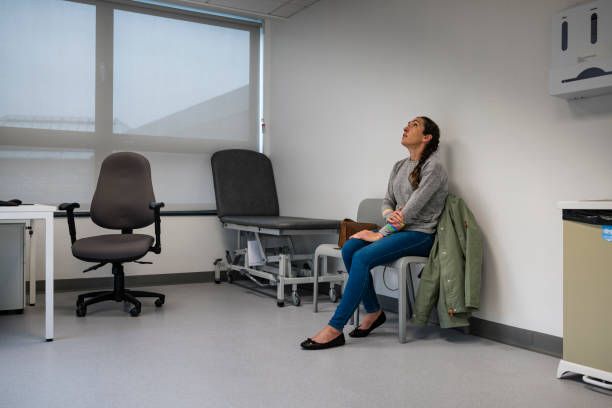
After saying goodbye to my husband in the ICU, I walked out of the hospital with tears still on my face… and then I overheard two nurses whispering something I was never meant to hear. One of them said, “I still can’t believe they’re going through with it.” The other replied, “And she has no idea.” I stopped cold because in that moment, it didn’t feel like grief anymore. It felt like a plan.
Doctors told me my husband had less than 48 hours left, so I said goodbye in a quiet ICU room then I heard two nurses whisper about $300,000 and “going through with it,” and I realized the man in that bed might not be dying at all… and the only thing between me and the truth was the phone sitting on his nightstand.
My name is Natalia. I’m thirty-two, and I live in Austin, Texas, in a little Hyde Park house that still smells like the paint Graham and I chose back when we thought we had forever.
For two weeks, I slept in a stiff hospital chair and woke up to the same beeping, the same fluorescent glare, the same dread lodged in my throat like a stone. I held my husband’s hand until my fingers cramped, telling him I was here, telling him to fight because that’s what wives do when love is the only thing left.
On October 1st, the doctor stepped into the hallway with that face—the one that makes the air feel heavier. He spoke gently, carefully, like he’d learned how to deliver bad news without getting any of it on himself. He said I should prepare myself.
So I went back into the room and said everything you say when you’re trying to be brave. I thanked Graham for the life we built. I apologized for every dumb little argument. I told him it was okay to rest.
And then my body noticed something my heart didn’t want to. His skin didn’t feel like someone slipping away. Not fever-hot. Not clammy. Just… normal.
I blamed medication. Machines. Anything except the thought that I might be standing in the wrong kind of goodbye.
His mother, Susan, begged me to go home for a few hours. “Just shower,” she said. “Sleep in your own bed. I’ll call if anything changes.” Exhaustion has its own gravity. It pulls you whether you agree or not.
I was walking past the nurses’ station when I heard two voices—soft, rushed, careless. One of them said, “I still can’t believe they’re going through with it.” The other answered, “The payout is huge.”
Then the number hit like a brick. “Three hundred grand.” “And she has no idea,” the first one said. I didn’t breathe until their footsteps faded.
Because $300,000 wasn’t a random number. It was Graham’s life insurance policy—the coverage amount we’d decided on together three years ago when we bought the house. The kind of figure family knows, the kind people don’t casually whisper in a hallway unless something is wrong in a way no one wants to name.
I went back to his room with my face smooth and my stomach turning. Susan was fiddling with a blanket, pretending to be busy. Graham’s phone sat on the hospital nightstand, screen dark, charging cable curled like a loose vein.
I lifted it like it was nothing. Like I was just making sure it wouldn’t get misplaced. Susan didn’t stop me. That should’ve been the first confirmation.
Let me back up six weeks, to before the hospital, before the machines, before everything fell apart.
Graham and I had been married for four years. We met at a coffee shop in downtown Austin—one of those meet-cutes that sounds fake when you tell people but felt inevitable when it happened. He was an accountant with a firm downtown, the kind of guy who wore button-downs even on weekends and always remembered to text when he’d be late. Reliable. Steady. Safe.
I’m a graphic designer, freelance mostly, working from our spare bedroom that we optimistically called “the office” even though it was really just a desk, a filing cabinet, and a cat tower for our tabby, Mango.
We weren’t rich, but we were comfortable. We had the house, the cat, date nights on Thursdays, Sunday brunts at our favorite taco place. We talked about kids someday, about traveling to Portugal, about normal things that normal couples plan when they think they have time.
Then Graham got sick.
It started with headaches. Bad ones, the kind that made him squint in normal light and cancel plans without warning. Then came the dizziness, the nausea, the day he collapsed in the bathroom and I found him on the tile floor, conscious but scared.
The ER visit led to scans. The scans led to a neurologist. The neurologist led to the word no one wants to hear: tumor.
Brain tumor. Inoperable, they said, because of where it was located. Too close to critical structures. Surgery would likely kill him or leave him with catastrophic damage.
They offered radiation, chemotherapy, clinical trials—all the things you throw at cancer when you’re trying to buy time. Graham agreed to all of it. I held his hand through every appointment, every treatment, every awful conversation about survival rates and quality of life.
His family rallied. Susan, his mother, drove up from Houston every weekend to help. Derek, his younger brother, came when he could, though he lived in Dallas and had his own job, his own life. They were supportive, loving, the kind of family you feel grateful to marry into.
Or so I thought.
The treatments didn’t work. Or rather, they worked just enough to keep Graham alive but not enough to stop the tumor from growing. By late September, he was in the hospital full-time, his condition deteriorating rapidly.
The doctors started using phrases like “palliative care” and “making him comfortable.” Susan cried constantly. Derek looked shell-shocked every time he visited. And I—I lived in a fog of grief and adrenaline, moving through each day on autopilot, waiting for the call that would tell me it was over.
That call came on October 1st, except it wasn’t a call. It was the doctor in the hallway, telling me Graham had maybe forty-eight hours left. That his organs were starting to shut down. That I should say my goodbyes.
I did. I sat beside his bed, held his hand, and said everything a wife says when she’s trying to let go. I told him I loved him. I told him he’d fought hard enough. I told him it was okay to rest.
And then I noticed his hand. It was warm. Not burning with fever, not cold and clammy. Just… warm. Normal. Like he was sleeping, not dying.
I told myself I was imagining things. That grief does strange things to perception. That I was looking for hope where there wasn’t any.
But the feeling stayed with me, nagging like a splinter I couldn’t quite reach.
I drove home in a fog, palms slick on the steering wheel, replaying those words—payout and going through with it—until they sounded less like gossip and more like instructions.
The house was frozen in place: his shoes by the door, his mug by the sink, the quiet of a life paused mid-sentence. I sat on the edge of our bed with his phone in my hand and felt something crack—not love, not grief.
Trust.
I tried the codes we always used. His birthday backwards. Our anniversary. The third one worked immediately, like the lock had been waiting for me to doubt.
Most of it was boring. Work threads. Calendar alerts. Numbers that meant nothing to me. Then I found a conversation with no name—just a Houston area code and a short exchange that didn’t belong anywhere near a hospital room.
Unknown Houston Number: Are you ready?
Graham: Yes. Tomorrow.
Unknown: Don’t mess this up.
Graham: I won’t. Trust me.
I scrolled higher and saw the line that made my vision narrow: 300k is a lot of money. She’ll never know.
My hand went numb around the phone. I didn’t cry. I didn’t scream. I didn’t even sit down.
I just backed the screen up, saved what I needed, and felt my whole body go frighteningly calm—the kind of calm that only shows up after your world has already shattered.
I went back to the hospital with that calm. And when I stepped into the ICU, Susan was there but this time she wasn’t alone.
Derek, Graham’s brother, stood beside her like he’d been waiting. Susan’s eyes were red… but not with grief. With fear.
Derek looked at my face, then at the phone in my hand, and his voice dropped into something careful. “Natalia,” he said, “you need to sit down.”
And the way he said it told me the next sentence wasn’t going to be about Graham’s health. It was going to be about what they’d been doing while I was holding his hand and begging him to live.
I didn’t sit. “What’s going on?” I asked, my voice eerily steady.
Susan’s face crumpled. “Natalia, please—”
“What. Is. Going. On.”
Derek took a breath. “Graham isn’t dying.”
The words hung in the air like smoke. I heard them, processed them, but they didn’t make sense. Not in the context of two weeks in the ICU, not in the context of doctors and scans and the conversation I’d just had about preparing myself.
“What?” I whispered.
“He’s faking it,” Derek said quietly. “The whole thing. He’s been faking it.”
My legs gave out. I sat down hard in the plastic chair beside the door, the phone still clutched in my hand.
“That’s not possible,” I said. “He’s been hospitalized. There are doctors, tests, scans—”
“The scans are real,” Derek interrupted. “The tumor is real. But it’s not killing him. Not yet. Not even close.”
I stared at him. “Then why—”
“The life insurance,” Susan whispered, her voice breaking. “The $300,000.”
The story came out in pieces, halting and horrible.
Graham’s tumor was real. The diagnosis was real. But according to the second opinion he’d gotten without telling me—the one from a specialist in Houston—it was slow-growing and operable. Difficult surgery, yes. Risky, yes. But survivable.
Graham had decided not to tell me. Instead, he’d decided to fake his deterioration, convince everyone he was dying, and collect the life insurance payout.
“How?” I asked, my voice hollow. “You can’t just collect life insurance while you’re alive.”
“Not while he’s alive,” Derek said. “But he was planning to disappear. Stage his death. There’s a guy in Houston—someone Derek knows—who helps people fake deaths. New identity, new life, new everything.”
“And the money?” I asked.
Susan’s face twisted with shame. “He was going to split it with us. Derek and me. $100,000 each. He said it was enough to start over, that you’d be fine because the house was paid off and you had your business—”
“You knew,” I said, my voice rising. “You both knew he was planning to fake his death and steal our life insurance, and you were going to help him?”
“We didn’t want to!” Susan cried. “But he said he was dying anyway, that this was his only way out, that we’d all be better off—”
“Better off?!” I stood up, shaking. “He was going to let me think he was dead! Let me grieve! Let me bury an empty casket while he lived somewhere else with a fake name and our money!”
Derek stepped forward, hands raised. “Natalia, I know this is—”
“Don’t.” My voice cut like glass. “Don’t you dare try to make this sound reasonable.”
I looked at the phone in my hand, then at the closed door to Graham’s room. “Is he awake?”
Susan nodded miserably.
I walked to the door and pushed it open.
Graham was sitting up in bed, looking better than he had in days. His color was good. His eyes were clear. He looked like someone recovering, not someone dying.
When he saw me, his face went white.
“Natalia—”
“Don’t,” I said, my voice shaking. “Don’t say my name. Don’t apologize. Don’t try to explain.”
I held up the phone. “I read the messages. I know what you were planning.”
He closed his eyes. “I can explain—”
“You were going to fake your death,” I said, each word deliberate. “You were going to let me believe you were dead. You were going to take $300,000 and disappear while I grieved and buried an empty casket and tried to figure out how to live without you.”
“It’s not that simple—”
“YES, IT IS!” The scream tore out of me, raw and furious. “It is exactly that simple! You were going to betray me in the worst possible way, and you roped your family into it, and you were just going to… what? Send me a postcard in five years saying ‘sorry’?”
Graham’s face crumpled. “The tumor is real, Nat. I’m still sick. I just—I couldn’t face the surgery. The risk. The recovery. And I thought—”
“You thought what? That stealing from me was easier than being honest?”
“I thought I was giving you a way out!” he shouted back. “You wouldn’t have to watch me die slowly! You wouldn’t have to take care of me! You’d get the insurance money and you could move on and—”
“And you’d get to live,” I finished coldly. “With a new name. A new life. And $200,000 to start over with.”
He looked away.
“Did you ever love me?” I asked quietly. “Or was I just… convenient? Just part of the plan?”
“Of course I loved you,” he whispered. “I still do.”
“No,” I said. “You don’t. Because if you loved me, you never could have done this.”
I left the room and found Derek and Susan in the hallway. They both looked terrified.
“I’m calling the police,” I said.
Susan grabbed my arm. “Natalia, please—”
“He committed fraud,” I said. “All of you did. Insurance fraud, conspiracy, I don’t even know what else. But I’m not going to let you get away with it.”
“He’s still your husband,” Derek said desperately. “He’s still sick. If you turn him in, he’ll go to prison—”
“Good,” I said flatly. “Maybe he should have thought of that before he decided to fake his own death.”
I called 911 from the hospital lobby. Told them everything. The plan, the messages, the conspiracy. They sent officers, who took statements from me, from the nurses who’d overheard things, from Derek and Susan who eventually broke down and confessed everything.
Graham was arrested in his hospital bed. So were Derek and Susan. The charges were extensive: insurance fraud, conspiracy, filing false documents. The DA’s office got involved because the amounts were high enough to be felonies.
I gave them everything. The phone records. The messages. The names of the people in Houston who’d been helping. I cooperated fully, answered every question, signed every statement.
And then I went home to our empty house and sat on the couch with Mango purring in my lap, and I finally let myself cry.
Not for Graham. Not for our marriage. But for the version of myself who’d sat in that ICU chair for two weeks, holding the hand of a man who’d been planning to abandon me the entire time.
Three Months Later
The legal process moved faster than I expected. Graham, Derek, and Susan all pled guilty in exchange for reduced sentences. Graham got five years. Derek and Susan got three each, plus restitution.
The life insurance company investigated and confirmed that no payout would be made. Obviously.
I filed for divorce. Graham didn’t contest it. The house became mine, along with what was left of our savings after legal fees.
The tumor, it turned out, was exactly what the Houston specialist had said: operable. Graham had the surgery in prison, under guard. It was successful. He’d live. He’d just live in a cell for the next few years, then on parole after that.
I sold the house. I couldn’t stay there, couldn’t walk past the bathroom where I’d found him collapsed, couldn’t sleep in the bed where we’d made plans that turned out to be lies.
I moved to a small apartment in South Austin, got a dog—a rescue mutt named Charlie who didn’t care about my past, just about whether I’d throw the ball again.
I rebuilt my freelance business. Slowly at first, then with more confidence. I was good at what I did, and people remembered that, even after everything.
Six Months Later
I was having coffee at a new place downtown when I ran into one of Graham’s former coworkers, a woman named Jennifer who’d always been kind to me.
“Natalia,” she said, surprised. “How are you?”
“Better,” I said honestly. “Getting there.”
She hesitated. “I heard about… everything. I’m so sorry.”
“Thank you.”
“For what it’s worth,” she said quietly, “a lot of us suspected something was off. The way Graham talked about the tumor, the way he described the prognosis—it never quite matched what the doctors were supposedly saying. But we didn’t want to believe he’d lie about something like that.”
“He lied about everything,” I said.
She nodded sadly. “I know. And I’m sorry you had to find out the way you did.”
After she left, I sat with my coffee and thought about those two nurses in the hallway. The ones who’d been careless enough to whisper about $300,000 where I could hear them.
I never found out who they were. Never tried to. But in a strange way, I was grateful. Because if they hadn’t said those words, if I hadn’t been walking past at exactly that moment, I might have spent the rest of my life grieving a man who wasn’t dead.
I might have buried an empty casket and never known the truth.
One Year Later
I’m thirty-three now, and I live in that South Austin apartment with Charlie and a new cat I adopted named Pepper.
I still do graphic design, but I’ve expanded into teaching online courses for other freelancers. It turns out almost dying—or thinking someone you love is almost dying—gives you a certain clarity about what matters and what doesn’t.
I date occasionally. Nothing serious yet. I’m not in a hurry.
My therapist says I’m doing well, considering. That I’ve processed the trauma in a healthy way. That I’m allowed to be angry, allowed to grieve the life I thought I had, even if that life was built on lies.
I think about Graham sometimes. About whether he regrets what he did. Whether he understands the magnitude of his betrayal. Whether he’s become someone different in prison, or whether he’s still the same man who thought faking his death was a reasonable solution to being scared of surgery.
I’ll probably never know. And honestly? I’m okay with that.
Because the truth is, he stopped being my husband the moment he decided to fake his death and steal from me. Everything after that—the divorce, the arrest, the guilty plea—was just paperwork.
The real ending happened in that hallway, when two nurses whispered about money and I realized the man I loved was someone I’d never really known at all.
Two Years Later
I’m thirty-four, and I’ve started dating someone new.
His name is Marcus, and he’s a high school history teacher with a terrible sense of humor and a golden retriever named Biscuit. We met at a dog park, of all places, when Charlie and Biscuit decided to become best friends and left us standing there awkwardly making conversation.
He knows about Graham. I told him on our third date, because I couldn’t build something new on secrets. He listened without judgment, asked thoughtful questions, and then said, “That must have been incredibly painful. I’m sorry you went through that.”
Not “I can’t believe he did that” or “What a monster” or any of the dramatic reactions people usually have. Just acknowledgment. Empathy. Space for me to feel what I needed to feel.
We’ve been together for six months now, and it’s different. Good different. He’s consistent. Honest. He doesn’t make promises he can’t keep, and when he says he’ll do something, he does it.
It’s not perfect. We argue sometimes about stupid things like whose turn it is to do dishes or whether pineapple belongs on pizza (it doesn’t, I will die on this hill). But even when we argue, I never doubt that he’s telling me the truth.
That’s what Graham took from me: the ability to trust easily. And that’s what Marcus is slowly giving back: proof that trust can be rebuilt, one honest conversation at a time.
Present Day
Graham got out on parole last month.
I know because his lawyer sent me a notification, as required by the terms of his plea deal. He’s living in a halfway house in Houston, working at a warehouse, reporting to a parole officer weekly.
Derek and Susan got out a few months ago. I haven’t spoken to either of them since the trial. I don’t plan to.
Part of me wonders if Graham ever thinks about what he lost. Not just the money or the freedom, but the life we had. The quiet Sunday mornings. The inside jokes. The way I used to look at him before I knew what he was capable of.
But mostly, I don’t think about him at all anymore.
I think about Marcus, about the life we’re building together. About Charlie and Biscuit wrestling in the living room while we cook dinner. About the fact that I’m happy—genuinely, surprisingly happy—in a way I didn’t think I’d be again.
I think about those two nurses in the hallway, the ones who whispered about money and plans and set everything in motion.
And I think about the moment I picked up Graham’s phone, made the choice to look, and discovered that sometimes the most loving thing you can do for yourself is refuse to be lied to.
Final Thoughts
If you’d asked me three years ago if I thought my husband was capable of faking his own death, I would have laughed. Graham was boring in the best way. Predictable. Safe. The kind of person who set calendar reminders for oil changes and always paid bills three days early.
But people are capable of extraordinary cruelty when they’re scared. And Graham was scared—of surgery, of disability, of losing control. So he made a plan that would let him escape everything, including me.
The thing is, he forgot one crucial detail: I’m not the kind of person who accepts things at face value. I ask questions. I dig deeper. I trust my instincts even when they make me uncomfortable.
And when two nurses whispered about $300,000 in a hospital hallway, my instincts screamed that something was wrong.
So I listened.
I picked up that phone. I read those messages. I followed the thread until it unraveled completely.
And I saved myself from a lifetime of grieving a man who wasn’t dead and believing a lie that would have destroyed me.
People ask me sometimes if I regret how it all turned out. If I wish I’d ignored the whispers, let Graham go through with his plan, taken the money and moved on.
The answer is always no.
Because here’s what I learned: you can’t build a life on lies, no matter how comfortable those lies might be. You can’t love someone who’s willing to betray you in the worst possible way. And you can’t heal from grief that was manufactured for someone else’s benefit.
Graham wanted me to think he was dying so he could escape. Instead, he taught me something far more valuable: that I’m strong enough to face the truth, no matter how ugly it is.
That I’m capable of walking away from someone I love when staying would destroy me.
That I deserve a partner who tells me the truth, even when it’s hard. Especially when it’s hard.
Marcus is that partner. And the life we’re building together is built on honesty, respect, and the knowledge that we both choose each other every single day.
Not because we have to. Because we want to.
That’s what real love looks like.
And it’s worth so much more than $300,000.
THE END

Lila Hart is a dedicated Digital Archivist and Research Specialist with a keen eye for preserving and curating meaningful content. At TheArchivists, she specializes in organizing and managing digital archives, ensuring that valuable stories and historical moments are accessible for generations to come.
Lila earned her degree in History and Archival Studies from the University of Edinburgh, where she cultivated her passion for documenting the past and preserving cultural heritage. Her expertise lies in combining traditional archival techniques with modern digital tools, allowing her to create comprehensive and engaging collections that resonate with audiences worldwide.
At TheArchivists, Lila is known for her meticulous attention to detail and her ability to uncover hidden gems within extensive archives. Her work is praised for its depth, authenticity, and contribution to the preservation of knowledge in the digital age.
Driven by a commitment to preserving stories that matter, Lila is passionate about exploring the intersection of history and technology. Her goal is to ensure that every piece of content she handles reflects the richness of human experiences and remains a source of inspiration for years to come.