My name is Kayla, and I’m still processing the betrayal that shattered my family six months ago. I run my own marketing company—we handle campaigns for small and medium businesses, helping them grow and reach new customers. The work pays well, more than well actually, and over the years it allowed me to build a life where I could be generous while maintaining my independence. Part of that generosity went to my parents. Seven years ago, I bought them a house and handed over the keys with pride, wanting them to have a comfortable place to live without worrying about rent or mortgages. They were overjoyed, tears streaming down their faces, hugging me so tightly I thought I might float off the ground.
I also helped my brother Marcus. He works as a sales manager—competent, but his salary never seemed to stretch far enough for the life he wanted. For years, I’ve paid for his apartment where he lives with his wife Jennifer and their two kids. I never expected gratitude, only honesty, respect, and acknowledgment of the boundaries that come with help.
A few years ago, I bought myself a small country house by the lake. It’s just over an hour’s drive from the city, tucked away where the noise of cars and horns fades into the gentle lap of water against the shore. I don’t go often because work keeps me busy, but whenever I do, it’s a refuge. The house is small, nothing ostentatious, with a wooden deck stretching toward the water, a lawn lined with wildflowers and oaks, and a cozy interior that’s entirely mine. I’d given my parents spare keys as a gesture of trust for emergencies—a burst pipe, a power outage, anything requiring their attention in my absence. I assumed, innocently, that they would only use them if necessary.
That assumption shattered one Tuesday afternoon. I was in the office designing a new campaign when my phone rang. It was Robert, a neighbor from the lake house. We weren’t close—just polite acquaintances who waved when we ran into each other. Seeing his name on the screen made my stomach twist.
“Hey, Kayla,” he said casually. “I wanted to check something with you. Did you sell the house? Are you doing renovations?”
I stopped typing, fingers hovering over the keyboard. “No,” I said sharply, unease crawling along my spine. “What are you talking about?”
“There are people at your property right now. Construction workers. A truck, equipment—serious work going on.”
My heart started racing. “Are you sure it’s my house?”
“Absolutely sure. Want me to send you a photo?”
“Yes, please send it immediately.”
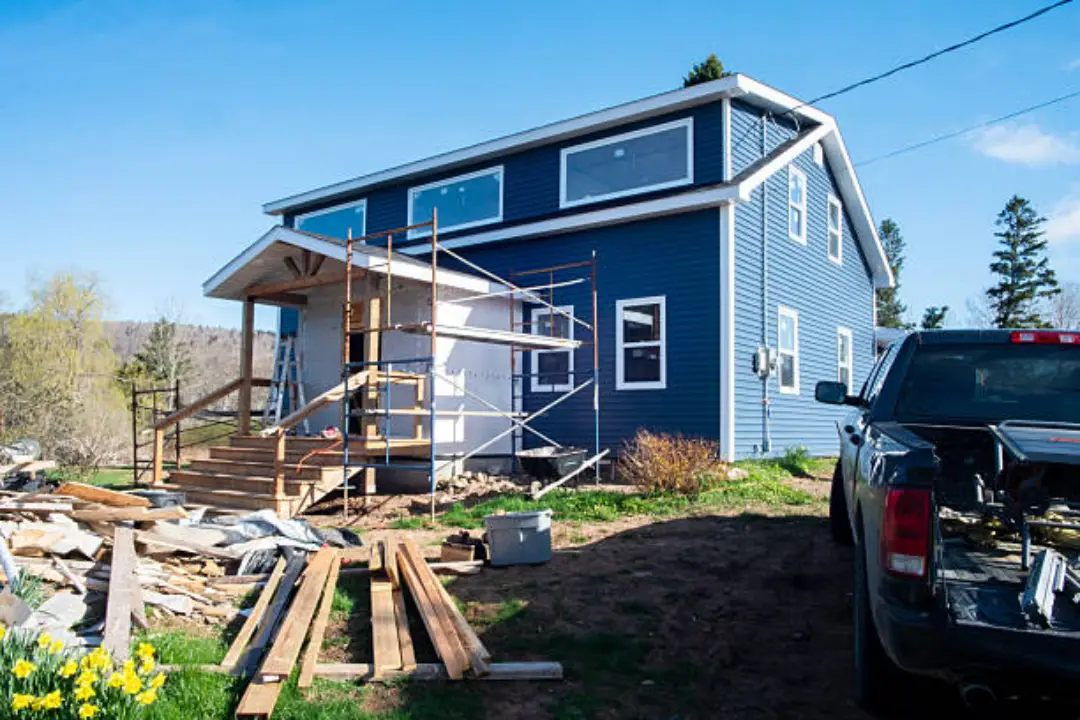
A minute later, the photo arrived. My hands shook as I opened it. There was my house, my lawn, the lake stretching beyond. And there, unmistakably, were my parents standing near the entrance, gesturing toward workers and pointing at parts of the house. Behind them, my brother Marcus and his wife Jennifer stood in discussion, supervising the men like they owned the place. My chest tightened, my stomach dropped, and a cold realization set in. This was my property. My sanctuary. My escape from chaos. And yet, in that instant, it was being invaded, altered, and claimed—all without my consent.
I grabbed my car keys, told my assistant I was leaving for the day, and drove out of the city. The drive was a blur of racing thoughts, each explanation more unlikely than the last. Perhaps it was a misunderstanding, a miscommunication. But deep down, I knew. This was intentional.
By the time I arrived at the lake, the construction truck was still parked outside, workers hauling timber and materials into the house. My parents spotted my car and came forward immediately. My mother’s smile was serene, practiced, comforting—but I could see through it. My father’s calm demeanor only made me angrier.
I stepped out of the car, trying to steady my voice. “What is all this? What’s going on here?”
“Oh, honey,” my mother said sweetly, her smile unyielding. “We decided to do some renovations. We’re expanding it a bit. After everything is finished, Marcus, Jennifer, and the kids will move in.”
I stared at my father, hoping for some sign of reason, but his nod confirmed this was deliberate. “Yes, the cottage is too small for a family. We’re adding another room and expanding the living area.”
I couldn’t comprehend it. Their words were casual, like discussing dinner plans, not the destruction and alteration of my property. I ran past them into the house, pulse pounding. Inside, dust hung in the air, the smell of sawdust thick. One of the walls had already been torn down. The space I’d envisioned as my personal retreat was in chaos.
My parents followed me inside, still smiling. “Have you completely lost your minds?” I asked, my voice shaking but controlled. “This is my house. My property. You had no right to do any of this.”
My father crossed his arms. “We don’t need to ask your permission. We’re one family, and you gave us spare keys yourself.”
Before I could respond, Marcus stepped in, his expression a mixture of annoyance and superiority. “Kayla, stop being so dramatic. You have a large, expensive apartment in the city, you own a business, and make good money. It’s not fair that we’re living in rentals while you have multiple properties.”
I looked at them—the people I had helped, supported, and provided for without question. And now they were standing there, defending their decision to take my property without even asking. Anger bubbled inside me, a slow, hot burn threatening to consume my reason. But I knew losing my temper would accomplish nothing. I needed clarity, precision, control.
I walked out silently, got into my car, and drove away. As I pulled out, their figures lingered in my rearview mirror, likely believing I would eventually calm down and acquiesce to their plan. They were profoundly mistaken.
I drove back to the city, but I didn’t go home. I couldn’t just sit and do nothing. I pulled over at a coffee shop, opened my laptop, and searched for the construction company whose name I’d seen on the truck. I found their website and office address—it wasn’t far. I grabbed my tablet containing digital copies of all my important documents, including the property deed for the lake house, and drove straight to their office.
The construction company office was in a small business center. I walked in and asked to see the director. The receptionist said he was busy, but I told her it was urgent and concerned their current project at my property. Five minutes later, I was sitting across from Dan Miller, a middle-aged man with gray hair who looked increasingly uncomfortable as I spoke.
I opened my tablet and showed him the property documents. “I’m the owner of the house where your workers are currently doing construction. I want to know on what basis you started this renovation and who signed the contract with you.”
Dan pulled out a folder. “An elderly couple came to us two weeks ago. They presented a power of attorney from the owner. They said they were tenants and that the owner had given them permission to do renovations.”
“Do you have copies of those documents?”
He made copies for me. I looked through them quickly. There was a document with my signature—except it wasn’t my signature. Someone had forged it.
My hands shook as I held those papers. “Mr. Miller, these people lied to you. I never signed any power of attorney. This signature is forged. I am the sole owner of this property, and I never authorized any construction work. Your workers must stop immediately.”
Dan’s face went pale. “Are you absolutely sure?”
“I’m completely sure. Here are my documents proving ownership. I want all construction work stopped right now, today. If your workers continue, I will hold your company responsible for the damage.”
Dan picked up his phone and made a call. I heard him telling someone to stop all work at my address immediately and pack up everything.
After he hung up, he apologized several times. I took all the copies of documents related to my house and left. I was driving home when my phone rang. It was my father.
“Why did the builders pack up everything and leave?” His voice was stern, angry.
“Because it’s my house, and I don’t need any renovation there.”
“Kayla, what are you doing? We already paid them a deposit.”
“You paid them with forged documents. You forged my signature. That’s a crime. Now you’re going to have serious problems.”
“You wouldn’t dare do anything to your own family.”
“Watch me,” I said, and hung up.
My hands were still shaking, but now from adrenaline, not fear. I called my lawyer, Peter Hammond, who’d handled all my business legal matters for years. I told him I needed to see him urgently about a personal matter.
At Peter’s office, I laid out everything—the forged documents, the property deed, photos from my neighbor. Peter listened carefully, taking notes.
“Kayla, what your parents and brother did is document forgery. That’s a criminal offense. You can sue them, and they’ll have to compensate you for all damages to your property.”
“I want to do exactly that.”
Peter made a phone call right there. When he finished, he told me that the next day, a property damage specialist would assess everything at my lake house.
That evening, I didn’t eat dinner. I just sat on my couch thinking about everything that had happened. I felt betrayed. These were people I had supported for years, and they had stabbed me in the back.
The next day, Peter had the assessment report ready. The specialist had documented everything—the destroyed lawn, the torn-down wall, the unnecessary addition they’d started building. The total damage was valued at fifteen thousand dollars.
“This is a solid case,” Peter said. “But I need to ask you—are you sure you want to proceed? They’re your family.”
“I’m sure. But I have another matter I need your help with.”
I pulled out another folder containing all the documents for the house where my parents lived—the house I’d bought for them seven years ago. “This house has always been mine. My parents have lived there for free all these years. They only paid utility bills. I paid property tax and never charged them rent. Now I want to evict them.”
Peter looked through the documents carefully. “Everything is in order. The house is yours. They have no lease agreement. Legally, you have every right to evict them. Are you certain about this?”
“Absolutely certain.”
Peter drafted an eviction notice. According to law, I had to give them thirty days to leave. He printed the document and handed it to me.
That evening, my mother called, her voice cold. “Your father and I are very disappointed in you. We need to talk. There will be a family meeting tomorrow evening at our house. You need to be there.”
I could already imagine what this meeting would be like. They would all sit there and try to shame me, to make me feel guilty, to pressure me to forget about everything.
But I had other plans.
“I’ll be there,” I said.
“Good. And Kayla, you need to behave properly and reasonably tomorrow.”
“Don’t worry, I will,” I said, and hung up, actually smiling. They thought they would lecture me and I would back down. They had no idea what I was bringing to their meeting.
The next evening, I drove to my parents’ house—actually, to my house where my parents lived. I parked in the driveway and took a deep breath before getting out. I had my folder with all the documents tucked under my arm.
When I walked in, everyone was already there. My mother and father sat on the large sofa. Marcus and Jennifer sat next to them. They all looked at me with the same expression—disapproval mixed with anger. They’d placed a single chair across from the sofa for me. It looked like a courtroom setup. They were the prosecutors and judges, and I was supposed to be the defendant on trial.
I sat down and placed my folder on my lap. Nobody said hello. Nobody asked how I was doing.
My father started immediately. “Kayla, the whole family is unhappy with your behavior. You embarrassed us in front of that construction company. You threatened us with terrible consequences. This is unacceptable.”
Marcus leaned forward. “Jennifer and I had everything planned out. We need that house to raise our children properly. They need space, fresh air, a yard to play in. Because of your conflict with the construction company, our move has been postponed indefinitely. You’re being selfish.”
I looked at each of them. My mother had her arms crossed. Jennifer was nodding along with everything Marcus said. They really believed they were right. They really thought I was the problem here.
“Your move hasn’t been postponed,” I said calmly. “It’s been completely cancelled. None of you will ever cross the threshold of my house again. My assistant already changed all the locks there yesterday.”
My mother gasped. My father’s face turned red. Marcus stood up.
“You can’t do that. We already made plans.”
“I can do whatever I want with my property. And that’s not all.” I opened my folder and took out the damage assessment report, placing it on the coffee table between us. “You owe me fifteen thousand dollars for destroying my property. This is the official assessment of the damage your construction project caused. If you refuse to pay, I will go to court. And when I do, I’ll present the documents where you forged my signature. That’s a crime.”
My mother immediately started crying, clutching her chest dramatically. “How can you do this to us? We’re your parents.”
My father stood up and shouted. “You wouldn’t dare take us to court. If you do that, we will disown you. You’ll be dead to us.”
I looked at him and smiled. “That suits me perfectly fine. Strangers won’t be living in my house anyway.”
My father froze. “What do you mean by that?”
I reached into my folder again and pulled out the eviction notice, placing it on the table next to the damage report. “Since you’re planning to disown me, this will make things easier. This is an eviction notice. You have thirty days to move out of my house.”
My father grabbed the paper, his hands shaking. “This is ridiculous. You can’t evict us. This is our home.”
“No, it’s my home. It has always been my home. I bought it with my money. You have lived there for free for seven years. I never charged you rent. I paid all the property taxes. But I’m done sponsoring the lives of people who forge my signature and try to steal my property.”
Marcus jumped up from the sofa. “Kayla, you’ve completely lost your mind. You’re destroying this family.”
My mother was still crying. “We raised you better than this. We invested so much money in you. We paid for your education, your clothes, everything.”
I stood up too. “And I invested a considerable sum in you over the years. I constantly gave you money for various urgent needs. Last year alone, I gave you six thousand dollars for things you said were emergencies. I paid for your vacation to Mexico. I paid for your vacation to Florida. I bought you a new car three months ago. And you never appreciated any of it. Now you have thirty days to leave.”
I turned to Marcus. “And I haven’t forgotten about you either. I called your landlord yesterday. I told him I will no longer be paying for your apartment rental. You also have a month to find new housing or come up with money to continue renting that apartment on your own.”
Marcus’s face went white. Jennifer grabbed his arm. “What? You can’t do that. We have children.”
“You should have thought about your children before you tried to steal my house.”
I picked up my folder and walked toward the door. Behind me, everyone started talking at once. My father was yelling that I was ungrateful. My mother was crying louder. Marcus was calling me horrible names. Jennifer was screaming about how cruel I was.
I opened the door, walked out, and closed it behind me. Their voices were still audible from outside. I got in my car and drove away.
Over the next few days, my phone wouldn’t stop ringing. My parents called, Marcus called, Jennifer called. They left voicemails, sent text messages. The messages started out angry, then became pleading, then turned angry again. I read a few of them and then blocked all their numbers.
A week later, my cousin Rachel called. “Kayla, what’s going on? Jennifer posted something on social media about you, and it’s getting a lot of attention.”
I opened social media and found Jennifer’s post. She’d written a long message saying that I had lost my mind, that I was trying to destroy the family, that I was evicting my elderly parents from their home, and that because of my revenge, her family might lose their housing too. She made it sound like I was a monster. The post had hundreds of comments already, most from people I didn’t know, calling me terrible things.
But I wasn’t going to stay silent and let them control the narrative. I wrote my own comment under Jennifer’s post, explaining the truth. I told them the lake house was my property and that my family had forged my signature to start unauthorized construction. I wrote about how I’d bought a house for my parents and let them live there for free for seven years. I wrote about paying rent for my brother’s apartment for years. Then I uploaded screenshots—property documents showing my name as the owner, bank statements showing all the payments I’d made to help them. Everything was there in black and white.
The reaction was immediate. Relatives started commenting. My aunt wrote that my parents had always told everyone the house was theirs, that they’d bought it themselves. My uncle said my parents claimed I never helped them financially. Other relatives piled on, saying Marcus was ungrateful and my parents had lied to the whole family.
Jennifer deleted her original post within an hour, but screenshots were already circulating.
I blocked my entire family on social media after that, but they didn’t give up. A few days later, my parents showed up at my apartment building. The doorman called me, and I told him not to let them in. They came back two more times that week. Each time I refused to see them. Marcus came once with Jennifer. Same result.
Finally, my mother left a note with the doorman saying they wanted to talk and resolve everything. I wrote back that I would only communicate through my lawyer.
Two weeks later, Peter called me. “Your parents contacted me. They threatened to sue you. I explained to them that they don’t have a single chance of winning. I showed them the forged documents, the damage assessment, everything. They backed down pretty quickly.”
“Good. What about the fifteen thousand dollars?”
“They didn’t mention it, but I made it clear that if they don’t pay, you will proceed with criminal charges for forgery.”
A month passed. On the last day before the eviction deadline, fifteen thousand dollars appeared in my bank account. The transfer came from my father. No message, no explanation, just the money.
Three days later, Peter confirmed that my parents had moved out of the house. I hired a cleaning service and then put the house up for rent. I found tenants within a week—a nice young couple who paid on time and took care of the property.
I heard updates about my family through relatives who still talked to me. My cousin Rachel told me that my parents had rented a small studio apartment on the outskirts of the city. My father had to go back to work even though he was past retirement age because their pension wasn’t enough to cover rent and expenses. My aunt mentioned that Marcus and Jennifer had left the city entirely. Apparently, they couldn’t afford rent anywhere decent, so they moved to another state where Jennifer’s parents lived.
I felt nothing when I heard these things. No guilt, no satisfaction—nothing.
Six months have passed since that day at the lake house. I still run my marketing company. Business is good. I go to my lake house sometimes on weekends. The new lawn is growing back nicely. I hired contractors to properly repair the wall and remove the addition that was started. The house looks like it did before, maybe even better.
I don’t communicate with my parents or Marcus or Jennifer. They tried reaching out a few more times through other relatives, but I made it clear I wasn’t interested. Some family members think I went too far. Others say I did the right thing. I don’t really care what anyone thinks anymore.
What they did was unforgivable. They didn’t just try to take my property. They betrayed my trust, forged my signature, and then tried to make me feel guilty about stopping them.
My mother sent me a letter last month. I didn’t open it. I threw it away. Whatever she wanted to say, I didn’t need to hear it.
Some people say that family is everything, that you should forgive family no matter what. But I don’t believe that anymore. Family shouldn’t steal from you. Family shouldn’t forge your signature. Family shouldn’t take advantage of your generosity for years and then demand even more.
I don’t know what will happen in the future. Maybe someday they’ll genuinely apologize and try to make things right. Maybe they never will. Right now, I’m not ready to restore any relationship with them. I’m not ready to forgive them or forget what they did.
They made their choices and now they’re living with the consequences. I made my choices too. I protected what was mine, and I stood up for myself.
Sometimes late at night, I wonder if I’m a bad person for what I did. Then I remember them standing in my house, defending their decision to take it from me. I remember the forged signature. I remember Marcus saying I was being dramatic. I remember my father threatening to disown me.
And then I stop wondering.
I did what I had to do. This is my life now, and I’m fine with it. I learned that generosity without boundaries isn’t love—it’s enabling. I learned that family isn’t defined by blood but by respect and reciprocity. I learned that sometimes the people who should protect you are the ones you need protection from.
My lake house sits quietly by the water, restored and peaceful. When I go there now, I sit on the deck and watch the sun set over the lake, and I feel something I didn’t feel before—not just peace, but ownership in the truest sense. Not just of the property, but of my life, my choices, my boundaries.
They took my trust and twisted it into entitlement. They took my generosity and turned it into expectation. They took my kindness and mistook it for weakness.
They were wrong.
And now, finally, I am free.

Adrian Hawthorne is a celebrated author and dedicated archivist who finds inspiration in the hidden stories of the past. Educated at Oxford, he now works at the National Archives, where preserving history fuels his evocative writing. Balancing archival precision with creative storytelling, Adrian founded the Hawthorne Institute of Literary Arts to mentor emerging writers and honor the timeless art of narrative.