When “Nothing” Became Everything: How I Reclaimed My Life at 67
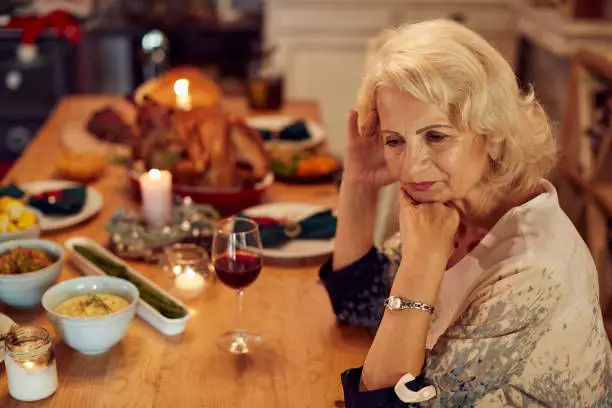
The words hung in the air like smoke from a fire you can’t put out, filling the room with something toxic and irreversible. I sat there at my own dining table—the one I’d refinished myself after Daniel died, sanding away years of scratches and water rings—and felt something inside me go very still and very quiet.
“Compared to my mother, you’re not really anything.”
Jessica said it calmly, almost kindly, the way you might tell someone their slip is showing or they have spinach in their teeth. Like she was doing me a favor by being honest. Like it was a simple statement of fact that any reasonable person would accept.
My son Mark sat beside her, fork frozen halfway to his mouth, his eyes wide with something that might have been shock or might have been the dawning realization that he should say something but didn’t know what.
The silence stretched. The chicken I’d roasted—rubbed with herbs from the garden I tended every morning, cooked at the exact temperature and time I’d perfected over forty years—sat steaming on its platter, suddenly looking like evidence of something pathetic rather than something made with care.
I looked at Jessica. Really looked at her. At her designer blouse that probably cost more than my monthly grocery budget. At her perfect manicure, her highlighted hair, her confident posture. At the diamond earrings Mark had bought her—with money I’d helped him save by never charging rent when he lived with me after college, by buying his groceries when he was “between jobs,” by covering his car insurance when things were “tight.”
Then I looked at my son. My only child. The boy I’d raised alone after his father died, leaving us with a mortgage and medical bills and a future that suddenly looked very different than what we’d planned.
I’d been twenty-nine when Daniel’s heart gave out. Mark had been seven.
I thought about the years that followed. The two jobs I worked—bookkeeping during the day, cleaning offices at night—so Mark could stay in his school, keep his friends, have some stability while his whole world was falling apart. I thought about the times I’d eaten plain rice for dinner so he could have chicken. The times I’d worn clothes from the thrift store so he could have new sneakers. The birthday parties I’d thrown with homemade cake and decorations I’d stayed up all night creating, because I couldn’t afford the party place all his friends went to but I’d be damned if my kid felt less-than.
I thought about selling my wedding ring—the only thing of value Daniel had left me besides our son—to keep the electricity on during a brutal winter when Mark was nine and had pneumonia and needed to stay warm.
I thought about sitting on the bathroom floor with the shower running so Mark wouldn’t hear me cry, because I needed to fall apart but I also needed him to believe everything was going to be okay.
I thought about teaching myself to fix the car from library books because I couldn’t afford a mechanic. About learning to patch drywall and replace faucets and rewire lamps because hiring someone wasn’t an option. About becoming both mother and father, both nurturer and protector, both the soft place to land and the firm hand that guided.
And I thought about the last fifteen years, since Mark had met Jessica.
I thought about how I’d welcomed her into my home, into my family, into my life. How I’d tried so hard to make her feel loved and accepted, even when she made it clear that my small house, my simple meals, my whole way of living was somehow quaint and inadequate compared to what she’d grown up with.
Jessica’s mother, Linda, lived in a sprawling house in the expensive part of town. She’d never worked—she’d married well, divorced better, and now spent her days at the country club and her evenings hosting dinner parties catered by professionals. She had a housekeeper, a gardener, a personal trainer, and a vacation home in Aspen.
I had a mortgage I’d finally paid off at sixty-three, a garden I tended myself, and a small savings account I’d built quarter by quarter, dollar by dollar, over decades of careful living.
But I’d given Mark and Jessica twelve thousand dollars for their first down payment—nearly half of what I’d saved. It was the money I’d been setting aside for my own future, for retirement, for the day when my body couldn’t work anymore and I’d need help.
I gave it to them because Mark was my son and I wanted him to have a good start in life. Because I’d spent thirty-eight years making sure he had what he needed, and that instinct didn’t just stop when he turned thirty.
Linda had offered them money for their second house—a bigger, better one in a neighborhood with “good schools” even though they didn’t have children yet. But she’d insisted her name go on the deed. “Just as protection for my investment,” she’d said sweetly.
My name had never gone on anything. I’d just handed over the check and hugged my son and told him I was proud of him.
And for the past three years, I’d watched Jessica compare me to her mother in a thousand small ways. “My mother would never do her own yard work.” “My mother says hiring cleaning help is essential for successful women.” “My mother thinks it’s beneath a woman to get her hands dirty with car maintenance.”
Always “my mother.” Always with the implication that I was somehow failing at being a woman, at being a mother, at being worthy of respect, because I did things myself instead of paying other people to do them for me.
I’d tried to let it roll off. I’d told myself Jessica was young, that she didn’t understand, that she’d been raised with privilege and couldn’t help her perspective. I’d bitten my tongue and smiled and kept cooking Sunday dinners and babysitting their dog and being available whenever they needed something.
Until tonight.
Tonight, I’d finally worked up the courage to ask them over specifically to have a conversation. I’d set my best plates on the table—the china I’d bought piece by piece from estate sales, collecting a full set over ten years. I’d made Mark’s favorite meal. I’d practiced what I wanted to say, how to express that I felt invisible and taken for granted without sounding accusatory or needy.
I’d asked, very calmly and with as much dignity as I could muster, if we could talk about how they treated me. About the constant comparisons to Linda. About the way my contributions seemed to be dismissed or forgotten while Linda’s were celebrated and praised. About how I’d like to feel valued as Mark’s mother, as someone who’d given everything she had to raise him.
And Jessica had responded with: “Let’s be realistic. Compared to my mother, you’re not really anything.”
Now, sitting in this terrible silence, I made a decision.
I pushed my chair back slowly. The legs scraped against the wood floor—a sound that seemed very loud in the quiet room. I stood up, carefully, with the dignity my grandmother had taught me to carry even when everything else was falling apart.
“You’re right,” I said softly.
Mark finally moved, setting down his fork. “Mom—”
I held up a hand. “No. Jessica’s right. Compared to her mother, I’m not really anything. I’m not wealthy. I don’t have a big house or fancy cars or a vacation home. I can’t write checks to cover houses or fund elaborate weddings or provide the kind of lifestyle Linda can provide.”
I looked at my son, really looked at him, and felt something crack in my chest.
“But I was enough to raise you,” I continued, my voice steady even though my hands were shaking. “I was enough to work two jobs so you could stay in your school. I was enough to sell my wedding ring to keep you warm and fed. I was enough to teach you to read, to bandage your scraped knees, to sit up with you when you had nightmares, to help you with homework, to attend every school play and parent-teacher conference and baseball game even when I was exhausted to my bones.”
“Mom, please—” Mark started, his face pale.
“I was enough,” I said again, “to give you twelve thousand dollars I’d saved for my retirement because you needed a down payment. I was enough to cook you Sunday dinners for three years and watch your dog and always, always be available when you needed something. But apparently, that’s ‘not really anything.'”
Jessica had the grace to look uncomfortable now, her confident posture faltering slightly.
“So here’s what’s going to happen,” I continued, my voice still calm, still controlled. “I’m going to leave now. And I’m going to take some time to think about what kind of relationship we have moving forward. Because I won’t sit at my own table and be told I’m nothing. Not by anyone. Not even by you.”
I picked up my purse from the counter, pulled out my car keys.
Mark stood up abruptly. “Mom, don’t go. Jessica didn’t mean—”
“Yes, she did,” I interrupted gently. “And that’s what makes it so clear. She meant exactly what she said. She believes it. And you’ve let her say things like this, in smaller ways, for three years now without defending me or standing up for me. So I think we all need some time apart to decide what we really value.”
I walked to the door. My hands were steady now, my mind clear.
“Mom!” Mark called after me. “Please, can we just talk about this?”
I turned back one last time. “We just did, sweetheart. And I heard everything I needed to hear.”
I left my house—left them sitting at my table with my china and my home-cooked food—and I drove.
I didn’t know where I was going. I just drove through the darkening streets of my town, past familiar landmarks that suddenly looked different, like I was seeing them through new eyes.
I ended up at the park where I used to take Mark when he was little. There was a bench overlooking the playground, and I sat there as the last light drained from the sky, feeling something vast and terrifying and liberating opening up inside me.
For the first time in thirty-eight years, I wasn’t anyone’s mother first.
I was just Evelyn.
And I had no idea who that was anymore.
My phone buzzed. Mark calling. I declined it. He called again. Again. On the fifth attempt, I turned it off.
I sat there until it was fully dark, until the streetlights came on and the playground equipment cast long shadows across the wood chips. And in that darkness, something began to take shape—not a plan exactly, but a question.
What would Evelyn want, if she wasn’t spending all her energy being what other people needed?
The next morning, I called my financial advisor—a competent woman named Sarah who’d helped me manage my small investments over the years.
“Sarah,” I said, “I need you to tell me honestly. If I sold my house, how much would I have to live on?”
There was a brief pause. “Evelyn, is everything all right?”
“I’m not sure yet,” I said honestly. “But I need to know my options.”
We spent an hour going over numbers. My house, purchased for sixty thousand dollars in 1987, was now worth nearly four hundred thousand dollars in our gentrified neighborhood. The mortgage was paid off. I had about forty thousand in savings and retirement accounts—it would have been more, but I’d given Mark that down payment.
“If you sold the house and invested the proceeds conservatively,” Sarah said carefully, “along with your Social Security and your savings, you could comfortably afford to live modestly but well. You could rent, or buy something smaller outright. You’d have financial security for the rest of your life.”
“And if I wanted to travel?” I asked. “If I wanted to… I don’t know, see things? Do things?”
“You could do that,” Sarah confirmed. “Not extravagantly, but yes. You could absolutely do that.”
I thanked her and hung up. Then I called a real estate agent.
Mark showed up at my door that evening. He looked terrible—unshaven, dark circles under his eyes, wearing the same clothes he’d worn the night before.
“Mom,” he said, the moment I opened the door. “I’m so sorry. Jessica is sorry. We need to talk.”
“Come in,” I said.
We sat in the living room—the room where I’d rocked him as a baby, where we’d opened Christmas presents and watched movies and weathered every storm life had thrown at us.
“Jessica didn’t mean it the way it sounded,” Mark began.
“Yes, she did,” I said gently. “And Mark, that’s okay. She’s allowed to think her mother is better than me. Linda probably is better, by most conventional measures. She has more money, more status, more of the things society values.”
“That’s not—”
“But here’s what I’ve realized,” I continued. “I’ve spent my entire adult life making sure you were okay. Making sure you had what you needed. Sacrificing what I wanted so you could have opportunities. And I don’t regret that. You were my child. That was my job. I loved doing it.”
I took a breath, steadying myself for what came next.
“But somewhere along the way, I forgot that my job was to raise you to be independent, not to spend my whole life serving you. And I forgot that I’m a person too, with my own needs and dreams and dignity.”
“Mom, you’re not just—”
“I’ve put the house on the market,” I said.
Mark’s face went blank with shock. “What?”
“I’m selling the house. I’m taking the money, and I’m going to live for myself for the first time in almost forty years. I’m going to travel. I’m going to take art classes I’ve always wanted to take. I’m going to rent a small apartment near the ocean and learn what it’s like to live somewhere just because I like it, not because it’s near good schools or affordable on a tight budget.”
“You can’t— This is our home! This is where I grew up!”
“It’s where you grew up,” I corrected gently. “Past tense. You have your own home now. With Jessica. And with Linda’s name on the deed.”
He flinched.
“I’m not doing this to punish you,” I said, and I meant it. “I’m doing this because last night, when Jessica told me I was nothing compared to her mother, something broke open inside me. And I realized I’ve been making myself small and acceptable and endlessly available because I was afraid.”
“Afraid of what?”
“Afraid that if I wasn’t useful, I wouldn’t be loved. Afraid that my value as a person was entirely tied to what I could do for you. Afraid that being ‘just Evelyn’—not Mom, not the helper, not the solution to every problem—wouldn’t be enough.”
Tears were running down my face now, but my voice stayed steady.
“And I can’t live like that anymore, Mark. I can’t keep shrinking myself to fit into the corners of other people’s lives. I need to find out who I am when I’m not defined entirely by being your mother.”
Mark was crying too. “I love you, Mom. Not because of what you do for me—because of who you are.”
“Then prove it,” I said softly. “Prove it by letting me go. By supporting this choice even though it scares you. By understanding that sometimes love means giving people space to become themselves, even when it’s inconvenient for you.”
We sat in silence for a long time, both crying, both holding this painful truth between us.
Finally, Mark spoke. “Did I… Did I become Dad? Did I leave you the way he did?”
The question hit me like a fist. “Oh, sweetheart. No. You didn’t die. But you did leave, in a way. You grew up, which is what you were supposed to do. And I should have grown too, should have built a life that didn’t revolve entirely around you. But I didn’t know how. And now I need to learn.”
“I don’t want you to sell the house,” he said quietly. “But I understand why you need to.”
“Thank you,” I said.
He left a few hours later. We hugged at the door for a long time, and I felt something shift between us—not breaking, but changing shape, becoming something different than it had been.
The house sold in three weeks. A young family with two small children, and the mother cried when she saw the backyard where I’d pushed Mark on his swing set a thousand times.
“It’s perfect,” she said. “Our kids are going to be so happy here.”
I signed the papers and felt simultaneously like I was betraying something sacred and like I was being released from a prison I’d built myself.
I found a small apartment two hours from Mark, in a beach town I’d always loved but never let myself consider because it was “too far” and “too impractical.” It had one bedroom, a tiny kitchen, and a balcony overlooking the ocean. The rent was reasonable. I could afford it comfortably with room left over for the art classes I’d signed up for and the trip to Italy I’d booked.
Italy. I was going to Italy for three weeks, something I’d dreamed about since I was a girl but never believed I’d actually do.
Mark helped me move. Jessica came too, subdued and careful, offering apologies I accepted without quite forgiving yet. That would take time.
“I really am sorry,” she said, standing in my new living room with its huge windows and ocean view. “I was cruel. And I was wrong.”
“You were honest,” I corrected. “And that honesty, as much as it hurt, gave me the push I needed to change my life. So in a weird way, I’m grateful.”
She looked at me with something like respect for the first time. “You’re braver than I thought.”
“I’m braver than I thought too,” I admitted.
That was eight months ago.
Now I’m sitting on my balcony, watching the sun set over the Pacific, drinking wine from a glass I bought in Venice. My apartment is small but mine. My days are full but peaceful. I take watercolor classes on Tuesdays and yoga on Thursdays. I’ve made friends—other women my age who are also figuring out who they are after decades of being defined by other people’s needs.
Mark calls every Sunday. We talk about his life, and now he asks about mine too. Really asks, really listens. Our relationship is different—less codependent, more equal. More honest.
Jessica and I are cordial. She’s expecting now—a baby girl, due in November. She asked if I’d come help after the birth, and I said yes, but with boundaries. Two weeks, not indefinitely. And I’d stay in a hotel, not with them, so I could have space when I needed it.
She’d agreed without hesitation, even seemed relieved by the clarity.
Linda, I’ve met exactly once since that awful dinner. She’d invited me to lunch, surprisingly, and we’d had a stilted but civil conversation where she’d admitted that she’d always felt threatened by me.
“You gave Mark something I could never give Jessica,” she’d said. “You gave him unconditional love that wasn’t tied to money or performance. You made him feel secure in a way that doesn’t require constant proof. Jessica’s still learning that kind of love is possible.”
It was the most honest conversation we’d ever had. I don’t know if we’ll be friends, but we might manage to be friendly.
As for me? I’m learning who Evelyn is.
She’s someone who likes long walks on the beach and experimental cooking and terrible reality TV. She’s someone who’s surprisingly good at watercolor and terrible at yoga but does it anyway because it makes her body feel good. She’s someone who talks to strangers at coffee shops and has started writing a memoir she’ll probably never publish but enjoys creating anyway.
She’s someone who spent forty years being “Mark’s mom” and is now, finally, just herself.
And “just herself” is not nothing.
She’s funny and resilient and creative. She’s survived loss and poverty and exhaustion and came out the other side still able to love, still able to hope, still able to dream.
She’s sixty-seven years old and she’s going to Iceland next month because she wants to see the Northern Lights before she dies.
She’s flawed and imperfect and still figuring things out.
But she’s enough. All on her own, without being useful or needed or essential to anyone else’s happiness.
She’s enough.
Yesterday, Mark sent me a photo. He and Jessica were painting the nursery for the baby. They’d chosen yellow—a warm, hopeful color. Jessica was smiling, paint smudged on her cheek, and Mark had his arm around her.
The text said: “Thanks for teaching me what real strength looks like, Mom. I hope I can teach our daughter the same thing.”
I cried when I read it. Good tears, healing tears.
Then I put down my phone and went back to my watercolor—a seascape I was working on, all blues and greens and the wild white of breaking waves.
My daughter-in-law told me I was nothing compared to her mother. And she was right, in a way. I’m not like Linda. I never will be. I don’t have her money or her status or her easy confidence.
But I have something else. I have resilience forged in the fire of real hardship. I have love that survived loss and poverty and betrayal and came out stronger. I have the courage to walk away from my own table when my dignity demanded it. I have the strength to rebuild my life at sixty-seven, to risk being alone in order to find out who I really am.
I’m not nothing.
I’m not everything either.
I’m just Evelyn. Perfectly imperfect, still learning, still growing, still becoming.
And at sixty-seven years old, I’m finally, finally living for myself.
Some people thought I was crazy to sell my house, to move away from my son, to “abandon my family” for a selfish adventure. They said I’d regret it, that I was being petty, that I was throwing away what mattered most over hurt feelings.
But those people don’t understand what it means to spend an entire lifetime being secondary. To always come last. To measure your worth entirely by how useful you are to other people.
They don’t understand what it means to finally, after sixty-seven years, put yourself first.
Not in a selfish way. Not in a way that hurts others unnecessarily.
But in a way that says: I matter too. My dreams matter. My dignity matters. My life matters, even if I’m “just” a mother, “just” a widow, “just” an ordinary woman without wealth or status or power.
I matter.
And that realization—that simple, profound truth—changed everything.
My daughter-in-law said I was nothing.
So I walked away from their table, sold my house, and went looking for myself.
And what I found was someone worth knowing. Worth celebrating. Worth building a whole new life around.
I found Evelyn.
And she’s magnificent.
THE END

Ethan Blake is a skilled Creative Content Specialist with a talent for crafting engaging and thought-provoking narratives. With a strong background in storytelling and digital content creation, Ethan brings a unique perspective to his role at TheArchivists, where he curates and produces captivating content for a global audience.
Ethan holds a degree in Communications from Zurich University, where he developed his expertise in storytelling, media strategy, and audience engagement. Known for his ability to blend creativity with analytical precision, he excels at creating content that not only entertains but also connects deeply with readers.
At TheArchivists, Ethan specializes in uncovering compelling stories that reflect a wide range of human experiences. His work is celebrated for its authenticity, creativity, and ability to spark meaningful conversations, earning him recognition among peers and readers alike.
Passionate about the art of storytelling, Ethan enjoys exploring themes of culture, history, and personal growth, aiming to inspire and inform with every piece he creates. Dedicated to making a lasting impact, Ethan continues to push boundaries in the ever-evolving world of digital content.