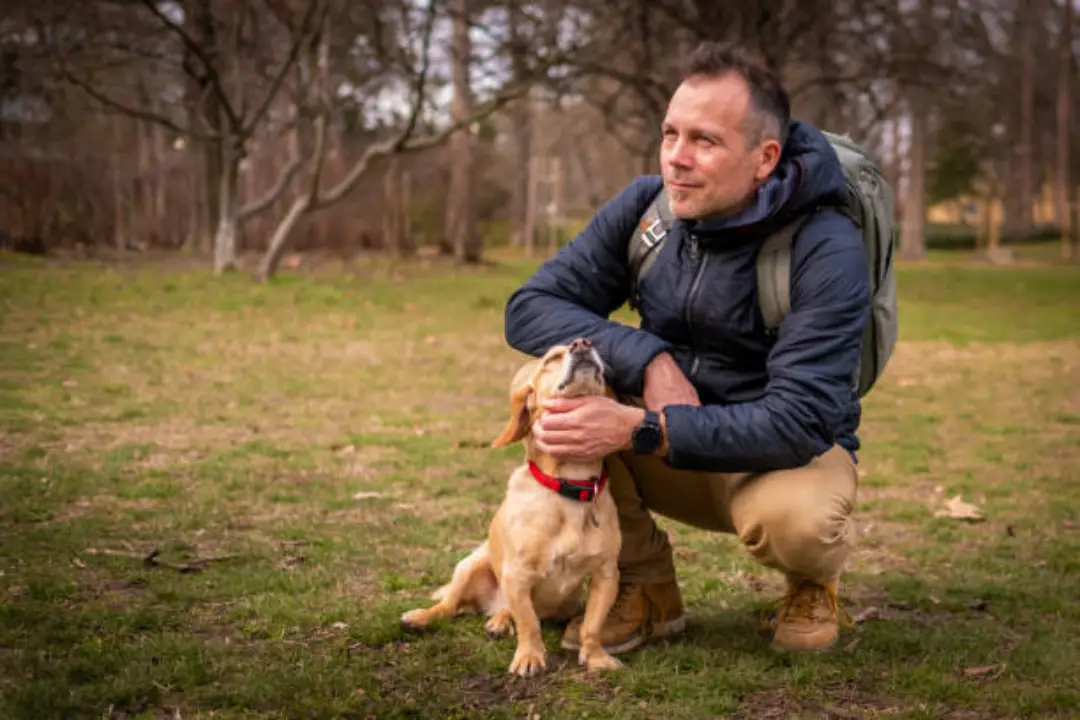
For nine years, I thought I knew my husband. James was predictable in the best way—steady, reliable, the kind of man who showed up for soccer games and remembered to buy milk without being asked. Our marriage wasn’t perfect, but it was ours. Two kids, a modest house in the suburbs, and a life that felt comfortably ordinary.
Until the night walks started.
It began innocently enough with a dog. James had been campaigning for months to adopt one, wearing me down with the persistence of a seasoned negotiator. “I’ll handle everything,” he’d promise, his eyes bright with enthusiasm. “Feeding, training, walks—all of it. You won’t have to lift a finger.”
I’d heard variations of this promise before. About the kids’ goldfish that I ended up flushing. About the hamster whose cage I cleaned every week despite James’s solemn vows. About literally everything that required ongoing responsibility in our household.
“We already have two kids under eight,” I reminded him, gesturing to the living room where our seven-year-old daughter, Emma, was attempting to teach our five-year-old son, Max, a complicated TikTok dance. “I’m running a daycare, a restaurant, and a laundry service simultaneously. Adding a dog feels like volunteering for chaos.”
But James was relentless, and he had recruited powerful allies. The kids caught wind of the potential dog and launched a full-scale campaign. Puppy drawings appeared on the refrigerator overnight. Emma wrote a persuasive essay for school titled “Why My Mom Should Let Us Get a Dog,” complete with cited sources and a bibliography. Max started a daily countdown on the kitchen calendar, even though no one had agreed to anything.
I held out for three weeks before I caved.
The day we went to the animal shelter, the kids were vibrating with excitement. They raced from kennel to kennel, faces pressed against chain-link fencing, debating the merits of every wagging tail. James walked slowly, methodically, as if this were the most important decision of his life.
We found Daisy in the back corner—a medium-sized mutt with floppy ears, a coat that couldn’t decide if it was brown or gray, and eyes so expressive they seemed almost human. When James knelt down, she immediately pressed her nose through the fence and licked his hand.
“This one,” he said softly, and I knew the decision was made.
Daisy came home with us that afternoon, and to my genuine shock, James kept his word. He took over the walks completely—morning routes before work, quick afternoon outings, and longer evening strolls. He bought the food, scheduled the vet appointments, and even watched YouTube videos on proper training techniques.
“See?” he’d say, grinning as he clipped on Daisy’s leash each evening. “Told you I’d handle it.”
For two months, everything felt stable. The kids adored Daisy. James seemed happier, more relaxed. I started to think maybe I’d been wrong to resist the idea.
Then came the evening that changed everything.
It was a Tuesday in late September. I was inside making dinner when I heard James shouting from the front yard. His voice had a frantic edge I’d never heard before. I dropped the wooden spoon and ran outside, my heart already racing.
Emma was standing on the sidewalk, crying. Max stood frozen on the porch steps, his eyes wide with fear. James was in the middle of the street, Daisy’s empty collar dangling from his hand.
“She slipped it,” he said, his voice shaking. “She just—she pulled back and the collar came off and she ran.”
For the next two hours, we searched the neighborhood. The kids took flashlights and called Daisy’s name until their voices were hoarse. James drove slowly through nearby streets while I walked the perimeter of our block, checking under porches and behind garages. Neighbors came out to help, forming a small search party of concerned strangers.
Emma cried so hard she made herself sick. Max kept asking if Daisy was dead, his voice small and terrified. I kept promising we’d find her, even as my own fear grew with each passing minute.
Just when I was about to call the police, James’s car appeared at the end of our street. He got out and opened the back door, and there was Daisy, shaking but unharmed.
“Where was she?” I asked, pulling the kids close as they rushed to hug the dog.
“Three streets over,” James said, his voice still unsteady. “Under someone’s porch. I just… I had a feeling she might have gone that direction. We walk that street sometimes.”
Something about the way he said it felt odd, but I was too relieved to question it. We brought Daisy inside, gave her water, and let the kids sleep in the living room with her that night, afraid to let her out of their sight.
The next morning, after James left for work, I sat at my laptop and ordered a GPS tracking collar. It arrived two days later—a sleek device that synced to an app on my phone, showing Daisy’s location in real-time.
When I clipped it onto Daisy’s neck, replacing her old collar, I told myself it was just for peace of mind. After the terror of that night, the idea of losing her again was unbearable. The kids had been traumatized. Emma had nightmares for a week afterward.
James noticed the new collar that evening. “Fancy upgrade?” he asked, running his fingers over the thick band.
I shrugged, keeping my tone light. “The old one was getting worn. This one’s supposed to be more secure.”
He nodded, accepting the explanation without question. It never occurred to me that the GPS would track more than just Daisy’s location. It would track wherever James took her, creating a digital map of his movements.
At first, the walks seemed normal. James would leave around eight o’clock each evening, after the kids were in bed, and return within an hour. I’d watch the GPS dot move through familiar streets, circling our neighborhood in predictable patterns.
But gradually, over the course of two weeks, the walks started getting longer.
One night, James left at eight-fifteen and didn’t return until ten-thirty. “Daisy had a lot of energy tonight,” he explained, heading straight to the bathroom to shower. “We did the long loop by the park.”
I opened the app on my phone. The GPS showed they’d been nowhere near the park.
The next night, he was gone for three hours. The night after that, nearly four.
“Where do you even go?” I asked when he finally came home at eleven-forty-five, his shoes muddy and his face flushed from exertion.
He kicked off his sneakers and headed to the kitchen for water. “Just around. She’s got boundless energy, and honestly, it helps me clear my head. Work’s been stressful lately.”
“For three hours?”
“Sometimes I just sit on a bench and let her run around. It’s nice. Peaceful.”
His explanations were reasonable. Plausible. But they didn’t match what the GPS was showing me. The red dot on my screen wasn’t circling parks or sitting at benches. It was traveling across town, stopping at the same address for hours at a time.
An address I didn’t recognize.
I didn’t say anything. Not yet. I told myself I was being paranoid, that there was surely a logical explanation. But every night, I watched the dot move across my phone screen, following James’s journey to that same location.
The street name looked familiar, but I couldn’t place it.
Then one night, Emma asked me a question that made my stomach drop.
“Mommy, why doesn’t Daddy tuck us in anymore?”
I was folding laundry in the living room. She stood in her pajamas, her favorite stuffed rabbit tucked under one arm.
“He does, honey. He just—”
“No, he doesn’t. He’s always walking Daisy. Max and I go to bed, and Daddy’s not home yet.”
I set down the towel I was folding. “He’s home. He just comes in late sometimes.”
Emma frowned. “It’s weird. He’s always gone.”
After she went to bed, I sat on the couch and opened the GPS app again. It was nine-thirty. The red dot showed James at that same address across town, exactly where he’d been for the past hour.
I zoomed in on the map, studying the street layout. And suddenly, I recognized it.
It was the street where we’d found Daisy that night she’d run away.
The same street. Possibly the same house.
My mind started racing through possibilities, each one worse than the last. An affair seemed most likely. He was seeing someone, using Daisy as his cover story. The long walks, the late nights, the evasive explanations—it all fit.
But why that house? Why the same place where we’d found Daisy?
Unless… unless Daisy had been running to someone. Someone she knew.
The thought made me feel physically sick.
I waited until midnight. James still wasn’t home. The GPS showed him at that address, the red dot stationary. I thought about confronting him over the phone, but I needed to see for myself.
I needed to know the truth.
I put on a jacket, grabbed my keys, and left a note for the babysitter who lived next door, asking her to listen for the kids. Then I got in my car and drove through the dark, empty streets, following the GPS coordinates on my phone.
The drive took forty minutes. The neighborhoods gradually changed from suburban developments to older, tree-lined streets with small cottages and overgrown gardens. I’d never been to this part of town before.
When I pulled up in front of the address, my hands were shaking. It was a modest single-story house with a small porch and a light glowing in the front window. Our car was parked in the driveway.
I sat in my car for a moment, my heart pounding so hard I could hear it. This was it. Whatever was happening, I was about to discover the truth.
I pulled out my phone and called James.
Through my car window, I could hear his phone ringing inside the house. He answered on the third ring, his voice calm and unsuspecting.
“Hey, babe. Everything okay?”
“Where are you?” I asked, my voice steadier than I felt.
There was a brief pause. “Just finishing up Daisy’s walk. We’re circling back now. Why?”
“Which street are you on?”
Another pause, longer this time. “Um, near the elementary school. Why? What’s wrong?”
I was staring at the house where his phone had just rung. He was lying. Directly, deliberately lying.
“James,” I said quietly.
I heard him exhale. Then the line went dead.
I got out of my car and walked up the porch steps. My legs felt unsteady. I reached for the doorbell, but before I could press it, the front door opened.
James stood in the doorway, Daisy beside him. His face had gone completely pale.
“Nora?” he whispered. “What are you doing here?”
“What am I doing here?” I repeated, my voice rising. “What are YOU doing here? Who lives here, James?”
Before he could answer, I heard a sound from inside the house—a small cough, delicate and elderly.
I pushed past James into a narrow hallway. He didn’t try to stop me. Daisy followed, her tail wagging as if nothing were wrong.
“Nora, wait—” James started.
But I was already walking down the hallway toward the sound. I pushed open a door to a small, warmly lit bedroom.
And I stopped breathing.
An elderly woman, perhaps in her mid-eighties, sat in a rocking chair by the window. She wore a soft cardigan and reading glasses perched on her nose. Beside her on the floor, a little boy—maybe three years old—was building an elaborate tower out of colorful blocks.
This wasn’t what I’d expected. Not even remotely.
The elderly woman looked up at me with kind, tired eyes. “You must be Nora,” she said gently. “I’m Carla.”
I turned to James, who had followed me into the room. “Who is she?” I asked, my voice barely above a whisper.
James ran his hand through his hair, a gesture I knew meant he was trying to find the right words. “Can we talk? Please? I’ll explain everything.”
“Explain now,” I said.
He nodded slowly. “A few months ago, I almost died.”
The room seemed to tilt. “What?”
“I was crossing the street downtown, on my phone, not paying attention. There was a car coming—I didn’t see it. Carla…” He gestured toward the elderly woman. “She was on the sidewalk. She saw what was about to happen and she pulled me back. If she hadn’t been there, if she hadn’t grabbed my arm at that exact second, I would have been hit.”
I stared at him, trying to process his words. “You almost got hit by a car?”
“The driver swerved, but the impact knocked Carla down. She fell hard. I walked away without a scratch, but she…” He looked at Carla with an expression of profound gratitude. “She got hurt. Bruised ribs, sprained wrist. And when I helped her up, when I made sure she was okay, I learned she lived alone here. With her grandson.”
I looked at the little boy on the floor. He was humming to himself, completely absorbed in his blocks.
Carla spoke softly. “Oliver’s parents died in a car accident two years ago. It’s just the two of us now.”
“I wanted to help her,” James continued. “She saved my life, Nora. She didn’t know me, but she didn’t hesitate. And afterward, I found out she was struggling. Taking care of a three-year-old at her age, with her injuries, with limited income…”
“So you’ve been coming here,” I said slowly. “Every night.”
“I wanted to tell you,” James said quickly. “But you’d just had your heart surgery. You were still recovering, dealing with the stress of that. I didn’t want to scare you by telling you I’d almost been hit by a car. And I didn’t know how to explain that I’d committed to helping this stranger without talking to you first.”
My heart surgery. Six months ago, I’d undergone a procedure to correct an arrhythmia. It had been routine, but James had been terrified. He’d barely slept the night before, had held my hand until they wheeled me into the operating room.
“So I adopted Daisy,” he said. “I figured if I had a dog, I’d have a legitimate reason to leave the house every night. A cover. I could come here, help Carla with cooking and cleaning, play with Oliver, make sure they were both okay. And you wouldn’t worry about me or about what had happened.”
I looked around the room. On a small table, I saw a photo of a young couple—presumably Oliver’s parents. Beside it was a stack of medical bills and grocery receipts.
“I cook dinner for them most nights,” James continued. “I fix things around the house when they break. I read to Oliver before bed. Carla’s daughter used to send money to help, but she died in the same accident as Oliver’s dad. There’s no one else.”
Daisy had walked over to Carla and rested her head on the elderly woman’s lap. Carla stroked her fur absently, her eyes glistening with tears.
“He’s been our angel,” Carla said quietly. “I don’t know what we would have done without him.”
I felt like I was standing outside my own body, watching this scene unfold. All the nights I’d suspected him of cheating, of lying, of betraying our family. And instead, he’d been here. Taking care of someone who’d saved his life.
“I thought you were having an affair,” I whispered.
James’s eyes widened in horror. “God, no. Nora, I would never—”
“I know,” I said, and suddenly I was crying. Relief, guilt, love—all of it crashing over me in overwhelming waves. “I’m sorry. I should have trusted you.”
He crossed the room and pulled me into his arms. “I’m sorry I didn’t tell you. I should have. I was just scared and I didn’t know how to handle it.”
I buried my face in his chest, holding him tightly. Over his shoulder, I saw Oliver looking up at us with curious eyes.
“How did you find me?” James asked softly.
I pulled back, wiping my eyes. “The GPS collar. I put a tracker on Daisy after she ran away that night. I wanted to make sure we’d never lose her again.”
James laughed, a sound of pure relief. “Of course you did.”
Carla stood up slowly, using the arm of her chair for support. “Would you like some tea, dear? I just put the kettle on.”
I looked at this stranger who had saved my husband’s life, who James had been quietly helping for months, and I nodded. “I’d love some.”
We sat in Carla’s small kitchen, drinking chamomile tea from mismatched mugs. Oliver climbed into James’s lap, and James helped him draw pictures with crayons on scrap paper. Daisy lay at Carla’s feet, content.
“She loves coming here,” Carla said, scratching Daisy’s ears. “Oliver does too. He gets so excited when he hears James’s car in the driveway.”
I watched my husband with this little boy who wasn’t ours, helping him color inside the lines, making airplane noises to make him giggle. He looked so natural, so happy.
“Why didn’t you tell me you saved him?” I asked Carla.
She smiled gently. “It wasn’t heroic, dear. Just instinct. I saw a young man about to walk into danger and I reacted. Any decent person would have done the same.”
“Not everyone would have,” I said. “Thank you. Thank you for saving my husband.”
Her eyes filled with tears. “He’s been saving us ever since.”
We stayed for another hour. James showed me all the little things he’d been doing—the loose cabinet door he’d fixed, the groceries he’d stocked in the pantry, the bedtime story books he’d bought for Oliver. Carla showed me photos of her daughter and son-in-law, telling me stories about Oliver’s parents with both sadness and love.
As we were leaving, I knelt down in front of Oliver. “I’ll see you soon, okay?”
He nodded shyly, then surprised me by wrapping his arms around my neck in a quick hug.
In the car on the way home, James reached over and took my hand. “I really am sorry I didn’t tell you.”
“I understand why you didn’t,” I said. “But from now on, no more secrets. We’re partners. We handle things together.”
“Deal,” he said, squeezing my hand.
“Also,” I added, “I’m coming with you from now on.”
He looked at me, surprised. “Really?”
“Really. If we’re going to help Carla and Oliver, we should do it as a family.”
The next week, I went with James for the first time. We brought the kids, who were initially confused but quickly enchanted by Oliver and his toys. Emma read him stories while Max showed him how to build elaborate block towers. I cooked dinner while James fixed a leaky faucet that Carla had been worried about for weeks.
Daisy bounded around the small backyard, happier than I’d ever seen her, playing with Oliver while the kids laughed and chased her.
“She knew,” James said, watching from the back door. “Somehow, she knew this was important.”
I leaned into him. “Dogs are smart like that.”
Over the following months, helping Carla and Oliver became part of our family routine. Sometimes we’d all go together. Sometimes James would go alone. But there were no more secrets, no more three-hour mysteries.
Emma started bringing her outgrown clothes for Oliver. Max donated toys he’d outgrown. We helped Carla apply for additional assistance programs and connected her with a local senior center that offered meal deliveries.
One evening, about four months after I’d discovered the truth, Carla pulled me aside while James was putting Oliver to bed.
“I need to tell you something,” she said, her voice serious.
My heart clenched. “What is it? Is everything okay?”
She smiled. “Everything is wonderful. Because of you and James, Oliver and I are going to be fine. My niece is moving back to California next month. She’s going to move in with us, help with Oliver, make sure we’re taken care of.”
“Carla, that’s amazing,” I said, genuinely thrilled.
“But I want you to know,” she continued, “that what you and James did for us… it was more than help. It was hope. You reminded an old woman that there’s still kindness in this world. That people still look out for each other.”
I hugged her carefully, mindful of her fragile frame. “You saved my husband’s life. How could we not?”
That night, driving home with the kids asleep in the backseat and Daisy snoring softly in the cargo area, James and I were quiet. But it wasn’t the silence of secrets or suspicion. It was the comfortable quiet of two people who understood each other completely.
“I love you,” I said.
“I love you too,” he replied. “Thank you for trusting me. Even when it didn’t make sense.”
I thought about all the nights I’d watched that red GPS dot, my imagination conjuring betrayals that didn’t exist. I thought about how close I’d come to confronting him with accusations instead of questions, to letting fear override faith.
“I’m glad I got that GPS collar,” I said.
James laughed. “Why?”
“Because it led me to the truth. Just not the truth I expected.”
Sometimes the things we fear most turn out to be blessings in disguise. Sometimes the mysteries that keep us up at night have beautiful explanations. And sometimes, a rescue dog and a GPS collar can lead you to discover that the man you married is even better than you knew.
Daisy had been more than a pet. She’d been a bridge—connecting my husband to a woman who saved his life, and eventually connecting our entire family to people who needed us as much as we needed them.
As we pulled into our driveway, I looked at our house—the lights we’d left on, the bikes scattered on the lawn, the comfortable chaos of our ordinary life. It was the same house it had been months ago, but somehow everything felt different.
We’d started this journey because James wanted a dog. We’d gained so much more: an extended family, a deeper understanding of each other, and a reminder that sometimes the best parts of life are the ones we never planned for.
The late-night walks had stopped being mysteries. They’d become something better—a shared mission, a family purpose, a testament to the kind of people we wanted to be.
And it all started with a rescue mutt named Daisy and a GPS collar I’d bought out of fear.
Sometimes love looks like trust. Sometimes it looks like patience. And sometimes, it looks like following a red dot on a screen straight into the heart of someone else’s kindness.

Ethan Blake is a skilled Creative Content Specialist with a talent for crafting engaging and thought-provoking narratives. With a strong background in storytelling and digital content creation, Ethan brings a unique perspective to his role at TheArchivists, where he curates and produces captivating content for a global audience.
Ethan holds a degree in Communications from Zurich University, where he developed his expertise in storytelling, media strategy, and audience engagement. Known for his ability to blend creativity with analytical precision, he excels at creating content that not only entertains but also connects deeply with readers.
At TheArchivists, Ethan specializes in uncovering compelling stories that reflect a wide range of human experiences. His work is celebrated for its authenticity, creativity, and ability to spark meaningful conversations, earning him recognition among peers and readers alike.
Passionate about the art of storytelling, Ethan enjoys exploring themes of culture, history, and personal growth, aiming to inspire and inform with every piece he creates. Dedicated to making a lasting impact, Ethan continues to push boundaries in the ever-evolving world of digital content.