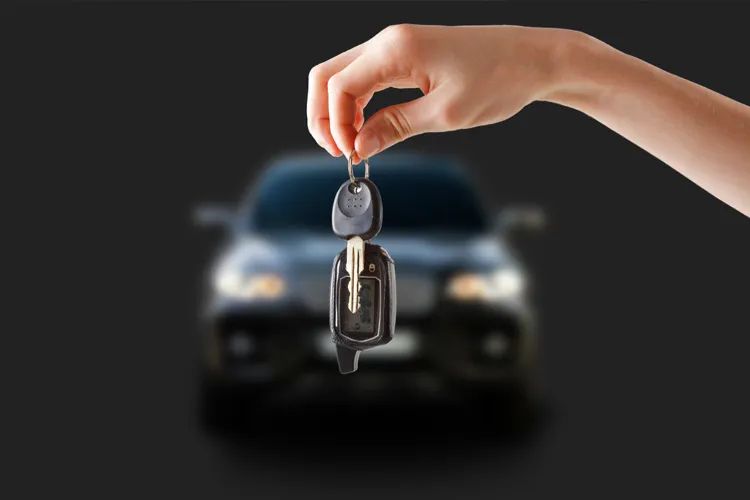
The Car They Took Without Asking
My brand-new car disappeared after one night, and then my parents said they had given the keys to my sister… I walked outside and only saw an empty parking spot, my shiny new car was gone. My mother laughed and said, “We gave the spare key to your sister, she needs a reliable car.” In the past few years, she has already wrecked four cars. I only said, “Okay, give me a moment.” And I called the police directly.
It was a weekday morning in Columbus, Ohio, the kind of cool, gray U.S. morning where the air smells like wet pavement and coffee. I stood there in the parking lot of my apartment complex, work bag on my shoulder, trying to understand how my three-month-old car had simply vanished while I was asleep.
I had bought that Honda the classic American way: signed my name on a stack of finance papers, shook hands with the salesman at the dealership, and promised myself I would take care of it because nobody else was going to do that for me. I made every payment on time, paid for full coverage, and parked it carefully between the white lines every night.
And yet, somehow, my parents had decided it was “no big deal” to drive over to my building late at night, use my spare key, and hand my car to my sister like it was a shared family item. No text. No call. Not even a knock on my door. Just a quiet decision made for me, about something I was still paying for.
On the phone, Mom kept repeating the same line in that calm tone that always made me feel like a difficult child instead of a grown woman with my own life. “Family helps family. Your sister is starting a new job, she needs support. You weren’t using the car at 11 p.m. anyway.” As if “not using it at that moment” meant she could give it away.
In the background, I could hear my dad chiming in, saying I should “stop focusing on money all the time” and think about how hard the divorce had been on my sister. Nobody mentioned the four cars she’d already lost in the last few years. Nobody asked how I would get to work on the east side of the city without the car I’d been relying on.
When the officer from Columbus Police pulled into the lot, her cruiser lights off, she walked over with a notebook and a steady, professional expression. She listened while I explained that my name was the only one on the title and registration, that I’d never given anyone permission to take the car, and that my parents had acted completely on their own.
She repeated it back slowly, making sure every detail was clear. “So your parents came here last night, used your spare key, gave your car to your sister, and nobody told you until you noticed it was gone this morning. And you did not give consent. Is that correct?” I nodded, feeling my phone buzz again and again with incoming calls I didn’t answer.
Because I already knew what those calls would sound like: I was being “too sensitive,” reminders that “this is what family does,” and long speeches about how in a tough economy, relatives have to share. Somehow, “share” always meant I was the one losing something, and everyone else was just “borrowing.”
The officer paused, pen hovering over the report. “I need to ask you something important—it could affect your sister’s record and your relationship with your parents. Are you sure that’s what you want to do?”
I looked at the empty parking space where my car should have been, at the spot I was still paying for, at the life I was trying so hard to build on my own terms. I thought about every “small favor” that had turned into a big problem, every time I’d been told to stay quiet for the sake of peace.
The next words out of my mouth are the ones that changed everything between me, my parents, and my golden-child sister.
“Yes,” I said firmly. “I want to file a report for auto theft.”
Let me back up and explain how we got here, because this wasn’t just about a car. It was about twenty-eight years of being the responsible one, the boring one, the daughter who was expected to sacrifice so her younger sister could have whatever she wanted.
My name is Claire Mitchell. I’m twenty-eight, and I work as a project coordinator for a construction company on the east side of Columbus. It’s not glamorous work, but it pays decent and I’m good at it. I live in a one-bedroom apartment in a complex off High Street, about fifteen minutes from downtown when traffic’s good.
I bought my Honda Civic three months ago—a 2024 model in silver, nothing fancy but reliable and efficient. I’d saved for a year to get the down payment together, and I was proud of myself. It was the first major purchase I’d made entirely on my own, without my parents’ input or financial help.
My sister, Brittany, is twenty-five and has been what my parents call “going through a hard time” for the past several years. She got married right out of college to a guy who turned out to be controlling and financially irresponsible. The divorce was messy and expensive, and she moved back in with our parents about a year ago.
Since then, she’s gone through four cars.
The first one she totaled by texting while driving. The second one broke down because she never changed the oil. The third one got repossessed because she stopped making payments. The fourth one—a car my parents bought her outright—she sold to pay off credit card debt without telling them.
Each time, my parents bailed her out. Each time, they told me I needed to be more understanding because Brittany was “fragile” and “going through something.”
And each time, I was the one who got the lecture about being selfish if I dared to suggest that maybe Brittany needed to face consequences for her choices.
The morning my car disappeared started like any other Wednesday.
I woke up at 6:30, showered, made coffee, and got dressed for work. I grabbed my bag, my keys, and my phone, and headed down to the parking lot.
My spot was empty.
At first, I thought I was losing my mind. Had I parked somewhere different last night? Had I taken an Uber and forgotten? But no—my keys were right there in my hand, and I distinctly remembered parking in my usual spot when I got home from grocery shopping the night before.
I called my car insurance company first, thinking maybe it had been stolen. They put me on hold while they checked for any reports or claims. Nothing.
Then I called my apartment complex office. The manager said she hadn’t seen anything suspicious on the security cameras, but she’d check and call me back.
That’s when my phone rang. Mom.
“Good morning, sweetie!” she said brightly, like nothing was wrong.
“Mom, my car is gone,” I said, my voice tight with panic. “Did you see anything last night? Did Dad—”
“Oh, that! Yes, your father and I came by around eleven. We used the spare key you gave us for emergencies and took the car to give to Brittany. She starts her new job today and needs something reliable.”
I stood there in the parking lot, phone pressed to my ear, trying to process what I’d just heard.
“You… took my car?”
“We didn’t take it, honey. We’re letting Brittany borrow it. She really needs it right now, and you’re only ten minutes from work. You can take the bus for a while.”
“Mom, that’s my car. I’m making payments on it. You can’t just—”
“Claire, don’t be dramatic. Family helps family. Brittany is going through a tough time, and she needs support. You weren’t using it at eleven p.m. anyway.”
My hands were shaking. “Where is she? Where’s my car?”
“She’s on her way to her new job. She’ll take good care of it, I promise. This is just temporary.”
“Mom, you had no right—”
“Claire, stop being so selfish. Your sister needs this. We’ll talk about it later. I have to go.”
She hung up.
I stood there, staring at my phone, feeling like I’d been punched in the stomach.
They took my car. While I was sleeping. Without asking. And they thought I was being selfish for being upset about it.
I called Brittany next. It went straight to voicemail.
I texted her: Where is my car? Bring it back NOW.
No response.
I called my dad. He answered on the third ring, his voice already defensive.
“Claire, your mother told me you’re upset.”
“Dad, you took my car without asking me. That’s theft.”
“Don’t be ridiculous. We’re your parents. We didn’t steal anything. We’re helping Brittany get back on her feet.”
“By taking something that belongs to me? Something I’m still paying for?”
“You’re making too big a deal out of this. Brittany wrecked her last car, and she needs something reliable for her new job. You can manage without it for a few weeks.”
“A few weeks?!”
“Or however long it takes. Claire, stop focusing on money all the time. Think about how hard this has been for your sister. She’s been through a divorce. She’s trying to rebuild her life.”
“And I’m supposed to sacrifice my car—my property—to help her do that?”
“Yes,” he said simply. “That’s what family does.”
I hung up.
And then I called the police.
The officer who responded was a woman in her forties named Officer Martinez. She was professional, calm, and thorough.
“Walk me through what happened,” she said, pulling out a notebook.
I explained everything: the car was registered in my name only, I was the sole owner, I’d never given anyone permission to take it, and my parents had used a spare key I’d given them for emergencies to take the car and give it to my sister.
“Do you know where the car is now?” she asked.
“My sister has it. She’s supposedly at a new job, but I don’t know where.”
Officer Martinez made notes. “And your parents—they admitted to taking the car?”
“Yes. My mother called me this morning to tell me they’d given it to my sister. She laughed about it.”
The officer’s expression didn’t change, but I saw something flicker in her eyes. “Do you have documentation showing you’re the owner?”
I pulled up the registration on my phone, along with my insurance card and the financing paperwork. She reviewed it all carefully.
“This is pretty clear-cut,” she said. “The car is registered to you. You didn’t give permission for it to be taken. That’s unauthorized use of a vehicle, which is a form of theft.”
My stomach twisted. “What happens now?”
“I can file a report. We’ll contact your sister and your parents and request that the car be returned immediately. If they refuse, we can escalate to formal charges.”
“What kind of charges?”
“Unauthorized use of a vehicle is a first-degree misdemeanor in Ohio. It could mean up to six months in jail and a fine up to $1,000. If there’s any damage to the vehicle or if your sister refuses to return it, it could be charged as a felony.”
I felt dizzy. “A felony?”
“Potentially. But it probably won’t get that far. Most people return the vehicle once they realize law enforcement is involved.”
She paused, her pen hovering over the report. “I need to ask you something important—filing this report could affect your sister’s record and your relationship with your parents. Are you sure that’s what you want to do?”
I looked at the empty parking space. I thought about every time I’d been told to be the bigger person, to let things go, to sacrifice for the sake of family peace.
I thought about the four cars Brittany had already destroyed through negligence and poor choices.
I thought about the fact that I was still making monthly payments on a car I no longer had access to.
“Yes,” I said. “I want to file the report.”
Officer Martinez filed the report and said someone would contact my parents and sister within a few hours to request the car’s return.
I called my job and explained I’d be late—car trouble, which wasn’t technically a lie. Then I went back to my apartment and waited.
My phone started ringing almost immediately. Mom. Dad. Mom again. Brittany. Mom. Dad.
I didn’t answer any of them.
Finally, a text from Brittany: Are you serious right now? You called the COPS on your own SISTER?
Me: Bring back my car and we won’t have a problem.
Brittany: I NEED this car. I have a JOB. You’re trying to ruin my life because you’re jealous.
Me: I’m not jealous. I’m the legal owner of a vehicle you took without permission. That’s theft.
Brittany: Mom and Dad gave me the keys. THEY said it was fine.
Me: Mom and Dad don’t own the car. I do. Return it by 5 p.m. or I’m pressing charges.
She didn’t respond.
My mother called again. This time I answered.
“Claire Elizabeth Mitchell, what is wrong with you?” she hissed. “The police just called your sister. They said you reported the car stolen!”
“It was stolen, Mom. You took it without my permission.”
“We’re your PARENTS! We didn’t steal anything!”
“You took property that belongs to me. Without asking. That’s theft.”
“You’re being ridiculous! This is your sister we’re talking about! She needs help!”
“Then YOU help her. Buy her a car. Give her YOUR car. But you don’t get to give away MY car without asking me.”
“I cannot believe you would do this to your own family.”
“I can’t believe my own family would steal from me and then act like I’m the problem.”
Mom’s voice turned cold. “If you go through with this, Claire, there will be consequences. Your father and I will not stand for this kind of disrespect.”
“Then don’t disrespect me by stealing my property.”
I hung up.
At 4:47 p.m., my doorbell rang.
I opened the door to find Brittany standing there, her face red and blotchy from crying, my car keys in her outstretched hand.
“Here,” she spat. “Take your stupid car. I hope you’re happy.”
I took the keys. “Where is it?”
“In your spot. Where it’s always been. God, Claire, I can’t believe you did this.”
“I can’t believe you thought it was okay to take my car without asking.”
“Mom and Dad said it was fine!”
“Mom and Dad don’t own it. I do.”
“You’re such a selfish bitch,” she said, her voice breaking. “I needed that car. I have a new job. I’m trying to get my life together, and you just—you don’t care about anyone but yourself.”
“Brittany, this is the fifth car in three years. When does it stop being everyone else’s responsibility to bail you out?”
“Fuck you, Claire.”
She turned and walked away. A few seconds later, Mom’s car pulled up—she’d driven Brittany over—and they sped off without another word.
I went downstairs to check on my car. It was there, looking fine on the outside, but the inside was a mess: fast food wrappers, coffee cups, a jacket I didn’t recognize. The gas tank was nearly empty.
I cleaned it out, drove to the nearest gas station, and filled up the tank. Then I drove home, parked in my spot, and went inside.
My phone was full of messages. None of them were apologies.
One Week Later
I didn’t hear from my parents for a week. No calls, no texts, nothing.
Then, on the following Wednesday, Dad called.
“Claire,” he said, his voice formal. “Your mother and I need to talk to you.”
“Okay.”
“Not over the phone. Can you come to the house this weekend?”
I hesitated. “What’s this about?”
“We need to discuss what happened. As a family.”
“There’s nothing to discuss. You took my car without permission. I got it back. It’s over.”
“It’s not over, Claire. You involved the police. You humiliated your sister. You disrespected your mother and me. We need to talk about this.”
“Fine,” I said. “Saturday afternoon.”
That Saturday, I drove to my parents’ house in Upper Arlington, a comfortable suburb west of downtown. The house I grew up in, with the big oak tree in the front yard and the vegetable garden in the back.
Mom and Dad were waiting in the living room, along with Brittany, who wouldn’t look at me.
“Sit down,” Dad said, gesturing to the couch.
I sat.
“Claire,” Mom began, her voice tight, “what you did last week was unacceptable. You called the police on your own sister. You made her feel like a criminal. You embarrassed this entire family.”
“I reported my car stolen,” I said calmly. “Because it was.”
“It wasn’t stolen,” Dad said. “We borrowed it to help Brittany.”
“You took it without asking me. That’s theft.”
“We’re your parents,” Mom said. “We don’t need permission to help our children.”
“You do when it involves my property.”
Brittany finally spoke up, her voice shaking. “I lost my job, Claire. Because of you. They said I had ‘legal issues’ and they couldn’t keep me on during the probationary period.”
I felt a flicker of guilt, then pushed it down. “That’s not my fault.”
“Yes, it is!” she shouted. “If you hadn’t called the cops, none of this would have happened!”
“If you hadn’t taken my car without asking, none of this would have happened,” I countered.
“Girls,” Dad said sharply. “That’s enough.”
He looked at me. “Claire, here’s what’s going to happen. You’re going to apologize to your sister and your mother. You’re going to drop any potential charges. And you’re going to loan Brittany your car until she can get back on her feet.”
I stared at him. “No.”
“Excuse me?”
“No. I’m not apologizing. I didn’t do anything wrong. And I’m not loaning Brittany my car.”
“Claire—”
“She’s destroyed four cars in three years, Dad. Four. She totaled one, neglected another, lost one to repossession, and sold the last one without telling you. Why would I give her mine?”
“Because she’s your sister,” Mom said, her voice rising. “Because family takes care of each other.”
“Family also respects boundaries,” I said. “And you crossed mine.”
“If you don’t do this,” Dad said slowly, “there will be consequences.”
“What kind of consequences?”
“You won’t be welcome in this house anymore. We won’t help you with anything—financially, emotionally, nothing. You’ll be on your own.”
I stood up. “I’ve been on my own for years. You just didn’t notice because I didn’t ask you for anything.”
I walked to the door.
“Claire!” Mom called after me. “If you leave now, don’t expect us to be here when you need us!”
I turned back. “When have you ever been there when I needed you? Every time Brittany has a crisis, you drop everything. But when I need support, I’m told to be independent. I’m told to be the bigger person. I’m told to sacrifice.”
My voice was steady, but my hands were shaking. “I’m done sacrificing for people who don’t appreciate it. I’m done being the backup plan. I’m done being the boring, reliable daughter who’s expected to fix everyone else’s problems.”
I opened the door. “If you want a relationship with me, it starts with an apology. A real one. Until then, don’t call me.”
I left.
Three Months Later
I didn’t hear from my parents for three months. No calls, no texts, no holiday wishes. It was like I’d been erased from the family.
It hurt. I won’t lie and say it didn’t. But it also felt… freeing.
I wasn’t getting calls asking me to cover Brittany’s rent. I wasn’t being guilt-tripped into skipping plans to help with some family emergency that always seemed to involve my sister’s latest mistake.
I focused on work. I got a promotion to senior project coordinator, which came with a raise and better hours. I started going to a gym, made some new friends, took a weekend trip to Chicago just because I could.
My car stayed in my possession. I kept it clean, maintained, and paid for on time. It was mine, and no one else’s.
Then, right before Thanksgiving, I got a text from my mom: Your sister is in the hospital. Thought you should know.
My stomach dropped. I called immediately.
“What happened?” I asked when Mom answered.
“She was in a car accident,” Mom said, her voice thick with tears. “Someone hit her while she was driving to work. She’s okay—broken arm, some bruises—but Claire… she didn’t have insurance. We’re looking at thousands in medical bills and the other driver is threatening to sue.”
I closed my eyes. “Was she driving your car?”
“No. She borrowed a friend’s car because… because we couldn’t keep giving her ours.”
There was a long pause.
“Claire, we need your help. We can’t afford this on our own.”
“What happened to your savings?” I asked.
“We used most of it bailing Brittany out of her previous situations,” Mom admitted quietly.
Another pause.
“I’m sorry,” I said. “But I can’t help.”
“Claire, please—”
“Mom, I love you. And I love Brittany. But I can’t keep bailing her out. She needs to face the consequences of her choices. And you and Dad need to stop enabling her.”
“She’s going to lose everything,” Mom whispered.
“Maybe that’s what needs to happen,” I said gently. “Maybe she needs to hit rock bottom before she learns.”
“You’ve become so cold,” Mom said.
“No,” I replied. “I’ve become healthy. There’s a difference.”
I hung up.
Six Months Later
Brittany filed for bankruptcy. My parents downsized to a smaller house to cover their debts. And I kept living my life—working, saving, building something stable and sustainable.
Then, on a random Tuesday evening, my doorbell rang.
It was Brittany.
She looked different. Thinner, tired, but somehow more grounded. She wasn’t wearing designer clothes or expensive jewelry. Just jeans and a plain sweater.
“Can I come in?” she asked.
I hesitated, then stepped aside.
We sat in my small living room, the silence awkward and heavy.
“I’m sorry,” she said finally. “For taking your car. For everything. You were right. About all of it.”
I didn’t respond.
“I’ve been going to therapy,” she continued. “And I’ve been learning about… patterns. How I’ve been making the same mistakes over and over and expecting different results. How I’ve been using Mom and Dad as a safety net instead of learning to stand on my own.”
She wiped her eyes. “The bankruptcy was the worst thing that ever happened to me. But it was also the best thing. Because it forced me to stop running. To stop expecting someone else to fix my problems.”
“I’m glad you’re getting help,” I said carefully.
“I know I hurt you,” Brittany said. “And I know an apology doesn’t fix that. But I want you to know… I get it now. I understand why you called the police. Why you set boundaries. You were trying to protect yourself from someone who kept taking and never giving back.”
She stood up. “I’m not asking you to forgive me. Or to let me back into your life. I just wanted you to know that I’m working on being better. And that I’m sorry.”
She walked to the door, then paused. “For what it’s worth… I’m proud of you. For standing up for yourself. I wish I’d learned how to do that sooner.”
She left.
I sat on my couch for a long time after she was gone, feeling something shift inside me. Not forgiveness, not yet. But maybe the beginning of it.
One Year Later – Present Day
I’m twenty-nine now, still living in Columbus, still driving my silver Honda Civic that I paid off three months ago.
Brittany and I talk occasionally. She’s working a steady job, paying her debts, living in a small apartment she can afford. She’s dating someone new, someone who seems kind and stable.
My parents and I have a tentative relationship. We have dinner once a month, carefully polite conversations where we avoid talking about the past. They haven’t apologized—not really—but they’ve stopped asking me to sacrifice for Brittany’s sake.
I think they finally understand: I’m not the family safety net. I’m not the one who exists to fix everyone else’s problems. I’m just Claire, trying to live my life on my own terms.
The car—my car—still sits in my parking spot every night. A reminder that some boundaries are worth defending, even when the people you love don’t understand why.
Especially then.
THE END

Sophia Rivers is an experienced News Content Editor with a sharp eye for detail and a passion for delivering accurate and engaging news stories. At TheArchivists, she specializes in curating, editing, and presenting news content that informs and resonates with a global audience.
Sophia holds a degree in Journalism from the University of Toronto, where she developed her skills in news reporting, media ethics, and digital journalism. Her expertise lies in identifying key stories, crafting compelling narratives, and ensuring journalistic integrity in every piece she edits.
Known for her precision and dedication to the truth, Sophia thrives in the fast-paced world of news editing. At TheArchivists, she focuses on producing high-quality news content that keeps readers informed while maintaining a balanced and insightful perspective.
With a commitment to delivering impactful journalism, Sophia is passionate about bringing clarity to complex issues and amplifying voices that matter. Her work reflects her belief in the power of news to shape conversations and inspire change.