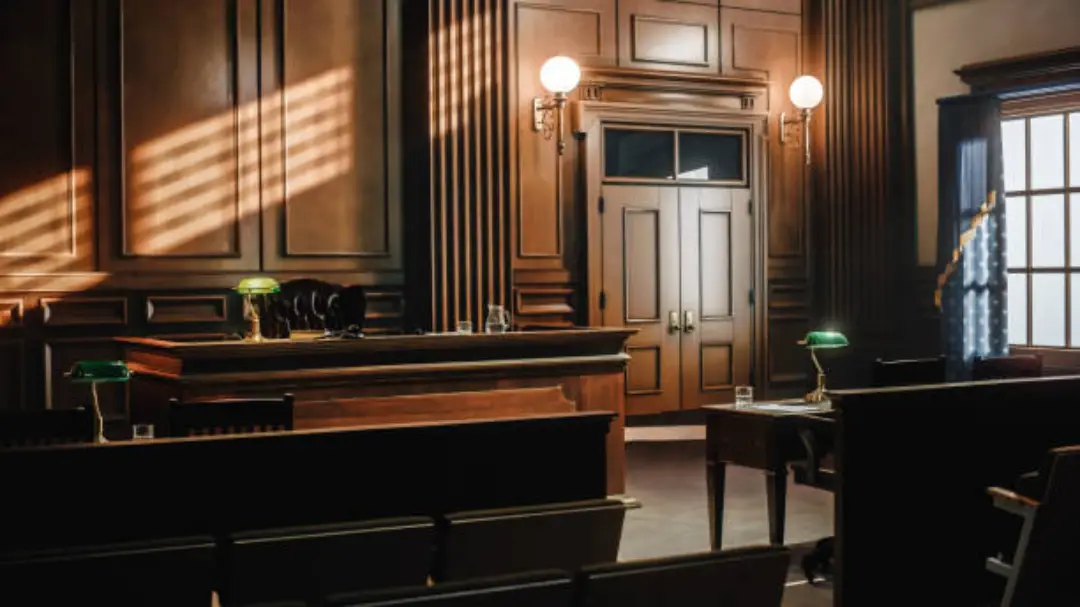
When the elite private school where I sent my daughter began abusing her, they saw me as just another powerless single mother. I let them think that – right up until the moment I walked into their courtroom wearing judicial robes instead of cardigans, ready to dismantle their empire one gavel strike at a time.
The sound of my daughter’s scream echoing through the school hallways will haunt me until the day I die. Not because I couldn’t save her, but because I had been letting it happen for months without realizing the full scope of what was being done to my child.
My name is Elena Vance, and I live two completely different lives. By day, I am Justice Elena Vance of the Federal Circuit Court, known in legal circles as the “Iron Lady” – a judge who has sent senators to prison, dismantled international crime syndicates, and authored precedent-setting decisions that law students study decades later. I sentence murderers, dissolve corrupt corporations, and make grown attorneys tremble when they stand before my bench.
But at 3:30 every afternoon, I transform into someone entirely different. I trade my imposing black robes for soft cardigans, exchange my authoritative judicial presence for the quiet demeanor of “Sophie’s mom,” and become just another parent picking up her child from Oakridge Academy – the most elite, most expensive, most prestigious private school in our city.
For two years, I maintained this careful separation of identities. Sophie knew Mommy was a judge, but to everyone else at her school, I was simply Mrs. Vance – a single mother who drove a modest SUV, wore department store clothes, and never volunteered for the fundraising committees that the other parents treated like corporate board positions.
I thought I was protecting my daughter by keeping my professional identity secret. I thought I was giving her a normal childhood, free from the intimidation and false friendships that came with being known as a federal judge’s daughter.
I was wrong. My attempt to shield her from my power left her vulnerable to theirs.
The School That Preyed on Perceived Weakness
Oakridge Academy was a fortress of privilege masquerading as an institution of learning. The annual tuition exceeded the median household income in our city, the waiting list stretched for years, and the parent body read like a who’s who of corporate executives, old money families, and political dynasties. The school’s mission statement spoke eloquently about “developing exceptional minds for tomorrow’s leadership,” but the real education happened in the subtle lessons about hierarchy, exclusion, and the divine right of wealth.
I had chosen Oakridge because of its academic reputation, not its social status. Sophie was brilliant – reading at a fifth-grade level while still in first grade, solving math problems that challenged children twice her age, asking questions that revealed a mind hungry for knowledge and understanding. I wanted her surrounded by other gifted children, challenged by rigorous curricula, prepared for whatever path her intelligence might take her.
But something had been wrong for months. Sophie, who had once bounded out of school chattering about her day, began emerging quiet and withdrawn. She would flinch at sudden noises, beg to stay home on school mornings, and wake up crying from nightmares she couldn’t or wouldn’t explain.
“Mrs. Vance,” Principal Halloway had said during our last conference, his voice dripping with condescension as he adjusted his expensive silk tie, “Sophie seems to be struggling academically. She appears… disengaged. Perhaps even slow for our advanced curriculum.”
The word “slow” had hit me like a physical blow. Sophie, who could discuss complex scientific concepts and create elaborate fictional worlds in her spare time, was being labeled as intellectually deficient by a man who clearly saw her as nothing more than a liability to his school’s test score averages.
“Perhaps you should consider a specialist,” he had continued with the practiced sympathy of someone delivering a cancer diagnosis. “Or tutoring. We have standards to maintain, and we can’t allow one struggling student to drag down the entire class.”
I had sat there in my cardigan and sensible shoes, nodding meekly while he systematically destroyed my daughter’s confidence and my faith in his institution. I had been the submissive mother, accepting his professional judgment, trusting that these educators knew what was best for my child.
I should have listened to my judicial instincts. I should have recognized the signs of institutional bullying, the language of systemic abuse disguised as academic concern. I should have demanded answers instead of accepting explanations.
But I was so committed to maintaining my civilian identity that I allowed my professional expertise to be silenced by my desire to be seen as just another concerned parent.
The Text That Changed Everything
That Tuesday afternoon, I was reviewing briefs for a complex racketeering case when my personal phone buzzed with a message that would transform my understanding of everything I thought I knew about my daughter’s school experience.
The text was from Sarah Martinez, one of the few mothers at Oakridge who treated me like a human being rather than a second-class citizen. Sarah volunteered regularly at the school and had become my eyes and ears in the parent community that otherwise excluded me.
Elena – come to the school NOW. I’m volunteering in the East Wing for the book fair. I heard screaming from near the janitorial closets. I think it’s Sophie. Something is very wrong.
I read the message three times, my judicial training warring with my maternal panic. Screaming. Janitorial closets. Something very wrong.
I closed my laptop, grabbed my keys, and drove to Oakridge Academy faster than I’d ever driven in my life. But as I pulled into the fire lane, I forced myself to think like the federal judge I was rather than the terrified mother I felt like.
Whatever I found at that school, I would need evidence. I would need documentation. I would need to build a case that could withstand the inevitable legal challenges from an institution with unlimited resources and powerful connections.
I had no idea that within the hour, I would be building a case that would destroy not just individual careers, but an entire system of institutionalized child abuse.
The Horror Behind Closed Doors
The East Wing of Oakridge Academy was the oldest section of the building, a maze of rarely used classrooms and storage areas that felt more like a medieval dungeon than part of a modern educational facility. As I approached the janitorial supply closet at the end of the corridor, the sound of a woman’s voice raised in fury made my blood run cold.
“You stupid, worthless girl!” The voice belonged to Mrs. Gable, Sophie’s homeroom teacher – the woman who had won “Educator of the Year” three times, whose methods were praised by parents and administrators alike.
“Stop crying! This is pathetic! This is why your father left! You’re unteachable! You’re a burden that nobody wants!”
The sound that followed was unmistakable – the sharp crack of an adult’s hand striking a child’s face.
I pressed myself against the wall beside the door, my heart pounding as my training took over. Evidence first. Justice second. I pulled out my phone and positioned it to record through the small safety glass window in the storage closet door.
What I saw through that window will be burned into my memory forever.
Sophie was cowering in the corner of the narrow space, surrounded by industrial cleaning supplies and maintenance equipment. She was sobbing, her face red with tears and fear, while Mrs. Gable loomed over her like a predatory bird.
As I watched in horror, Mrs. Gable grabbed Sophie by the upper arm and yanked her upright, leaving visible fingermarks on her small limb. My daughter screamed – a sound of pure terror that cut through my soul like a blade.
“You will sit in this dark room until you learn to behave like a human being instead of an animal,” Gable hissed, her voice venomous with contempt. “And if you tell anyone about our disciplinary sessions, I will make sure you fail every subject. I will make sure you never succeed at anything. Do you understand me?”
I hit the save button on my phone and put it away. Then I took a step back and kicked the door with every ounce of strength in my body.
The lock shattered, the door flew open, and I stepped into that nightmare storage room like an avenging angel in a beige cardigan.
The Confrontation That Revealed True Character
Mrs. Gable spun around, releasing Sophie, who immediately scrambled backward against the shelving. Her face went white when she saw me, but she recovered quickly, smoothing her skirt and assuming the practiced expression of a professional educator caught in an awkward moment.
“Mrs. Vance!” she gasped, her voice artificially bright. “Thank goodness you’re here. Sophie was having another one of her episodes. She became violent during lesson time, so I brought her here for a calming timeout. Sometimes children need a quiet space to process their emotions.”
I looked at my daughter – at the red handprint blooming across her cheek, at the finger-shaped bruises forming on her arm, at the terror in her eyes as she pressed herself against the wall like a cornered animal.
“Discipline?” I said, my voice barely above a whisper. “You call this discipline?”
“Standard behavioral intervention,” Gable replied smoothly, her confidence returning as she assumed I would accept her professional authority. “Sophie has been increasingly disruptive. She requires firm boundaries and consistent consequences. Some children need more intensive correction than others.”
I knelt down and gathered Sophie into my arms, feeling her small body shake with residual terror. She buried her face in my neck and whispered words that shattered what remained of my faith in humanity: “I’m sorry, Mommy. I’m sorry I’m so stupid. I tried to be good, but I’m too dumb to learn.”
The rage that filled me in that moment was unlike anything I’d experienced in twenty years of judicial service. This wasn’t the cold anger I felt when sentencing criminals – this was molten, primal fury that threatened to consume every rational thought in my head.
“You locked her in a closet,” I said, standing with Sophie in my arms. “You hit her. You called her stupid. You told her that her father left because of her.”
“I provided appropriate behavioral modification for a disruptive student,” Gable corrected, her voice growing sharper. “Your daughter has significant learning disabilities and behavioral problems. She requires intensive intervention that you’re clearly not providing at home.”
“Get out of my way,” I said quietly.
“I’m afraid I can’t allow you to remove Sophie during school hours without proper authorization,” Gable replied, crossing her arms and blocking the doorway. “You’ll need a release form signed by Principal Halloway. School policy requires—”
“Move,” I repeated, my voice dropping to the register I used when addressing unrepentant criminals. “Move now, before I make you move.”
Something in my tone must have penetrated her arrogance, because Gable stepped aside with obvious reluctance. But as I carried Sophie toward the exit, I heard footsteps behind us. We weren’t leaving that easily.
The Principal Who Thought He Held All the Cards
Principal Halloway was waiting for us in the main corridor, flanked by the school’s security guard and wearing the expression of a man who had dealt with many hysterical parents before. He stood with his hands clasped behind his back, radiating the kind of institutional authority that had cowed generations of families into submission.
“Mrs. Vance,” he said, his voice carrying the practiced calm of someone accustomed to controlling difficult situations. “I understand there’s been an incident. Please come to my office so we can discuss Sophie’s behavioral challenges and develop an appropriate intervention plan.”
“There’s nothing to discuss,” I said, adjusting Sophie’s weight in my arms. “I’m taking my daughter home, and I’m calling the police.”
Halloway’s expression hardened slightly. “I’m afraid I must insist on a proper debrief before you leave campus with a distressed student. If you attempt to remove Sophie without following protocol, we’ll be forced to contact Child Protective Services regarding the home environment that may be contributing to her school difficulties.”
The threat was delivered with the smooth professionalism of someone who had used it many times before. He was weaponizing the system against me, using my love for my daughter as leverage to force compliance with his authority.
“Five minutes,” I said, recognizing that I needed to handle this carefully. Whatever evidence I had gathered would be meaningless if he could paint me as an unstable parent removing a child inappropriately.
In his office, surrounded by diplomas and photographs of Halloway with various wealthy donors, I sat Sophie in a chair and gave her my phone to play a quiet game while the adults talked. What she was about to witness would be carefully calculated to show her that monsters don’t always win, that justice exists even in places where corruption seems absolute.
The Blackmail That Sealed Their Fate
Halloway settled behind his massive oak desk like a king on his throne, while Mrs. Gable positioned herself in the corner like a loyal courtier. They had clearly dealt with upset parents before and had a well-rehearsed strategy for containing damage and maintaining control.
“Now,” Halloway began, his voice patronizing in the extreme, “Mrs. Gable informs me that Sophie became violent during instruction. She had to be physically restrained for the safety of other students. We take all incidents of student aggression very seriously.”
“Violent?” I laughed, a sound devoid of humor. “She’s eight years old and weighs sixty pounds. And she’s covered in bruises from your ‘restraint.'”
I pulled out my phone and played the video I had recorded, turning the volume up so every word of Mrs. Gable’s abuse was clearly audible. The sound of that slap filled the office, followed by my daughter’s terrified crying and the teacher’s vicious threats.
When the video ended, Halloway leaned back in his chair and sighed as if he were dealing with a particularly tedious administrative problem.
“Mrs. Vance,” he said, his voice taking on the tone one might use with a mentally deficient child, “context is everything in education. Sophie is a difficult student with learning disabilities and behavioral problems. Mrs. Gable is an award-winning educator whose intensive methods have helped hundreds of struggling children. Sometimes strong medicine is required to break through to a stubborn student.”
“You call child abuse ‘strong medicine’?” I asked, my voice deadly calm.
“I call it effective intervention,” Halloway replied. “Now, I need you to delete that video immediately.”
The silence that followed was absolute. I stared at him, waiting to see if he was serious, if he actually thought he could command me to destroy evidence of a felony.
“Excuse me?” I said finally.
Halloway leaned forward, his mask of benevolent authority slipping to reveal the calculating bureaucrat beneath. “Listen carefully, Mrs. Vance. We know your situation. Single mother, struggling to maintain the lifestyle necessary for Oakridge. We’ve been charitable in overlooking Sophie’s academic deficiencies and behavioral problems because we believe in giving every child a chance.”
He paused for effect, savoring what he believed was his moment of absolute power.
“But if you release that video, if you attempt to damage the reputation of this institution with your misunderstanding of proper educational techniques, we will destroy your daughter’s future. We will expel her for violent behavior toward a teacher. We will ensure that her permanent record reflects her inability to function in an academic environment. We will blacklist her from every quality private school in the state.”
Mrs. Gable smiled from her corner, adding her own threat to the pile: “Who do you think people will believe? An institution with a century-long reputation for excellence, or a single mother with a hysterical, lying child who clearly can’t control her own daughter?”
I looked at these two people – these educators who were supposed to nurture and protect children – as they calmly threatened to destroy an eight-year-old girl’s future to cover up their own crimes.
“So that’s your final position?” I asked, standing slowly. “You’re threatening to ruin my daughter’s educational opportunities to force me to hide evidence of child abuse?”
“Absolutely,” Halloway said with complete confidence. “And before you think about going to the authorities, you should know that Police Chief Miller serves on our board of directors. He’s a good friend and a strong supporter of our disciplinary methods.”
I picked up Sophie, who had been quietly playing her game but absorbing every word of the conversation with the heightened awareness that traumatized children develop.
“You mentioned that Chief Miller is on your board?” I asked conversationally.
“Yes,” Halloway replied, clearly pleased to be reminding me of his connections. “So don’t bother calling 911. It won’t go the way you think it will.”
“Good to know,” I said, walking toward the door. “He’ll be the first person named in the federal RICO lawsuit for conspiracy to conceal systematic child abuse.”
Halloway’s frown deepened. “RICO? What could you possibly know about federal racketeering law? You’re just a… a mother.”
I paused at the threshold and looked back at him with the first genuine smile I’d worn since entering his office.
“I know enough,” I said quietly. “See you in federal court, Principal Halloway.”
The Docket That Destroyed an Empire
Three days later, the federal courthouse was buzzing with an energy that veteran court reporters recognized as the prelude to something extraordinary. I had leaked the story – not the video, but the basic facts of institutional abuse and administrative cover-up – to a contact at the Washington Post. The resulting headline had sent shockwaves through the education establishment: “ELITE ACADEMY ACCUSED OF SYSTEMATIC CHILD ABUSE: FAMILY ALLEGES INSTITUTIONAL BLACKMAIL.”
Halloway and Mrs. Gable arrived at the courthouse looking annoyed but confident, flanked by the school’s high-powered legal team – three attorneys whose hourly rates exceeded most people’s monthly salaries. They clearly expected to face some overmatched parent who had scraped together enough money for a strip-mall lawyer to file a nuisance lawsuit.
I was already inside the courtroom, but they couldn’t see me from their position at the defendant’s table. I could hear Halloway whispering dismissively to his lead attorney: “Let’s get this over with quickly. The woman probably couldn’t afford competent representation. She’s probably representing herself. We’ll crush this and be back at school by lunch.”
Mrs. Gable looked nervous despite his confidence. “There are reporters here, Principal. This could be bad publicity regardless of the outcome.”
“Ignore them,” Halloway snapped. “We have connections at the highest levels of city government. We have influential board members. We’ll destroy her credibility and make this disappear.”
“All rise,” the bailiff commanded as the door to chambers opened.
Judge Marcus Sterling entered – a stern man known for his strict adherence to procedure and his intolerance for any form of courtroom theatrics. He was also a personal friend who had officiated at my swearing-in ceremony fifteen years earlier.
Halloway stood confidently, buttoning his expensive jacket and preparing to charm the court with his practiced “respectable educator” persona.
“Case number 2024-CV-1847: Vance versus Oakridge Academy, et al.,” Judge Sterling read from the docket, looking out over the courtroom with his characteristic stern expression.
He looked at the defense table first. “Mr. Halloway, Mrs. Gable, counsel.”
Then his gaze moved to the plaintiff’s table, and his entire demeanor shifted to one of professional deference.
“Good morning, Justice Vance,” he said formally. “I see you’ve brought District Attorney Penhaligon as co-counsel.”
The silence in the courtroom was so complete that you could have heard dust settling on the gallery benches.
Halloway’s hand froze in mid-air as he processed what Judge Sterling had just said. He turned slowly to look at the plaintiff’s table, where I sat in my professional armor – a navy blue tailored suit, pearl necklace, and my hair pulled back in the severe chignon I wore for important cases.
Seated beside me wasn’t some overwhelmed parent’s attorney, but Arthur Penhaligon, the District Attorney himself – a man whose presence in a civil courtroom meant that criminal charges were imminent.
“Justice?” Halloway whispered, the word sounding foreign and terrifying in his mouth.
His lead attorney had gone the color of old parchment, recognition and dread warring across his features. “You didn’t tell me she was Elena Vance,” he hissed at his client. “The Elena Vance. The federal circuit judge who dismantled the Torrino crime family.”
“I… I didn’t know,” Halloway stammered, his practiced confidence evaporating like smoke. “She drives a Honda. She wears cardigans. She never mentioned…”
I turned my chair slowly to face the defense table, letting them see the full transformation from meek mother to federal judiciary. When I spoke, my voice carried the authority of someone accustomed to being obeyed by everyone from senators to Supreme Court justices.
“I told you I knew enough about the law, Principal Halloway,” I said clearly enough for the gallery to hear. “I just didn’t mention that I am the law.”
The Justice That Came Swift and Complete
The complete destruction of Halloway’s world took exactly forty-seven minutes from the moment court was called to order.
“Your Honor,” District Attorney Penhaligon began, rising with the folders that would demolish everything the defendants thought they knew about power and connections, “based on evidence collected by Justice Vance and corroborated by our subsequent investigation, the State is filing criminal charges against Mrs. Gable for felony child abuse, aggravated battery, and criminal confinement.”
Mrs. Gable let out a small, strangled sound as the weight of federal prosecution settled on her shoulders.
“Additionally,” Penhaligon continued, his voice growing stronger as he outlined the case that would dominate legal headlines for months, “we are charging Principal Halloway with extortion, criminal conspiracy, obstruction of justice, witness tampering, and operating a criminal enterprise.”
“Criminal enterprise?” Halloway’s attorney sputtered, desperately trying to maintain some semblance of professional control. “Your Honor, this is supposed to be a civil hearing for injunctive relief!”
“Not anymore,” Judge Sterling replied with the calm finality of someone delivering a death sentence. “Mr. Halloway, I have reviewed the video evidence submitted by Justice Vance, as well as the documentation of your attempted blackmail and threats against a minor child. The Court finds probable cause for all charges filed by the District Attorney.”
He leaned forward, his voice taking on the tone reserved for the most serious judicial pronouncements. “Bailiff, please ensure that the defendants do not leave this courtroom. There are federal warrants to be executed.”
Halloway looked desperately toward the back of the courtroom, where Police Chief Miller was seated, hoping for the rescue that his connections had always provided in the past. But Miller was studying the floor with the intensity of someone pretending not to exist, clearly understanding that his own position was now precarious.
The Investigation That Revealed Systematic Abuse
As federal marshals moved in to execute the arrest warrants, Penhaligon opened the second folder that contained evidence that had emerged during their three-day investigation into Oakridge Academy’s practices.
“Your Honor,” he said, his voice heavy with the weight of institutional betrayal, “Justice Vance’s case opened what appears to be a systematic pattern of abuse and cover-up spanning multiple years. We have identified six additional families whose children were subjected to similar treatment.”
He lifted a thick stack of documents. “Parents who were threatened with academic retaliation if they complained about physical abuse. Non-disclosure agreements signed under duress. Children who were removed from the school suddenly, with their families relocating to other states to escape retaliation.”
Mrs. Gable was led away in handcuffs, her “Educator of the Year” awards meaningless in the face of criminal prosecution. As the court officers guided her past my table, she looked at me with pure hatred.
“You destroyed my career,” she hissed. “I’ve been teaching for twenty-seven years.”
“You’ve been abusing children for twenty-seven years,” I corrected calmly. “I just finally stopped you.”
Halloway’s breakdown was more spectacular. As the reality of prison time and professional destruction settled in, he began offering increasingly desperate bargains.
“Justice Vance,” he pleaded, his voice cracking with desperation, “surely we can reach an accommodation. Full scholarship for Sophie, guaranteed admission to any university, financial compensation for any misunderstanding. Name your price.”
“My daughter doesn’t need your money,” I said, gathering my files as the federal marshals approached his table. “And she certainly doesn’t need your education. What she needed was to see that predators don’t win, that institutions can’t protect criminals, and that justice exists even for people who think they’re untouchable.”
“But I have connections,” he whimpered as the handcuffs clicked into place. “The mayor, the school board, federal representatives. I know people who know people.”
“So do I,” I replied as they led him away. “I know people who put those people in prison when they break the law.”
The Aftermath That Restored Faith
The broader investigation that followed revealed Oakridge Academy to be exactly what I had suspected – a predatory institution that used its reputation and connections to systematically abuse vulnerable children while silencing their families through threats and intimidation.
Six additional families came forward with stories that mirrored Sophie’s experience: children locked in closets, subjected to physical abuse disguised as discipline, traumatized by educators who saw them as problems to be solved rather than humans to be nurtured. The pattern was so consistent that federal investigators suspected formal training in psychological manipulation and abuse techniques.
The school’s board of directors, when presented with evidence of systematic criminal behavior, immediately distanced themselves from Halloway’s administration and agreed to cooperate fully with federal authorities. Several board members, including Police Chief Miller, resigned their positions to avoid being charged as accessories.
Oakridge Academy declared bankruptcy within sixty days of the criminal charges being filed, unable to survive the complete loss of donor confidence and the massive civil settlements required for the abuse victims. The school’s endowment, built over a century of wealthy family contributions, was liquidated to provide compensation for the children whose lives had been damaged by institutional cruelty.
Mrs. Gable accepted a plea agreement that sentenced her to three years in federal prison and lifetime placement on the sex offender registry, ensuring she would never again work with children. Halloway, facing more serious charges related to the conspiracy and cover-up, was sentenced to seven years in federal prison.
But the most important outcome wasn’t measured in prison sentences or financial settlements.
The School That Taught Real Lessons
One year after the trial, I stood outside Sophie’s new school on a crisp autumn morning, watching her run toward the entrance with genuine excitement rather than the dread that had characterized her Oakridge days.
Roosevelt Elementary was a public school in a diverse neighborhood, where children from different economic backgrounds learned together in an environment that valued character over capital. The building was older, the resources more limited, but the hallways were filled with artwork and laughter instead of intimidation and fear.
Sophie’s new teacher, Ms. Rodriguez, greeted her students each morning with genuine warmth, addressing each child by name and asking about their lives outside school. When Sophie had struggled with a difficult math concept, Ms. Rodriguez had stayed after school to work with her, patiently explaining different approaches until something clicked.
Most importantly, Sophie was healing. The nightmares had stopped. The flinching at sudden noises had gradually disappeared. The spark of curiosity and joy that made her who she was had returned, brighter than ever.
“Have a wonderful day, sweetheart,” I said, handing her the lunch box she still occasionally forgot.
“Bye, Mom!” she replied, already running toward her friends – a diverse group of children who accepted each other without judgment or hierarchy.
I watched for a moment as she joined her classmates, her confidence restored and her spirit unbroken. Then I returned to my car and prepared for the transformation that defined my daily existence.
Sensible shoes were exchanged for judicial pumps. The casual cardigan was replaced by the formal blazer that signaled serious business. “Sophie’s mom” became Justice Vance, ready to preside over cases that would determine the fates of people who thought themselves above the law.
The Truth About Power and Justice
People often asked me, in the months following the Oakridge case, why I had maintained my civilian identity for so long. Why hadn’t I immediately revealed my position and used my authority to intimidate the school into proper behavior?
The answer was simple: because power that announces itself only reveals performance, not character.
If I had walked into that first parent conference as Justice Elena Vance, Halloway and his staff would have put on their best behavior. They would have treated Sophie with exaggerated care and respect, not because she deserved it, but because they feared the consequences of mistreating a federal judge’s daughter.
But by allowing them to see me as powerless, I gave them permission to show their true selves. I watched them reveal the contempt they held for families they considered beneath them, the cruelty they inflicted when they thought no one important was watching, the systematic abuse they perpetrated against children who couldn’t fight back.
The greatest predators are those who abuse positions of trust and authority. They rely on their victims’ fear, isolation, and helplessness to maintain their power. They count on institutional protection and social connections to shield them from consequences.
But justice works best when it comes as a surprise to those who think they’re immune to it.
The Legacy That Continues
Today, Sophie is thriving in an environment that values her mind and nurtures her spirit. She’s learned that adults should protect children, not victimize them. She’s seen that truth and evidence matter more than connections and wealth. Most importantly, she’s witnessed that justice exists even in places where corruption seems absolute.
The community center that now occupies the former Oakridge Academy building serves children from all economic backgrounds, offering after-school programs, tutoring, and mentorship opportunities. The inscription above the main entrance reads: “A Place for Everyone” – a direct rebuke to the exclusion and elitism that once defined that space.
I still serve on the federal bench, where my experience with institutional abuse has made me particularly vigilant about protecting the vulnerable from those who would exploit them. The Oakridge case has become required reading in law schools as an example of how systemic corruption can be dismantled through careful documentation, strategic patience, and unwavering commitment to justice.
But my most important role remains the same one I’ve held since Sophie was born: being a mother who will move heaven and earth to protect her child, whether that means wearing cardigans to parent conferences or judicial robes to courtrooms.
The law taught me that justice delayed is justice denied. But it also taught me that justice delivered at the perfect moment – when criminals think they’re safe, when predators believe they’re protected, when the corrupt assume they’re untouchable – is justice that changes everything.
Sometimes the most powerful weapon in a parent’s arsenal isn’t the authority they wield in their professional life, but the love that drives them to use every resource at their disposal to protect their child from those who would harm them.
Sometimes the best way to catch monsters is to let them think you’re prey, right up until the moment you reveal that you’ve been the hunter all along.
The most dangerous thing you can do to your enemies is let them underestimate you. When people believe you’re powerless, they reveal their true character – and that’s when you can destroy them with the very power they never knew you possessed.

Sophia Rivers is an experienced News Content Editor with a sharp eye for detail and a passion for delivering accurate and engaging news stories. At TheArchivists, she specializes in curating, editing, and presenting news content that informs and resonates with a global audience.
Sophia holds a degree in Journalism from the University of Toronto, where she developed her skills in news reporting, media ethics, and digital journalism. Her expertise lies in identifying key stories, crafting compelling narratives, and ensuring journalistic integrity in every piece she edits.
Known for her precision and dedication to the truth, Sophia thrives in the fast-paced world of news editing. At TheArchivists, she focuses on producing high-quality news content that keeps readers informed while maintaining a balanced and insightful perspective.
With a commitment to delivering impactful journalism, Sophia is passionate about bringing clarity to complex issues and amplifying voices that matter. Her work reflects her belief in the power of news to shape conversations and inspire change.