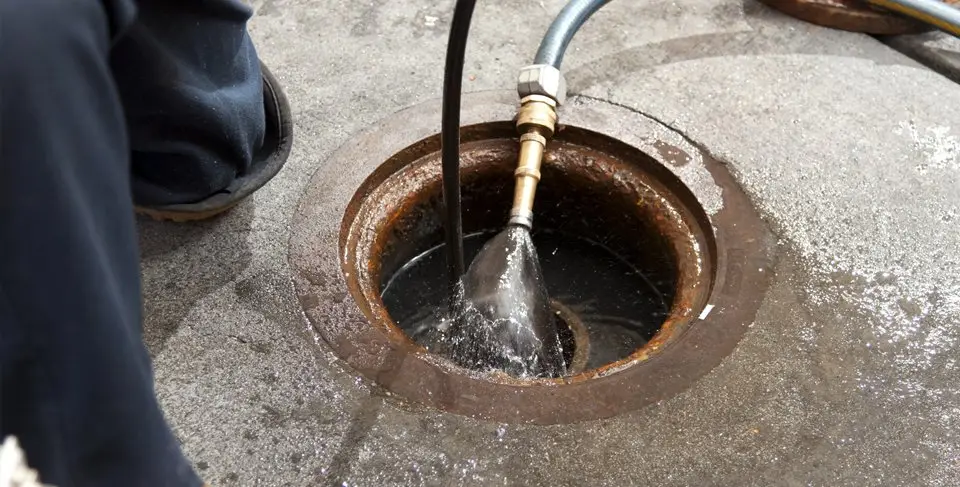
The Discovery Beneath the City
The call came through dispatch at 2:47 p.m. on a gray Tuesday afternoon in late October, the kind of day where the sky hangs low and heavy, threatening rain that never quite arrives. Maintenance request #4721: reported blockage in sector 7-D of the municipal sewer system, near the intersection of Warehouse District and Old Harbor Road. Routine. Standard. The kind of job Marcus Chen had handled hundreds of times in his twelve years working for the city’s Department of Public Works.
Marcus finished his coffee in the break room, grabbed his equipment bag from his locker, and headed to the yard where the department’s trucks were parked. His partner for the day, a younger guy named Tommy Rodriguez who’d only been on the job for eight months, was already loading gear into the back of their utility van.
“Another glamorous day in paradise,” Tommy said with a grin, tossing a coil of rope into the vehicle.
Marcus smiled despite himself. “You say that now. Wait until you’ve been doing this for a decade. The glamour really wears off around year three.”
They drove through the industrial district, past warehouses with faded paint and loading docks that had seen better days. This part of the city had been thriving forty years ago when manufacturing was king. Now it was mostly empty buildings, a few struggling businesses, and the occasional artist’s studio taking advantage of cheap rent.
The access point was located behind an abandoned textile factory, a massive brick building with most of its windows broken out. The manhole cover sat in a cracked parking lot where weeds pushed through the asphalt, nature slowly reclaiming what humans had built.
“Sector 7-D,” Marcus read from his work order. “Reported unusual backup in the line. Possible debris obstruction.”
Tommy helped him pry up the heavy iron cover, the metal scraping against concrete with that distinctive sound that meant another descent into the city’s underground arteries. The opening revealed a ladder descending into darkness, with the sound of running water echoing from below.
Marcus had been underground countless times, but he never quite got used to that first moment when you swing your legs over the edge and commit to going down. There’s something primal about descending into the earth, something that triggers ancient fears hardwired into human DNA.
He went first, climbing down the rusted ladder while his headlamp cut a cone of white light through the darkness. The air grew cooler with each rung, and that familiar sewer smell—a mixture of dampness, concrete, organic decay, and chemicals—filled his nostrils. You never quite got used to it, but you learned to breathe through your mouth and focus on the work.
Tommy followed, and soon both men stood in the main tunnel, a concrete cylinder about eight feet in diameter. Normally, the water level ran at about eighteen inches in this section—enough to carry waste and debris but not enough to make walking difficult.
But as soon as Marcus’s boots hit the tunnel floor, he knew something was wrong.
The water was much higher than it should be, reaching almost to the top of his waterproof waders, nearly three feet deep. The current was stronger too, pushing against his legs with insistent pressure.
“That’s weird,” Tommy said, sweeping his light along the tunnel. “Water’s never this high here, is it?”
“Never,” Marcus confirmed, his unease growing. “Not unless there’s a major blockage downstream or we’ve had serious rain. And it hasn’t rained in a week.”
The air felt different too—heavier, more oppressive than usual. There was a sharp, chemical smell underneath the normal sewer odor, something Marcus couldn’t quite identify. In twelve years, he’d developed instincts about these tunnels, a sense of when something was off. And right now, every instinct was screaming that this wasn’t routine.
They moved forward slowly, fighting the current, their boots making sucking sounds with each step. The tunnel stretched ahead into darkness, the curved walls glistening with moisture. From somewhere deeper in the system came a sound that made Marcus stop—a dull, oppressive groaning, like immense pressure building against an obstruction.
“You hear that?” he asked Tommy.
The younger man nodded, his eyes wider than usual. “Sounds like something’s really stuck down there.”
They continued on, following the main line toward the source of the backup. Marcus had worked this sector before—it was a relatively straightforward system, mostly handling runoff from the old industrial area. There shouldn’t be anything down here capable of creating this kind of blockage.
After about fifty yards, Marcus stopped again. His light had caught something ahead, something that didn’t belong in a sewer tunnel.
“Hold up,” he said, raising one hand.
He moved closer, crouching down despite the deep water, and aimed his light directly into the pipe ahead. What he saw made his breath catch.
Blocking the passage completely was a massive, dense object unlike anything he’d encountered in over a decade of sewer work. It filled the entire diameter of the tunnel, a perfect cylinder of material that looked almost organic in the beam of his flashlight.
The surface was uneven and wrinkled, with a texture that reminded Marcus of heavy fabric that had been soaked in water for weeks. The color was a murky greenish-gray, with darker patches and strange discolorations scattered across its surface. Water pressed against it with tremendous force—Marcus could hear it, could feel the vibration through the concrete—but the object didn’t move even a fraction of an inch.
“What the hell is that?” Tommy asked, coming up beside him.
“I have no idea,” Marcus admitted. “I’ve seen debris jams, fatbergs, tree roots, construction materials—you name it. But this… this is different.”
The object looked too uniform to be random debris, too perfectly sized to the pipe’s diameter. It was as if someone had taken precise measurements and created something specifically to fit this space. The thought sent a chill down Marcus’s spine.
He reached for his telescoping hook, the tool they normally used to snag and pull debris. Extending it fully, he probed the surface of the object, trying to get some sense of what they were dealing with.
The hook made contact, and Marcus felt resistance—but not the kind he expected. The surface gave slightly under pressure, elastic and springy, then rebounded when he pulled back. It was definitely neither wood nor concrete. Not plastic either. The texture was wrong, the density wrong.
“Try to get a piece of it,” Tommy suggested. “Maybe we can figure out what it’s made of.”
Marcus tried, but the hook couldn’t penetrate the surface. He pushed harder, putting real force behind it, but the material resisted. It wasn’t impossibly hard—it had some give to it—but it wouldn’t tear or break the way most materials would.
An unpleasant feeling tightened in Marcus’s chest. In twelve years of clearing blockages, he’d developed a mental catalog of what materials felt like, how they responded to tools, how they behaved. This matched nothing in that catalog. It was completely unfamiliar.
And there was something else bothering him, something beyond just the strangeness of the material. The placement was too precise, too deliberate. Natural blockages were chaotic—branches and trash and sediment piling up randomly until water couldn’t pass. This was the exact opposite. This was ordered, intentional, engineered.
“We need to call this in,” Marcus said, pulling out his radio. “This isn’t a normal blockage. Something’s not right here.”
He reported their findings to dispatch, describing the unusual obstruction and the elevated water levels. The dispatcher sounded skeptical—probably thought they’d found some weird piece of industrial equipment that had fallen into the system—but agreed to send a supervisor to assess the situation.
While they waited, Marcus decided to try reducing the water level to get a better look at the object. There was a bypass valve about twenty yards back that could divert flow to a parallel tunnel. It took both of them working together to turn the ancient wheel valve, metal grinding against metal, but eventually water began routing around their position.
Slowly, almost painfully slowly, the water level began to drop. Inch by inch, the surface of the mysterious object was revealed.
As more of it became visible, Marcus’s unease transformed into genuine alarm. The object wasn’t just blocking the pipe—it was installed in the pipe. He could see now that it had a regular, manufactured shape. There were seams, reinforced edges, what looked like intentional fittings.
“Marcus,” Tommy said quietly, his voice tight. “That’s not debris, is it?”
“No,” Marcus replied, his mouth suddenly dry. “It’s not.”
With the water level down to about six inches, the full shape of the object became clear. It was an inflatable plug—professional equipment used in sewer maintenance and construction. Marcus had seen them before, had even helped install a few during major repair projects. They were sophisticated devices, heavy-duty rubber or reinforced fabric that could be inserted into a pipe and then inflated to create a watertight seal.
But they were expensive, highly specialized, and strictly controlled. You didn’t just stumble across one. And more importantly, there shouldn’t be one here. There was no scheduled maintenance in this sector, no construction permits filed, no authorized work of any kind.
Someone had installed this deliberately, without authorization, and then left it here.
“This doesn’t make any sense,” Tommy said, echoing Marcus’s thoughts. “Why would someone put this here?”
Marcus’s mind was racing. Professional equipment. Deliberate installation. Hidden in an abandoned section of the sewer system. The pieces didn’t add up to anything good.
“We need to call the police,” he said abruptly. “Right now.”
Twenty minutes later, the tunnel was considerably more crowded. Two patrol officers had arrived first, followed by their sergeant, a stocky woman named Janet Reeves who’d been with the city police for fifteen years. She stood in the tunnel, her uniform waders making her look like everyone else down here, studying the inflatable plug with the practiced eye of someone who’d seen a lot of strange things but recognized when something was genuinely concerning.
“And you’re saying there’s no authorized work happening in this sector?” she asked Marcus for the second time.
“Nothing,” he confirmed. “I checked with dispatch before you arrived. No permits, no scheduled maintenance, no emergency repairs. This equipment was installed without the city’s knowledge or permission.”
Sergeant Reeves nodded slowly, playing her flashlight beam along the length of the plug. “How hard is it to get one of these things?”
“They’re not something you can buy at a hardware store,” Marcus explained. “This is professional industrial equipment. You’d need to either purchase it from a specialty supplier or steal it from a construction company. And you’d need to know what you were doing to install it properly.”
“Someone with sewer system knowledge,” the sergeant said.
“Yeah. Someone who knows their way around these tunnels.”
One of the patrol officers, a young guy who looked fresh out of the academy, spoke up. “Sergeant, if someone went to this much trouble to install this thing, they must have a reason. Maybe we should see what else is down here.”
It was a sensible suggestion, and Sergeant Reeves made the decision quickly. “Chen, Rodriguez—you know these tunnels better than anyone. Can you guide us deeper into the system? Let’s see if there are any other surprises waiting for us.”
Marcus felt his pulse quicken. Part of him wanted to refuse, to climb back up to street level and let the police handle whatever this was. But another part—the part that had spent twelve years learning every inch of this underground network—felt a responsibility to see this through.
“There are several branch tunnels in this sector,” he said. “If someone’s trying to control water flow or restrict access to certain areas, they might have installed plugs in multiple locations.”
They formed a group—Marcus in front with Sergeant Reeves, Tommy and the two patrol officers following, everyone’s lights creating overlapping pools of illumination in the darkness. Marcus led them back to the main junction, where three smaller tunnels branched off from the primary line.
In the second tunnel they checked, they found another plug. Smaller than the first, but identical in design and installation. And in the third tunnel, yet another.
“Three so far,” Sergeant Reeves said grimly. “Someone’s systematically blocking off sections of this system.”
“But why?” one of the officers asked. “What’s the point?”
Marcus had been thinking about that question, and he had a theory that made his skin crawl. “If you wanted to control movement through the tunnels, or restrict access to a specific area, this is how you’d do it. Block off the routes you don’t want people using, leave open the routes you need.”
“Movement,” the sergeant repeated. “You think someone’s using these tunnels to go somewhere?”
“I think someone’s been down here long enough to plan this out and execute it carefully,” Marcus said. “That takes time and familiarity with the system.”
They pressed deeper into the tunnel network, following the main line that ran beneath the old warehouse district. The air grew more stale, the ceiling lower in places. This was one of the oldest sections of the city’s sewer system, built in the 1950s when the industrial area was first developed.
After several more minutes of walking, Marcus noticed the tunnel was widening ahead. His map knowledge told him they were approaching Junction Station 7—a large underground chamber where multiple sewer lines converged. These junction stations were built big enough for maintenance crews to work in, with high ceilings and dry platforms along the walls.
But as they got closer, Marcus noticed something that stopped him cold.
There was light ahead. Not flashlight beams. Steady, artificial light coming from the chamber.
Sergeant Reeves saw it too and immediately held up her hand, signaling everyone to stop. She killed her flashlight, and the others followed suit. In the sudden darkness, the light from the chamber ahead seemed much brighter.
“Stay quiet,” the sergeant whispered. “Chen, is there another way into that chamber?”
Marcus thought quickly, visualizing the tunnel layout from memory. “There’s a service access tunnel about fifty yards back. It connects to the far side of the chamber. We could come in from a different angle.”
“Show me.”
They backtracked silently, boots squelching in the shallow water. Marcus found the service tunnel—narrower than the main line, barely four feet in diameter, forcing everyone to crouch as they moved. It was slow going and uncomfortable, but it would bring them out in the shadows on the opposite side of the junction chamber.
As they got closer, Marcus could hear voices. Multiple people, talking in low tones that echoed off the concrete walls. He couldn’t make out words yet, but the sound sent adrenaline surging through his system. This was really happening. There were actually people down here.
The service tunnel ended at a metal grate that opened into the main chamber. Marcus approached it carefully, peering through the rusted bars.
What he saw made him forget to breathe.
The junction chamber had been completely transformed. Normally, these spaces were empty except for pipes and the occasional maintenance equipment. But this chamber looked like some kind of underground operations center.
There was equipment everywhere—expensive equipment. Multiple computer monitors were set up on folding tables, their screens glowing with various displays. Cables snaked across the floor, some running to portable generators, others connecting different devices. Marcus could see laptops, what looked like server equipment, multiple cell phones charging in a row.
But it was what was on the monitors that truly shocked him. One screen showed a live feed from a street camera—Marcus recognized the intersection of Harbor and Main, right in the commercial district. Another monitor displayed what looked like architectural blueprints. A third showed a grid pattern that Marcus realized with growing horror was a map of the sewer system itself, with certain routes highlighted in red.
On the tables lay printed diagrams, photographs of buildings, what looked like security schedules, and stacks of paper covered in handwritten notes.
Three people were in the chamber. Two men and a woman, all in their thirties or forties, dressed in dark clothing that was practical rather than fashionable. They were talking, and now that Marcus was closer, he could hear their conversation.
“—sealed off the eastern route like you wanted,” one of the men was saying. He was tall and lean, with a shaved head and a pronounced scar along his jawline. “Nobody’s getting through there without us knowing about it.”
“Good,” the woman replied. She had short dark hair and moved with the confidence of someone in charge. “What about the power situation? We can’t afford any interruptions during the job.”
“We’re tapped directly into the grid,” the second man said. He was shorter, heavier, with glasses and a nervous energy about him. “I set up the bypass exactly like we discussed. The city won’t even notice the draw. We could run all this equipment for months without anyone catching on.”
“We won’t need months,” the woman said. “Three more days and we’re ready to move. Have you finalized the exit routes?”
The tall man gestured to one of the monitors showing the sewer map. “Two primary paths, both clear now that we’ve got the plugs in place. We come in through the northern access here”—he pointed to the screen—”grab what we need, and exit through the southern line. Total time underground: eighteen minutes. We’ll be clear before anyone even realizes what happened.”
Marcus felt his blood turn to ice. He wasn’t hearing maintenance workers or urban explorers. He was listening to criminals planning some kind of major operation.
Beside him, Sergeant Reeves had gone completely still. She was recording everything on her body camera, her expression hard and focused.
“The jewelry store job is the big one,” the woman continued. “We’ve studied their security for three months. The safe is in the basement, right above the old access tunnel. We cut through from below, get in and out without ever touching the front door. By the time their alarm even thinks about going off, we’ll be back underground.”
“What about the bank?” the nervous man asked.
“Same principle, different entry point,” the woman said. She was clearly the leader, the one directing this operation. “These old buildings all have the same weakness—they worry about street-level security and forget there’s an entire network of tunnels running underneath them. We’ve been mapping it for a year, finding every possible access point.”
A year, Marcus thought. These people had been operating beneath the city for an entire year, and nobody had known. They’d been using the sewer system as their personal highway, planning robberies, installing equipment, treating the tunnels like their own private domain.
The woman checked her watch. “Alvarez should be back soon with the cutting equipment. Once we have that, we can do final testing on the entry points.”
“Three days,” the tall man said, almost to himself. “Then we’re rich and gone.”
“Then we’re careful and smart and we don’t get caught,” the woman corrected sharply. “This only works if we stay disciplined. No celebrating until we’re clear.”
Sergeant Reeves had heard enough. She pulled back from the grate and signaled everyone to retreat down the service tunnel. When they were far enough away that their whispers wouldn’t carry, she started making calls on her radio—but quietly, conscious that sound could travel in these tunnels.
“This is Sergeant Reeves requesting immediate backup at Junction Station 7 in the sector 7-D sewer system,” she said in a low, urgent voice. “We have discovered multiple suspects engaged in planning what appears to be a series of major thefts. I need tactical units, detectives, and at least one representative from every business in the commercial district that has basement access to the old sewer tunnels.”
While she coordinated the response, Marcus tried to process what he’d just witnessed. In twelve years of sewer work, he’d found plenty of strange things—homeless encampments, lost valuables, once even a small alligator someone had flushed—but never anything like this. Never a sophisticated criminal operation using the city’s infrastructure for serious crimes.
“They mentioned someone named Alvarez coming back with equipment,” one of the patrol officers whispered. “Should we wait for him?”
Sergeant Reeves nodded. “We wait. The more of them we can grab at once, the better. Tactical is on the way—ETA fifteen minutes. We sit tight until then.”
Those fifteen minutes felt like hours. Marcus stayed at the grate, watching the three criminals in the chamber as they continued planning, completely unaware they’d been discovered. The woman—clearly the leader—pulled up another set of blueprints on one of the laptops and started discussing entry angles and escape timing with a precision that spoke of serious experience.
Finally, Marcus heard new sounds in the tunnels—the careful approach of the tactical unit, moving through the darkness with practiced stealth. Sergeant Reeves went to brief them, leaving Marcus and Tommy at their observation post.
“This is insane,” Tommy whispered. “Absolutely insane.”
“Yeah,” Marcus agreed. “And we walked right into the middle of it.”
The tactical team arrived with overwhelming force—twelve officers in full gear, moving silently into position around the chamber. They had exits covered, equipment ready, a plan coordinated through hand signals and subvocal radio communication.
The breach happened fast. One moment the three criminals were studying their monitors, and the next, blinding lights flooded the chamber and voices were shouting “Police! Hands up! Don’t move!”
The woman tried to run, but there was nowhere to go. The tall man reached for something—maybe a weapon, maybe just instinct—but was tackled by three officers before he could complete the motion. The nervous man with glasses simply froze, hands in the air, looking like he might pass out.
Within ninety seconds, all three were in handcuffs, face-down on the concrete, while tactical officers secured the scene and called in the detectives.
Marcus and Tommy were led back to the surface by one of the patrol officers, emerging into late afternoon daylight that felt surreal after the underground darkness. The abandoned parking lot was now filled with police vehicles, their lights painting the old warehouse walls in alternating red and blue.
Detective Sarah Chen—no relation to Marcus despite the shared last name—took his statement, asking detailed questions about everything he’d seen and heard. She was particularly interested in the timeline, in how long Marcus thought the criminal operation had been active.
“Based on what they were saying, at least a year,” Marcus told her. “They mentioned studying the jewelry store security for three months and mapping the tunnels for a year. This wasn’t amateur hour—these people knew exactly what they were doing.”
“They almost succeeded too,” the detective said grimly. “If you hadn’t been called about that blockage, if you hadn’t reported the plugs, we might not have found them until after they’d hit their first target.”
Over the next several hours, as crime scene technicians photographed the underground chamber and removed evidence, the full scope of the operation became clear. The three people Marcus had seen—later identified as Monica Ferrara, the leader; Jake Hollis, her second-in-command; and Dennis Park, their technical specialist—were part of a larger crew. Two more members were arrested when they returned to the chamber, including the Alvarez mentioned in the conversation.
The equipment they’d installed was sophisticated and expensive. The computers contained detailed plans for robberies targeting a jewelry store, a bank, and a high-end art gallery—all businesses with basement storage areas above old sewer access points. The gang had been mapping the entire underground system, finding forgotten tunnels and connections, planning routes that would let them strike and escape without ever appearing on street-level cameras.
The inflatable plugs Marcus had discovered were part of their security system, installed to control access to the routes they were using and to alert them if anyone else entered the tunnels. They’d tapped into the city’s power grid illegally, run network cables to access security camera feeds, and created what amounted to an underground lair that had gone undetected for months.
“If they’d pulled off even one of these jobs,” Sergeant Reeves told Marcus later, “they would have gotten away with hundreds of thousands of dollars. Maybe millions. And we might never have caught them.”
The media coverage was intense. “Tunnel Gang Foiled By Sewer Worker” was the headline in the city newspaper. Marcus found himself doing interviews, explaining how a routine blockage call had turned into the discovery of a major criminal operation. He downplayed his role—”I just reported what I found,” he kept saying—but the city treated him like a hero anyway.
The mayor presented him with a commendation. The police chief shook his hand at a press conference. Even Tommy became a minor celebrity, though he admitted the whole thing had terrified him.
But for Marcus, the most significant moment came three weeks later, when the trial began and the full extent of the criminals’ plans was revealed in court. The prosecution presented evidence of nine planned robberies, not just three. The gang had been preparing for a coordinated series of strikes that would have netted them over three million dollars in cash, jewelry, and art.
Monica Ferrara, the leader, had a background in urban planning and had worked for the city’s Department of Public Works fifteen years earlier. She knew the tunnel system intimately because she’d helped map it early in her career. Jake Hollis was a former security consultant who’d turned his knowledge of alarm systems to criminal purposes. Dennis Park was a network engineer who’d been fired from his job and had decided to use his skills for crime.
They’d met in prison—all three had served time for various offenses—and had spent two years after their release planning this operation. They’d recruited specialists, gathered equipment, studied targets, all while living normal surface lives that gave no hint of what they were doing underground.
“These were not impulsive criminals,” the prosecutor said in his opening statement. “These were calculated, intelligent people who saw an opportunity in the city’s aging infrastructure and decided to exploit it for personal gain. If not for the diligence of a city worker simply doing his job, they would have succeeded.”
Marcus sat in the courtroom gallery, listening to the evidence, still somewhat amazed that a routine Tuesday afternoon had led to all this. He thought about how many times he’d descended into those tunnels, walked past junction chambers, cleared blockages, never knowing that just around the corner, someone might be planning crimes.
The underground world beneath the city had always seemed separate, isolated, a place of pipes and water and mechanical systems. But it turned out to be connected to the surface in ways he’d never imagined—not just through manholes and drain grates, but through human ambition, greed, and criminal ingenuity.
The trial lasted six weeks. All five members of the tunnel gang were convicted on multiple charges: conspiracy, attempted burglary, theft of city services, illegal access to secure infrastructure, and various other crimes. Monica Ferrara received fifteen years. The others got sentences ranging from eight to twelve years.
Marcus returned to work the day after the verdict, back to routine calls and regular blockages and the familiar rhythm of sewer maintenance. But something had changed. Now when he descended into the tunnels, he paid closer attention to details, noticed things he might have overlooked before. The underground wasn’t just infrastructure anymore—it was a reminder that the city had layers, that beneath the surface world everyone saw, there were depths and complexities and possibilities both good and bad.
Tommy asked him once if the whole experience had scared him, if he ever thought about quitting.
“Not really,” Marcus said, surprising himself with the honesty of it. “I mean, yeah, it was intense. But I’ve been doing this job for twelve years because I believe in it. Cities need people who pay attention to the systems everyone else ignores. Someone has to care about the water flowing beneath the streets, about the tunnels that make modern life possible.”
“Even if there might be criminals hiding in them?” Tommy asked with a slight smile.
“Especially then,” Marcus replied. “Because most of the time it’s just water and pipes and blockages. But every once in a while, you find something that matters in a bigger way. And when that happens, you need people who know these spaces, who understand how they work, who can recognize when something’s wrong.”
Six months after the discovery, the city completed a comprehensive audit of the entire sewer system. They upgraded security on access points, installed monitoring equipment in key locations, and created new protocols for tracking maintenance work and detecting unauthorized access. Marcus served on the advisory committee, sharing his knowledge of the tunnels and his insights from the discovery.
The Department of Public Works created a new position: Underground Security Coordinator, someone whose job was to monitor the tunnel systems for signs of unauthorized use. They offered it to Marcus, but he turned it down.
“I appreciate it,” he told his supervisor. “But I like being in the field. I like doing the actual work, solving the actual problems. Someone else can coordinate. I’ll keep clearing blockages.”
And that’s what he did. He went back to routine calls and familiar problems, to the daily work of keeping the city’s hidden infrastructure functioning. But he never again assumed that “routine” meant simple, or that an ordinary blockage couldn’t lead to something extraordinary.
Sometimes, late at night when he couldn’t sleep, Marcus thought about those moments in the tunnel—the first glimpse of the inflatable plug, the realization that something was wrong, the decision to push deeper instead of turning back. He thought about how easily things could have gone differently. If he’d dismissed the strange object as just unusual debris. If he’d waited for the next shift to investigate. If he’d decided it wasn’t worth the trouble to call it in.
But he hadn’t done any of those things. He’d trusted his instincts, followed through on his concerns, and helped stop crimes that would have cost millions and potentially hurt people.
That was the lesson, he decided. Not that the tunnels were dangerous or that criminals lurked around every corner. But that the ordinary and the extraordinary existed side by side, separated sometimes by nothing more than attention and care. That routine work mattered because you never knew when routine would transform into something significant.
The city gave him a plaque that hung in the Department of Public Works office: “To Marcus Chen, whose attention to duty prevented major crimes and protected our community.”
But the real reward, for Marcus, was simpler than that. It was knowing he’d done his job thoroughly. That when something didn’t look right, he’d investigated. That when he found something concerning, he’d reported it. That he’d been present and attentive and responsible in the small moments that turned out to matter in big ways.
A year after the discovery, Marcus was training a new hire—a young woman named Lisa who reminded him of himself when he first started, eager but nervous about descending into the dark.
“Is it true what they say?” she asked as they approached a manhole cover. “About you finding that whole criminal operation?”
“Yeah,” Marcus said. “It’s true.”
“Were you scared?”
Marcus thought about it. “At first, I was just confused. Then concerned. Then, yeah, when I realized what we’d stumbled into, scared came into the picture. But mostly I was just trying to do my job and make the right calls.”
“Do you think it could happen again?” Lisa asked. “Someone using the tunnels like that?”
“Maybe,” Marcus said honestly. “But probably not. The city’s watching more carefully now. And we’re watching more carefully too. That’s the thing about this job—you have to pay attention. Most days it’s routine. But some days it’s not, and you need to be ready for that.”
They descended into the tunnel together, Marcus leading the way like he had thousands of times before. The darkness wrapped around them. The water rushed past. The familiar smell of the underground filled the air.
And Marcus knew that whatever they found down there—whether it was routine or extraordinary, simple or complex—he would handle it the same way he always had: carefully, thoroughly, with attention to detail and respect for the systems that kept the city running.
Because that’s what the job required. And after everything he’d seen, everything he’d discovered, he understood more than ever that even the most ordinary work could turn out to matter in ways you never expected.
The tunnel stretched ahead into darkness, full of possibilities both mundane and profound. Marcus activated his headlamp and kept walking.
THE END

Lila Hart is a dedicated Digital Archivist and Research Specialist with a keen eye for preserving and curating meaningful content. At TheArchivists, she specializes in organizing and managing digital archives, ensuring that valuable stories and historical moments are accessible for generations to come.
Lila earned her degree in History and Archival Studies from the University of Edinburgh, where she cultivated her passion for documenting the past and preserving cultural heritage. Her expertise lies in combining traditional archival techniques with modern digital tools, allowing her to create comprehensive and engaging collections that resonate with audiences worldwide.
At TheArchivists, Lila is known for her meticulous attention to detail and her ability to uncover hidden gems within extensive archives. Her work is praised for its depth, authenticity, and contribution to the preservation of knowledge in the digital age.
Driven by a commitment to preserving stories that matter, Lila is passionate about exploring the intersection of history and technology. Her goal is to ensure that every piece of content she handles reflects the richness of human experiences and remains a source of inspiration for years to come.