I walked outside that Wednesday morning expecting to see my silver Honda Civic gleaming in the early sunlight, right where I’d parked it the night before in my assigned spot. Instead, I found an empty rectangle of pavement, a few oil stains, and a confusion that would soon transform into something much colder and clearer. My keys were already in my hand, my work bag slung over my shoulder, my coffee getting cold in its travel mug. I was running five minutes late, which meant I was already mentally calculating the fastest route to avoid morning traffic on Interstate 270.
But my car wasn’t there.
For a moment, I just stood there stupidly, staring at the empty space like maybe if I blinked hard enough, the car would materialize. Maybe I’d parked somewhere else? Maybe I was in the wrong section? But no—this was definitely parking spot 47, the same spot I’d been using every single day for six months at my apartment complex in Columbus, close enough that I could see it from my living room window. The spot was unmistakably mine, marked with fading white paint and a number that matched my lease agreement.
My first coherent thought was theft. My second was confusion—how does someone steal a car from a secured lot without anyone noticing? My third was rapidly escalating panic as I realized I had exactly fifteen minutes to get to work for a meeting I couldn’t miss.
I was pulling out my phone to call the apartment office when it started buzzing in my hand. Mom. Calling at seven-thirty in the morning, which was unusual enough to make my stomach drop.
“Hey, sweetie!” Her voice came through bright and cheerful, that particular tone of forced casualness that mothers use when they’re about to tell you something they know you won’t like.
“Mom, I can’t talk right now. My car is missing—”
“Oh! Yes, about that.” She said it so casually, like she was commenting on the weather. “That’s actually why I’m calling. Your father and I were talking last night about Jessica’s situation, and we realized she really needs a reliable vehicle for her new job. We remembered you gave us that spare key for emergencies, so we drove over around midnight and picked it up. We didn’t want to wake you! Anyway, we dropped it off at Jessica’s apartment this morning, and she’s so grateful, honey. She actually cried.”
I couldn’t speak. My brain was trying to process what I was hearing, but it felt like trying to solve a math problem in a foreign language.
“You took my car,” I finally managed, my voice coming out flat and strange.
“We gave it to your sister temporarily,” Mom corrected. “Just until she gets back on her feet financially. A few weeks, maybe a month. She’s starting that new call center job tomorrow and she needs reliable transportation, and you weren’t using it last night anyway—”
“You took my car. In the middle of the night. Without asking me.”
“We didn’t want to wake you! You work so hard. And honestly, honey, we didn’t think you’d mind helping your sister. It’s just temporary.”
“So you stole my car.”
“Don’t be dramatic, sweetheart. It’s not stealing when it’s family. Jessica’s been having such a hard time since the divorce. She lost the house, she’s starting over. This is what family does—we support each other.”
“By taking my property without permission?”
“Your sister is going through a crisis! She needs help, and you’re in a position to help her. You have a good job, you’re stable, you can afford to be generous.”
“It’s not about affording it, Mom. You can’t just take my car!”
“We didn’t take it, we’re lending it. There’s a significant difference. We’ll bring it back in a few weeks. It’s really not a big deal. You’re making this into something it doesn’t need to be.”
I heard my father’s voice in the background, muffled but clear: “Tell her to stop being selfish. Her sister needs help.”
Selfish. That word hit me like a physical blow. The same word I’d been hearing my entire life whenever I tried to establish boundaries, whenever I said no, whenever I prioritized my own needs. That word had been weaponized to control me since childhood.
“I have to go,” I said, my voice shaking.
“Wait, honey, don’t hang up angry—”
I ended the call.
For a long moment, I just stood there in that empty parking space, phone clutched in my trembling hand, trying to decide what to do next. Part of me wanted to call Jessica directly and scream at her. Part of me wanted to try explaining calmly and rationally to my parents why this was unacceptable. Part of me wanted to sit down on the curb and cry.
But mostly, I felt something else. Something cold and clear and final settling in my chest.
I felt done. Completely, utterly, irreversibly done with being the family doormat.
Let me give you the context that makes this moment matter, because this wasn’t just about a car. This was about twenty-eight years of being the responsible one, the stable one, the one who could handle anything and therefore should handle everything.
I moved to Columbus three years ago with two suitcases, a job offer from a marketing firm, and a desperate need to build something that belonged entirely to me. No family input. No collective decision-making. No guilt trips about abandoning anyone. Just me, figuring out how to be an adult on my own terms.
That first year was brutal. I worked overtime constantly, stayed late whenever my boss asked, volunteered for every extra project. I saved aggressively, tracking every dollar in a spreadsheet. I skipped happy hours because drinks added up. I meal-prepped every Sunday—chicken breast, rice, vegetables, the same rotation week after week—to avoid takeout temptation. I watched Netflix instead of going to movies. I bought clothes at thrift stores and furniture at estate sales. I watched my savings account grow dollar by dollar while my friends posted pictures from beach trips and music festivals I couldn’t afford.
But I had a goal: a reliable car. Not just any car—something with a warranty, something that started every morning, something I could count on. I wanted to stop relying on sketchy used vehicles that were one broken transmission away from the junkyard.
Six months ago, I walked into a Honda dealership with my pre-approval letter and a clear idea of what I wanted. I test-drove a silver Civic with exactly forty-seven miles on it from previous test drives. Clean, practical, with the features I needed without luxury add-ons: backup camera, Bluetooth, good gas mileage, excellent safety ratings.
“This is the one,” I told the salesman.
I’d done extensive research. I knew the invoice price, fair market value, what interest rate my credit score should get me. We negotiated for over an hour. The finance manager kept trying to add extended warranties, paint protection packages, fabric guard treatments. I declined everything politely but firmly. When we finally reached an agreement, I signed my name seventeen times across seventeen different documents. My hand was cramping by the end.
I drove off that lot with the windows down despite the cool spring air, radio turned up, feeling something I hadn’t felt in years: pure, uncomplicated pride. This car represented three years of sacrifice, discipline, and delayed gratification. Every payment would be a reminder that I could set a goal and achieve it through my own effort.
I named her Silver. She was mine, and that was all that mattered.
My family’s reaction when I sent a photo to our group chat was underwhelming at best. My mother asked how much I’d paid. My father hoped I’d gotten a good interest rate. My sister Jessica wrote: “Must be nice to have money to waste on brand new cars when some of us are barely surviving.”
That message stung. Waste? I’d worked sixty-hour weeks to save that down payment. I’d eaten rice and beans for months. Nothing about this purchase was wasteful—it was investment, planning, delayed gratification paying off.
But Jessica had always been like that. Four years younger than me, perpetually in crisis, perpetually needing rescue. She’d gone through four cars in five years, and somehow each loss was never her fault.
The first car—a used Toyota our parents bought her as a graduation present—she totaled six months later while texting and driving. The second she got from a boyfriend who took it back when they broke up. The third was a lease our parents co-signed for; she made three months of payments before stopping, destroying their credit when it got repossessed. The fourth was from a predatory buy-here-pay-here lot; she drove it into the ground, never changing the oil until the engine seized on the highway.
And now, apparently, she needed a fifth car. And somehow, that had become my problem.
Last month, Jessica had called crying, her divorce just finalized, moved into a tiny apartment, starting a new call center job after eight months of unemployment. She asked if I could lend her three or four thousand for a car.
“I can’t afford that right now, Jess. I’m sorry.”
“You just bought a brand-new car!”
“Which I’m making monthly payments on. It’s not like I have thousands sitting around.”
“But you could get a loan. You have good credit.”
“I’m not taking out a loan to buy you a car, Jessica. I have my own bills.”
“So you’re just going to let me fail? I’m your sister!”
“I’m not letting you fail. I’m saying I can’t finance your life. There’s a difference.”
“Some sister you are.” She hung up on me.
Two days later, my mother called. “You need to help your sister.”
“I can’t, Mom.”
“You have a good job, you’re stable, you have savings. Jessica is barely surviving.”
“And I’ve worked incredibly hard to become stable. I can’t just hand out money every time someone in the family has a crisis.”
“This isn’t just a crisis, it’s your sister. This is what families do.”
“I am supporting her. I’ve listened, given advice, helped her update her resume. But I can’t give money I don’t have.”
“You have a brand-new car.” There it was. The real issue. Not that Jessica needed help—that I had something she didn’t.
We went in circles for twenty minutes, me explaining boundaries, her explaining family obligations. I thought that was the end of it.
I was spectacularly wrong.
After I hung up with my mother that morning, I stood in that empty parking space for two full minutes, mind spinning through options. I could call Jessica and demand the car back. I could reason with my parents. I could show up at Jessica’s apartment and take it by force. I could let it go and preserve family peace.
Or I could do something I’d never done before: enforce an actual consequence.
I pulled up my contacts and called 911.
“911, what’s your emergency?”
“Hi, I need to report a stolen vehicle.” My voice was steady.
The dispatcher was professional. I gave her my address, my car’s make and model, license plate, VIN—I had everything memorized.
“Can you describe what happened?”
“I parked my car in my assigned spot last night. This morning it was gone. I’ve since learned that my parents used a spare key I’d given them for emergencies and took the car without my permission. They gave it to my sister. But it’s my car—my name is on the title, I’m the only one making payments, and I absolutely did not give anyone permission to take it.”
Brief pause. “So this is a domestic situation? A family matter?”
“It’s a theft matter,” I said firmly. “The car is registered solely in my name. They took it without permission. That’s theft, regardless of whether we’re related.”
“Yes, ma’am, you’re correct. That would be unauthorized use of a motor vehicle. I’m sending an officer to your location.”
My phone started buzzing almost immediately.
Mom: “What are you doing??” Mom: “Jessica just called crying. Police are looking for the car??” Mom: “Are you SERIOUSLY calling the police on your own family???” Dad: “This is completely ridiculous. Tell them it was a misunderstanding immediately.” Jessica: “I CANNOT BELIEVE YOU. I’M TRYING TO GET TO MY NEW JOB.” Jessica: “You’re going to ruin my life over a CAR?”
I didn’t respond. I just sat on the curb, hands surprisingly steady. I’d spent twenty-eight years keeping peace by sacrificing my own needs. I was done.
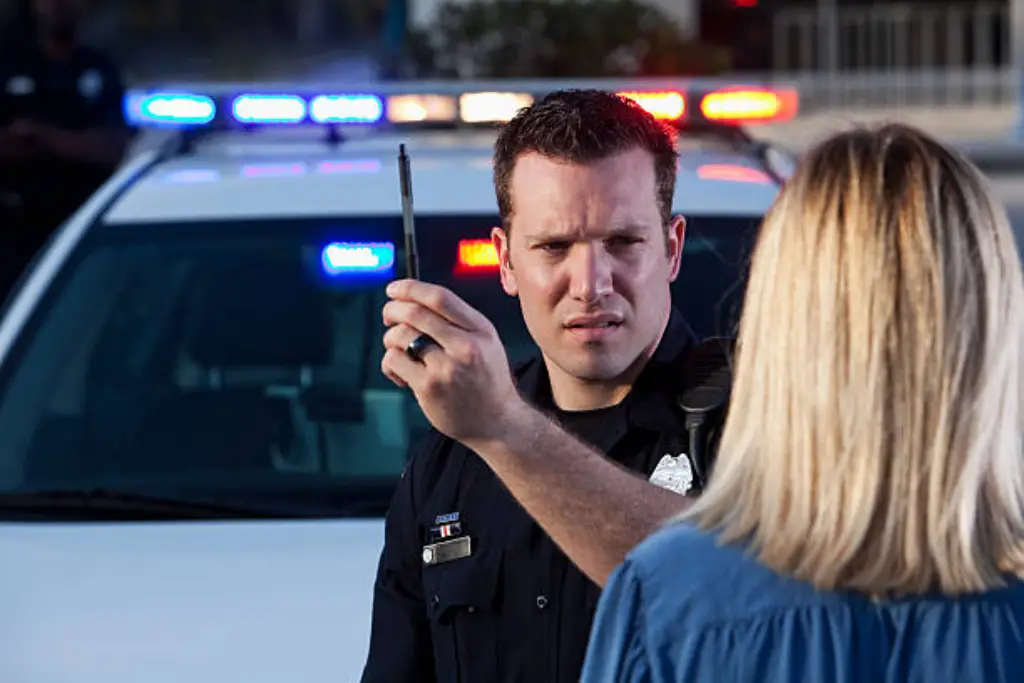
Twenty minutes later, a police cruiser pulled in. The officer who emerged was a woman in her forties with tired eyes and short gray hair.
“You reported the stolen vehicle?”
“Yes, ma’am.”
“Walk me through what happened.”
I told her everything. About buying the car with money I’d saved. About giving my parents a spare key explicitly for emergencies. About waking to find it gone and getting the phone call where my mother admitted taking it. About the history of my sister’s failed vehicles and my family’s pattern of expecting me to solve everyone’s problems.
The officer wrote steadily, occasionally asking questions. “Your name is the only one on the title?”
“Yes, ma’am.”
“You’re the only one making payments?”
“Correct. Every month.”
“And you didn’t give permission to use or move the vehicle?”
“No, ma’am. Not anyone.”
She nodded. “What happened here is unauthorized use of a motor vehicle. Your parents took property that belongs solely to you without consent. That’s a crime under Ohio law.” Relief washed through me—validation that I wasn’t crazy, wasn’t overreacting.
“However,” she continued, “I need to be clear. This is a family situation, which makes it complicated. If we pursue this criminally, your sister could be charged with unauthorized use. Your parents could be charged as accessories. Depending on the prosecutor, these charges could result in fines, community service, even jail time. And this will permanently damage your family relationships. Maybe irreparably. So I need to ask: Are you prepared for those consequences?”
I took a breath and did something I’d never done before. I thought about what I wanted, not what would make everyone else happy. I thought about every time I’d been called selfish for having boundaries. Every time I’d been guilt-tripped into giving more than I could afford. Every time Jessica’s problems became my emergencies. Every time my parents chose her immediate comfort over my long-term autonomy. I thought about the word “family” and how it had been weaponized to control me, to extract resources, to make me feel guilty for wanting anything of my own.
I looked at the officer and said clearly, “Yes. I’m prepared for that.”
She nodded. “Okay then. I’ll need your sister’s address.”
The next few hours unfolded like a surreal movie. The officer drove to Jessica’s apartment, located Silver in the visitor parking, verified the VIN, and knocked on Jessica’s door. Jessica called me seventeen times while it was happening. Seventeen increasingly frantic calls I watched go to voicemail.
Around noon, the officer returned with my keys. “Your vehicle has been recovered. Your sister has been issued a citation for unauthorized use of a motor vehicle. That carries a fine and will go on her record. Your parents will be contacted for questioning about their role.”
“Thank you,” I said, fingers closing around those keys like a lifeline.
“Do you want to press formal charges beyond the citation?”
I hesitated. A citation meant a fine and a mark on her record, but not a criminal charge that would follow her forever. Pressing formal charges meant lawyers, court dates, potential criminal record affecting employment. “The citation is enough,” I said. “I just want my car back and this to stop.”
She nodded approvingly. “That’s reasonable. Here’s your case number. If you experience further issues, call immediately. And I’d recommend getting that spare key back from your parents.”
After she left, I walked to where Silver was now parked, got in, ran my hands over the steering wheel, checked the mileage—only forty miles added, thank God—and just sat there. She was back. She was mine. No one could take her again without consequences.
The fallout was immediate and explosive. My phone didn’t stop ringing for three days. My mother called at least fifteen times, leaving increasingly frantic voicemails: “How could you do this to your sister? That citation is three hundred dollars she doesn’t have! You’ve humiliated us. Everyone is talking about this. Your father is so disappointed. How did we raise such a selfish daughter?”
My father sent a single text: “You chose a car over your family. I hope you can live with that. Don’t bother coming home for the holidays.”
Jessica sent a long, rambling email about how I’d ruined her life, how she’d been late to her first day at the new job, how she’d have to pay a fine she couldn’t afford, how this proved I’d never cared about her, how I’d always been jealous, how I was vindictive and cold.
Then the extended family got involved. Cousins I hadn’t heard from in years had strong opinions. Aunts and uncles weighed in. My grandmother called to tell me I was breaking my mother’s heart and that family was supposed to be forever but I was destroying ours over material things.
The family group chat exploded with over two hundred messages in forty-eight hours. The general themes: I was selfish and materialistic. Heartless and cruel. I’d changed since moving to the city, become cold. I cared more about possessions than people. I had betrayed the family bond. I owed everyone apologies.
For the first few days, I felt awful. The guilt was crushing, physical. Maybe I had overreacted. Maybe I should have handled this privately. Maybe I was being selfish—it was just a car, and Jessica’s need was greater. Maybe I’d destroyed my family over something that didn’t matter.
But then something shifted. I started thinking clearly instead of emotionally. My parents had committed theft. Not borrowing, not a misunderstanding—theft. They’d taken property that belonged solely to me, that I was making payments on, without asking permission. They’d done it in secret, in the middle of the night, specifically to avoid giving me a chance to say no.
And everyone was mad at me for having a problem with that?
I started responding to messages with questions: “Did you know they took my car without asking me first?” “Would you be okay with someone taking your car without permission?” “How is it selfish to want to keep something I’m paying for?”
Most people stopped responding. Some doubled down, insisting family trumped ownership. But a few—cousins around my age, one progressive aunt—quietly messaged privately: “You’re right. That wasn’t okay. Stay strong.”
Those messages meant more than I could express.
Three weeks later, my mother called again. I almost didn’t answer, but something made me pick up.
“Can we talk? In person?”
I agreed to meet at a coffee shop near my apartment—neutral ground, public space, easy to leave. She was already there when I arrived, two cups of coffee on the table. She looked older, more tired, with new lines around her eyes.
“Thank you for coming,” she said.
I waited.
“I’m sorry,” she said, the words rushed. “I’m sorry for taking your car. I’m sorry for not asking permission. I’m sorry for making you feel like your property doesn’t belong to you.”
It was better than I’d expected. But I didn’t let my guard down. “Why did you do it?”
She stared into her coffee for a long time. “Because it was easier than dealing with Jessica falling apart. You’re so capable, so responsible, so stable. You handle things. Jessica falls apart, spirals, needs constant support. I wanted to fix her problem quickly. I thought you’d understand because you’re the strong one. I thought you wouldn’t mind because you always manage somehow.”
“But that’s not fair to me, Mom. You raised me to be independent, to work hard, to save money, to make good choices. And then when I do all that, you punish me for it by making me responsible for Jessica’s problems.”
“You’re right,” she said simply. Those two words surprised me more than the apology.
“I’ve been enabling your sister for years. Your father and I both have. But she’s our baby, and when she hurts, we want to fix it immediately. And you’ve always been so self-sufficient that we just assumed you could handle more. We took advantage of your strength.”
“That’s not fair.”
“I know. I’m sorry.”
We sat in silence, normal coffee shop life continuing around us.
“I need you to understand something,” I said. “I’m not responsible for Jessica’s life. I’ll help when I can, in ways that don’t hurt me. But you can’t take my things. You can’t make decisions about my life without permission. And if you do, I will involve authorities again. This is my final boundary.”
She flinched but nodded. “Okay.”
“And Jessica needs to apologize. A real apology. Not ‘I’m sorry you were upset’ but ‘I’m sorry I took your car.'”
“I’ll talk to her—”
“No,” I said firmly. “She needs to do it on her own. Or not at all. But I won’t have a relationship with her until she takes responsibility.”
We finished our coffee. She tried to pay for both, but I insisted on paying for my own—a small assertion that felt important. She hugged me before leaving, tentative and careful. I hugged back, but it was different now. There was distance, wariness.
Jessica never apologized. She stopped speaking to me entirely, blocked me on social media, told family I was dead to her. It hurt to lose my sister. But I recognized that what we’d had wasn’t really a relationship—it was a one-sided arrangement where I provided support and she took it without reciprocation.
My father eventually, months later, sent a brief text: “Your mother explained her perspective. I don’t agree with what you did, but I understand why you felt you had to. That’s the best I can offer.” It wasn’t forgiveness, but it was acknowledgment. I took it.
Some family relationships recovered over time. Others didn’t. The family group chat never quite bounced back. But I was okay with that. I’d rather have a smaller circle of genuine relationships than a large network of people who only valued me for what I could give them.
Six months later, I got a promotion at work—more responsibility, better pay, an actual office. I called my mother to tell her.
“That’s wonderful, honey!” she said, sounding genuinely happy, genuinely proud. “I’m so proud of you. You’ve worked so hard.”
“Thanks, Mom.”
“Are you doing okay? Really?”
“Yeah,” I said, and meant it. “I really am.”
And I was. I’d spent so long feeling guilty for having boundaries, for wanting to keep what was mine, for not sacrificing endlessly. But that morning in the parking lot had clarified something essential: I could love my family without destroying myself for them. I could help when it didn’t cost me everything. I could say no without being a villain.
That police officer had asked if I was prepared for the consequences, and I’d said yes. But what I hadn’t known then was that the consequences weren’t just damaged relationships and drama. The real consequence was freedom—freedom from guilt that wasn’t mine to carry, freedom from expectations that had nothing to do with love, freedom to build a life that was wholly, completely, unapologetically mine.
A year later, on an ordinary Tuesday, Jessica sent me a text. Just one line: “I’m sorry for everything that happened. You were right.”
I stared at it for a long time, trying to determine if it was genuine. Finally: “Thank you. I appreciate that.”
We didn’t become best friends again. We didn’t fall back into old patterns. But we started being cordial at family gatherings—small talk about work and weather, polite interest without complicated history weighing everything down. It was enough.
My parents gradually learned to ask before assuming. They learned that loving me meant respecting my boundaries, not testing them. Our relationship became more honest, more equal. They started treating me like an adult whose decisions deserved respect instead of a resource to be managed and deployed as needed.
It wasn’t perfect. Families never are. But it was better, healthier, more sustainable.
And Silver? She’s still with me. Three years old now, running perfectly, maintained meticulously. Every time I slide behind the wheel, turn the key, and hear that engine start, I remember that Wednesday morning—the empty parking space, the phone call, the decision that changed everything.
Best decision I ever made. Not just because I kept my car, but because I finally, after twenty-eight years, chose myself. And that choice—terrifying and liberating in equal measure—taught me something my family never could: that loving yourself isn’t selfish. It’s necessary. And anyone who tells you otherwise doesn’t actually have your best interests at heart, no matter what they call themselves.
I’m still driving Silver. Still making those monthly payments. Still proud every time I park her in spot 47. And I sleep better now than I have in years, knowing that everything I have is truly mine, earned through my own effort, protected by boundaries I’m finally strong enough to enforce.
That’s worth more than any family approval I was never going to get anyway.

Ethan Blake is a skilled Creative Content Specialist with a talent for crafting engaging and thought-provoking narratives. With a strong background in storytelling and digital content creation, Ethan brings a unique perspective to his role at TheArchivists, where he curates and produces captivating content for a global audience.
Ethan holds a degree in Communications from Zurich University, where he developed his expertise in storytelling, media strategy, and audience engagement. Known for his ability to blend creativity with analytical precision, he excels at creating content that not only entertains but also connects deeply with readers.
At TheArchivists, Ethan specializes in uncovering compelling stories that reflect a wide range of human experiences. His work is celebrated for its authenticity, creativity, and ability to spark meaningful conversations, earning him recognition among peers and readers alike.
Passionate about the art of storytelling, Ethan enjoys exploring themes of culture, history, and personal growth, aiming to inspire and inform with every piece he creates. Dedicated to making a lasting impact, Ethan continues to push boundaries in the ever-evolving world of digital content.