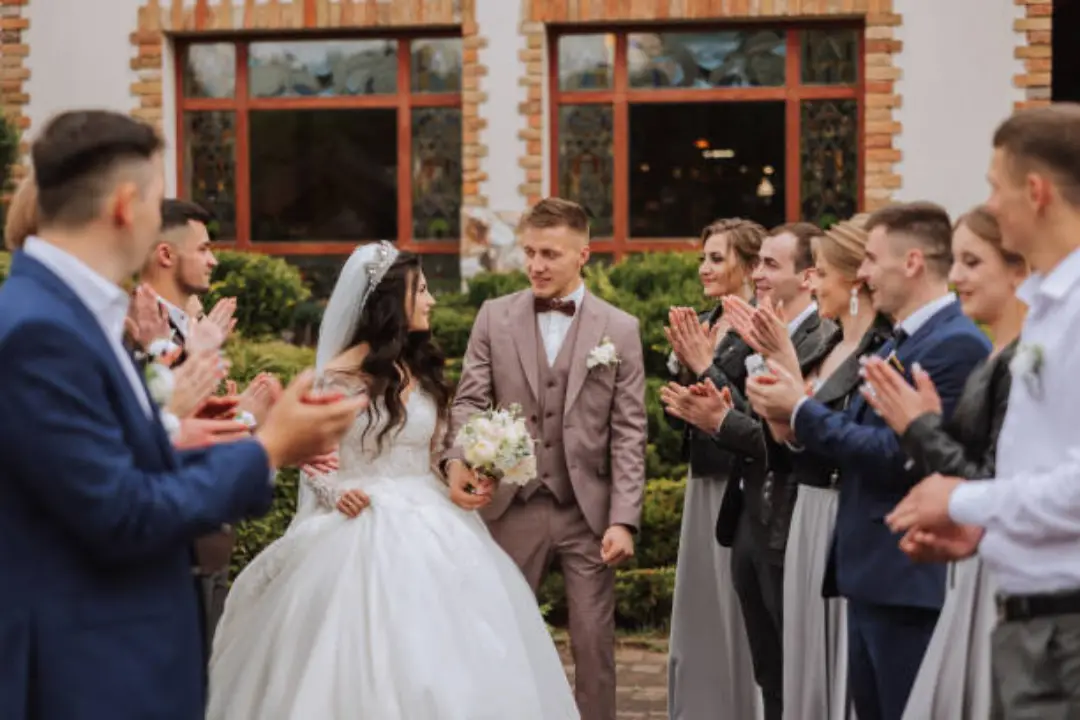
On June twenty-fourth, I sat on the balcony of my resort suite in Nantucket with lukewarm coffee and a phone that glowed with one simple notification: motion detected. The ocean air carried salt and possibility while somewhere down the hall, Sinatra played through someone’s open door—brass and velvet, the kind of music my grandmother used to love.
At nine thirty-seven, I opened the camera feed and watched my own driveway like it was a film I’d already written the ending to. A white catering van rolled up first, glossy and confident. Two SUVs followed, their chrome catching the morning light. Then my parents’ dark sedan—the one my father always called “reliable” in that tone that meant superior. Then my brother’s Tesla. Then Caroline’s mother’s Range Rover, because of course she drove a Range Rover.
At the edge of the camera frame, one of my security guards stood motionless, an American flag patch stitched cleanly on his shoulder. He didn’t move toward the gate. He didn’t need to. That gate stayed closed, and for the first time in nine years, I didn’t feel guilty about it.
My name is Kalista, I’m thirty-four years old, and I own the house they were standing outside of—a house I restored with my own hands from an abandoned colonial wreck into something that appeared in design magazines. A house my parents never once congratulated me for. A house they only cared about now because they needed it.
But I’m getting ahead of myself. This story started long before that June morning, back when I was still trying to earn love from people who only valued usefulness.
For most of my childhood, I didn’t realize I was invisible. My parents saw me—they just never looked. They saw the straight A’s, the completed chores, the polished smile at their dinner parties. What they didn’t see was me. My brother Trenton, three years younger, was impossible to miss. Reckless, entitled, golden. He failed upward constantly while I worked myself raw for silence. When I brought home perfect grades, my father never looked up from his newspaper. “That’s what we expect from you,” he’d say, like excellence was the bare minimum and praise was reserved for someone else.
I learned early that being useful was the only acceptable form of being, so I worked harder. I turned an abandoned sunroom into a reading nook for my mother’s book club. She never mentioned I built it. My father complained about the paint smell. I started sketching renovations in my notebooks during class, reading design blogs when no one was watching, teaching myself that if I couldn’t earn their attention, I could at least build something that felt like mine.
When college came, I chose interior design. They chose to undermine it. My father called it a phase. My mother suggested I do it “on the side.” They pushed business school. I compromised—double major, state university, three jobs to pay for everything they refused to fund. Meanwhile, Trenton coasted through fully-funded education, switching majors when bored, skipping internships. “He’s a late bloomer,” my mother would say, like it was charming. I was “difficult.”
By the time I graduated with job offers from top firms, I thought maybe they’d finally be proud. So I invited them to dinner at their favorite steakhouse—white tablecloths, dim lighting that made everyone look kinder than they were. I waited until dessert to tell them I’d opened my own design firm.
My father set down his fork. “That’s a mistake.”
Not curiosity. Not interest. Just rejection, clean and immediate.
Then came the offer—a job at one of his friend’s commercial property companies managing office spaces. He’d already told them I’d accept, as if my life was just another contract he could negotiate on my behalf.
I told him no.
That’s when everything shattered. He said if I wouldn’t take the job, I was on my own—no support, no family name, no relationship. My mother said nothing. Trenton looked away. I placed the keys to their house on the table, metal clinking once against porcelain, and I walked out of the restaurant and out of their lives.
I was twenty-five years old, and I didn’t cry until I reached my friend Zoe’s apartment. By sunrise, the tears had stopped. The illusion that I mattered to them was gone, but so was the weight of trying to earn something they were never going to give.
The first year on my own was brutal. Two of my initial three clients mysteriously cancelled—last-minute changes that smelled like my father’s influence, though I could never prove it. I redesigned a friend’s coffee shop for free just to build my portfolio. I bartered design services for printer ink. I slept on the floor of my tiny office for three months to save rent money. Every penny I made went back into the business. I wore the same blazer to every pitch meeting and made it look intentional.
But slowly, momentum built. A restaurant I’d helped went viral after a food blogger featured the space, and suddenly I had leads. A wealthy client’s aunt hired me for a historic condo restoration and became the kind of person who talks about you at charity galas. Within two years, I went from sleeping on a futon to signing a lease on a proper studio space with exposed brick and fourteen-foot ceilings.
By thirty, I was ready for more. I found an abandoned seventeen-eighty colonial buried under ivy on three acres in Connecticut. Most people saw rot and rodents. I saw potential. I emptied my savings and bought it outright, then spent three years transforming it. I showered at the gym, lived in two rooms while working on the others, learned plumbing from YouTube. When things broke, I fixed them. When they were too far gone, I rebuilt them better.
I didn’t hire influencers or stage dramatic reveals. I documented the honest process on my firm’s blog—raw, unvarnished, real. People responded. By year three, my home was featured in design magazines as a masterpiece of historic restoration. The kitchen blended modern functionality with colonial warmth. I turned the barn into my workspace. Every detail, from the exposed ceiling beams to the stone path leading to the fire pit, was mine.
But more importantly, during those same years, I built something else: a family I didn’t inherit but created. Zoe, my anchor since college, moved nearby with her wife and two kids. Marcos and David, who owned the best restaurant in town, invited me to every holiday and treated me like blood. Kelly, a landscape architect who helped design my gardens, became one of my closest friends. These people never asked me to prove my worth—they just showed up, consistently, without keeping score. They remembered my birthday. They celebrated my successes. They helped me haul lumber when deliveries fell through.
One evening around the fire pit, wine glasses in hand, Zoe looked at me and said, “I hope you know this is home now. We’re your people.” And I did know, because for the first time in my life, I felt seen.
Then, nine years after I walked away from my family, my phone rang with a number I recognized instantly but hadn’t seen in nearly a decade. My mother’s name appeared on the screen. My hand hovered, not from emotion but calculation. When I answered, her voice poured through like honey—sweet, practiced, performative.
“Kalista, darling, it’s Mom,” she sang, as if we’d spoken last week instead of not at all for nine years. She asked how I’d been with that breezy tone people use when they’re not actually interested in the answer, then got to her point. Trenton was getting married. The country club venue had smoke damage and cancelled. And she’d “remembered” that beautiful magazine article about my home—those gardens, that barn. “Your house would be perfect for the wedding.”
Not a hello. Not an apology. Not a hint of remorse for abandoning me. Just a request to use my property as if the past nine years hadn’t happened.
“You want to host Trenton’s wedding at my home?” I clarified, my voice flat.
“Just a small celebration,” she said brightly. “Two hundred people. Ceremony in the garden, cocktails on the patio, dinner under a tent. It would be a lovely chance to let bygones be bygones.”
I told her I needed time to think. She told me to think quickly because invitations “should have gone out already.” The line went dead.
The next day, my father called with no pretense of warmth. “Your mother tells me you’re considering hosting the wedding.”
“I haven’t agreed to anything.”
“Well, we need to begin preparations immediately. Our event planner will contact you.”
When I mentioned our history, he cut me off. “History is irrelevant. This is about family. Trenton needs this.” Then Trenton called, playing the affectionate brother as if we’d simply lost touch instead of him watching our parents disown me without saying a word. He said Caroline had “literally cried” when she saw my house in the magazine, that it was her “dream venue.” He talked about logistics—where catering trucks would park, how guests could use my primary suite to get dressed—as if I’d already agreed, as if I was just staff.
By the end of that day, I’d received seven more calls from relatives who hadn’t acknowledged my existence in years, all suddenly concerned about “family unity.” Then I saw the social media post—a professional photo of my house taken from my website, captioned about celebrating their big day at this “dream venue” with my address included. They’d announced it publicly. Used my home without permission. My cousin Jennifer texted to confirm what I already suspected: “They sent invitations last week with your address. Thought you’d say yes once RSVPs started rolling in.”
That afternoon, Caroline’s mother approached me at a coffee shop I frequented, greeting me like family while making it clear she expected me to comply. When I said I hadn’t agreed to host anything, her smile barely flickered. “I’m sure you and Trenton will sort it out. Family always comes through.” That same day, an anonymous complaint was filed against my business alleging code violations. The inspector found nothing, but I understood the message: say yes, or we’ll make your life difficult.
That night, I drafted an email to my parents, Trenton, Caroline, and the wedding planner who’d apparently already been hired. It was concise and unmistakably final: After careful consideration, I must decline the request to host Trenton and Caroline’s wedding at my home. My property is not available as a venue. Please inform all guests and vendors immediately.
The response was instantaneous. My father called within the hour, his voice tight with controlled fury. “After everything we’ve done for you—”
“You disowned me,” I interrupted. “Nine years ago.”
He deflected, making it about Trenton’s needs and important connections. When I refused again, he called me ungrateful. My mother sent texts about how cruel I was being. Trenton begged me to reconsider, offering to cut the guest list to one hundred. Caroline left a tear-choked voicemail about wanting to build a relationship with me. The extended family mobilized—aunts calling to explain how I was tearing everyone apart, uncles warning that stress could affect my father’s health, cousins offering to mediate.
Then came the retaliation. Two more anonymous complaints were filed with the town—one for supposed historic code violations, one for improper commercial use of my property. Both were baseless but disruptive and time-consuming. Newly created accounts began leaving one-star reviews on my business listings. One client called to say someone had been asking questions about my licensing and billing practices.
But the real violation was the invitation itself. I obtained a copy—a watercolor rendering of my home, my roofline, my garden path, featured like it was a public venue they owned. My address. My house. Without my consent.
I called my attorney, Elliot Harding, a calm man I’d worked with on past business disputes. When I explained the situation, he didn’t waste time on sympathy. “This isn’t a family argument anymore. This is unauthorized use of your property. We treat it like we’d treat anyone else.”
That’s when I stopped trying to solve this with emotions and started treating it like the legal violation it was. Elliot drafted cease-and-desist letters sent certified mail to my parents, Trenton, Caroline, and the wedding planner, explicitly stating that any continued listing or use of my property as an event venue was unauthorized. We sent separate notices to every vendor we could identify. We contacted the local police department to create a record that I’d refused permission and was concerned about trespass.
“I do not consent,” Elliot coached me to say. “My property is private. This event is unauthorized.” Simple, clean, legally sound.
I drove to the police station and filed a report, explaining that my family was planning to bring a large group to my home despite my refusal. The officer made a note in the system and offered to schedule extra patrols that weekend. It wasn’t dramatic, but it mattered—it meant there would be an official record that this wasn’t a misunderstanding.
Then I hired security. Four guards for the day of the wedding—two at the main gate, one by the barn entrance, one on the back trail. Discreet but professional. The retainer was seven thousand dollars. I wrote the check without hesitation because I’d learned that independence isn’t punishment—it’s protection.
I installed motion sensors and additional cameras. I posted signs at every entry point in plain language: Private Property. No Authorized Event. Do Not Enter. I changed all the locks. I briefed my neighbors, who agreed to keep watch. I moved anything sentimental into locked storage.
And then, because I refused to be cornered in my own home, I booked a four-day retreat in Nantucket. Prepaid, nonrefundable, private. It wasn’t about hiding—it was about refusing to be manipulated.
Days before the wedding, the pressure intensified. Caroline’s mother left a voicemail using the word “pride” like it was a character flaw, implying I’d regret letting pride steal something precious. Another anonymous review appeared calling me cold and spiteful. Someone posted in a local community group that I was refusing family and making a scene.
I didn’t respond. Instead, I posted a neutral statement on my business page: “My property is a private residence and is not available as an event venue. Any online listings indicating otherwise are unauthorized.”
Two longtime clients immediately texted support. That shouldn’t have mattered, but it did, because my family had trained me to believe support came with conditions. This came without any.
Then came the smoking gun—an email forwarded by mistake from Caroline’s mother to the wedding planner with the subject line “If Kalista resists.” The body outlined strategies like they were planning a campaign: bring a locksmith, distract me with a brunch invitation, have family friends insist I’d already agreed, use “public embarrassment” as leverage.
I printed ten copies and sent one to Elliot. He replied immediately: “Good. This changes everything.” It transformed their narrative from hurt feelings into documented harassment and planned interference. My father’s favorite weapon—deniable discipline—stopped working when everything was in writing.
On the morning of June twenty-fourth, I was exactly where I needed to be: far enough away to breathe, close enough to watch. At nine thirty-seven, motion detected. I opened the camera feed and watched my driveway fill with vehicles, vendors, and family members who believed entitlement would override consent.
My father stepped out first, shoulders squared like he was arriving at property he owned. Trenton paced, running hands through his hair, glancing at his phone for solutions that didn’t exist. Caroline stood with arms crossed, her dress bag hanging from the car door, eyes already glossy. The wedding planner fluttered with her clipboard, trying to manage chaos.
At the gate, my guard stood firm. He didn’t approach. He didn’t argue. He simply pointed to the posted notice.
I couldn’t hear the words, but I could read the choreography of entitlement. My father gesturing sharply at the intercom, his hands moving in that familiar pattern—chest, outward, demanding. Trenton trying a different angle, attempting reason. Caroline’s mother approaching with her practiced smile. The planner rifling through papers as if she could produce a document that would override the laws of consent.
Then guests started arriving. A black SUV. A shuttle van. More cars. People in formal clothes stepping out, confused, looking between the closed gate and my parents as if someone had made a terrible mistake.
At ten twelve, my phone exploded with texts. From my mother: “Kalista, answer. This is humiliating.” From my father: “Open the gate. Now.” From Trenton: “Please. Just for today. We’re here.” From unknown numbers, relatives and strangers demanding I reconsider, calling me heartless, saying I was breaking Caroline’s heart.
I didn’t reply. I took a screenshot of the camera feed and added it to the documentation file.
At ten forty-five, two police cruisers arrived—no flashing lights, no drama, just presence. The officers spoke to the guards first, then to my father. He gestured wildly, pointing toward my house like it was evidence of wrongdoing. He tried to hand over papers—probably invitations, maybe vendor contracts.
The officer glanced, then shook his head. One of my guards handed over Elliot’s packet. The officer read briefly, then spoke. I couldn’t hear the words, but I saw the effect. My father’s shoulders stiffened. Trenton’s hands went to his hips. Caroline started crying—quiet at first, then openly, her body folding as the day collapsed.
The officer’s message was clear: This is private property. Permission has been refused. You need to leave.
My father argued. I could tell because his face did that thing it always did when I was younger—tight jaw, narrowed eyes, the stare that used to make me apologize for existing. It didn’t work through a camera. It didn’t work with documentation.
By noon, the heat had turned the scene into a wilted disaster. Guests arrived and immediately turned around. The caterer stood by the van, hands on hips, demanding answers. The tent company arrived, saw the closed gate, and started making calls. Somewhere in that chaos, deposits were burning.
I didn’t feel joy. I felt inevitability. This was what happened when you built plans on someone else’s eventual compliance.
At one eighteen, my guard texted: “Intercom calls attempted: 29. Logged.”
Twenty-nine. The same number of missed calls I’d ignored the week before. The universe circling that number like a signature. My family had spent the entire day trying twenty-nine different ways to make me fold, and the answer remained the same: no.
By midafternoon, reality set in. Cars stopped arriving. The shuttle van departed. The planner stood alone by her car for nearly ten minutes, phone pressed to her ear, hand to her forehead. My mother sat in the passenger seat, lips moving rapidly, still talking, still believing words could change boundaries.
At four forty-two, Trenton leaned against his Tesla and stared at the ground. For the first time, he looked less like a golden child and more like a man realizing the world doesn’t rearrange itself for him.
At five thirty, the last vehicle pulled away. My guard texted: “All clear. Your father said, ‘This isn’t over.'”
I didn’t reply because the truth was, it already was. Not in the sense that my father would stop being who he was, but in the sense that I was done negotiating with people who’d never seen me as anything more than useful.
I closed the app and set down my phone. I didn’t feel triumphant or vindicated. I felt still, like concrete finally setting after years of being disturbed.
The next day, the internet did what it always does. Cousins posted vague statuses about family betrayal. Caroline’s mother wrote in a private group about how sad it was when success changed people. Relatives who hadn’t spoken to me in years suddenly spoke about me like they knew me intimately.
I didn’t defend myself. Elliot had warned me not to. “Let them perform,” he said. “You don’t have to clap.”
There were no lawsuits. A few letters from the planner’s attorney arrived—thinly veiled attempts to blame me for financial losses—but Elliot responded with the smoking-gun email attached, the one where they’d outlined their plan to pressure and manipulate me. After that, the tone changed dramatically. People get very polite when their tactics are documented.
When I returned home three days later, the house was exactly as I’d left it—clean, silent, mine. The garden was untouched. The barn was locked. The camera logs were full of attempts and refusals, all carefully archived.
Waiting in my mailbox were three letters. My mother’s was written in clipped cursive, calling my boundary “spite” and saying I’d chosen pride over love. Trenton’s was messier, asking if I’d hated him all along. Caroline’s was the quietest—an apology for not seeing how determined my parents had been, an admission that she “didn’t realize.”
I read them once, then put them in a drawer I no longer opened. Not because I was pretending they didn’t exist, but because I refused to live inside their version of the story.
By autumn, my calendar was full again. Work continued. In September, a local historic preservation group called asking if I’d host a small fundraiser at my home—thirty people, catered, quiet. The irony wasn’t lost on me, but the difference was consent. They asked. They listened when I set conditions. They signed a contract. So I said yes, on my terms.
When Thanksgiving came, I hosted twenty people—Zoe and her family, Kelly and her girlfriend, Marcos and David and their extended circle, two clients who’d become friends, neighbors who’d kept watch during the wedding chaos. My people.
The morning of, I woke early and moved through my kitchen with the steady confidence of someone who’d built something that mattered. The oven warmed the room. The counters filled with dishes. The house smelled like rosemary and butter and home.
By noon, cars began arriving—not in an entitled convoy, but one by one, with pies in hand and laughter already forming. Zoe walked in first, carrying a casserole dish like treasure. “Where do you want this?” she asked.
“Wherever you want,” I said, and the simplicity of that exchange—the ease of it—felt revolutionary.
Dinner stretched long. Stories bounced around the table. Someone put on music—soft, classic—and Sinatra’s voice floated through my dining room the way it had through that Nantucket hallway, except this time it wasn’t a soundtrack to conflict but to peace.
Later, when plates were stacked and people had moved to the fire pit, I stayed behind in the kitchen rinsing glasses. I set my keys on the counter, and the metal caught the light before going still. Nine years ago, placing keys on a table had been an act of surrender. Now, setting them down in my own home was an act of ownership—not just of property, but of my life, my choices, my boundaries.
Through the window, I watched my friends gathered in the yard I’d restored. Their shoulders were relaxed, their faces soft, their laughter lifting into cold November air. No one was keeping score. No one was waiting to cash in favors. No one was treating my home like a prop for their performance.
I stepped outside and let the warmth of the fire brush my cheeks. Zoe shifted closer and bumped my shoulder with hers. “I hope you know this is home now. We’re your people.”
I didn’t need to answer because the answer was already built into every beam of the house, every person gathered around the fire, every choice I’d made to protect what I’d created. Family isn’t who shares your name or your blood. Family is who shows up consistently, who respects your no, who celebrates your yes, who sees you as more than useful.
And somehow, without meaning to, I’d found exactly that.
The gate stayed closed on June twenty-fourth, and it was the best decision I ever made. Not because it stopped a wedding, but because it drew a line between the life I was supposed to live and the one I chose. Between the family I was born into and the family I built. Between being useful and being seen.
Nine years ago, I walked away from people who loved me conditionally. That June morning, I finally stopped hoping they’d change and started protecting what I’d become without them.
And that made all the difference.

Adrian Hawthorne is a celebrated author and dedicated archivist who finds inspiration in the hidden stories of the past. Educated at Oxford, he now works at the National Archives, where preserving history fuels his evocative writing. Balancing archival precision with creative storytelling, Adrian founded the Hawthorne Institute of Literary Arts to mentor emerging writers and honor the timeless art of narrative.