The Nine-Hundred-Dollar Bill
Part 1: The Dinner I Never Ate
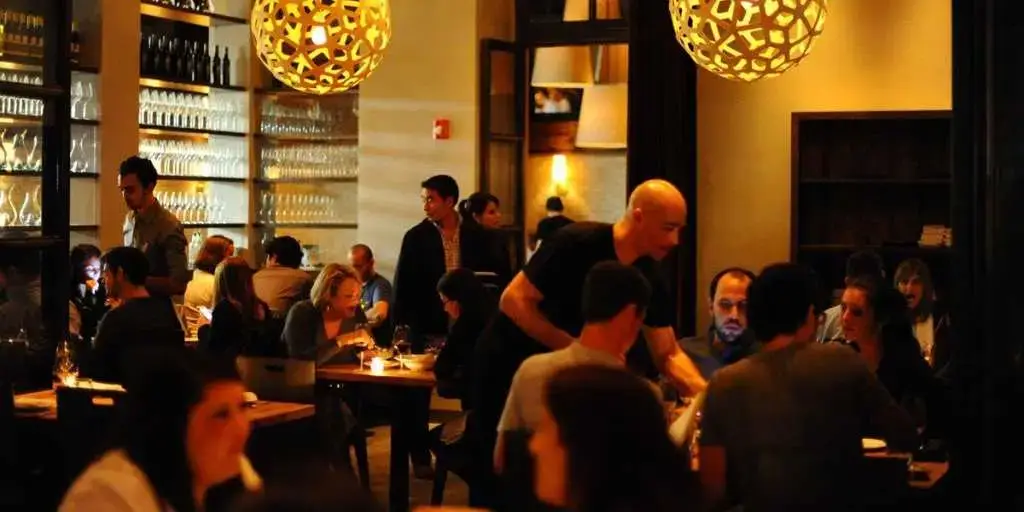
When I walked into Le Jardin, the air smelled of expensive truffles, aged wine, old money, and that specific, suffocating scent of exclusion that luxury restaurants cultivate like rare orchids. I paused at the host stand just inside the heavy mahogany doors, instinctively smoothing the fabric of my wool coat—a good coat, practical and warm for brutal Wyoming winters, purchased on sale at an outdoor outfitter three years ago. But against the backdrop of silk scarves and cashmere wraps that filled the dining room, against the soft gleam of designer labels and the quiet confidence of wealth, my coat felt like burlap, like poverty cosplaying as middle class.
I fought the familiar knot of anxiety that always tightened in my chest when I had to see my sister, that same sinking feeling I’d had since childhood when Amber would examine my outfit and find it wanting, when she’d comment on my hair or my shoes or my choice of words at family gatherings. I checked my watch—6:47 p.m. The reservation had been for six-thirty. I thought I was late, rushing from a job site where I’d been reviewing structural plans, my hands still slightly dirty despite washing them twice.
I wasn’t late at all, I would soon discover. I was simply the punchline to a joke I hadn’t known was being told.
The host—a man with a thin, precisely trimmed mustache and eyes that could assess your net worth in a single practiced glance—led me through the main dining room with its hushed conversations and artfully arranged tables. We walked past couples leaning toward each other over candlelight, past business dinners where deals were being closed over wine that cost more than my monthly truck payment, past everything warm and inclusive, straight to the back corner where the lighting was slightly dimmer and the atmosphere noticeably cooler.
The table was already silent when I arrived. Not the companionable silence of people comfortable together, but the expectant silence of predators watching prey approach the trap. The gentle clatter of silverware had ceased. The plates were scraped clean, leaving only artistic streaks of reduction sauce and the crumpled remains of linen napkins that had been used and discarded.
My sister, Amber, didn’t stand to greet me. She didn’t smile or wave or even acknowledge my arrival with anything resembling warmth. Her husband, Tyler, didn’t bother looking up from his phone, his thumb scrolling rhythmically through what appeared to be social media feeds, as if my arrival was so insignificant it didn’t merit breaking his digital trance. Neither did Tyler’s parents, Thomas and Lorraine Ashford, who sat with the stiff, regal posture of monarchs holding court in a kingdom they couldn’t actually afford but pretended to rule through sheer force of snobbery.
They all looked at me with identical expressions: polished, expectant, and carrying an edge of casual cruelty that made my stomach clench.
“You made it,” Amber said, her voice completely devoid of warmth or genuine greeting. It was a statement delivered like an accusation, not a welcome. She lifted a black leather bill folder between two perfectly manicured fingers—French tips in a subtle nude shade that probably cost eighty dollars—balancing the folder like it was a dirty tissue she couldn’t wait to dispose of, and tossed it across the white tablecloth toward me.
The folder slid across the smooth mahogany surface with a soft hissing sound that seemed loud in the sudden quiet, and stopped inches from my hand. The gesture was so casual, so dismissive—like flicking lint off an expensive sleeve or shooing away a persistent fly.
“Nine hundred dollars,” Amber announced, her tone sharp enough to cut glass, loud enough that the couple at the next table glanced over with barely concealed curiosity. “Come on, Liv. You’re the rich one here. You’re the one with the successful business. It’s literally the least you can do, considering you missed the toast and the whole dinner. We’ve been waiting for over an hour.”
Lorraine let out a laugh that sounded like a silver fork scraping slowly against bone china—high, artificial, designed to wound. She took a delicate sip of water from her crystal glass, her eyes glittering with malicious amusement above the rim. “Indeed. All she’s good for is opening her wallet, isn’t she? God knows she doesn’t have the personality to actually join a civilized conversation. Can you imagine her trying to discuss art or culture?”
They laughed. Not with me—I wasn’t part of any shared joke. They laughed at me, around me, through me, as if I were transparent, as if I existed only as a financial resource to be tapped and not as a person capable of feeling humiliation.
It took me exactly three seconds to fully process the scene before me. I looked at the table with the trained eye of someone who’d learned to calculate costs, to assess value, to understand what money meant. Two empty bottles of Châteauneuf-du-Pape sat prominently displayed on the table—wine I knew from the restaurant’s menu cost at least two hundred dollars per bottle. Five entrée plates, scraped clean, showing the remnants of dishes that ranged from forty-five to seventy dollars each. A platter that had clearly held oysters, probably the premium selection. Multiple desserts—I could see the smears of chocolate and caramel on small plates. Coffee service for everyone. Probably aperitifs before dinner.
I had never been invited to join their dinner. That much was now crystalline clear. I had been invited solely and exclusively to finance it, to play the role I’d apparently been cast in years ago: the family ATM, the walking checkbook, the resource to be exploited.
The humiliation should have burned my cheeks red. It should have made me stammer out apologies for being late even though I wasn’t actually late for anything except my own financial execution. It should have made me reach automatically for my credit card, pulling it from my wallet with the practiced motion of someone who’d done this a thousand times before, buying scraps of their conditional affection with money I’d earned through hard work while they spent it on expensive performances of wealth they didn’t actually possess.
I was the structural engineer, after all. The one with the successful firm that employed twelve people. The one who’d stayed on the family farm after our mother died and turned it from a financial burden into a profitable operation. The one who’d taken our mother’s modest legacy and built something real from it. And yet, somehow, in their presence, I was always reduced to just the bank—a convenient source of funding with no feelings, no dignity, no right to respect.
But tonight, something was different. The shame didn’t come. The automatic compliance didn’t activate. Instead, something inside me went cold—not angry hot, but glacially, dangerously cold. It was a steady calm that settled over my nerves like a layer of fresh snow covering everything, muffling sound, transforming the landscape into something unrecognizable.
I stared at the leather folder sitting on the table. I didn’t reach for it. I didn’t touch it. I didn’t move toward my purse.
“Well?” Thomas grunted, checking his Rolex with an exaggerated gesture, the gold catching the candlelight. “We have theater tickets for the eight o’clock show, Olivia. Premium seats that cost a fortune. Don’t be tedious about this. Just pay the bill so we can leave.”
I stood up slowly, with deliberate control. I pushed in the chair I hadn’t even sat in, the chair they’d saved for me at their table not as a dinner companion but as their designated payer. I raised my hand and calmly signaled for the restaurant manager.
Amber’s perfectly practiced smirk twitched, faltered. For the first time that evening—perhaps for the first time in years—her eyes flickered with something that looked almost like uncertainty, maybe even fear. “Liv? What are you doing? Just pay the bill. Don’t make this weird.”
I didn’t answer her. I didn’t acknowledge the question. The manager arrived within thirty seconds—a man in his fifties with salt-and-pepper hair, wearing an impeccably tailored suit and a practiced mask of professional neutrality. He carried a tablet in his hand, ready to process payment.
“How was everything this evening?” he asked politely, directing the question primarily toward Thomas, who looked like the obvious patriarch of the table.
“There’s been a mistake,” I said clearly, my voice quiet but somehow carrying through the sudden heavy silence that had descended on our corner of the dining room. I stepped between the manager and the rest of my family, positioning myself as a barrier.
The manager turned his full attention to me, his professional mask shifting slightly to show genuine curiosity. “Ma’am? How may I help you?”
“This dinner isn’t on me,” I told him, keeping my posture rigid, my voice steady despite my heart hammering against my ribs. “I need to make that absolutely clear. I was not present for this meal. I did not order any of these items. I did not consume any of this food or wine. I do not authorize any charges whatsoever to my name, my credit cards, or any of my accounts.”
Amber’s breath caught audibly in her throat, a small gasping sound. “Liv, don’t be dramatic. Don’t do this. Just pay the damn bill. You’re making a scene and embarrassing all of us.”
I ignored her completely, maintaining eye contact with the manager. “I believe this table is attempting to commit theft of services,” I said, letting each word land with weight. “They ordered an expensive meal they apparently cannot pay for, operating under the false assumption that a third party who was not present for the dinner, who did not order anything, and who did not consume anything would be forced to cover the cost.”
The manager’s eyes widened slightly—the first crack in his professional composure. He looked at the table with new eyes, seeing the expensive wine bottles, the remnants of premium dishes, the well-dressed people who suddenly looked much smaller and less impressive than they had moments before. “Is this… is this true?” he asked Thomas, his voice hardening.
“I’d like the charges addressed directly with the people who actually consumed the food and wine,” I continued, taking a deliberate step back from the table, creating physical distance. “And perhaps you should call security now, before this situation escalates further. Based on past experience with this group, they can be quite volatile when they don’t get their way.”
The blood drained from Thomas’s face so rapidly I thought he might actually faint. His complexion went from ruddy to chalk white in seconds. Lorraine looked equally pale, like candle wax melting, one hand flying up to clutch at the pearl necklace around her throat as if those pearls could somehow save her from the indignity of a declined credit card.
Amber stood up abruptly, her chair screeching backward against the hardwood floor with a sound like nails on a chalkboard, drawing the attention of at least half the restaurant’s diners. “You’re embarrassing yourself, Olivia! We are family! You selfish, ungrateful bitch! After everything we’ve done for you!”
“Family doesn’t ambush family with luxury debts,” I replied, my voice still calm, still level. “Family doesn’t lie about dinner invitations to trap each other into paying nine-hundred-dollar bills.”
I looked at them—really looked at them, perhaps seeing clearly for the first time. I saw the panic behind Tyler’s eyes as he finally looked up from his phone, his thumb frozen mid-scroll. I saw the desperation in Thomas’s clenched jaw, the way his hand shook slightly as he reached for his water glass. I saw the pure, unadulterated malice in Amber’s face, the hatred that had probably always been there beneath the fake sisterly smiles.
And I realized with absolute clarity: This wasn’t about a dinner bill. This wasn’t just garden-variety greed or casual exploitation. This was a test. They were checking to see if the ATM still worked. They were checking to see if I was still compliant, still controllable, still willing to bankroll their lifestyle while they treated me like garbage.
“Goodnight,” I said simply.
I turned on my heel and walked toward the exit with measured steps, my head high, my shoulders back. Behind me, chaos erupted—Amber’s voice rising to a shriek, the manager’s stern tones cutting through her protests, Thomas blustering about knowing the owner and threatening lawsuits. I didn’t look back. I didn’t slow down. I didn’t give them the satisfaction of seeing any reaction.
I walked out into the biting Wyoming wind, the cold immediately stinging my face and cutting through my practical wool coat. My heart was pounding, but not with fear—with a terrifying clarity, with an adrenaline-fueled understanding of what had just happened and what it meant.
Amber wasn’t just jealous of my success or resentful of my financial stability. She was planning something bigger. You don’t test a fence unless you’re planning to break through it. You don’t probe for weakness unless you’re preparing for an attack.
I got into my truck—a practical Ford F-250 that Amber had mocked countless times as “so pedestrian”—and drove toward the farmhouse on the outskirts of town, the only home I had ever really known, the house where my mother had raised us, where I’d learned to be strong even when my family was teaching me to be small.
The silence of the drive was heavy, thick with implications I was only beginning to understand. I had fired the first shot in a war I didn’t even know I was fighting. And I knew, with a sinking feeling of dread settling in my stomach like a stone, that they would return fire.
This wasn’t over. This was only the beginning.
Part 2: The Midnight Call
As I walked into my dark, empty farmhouse—the lights off because I’d left in a hurry, the rooms cold because I’d turned down the heat to save money despite having plenty—the old rotary phone on the kitchen wall began to ring.
The sound was jarring in the silence, harsh and insistent. I stared at it for three rings, my hand hovering over the receiver. The caller ID display—a modern addition to the vintage phone—showed “BLOCKED.”
It wasn’t Amber’s cell number. It wasn’t Tyler’s. This was deliberate anonymity.
I let it go to voicemail, standing frozen in my kitchen while the ancient answering machine—my mother’s machine, the one I’d never had the heart to replace—clicked and whirred to life.
After the beep, a voice filled my kitchen. It was distorted, deliberately lowered to a threatening register, but terrifyingly familiar beneath the artificial menace.
“You think you’re smart, Liv? You think you can just walk away from family obligations? From your responsibilities?” The voice paused, and I could hear breathing, heavy and deliberate. “We’re going to take it all. Everything you think you own. Everything Mom left you. Watch your back. Watch your mind. Things are going to get very difficult for you very soon.”
The message ended with a click.
I stood frozen, my blood turning to ice water in my veins. The voice had been altered, run through some kind of filter or app, but I recognized it. It was Tyler speaking the words, his particular cadence and speech patterns evident even through the distortion.
But the malice, the venom, the calculated cruelty in those words—that sounded exactly like my sister.
My hands shaking, I replayed the message twice more, recording it on my phone the second time. Then I checked every door, tested every window lock, pulled every blind and curtain tight against the vast darkness of the ranch that suddenly felt less like home and more like a fortress under siege.
I sat at my kitchen table—the same scarred oak table where my mother had taught me to do homework, where we’d shared countless meals, where she’d held my hand during my divorce three years ago and told me I was stronger than I knew—and I pulled out the heavy metal box from the top shelf of the pantry.
It was my mother’s old letter box, brass with tarnished corners, sealed with red wax that bore her initials. It had sat on that shelf for two years, untouched since her funeral, a heavy reminder of grief I couldn’t quite face. But tonight, the seal didn’t feel like a memory. It felt like a warning.
My hands trembled as I broke the wax seal, the red fragments falling onto the table like drops of dried blood. On top of the stack of papers inside lay a letter in my mother’s elegant, loop-heavy script that I’d recognize anywhere:
For Olivia. When your heart knows something is wrong, trust it. I raised you to be strong. Don’t let them make you doubt that strength. – Mom
I swallowed hard, a lump forming in my throat so large I could barely breathe around it. She had known. Even at the end, when the cancer was eating her away and the morphine made her drift in and out of consciousness, she had seen what I’d refused to see. She had seen Amber’s hunger, her resentment, her willingness to destroy what she couldn’t control.
Underneath the letter were documents. Not sentimental notes or family photos, but legal filings—heavy, official papers with notary seals and formal language. A Trust document. A Deed Protection Clause. Property transfer restrictions. And a thick manila folder labeled simply: Dossier – Amber Collins née Hart.
I opened the dossier with shaking hands. It was a log, meticulously maintained. Dates, times, observations. My mother had been tracking them for at least two years before she died.
June 12, 2019: Amber asking Dr. Morrison about Olivia’s mental health history during my appointment. Implying Liv is ‘unstable’ and ‘obsessive’ about work. Doctor refused to discuss, but Amber was persistent.
August 4, 2019: Tyler inquiring at County Planning Office about property subdivision laws and zoning requirements for the ranch. Asked specifically about commercial development potential.
September 1, 2019: Amber having lunch with County Clerk. Discussing competency hearings and guardianship procedures. Clerk mentioned it to me at church – thought it was odd.
November 18, 2019: Overheard Amber on phone with someone (lawyer?) discussing “what it takes to prove someone can’t manage their own affairs.” She hung up when I entered the room.
The entries went on, page after page of documented manipulation and scheming. At the bottom of the last page, written in my mother’s hand but in angry red ink, were words that made my blood run cold:
Amber is not just envious – she is strategic and dangerous. She has been courting my attorney, asking questions about the estate. She has researched guardianship laws. She has mentioned “concerns about Olivia’s stability” to multiple people in town, building a narrative. If she ever tries to take what is yours, call Margaret Reeves IMMEDIATELY. Do not face them alone. They will try to make you seem crazy. Don’t let them. You are the sanest person I know. – Mom
Guardianship. The word sat on the page like a curse, like a weapon aimed directly at my future.
They didn’t just want my money. They wanted to erase me entirely.
Part 3: The Attorney’s Office
The next morning, I didn’t go to my job site where my crew was waiting to review foundation plans. I didn’t return the three calls from my project manager. I drove straight to town through early morning fog, to a modest brick building with a discreet brass sign: Reeves & Associates – Estate Law.
Margaret Reeves was a woman constructed entirely of steel and tweed, with silver hair cut in a sharp, no-nonsense bob and eyes that missed absolutely nothing. She was the most feared estate attorney in three counties, known for taking on cases that other lawyers considered too messy, too personal, too likely to destroy families. When I placed my mother’s dossier on her polished desk, she didn’t look surprised.
“I was wondering when you’d come,” she said softly, pouring two cups of black coffee from a French press on her credenza. “Your mother told me to expect you eventually. I’d hoped it would be under better circumstances.”
“She tested me last night,” I said, gripping the warm ceramic mug like a lifeline. “A nine-hundred-dollar dinner bill at Le Jardin. It was a power play, wasn’t it?”
“It was a probe,” Margaret corrected, opening a thick accordion file of her own that sat prominently on her desk. “Your mother and I prepared for this possibility years ago. Amber wanted to see if you were still compliant, still controllable. By refusing to pay, you forced her hand. She’s going to accelerate now.”
“Accelerate what?” I asked, though I already knew the answer, could feel it in my bones.
Margaret slid a document across the desk. It was a photocopy of an inquiry made to the County Clerk’s office just three days ago.
Subject: Guardianship Proceedings – Requirements and Process Target: Olivia Marie Hart Petitioner: Amber Collins Date of Inquiry: Three days before the dinner
The room spun. I felt bile rise in my throat. “Guardianship? That’s for people with dementia. For people who can’t dress themselves. For people who are actually incapacitated.”
“Or,” Margaret said grimly, her eyes hard as granite, “for people who can be painted as ‘unstable’ by concerned family members who have been carefully building a narrative for years. They want total control, Olivia. Your house, your land, your business, your inheritance, your bank accounts—everything. They need to prove you can’t manage your own affairs so the court gives them power of attorney and financial control. It’s called predatory guardianship, and it’s more common than you’d think.”
She pulled out another document—this one a horror story printed from legal databases.
“Once they get guardianship,” Margaret continued, “you lose your rights. All of them. You can’t hire a lawyer without their approval. You can’t access your own money. You can’t drive. You can’t vote. You can’t even choose where you live. They can put you in a facility—the cheapest one they can find—and drain your assets legally. And getting out is nearly impossible because you need a lawyer to challenge it, but you can’t hire one without permission from your guardian.”
“They can’t prove I’m incompetent,” I argued, hearing the desperation in my own voice. “I’m a licensed structural engineer. I run a successful firm with million-dollar contracts. I’m completely sane.”
“Logic doesn’t matter if they control the narrative,” Margaret warned, leaning forward intensely. “They will provoke you. They will try to make you look hysterical in public. They will call the police for ‘welfare checks’ to create a paper trail of concern. They’ll get neighbors to sign statements saying you seem ‘different.’ They’ll paint your success as obsessive behavior. Your independence as isolation. Your strength as instability. This is psychological warfare, Olivia. The walls are already going up.”
“So what do I do?”
Margaret smiled then—a sharp, dangerous expression that made me profoundly glad she was on my side. “We let them walk straight into the trap your mother built three years ago. But first, you have to survive the escalation. You must be ice. No emotion, no outbursts, no matter what they do. You must record everything. Document everything. Trust no one except me and the people I tell you to trust.”
She handed me a voice recorder, a folder of instructions, and a business card. “This is a private investigator. He’s expensive but worth every penny. He’ll document their movements, their spending, their lies. And this”—she tapped the card—”is a psychiatrist who will evaluate you and provide documentation of your mental competence. We’re going to build a fortress of paper around you.”
I left her office three hours later feeling like I was carrying a grenade with the pin already pulled, just waiting to see who it would explode on.
When I got home, there was a truck in my driveway. My heart stopped, then restarted when I recognized it. My younger brother Daniel’s beat-up Chevy.
Daniel stood by the porch, looking haggard, like he hadn’t slept in a week. His hands were jammed deep in his coat pockets, his shoulders hunched against the cold wind.
“Amber sent me,” he said without preamble, not meeting my eyes.
I stayed by my truck door, my hand in my pocket gripping the voice recorder Margaret had given me, already recording. “To do what, Daniel? Check if I’ve lost my mind? See if I’m foaming at the mouth yet?”
“To ask you to sign this.” He held out a paper, his hand visibly shaking.
I walked over slowly and took it. The header made my blood freeze: Voluntary Asset Management Agreement.
It was dressed up in friendly language about “family helping family” and “professional oversight,” but buried in the legal terminology was a complete surrender. By signing, I would be agreeing that I needed help managing my affairs, that my family should have access to my accounts, that I trusted them to make financial decisions on my behalf.
It was a precursor to guardianship. A voluntary confession of incompetence.
“Did you read this, Daniel?” I asked quietly, holding up the paper. “Do you understand what this actually says?”
He finally looked up, and I saw misery etched into every line of his face. He looked ten years older than his thirty-two years.
“Liv, they’re desperate,” he whispered, stepping closer and glancing around as if someone might be listening. “Thomas and Lorraine—they’re bankrupt. Completely underwater. They leveraged everything on a bad development deal in Jackson Hole. Foreign investors pulled out and the whole thing collapsed. They’re losing their house, their cars, everything. And Amber… she promised them she could fix it all. She promised them your house, your land. She told them she had a plan to take control.”
“And you’re helping them steal from me?”
“I’m trying to stop them from destroying you completely!” he said urgently, his voice breaking. “If you sign this voluntarily, maybe they’ll back off. Maybe they won’t go through with the guardianship petition. Maybe it won’t get as ugly as it could.”
“No, Daniel,” I said firmly, my voice shaking with betrayal. “If I sign this, I cease to exist as an independent person. I become their property. They’ll drain everything I have, and when there’s nothing left, they’ll throw me away. Go home. Tell Amber I’m not signing anything. Tell them all to go to hell.”
He stood there for a long moment, visibly torn between the sister who was commanding him with threats and manipulation and the sister he was actively betraying. He looked at the farmhouse—our childhood home, the place where we’d played as kids, where Mom had raised us—and then back at me.
“I’m sorry, Liv,” he choked out, tears streaming down his face. “I’m so sorry for all of this.”
Then, without another word, he got in his truck and drove away, dust billowing behind him like a departing army.
I went inside and locked every door, checked every window, set the security system I’d had installed just that morning. I was alone now. Truly, completely alone.
Or so I thought.
Part 4: The Siege
Two hours later, as darkness fell over the ranch like a heavy blanket, powerful headlights flooded through my living room windows, piercing through the blinds I’d closed.
I froze, my heart hammering. I went to the window and peered out carefully.
It wasn’t Amber’s Mercedes. It wasn’t Daniel’s truck.
It was a Sheriff’s cruiser, light bar dark but presence unmistakable.
Amber hadn’t waited. The siege had begun.
I took three deep breaths, forcing myself calm. Margaret’s training echoed in my head: Calm. Predictable. Rational. Show no emotion. Record everything.
I activated the recorder in my pocket and opened the front door before the deputy could knock.
“Evening, ma’am,” the deputy said, touching the brim of his hat. He looked uncomfortable, and I recognized him—Deputy Miller. We’d gone to high school together, had been in the same chemistry class. “We received a call about a potential disturbance. A family member expressed serious concern that you might be a danger to yourself. They mentioned you’d made statements about self-harm.”
“I see,” I said, keeping my hands visible, my voice calm and slightly confused. “I’m afraid my sister tends toward exaggeration when she doesn’t get her way, Jim. I’m currently having a cup of tea and reviewing structural engineering calculations for a commercial project. Would you like to come in and verify that I’m safe?”
I stepped back, showing him my immaculate kitchen—no weapons, no pills, no signs of distress. I showed him the tea cup. I showed him the engineering drawings spread across the table. I spoke with the patient confusion of a sane woman dealing with a frustrating but minor family situation, not a hysterical woman fighting for her life.
He looked around, seeing nothing alarming, no evidence of the crisis Amber had reported.
“I apologize for the intrusion, Olivia,” he said, putting his notepad away after making a few cursory notes. “I have to follow up on all calls, you understand.”
“Of course, Jim. I completely understand you’re just doing your job. Please tell my sister I appreciate her concern but I’m perfectly fine.”
He left within ten minutes. Amber’s first shot had missed. But she didn’t stop.
Over the next week, the attacks were relentless, a coordinated campaign of harassment and manipulation designed to break me down.
Tuesday: My bank accounts were flagged for “suspicious activity” after anonymous tips claimed potential identity theft. I spent four hours at the bank proving I was actually myself, watching them scrutinize my driver’s license, my signature, my answers to security questions.
Wednesday: My doctor’s office called. “Olivia, your sister called to cancel your annual physical. She said you were having some kind of episode and couldn’t safely leave the house. I wanted to check if you were alright.”
Thursday: A contractor called me from a job site, confused. “Liv, your brother-in-law Tyler showed up here. Told my foreman you were being removed from the project for mental health reasons and that he was taking over financial oversight. What the hell is going on?”
Friday: Three of my neighbors received visits from Amber, who tearfully explained that I was “having a breakdown” and asked them to watch for “concerning behavior” and call her if they saw anything unusual.
They were tightening the net systematically. They were trying to induce the very breakdown they claimed I was already having. They wanted me to scream, to cry, to lash out publicly so they could record it and present it as evidence. See? She’s unstable. She’s dangerous. She needs to be controlled.
Then came the home invasion.
Saturday evening, a knock on my door. I looked through the peephole and my stomach dropped.
Amber stood on my porch flanked by Thomas and Lorraine, all three of them looking like an execution squad dressed in expensive coats.
I opened the door with the chain still engaged, the recorder running in my pocket.
“We’re done playing games, Liv,” Amber said, her voice tight with barely controlled fury. She looked different—manic, her perfect facade cracking under the pressure of her in-laws’ financial collapse. “We filed the guardianship petition this morning. The emergency hearing is Monday. The court will grant temporary guardianship, and then it’s over.”
“On what grounds?” I asked, leaning against the doorframe, forcing my voice to stay level.
“Mental instability,” Thomas said smoothly, adjusting his expensive tie that probably wasn’t even paid for. He looked at me with the cold assessment of a butcher eyeing livestock. “Paranoid delusions—you genuinely believe your own family is conspiring against you. Severe isolation. Erratic behavior—like that scene you caused at Le Jardin, refusing to pay a simple dinner bill and accusing your family of theft. We have witnesses, Olivia. Neighbors who say you scream at night. Your own brother will testify that you’re confused and making wild accusations.”
“Daniel won’t lie for you,” I said, though my heart sank.
Amber laughed—a cold, jagged sound that sent shivers down my spine. “Daniel does exactly what he’s told. He knows what happens if he doesn’t cooperate. We’re taking this house, Liv. We’re selling the land to developers by next month—we already have offers. It’s for your own good. You can’t handle this place alone. You never could.”
“Get off my property,” I said quietly.
“Enjoy it while you can,” Lorraine sneered, looking past me into the warm interior of my home like she was already measuring for new curtains. “By Monday afternoon, we’ll be the ones with the keys. And we’ll find a nice, affordable facility for you somewhere. Somewhere… quiet. Somewhere you can’t cause any more problems.”
They left, their expensive shoes crunching on the gravel, leaving behind a cloud of exhaust and menace.
I sank to the floor after closing the door, my resolve wavering for the first time. Could they actually do it? Could they really lie their way into legally owning me? If Daniel testified against me… if my own brother stood in court and said I was incompetent…
My phone buzzed. A text message from an unknown number.
Meet me at the old barn. Midnight. Come alone. Don’t tell anyone. -D
Daniel.
I sat there for twenty minutes debating. Was it a trap? Would Amber be waiting there with cameras to catch me “wandering at night in a delusional state”?
But something in the message, some desperate undercurrent, stopped me from dismissing it entirely.
At 11:45 p.m., I grabbed my coat and drove into the darkness.
Part 5: The Brother’s Betrayal… Or Redemption?
The old barn stood at the edge of our property, a skeleton of weathered wood against starlight. I’d played here as a child, back when it still stored hay and equipment. Now it was just a shell, a memory of the working ranch we used to be.
I parked and walked in, every sense on high alert.
Daniel was waiting in the shadows, illuminated only by moonlight through the broken roof. He held a thick manila envelope in both hands.
“They think I’m completely under their control,” he said without preamble, his voice trembling. “They think I’m the weak link, the one who’ll do anything to avoid conflict.”
“Aren’t you?” I asked, unable to keep the bitterness from my voice.
“I was,” he admitted, and tears were streaming down his face now, catching the moonlight. “I was weak and scared and I let them use me. But then I found the emails, Liv. I hacked into Amber’s laptop. And I found everything.”
He thrust the envelope toward me with shaking hands.
“They’re not just trying to take the house. They’ve got a facility picked out—the cheapest state-run place they could find, four hundred miles away. They’ve calculated how fast they can liquidate the assets. They’ve already met with developers. And Amber… God, Liv, she’s been researching medications. Ways to sedate you before the hearing. Ways to make you seem incoherent in court.”
I opened the envelope with numb fingers. Inside was a nightmare made real: bank statements showing Thomas and Lorraine’s bankruptcy, foreclosure notices, desperate loan applications all denied. Emails between Amber and Tyler coordinating their campaign—the welfare checks, the doctor’s office calls, the neighbor visits. Screenshots of texts where they scripted exactly what people should say if questioned. And most damning of all, audio files.
“I recorded them,” Daniel said. “Last week, when they thought I was asleep upstairs. Amber was practicing her testimony for the guardianship hearing. She was rehearsing how she’d cry, what she’d say about your ‘deteriorating mental state,’ how she’d paint herself as the concerned sister who just wants to help.”
I scrolled through file after file—documentation of a conspiracy so calculated, so methodical, it took my breath away.
“Why?” I whispered. “Why are you giving me this now?”
“Because you’re my sister,” he choked out. “My real sister. Not the manipulative monster who’s been threatening me for years. When I saw what they were planning—the facility, the sedation, the complete erasure of who you are—I couldn’t do it anymore. I couldn’t be part of killing you just so Amber could steal your life.”
We stood in the darkness, the evidence of their betrayal heavy in my hands.
“They’re going to destroy you for this,” I said.
“I know,” he replied. “But at least I’ll be able to live with myself. Take the files to Margaret. Take them to the judge. Stop them, Liv. And… I’m sorry. I’m so, so sorry I didn’t do this sooner.”
He turned to leave, then paused.
“Monday morning. The hearing. I’ll be there. And I won’t be testifying for them.”
Part 6: The Courtroom
Monday morning arrived with merciless clarity, the sky a hard blue dome over the courthouse. I met Margaret on the steps, and she took the envelope Daniel had given me, flipping through the contents with eyebrows rising higher and higher.
“My God,” she murmured. “This is… this is a prosecutor’s dream. They documented their own conspiracy.”
“Can we use it?” I asked.
“Oh, we’re going to do more than use it,” she said, her smile sharp as a knife. “We’re going to end them.”
The courtroom was small, intimate enough to hear breathing and heartbeats. Amber sat at the petitioner’s table dressed in a modest beige suit—costume designed to project concerned sister, not calculating predator. Thomas and Lorraine sat behind her, radiating false sympathy. Tyler was there too, looking smug and confident.
When Judge Patterson—a stern woman in her sixties with steel-gray hair and no-nonsense demeanor—called the case, Amber’s attorney stood. He was expensive, brought in from Denver, slick in his tailored suit.
He painted a tragic picture. “Your Honor, Olivia Hart is suffering from severe paranoid delusions, acute social withdrawal, and dangerous isolation. She has alienated herself from her loving family. She refuses basic family obligations, demonstrated by her shocking behavior at a recent dinner where she publicly accused her family of theft. We have affidavits from neighbors, statements from medical professionals she’s contacted, and most importantly, testimony from her own brother confirming her deteriorating mental state.”
He paused dramatically. “We ask for emergency guardianship to prevent Ms. Hart from harming herself and dissipating the family estate.”
Judge Patterson turned her sharp gaze to me. “Ms. Hart, do you have representation?”
Margaret stood slowly, deliberately. She didn’t rush. She opened her briefcase with a loud click that echoed in the silent courtroom.
“Your Honor, we don’t just have a defense,” Margaret said, her voice clear and carrying. “We have evidence of criminal conspiracy, fraud, and attempted theft.”
Amber shifted in her seat. Thomas’s confident expression flickered.
“I call Daniel Hart to the stand.”
Amber smiled at Daniel as he walked down the aisle—a confident, predatory smile. She nodded at him, a silent command: Stick to the script. Do what we told you.
Daniel took the oath. He sat down, pale but steady, and looked directly at me.
Judge Patterson leaned forward. “Mr. Hart, do you share your sister’s concerns about Olivia’s mental state?”
The courtroom held its breath.
Daniel took a deep breath. He looked at Amber, saw the expectation in her eyes. Then he turned to the judge.
“No, Your Honor,” he said clearly, firmly. “The only thing I’m concerned about is the criminal conspiracy my sister Amber and her in-laws have orchestrated to defraud Olivia of her property and her freedom.”
Amber’s face went slack, color draining like someone had pulled a plug. A gasp rippled through the courtroom. Thomas half-rose from his seat, face purpling.
“Explain,” Judge Patterson ordered, leaning forward with intense focus.
Daniel laid it all out. The bankruptcy. The scripted welfare checks. The neighbor manipulation. The threats against him if he didn’t cooperate. The plan to sedate me before the hearing.
“This is a lie!” Amber shrieked, jumping to her feet. “He’s been brainwashed! She’s manipulated him! She’s insane!”
“Sit down!” the judge barked, her gavel cracking like a gunshot.
Margaret moved smoothly into the carnage. “Your Honor, we submit into evidence audio recordings made by Mr. Hart of the petitioner explicitly discussing liquidation of assets, placement in a state facility, and methods to chemically sedate Ms. Hart to ensure courtroom compliance.”
She pressed play. Amber’s voice filled the courtroom, tinny but unmistakable:
“Once we get guardianship, we liquidate immediately. The developers are ready to close. Put Liv in the state facility—the cheap one we found upstate. She won’t know the difference once we get the medication dosage right. Mom and Dad need this money, Tyler. They’re drowning and this is our only life raft.”
The courtroom erupted. Thomas turned purple. Lorraine looked faint. Tyler was frantically whispering to their lawyer, who looked ready to flee.
Margaret wasn’t finished. “Furthermore, Your Honor, we submit the ‘Fortress Trust’ documents, prepared by the late Mrs. Hart three years ago with the assistance of our firm. Clause 4A explicitly states that any attempt by Amber Collins to challenge Olivia Hart’s competency or petition for guardianship triggers immediate and irrevocable disinheritance from all family assets and trusts.”
She placed the document before the judge.
Amber had gone white as paper. She hadn’t just lost the battle for my house. She’d lost everything.
Judge Patterson’s face was carved from granite. “Petition dismissed with prejudice,” she said, her gavel coming down with finality. “Furthermore, I am referring this matter immediately to the District Attorney for investigation of fraud, perjury, conspiracy to commit theft, and attempted false imprisonment. Bailiffs, please escort the petitioners from my courtroom.”
We walked out into blinding sunlight. Behind us, Amber was screaming at Daniel, her mask completely shattered, revealing the monster underneath. Thomas and Lorraine were arguing with their lawyer, who was already abandoning them.
Daniel stood beside me on the courthouse steps, looking lighter somehow, unburdened.
“Thank you,” I said.
“I should have done it months ago,” he replied. “But I’m here now. And I’m done being afraid of her.”
Epilogue: Six Months Later
The farmhouse is quiet now, but not empty.
The wind still howls against the siding on cold nights, but it doesn’t sound threatening anymore. It sounds like home.
Daniel comes for dinner every Sunday. We cook real food—roast chicken, fresh vegetables from the garden we planted together. We talk about Mom. We laugh. We’re healing.
He’s working at my engineering firm now, managing project logistics. He’s good at it. He’s good at a lot of things when he’s not being crushed under Amber’s manipulation.
Amber and her in-laws are tangled in legal battles that will last years. The District Attorney filed charges—fraud, conspiracy, attempted theft through legal deception. Thomas’s financial crimes investigation opened a Pandora’s box revealing years of illegal dealings. They lost everything. I heard Amber and Tyler are living in a rented apartment in Cheyenne, both working retail jobs.
I haven’t spoken to her since the courthouse. I never will.
Sometimes, when I’m on the porch watching the sunset paint the mountains gold, I think about that nine-hundred-dollar bill at Le Jardin.
It was the most expensive mistake Amber ever made. She thought she was handing me a bill for dinner.
In reality, she was handing me the receipt for her own destruction.
It was the best investment I never made.
THE END
This story explores predatory guardianship, family financial abuse, and the courage required to stand against those who seek to control and exploit. While inspired by real cases of such abuse, this is a work of fiction. If you or someone you know is facing similar circumstances, please seek legal help immediately. Predatory guardianship is real and devastating, but it can be fought with proper legal representation and documentation.

Lila Hart is a dedicated Digital Archivist and Research Specialist with a keen eye for preserving and curating meaningful content. At TheArchivists, she specializes in organizing and managing digital archives, ensuring that valuable stories and historical moments are accessible for generations to come.
Lila earned her degree in History and Archival Studies from the University of Edinburgh, where she cultivated her passion for documenting the past and preserving cultural heritage. Her expertise lies in combining traditional archival techniques with modern digital tools, allowing her to create comprehensive and engaging collections that resonate with audiences worldwide.
At TheArchivists, Lila is known for her meticulous attention to detail and her ability to uncover hidden gems within extensive archives. Her work is praised for its depth, authenticity, and contribution to the preservation of knowledge in the digital age.
Driven by a commitment to preserving stories that matter, Lila is passionate about exploring the intersection of history and technology. Her goal is to ensure that every piece of content she handles reflects the richness of human experiences and remains a source of inspiration for years to come.