Graduation was supposed to be the moment everything finally made sense—the proof that all those unpaid hours, late nights, and quiet sacrifices had earned me a future in my family’s business. Instead, three days after I walked across that stage, I opened a thin folder in my father’s office and realized my future had already been given away. Not to a buyer, not to a partner—to my sister. When I confronted my parents, my dad avoided my eyes. My mom didn’t. She looked at me with the same calm expression she used when making final decisions and said, “Harper, you’re just good with your hands, not your brain.” That sentence erased years of loyalty in one breath.
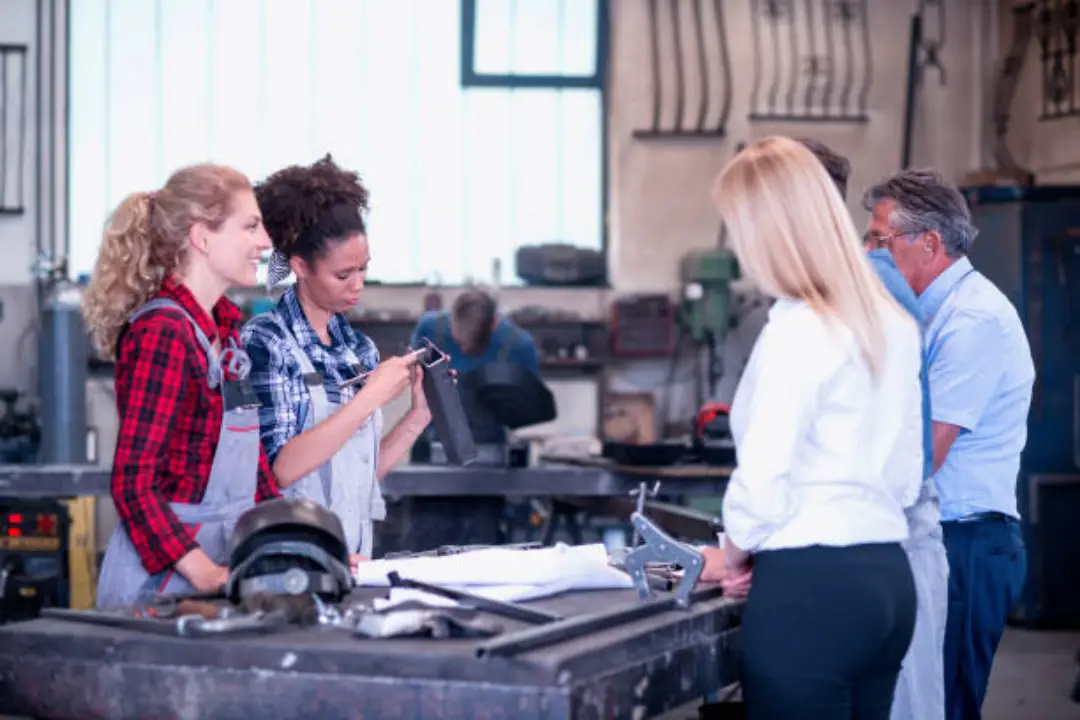
My name is Harper Collins, and for most of my life, I thought loyalty was something you earned your place with. I grew up inside our family workshop, not as a visitor, but as part of the machinery itself. The sounds of grinding metal and humming engines were more familiar to me than music. The smell of oil clung to my clothes so deeply that even after washing, it followed me into classrooms and later into college dorms. While other kids talked about weekends and vacations, I learned how to spot small problems before they became expensive ones. I learned how to keep my mouth shut and my hands busy.
By the time I was sixteen, I knew the workflow better than most of the adults on the floor. Employees came to me when machines stalled or orders went wrong, even when my father was standing ten feet away. I took it as a sign that I was needed, that I mattered. My father, Richard Collins, loved to talk about legacy. He said the word often like a promise—legacy, family, sacrifice. When he spoke to clients, his voice was steady and confident. When he spoke to me, it was usually about what still needed to be done.
My mother, Elaine, was different. She didn’t care much for the workshop itself. She cared about how it looked from the outside—clean lines, strong branding, the right people seeing the right version of our family. With her, nothing was ever said directly. Expectations floated in the air, unspoken but heavy, and I learned quickly that disappointing her meant becoming invisible.
Then there was my younger sister, Madison. Madison never belonged to the workshop the way I did. She passed through it like a guest, wearing clean shoes that never picked up dust, her hands always soft, always empty. When clients visited, she appeared effortlessly, smiling at the right moments, laughing at the right jokes. My parents watched her differently—with pride, with anticipation. When they looked at me, there was no anticipation, only assumption. I was the one who would stay late. I was the one who would handle it. I was the one who didn’t need to be asked.
Weekends weren’t days off. They were longer shifts. Summers weren’t breaks. They were proof that I was learning responsibility. Whenever I asked about pay, it was brushed aside. “It’s for the family. It’ll come back to you. You’re building something.” So I stayed. I worked sixty-hour weeks while balancing classes. I skipped social events. I told myself rest was for people who didn’t care as much as I did.
Madison, meanwhile, was being introduced to clients as the future. She sat in meetings I wasn’t invited to. She spoke in polished phrases I recognized from my mother. No one ever said I couldn’t be there. I was simply never asked. Still, I believed. I believed that once I graduated, once I came back with a degree, things would change. I imagined being seen not just as useful, but as capable. I didn’t realize that in my family, my role had already been decided, and proving myself was never going to change it.
For a long time, graduation was the thing that kept me going. I didn’t just study to pass—I studied to fix what I’d watched quietly break for years. I learned systems, logistics, scheduling, the kinds of structures that kept businesses from collapsing under pressure. In class, I found myself thinking about our workshop constantly, about how much time we lost fixing the same problems repeatedly, how many delays could have been prevented if anyone bothered to step back and look at the whole picture.
When graduation came, my parents sat in the front row. My dad clapped loudly when my name was called. My mom smiled for photos. Madison hugged me afterward and told me she was proud. I thought that moment meant something. Three days later, I was back at the workshop. Same floor, same noise, same expectations. No meeting was scheduled. No conversation happened. I wasn’t asked what I’d learned or what I thought we could improve. I picked up my apron like always and went to work, waiting for the shift that never came.
The workload increased instead. Projects stacked up. Deadlines tightened. Sixty-hour weeks returned as if nothing had changed, and payment was still coming “later.” When I brought up ideas, my dad nodded and said we’d think about it. My mom reminded me that change took time. Madison started showing up more, drifting in around midday, smiling at clients, taking photos of finished pieces, and leaving. Later, I’d see those photos online with captions praising vision and leadership. My parents shared every single one.
The first time it really sank in was during a client issue I solved late one night. A delivery had gone wrong, and I stayed until nearly midnight fixing it. The next morning, my dad thanked Madison in front of the team for handling the situation so well. I didn’t correct him. I told myself it was a mistake, that recognition wasn’t important, that I needed to be patient. But patience started to feel less like a virtue and more like a trap.
Meetings began happening without me. Conversations paused when I walked in, decisions already made by the time I heard about them. Emails I used to be copied on arrived after the fact, if at all. Madison’s name appeared more often in places where mine never did. I felt it before I understood it—something was shifting quietly and deliberately, and I was standing in the middle of it, still working, still giving, still waiting, while the future I thought I’d earned was being shaped without me.
The night everything finally clicked, the workshop was unusually quiet. Most of the crew had left early after a large delivery. My dad had asked me to grab some insurance paperwork before heading out, something routine I’d done a hundred times. As I opened the filing cabinet, a few folders slid forward. One of them stopped halfway out with a clean typed label that caught my eye: Internal Planning.
I told myself not to look. I stood there for a long moment, my hand resting on the edge of the drawer, my heart beating harder than it should have. I opened it anyway. At first, the words blurred, but then certain phrases began to stand out: ownership structure, transition timeline, leadership realignment. Madison’s name appeared over and over. Mine appeared once, under a section titled “phase-out support role.”
This wasn’t a draft. It wasn’t a possibility. It was a plan—detailed, deliberate, already in motion. Dates, responsibilities, a future mapped out carefully with me placed exactly where they wanted me: useful, silent, and temporary. I closed the folder and put it back exactly where it had been, my hands shaking. That was when the truth finally settled in. I wasn’t being overlooked by accident. I was being erased on purpose.
By morning, something inside me had changed. Not anger, not yet—something quieter, heavier. The belief that if I worked hard enough, I would eventually be chosen was gone. The next morning, I went back to work like nothing had happened, but inside, something fundamental had shifted. I simply stopped carrying what was never mine to carry. When the clock hit the end of the day, I cleaned my station and left. No lingering, no checking emails from my phone. If an issue came up after hours, I documented it and set it aside for the next morning.
At first, no one noticed. The systems I’d built over years didn’t collapse immediately. But without me constantly stepping in to smooth the edges, small inefficiencies started to show. A supplier called asking for clarification on specifications I usually handled—I directed the call to the office. A client emailed late one evening with technical questions—I replied politely the next morning and looped in management. Meetings grew longer. Decisions stalled. I watched from the sidelines as problems I used to solve in minutes turned into hour-long discussions.
Outside the workshop, something unexpected began to happen. A supplier I’d worked with for years pulled me aside during a routine pickup. “You still planning to stay long-term?” he asked. When I hesitated, he nodded like he already knew the answer. “Whatever you do, you’re good. People notice.” A few days later, a client emailed me privately, thanking me for a recent project and asking if I’d ever consider working independently. I didn’t reply right away, but for the first time since graduation, I allowed myself to consider the possibility that my future didn’t have to exist inside a place that had already decided I didn’t belong.
Then my phone rang. My father’s name lit up the screen. He didn’t usually call me directly during work hours, so I knew something was wrong. “Harper,” he said, his voice tight and controlled but strained. “We have a situation. Our biggest client has concerns. They’re asking questions—technical ones. Things only you usually handle. They specifically asked for you.”
I waited, listening to the way his voice changed when he needed something from me, to the panic he tried and failed to hide. “I’ve documented everything,” I said finally. “It’s all in the shared system.” There was a pause, then a sharp exhale. “They don’t want documents. They want reassurance.” The word almost made me laugh. “I’ll call you back,” I said, and ended the call before he could say more.
That evening was our regular family dinner. I showed up exactly on time instead of arriving early to help. My mom was arranging plates when I walked in. Madison arrived next, perfectly put together, phone already in her hand. My dad followed, carrying a bottle of wine like nothing in the world was wrong. We sat, and there was small talk about Madison’s recent post, the weather, nothing of substance. It all felt rehearsed, like a scene they’d practiced without me.
I reached into my bag and placed a slim folder in the center of the table. No one touched it. “What’s that?” my dad asked. “You know what it is,” I said. I opened it to the page I’d memorized and slid it closer to them. “I found this by accident. But it explains a lot.”
My dad leaned forward, reading. His jaw tightened. My mom didn’t look at the page—she looked at me. “This is business planning,” she said calmly. “You weren’t meant to see it yet.” “Yet,” I repeated. “So there was a time you planned to tell me I was being phased out.” Madison finally looked up. “You’re overreacting. It’s just structure.” “Structure that gives you everything and gives me nothing,” I said, turning to her.
My mom sighed, a sound heavy with practiced disappointment. “Harper, you’ve always been good with your hands. That’s your strength. But leadership takes a different kind of mind.” There it was—the sentence I’d heard in pieces my entire life, finally said without softening. “You mean I’m useful, but not worthy,” I said slowly. “That’s not what I said,” my dad cut in quickly. “It’s exactly what you said. Just spread out over years.”
The table fell silent. Then my dad’s phone buzzed. He glanced at the screen, frowned, and stood up to take the call. I watched his shoulders tense, watched the color drain from his face. When he came back, his expression was different. “It’s the client. They’re not comfortable proceeding.” Madison scoffed. “They’re bluffing.” “They’re not,” my dad snapped. He turned to me. “They’re asking for you. They said if you’re not involved, they’re reconsidering.”
“I told you everything you need is documented,” I said. “They don’t want documents. They want the person they trust.” My mom looked between us, confusion flickering across her face. “It means the relationship was with me,” I explained. “Not the brand, not the image. Me.” Madison laughed, sharp and disbelieving. “That’s ridiculous.” “They work with who delivers,” I replied. “Who answers their calls at night? Who fixes things before they become problems?”
My dad rubbed his forehead. “Harper, we need you to step in just this once.” The irony almost made me smile. “And after I fix this, do I go back to being phased out?” “We can revisit things,” he said weakly. My mom leaned forward. “You’re being selfish. This affects all of us.” “No,” I said calmly. “This affects the system you built.”
Another buzz. My dad checked his phone again, his hand shaking. “They’re pulling out. Effective immediately.” The room felt smaller, the air heavier. My dad looked at me like he was seeing me clearly for the first time, far too late. “You could stop this,” he said. I shook my head. “No. I couldn’t. Not anymore.” The silence that followed wasn’t loud. It was final.
I didn’t leave that house angry. I gathered the folder, slid it back into my bag, and stood up slowly. My dad reached out like he wanted to stop me, then hesitated, his hand hovering before dropping back to his side. No one followed me to the door. No one apologized. No one tried to explain. That silence told me everything I needed to know.
The next morning, I didn’t show up to the workshop. Instead, I sat at my kitchen table and wrote down every responsibility I had quietly absorbed over the years. The list was longer than I expected, and seeing it laid out in ink made my chest tighten—not with pride, but with clarity. By noon, my phone started ringing. First my dad, then my mom, then Madison. I let every call go to voicemail.
When I finally responded, it wasn’t with emotion. It was with structure. I sent a short email, professional and calm, explaining that effective immediately, I would no longer be providing unpaid labor, informal consulting, or emergency support. Any future involvement would require a written agreement outlining compensation, authority, and scope of responsibility. My mom replied first, saying I was being cold, that I was tearing the family apart, that I was choosing money over loyalty. I didn’t argue. I forwarded her response to my attorney.
Because loyalty without protection isn’t love—it’s exposure. And I had been exposed for a long time.
Over the next few days, the consequences spread. Suppliers began asking for confirmations no one could give. Clients requested meetings that kept getting postponed. Internal emails grew longer, more frantic. The system I’d quietly supported didn’t collapse all at once—it stalled, strained, and started to show exactly how dependent it had been on someone they refused to acknowledge.
A week after I stepped away completely, an email came in from Laura Bennett, someone I’d only dealt with professionally. She didn’t ask about my family or the fallout. She asked about my availability. We met for coffee on a Tuesday morning. She listened while I explained what I did, how I thought, how I approached systems that were already under strain. When I finished, she nodded once and said something so simple it almost caught me off guard: “That’s exactly what we need.”
The terms were clear: fair pay, defined authority, real boundaries. No late-night emergencies disguised as favors. No vague promises about someday. Everything was written down. Everything was respected. For the first time in my adult life, my calendar felt like it belonged to me. I didn’t wake up with dread in my chest. I didn’t feel guilty for leaving work on time.
At Bennett Industrial, I threw myself into work because systems didn’t care about favoritism—a process either functioned or it didn’t. Laura gave me access to everything and didn’t flinch when I asked tough questions. “If it’s wrong, fix it,” she said. No guilt, no hush, no “be patient.” Just responsibility—real responsibility, the kind that came with authority instead of blame.
Two weeks in, I presented my first overhaul plan to the leadership team. I expected pushback and ego. What I didn’t expect was the way my voice stayed steady as I walked them through where time was being lost and why. When I finished, the room was quiet—not the dismissive silence I grew up with, but the thinking kind. Laura nodded once. “Do it,” she said. Not permission. Not approval. Trust.
Meanwhile, my parents’ calls continued, their messages circling the truth without ever landing on it. My dad talked about regret without naming it. My mom talked about family without acknowledging damage. Madison posted more than ever with confident captions and polished images, but something about them felt thinner now, louder, like reassurance meant for herself.
Three days later, my dad called again, his voice different—older, broken. “Harper, we need to talk. We’re in trouble. Another client is questioning timelines, and the bank is asking for updated projections. We’re tight. The big client pulling out hit harder than I thought.” He paused. “Can you come by? To help us stabilize?”
“I can’t,” I said. “You can,” he insisted. “You know the systems. You know the relationships. If you talk to them—” “I’m not available for unpaid rescue work,” I replied. His tone sharpened. “We’re family.” I exhaled slowly. “Family didn’t include me in the plan. Family didn’t give me a seat at the table.” He went quiet. “Harper,” he said finally, his voice cracking, “I didn’t think you’d walk away.”
There it was—the assumption. “Now you know,” I said. He tried again, softer. “Just come for an hour. Just tell me what we’re missing.” I closed my eyes. “I’m not your missing piece. I’m a person.” Then I ended the call. I expected guilt to flood in. It didn’t. What came instead was a clean, sharp clarity. I hadn’t caused their crisis. I had just stopped absorbing it.
A month later, Laura called me into her office and slid a paper across the table. It was an offer letter with a title I hadn’t expected: Director of Operations. Beneath it was a salary that made my throat tighten. “It’s not charity,” Laura said. “You’re saving us money. You’re building stability. I’m paying for value.” I stared at the number and thought of my mother’s voice: good with your hands, not your brain. I swallowed and signed.
The biggest client my dad had lost reached out to me directly. Their project manager, Denise Holland, emailed my work address: “Harper, I heard you’re no longer at Collins Manufacturing. We were told your role was ‘support.’ We’d like to understand what actually happened.” I replied with one sentence offering to speak if it was regarding future work. Denise called the next morning and was blunt. “We didn’t leave because of one issue. We left because everything got chaotic after you stopped being on the calls. Madison couldn’t answer anything technical. Harper, are you available independently?”
My heart kicked. “I’m at Bennett, but I consult on the side if there’s no conflict.” Denise didn’t hesitate. “We want you. Not the brand. You.” The words were the exact line I’d thrown at my parents, and now I was hearing it from the outside. She sent over a contract that afternoon—a real agreement with scope, pay, and authority. Laura approved it without jealousy or possessiveness, just respect. “Take it,” she said. “As long as it doesn’t compromise your work here.”
That’s how the next chapter began—not as revenge, but as momentum. Denise introduced me to two other project managers in her network. One called me the same day. “We heard you’re the one who makes impossible deadlines possible.” I smiled. “I make systems that make deadlines possible,” I corrected. He laughed. “Whatever you call it, we want it.”
My parents found out through the grapevine. Madison called, her voice too bright. “I heard you’re consulting. Isn’t that cute—after all the drama, you’re still using the family connections.” The audacity almost took my breath. “I’m using professional relationships I built,” I said calmly. “They’re not family connections. They’re mine.” She went quiet, then tried a different angle. “Dad’s stressed. He’s not sleeping. Mom’s worried.” Worried about him, not about me. “I’m not responsible for his stress,” I said. “You’re so cold,” she whispered. “I’m accurate,” I replied, and hung up.
Two days later, my mother showed up at Bennett through the side entrance. Security stopped her before she got far. I went down anyway. She stood in the hallway in a cream blouse and pearl earrings, looking around at the building like she was taking inventory. “Harper,” she said, smiling like nothing had happened. I didn’t return it. “Elaine,” I said. Her smile faltered. “Don’t be dramatic. I came to talk like adults. You’ve embarrassed the family.”
I laughed once, sharp. “You mean you’re embarrassed people now see the truth.” Her jaw tightened. “You’re making it sound worse than it is. It was business.” “And you made it personal,” I replied. “You told me I wasn’t smart enough to lead.” Her eyes flicked away. “You’re good with your hands. That’s not an insult.” “It’s an insult when it’s used to erase everything else I am,” I said.
She sighed, impatient. “Your sister needs support. This is bigger than your feelings.” My throat tightened. “My feelings? This is my life.” Her face hardened. “You’re being selfish.” I nodded. “Yes. I’m being selfish with my time and my labor now. That’s called being an adult.” Her smile turned cold. “You think you’re better than us.” I met her eyes. “No. I think I’m done being used.” Security hovered behind her. Laura stood nearby, arms crossed, watching. “She needs to leave,” I said. My mother’s face went pale—not with sadness, but with fear, because the outside world was watching and she couldn’t control the narrative.
A week later, my dad’s lawyer sent a cease and desist letter accusing me of interfering with business relationships and misusing proprietary information. My attorney, Cheryl Mason, read it once and smiled. “They’re panicking. Can they do this?” I asked. “They can try,” she said, “but they’d have to prove you have a non-compete or you stole trade secrets.” “I don’t,” I said. Cheryl nodded. “Then we respond with documentation—and with the wage issue.”
Her response was polite, firm, and devastating. It listed my lack of non-compete, my independent client relationships, my documented workflows. And then it included a line that made my hands go cold: “If Collins Manufacturing wishes to escalate legal action, we will proceed with documentation regarding unpaid labor and misclassification of employee status.”
When my dad called after that, his voice shook. “What did you do?” “I protected myself,” I said. “You’re going to ruin us,” he whispered. I closed my eyes. “No. You ruined yourselves when you decided my work didn’t count as mine.” He made a sound like a wounded animal. “I just needed you to stay.” There it was—not apology, but need. “I stayed for years. You still gave it away.” He went quiet, then said softer, “Madison can’t do it. She’s good at talking, good at the image. But when things break, she freezes.” My throat tightened. “And you thought I’d keep fixing it.” He didn’t deny it.
Over the next few months, my world grew bigger while theirs grew smaller. At Bennett, we hit milestones. Scrap rates dropped. Rework decreased. Client satisfaction rose. On weekends, I consulted and watched my bank account grow in a way that felt earned. At Collins Manufacturing, layoffs started. Ray, one of the longtime employees, texted me that Tony had been let go after twenty-two years. My stomach turned. Tony had taught me how to weld when I was a kid. “Tell him to call me,” I said.
When Tony called, his voice was rough. “I don’t want charity.” “It’s not charity. It’s work.” I set him up with a contract role through Bennett. Laura didn’t question it. “If he’s good, bring him.” Tony was good. Within a month, two more former shop employees applied to Bennett. My parents found out. Madison posted an Instagram story about “loyalty” and “people showing their true colors.” My mother called it betrayal. My father called it a misunderstanding. I called it reality.
The final collapse came on a rainy Thursday. Denise called to warn me. “Your family contacted us. Madison said you’re stealing proprietary information, that you’re under investigation.” My jaw clenched. Denise’s voice sharpened. “She tried. But Harper, we left because they failed. We came to you because you deliver. I told her we won’t meet without legal counsel, and if she keeps harassing us, we’ll document it.” I thanked her and walked back into the conference room with Laura, who immediately offered legal support. That afternoon, Cheryl sent a formal letter demanding they cease interference with my contracts, warning that further attempts to defame me could result in civil action.
The next day, Madison showed up at my condo. I watched her through the peephole, hair perfect, lipstick sharp, phone in hand. She knocked, calling my name, performing softness before her voice sharpened. “You think you can just take everything. You were supposed to stay.” There it was—not an apology, but an admission. I opened the door. “Say it again,” I said. “You were supposed to stay,” she repeated louder. “You were supposed to keep fixing things so I could run it.”
“And you think that’s fair,” I said. “That’s family,” she said. “That’s what you do.” I stared at her. “No. That’s what you expected.” Her face hardened. “You’re going to regret this.” I nodded once. “I already regret staying as long as I did.” Then I closed the door.
Two weeks later, Collins Manufacturing filed for bankruptcy protection. I learned it from Ray, who texted me a photo of a notice taped to the breakroom door. My chest went tight, not because I wanted to save them, but because I knew what it meant for the people on the floor. Over the next month, I helped twelve former Collins employees find jobs—some at Bennett, some through Denise’s network, some through suppliers. It didn’t save the shop. It saved people.
My father texted once: “Thank you.” Two words. No excuses. No demands. Just the smallest acknowledgment.
A year after graduation, Laura held a company meeting and pointed to a new plaque on the wall: Process Excellence Award—Harper Collins. The room applauded. I stood there and felt something shift. Not revenge. Not victory. Release. Because my mother once told me I was good with my hands, not my brain. A year later, my name was on a plaque that proved the opposite.
That’s the truth my family never planned for. They didn’t just lose a worker. They lost the person holding the whole thing together. And I finally learned that my future was never something they could give me. It was something I had to take. I used to believe that being needed was the same as being valued, that if I just worked harder, stayed longer, sacrificed more, eventually someone would say I belonged. Walking away forced me to see the truth—I wasn’t leaving because I was weak. I was leaving because I finally understood my value.
Today, my work is respected, my time is protected, and my future no longer depends on whether someone else decides to choose me. If this story sounds familiar, if you’ve ever been told you were useful but not worthy, remember this: You don’t need permission to leave a place that keeps hurting you. You don’t owe loyalty to a system built on your silence. Sometimes the bravest thing you can do isn’t staying—it’s choosing yourself and walking forward without looking back.

Ethan Blake is a skilled Creative Content Specialist with a talent for crafting engaging and thought-provoking narratives. With a strong background in storytelling and digital content creation, Ethan brings a unique perspective to his role at TheArchivists, where he curates and produces captivating content for a global audience.
Ethan holds a degree in Communications from Zurich University, where he developed his expertise in storytelling, media strategy, and audience engagement. Known for his ability to blend creativity with analytical precision, he excels at creating content that not only entertains but also connects deeply with readers.
At TheArchivists, Ethan specializes in uncovering compelling stories that reflect a wide range of human experiences. His work is celebrated for its authenticity, creativity, and ability to spark meaningful conversations, earning him recognition among peers and readers alike.
Passionate about the art of storytelling, Ethan enjoys exploring themes of culture, history, and personal growth, aiming to inspire and inform with every piece he creates. Dedicated to making a lasting impact, Ethan continues to push boundaries in the ever-evolving world of digital content.