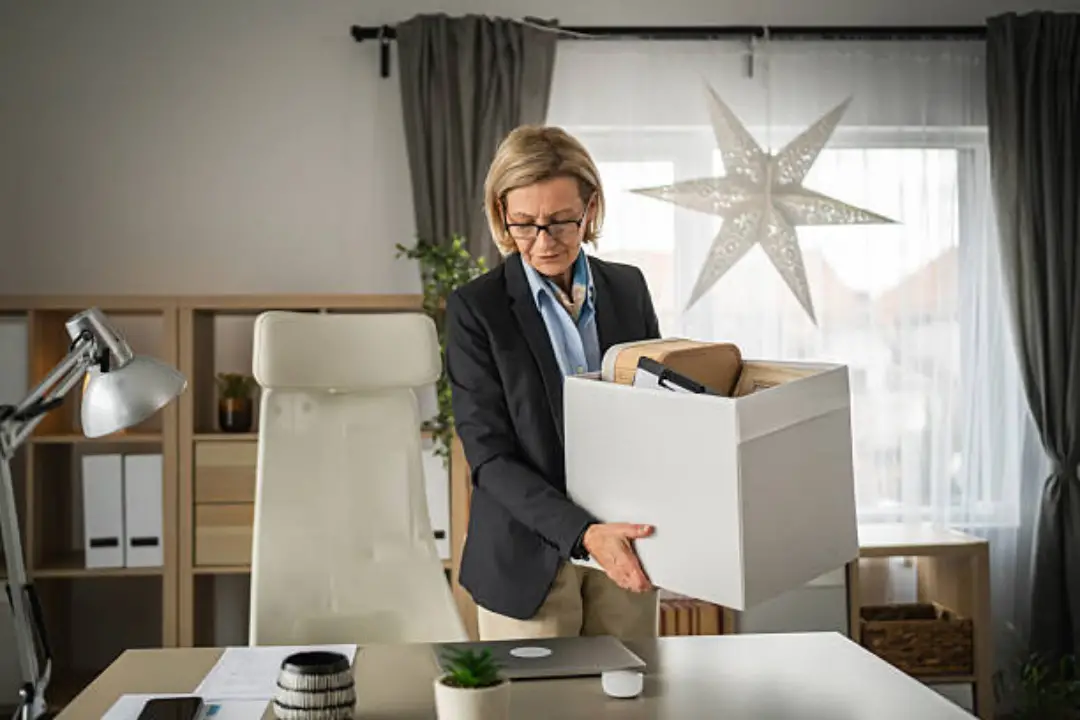
I returned from my fifteen-day trip expecting to collapse into my own bed, but when I opened the door to my bedroom, the bed was gone. In its place stood a modern white bed with decorative pillows that looked like they belonged in a magazine. The walls I’d painted soft peach were now cold gray. My photographs—my wedding to Lewis, my children as babies, my husband’s warm smile—had been removed from the walls and replaced with abstract art I’d never seen before.
My daughter-in-law Valerie appeared in the doorway, leaning against the frame with a smile that didn’t reach her eyes. She wore a wine-colored dress, her hair freshly styled, nails perfectly manicured. She looked victorious.
“Do you like how it turned out, Mother-in-law? We redecorated. The house needed something more modern, more functional.” She walked closer, running her hand along the gray wall. “And this room is perfect for me. Better light, more space. Robert and I really needed it.”
My hands began to shake. I clenched them into fists. “Where are my things? Where is my bed?”
Valerie sighed as if I were a child throwing a tantrum. “In the garage, stored safely. We thought you could stay in the guest room. It’s smaller, yes, but at your age you don’t need that much space. Besides, this way you don’t have to climb stairs every day.”
Every word was a slap. I didn’t scream. I didn’t cry. I looked her straight in the eyes—eyes that now shone with contempt—and understood something that broke my soul. To her, I wasn’t a person. I was an obstacle, an old piece of furniture that needed moving.
I took a deep breath. “You want a space just for yourself?”
She smiled wider, thinking she’d won.
“Perfect,” I continued with a calmness I didn’t know I possessed. “Today you’re going to start looking for a new house to live in.”
Her smile froze. The color drained from her face. “What did you say?”
“You heard me, Valerie. If you need your own space so badly, get your own house. This one is mine.”
But I couldn’t have imagined what I would discover in the coming days—a betrayal so calculated, so methodical, that it would destroy me in ways I never anticipated. Because when you trust the people you love, you never expect them to stab you in the back, especially when those people are your own blood.
Valerie looked at me as if I’d lost my mind. She let out a nervous laugh. “Mother-in-law, you can’t be serious. Robert is your son. This is his house too.”
“I bought this house,” I said, my voice firmer now. “I paid for it brick by brick with my own sweat, and nobody asked my permission to touch my things.”
My son Robert appeared in the hallway—the boy I’d carried, raised alone after his father died, to whom I’d given everything. He was in sweatpants and a t-shirt, looking like he’d just woken up even though it was three in the afternoon.
“What’s going on? Why are you yelling?”
“Your wife turned my bedroom into hers without asking me, without even telling me. Did you know?”
Robert avoided my gaze, staring at the floor just like when he was a boy caught in a lie. “Mom… Valerie said it was a surprise. That we wanted to renovate. I didn’t think—”
“You didn’t think, or you didn’t want to think?”
Valerie moved closer to him, taking his arm in a gesture that seemed more possessive than protective. “Robert, your mom is exaggerating. We just made improvements. The house was so outdated. We did it for everyone’s good.”
“For everyone’s good?” I felt something hot rising in my chest. “Where is the good for me in all of this?”
I needed to see my things with my own eyes. I went down to the garage with them following. When I opened the door, the smell of dampness hit me. There was my furniture—my antique wooden dresser that had belonged to my mother, my disassembled bed leaning against the wall, my boxes. I opened one with trembling hands and found my photographs thrown in carelessly, some with broken frames. The photo of my wedding to Lewis—the glass shattered right over his smiling face.
Something inside me broke.
“We stored them carefully,” Valerie said from behind, but her voice sounded hollow.
I clutched the broken frame to my chest. “I need to be alone.”
“Mom,” Robert tried to approach.
“I said I need to be alone,” I shouted, my voice echoing off the garage walls.
That night I lay in the small guest room bed—hard mattress, smell of disuse—listening to Valerie and Robert laughing in my bedroom. Sometime in the middle of the night, I heard them making love. And I, the owner of that house, lay there wondering when my life had turned into this.
But what they didn’t know was that this humiliation was just the beginning.
I didn’t sleep. At four in the morning I gave up and went to the kitchen to make chamomile tea. Sitting at the table with the warm mug in my hands, memories washed over me. I remembered when Lewis and I were young, dreaming of our own house. We’d lived in a rented two-bedroom apartment with paper-thin walls. Lewis worked as a mechanic, I sold tamales in the mornings. We saved every single dollar.
It took us eight years to save twenty thousand for the land—an empty lot in a rough part of town, far from everything, with no utilities. But it was all we could afford. When we signed the deed, Lewis picked me up and spun me around in the dusty lot. “We’re going to build our future here, my love.”
I was thirty-two. He was thirty-five. We never got to build it together.
Two years later, Lewis died when a car ran a red light and hit him on his way to work. I was left alone with Robert, who was fifteen, and Lucy, who was twelve, with no money and just a piece of empty land. But I’d made a promise at his grave: our children would have that home.
I took two jobs, sometimes three. I cooked in a diner from six in the morning to two in the afternoon, then cleaned offices from four to nine at night. On weekends I sold gelatin desserts and cakes at children’s parties. I slept four hours a day. My hands became calloused, my back began hurting constantly. But I kept saving.
It took me fifteen years to save eighty thousand dollars for construction—fifteen years of watching other mothers go to school festivals while I worked, fifteen years without buying new clothes, without movies, without treating myself to anything. Everything went to the house.
When we finally finished building it, I was forty-nine. Robert was thirty and came with Valerie, his girlfriend of six months. She walked in looking at everything with disinterest, not knowing that every tile had cost me a double shift, that every window represented a month of not eating meat, that the spacious living room existed because I’d worn shoes with holes for two years.
Lucy, however, cried. My daughter hugged me and whispered, “You did it, Mom. Dad would be so proud.”
Now, at sixty-seven, sitting in my kitchen at four in the morning, I wondered: what was it all for? To end up displaced in my own house, for my daughter-in-law to erase my history as if it were worthless, for my son to allow them to treat me this way.
Robert came down in his boxers and t-shirt, eyes swollen with sleep. He was surprised to see me.
“Mom, what are you doing up?”
“I can’t sleep in that bed. My back hurts.”
He opened the fridge, poured water, stood there not looking at me.
“Mom, I know you’re upset, but—”
“Do you know how much this house cost me, Robert? How many nights I worked without sleep so you could have a roof over your head? How many times I skipped meals so you could eat three times a day?”
“Mom, don’t start with that.”
“No, son. I need you to understand. This house isn’t just walls and a roof. It’s my blood. It’s my life. And you two are treating it like property you can remodel whenever you feel like it.”
Robert put the glass down hard. “So what do you want me to do? Tell Valerie to undo everything? We already spent fifteen thousand dollars on the remodeling, Mom. Fifteen thousand.”
I froze. “Where did you get that money?”
“We have our savings.”
But something in his tone told me he was lying. When he lied, he scratched the back of his neck and avoided eye contact—just like he was doing now.
“Robert, look at me.”
He didn’t.
“What did you do?”
“Nothing, Mom. We just improved the house.”
“Did you use my money?”
“No.”
“Then what?”
Silence. Heavy, crushing silence.
For the next three days, I acted as if nothing had happened—as if I’d accepted my new place in the hierarchy of my own house. I made breakfast, cleaned, smiled when necessary. But inside, every fiber of my being was on alert, watching, listening.
On the third day, Valerie went to the salon. “I’m getting my hair done, Mother-in-law. I’ll be back in three hours.”
Robert was at work. The house was empty. It was my chance.
I went upstairs slowly, holding my breath. I entered what had been my room. Valerie’s perfume saturated the air, making me nauseous, but I pushed forward. I opened the desk drawers.
Papers. Lots of papers. Invoices for furniture: forty-five hundred dollars at a luxury decor store. Payment receipts to an interior designer: three thousand dollars. And then I found something that made my blood run cold.
A manila folder containing documents printed from the internet about property possession rights through improvements. Legal articles highlighted in yellow. Notes in Valerie’s handwriting: “Lawyer consultation $500.” “Document all improvements.” “Before and after photos.”
Deeper in the drawer, photocopies of the deed to my house with sticky notes: “Changed to joint name?” “How much possession time is needed?”
Valerie hadn’t redecorated for fun. She was building a legal case to claim rights to my house—the house I’d built with fifteen years of sweat and tears.
I took pictures with my old phone, hands trembling. I put everything back exactly as it was and went downstairs.
That night, I waited. At eleven o’clock, I heard Valerie talking on the phone in the backyard. I went to the guest room window overlooking the yard and watched through thin curtains.
“It’s almost ours, Mom. I swear,” she said excitedly. “The old lady is confused. She says she’s going to kick us out, but she can’t. Robert is her son.”
Silence while she listened.
“No, she doesn’t know about the loan yet. Robert is scared of her.” She laughed. “Imagine her face when she finds out we used the house as collateral, but by then we’ll have everything sorted out.”
My heart stopped. Loan. Collateral.
“The plan is simple,” Valerie continued. “We keep investing in improvements. The more money we put in, the stronger our legal case. The lawyer said if she tries to kick us out, we can counter-sue for the investments.”
“And if she gets difficult, well, she’s already sixty-seven. How much time does she have left? Five, ten years max? After that, this house will be worth over two hundred thousand with all our work. We’ll sell it and buy something better, just like you always wanted.”
Tears rolled down my cheeks, but I made no sound.
“Robert is a fool, but he’s easy to manipulate. His mom has him so traumatized he’ll do anything not to disappoint her. I know what I want, and I’m going to get it.”
I moved away from the window and lay in my small bed, staring at the ceiling, my heart pounding. Now I knew the truth. It wasn’t about taking over a room. It was a calculated plan to steal my house. And Robert knew.
That night I made a decision. I wasn’t going to scream or cry anymore. I was going to be smart. I was going to plan. And when I struck back, it was going to hurt so much they would never forget.
I called my daughter Lucy. “Honey, I need you to come home. I need your help now.”
Lucy arrived two days later. Those two days were the longest of my life. When she finally walked into the kitchen, I broke down and told her everything. She held me tight.
“No more, Mom. This ends today.”
The next afternoon, Valerie was hosting friends for lunch. “Mother-in-law, some friends are coming over. Can you make your enchiladas? And please stay in your room—we need privacy.”
I made the enchiladas, served them. When I brought plates to the living room, one of Valerie’s friends—a blonde wearing sunglasses indoors—said to Valerie, “How convenient to have live-in help, right?”
Valerie laughed. “Very convenient. Although sometimes you have to tell her how to do things. The older generation had different standards.”
Another friend looked at me. “And do they pay you for cooking and cleaning?”
Valerie took a sip of wine. “No, but we give her room and board. That’s enough. Besides, she’s family.”
The laughter exploded. I stood there, cheeks burning, feeling each laugh like a slap.
“Mother-in-law, can you clear these plates?” Valerie said. “We’re done.”
I took the plates back to the kitchen with shaking hands. And there, standing in front of the window, something inside me cracked—not loudly, but like glass fracturing, a fine break that changes everything.
“Mom.”
I turned. Lucy stood in the doorway with her suitcase, wearing jeans and a simple blouse. But what I noticed most were her eyes—filled with tears of rage.
“How long have you been here?”
“Long enough to hear everything. Long enough to understand what’s happening in this house.” She dropped her suitcase and hugged me tight. “This ends today.”
Lucy walked into the living room with firm steps. I followed. Valerie’s smile froze when she saw Lucy.
“Lucy, what a surprise.”
“Hello, Valerie,” my daughter said, voice cold as ice. “I came to spend a few days with my mom. Hope you don’t mind me using my old room. Oh wait, that’s right. It’s yours now, isn’t it?”
Silence filled the room.
“I’m already settled in with Mom,” Lucy continued, smiling without kindness. “We have a lot to talk about. Legal matters about property inheritance, that kind of thing.”
All eyes turned to me. “That’s right, honey. A lot of things to review.”
I saw the color drain from Valerie’s face. She knew. She knew her game was over.
Valerie’s friends left half an hour later. Lucy and I sat at the dining room table with her laptop and papers spread out. I’d given her my phone with the pictures from Valerie’s desk.
“This is serious, Mom. Very serious.”
Valerie walked in. “What are you two doing?”
“Reviewing documents. Mom’s legal affairs.”
“What documents?”
“The ones for the house. The deed, payment records—everything that proves who owns this property.”
“No one’s saying it’s not your house.”
Lucy took out her phone and pressed the screen. Suddenly, Valerie’s voice filled the room—the recording from the backyard. “It’s almost ours, Mom. The old lady is confused…”
The color drained from Valerie’s face.
“Sit down,” Lucy commanded.
Valerie collapsed onto the sofa.
“Now we’re going to talk, and you’re going to tell me the truth. What loan?”
Valerie’s eyes filled with tears. “Robert took out a loan.”
“For how much?”
Silence.
“How much?”
“Twenty-five thousand dollars.”
I felt punched in the stomach.
“And what did you use as collateral?”
“The house,” Valerie whispered. “But Robert forged the signature.”
She covered her mouth, but it was too late. The words were out.
“What did you just say?” My voice was barely a whisper.
Valerie started crying. “We didn’t want to do it like this, but we needed the money. Robert has debts—credit cards, personal loans. If we didn’t pay, they were going to sue him.”
“And your solution was to steal from his mother,” Lucy’s voice was steel. “To forge her signature.”
The front door opened. Robert walked in with groceries, whistling, then stopped when he saw us. “What’s going on?”
“Sit down, Robert.”
He sat next to Valerie. Lucy took out a folder and began reading aloud every document, every receipt, every piece of evidence: the fifteen thousand in renovations, the legal documents researching how to dispossess me, the twenty-five thousand dollar loan with forged signature, the recorded conversations.
“Is it true?” I asked my son. “Did you forge my signature?”
Robert covered his face. “Mom, the debts. I didn’t know what to do.”
“Did you forge my signature?”
He looked up with red eyes. “Yes.”
That simple word fell like a stone into a bottomless well.
“Then this is what’s going to happen,” Lucy said. “You have forty-eight hours to get out of this house. Take only your clothes and personal belongings. All the furniture you bought with fraud money stays here.”
“You can’t kick us out,” Valerie shouted. “This house belongs to Robert too!”
“It was his inheritance until he decided to rob me while I was still alive.”
“Mom, please,” Robert begged, kneeling. “Please give me another chance.”
“Love doesn’t steal, Robert. Love doesn’t lie. Love doesn’t plan to ship its mother off to a small apartment.”
Lucy placed documents in front of them. “Here’s an agreement acknowledging you have no rights to this property. If you don’t sign, we file fraud charges tomorrow morning.”
“If we sign?” Valerie asked.
“If you sign and leave without trouble, we won’t press charges.”
Robert took the pen with trembling hand and signed. Valerie did the same, tears staining the paper.
“Forty-eight hours. And if you damage anything or cause problems, the deal is off and you’re going to jail.”
The next two days were silent torture. Robert and Valerie moved through the house like ghosts, packing their things. On Monday morning—the deadline—we sat at the dining table one last time.
Lucy opened a thick folder. “Before you go, I want you to understand exactly what you did.”
She placed the deed on the table. “Mom worked fifteen years to save eighty thousand dollars. Fifteen years cleaning, cooking, selling things while you studied and lived normally.”
She placed bank statements down. “Charges at department stores for eighty-seven hundred dollars. Valerie, your name on several receipts. You used her card without authorization.”
Next came the loan contract. “Twenty-five thousand borrowed at thirty percent annual interest with Mom’s forged signature. Do you know what would have happened if you didn’t pay? Mom would have had to hire lawyers, go to court, prove fraud—all while you enjoyed stolen money.”
She placed legal consultation quotes down. “Valerie, you got three different legal opinions on how to claim possession rights. This wasn’t impulse. It was calculated over months.”
Valerie stood abruptly. “What do you want me to say? That I’m sorry? I am. But don’t pretend your mom is a saint. She’s always manipulated Robert, made him feel guilty like he owes her his whole life.”
“How dare you?” I began.
“It’s the truth,” Valerie snapped. “It’s always ‘Mom suffered so much.’ ‘Mom worked so hard.’ Yes, she did. But that was her choice. Robert didn’t ask her to work herself to death.”
“You’re right,” I said, surprising everyone. “I’m not perfect. Maybe I was too present, used my sacrifice as a weapon. But none of that justifies stealing from me, forging my signature, planning to dispossess me.”
I stood, looking Robert in the eye. “If you were upset with me, you should have talked. You had no right to destroy me.”
Robert’s tears streamed down. “Mom, I never wanted to destroy you. I felt so pressured—the debts, Valerie wanting a better house. And this house was so big just for you. I thought if we could have it, everything would be fixed.”
He swallowed hard. “I thought you wouldn’t notice until too late. By then everything would be legally settled.”
There it was—the naked truth. Not a mistake, but a deliberate plan.
Lucy placed a final document down. “Mom’s new will. This house, upon her death, passes entirely to me. Robert is explicitly excluded.”
“You’re disinheriting me.”
“Yes. Because a son who steals from his mother doesn’t deserve to inherit anything from her.”
“But you always said the house was for your children.”
“It was for my children. But you stopped being my son the day you forged my signature.”
Robert broke down, sobbing. “Is there anything I can do to make you forgive me?”
“I don’t know, Robert. Maybe with time. But that doesn’t mean you’ll live here again or that I’ll include you in my will. Some things, once broken, can never be the same. Now go before I regret not pressing charges.”
We watched them pack the last suitcases, bring everything down. Four large suitcases, three boxes. That was all they were taking from three years here. Robert loaded everything into his car. Before getting in, he turned.
“Take care, Mom.”
I closed the door. I stood on the other side, listening to the engine start, to my son driving away, maybe forever.
Lucy hugged me from behind. “You did the right thing, Mom.”
“Then why does it hurt so much?”
“Because even though he did a terrible thing, he’s still your son. That’s the hardest part.”
I cried in my daughter’s arms—for the son I lost not to death, but to betrayal. And that kind of loss hurts in ways death never could.
Lucy stayed for two weeks helping me reclaim my space. We brought my furniture back up from the garage, repainted the walls peach, hung my photographs. When we finished, I stood in the center of my room and turned slowly. “I’m home again.”
The months that followed brought news about Robert and Valerie through neighborhood gossip. They’d moved to a tiny apartment in the industrial park for nine hundred fifty a month. Robert had sold his car. The loan shark sued him, and thirty percent of his salary would go directly to paying the debt for the next five years.
Valerie got a second job. I saw her one night at the 7-Eleven near my house in the red and green uniform, attending customers with an exhausted face. Our eyes met. She turned pale. I didn’t say anything. I paid for my things and left. But I saw in her eyes everything she’d lost.
Four months after the eviction, Robert called. “Mom, I need to talk to you.”
We met at a coffee shop. He arrived looking unrecognizable—weight loss, gray hairs, deep dark circles, wrinkled clothes.
“Thanks for coming. I came to apologize—for real, without excuses. What I did was unforgivable. I stole from you, betrayed you, tried to take what was yours. Then like a coward, I tried to blame you.”
“What do you expect me to do with that apology?”
“Nothing. I don’t expect forgiveness. I don’t deserve it. I just needed you to know that every day I wake up with the weight of what I did.”
“Does Valerie know you’re here?”
“Valerie and I separated. It didn’t work. When the money ran out, we realized we had nothing else. She went to her mother’s two weeks ago. We signed divorce papers yesterday.”
“Why are you telling me this?”
“Because I needed you to know I’m paying. That life is making me pay for every mistake. I’m going to spend the rest of my life trying to be a better person—not for you, for me.”
I looked at him—my son who’d once been a sweet boy bringing me flowers from the garden. “Robert, I don’t know if I can ever fully forgive you. But I hope you find peace.”
“Does that mean—”
“It means I’m open to seeing what you do with your life from now on. Words are easy. Actions are what count.”
He stood to leave. “I love you, Mom. I’ve always loved you, and I’m so sorry I hurt you.”
I watched him go, walking slowly with slumped shoulders.
It’s been eight months now since they left my house. Eight months that feel like a lifetime.
Now when I wake up, I open the curtains and let the sun fill my room. Everything is in its place. And so am I.
I’ve learned to live alone again. It’s not sad loneliness—it’s chosen quiet. Lucy visits once a month. We cook together like when she was little. She teaches me to use my phone better.
“Mom, you need to meet someone,” she told me on her last visit. “A partner, some friends.”
I smiled. “I have friends. Mrs. Lupita and I play dominoes on Thursdays. I joined a church craft group. And Mr. Fermine invited me to Saturday afternoon dances at the community center.”
“Really? And have you gone?”
“I went once. I danced with a very kind gentleman named Arthur—seventy-two, a widower. He stepped on my feet twice, but it was fun.”
My daughter hugged me. “I’m so happy to see you like this.”
“I was angry for a long time. But anger is like poison you drink hoping it will kill the other person. It only poisons you.”
Robert has called me three times in these eight months—short, awkward conversations at first. He tells me he got a new job, better paying. That he’s living alone, learning to cook. That he’s going to therapy.
I haven’t given him false hope. I haven’t said all is forgiven, because it’s not. But I listen.
Maybe with time we can build something new. Not what we had before—that’s dead. But maybe something different, more honest, more real. Or maybe not. And that’s okay too.
Because I learned that a mother’s love doesn’t mean sacrificing yourself until you disappear. True love includes boundaries, includes respect, includes the dignity to say: this far, and no further.
This house I built with my own hands—brick by brick, dollar by dollar—is no longer just a building. It’s a symbol. It’s proof that I can survive impossible losses, that I can get up when knocked down.
My worth doesn’t depend on whether my children acknowledge me or not. I am worthy because of who I am, what I’ve built, the battles I’ve won and lost, every scar I carry with dignity.
Now when I walk through my house, I touch the walls and whisper, “We endured. You and I—we endured together.”
Tonight I sit in my garden with chamomile tea. The colorful lights I never took down illuminate the trees. It’s cold, but I like the fresh air on my face. It reminds me I’m alive, that I survived.
It was worth fighting for what was mine. It was worth setting boundaries even though it hurt. It was worth saying no even when they called me selfish. It was worth defending myself even if it meant losing, temporarily or forever, my relationship with my son.
Because at the end of the day, when I close my eyes in my bed—in my room, in my house—I can sleep in peace. I don’t have to wonder who will try to dispossess me tomorrow. I don’t have to walk on eggshells in my own home.
I am free. And that freedom, that peace, is priceless.
To all the women who have given so much, who have sacrificed so much, who feel like they can’t go on—you have the right to set boundaries. You have the right to say enough. You have the right to protect what you built with your own hands.
You are not bad mothers for demanding respect. You are not selfish for putting your well-being first. Generosity is beautiful, but when it turns into abuse, when sacrifice erases you as a person, it’s not love. It’s self-destruction. And you are worth more than that.
If someone tries to take what is yours—whether it’s a house, your dignity, or your peace—you have the right to defend what belongs to you. Even if that means walking away from people you love, even if that means being alone temporarily, even if that means being called harsh or bitter.
Because chosen solitude is a thousand times better than company that destroys you.
It’s never too late to take your life back. I was sixty-seven when I faced the greatest betrayal of my life. Many told me I was too old to fight, to start over, to be alone. But here I am at sixty-eight—stronger than ever, more at peace than ever, more myself than ever.
Age doesn’t define you. The mistakes of others don’t define you. What defines you is how you respond when life hits you—whether you stay down or get up, whether you accept abuse or say “never again.”
I chose to get up. And if you’re going through something similar, you can get up too. You have that strength inside you. Maybe you don’t believe it now. Maybe you feel broken, finished, too tired to fight. But the strength is there, waiting.
You just need to make the decision. One decision at a time, one day at a time, one boundary at a time.
And one day you’ll wake up and realize you survived, that you moved on, that you got your life back. And that day you will smile and know that every tear, every fight, every moment of pain was worth it.
Because in the end, the only thing that really matters is this: Can you look at yourself in the mirror and be proud of the woman you see? Can you sleep in peace knowing you defended yourself? Can you live with dignity in the space you built?
If the answer is yes, then you’ve won.
And I, Emily Fuentes, sixty-eight years old, owner of this house I built with my own hands, can say with all my heart: I won.

Lila Hart is a dedicated Digital Archivist and Research Specialist with a keen eye for preserving and curating meaningful content. At TheArchivists, she specializes in organizing and managing digital archives, ensuring that valuable stories and historical moments are accessible for generations to come.
Lila earned her degree in History and Archival Studies from the University of Edinburgh, where she cultivated her passion for documenting the past and preserving cultural heritage. Her expertise lies in combining traditional archival techniques with modern digital tools, allowing her to create comprehensive and engaging collections that resonate with audiences worldwide.
At TheArchivists, Lila is known for her meticulous attention to detail and her ability to uncover hidden gems within extensive archives. Her work is praised for its depth, authenticity, and contribution to the preservation of knowledge in the digital age.
Driven by a commitment to preserving stories that matter, Lila is passionate about exploring the intersection of history and technology. Her goal is to ensure that every piece of content she handles reflects the richness of human experiences and remains a source of inspiration for years to come.