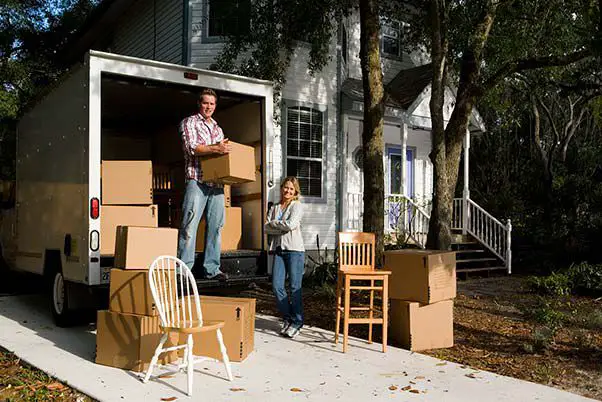
I Secretly Bought A $1 Million House, And On Moving Day I Pulled Up Expecting A Quiet, Happy Start. Instead, I Found My Sister’s Husband And His Family Standing There With Movers, Already Trying To Bring Their Belongings Inside Like The Place Belonged To Them. I Didn’t Blow Up Or Make A Scene—I Opened The Door, Smiled, And Welcomed Them In. They Were Halfway Through Celebrating When One Of Them Froze And Suddenly Shouted, “Wait A Minute!”
The drive up the canyon road took exactly seventeen minutes from the highway exit. I’d timed it during my first visit to the property, then again during the inspection, then three more times just because I liked the feeling of knowing exactly how long it would take to get home. My home. The words still felt new in my mouth, unfamiliar and thrilling in equal measure.
My name is Jenny Caldwell, and I’m thirty-four years old. For the past six years, I’ve been working as a project manager for a commercial construction company, which sounds more glamorous than it actually is. Most days meant mud on my steel-toe boots, dust in my hair that no amount of dry shampoo could hide, and sunrise coffee in a paper cup on job sites while everyone else I went to college with was posting vacation photos from Bali or Santorini or wherever people with normal jobs went when they needed to decompress.
I didn’t buy designer bags. I didn’t take trips beyond the occasional weekend at my parents’ place two hours away. I drove a seven-year-old Honda Accord with a check engine light that had been on so long I’d started to think of it as a dashboard decoration. I lived in a studio apartment in a neighborhood that was “emerging” in the way that real estate agents use that word to mean “not quite safe yet but getting there.”
And I saved. In silence. Relentlessly. Every bonus. Every raise. Every overtime check that came from working Saturdays when everyone else was brunching or shopping or living the life they posted about on social media.
Because I wanted one thing that was completely, undeniably, legally mine.
A house. Not just any house—a specific house that I’d found almost by accident two years ago while driving through the hills trying to clear my head after a particularly brutal week at work. Glass walls. Modern architecture. Mountain views that went on forever. A sanctuary carved into the hillside, all clean lines and natural light and the kind of quiet that only comes from being far enough away from everything else.
It had been listed at $1.2 million. Completely out of reach for someone like me, someone who’d grown up in a working-class family where a million dollars was a lottery fantasy, not a real estate goal. But I’d saved the listing anyway. Looked at the photos so many times I could close my eyes and walk through every room. Used it as motivation on the days when getting up at 5 AM for a job site meeting felt impossible.
Then, six months ago, the price dropped. The sellers were relocating for work, needed to close fast, were willing to negotiate. I made an offer that emptied every savings account I had, liquidated my small investment portfolio, and required me to provide so much documentation to the mortgage company that I’d started to wonder if they wanted my dental records too.
But they approved it. The sellers accepted. And three weeks ago, I’d sat in a title company office signing my name so many times my hand cramped, watching the notary stamp document after document that transferred ownership of that beautiful glass house from strangers to me.
I didn’t tell my family about the closing date. Didn’t mention that I’d taken two days off work for the move. Didn’t share the address or send pictures or do any of the things most people do when they buy their first home.
I kept it private for the same reason you lock your front door at night—because some people don’t respect “yours” unless you make it impossible to miss.
My family loved me, I didn’t doubt that. But they also had a very flexible definition of boundaries, particularly my older sister Lucy and her husband Steve. They had three kids, lived in a crowded three-bedroom rental in a less expensive part of town, and had spent the last several years making it very clear that they thought my choices—my long hours, my lack of social life, my “obsessive” saving—were somehow proof that I didn’t understand what really mattered in life.
“You can’t take it with you,” Lucy liked to say, usually while asking to borrow money for something the kids needed, or Steve’s business needed, or their car needed, or whatever the crisis of the month was.
I’d helped when I could. Loaned money that never got paid back. Cosigned for things I shouldn’t have. Let them stay in my studio apartment when their landlord raised the rent and they needed a month to “figure things out,” which meant I’d slept on my own couch for six weeks while they occupied my bed.
But the house was different. The house was mine. And I’d learned, slowly and painfully, that with Lucy and Steve, “sharing” meant “giving up,” and I wasn’t prepared to give up the one thing I’d worked six years to earn.
So I’d kept it secret. Told my parents I was moving but kept the details vague. Let Lucy assume I was upgrading to a bigger apartment. Said nothing about the location or the price or the fact that I’d achieved something that should have been impossible for someone with my background and my salary.
The moving truck I’d hired was scheduled to arrive at 5 PM. I’d timed it so I could leave work at 3, stop by my old apartment for one final check, and arrive at the new house with enough time to do a walk-through before the movers showed up with the furniture I’d carefully selected over the past month. Nothing extravagant—I’d learned to stretch my budget—but nice. New. Mine.
I pulled off the highway at 4:47 PM, thirteen minutes ahead of schedule. The canyon road wound up through increasingly expensive neighborhoods, each turn revealing houses that got larger and more impressive, properties that represented the kind of wealth I’d never imagined having access to.
And then I rounded the final curve and saw it—my house, my glass-walled sanctuary, glowing in the late afternoon sun exactly the way it had in my dreams.
Except there was a massive moving truck in the driveway. Not my truck—my movers drove a white truck with blue lettering. This was a rental, one of those orange and white U-Hauls that people use for DIY moves, parked at an angle like someone had pulled in fast and couldn’t be bothered to straighten out.
My foot hit the brake automatically. My car rolled to a stop at the bottom of the driveway, and I just sat there, staring, trying to make sense of what I was seeing.
Movers—or people who looked like movers—were carrying furniture into my house. A faded brown sofa. A bulky cabinet that had clearly seen better days. Boxes stacked on a dolly. Through the floor-to-ceiling glass walls that had sold me on the house in the first place, I could see people inside. Multiple people. Moving around my living room like they belonged there.
And kids. I could see kids sliding across my brand-new hardwood floors in their socks, the kind of sliding that leaves scuff marks and makes homeowners wince.
My hands started shaking on the steering wheel.
I put the car in park and pulled out my phone, my fingers not quite steady as I opened the camera app. Before I did anything else—before I confronted anyone, before I let anger take over—I hit record.
Because I’d learned something from six years of construction management: document everything. Every conversation. Every decision. Every moment when someone tries to tell you something is different than what you know to be true.
I got out of the car, phone still recording, and walked up the driveway toward my house. Each step felt surreal, like I was moving through someone else’s nightmare instead of my own life.
That’s when I heard his voice.
Steve. My brother-in-law. Standing on my terrace—the terrace I’d imagined having coffee on every morning, the one with views that stretched to the mountains—giving directions like he was directing his own personal moving crew.
“Careful with that table. It’s an antique.”
It wasn’t an antique. I’d seen that table in their rental. It was from IKEA, assembled wrong, one leg shorter than the others so it wobbled.
“Move the TV stand to the right. Yeah, right there. This is going to be my office.”
His office. In my house.
I stood at the bottom of the three steps that led to the front door and just watched for a moment, my phone still recording, my brain trying to process the absolute audacity of what I was witnessing.
Through the glass, I could see Lucy now. My older sister, thirty-seven years old, mother of three, wearing yoga pants and an oversized sweatshirt, looking completely at home as she directed her kids to take off their shoes. In my entryway. On my floors.
The front door was unlocked—they’d left it standing open, probably for the movers. I pushed it wider and stepped inside.
The immediate smell of takeout hit me. Chinese food, based on the containers I could see spread across the kitchen island. My kitchen island. The one I’d spent actual months picking out in my head, comparing quartz colors and edge profiles and overhang measurements. There were soy sauce packets and crumpled napkins and used chopsticks scattered across the surface I’d imagined keeping pristine and perfect.
Lucy turned at the sound of my footsteps, and her face broke into a bright, completely genuine smile. Like she was delighted to see me. Like this was all perfectly normal.
“Jenny! Oh my God, you’re here! We were hoping you’d get here before it got too late. Isn’t this place amazing? The realtor said you wouldn’t mind—said it was a family property situation. When Steve’s mom mentioned you’d been helping with the down payment, we figured it was like a family investment thing.”
The words tumbled out so fast I could barely track them. Family property. Down payment. Investment.
None of those words were true. But the way Lucy said them, with such conviction, such certainty, I could see how she’d convinced herself. How she’d taken whatever tiny grain of misunderstanding or miscommunication and built an entire narrative around it.
“The realtor said I wouldn’t mind?” I asked, my voice surprisingly calm given that my heart was pounding hard enough to hurt.
“Well, your realtor. The one handling the family trust stuff. Steve’s mom set it up—she said since you were contributing, it made sense for us to be the ones actually living here since we need the space more. You know, with the kids and everything.”
Family trust. Steve’s mom. Contributing.
Each word was a brick in a wall of fiction that Lucy and Steve had apparently constructed without my knowledge or consent.
“Where is Steve?” I asked.
“On the terrace. He’s trying to figure out the outdoor furniture situation. Did you pick out patio stuff yet? Because we have some pieces that would work great out there.”
I walked through my living room—past the movers who were setting down boxes marked “MASTER BEDROOM” and “STEVE’S OFFICE”—and out onto the terrace where Steve stood with his hands on his hips, surveying the view like a conquering general surveying newly acquired territory.
“Steve,” I said.
He turned, and his expression was even worse than Lucy’s had been. Not surprised to see me. Not concerned. Just pleased, like I was exactly who he’d been waiting for.
“Hey, Jenny! Perfect timing. I wanted to talk to you about the HOA rules. Mom said there are some restrictions on exterior modifications, but I’m thinking we could probably get a variance for a pergola. Would really make the space more usable.”
I stared at him. At this man I’d known for twelve years, who’d married my sister when I was in college, who I’d helped move three times, who I’d loaned money to more times than I could count, who’d never once paid me back or seemed to think that repayment was even expected.
“Steve,” I said again, “what are you doing here?”
He blinked, confused. “Moving in? I mean, we discussed this. Mom set everything up with the property trust. She said you were cool with it since you couldn’t really afford the place on your own anyway, and it made more sense to have family here than to lose the investment.”
Property trust. Couldn’t afford it. Investment.
More bricks in the fiction wall.
“Steve,” I said, my voice still eerily calm, “there is no property trust. There is no family investment. I bought this house. By myself. With my money. It’s in my name. Only my name.”
The confusion on his face deepened. “But Mom said—”
“I don’t care what your mom said. She doesn’t have anything to do with this house. Neither do you. This is my house.”
Behind me, I heard Lucy’s voice, sharp now: “Jenny, what are you talking about? This is the family property. The one Steve’s mom helped set up. You’re part of it, obviously, but so are we. That’s what family means.”
I turned to face her. Through the glass walls, I could see her kids running around my living room, jumping on my new sofa, leaving fingerprints on my windows. I could see the movers still bringing in boxes. Could see takeout containers multiplying on my kitchen island.
And I could see my phone, still recording from where I’d propped it on the edge of the terrace railing when I’d walked outside.
“Lucy,” I said, “I need you to listen to me very carefully. There is no family trust. There is no shared investment. I bought this house with money I saved. I alone am on the deed. I alone have a mortgage in my name. Whatever Steve’s mom told you is wrong.”
“But she showed us the paperwork—”
“She showed you something that wasn’t real. Or she misunderstood something. Or she lied. I don’t know which, and right now I don’t care. What I care about is that you and Steve and your kids are in my house without my permission, with your furniture, acting like you own a place you have zero legal claim to.”
The smile had finally disappeared from Lucy’s face. “You’re being dramatic. We can share it. We’ll split the mortgage payment—”
“You can’t afford to split this mortgage payment. You couldn’t afford to split my studio apartment rent. You’re three months behind on your current rent, which I know because your landlord called me asking if I’d cosigned anything, which thank God I didn’t this time.”
“That’s not fair—”
“What’s not fair is you bringing movers to my house on my moving day and treating it like it’s yours.”
Steve had come in from the terrace now, his expression shifting from confused to defensive. “Mom wouldn’t lie about something like this. She said she’d worked it out. That the family needed this space more than you did living alone. That it was selfish to keep a house this size to yourself when we have three kids.”
Selfish. There it was. The word they always used when I set boundaries, when I said no, when I prioritized my own needs over their convenience.
“Did your mom show you a deed with your name on it?” I asked.
“Well, no, but she said it was being processed—”
“Did she show you mortgage documents?”
“She said those were confidential—”
“Did you speak to any realtor? Any title company? Any lawyer? Anyone in any official capacity who confirmed that you had any legal right to be here?”
The silence that followed was answer enough.
“Or did your mom just tell you that she’d ‘worked it out’ and you believed her because it was what you wanted to hear?”
Lucy’s face was red now. “This is cruel, Jenny. We’re your family. We need this. You know how cramped our place is. You know how hard things have been.”
“I do know. Which is why I’ve loaned you money I never got back. Why I cosigned for a car you defaulted on, which destroyed my credit for three years. Why I let you live in my studio apartment for six weeks. I know exactly how hard things have been for you. But that doesn’t give you the right to my house.”
“What are we supposed to do?” Steve demanded. “We gave notice at our rental. We’re supposed to be out by the end of the week. Mom said this was set up, that we could move in, that it was all arranged.”
“Then you need to talk to your mom about why she told you something that wasn’t true. But you need to do it somewhere else. Because this is my house, and you need to leave.”
“We have nowhere to go!” Lucy’s voice had climbed to a near-shout.
“That’s not my emergency. You made plans based on information you didn’t verify. You brought movers and your furniture and your family to a house you didn’t actually have permission to be in. Those are your decisions and your consequences. Not mine.”
One of Lucy’s kids—Mason, the eight-year-old—appeared in the doorway. “Mom, are we really moving here? Jordan said this is our new house.”
Lucy’s eyes filled with tears. “Honey, just… go play with your brother for a minute, okay?”
“But Mom—”
“Just go!”
He ran off, and Lucy turned back to me. “You’re really going to do this? You’re going to throw us out? Your own sister?”
“I’m not throwing you out. You were never in. You showed up without permission and tried to move into a house that doesn’t belong to you.”
“Because we thought it did! Because we were told it did!”
“By someone who had no authority to tell you that. Lucy, think about this logically. If someone told you they’d arranged for you to move into a house, wouldn’t you want to see proof? Wouldn’t you want to verify?”
“We trusted family,” Steve said, his voice bitter now. “I guess that was our mistake.”
“No, your mistake was assuming that your mom could give away something that wasn’t hers to give. My house is not a family resource. It’s my property. That I bought. That I own.”
The movers had stopped moving, clearly picking up on the tension. One of them—a older guy with a clipboard—approached cautiously. “Uh, folks? We’re getting paid by the hour, but this seems like a situation we maybe shouldn’t be in the middle of. Should we start loading stuff back into the truck?”
“Yes,” I said.
“No!” Lucy said simultaneously.
The mover looked between us, then at Steve, then back at his clipboard like it might have answers. “Okay, so, legally speaking, who actually has the right to say what happens here?”
“I do,” I said. “I’m the owner. I have the deed. I can show you the paperwork.”
“We’re family,” Lucy tried. “This is a family matter—”
“Ma’am,” the mover said, “I appreciate that this is complicated, but if she’s got the deed and her name is on it, then from our perspective, she’s the client. And if the client is saying to remove the items that aren’t hers, then that’s what we need to do.”
“This is insane,” Steve muttered.
“What’s insane is that you moved furniture into someone else’s house without verifying you had the right to be here.”
“We were told—”
“By someone who was wrong! Steve, your mom doesn’t have some magic ability to redistribute property. She can’t just decide that because your family needs space, you get to have my house. That’s not how ownership works. That’s not how anything works.”
My phone, still recording from the terrace, had captured this entire exchange. Every word. Every claim about family trusts and arrangements and contributions. All of it documented.
“Here’s what’s going to happen,” I said, my voice steady despite the adrenaline making my hands shake. “The movers are going to load your furniture back into the truck. You’re going to gather your family and leave. And then you’re going to figure out your housing situation without involving my property.”
“And if we refuse?” Steve challenged.
“Then I call the police and report you for trespassing. Because that’s what this is. Trespassing. You’re in my house without my permission, and you’re refusing to leave. That’s a crime.”
Lucy’s face crumpled. “You’d really do that? You’d call the cops on your own sister?”
“I’d really like not to. I’d really like for you to just leave voluntarily and we can all pretend this incredibly awkward misunderstanding never happened. But if you force me to, yes. I will call the police. Because this is my house.”
The movers had already started moving. Without waiting for a final answer, they’d begun picking up boxes, carrying the sofa back toward the truck, removing the physical evidence of Lucy and Steve’s attempted occupation of my space.
Steve pulled out his phone. “I’m calling Mom. She said this was arranged. She’ll explain.”
“Great. Call her. Just do it outside.”
He stalked toward the front door, phone already to his ear. Lucy stood frozen for a moment, tears streaming down her face, before following him.
“Come on, kids!” she called. “Get your shoes. We’re leaving.”
“But you said this was our new house,” Mason protested.
“Plans changed. Let’s go.”
I stood in my living room—my living room, my house, my space—and watched them gather their children and their belongings and their shattered expectations. The movers worked efficiently, loading the truck with the same furniture they’d unloaded less than an hour ago.
Through the windows, I could see Steve pacing on the driveway, phone pressed to his ear, his free hand gesturing wildly. Having what looked like a very intense conversation with his mother, presumably.
Lucy sat on the front steps, her kids clustered around her, all of them looking confused and upset. She wasn’t looking at the house. Wasn’t looking at me. Just staring at nothing while tears ran down her face.
Part of me—a small part that remembered every childhood memory, every sisterly moment, everything we’d been to each other before adulthood and complications and boundaries—wanted to go out there and fix it. To say it was okay, to figure out some compromise, to make everyone happy.
But the larger part—the part that had worked for six years to earn this moment, that had sacrificed and saved and finally achieved something that should have been mine—knew that giving in now would mean never having anything that was truly my own.
The last box came out. The movers closed the truck. The older guy with the clipboard approached me one more time.
“Sorry about all that, ma’am. For what it’s worth, you handled it a lot better than most people would’ve.”
“Thanks. What do I owe you for your time?”
“Nothing. We didn’t complete the move we were hired for, and honestly, loading and unloading the same stuff evens out. You have a nice house. Hope you enjoy it.”
After they left, Steve’s truck pulled out without him coming back inside. Without saying goodbye. Lucy gathered her kids into their minivan, still not looking at the house, at me, at anything.
And then they were gone.
I stood in my empty living room as the sun set through the glass walls, painting everything gold and orange and beautiful. My house. My space. My accomplishment.
Except it didn’t feel the way I’d imagined. It felt hollow and strange and sad in ways I hadn’t anticipated.
I pulled out my phone—the one that had recorded everything—and stopped the recording. Three hours and forty-seven minutes of footage documenting the entire surreal encounter.
Then I called my parents.
“Hi, honey,” my mom answered. “How’s the move going?”
“It’s complicated. Are you free? I need to talk.”
Twenty minutes later, I was on a video call with both my parents, showing them the recording, explaining what had happened, watching their faces cycle through confusion and shock and finally anger.
“Steve’s mother told them WHAT?” my dad demanded.
“That there was a family trust. That I was contributing to it. That they had a right to live here because they needed the space more.”
My mother’s face had gone pale. “Jenny, I am so sorry. Your sister should have known better. She should have verified. This is… I don’t even know what to call this.”
“I think Lucy wanted to believe it,” I said. “She wanted it to be true so badly that she didn’t question it. And Steve’s mom apparently wanted her son to have a house in the hills badly enough that she created a story about how it could happen.”
“What are they going to do?” Mom asked. “About housing?”
“I don’t know. That’s not my problem to solve.”
“But she’s your sister—”
“Mom, if I let them stay, even for a few days, even as a ‘temporary’ thing, I’ll never get them out. You know that. They’ll find reasons why moving would be hard for the kids, why they need just a little more time, why it’s cruel to make them leave. And before I know it, six months will have passed and they’ll be claiming squatter’s rights or something.”
My father nodded slowly. “You’re probably right. But honey, this is going to cause family problems.”
“It already has caused family problems. Lucy and Steve tried to move into my house without permission based on completely false information they never verified. I didn’t create this problem. I’m just refusing to solve it by giving up something that’s mine.”
We talked for another hour. My parents were torn—supportive of me but worried about Lucy, angry about the situation but concerned about the kids, proud of my accomplishment but stressed about the family dynamics this had shattered.
By the time we hung up, it was fully dark. My real movers called—they’d been stuck in traffic and were running late, wouldn’t arrive until morning. Which meant I’d spend my first night in my new house completely alone, with no furniture, no belongings, nothing but an air mattress I’d left in my car just in case.
I inflated it in what would be my bedroom, spread out the sleeping bag I’d also packed, and lay there staring at the ceiling of my million-dollar house, wondering how something I’d worked so hard for could feel so complicated.
My phone buzzed. A text from Lucy:
“I hope you’re happy. The kids are devastated. We have nowhere to go. Mom and Dad’s place is too small. Steve’s mom won’t let us stay with her because she’s ’embarrassed’ by how this turned out. But I guess that doesn’t matter to you, right? You got what you wanted.”
I stared at that message for a long time before responding:
“What I wanted was to move into the house I bought on the day I planned to move in. What I got was my sister and her family trying to take over my house based on lies. I’m sorry you’re in a difficult situation, but I didn’t create it. You did, by not verifying information before making major decisions.”
Her response came immediately: “You’re heartless.”
I didn’t respond to that.
Over the next few days, my phone exploded with messages. Lucy, demanding I “do the right thing.” Steve, claiming I’d “ruined his family’s life.” Steve’s mother, somehow having gotten my number, leaving voicemails about how I was “tearing apart a family” and how I “clearly had no understanding of what it means to sacrifice for others.”
I blocked most of them. Changed my number for the really persistent ones. And slowly, methodically, moved into my house.
My furniture arrived. My belongings found their places. I hung art on the walls and put books on the shelves and slowly transformed the empty glass structure into something that felt like home.
Three weeks after the moving day incident, my doorbell rang. I checked the camera—a safety feature I’d installed immediately—and saw my mother standing outside.
I opened the door. “Hi, Mom.”
“Can I come in?”
I stepped aside, let her into the house she hadn’t seen yet. Watched her take in the space, the views, the life I’d built.
“It’s beautiful, Jenny,” she said finally. “You did really well.”
“Thank you.”
“Your sister is staying at a long-term motel near her kids’ school. It’s… not great. But they’re managing.”
“I’m sorry it’s hard for them.”
“Are you though? Because you haven’t called. Haven’t checked in. Haven’t asked how the kids are doing.”
“Mom, if I call, Lucy will see it as an opening. She’ll ask for money or help or to stay here ‘just temporarily.’ And I can’t do that. I can’t let her turn this into another situation where my boundaries don’t matter.”
My mother sat down on my couch, looking tired. “When did it get like this? When did you and Lucy become so… adversarial?”
“I think it happened gradually. Every time I said yes when I wanted to say no. Every time I loaned money I never got back. Every time I let myself be treated like a resource instead of a person. It built up until this moment where I finally said no to something big, and she couldn’t handle it.”
“She thinks you’re being cruel.”
“I think I’m being clear. There’s a difference.”
“Is there room for any middle ground? Any compromise?”
I looked at my mother—at this woman who’d raised me to be responsible, to be the one who could be counted on, to be the fixer—and saw that she was asking me to be that person again. To solve the problem. To make it easier for everyone else by making it harder for myself.
“Mom, what would compromise look like? They move in here ‘temporarily’ and never leave? I give them money for a deposit on a new place that I’ll never see again? I cosign for something else and ruin what’s left of my credit? Where’s the line where my life gets to be mine?”
She didn’t answer for a long time. “I don’t know,” she finally said. “I just hate that this happened. I hate that our family is broken over a house.”
“It’s not broken over a house. It’s broken because Lucy and Steve felt entitled to something that wasn’t theirs. The house is just where that entitlement became impossible to ignore.”
My mother left an hour later. We hugged, but it felt strained, complicated by the weight of unspoken expectations and disappointed hopes.
That night, I sat on my terrace—the one Steve had claimed as his future office—and looked at the view I’d worked six years to earn. The lights of the city spread out below. The mountains dark against the sky. The silence that came from being far enough from everything else.
My phone was quiet now. Most people had given up trying to convince me to change my mind. Lucy had stopped texting. Steve’s mother had apparently moved on to other dramatic situations that required her attention.
And I was alone in my beautiful house, wondering if I’d done the right thing or just the necessary thing, and whether there was any real difference between the two.
Six months later, I ran into Lucy at a family birthday party for our niece. We hadn’t spoken since moving day. She’d blocked me on social media. I’d heard through my parents that they’d found a new rental, smaller than before but manageable, and that Steve had taken a second job to cover the increased costs.
“Jenny,” she said when she saw me, her voice neutral.
“Lucy.”
We stood in awkward silence while kids ran around us and family members pretended not to watch our interaction.
“Nice place you’ve got,” she finally said. “Mom showed me pictures.”
“Thanks. How’s your new place?”
“Cramped. Loud. But it’s ours. Actually ours this time.”
Another silence.
“I’m sorry,” she said suddenly. “For everything. For believing Steve’s mom without checking. For showing up at your house. For… all of it.”
I hadn’t expected an apology. Hadn’t even hoped for one, really.
“I’m sorry too,” I said. “That it happened that way. That our family got so broken over it.”
“Was it worth it?” she asked. “The house? Was it worth this?”
I thought about that question. About the six years of work. About the moment of standing in my own space. About the cost of finally having something that was mine and only mine.
“I don’t know,” I said honestly. “But I know that if I’d given it up, if I’d let you move in or given in to the pressure, I’d have spent the rest of my life resenting it. So maybe the question isn’t whether it was worth it, but whether the alternative would have been worse.”
She nodded slowly. “Mom says you’re happy there. That you finally have the space and quiet you always wanted.”
“I am. It’s good.”
“I’m glad. Really. I mean it.”
And looking at her face, I thought maybe she did.
We didn’t suddenly become close again. Didn’t repair years of boundary violations and resentment in one awkward conversation at a kid’s birthday party. But we were civil. We could exist in the same room without the air feeling toxic.
It was something. Maybe not enough, but something.
That night, I drove back to my house in the hills, through the canyon road I’d timed so carefully, and pulled into the driveway where Lucy and Steve had once parked their moving truck.
I walked into my home—my space, my achievement, my complicated victory—and felt something shift. Not quite peace. Not quite satisfaction. But a recognition that I’d chosen myself when it mattered most, even when it cost me things I’d wanted to keep.
The house was mine. The boundaries were drawn. The family had survived, even if it looked different than before.
And maybe that was enough.
THE END

Lila Hart is a dedicated Digital Archivist and Research Specialist with a keen eye for preserving and curating meaningful content. At TheArchivists, she specializes in organizing and managing digital archives, ensuring that valuable stories and historical moments are accessible for generations to come.
Lila earned her degree in History and Archival Studies from the University of Edinburgh, where she cultivated her passion for documenting the past and preserving cultural heritage. Her expertise lies in combining traditional archival techniques with modern digital tools, allowing her to create comprehensive and engaging collections that resonate with audiences worldwide.
At TheArchivists, Lila is known for her meticulous attention to detail and her ability to uncover hidden gems within extensive archives. Her work is praised for its depth, authenticity, and contribution to the preservation of knowledge in the digital age.
Driven by a commitment to preserving stories that matter, Lila is passionate about exploring the intersection of history and technology. Her goal is to ensure that every piece of content she handles reflects the richness of human experiences and remains a source of inspiration for years to come.