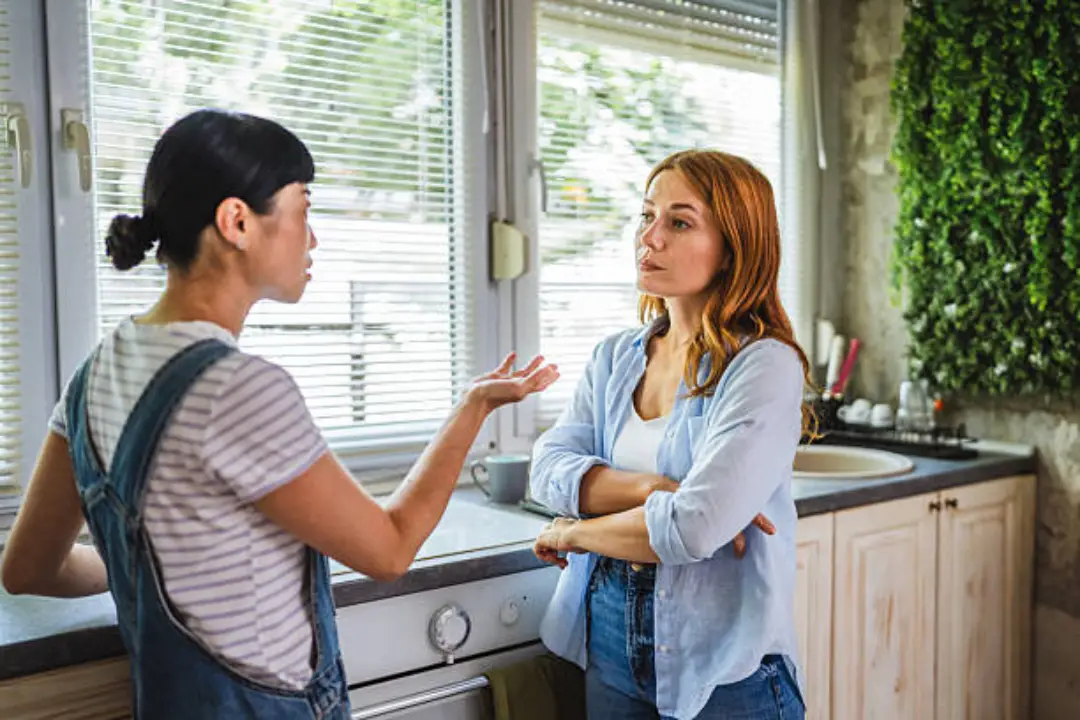
The first time I saw them again after everything fell apart, it wasn’t at a family gathering or some accidental encounter that could be blamed on coincidence. It was outside my house—my new house—on a cloudy Saturday afternoon when the neighborhood was quiet enough to hear wind chimes from three yards away.
Their car rolled up slowly, like it was ashamed to be recognized. I knew it immediately, not because the car was special anymore but because my body remembered everything before my brain caught up. My stomach dropped the way it used to when I could sense a fight coming before a word was spoken. My hands went cold.
Then the car stopped across from my gate, and out stepped my sister Sloane wearing oversized sunglasses like she still had money to hide behind. Behind her, Mason climbed out slower—my ex-husband, the man who’d once promised we’d build a life together brick by brick, now moving like someone who’d learned exactly how fast those bricks can fall.
They didn’t wave. They didn’t smile. They just stood there staring at my house like they’d expected it to be smaller, like they’d expected me to be smaller.
“We need to talk,” Sloane said, her voice carefully rehearsed.
Mason rubbed his palms together nervously—a gesture I knew by heart from years of marriage. He did it when he wanted something but didn’t want to admit it.
I looked at them through the bars of my gate, and then I started laughing. Not a polite laugh or a bitter one, but a real laugh—bright, shocked, almost joyful—because the absurdity hit me all at once. They’d come back like I was still the same woman they’d left behind, like consequences were negotiable, like I owed them rescue simply because we shared blood and history.
They’d come back broke. And I was the first stable thing they’d seen in months.
It had started the way disasters usually start in families like mine—casually, with a joke that wasn’t really a joke, said loud enough in public that you’d look crazy if you reacted.
Sloane had chosen the brunch place, some trendy café with sticky tables and weak coffee. I’d slid into the booth across from her and immediately felt the shift in energy. Sloane had always possessed a restless hunger, like she was constantly auditioning for a better life. Even as kids, she’d wanted the newest shoes, the coolest backpack, the right friends. She didn’t just want things—she wanted what things made people think of her.
And now she’d won the lottery. Not “pay off your car” money or “take a vacation” money. The kind of windfall that makes strangers smile at you like you’re simultaneously lucky and important, the kind that makes you start talking like gravity is optional.
She was in full performance mode that morning, laughing too loud, waving her hands, telling the same story repeatedly about checking the numbers three times because she thought she was hallucinating. The waitress came with our coffees, and Sloane tipped her like a celebrity, clearly loving the feeling of making someone else grateful.
I was half-listening, half-thinking about my investor meeting from the day before. Because quietly, finally, my life was starting to turn. I had a small business—nothing glamorous, no viral success story—just me, a handful of clients, a calendar that never stopped, and stubborn refusal to quit even when quitting would’ve been easier. Yesterday, after months of pitching and refining and holding my breath through polite rejections, someone had sat across from me and said, “I want to invest.”
Real money. Not social media shares or empty promises. I’d walked out of that building feeling like I’d been underwater for two years and somebody had finally handed me oxygen.
I couldn’t wait to tell Mason. My husband wasn’t perfect, but we were steady. We’d survived hard years together. I believed in us.
So when Sloane started mentioning him in that pointed way, I tried to ignore the uncomfortable itch under my skin.
“How’s Mason?” she asked, stirring her coffee like she was hypnotizing it. “Still at that job where they treat him like dirt?”
“He’s fine,” I said lightly.
“He’s so talented,” Sloane sighed. “He deserves more.”
Something about that word—deserves—felt like a hook catching skin.
Then she leaned back and smiled in a way that made my chest tighten. “I bet you two hundred dollars I could seduce your husband if I really wanted to.”
The booth went quiet like someone had cut the sound. My heart didn’t break dramatically—it cracked quietly, like a hairline fracture you don’t notice until you try to put weight on it later.
I laughed, because that’s what I did when uncomfortable. I’d grown up learning that laughter could sand down tension, that if you played things off, maybe they wouldn’t become real.
“Sure,” I said, lifting my coffee. “Good luck with that.”
Sloane’s smile widened, and for a second I saw how much she enjoyed not just money, but power—the power to unsettle, to test boundaries, to prove she could take what she wanted.
When we left, she hugged me too tightly and whispered near my ear, “Don’t be so sensitive, okay? I’m just teasing.”
But it didn’t feel like teasing. It felt like a declaration of war.
The next afternoon, I was wiping down kitchen counters when I heard a car door slam. Through the window, I watched Sloane march up my walkway carrying shopping bags like trophies. She hadn’t called or texted—she just showed up, because “I was nearby” was Sloane’s favorite lie for making boundaries seem unreasonable.
She stepped inside wearing expensive perfume that flooded the room, her heels clicking on my floor like punctuation. Mason sat at the table scrolling his phone, but when she entered, his expression shifted—interest, curiosity, something almost flattered.
Sloane smiled like she’d noticed. “Surprise! I brought you a few things.”
She started pulling gifts out one by one: headphones, a designer jacket, an expensive watch. All things Mason had mentioned wanting in passing, like she’d been listening more carefully than his wife.
Mason laughed nervously, that sound that said he knew this was wrong but didn’t want to refuse. “You didn’t have to do all this.”
But his hands were already touching everything, claiming it.
Sloane pulled up her phone and angled the screen so I could see the payment confirmation: three thousand dollars. “See?” she said sweetly. “When you’re with someone who has real money, you don’t have to wait for sales. You just get what you deserve.”
The sentence landed like a slap. I waited for Mason to look at me, to say this was too much. He didn’t. I felt myself becoming a background character in my own kitchen while Sloane laughed too loudly, touched Mason’s arm too often, and told stories about luxury travel and “people who get it”—with her eyes sliding to me each time like I was someone who didn’t.
That night after she left, I stood in the kitchen and said quietly, “You need to give that stuff back.”
Mason leaned against the counter like I was being irrational. “Why? They’re just gifts.”
“She’s doing this on purpose,” I said. “And you’re letting her.”
“Are you serious?” He actually laughed. “You’re being jealous over gifts?”
“She literally told me she’d seduce you for a bet,” I snapped.
He paused, guilt flickering across his face. Then he shrugged. “She was joking.”
“No,” I said quietly. “She wasn’t.”
His jaw clenched. “So what, you want me to block your sister because you’re insecure?”
I swallowed hard, keeping my voice steady. “If you want to stay married to me, you block her. You return everything. You draw a line.”
Mason’s expression hardened. “You can’t control who I talk to.”
I watched him and saw it clearly—the pride, the resentment, the itch inside him that Sloane’s money had scratched. The idea that he’d been underappreciated, underpaid, maybe entitled to something better.
“I’m not controlling you,” I said. “I’m telling you what I won’t live with.”
He stared at the watch on his wrist. And I knew, before he said another word, that he’d already chosen the fantasy.
In the morning, I woke up knowing something was wrong without opening my eyes. The house was too quiet. I got up and walked to the bedroom, and my stomach dropped. His side of the closet was hollowed out—drawers half open, empty hangers, his shoes gone. The watch gone. The jacket gone.
He hadn’t just left. He’d packed while I slept and walked out of our life without even turning off the coffee maker he’d started that morning.
I spent the day with shaking hands, calling and texting, re-reading my own messages like I could decode something from his silence. By nightfall I was on the bedroom floor surrounded by empty hangers, crying so hard I couldn’t breathe.
Two weeks later, I got an email. Not from Mason—from a lawyer. Subject line: DIVORCE. Cold language. My marriage translated into filing fees and legal terminology. He’d chosen paperwork over conversation, a lawyer over looking me in the face.
Then my phone buzzed with a text from Sloane: So, about that bet… you owe me $200.
I stared at it until I felt strangely calm. Not numb—focused. Because Sloane didn’t understand money. She understood attention. And Mason didn’t understand Sloane. He understood shiny things that made him feel important.
Which meant the collapse wasn’t a question of if. It was a question of when.
So I didn’t warn him. I didn’t warn her. I let them run toward the cliff they couldn’t see yet.
Rebuilding isn’t dramatic. It’s a stack of boring days you survive until the pile becomes a life. I met with my lawyer, signed divorce papers without contesting much because there wasn’t anything worth the cost to my peace. Then I went home and did the most humiliating thing: I kept living.
I paid bills. I answered client emails. I cried in the shower. I made lists because my brain couldn’t hold thoughts without dropping them. I canceled streaming services, sold extra furniture, cut corners quietly. And slowly, painfully, my body learned it could keep moving even with a hole punched through my life.
Then six months after Mason left, the investor deal went through. I sat at my desk staring at the confirmation email, feeling nothing at first because grief can steal your ability to feel happy even when you win. But then something warm crept in—relief. I wasn’t going to drown. And I wasn’t drowning because I’d built the ladder out myself.
A year after Mason left, I bought a modest house in a quieter neighborhood. Not fancy, not Instagram-worthy. A yard with weeds, a kitchen with enough counter space to breathe. I signed the papers with shaking hands for a different reason this time—this life was mine, and no one could pack it into a suitcase while I slept.
Meanwhile, Sloane and Mason were performing their trophy relationship online—glossy photos of dinners and trips, a hasty courthouse wedding the second my divorce finalized. But trophies don’t pay bills.
A mutual friend started dropping hints. “They seem stressed.” “I saw them arguing in a parking lot.” “Sloane looked… tired.”
Then Mason texted me: Hope you’re doing okay.
I ignored it. He tried again with a longer, more emotional message. When I finally replied, it was one sentence: What do you want?
That opened the floodgates. He confessed carefully at first, then more desperately. Sloane was secretive about money. Bills were arriving. His credit score was wrecked. He’d signed papers he didn’t understand. He felt trapped.
Then he tried guilt: “You should’ve warned me. As my wife, you had a duty to protect me from people like her.”
I laughed out loud in my kitchen and typed back: I was your wife. You left. These are your consequences.
Then I blocked him. He tried new numbers, new emails, alternating between begging and rage. I ignored all of it.
Until that Saturday afternoon when their car rolled up to my gate.
“We need help,” Sloane said, her voice stripped of its usual performance.
Mason started, “I made a mistake—”
And I laughed because the funniest thing in the world is watching two people who treated you as disposable suddenly remember you have value when they’re broke.
I stood slowly, not rushing, not trembling. “You came here like I’m still the woman who fixes things.”
Sloane’s lips tightened. “We’re family.”
I tilted my head. “Funny. You didn’t remember that at brunch.”
Mason stepped forward, voice soft and pleading. “Please. I don’t have anyone else—”
I looked at him like he was a stranger. “You did. You had me. You traded me for a fantasy.”
Sloane’s voice sharpened. “You’re enjoying this.”
I smiled slightly. “I’m enjoying my peace.”
Then I said the sentence that ended it: “You don’t get to crawl back here because your fantasy ran out of funding.”
Sloane’s face crumpled for half a second. Mason’s eyes went wet with tears he had no right to shed in front of me.
For a moment I felt pity try to rise in my chest. Then I remembered the empty drawers, the divorce email, the winking emoji about winning a bet over my marriage. The pity died.
I stepped back from the gate. “No. Goodbye.”
I turned and walked inside, not with a dramatic slam but a simple click—a locked boundary they could no longer cross.
But they didn’t leave. My neighbor texted twenty minutes later: “Are those two still outside your gate?”
I peeked through the curtain. They stood on the sidewalk like they were waiting for reality to change its mind. Some old reflex kicked in—go handle it, fix it, make it stop. Then I remembered my therapist’s words: “You’re not responsible for their discomfort. You already set the boundary. Let them sit in it.”
So I walked away from the window, refilled my iced tea, put on music, and taught my nervous system that I didn’t have to respond just because someone demanded my attention.
A voicemail came from an unknown number—Sloane’s voice hissing that I was being psychotic, that I couldn’t punish her forever over “one mistake.” Then Mason’s voice, softer, trying to sound reasonable: “We just need an hour. Just to talk.”
I didn’t respond. I screenshot the voicemail, saved it as evidence for myself, and went back to my life.
That night, Sloane sent a message from some forgotten email account: “Fine. If you’re going to be like this, at least pay the $200 you owe me. You lost. You always lose.”
I stared at it and felt recognition settle in my chest. That wasn’t about money. That was about her needing to feel like she’d won something, anything. I replied with exactly three words: “Stop contacting me.” Then I blocked that account too.
Two days later, my aunt called about a “small family dinner” that turned out to be an ambush. I walked into her house and found Sloane and Mason waiting with half the family arranged on couches like an audience.
Sloane stood when she saw me, eyes glittering with performative sadness. “There she is. My sister.”
My aunt grabbed my hands. “Sweetheart, please. Just hear them out.”
I looked around at faces avoiding my eyes, at people who’d watched Sloane hurt others for years and called it “personality,” at relatives who would’ve happily let me keep bleeding if it kept dinner peaceful.
“You invited me here without telling me they’d be here,” I said calmly. “You thought you could corner me. Okay. So let’s do it.”
Mason stepped forward. “Lena, I—”
I held up a hand. “No. You don’t start with ‘I.’ You start with what you did.”
Silence filled the room.
“I left,” he admitted quietly.
“While I slept,” I said. “And you filed divorce through a lawyer. And you married my sister.”
Sloane jumped in desperately. “He was unhappy! You never appreciated him!”
I looked at her with the calm of a locked door. “You stole my husband.”
“I didn’t steal anything,” she hissed. “He chose.”
“Exactly,” I said. “And you knew he would because you offered him money. You bought him. And he sold himself.”
A sharp inhale went through the room. My aunt gasped like she’d heard profanity, but I didn’t care anymore. Comfort was how this family had enabled Sloane for years.
“Please,” Mason’s voice cracked. “We’re drowning.”
My aunt whispered, “Lena, they’re family.”
I turned to her. “Family doesn’t mean I have to be their life raft.”
Sloane’s voice broke into a whine. “We just need help. Just a loan. Just until—”
“A loan?” I stared at her. “From who? Me?”
Sloane swallowed. “You have money now.”
There it was. Not apology, not remorse—a calculation. My throat went tight with disgust.
“You’re still trying to use me,” I said quietly.
Sloane’s eyes filled with instant tears like she had a switch. “I’m your sister. How can you be so cold?”
I looked around at all those faces one more time. “This is what cold looks like? Because to me, cold looked like you texting me about two hundred dollars after destroying my marriage.”
Sloane’s tears stopped like someone cut the water.
I picked up my coat. “You don’t get to crawl back because your fantasy ran out of funding.”
My aunt rushed after me. “Don’t tear the family apart!”
I paused with my hand on the doorknob. The old me would have apologized and soothed her. Instead I said calmly, “I’m not tearing the family apart. I’m just refusing to be the part you all tear up to keep the rest looking pretty.”
Then I walked out.
A week later, my lawyer called to tell me they were threatening to sue for defamation because I’d posted a photo after buying Sloane’s repossessed car at auction. It had been petty satisfaction, watching that car I’d once seen her flaunt in my driveway sell for a fraction of what she’d paid. But my lawyer was right—I didn’t need to keep baiting them.
So I did the most grown-up thing I’d ever done: I deleted the post, changed my number, updated my security cameras, and had my lawyer send a formal cease-contact letter. Not emotional, not dramatic. Professional. Cold in the way boundaries have to be to survive.
The final time I saw Sloane was months later, leaving a hardware store on a Tuesday evening. She walked out wearing a reflective work vest, hair pulled back, face bare—no sunglasses, no performance. She looked smaller, not physically but spiritually, like someone who’d finally hit bottom hard enough to feel it.
She saw me and froze. For a split second I saw that old flicker, the instinct to posture or attack. But it didn’t come. Instead she just looked down and walked past me without a word.
No insult. No plea. No accusation. Just silence.
And in that silence, I understood something I hadn’t allowed myself to feel before: I didn’t need her apology anymore. Not because she didn’t owe one, but because my life wasn’t waiting for it. I noticed her hands were chapped and rough, the way hands get when you actually work instead of outsourcing every inconvenience to money.
For the first time, she looked like a person who might actually be learning something.
I didn’t feel triumph. I didn’t feel pity. I felt peace—like watching a storm move out over the horizon, no longer a threat, just weather happening somewhere else.
As I got in my car, my phone buzzed with a calendar reminder about an expansion meeting with my investor the next morning. A year ago I’d been building my life around a marriage that could be bought. Now I was building my life around myself.
I used to think the worst part was losing my husband. It wasn’t. The worst part was realizing how much of my identity was wrapped up in being chosen—being the wife, the fixer, the reasonable one who kept peace. And the best part, strangely, was realizing I could survive being unchosen by people who’d never deserved me in the first place.
Sloane didn’t win. Mason didn’t upgrade. They just traded stability for spectacle and then acted shocked when the spectacle turned on them.
And me? I didn’t get a fairy tale. I got something better: a quiet house, a business that feeds my employees, a nervous system that doesn’t jump at every phone buzz, and a life that doesn’t require anyone’s loyalty to be real.
Sometimes people ask if I regret not warning Mason or reaching out to Sloane before she burned everything down. I always think about that brunch bet, the way Sloane smiled, the way Mason’s eyes lit up at expensive gifts like he was already halfway gone.
You can’t warn someone out of a choice they want to make. You can’t rescue people who think rescue is their right. And you can’t build a peaceful life while volunteering as cleanup crew for people who love mess.
The funniest thing about their whole lottery fantasy? They thought money was power. Turns out the real power was always simpler than that: knowing when to close the door and having the strength not to open it again.
That night I made coffee in my quiet kitchen, the smell of roasted beans mixing with the faint lemon scent of cleaner I’d used that morning. It smelled like stability, like something no one could pack into a suitcase while I slept.
I sat at my table with the mug warm in my palms and waited for the delayed reaction—the sobbing, the shaking, the spiral. But it didn’t come. Not because I was numb, but because I was genuinely, finally done.
There’s a difference between being hardened and being finished. Hardened is when you still care but you’ve learned to survive it. Finished is when your body finally believes you don’t owe them anything—no attention, no closure, no access.
I put my phone face-down and didn’t check it for the rest of the night. The world outside continued without my participation in their drama, and I discovered something revolutionary: I could let it.
The next morning I went to work and handled a crisis that would have destroyed me a year earlier, but now I just solved it because problems are just problems when you’re not carrying someone else’s chaos on your back.
My receptionist mentioned they’d shown up at my office again, and I simply said, “If they don’t leave, call security. Don’t engage.” She looked at me with something like awe and said, “You’re kind of terrifying in a good way.”
I smiled because that was exactly the goal—not to be cruel, but to be unmovable. To be the kind of person who knows her worth isn’t up for negotiation just because someone else went broke betting against it.
People imagine karma like lightning, instant and cinematic. But consequences are slower and uglier and involve a lot more paperwork than anyone posts about. Mason didn’t get struck down by the universe—he got worn down by late notices and credit scores and the humiliating reality that “abundance mindset” doesn’t pay a lender. Sloane didn’t collapse in one viral moment—she collapsed in a thousand quiet humiliations, each one teaching her what I’d already learned the hard way.
That you can’t buy character. You can’t purchase peace. And you definitely can’t purchase your way back into the life of someone you treated as disposable when you thought you had better options.
I don’t know where they are now, and I don’t need to. They’re not my storm anymore. They’re just weather happening somewhere I don’t live.
And I sleep like a person who doesn’t owe anyone an explanation for choosing herself.
That’s not just survival. That’s victory.

Lila Hart is a dedicated Digital Archivist and Research Specialist with a keen eye for preserving and curating meaningful content. At TheArchivists, she specializes in organizing and managing digital archives, ensuring that valuable stories and historical moments are accessible for generations to come.
Lila earned her degree in History and Archival Studies from the University of Edinburgh, where she cultivated her passion for documenting the past and preserving cultural heritage. Her expertise lies in combining traditional archival techniques with modern digital tools, allowing her to create comprehensive and engaging collections that resonate with audiences worldwide.
At TheArchivists, Lila is known for her meticulous attention to detail and her ability to uncover hidden gems within extensive archives. Her work is praised for its depth, authenticity, and contribution to the preservation of knowledge in the digital age.
Driven by a commitment to preserving stories that matter, Lila is passionate about exploring the intersection of history and technology. Her goal is to ensure that every piece of content she handles reflects the richness of human experiences and remains a source of inspiration for years to come.