The Graduation Nobody Attended
Some moments are supposed to matter. They’re supposed to be witnessed, celebrated, marked with photographs and pride. Mine passed in silence, noted only by the echo of my own name in a stadium full of strangers’ families.
But I’m getting ahead of myself. Let me take you back to the beginning—or what I thought was the beginning, back when I still believed that achievement could purchase affection, that excellence might finally earn me a place in my own family’s attention.
I was born second, which in my family meant I was born auxiliary. A backup system. The spare daughter kept on standby in case the primary one needed something.
Avery came first—three years before me—arriving with complications that made her precious in ways I would never be. She was premature, spent weeks in NICU, required expensive interventions and constant monitoring. My parents’ entire world reorganized around keeping her alive, then keeping her thriving, then keeping her happy.
By the time I arrived—full-term, healthy, requiring no dramatic interventions—the family dynamics were already set. Avery was the miracle. I was the afterthought.
Don’t misunderstand: my parents weren’t overtly cruel. They fed me, clothed me, took me to doctor appointments. But love in my house was rationed, and Avery got the larger share by default. She got the attention, the indulgence, the assumption that her needs came first.
I got the message, loud and clear, that my role was to support rather than shine.
When I was seven, Avery wanted piano lessons. Expensive ones, with the teacher everyone recommended. Money was tight—Dad’s construction business was struggling, Mom worked part-time retail—but they found a way. They always found a way for Avery.
When I asked about art classes the same year, Mom sighed and said maybe next year. Next year became the year after, became never. I learned to stop asking.
When I was ten, Avery got the bigger bedroom because she “needed space for her hobbies.” I moved into what had been a storage room, barely big enough for a twin bed and a narrow desk. I told myself it was fine. I didn’t need much space. I spent most of my time studying anyway, trying to earn the kind of praise Avery received just for existing.
Straight A’s became my baseline. Academic achievement awards piled up. I joined honor society, made debate team, tutored other students for extra credit. I thought excellence would make me visible. Instead, it made me useful.
“Camila got another scholarship opportunity,” Mom would say on phone calls with relatives, her voice bright. Then, quieter, “It really helps with expenses.”
I was proud the way bank accounts are proud: silently, functionally, measuring my worth in what I could provide.
The real shift happened when I turned sixteen and got my first job at Starbucks.
I’d wanted the job for normal teenage reasons: independence, spending money, a resume builder. But within weeks, my paychecks stopped being mine.
“Avery needs new shoes for volleyball,” Mom texted one afternoon. “Can you cover it? Just this once?”
Just this once became twice, became weekly, became assumed.
“Her field trip is $40.”
“Piano recital dress, about $120.”
“Volleyball camp deposit, $300.”
Every text phrased as a question but functioning as a demand. Every request accompanied by some variation of “You’re so responsible” or “We’re so proud of you” or “You’re really helping the family.”
I was sixteen, pulling double shifts, and proud became the word they used instead of love.
At first, I didn’t mind. Or I told myself I didn’t mind. Helping family was what you did, right? And maybe if I helped enough, contributed enough, they’d see me the way they saw Avery. Maybe usefulness could evolve into belonging.
I worked opening shifts before school—4:30 AM wake-ups to steam milk and smile at bleary commuters. I worked closing shifts after school—scrubbing equipment and mopping floors until 10 PM. My grades stayed perfect because failure wasn’t an option, because academic success was the only currency I had that might purchase attention.
Avery’s activities multiplied. Volleyball became travel volleyball. Piano became piano plus voice lessons. She got a car for her sixteenth birthday—used but functional—while I rode the bus with my Starbucks apron stuffed in my backpack.
“You understand, right?” Dad said when I didn’t react enthusiastically enough to Avery’s car. “You’re more independent. She needs the transportation for all her activities.”
I understood. I understood that needing made you valuable and not-needing made you invisible.
High school graduation was my first test of whether achievement could break through the established hierarchy.
I was valedictorian. Full scholarship to state university. Recognition at the ceremony. It was supposed to matter.
My parents came—I have photos to prove it. But the photos also prove how distracted they were. Mom checking her phone during my speech. Dad yawning. Both of them leaving immediately after for Avery’s volleyball tournament two hours away.
“We’re so proud,” Mom said, hugging me quickly in the parking lot. “This scholarship is such a relief for the family finances.”
Proud. Relief. Family finances.
Not: you worked so hard. Not: we’re amazed by what you’ve accomplished. Not: we love you.
I drove myself home in the used car I’d bought with my own money, ate grocery store cake alone in my room, and told myself college would be different.
College was different, but not in the way I’d hoped.
Away from home, I discovered I could breathe. Could make choices without calculating how they’d affect everyone else. Could spend a Friday night watching movies instead of working extra shifts to fund someone else’s activities.
But the financial requests didn’t stop. If anything, they intensified.
“Avery needs a new laptop for school.”
“Her senior photos are $400.”
“Prom dress emergency.”
“College application fees.”
I worked campus jobs—library, tutoring center, research assistant. Sent money home religiously, even when it meant eating ramen for weeks, even when it meant skipping social activities because I couldn’t afford the cover charge.
Junior year, I made the dean’s list again. Called home to share the news, excited despite myself.
“That’s wonderful, honey,” Mom said, distracted. “Listen, can we talk about Avery’s college situation? The state school is fine, but there’s this private program she’s interested in…”
We talked about Avery’s college situation. We didn’t talk about mine.
I graduated with honors, a 3.9 GPA, and a job offer. My parents didn’t come to the ceremony—Avery had a volleyball tournament, a big one, potentially scouts. I understood. I always understood.
I worked that job for two years, climbing quickly, earning praise from supervisors who actually noticed my work. But the money still flowed home. Avery’s college expenses, Avery’s car repairs, Avery’s spring break trip that was “important networking.”
I started to realize: there would never be enough achievement to outweigh the fundamental fact that I was the auxiliary daughter. The one kept functional and productive, but never prioritized, never celebrated, never seen as having needs that mattered as much as Avery’s wants.
So I applied to graduate school. Data analytics, a field I actually loved, at a respected program. Got in with partial funding. Took out loans for the rest because asking my parents for help felt absurd after years of being their personal ATM.
Graduate school was brutal—intensive coursework, thesis research, teaching assistantships to cover costs. I had maybe five hours of free time per week, all of which I used to sleep or panic about deadlines.
The financial requests from home continued.
“Avery’s graduation gift.”
“Her first apartment deposit.”
“Interview clothes for job hunting.”
I sent what I could, though by this point my own student loans were mounting, my own expenses pressing. Guilt accompanied every declined request, though rationally I knew my own financial survival should matter.
Should matter. Didn’t matter. Not to them.
The graduation ceremony for my Master’s program was scheduled for May 15th, a Saturday afternoon. I ordered tickets in February—sent two to my parents with a note about the ceremony details, the reception afterward, how much it would mean to have them there.
Mom texted back: “We’ll do our best!”
That should have been a warning. “We’ll do our best” was parent code for “don’t count on it.”
But I was foolish enough to hope. Stupid enough to believe that a Master’s degree—something significant, something rare in our extended family—would be enough to warrant their presence.
I reserved seats in the family section. Told friends my parents were coming so I wouldn’t seem completely alone. Bought a new outfit for the reception, splurged on professional photos, told myself this time would be different.
The ceremony was at 2 PM. At 1:45, I texted: “Saved you seats near the front. Can’t wait to see you after!”
No response.
At 2:10, lined up in my cap and gown, I checked again. Nothing.
At 2:30, when the procession started, I looked up at the family section one more time. The reserved seats glared back, empty and accusing under the stadium lights.
Around me, families crowded together. Proud parents with cameras. Grandparents dabbing tears. Siblings making too much noise. Everyone had witnesses. Everyone had people who’d carved time out of their lives to watch them walk across a stage for thirty seconds.
Everyone but me.
“Camila Elaine Reed, Master of Science in Data Analytics, graduating with distinction.”
Scattered applause from strangers. I walked across the stage, shook the dean’s hand, held up my diploma for a photo. The photographer captured my smile—I’ve seen the picture. It’s technically a smile. But my eyes tell a different story.
After the ceremony, during the reception, I stood alone near the refreshment table watching reunions happen around me. Families hugging, taking photos, crying happy tears. I ate a cookie I didn’t want and checked my phone obsessively.
Finally, at 4:30 PM, a text from Mom: “Something came up with Avery. Sorry we couldn’t make it. Congrats though!”
Something came up with Avery.
Always something with Avery. Always something more important, more urgent, more worthy of their time and attention.
I left the reception early, drove home to my small studio apartment, hung my cap and gown on the back of the door, and sat on my couch in silence for three hours.
I didn’t cry. Crying felt too dramatic, too much like admitting defeat. Instead, I felt something crystallize inside me—something that had been forming for years, hardening molecule by molecule with every overlooked achievement and unpaid loan and casual dismissal.
I felt done.
The text came three days later, Tuesday morning while I was updating my resume: “Need $2100 for your sister’s Sweet 16. Big party planned. Can you send by Friday?”
I stared at the message. Read it three times. Noticed what was missing.
No “How was graduation?” No “Sorry we missed it.” No “We’re proud of you.” Just numbers, a deadline, and the assumption that I’d comply.
Avery was turning sixteen. The age I’d been when I started funding her life. The age when I’d learned that love in my family was transactional, that worth was measured in what you could provide.
And they wanted $2,100. For a party.
I opened my banking app. My checking account showed $3,200—a number I’d been carefully building, saving, protecting. My emergency fund. My security. My proof that I could survive independent of a family that had never quite claimed me.
They wanted two-thirds of it. For a party for the daughter who’d always had everything while I’d had discipline and invisible excellence and the expectation that I’d fund my own dreams while financing hers.
Something in me—something that had been bending for years under the weight of being useful but unloved—finally snapped upright.
I opened Venmo. Typed in my mother’s username. Amount: $1.00.
Message: “Congrats.”
Sent.
For a long moment, I just stared at the confirmation screen. One dollar. Thirty-five cents less after the transfer fee. The smallest possible amount that still counted as compliance, that still technically fulfilled the request while making my position absolutely clear.
I should have felt guilty. Should have felt mean or petty or like a bad daughter.
Instead, I felt powerful. I felt seen. For the first time in my life, I’d set a boundary, and it felt like planting a flag on territory that had always been mine but I’d never claimed.
The next decision came quickly, powered by momentum I’d never let myself build before.
I walked to the junk drawer in my kitchen—the one that accumulated keys and spare batteries and rubber bands nobody remembered keeping. At the bottom, underneath expired coupons and take-out menus, was a spare key to my apartment.
My mother had insisted I give her one when I moved in. “For emergencies,” she’d said. “What if something happens and we need to check on you?”
In three years, she’d never once used it to check on me. But she had used it twice to “borrow” things while I was at work—a mixer I’d bought myself, an extension cord she’d never returned. Both times justified with “Well, you weren’t using it” and “That’s what family does.”
I picked up the key. It was small, brass, ordinary. But it represented something larger: access. The assumption that my space, my belongings, my life were communal property available for requisition whenever convenient.
I walked to the kitchen trash can and dropped it in.
The small clink as it hit the bottom was disproportionately satisfying.
Then I called a locksmith. “How soon can you change a lock on an apartment door?”
“Today if it’s urgent. $150 for standard service.”
“Today,” I said. “Definitely today.”
He arrived within two hours—a weathered man in his fifties who asked no questions, just got to work. I watched him remove the old lock, install a new one, hand me two keys that had never been in anyone’s possession but mine.
“All set,” he said. “Nobody’s getting in without your permission.”
After he left, I stood in my apartment—really stood there, present and aware—for the first time since moving in. This space was mine. Not provisionally mine pending family emergencies. Not conditionally mine as long as I remained useful. Just mine.
I locked the new lock. Unlocked it. Locked it again.
The mechanism was smooth, solid, final. Every click a declaration: this is mine, and I choose who enters.
The next day was Wednesday. I woke up to sunlight streaming through windows I’d never properly appreciated, brewed coffee I’d bought because I liked it rather than because it was on sale, and ate breakfast without checking my phone every thirty seconds for new requests.
The silence in my apartment was different now. Not lonely—peaceful. Not empty—spacious. For the first time in my adult life, I wasn’t waiting for the next demand, the next deadline, the next reminder that my worth was measured in what I could provide.
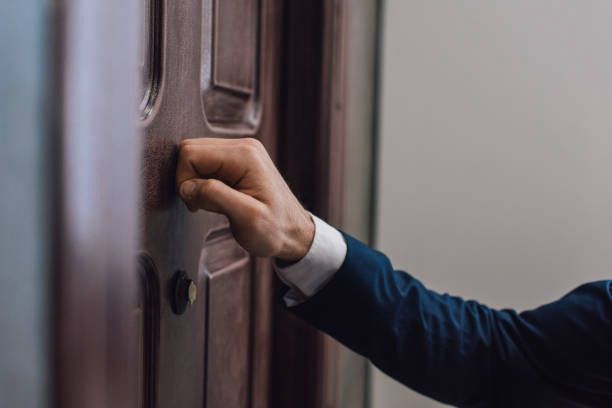
I was halfway through my second cup of coffee when the knocking started.
Not tentative knocking. Not friendly knocking. Authoritative knocking, firm and rhythmic and impossible to ignore.
I froze, coffee cup suspended between table and mouth.
The knocking continued. Three sharp raps, a pause, three more.
I set down the coffee and walked slowly to the door, that new sense of peace evaporating into something that felt like dread mixed with confusion.
Through the peephole, two police officers filled my hallway. Both in uniform, both with that particular expression of professional neutrality that gives nothing away.
My heart rate spiked. I hadn’t done anything illegal. Hadn’t even gotten a parking ticket in three years. Why were police at my door?
I opened it slowly, keeping the chain engaged. “Yes?”
“Miss Reed?” The taller officer—nameplate reading MARTINEZ—spoke first. “Camila Reed?”
“That’s me.”
“We need to speak with you. Can you open the door please?”
I disengaged the chain with shaking hands, opened the door fully. Both officers stepped just inside the threshold, not entering completely but making their presence known.
“Is something wrong?” My voice came out smaller than I intended.
Officer Martinez consulted a notepad. “We received a wellness check request from your mother, Margaret Reed. She claims she’s been unable to reach you for several days and is concerned for your safety.”
My brain stuttered. “Wellness check? I’m fine. I’ve just been busy—”
“She also reports,” the second officer—nameplate JOHNSON—interrupted, “that she has a key to this apartment for emergencies, but when she tried to check on you today, the locks had been changed. She’s concerned you may be in crisis or danger.”
Understanding crashed over me like cold water. My mother had tried to use her key—probably to retrieve something, or to let herself in to have a “talk” about the one-dollar Venmo—and found herself locked out. So she’d called the police, weaponizing their authority to regain access to my space.
“I’m not in crisis,” I said carefully. “I changed the locks because I’m entitled to privacy in my own home. My mother has no legal right to access my apartment without my permission.”
Martinez’s expression didn’t change. “Ma’am, your mother expressed concern that this behavior is uncharacteristic for you. That changing locks suddenly and becoming uncommunicative might indicate mental health issues or unsafe circumstances.”
“There are no mental health issues. No unsafe circumstances. I’m a twenty-five-year-old adult who changed her own locks in her own apartment. That’s not a crime.”
“No one’s saying it’s a crime,” Johnson said in a tone probably meant to be soothing. “But your mother seems genuinely worried. Have you been in contact with her recently?”
I thought about the Venmo message. About the text three days ago demanding money. About the graduation they’d skipped.
“I sent her money two days ago,” I said flatly. “A Venmo payment. If she was genuinely concerned about my wellbeing, she could have texted or called instead of immediately involving law enforcement because I changed my locks.”
Martinez and Johnson exchanged glances—the kind of look that suggested they were rapidly reassessing the situation.
“Your mother didn’t mention any recent communication,” Martinez said slowly.
“I’m sure she didn’t.” I pulled out my phone, opened Venmo, showed them the transaction. One dollar. Sent to Margaret Reed. Message: “Congrats.”
Johnson actually cracked a small smile before controlling his expression.
“Look,” I said, “I appreciate you checking, but I’m fine. I’m employed, I’m healthy, I’m just establishing boundaries with family members who’ve had unlimited access to my life for too long. That’s not a crisis—that’s adulthood.”
Martinez closed his notepad. “Are you willing to call your mother now, just so she knows you’re safe? That would resolve this immediately.”
“I’ll text her,” I said. “But I won’t be giving her a new key, and I won’t be resuming the previous dynamic of unlimited access and financial support. Those boundaries are permanent.”
“That’s your right,” Johnson said. “We’ll note that we made contact and you’re clearly capable of caring for yourself. But for the record—changing locks isn’t unusual, but maybe a heads-up to family members with emergency access would prevent future confusion.”
They meant well. They were trying to be diplomatic. But the suggestion still stung—the implication that I owed my mother notification about securing my own space.
“Noted,” I said, voice tight.
After they left, I closed the door, locked it—that satisfying new lock—and stood there shaking. Not from fear. From rage.
My mother had actually called the police. Had weaponized authority figures and my own theoretical safety to try to regain access after I’d set a boundary. Had framed my entirely reasonable decision to control my own space as evidence of crisis requiring intervention.
I pulled out my phone and texted: “Police just left. I’m fine. Changed my own locks in my own apartment because I’m entitled to privacy. Do not call wellness checks on me again. I will communicate when and how I choose.”
The response came within thirty seconds: “We’re just worried about you. This isn’t like you. Call me.”
I typed: “I’m not calling. And this IS like me. You just haven’t been paying attention.”
Then I blocked her number.
The next forty-eight hours were a masterclass in extinction burst behavior—the phenomenon where someone accustomed to getting what they want intensifies their efforts when suddenly cut off.
Texts from my father (whom I’d never blocked because he rarely initiated contact): “Your mother is very upset. This is causing stress on the family. Can you please just talk to her?”
Text from Avery: “Why are you being so mean? Mom’s crying. What’s your problem?”
Email from my mother’s sister: “I don’t know what’s going on, but family is important. Your mother loves you. Please don’t do something you’ll regret.”
Call from a number I didn’t recognize that went to voicemail—my mother’s voice, tearful, saying I was “breaking her heart” and “destroying the family” and “being selfish when we need you most.”
Each message was a variation on the same theme: I was the problem. My boundaries were the crisis. My refusal to continue funding and accommodating was the family emergency.
None of them asked about my graduation. None of them acknowledged that they’d missed it. None of them seemed to consider that maybe—just maybe—I had legitimate reasons for stepping back.
I blocked my father’s number. Blocked Avery’s. Sent my aunt a brief email: “I’m fine. I’m establishing healthy boundaries. Please respect my decision.”
The voicemail from my mother, I saved. Not to torture myself, but as evidence. Because something in me knew this wasn’t over.
Friday arrived—the deadline from the original text about Avery’s Sweet Sixteen party. The party that required $2,100, that I’d “contributed” exactly one dollar toward.
I didn’t hear anything all day. Went to work, had meetings, ate lunch at my desk, came home to my quiet, locked apartment that nobody could access without my permission.
At 8 PM, my doorbell rang. Not knocking—the buzzer from the building entrance, requesting access.
I checked the video intercom. My mother stood there, dressed nicely, face composed. She looked directly at the camera.
“Camila, I know you’re home. I just want to talk. Please.”
I didn’t buzz her in.
The buzzer rang again. Once. Twice. Three times.
Then my phone lit up—a call from the blocked number. I let it ring out.
A text appeared from a new number I didn’t recognize: “Camila, it’s your father. Your mother is downstairs. She’s been crying all week. Whatever’s going on, we can fix it. Just let her come up for five minutes. Please.”
They’d gotten a new number to circumvent the block. Used my father as a proxy. Shown up at my building without warning because they’d learned that calling ahead would allow me to refuse.
I typed carefully: “I’ll talk when I’m ready. Showing up uninvited is not respect. It’s control. Please leave.”
No response for three minutes. Then: “We’re not leaving until you let us in. We’re your parents. We deserve an explanation.”
Deserve. That word crystallized everything.
They believed they deserved access to me—my time, my space, my money, my emotional labor—by virtue of being my parents. Deserved it unconditionally, without reciprocity, without having to earn it through presence or respect or actual love.
I looked out my window. Could see the building entrance from my third-floor apartment. My mother stood there, arms crossed, face set in determination. My father sat in their car at the curb, engine running.
They were staging a siege.
I called the non-emergency police line.
“Hi, I have two people refusing to leave my apartment building entrance. I’ve asked them to leave. They’re my parents, but I’m an adult, I don’t want contact right now, and they’re not respecting that boundary.”
The dispatcher asked a few questions, took my address, said someone would be there shortly.
Ten minutes later, a patrol car pulled up. Not Martinez and Johnson this time, but two different officers who spoke with my parents for several minutes. I watched from the window as my mother gestured emphatically, as my father stayed in the car, as the officers remained calm and professional.
Finally, my parents returned to their car and drove away.
My phone buzzed: text from the new number. “The police told us we have to leave. This is ridiculous. You’re an adult throwing a tantrum. When you grow up and realize how good you had it, don’t expect us to be waiting.”
I stared at that message for a long time.
“How good you had it.”
I’d had a childhood of being second priority. A adolescence of funding my sister’s activities with my own labor. An adulthood of missing ceremonies and unacknowledged achievements and requests for money that never came with gratitude, only more requests.
I’d had it so good that I’d paid for my own Master’s degree while sending them thousands of dollars a year. I’d had it so good that nobody came to my graduation. I’d had it so good that my worth was measured entirely in what I could provide.
I saved that message too. Then I blocked the new number.
The Sweet Sixteen party happened without me, without my contribution beyond the symbolic one dollar. I didn’t see pictures—Avery had blocked me on social media, or been told to—but I heard later from a cousin who was still speaking to me that it had been “nice but smaller than planned.”
Smaller than planned because I hadn’t provided the $2,100 that would have paid for the upgraded venue, the premium catering, the DJ instead of a playlist.
I felt no guilt. Just a strange, light sensation, like I’d put down something heavy I’d been carrying so long I’d forgotten it was there.
Work noticed the difference. My supervisor commented that I seemed more focused, more present. A colleague asked if I’d been on vacation—I looked “relaxed” somehow.
“Just made some life changes,” I said.
Dating became possible. I’d never had time or energy before, always working or studying or dealing with family demands. Now I had evenings that belonged to me. I started saying yes to social invitations, joined a hiking group, went to a concert just because I wanted to.
My bank account began growing without the constant drain of family requests. I paid down student loans aggressively. Started a legitimate emergency fund. Looked into buying a small condo.
Freedom, I discovered, had a specific feeling: lightness. Space. The ability to make choices based on what I wanted rather than what was expected or demanded.
Three months after I changed the locks, I got a text from an unknown number. Not my parents this time—my grandmother, my mother’s mother.
“Camila, I don’t know what happened between you and your parents, but I think you should know your mother is very hurt. She raised you. Supported you. This seems very ungrateful.”
I almost didn’t respond. Almost let it go, added this number to the growing block list.
But something made me type out a careful reply:
“Grandma, I love you. But I need you to know: I’m not ungrateful. I’m grateful for having a home and food and the basic necessities of childhood. What I’m not grateful for is being treated as a financial resource rather than a daughter. I worked two jobs as a teenager to fund Avery’s activities. I sent money throughout college and graduate school while taking on debt myself. I’ve been told I’m ‘pride’ and ‘responsible’ but never that I’m loved or valued beyond what I can provide. I set a boundary. That’s healthy, not ungrateful. I hope someday the family can understand that.”
My grandmother didn’t respond. But she didn’t continue the lecture either. Small victory.
Six months after the one-dollar Venmo, I got a letter. Actual mail, handwritten envelope, my name in my father’s careful print.
I almost threw it away unopened. But curiosity won.
The letter was two pages, front and back. My father’s handwriting, always precise, filling the space with words he’d apparently never been able to say out loud:
Camila,
I don’t know if you’ll read this. Your mother thinks writing is pointless, that you’ve made your decision. But I needed to try.
I’ve been thinking a lot about the past few months. About why you cut contact so completely, so suddenly. Your mother says it’s rebellion or a phase or influence from friends we don’t know. But I think it’s simpler than that.
I think we failed you.
Not in the dramatic ways that make good stories—we didn’t abuse you or abandon you. But we failed you in quieter ways. We saw your competence and mistook it for not needing anything. We saw your independence and assumed you didn’t want attention. We saw your achievements and felt pride, but never thought to wonder what it cost you to keep achieving while supporting your sister.
Your mother won’t admit this. She believes we treated you fairly, that you’re being dramatic. But I’ve been looking at bank statements, at the Venmo history, at every time we asked and you gave without question. It’s thousands of dollars, Camila. Tens of thousands over the years. Money you earned, sent to us, while we paid for Avery’s activities and told you we were proud of you for being “responsible.”
I missed your graduate school graduation. That’s unforgivable. I don’t have a good excuse—Avery’s volleyball tournament could have happened without us there. We chose her, again, like we always did. And you asked for nothing in return except that we show up for one afternoon. We couldn’t even do that.
I don’t know how to fix this. I don’t know if it can be fixed. But I want you to know I see it now. I see the patterns, the inequity, the way we took you for granted because you never complained, never demanded, never stopped being there even when we weren’t there for you.
If you’re willing to talk, I’m willing to listen. Really listen, not just wait for my turn to defend or explain. If you’re not willing, I understand. You don’t owe me forgiveness. You don’t owe me anything.
I’m sorry. I’m so sorry.
-Dad
I read the letter three times. Cried through the second reading—angry tears, sad tears, tears for the daughter I’d been who’d needed this acknowledgment years ago.
By the third reading, I was calmer. The letter didn’t fix anything. But it was something. An admission. A crack in the defensive wall that had characterized every other communication from my family.
I didn’t respond immediately. Took two weeks to think, to feel, to decide if I wanted to re-open communication even partially.
Finally, I sent an email:
Dad,
I got your letter. Thank you for writing it. Thank you for seeing what you saw and saying it out loud.
I’m not ready for regular contact. I’m not ready to resume the previous relationship. But I’m willing to consider limited communication—maybe lunch once a month, somewhere neutral, just us. No Mom, no Avery. I need to know this acknowledgment is genuine, that it’s not just a strategy to get me back into the family system.
If you want that, let me know. If it’s too difficult without including everyone else, I understand.
-Camila
He responded the next day: I’ll take whatever you’re willing to give. Just us works for me. Name the time and place.
We met three weeks later at a diner halfway between his house and my apartment. Neutral territory, public setting, easy exit if needed.
He looked older than I remembered. Grayer, more tired. He stood when I arrived, hugged me tentatively, and I let him.
We ordered coffee. Made awkward small talk about weather and traffic. Then he took a breath and said, “Tell me about your graduation. The one I missed. I want to hear about it.”
So I did. Told him about walking across the stage alone, about the empty reserved seats, about standing at the reception watching everyone else’s families celebrate. About driving home and hanging my cap and gown on the door and sitting in silence for hours.
He cried. Actually cried, quietly, wiping his eyes with rough napkin material.
“I’m so sorry,” he said again. “That should never have happened.”
“No,” I agreed. “It shouldn’t have.”
We talked for two hours. He asked questions—real questions, not leading ones designed to steer me back toward compliance. Asked about my job, my life, my goals. Asked what I needed from him going forward.
“Acknowledgment,” I said. “Not just now, in crisis mode, but ongoing. I need to know I matter beyond what I can provide. I need the relationship to be reciprocal—I’m willing to help family when needed, but not to be the default bank account while getting nothing in return.”
“That’s fair,” he said. “More than fair.”
“And I need you to understand: I’m not resuming contact with Mom or Avery right now. Maybe eventually, but not until they can acknowledge their part in this dynamic. I won’t be convinced I’m overreacting or ungrateful or having a phase. What I’m doing is healthy. It’s overdue.”
He nodded slowly. “Your mother won’t like that.”
“I know. But this boundary isn’t negotiable.”
“Okay.” He said it simply, without argument or attempted compromise. “Okay.”
That was eight months ago. Dad and I meet monthly for lunch. The conversations have gotten easier, more genuine. He’s learning to see me as a whole person rather than the competent, invisible daughter who needed nothing.
He asks about my life now with real curiosity. Remembers details from previous conversations. Shows up on time and doesn’t spend the meal checking his phone or making excuses to leave early.
It’s not the relationship we could have had if they’d seen me sooner. But it’s something. A new foundation being built slowly, carefully.
Mom and Avery, I haven’t spoken to. I hear updates through Dad—Avery’s in college now, apparently struggling without the financial support she’d taken for granted. Mom is angry still, oscillating between claiming I’m cruel and insisting I’ll “come around eventually.”
I won’t come around. Not to the old dynamic, anyway. I don’t know if we’ll ever rebuild a relationship, and I’ve made peace with that possibility.
What I do know: changing those locks was the best decision I ever made. That one-dollar Venmo was the moment I finally claimed my own worth.
And graduation—the one nobody came to—was still an achievement worth celebrating, even if I had to celebrate it alone.
Because the degree was real. My accomplishment was real. And my value has never been contingent on whether anyone else showed up to witness it.
Some moments matter even when nobody’s watching. Some victories count even when nobody applauds. And some families are the ones we build after we walk away from the ones that couldn’t see us.
I’m building that now. Slowly. On my own terms.
And when I lock my door at night—that solid, final click of a lock nobody else has keys to—I feel something I never felt in all those years of being useful and invisible:
Safe. Whole. Finally, completely mine.
THE END

Adrian Hawthorne is a celebrated author and dedicated archivist who finds inspiration in the hidden stories of the past. Educated at Oxford, he now works at the National Archives, where preserving history fuels his evocative writing. Balancing archival precision with creative storytelling, Adrian founded the Hawthorne Institute of Literary Arts to mentor emerging writers and honor the timeless art of narrative.