My name is Sienna Brennan, I’m thirty-two years old, and six months ago my parents sued me for six hundred eighty-two thousand dollars for a house I never agreed to buy. They’d purchased my sister Melody a four-bedroom suburban home and secretly put my name on the mortgage as co-signer without my knowledge or consent. I found out through a collections letter.
When I called my mother, hands shaking, demanding an explanation, she said five words that still echo in my head: “We decided you should pay.”
When I refused, they didn’t apologize. They took me to court. Melody testified against me, claiming I’d made a verbal promise at Christmas dinner two years ago. But there was something they didn’t know, something I’d kept in a folder for years, waiting for the day I’d need proof that I wasn’t crazy.
Growing up, there were two daughters in the Brennan house, and everyone knew which one mattered more. Melody was the golden child—warm, charming, always knowing the right thing to say at family dinners. She laughed at Dad’s jokes, helped Mom in the kitchen without being asked, and somehow made every relative feel like their favorite person. Teachers adored her. Neighbors waved when she walked by. She was the kind of daughter parents brag about at church.
And then there was me. Quiet. Focused. I preferred numbers to small talk, spreadsheets to gossip. While Melody collected compliments, I collected A’s—not because I craved approval, but because precision made sense to me in a way people never did. In our house, Melody was the story people told out loud. I was the footnote.
Dad used to say it like it was clever observation: “Melody got the charm, Sienna got the brains.” It sounded like a compliment until you lived inside it. Charm got you forgiven. Brains got you used.
When I passed my CPA exam at twenty-six, I called home expecting congratulations. My father’s response came through the receiver like a shrug: “So when are you getting married like your sister?”
Melody had married Derek at twenty-four, had two kids by twenty-eight. My parents helped them with rent for five years straight—checks every month, no questions asked. When I graduated with student loans, I paid them off myself. No one offered. No one asked if I needed help.
The label came gradually, then all at once: Sienna, the selfish one. It started three years ago when Melody called asking for fifteen thousand dollars for a new car. She promised to pay me back within six months. I said no, not because I didn’t have it, but because she still owed me eight thousand from the last time—money I’d never seen again, money I hadn’t even been thanked for.
Mom called that night crying. “How can you be so cold to your own sister?”
I stared at my kitchen wall while she talked. “I’m not cold. I’m careful.”
“Careful is what you say when you don’t want to admit you don’t care.”
Six months later, Melody asked me to co-sign her apartment lease. The landlord wanted a guarantor, and her credit wasn’t strong enough. I declined, explaining that co-signing meant legal liability. Dad’s response was three weeks of silence—cold treatment delivered with surgical precision.
At first, my folder was simple: screenshots of texts, emails where Melody asked for money, my replies, the guilt messages that followed. Then I started adding things I never thought I’d need—photos of my calendar, work travel confirmations, pay stubs. Everything that anchored me to reality when my family tried to pull it away. That folder would become the most important thing I owned.
The envelope that changed everything looked ordinary—standard bank letterhead, my name and address printed in impersonal font. I almost threw it away with junk mail. Second notice. The header read: Mortgage payment overdue. Property address: 4847 Willowbrook Lane, Lakewood, Colorado.
I’d never heard of Willowbrook Lane. I’d never set foot in Lakewood. My hands went cold as I read further. Outstanding balance: six hundred eighty-two thousand dollars. Co-signer: Sienna M. Brennan.
I called the bank immediately. The representative was polite, professional, completely unaware she was about to turn my world inside out. “Yes, Ms. Brennan, you’re listed as co-signer on this mortgage. The account was opened fourteen months ago. The primary borrowers are Harold Brennan and Melody Brennan Cole.”
“There has to be a mistake. I never signed anything.”
“I have the application right here, ma’am. Your signature is on file. The documents were notarized on September fifteenth, 2023.”
Notarized. Someone had watched a signature go onto paper and stamped it as legitimate. A signature I never wrote. For a house I never agreed to buy. For a sister who never asked.
I pulled up my credit report while still on the phone. There it was—a six-hundred-eighty-two-thousand-dollar liability attached to my name like a parasite, quietly destroying my credit score for over a year while I had no idea. The mailing address on file was my parents’ house, the one I hadn’t lived in for a decade.
That night, I called my mother. I was shaking so hard I had to use both hands to hold the phone.
“Did you put my name on a mortgage?”
Silence. Three seconds. Four. An eternity.
“We were going to tell you.”
“Tell me what, Mom?”
Dad’s voice came on the line. “This is family, Sienna. Melody needed the house. You have a good job. We decided you should help.”
“You decided? Without asking me?”
“We raised you. We paid for your upbringing. This is what family does.”
“I paid off my own student loans. Every cent. You paid for Melody’s entire education.”
“That’s different. You were always difficult.”
Mom took the phone back, voice soft in that way that meant she was about to cry. “If you loved us, Sienna, you wouldn’t make this so hard.”
“Make what hard? You forged my signature. You committed fraud.”
“Don’t be dramatic,” Dad cut in. “We used your name on some paperwork. It’s not a crime when it’s family.”
“It literally is.”
“We don’t have the money, Sienna. We used our retirement for the down payment. All of it. If we lose this house, we lose everything.” His voice cracked. “You’re thirty-two. No husband, no kids. What do you even need that money for?”
I hung up without answering.
I didn’t sleep that night. Instead, I researched. The math was brutal. If the mortgage defaulted with my name attached, my credit score would crater—seven years of damage minimum, collection calls, potential lawsuits from the bank. And my career—many accounting firms run credit checks on employees who handle client finances. A foreclosure on my record could cost me everything I’d spent a decade building.
At two a.m., I called Marcus Webb, my friend from college who’d gone into real estate law. “If you didn’t sign, this is identity fraud. Forgery. Serious stuff.”
“What do I do?”
“First, get copies of everything. You have a right to those under federal law. Second, do you have any evidence you never agreed to this?”
I thought about my folder, the emails, the documented refusals. “I sent Melody an email three years ago when she asked me to co-sign her apartment lease. I told her no in writing. I said I would never co-sign any loan for her.”
“Forward that to me. That’s exactly the evidence we need.” Then he said something that landed deeper: “Your signature is your word. If someone forges it, they’re not just stealing money. They’re stealing your integrity.”
I found that email at three a.m., read it twice, then forwarded it to Marcus.
Two weeks later, I drove to my parents’ house for Thanksgiving—not because I wanted to, but because I needed to look them in the eye when I said no. The driveway was full of cars I didn’t recognize. Inside, I found not just Mom, Dad, and Melody, but Aunt Patricia, Uncle Ronnie, Grandma Ellen, three cousins I hadn’t seen in years. The dining table was set for twelve.
This wasn’t a holiday dinner. This was an ambush.
Melody stood first, arms crossed. “We all know why we’re here.”
Dad nodded. “Sienna, sit down. We need to talk as a family about your sister’s house. This family needs you to step up.”
Aunt Patricia leaned forward, eyes sharp. “You’ve always been the selfish one, Sienna. This is your chance to prove us wrong.”
“I didn’t sign anything,” I said, voice steadier than I felt.
Melody’s eyes narrowed. “You said you would help. Christmas two years ago. At dinner.”
“I said I’d think about it. Thinking isn’t signing.”
“You nodded. We all saw you nod.”
“A nod isn’t a contract.”
Dad stood, chair scraping against the floor. “Then you leave us no choice. We’re giving you until December fifteenth. Either you agree to pay the mortgage or we sue you.”
I looked at my sister. She wouldn’t meet my eyes. “You’d perjure yourself? Lie under oath?”
“It’s not lying if I remember it that way.”
I was almost to my car when I heard footsteps. Grandpa Harold moved slowly, cane tapping against concrete. “Sienna, wait. Check the notary date on the mortgage documents. Something’s not right.”
Under federal law, I had the right to request copies of any financial documents bearing my name. When the envelope arrived, I sat at my kitchen table for a full minute before opening it. The mortgage application was twelve pages long. My signature appeared on three of them. I studied it under my desk lamp, comparing it to my actual signature on my driver’s license. The differences were subtle but unmistakable—my S curves backward at the top, a quirk from rushing through signatures during tax season. The S on these documents curved forward, rounder, written by someone who knew what my signature looked like but had never actually watched me write it.
Then I checked the notary date: September 15th, 2023. My heart stopped. I pulled up my calendar from that month. September 14th through 17th: AICPA National Conference, Seattle. I’d been eight hundred miles away when someone signed my name on a six-hundred-eighty-two-thousand-dollar mortgage. I had the boarding pass, the hotel receipt, a photo I’d posted on Instagram standing with colleagues in front of the Space Needle, timestamped September 15th at 4:47 p.m.
Someone had forged my signature. And someone else, a licensed notary public, had verified a lie.
Marcus filed a subpoena for the bank’s internal records. What they sent changed everything. There was an email chain between Melody and the loan officer who processed my application.
Melody: “Is there any way to add my sister to the application without her being physically present? She’s traveling for work and can’t make it to the signing.”
Kevin Torres: “If someone else handles the paperwork, we can accommodate that as long as the documents are properly notarized.”
Melody: “She can’t do remote signing. She’s at a conference, but my dad can handle the paperwork on her behalf.”
Watching my own robbery in slow motion through email exchanges—everyone involved thinking they’d get away with it.
Marcus advised me to file a formal report. I went to the Denver Police Department on a Wednesday morning with copies of everything—the mortgage documents, my flight records, the email chain. A week later, Detective Carla Nguyen from the Financial Crimes Unit called. “Based on the evidence, we’re opening a formal investigation into potential identity fraud and forgery. Do you believe your family members knew this was illegal?”
“I think they didn’t care. They needed money. They saw me as a solution. Whatever laws they broke, whatever it meant for my credit or career, none of that mattered as much as getting what they wanted.”
December 20th, five days before Christmas, the process server found me at work. Harold Brennan and Diane Brennan v. Sienna Brennan. Filed in Douglas County Civil Court. Damages sought: six hundred eighty-two thousand dollars plus legal fees. They claimed I’d verbally agreed to help with the mortgage and then reneged, causing them financial harm and emotional distress. Melody was listed as a witness.
The lawsuit wasn’t enough. They needed the court of public opinion too. Melody posted on Facebook: “Some people care more about money than blood. I never thought my own sister would watch our parents lose their retirement over pride.” Three hundred forty-seven reactions. Ninety-two comments. Everyone from high school acquaintances to distant relatives weighing in with prayers and sympathy and thinly veiled criticism of the unnamed villain.
What they didn’t post: the forged signature, the identity theft, the mortgage I never agreed to sign. Those details didn’t fit the story they wanted to tell.
I spent Christmas alone, ordered Thai food, poured wine, sat on my couch with case files spread around me like the world’s worst holiday decorations. Around nine p.m., my phone buzzed—a private message from Grandpa’s Instagram account that someone must have helped him set up. “I’m sorry. I tried to stop them. They wouldn’t listen. Merry Christmas, Sienna.”
I cried for the first time since this started—not because of the exclusion, but because one person in that family had seen me, knew the truth, and had the courage to say it.
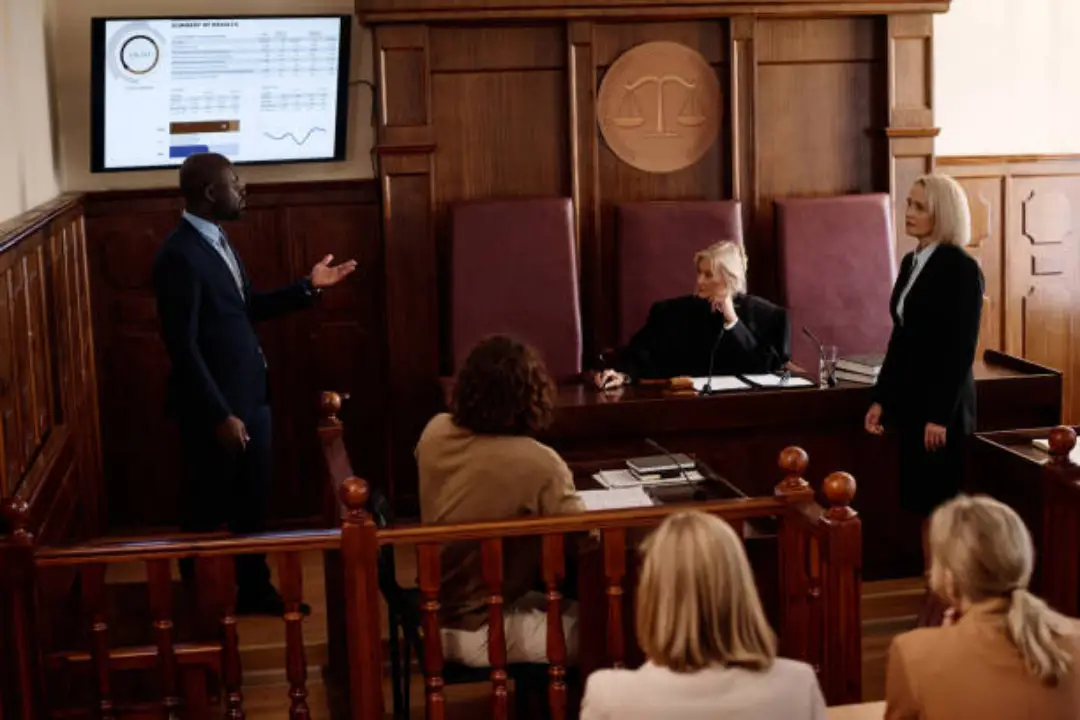
March 3rd, 8:47 a.m., Douglas County Courthouse. I arrived thirty minutes early wearing my charcoal gray suit—professional, put together, refusing to give them the satisfaction of seeing me rattled. The courthouse smelled like old wood and industrial cleaner. At 8:55, they arrived: Dad in a suit I’d never seen before, Mom clutching his arm, Melody with red-rimmed eyes, Derek behind them looking everywhere except at me. The gallery filled with relatives serving as witnesses to my supposed villainy.
Their lawyer Mitchell Davidson went first with practiced confidence. “Your Honor, this is a case about broken promises, about a daughter who agreed to help her family and then changed her mind when the bills came due.” He called Melody to the stand. She walked forward like she was heading to an execution—hands clasped, eyes downcast, the picture of reluctant testimony.
“We were all talking about expensive houses,” Melody said, voice cracking. “Mom mentioned wanting to help me buy a home for my kids. Sienna said ‘I’ll think about it.’ And then she nodded. We all saw it. In our family, when someone nods, they’re saying yes.”
Dad testified next with the same script, same rehearsed pauses. Not once did Davidson mention the mortgage documents. Not once did he address the signature I supposedly wrote. The entire case rested on a nod at a dinner table—a moment no one could prove or disprove. They were avoiding the paper trail because they knew it would destroy them.
Marcus stood slowly, letting the silence stretch. “Your Honor, my client never made any verbal agreement. But more importantly, even if she had, it wouldn’t matter because there’s a mortgage document in existence with her name on it—a document she did not sign.”
He entered exhibits: the mortgage application showing me as co-signer, flight records and hotel receipts proving I was in Seattle when the document was allegedly signed and notarized. “Ms. Brennan, is this your signature?”
I stood, voice clear. “No, it is not.”
Judge Eleanor Price leaned forward. “Then why does the signature on this notarized document look different from every signature you have provided in court?”
“It looks different because I didn’t sign it.”
Marcus had me sign my name three times on paper. He placed my fresh signatures beside the mortgage document on the display. The difference was obvious even from twenty feet away. “The signature on the mortgage curves forward. Ms. Brennan’s actual signature curves backward. She didn’t sign this document. Someone else did.”
Then Marcus read the email chain aloud between Melody and the loan officer. Each word landed like a verdict. The gallery erupted in whispers. Aunt Patricia’s hand flew to her mouth. Dad’s face went from pale to red.
“Mrs. Brennan Cole, did you write these emails?”
Melody’s voice came out strangled. “I thought it was okay. My dad said he would handle everything.”
She was throwing him under the bus—her own father, in front of a judge, in front of family, in front of everyone.
Judge Price removed her reading glasses and folded them carefully. “I’ve reviewed the plaintiff’s complaint alleging a verbal agreement, a nod at Christmas dinner, as the basis for demanding six hundred eighty-two thousand dollars. I’ve also reviewed the defense’s evidence—flight records proving the defendant was in Seattle on the date the mortgage was signed, signature analysis showing clear discrepancies, and email communications explicitly discussing how to add the defendant’s name to documents without her presence.”
She straightened the papers. “This court does not exist to enforce family expectations. It exists to enforce the law. A verbal agreement, even if it existed, would not obligate anyone to pay six hundred eighty-two thousand dollars, especially when documentary evidence suggests identity fraud. I’m dismissing this case with prejudice. Furthermore, I’m referring the mortgage documents and related emails to the district attorney’s office for review of potential fraud charges.”
Her gavel fell. For the first time in six months, I exhaled.
But Marcus rose immediately. “Your Honor, my client has a counterclaim. Sienna Brennan is filing suit against Harold Brennan, Diane Brennan, and Melody Brennan Cole for identity fraud, forgery, and damages to her credit and professional reputation. We’re requesting immediate removal from all mortgage documents and compensation for damage threatening her career in the financial industry.”
The bank representative stood. “First Mountain Bank will cooperate fully. We’re already conducting an internal investigation.”
I looked at my parents, at Melody, at the relatives who’d come to watch me lose. “I never wanted this. I didn’t ask to be put on a mortgage I never agreed to. I didn’t ask to be sued by my own family. You chose to do this instead of apologize. Remember that.”
Two months after the hearing, pieces fell into place. Kevin Torres was terminated for multiple compliance violations. The notary who certified my signature—Gary Peterson, Dad’s friend from bowling league—had his license revoked by the Colorado Secretary of State. My name was officially removed from the mortgage, expunged from my credit report. My credit score recovered within ninety days.
The district attorney’s office declined to pursue criminal charges—first offense, family matter, no intent to defraud the bank itself. But Dad and Melody both received civil penalties and formal warnings. My counterclaim settled out of court. They agreed to pay my legal fees in full: twenty-three thousand dollars. It wasn’t about the money. It was about accountability.
The family I’d known didn’t survive the trial. Melody and Derek separated three months later. He told a mutual friend he couldn’t trust her after what came out in that courtroom. My parents had to sell the house—without my name supporting the mortgage, they couldn’t keep up with payments. They’d already drained their retirement for the down payment. Now they were downsizing to a two-bedroom condo in a neighborhood they used to drive past without stopping.
Mom sent me one email after everything settled: “You ruined us. Remember that.”
I didn’t reply. Some accusations answer themselves.
Aunt Patricia called unexpectedly in April, voice different, smaller. “I didn’t know the whole story. About the forged signature. About the emails. I believed what Melody told everyone. I’m sorry, Sienna. I should have asked you directly.”
“Thank you for saying that,” I said, then hung up. One apology from one aunt didn’t erase what happened, but it reminded me not everyone chooses to stay blind.
Grandpa Harold sent me a handwritten letter that spring in shaky handwriting: “I’ve updated my will. You’re taken care of. You deserve to have someone in this family stand by you.” He passed away six weeks later, peaceful in his sleep. At the funeral, I sat in the back row. No one spoke to me. But I was there. That was enough.
Six months after the trial, things look different now. I got promoted at work—senior accountant. My boss pulled me aside: “I’ve seen people crumble under less pressure than what you went through. You didn’t. That kind of backbone is rare.”
I started therapy, not because I was broken but because I wanted to understand why I’d accepted being treated poorly for so long, why I kept showing up to holidays where I was the punchline. Dr. Reed said something that stuck: “Sometimes the people who are supposed to love us teach us to accept the unacceptable. Healing means unlearning those lessons.”
I changed my last name legally to Burke—my mother’s maiden name before she married into the Brennan family. It felt right. A small act of reclamation. A way of saying I’m still connected to where I came from, but I choose who I become.
I have a small group of friends now—people who don’t ask me to sacrifice my boundaries for their comfort, who call to check on me, not to ask for money. Marcus and I get coffee every few weeks. The quiet took some getting used to—no more crisis calls, no more guilt trips, no more holidays spent feeling like an outsider in my own bloodline. Now there’s just peace.
Last month I wrote a letter to my parents—not to send, just to get words out. Dr. Reed suggested it as a way to process without requiring response. I sat at my kitchen table and let myself write the truth about loving them, spending my whole life trying to earn something they never gave freely, working harder, asking for less, and still never being enough. About how they saw my boundaries as betrayal, my success as something to exploit. How I didn’t destroy the family—the lies did, the forgery, the decision to steal my identity rather than respect my answer.
I read it three times, let emotions move through me—grief, anger, strange relief of saying things I’d kept locked away for thirty-two years. Then I deleted the file. The act of writing was the point, not sending or receiving. Closure doesn’t always come from apology. Sometimes it comes from accepting you’ll never get one.
Today is an ordinary Saturday. I’m sitting in my apartment with sunlight streaming through windows, coffee on the table, a book I’ve been meaning to finish, and the kind of silence that used to feel lonely but now feels like freedom. My phone buzzes—text from Marcus: “Coffee tomorrow? Bring your brutal honesty.” I smile and type back: “Always.”
On my bookshelf there’s a photo of Grandpa and me taken at a restaurant last Christmas, his last one. We’d escaped the family gathering for an hour, just the two of us. On the back, in his shaky handwriting: “The strongest people are the ones who can walk away.”
I walked away. Not because I didn’t love them, but because loving myself meant more than earning theirs. They called me selfish, cold, the daughter who chose money over blood. But I didn’t choose money. I chose integrity. I chose the right to my own signature, my own decisions, my own life.
Some families lift you up. Some teach you to accept being knocked down. Mine taught me that no is a complete sentence, that keeping receipts isn’t paranoia but protection, and that sometimes the people you share blood with are strangers while the family you choose becomes everything.
I didn’t win because I had the better lawyer. I won because I never stopped believing I was worth fighting for. And that knowledge—that simple, hard-won knowledge that I deserved better than what they offered—is worth more than any inheritance, any house, any amount of money they could have ever given me.
I’m thirty-two years old, my name is Sienna Burke, and I’m finally free.

Adrian Hawthorne is a celebrated author and dedicated archivist who finds inspiration in the hidden stories of the past. Educated at Oxford, he now works at the National Archives, where preserving history fuels his evocative writing. Balancing archival precision with creative storytelling, Adrian founded the Hawthorne Institute of Literary Arts to mentor emerging writers and honor the timeless art of narrative.
Wow! Great story