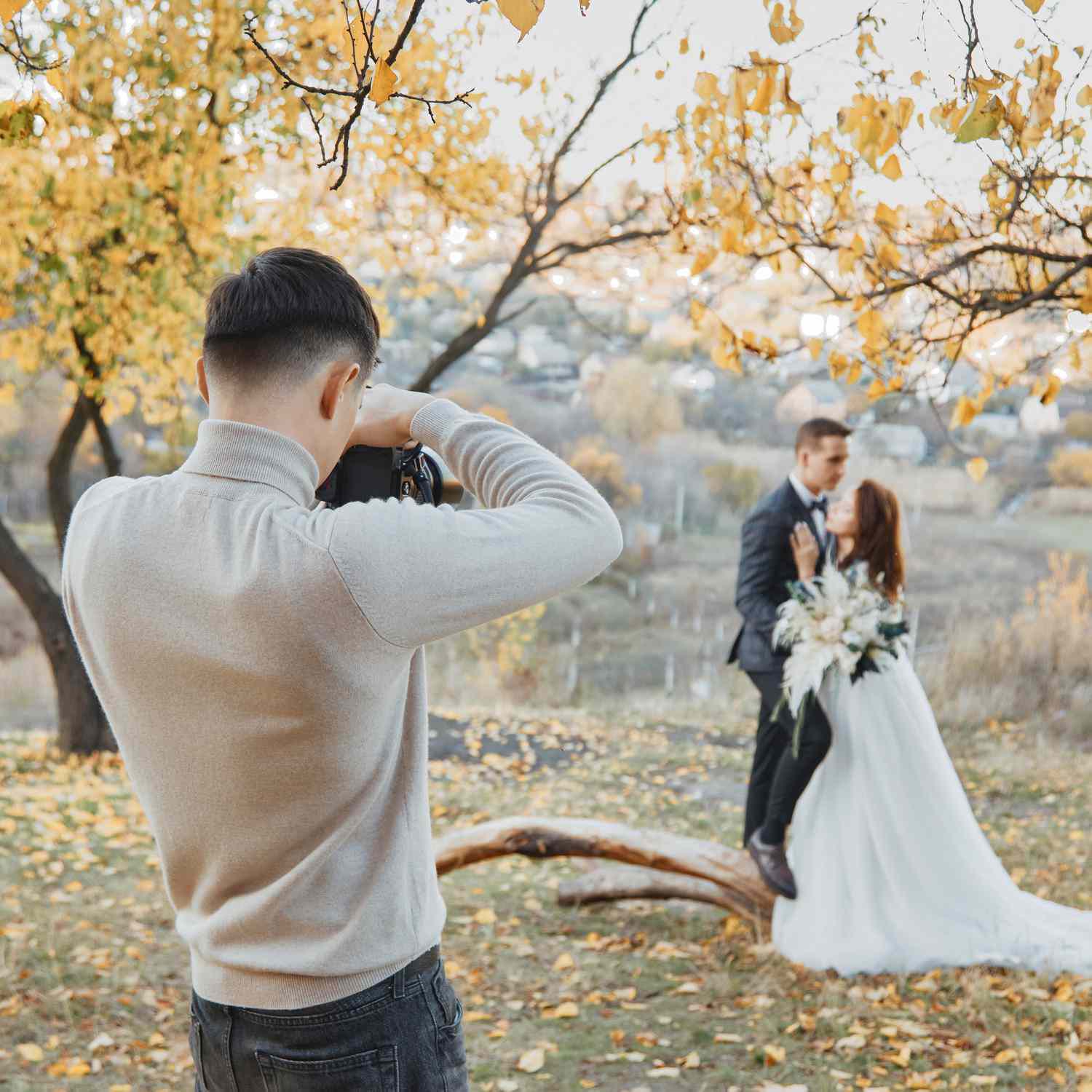
The Wedding Album That Spoke Too Loud
Some secrets hide in plain sight, preserved forever in pixels and timestamps, waiting for someone to look closely enough. Mine waited in a photographer’s computer, tucked between ceremony shots and reception candids, quiet as a held breath until the moment someone decided I deserved to know the truth.
But I should start at the beginning—or what I thought was the beginning, back when my wedding was still just a beautiful event and not the elaborate stage set for a deception I’d been living my entire life.
The wedding had been perfect in that meticulously controlled way that makes people whisper about Pinterest boards and wedding planners who earn their astronomical fees. Every detail calibrated, every moment choreographed, every potential problem anticipated and solved before it could materialize.
The venue was a restored estate forty minutes outside the city, all manicured gardens and French doors that opened onto a terrace overlooking rolling hills. The flowers were white peonies and garden roses—expensive, seasonal, exactly what my mother had envisioned. The dress was custom, fitted seven times until it moved like water. Even the weather cooperated, delivering a May afternoon with golden light and temperatures that required neither jackets nor complaints.
Three hundred guests. A string quartet for the ceremony, a twelve-piece band for the reception. Passed hors d’oeuvres that were more art than food, a cake that required structural engineering, champagne that cost more per bottle than most people’s car payments.
My parents paid for everything. They insisted, actually, waving away any offers from my husband Daniel’s family with polite but firm declarations that they wanted to give their only daughter the wedding she deserved. At the time, I thought it was generosity. Love expressed through luxury. The final extravagant gesture before releasing me into my own adult life.
I didn’t question why my mother micromanaged every detail. Didn’t question why certain family members were strategically seated far apart, or why some childhood friends of mine weren’t on the final guest list despite being on earlier drafts. Didn’t question why my father seemed preoccupied during the toasts, or why my mother kept checking her phone even during the ceremony.
I just thought they were being my parents—particular, controlling, desperate for everything to be perfect. And honestly, I was too caught up in being a bride to analyze the dynamics. The dress, the flowers, the first dance I’d practiced for weeks—those things felt important at the time.
The photographer was someone my mother found. Adrian Winters, his portfolio full of editorial-style wedding photography that made ordinary people look like they belonged in magazines. He was expensive, professional, and according to my mother, “the only acceptable choice.”
I met with him once before the wedding. He explained his approach: candid moments mixed with traditional poses, journalistic coverage that captured the real emotion of the day. He asked thoughtful questions about our relationship, about family dynamics, about what moments mattered most.
“I pay attention to what’s happening around the edges,” he’d said. “Sometimes the most honest moments happen when people don’t think anyone’s watching.”
At the time, I thought that sounded perfect. Documentary-style wedding photography that would capture the authentic joy of the day.
I didn’t consider that authenticity cuts both ways. That cameras don’t just capture joy.
The wedding itself felt like being inside a dream you can’t quite control. Beautiful but distant, happening to you rather than with you.
I remember fragments: Daniel’s face when I came down the aisle, genuinely moved in a way that made my chest tight. My father’s hand shaking slightly as he walked beside me. The weight of the dress. The smell of peonies overwhelming. My mother’s smile, perfect and empty, like a mask she’d practiced.
The vows went smoothly. The kiss was appropriate for public consumption. People cried in the front rows—Daniel’s mother, my aunt Rebecca, several of my college friends. My mother didn’t cry. My father’s eyes were wet, but he looked more troubled than joyful.
At the reception, I moved through the evening like a programmed robot: smile, thank guests, cut cake, throw bouquet, dance with father, dance with husband, wave goodbye through a shower of sparklers. Three hundred people watching my every move, and I performed beautifully.
But there were moments—flickers of something off that I registered but didn’t process.
My uncle Richard arriving late, looking disheveled and angry. My mother intercepting him before he reached the main reception area, their conversation sharp and brief before he left entirely.
A woman I didn’t recognize, seated alone near the back, watching everything with the focused intensity of someone documenting evidence. When I tried to catch my mother’s eye to ask who she was, my mother was suddenly busy with the caterer.
Daniel’s brother mentioning during the reception that he’d heard someone arguing in the corridor near the kitchen, voices raised enough to carry. “Probably just catering drama,” he’d said with a shrug.
My father disappearing for nearly forty minutes between dinner and the cake cutting. My mother’s explanation: “Business call, you know how he is.” But my father was retired. Had been for three years.
And the phone. My mother’s phone that she kept checking, kept clutching, even during the ceremony. I’d noticed during the processional—that moment when all eyes should have been on me, the bride—my mother had her phone in her hand, screen lit, thumb moving.
Small things. Odd things. The kind of details you file away but don’t examine because you’re too busy being the center of attention at your own wedding.
Adrian Winters noticed, though. His camera caught what I was too distracted to see.
Two weeks after the wedding, Daniel and I were settling into married life in our renovated condo downtown. We’d returned from a week in Greece—a honeymoon of azure water and white stone buildings and meals that lasted three hours. Real life was reasserting itself slowly: work emails, unpacked gifts, the mundane logistics of combining two households.
I was at my desk, halfway through an expense report, when my phone rang. Unknown number, local area code.
“Hello?”
“Mrs. Chen?” The voice was familiar but different—no longer the warm, professional photographer tone I remembered. This was careful. Measured. Almost reluctant.
“This is Adrian Winters. The wedding photographer?”
“Oh! Hi, Adrian. Is this about the final album? I know we haven’t scheduled the design meeting yet—”
“No.” He cut me off gently. “It’s not about that. Mrs. Chen, I found something in the photographs. Something I think you need to see before I deliver the final collection.”
My hand tightened on the phone. “Found something? Like what?”
A long pause. Long enough that I could hear him breathing, could sense him choosing words carefully.
“I can’t explain over the phone. I need you to come to the studio. And—” Another pause. “Don’t tell your parents you’re coming. Please. You should see this before anyone else does.”
My stomach dropped. “Adrian, you’re scaring me. What did you find?”
“Just… please come. Are you free this afternoon? Around three?”
I agreed because what else could I do? The rest of the workday was impossible. I stared at spreadsheets without seeing them, refreshed email without reading, mentally ran through possibilities of what a photographer could have captured that required secrecy.
An affair? Someone drinking too much? A family argument? But why would those things require hiding from my parents specifically?
At 2:45, I told Daniel I had errands and drove to Adrian’s studio in the arts district. The space was exactly as I remembered from our initial consultation—exposed brick, huge windows, the distinctive chemical smell of a working photographer’s space. Black and white prints lined the walls, mostly editorial work and previous weddings.
Adrian met me at the door. He looked tired, like he hadn’t slept well. No smile, no small talk, no congratulations on the marriage or compliments about how beautiful the wedding had been.
“Thank you for coming,” he said quietly. “Can I get you water? Coffee?”
I shook my head. “Just show me.”
He led me to his computer workstation, a massive monitor surrounded by hard drives and color calibration tools. His finger hovered over the mouse.
“Before I show you this, I need you to understand something. I wasn’t trying to spy or capture private moments inappropriately. I was doing my job—documenting the day comprehensively. These images…” He trailed off. “They were never meant to be in your final album. I was going to delete them. But then I actually looked at them, and I realized deleting them would be… wrong. You deserved to know.”
“Know what?” My voice came out harder than intended. “Adrian, please. Just show me.”
He clicked, and the monitor filled with a grid of thumbnails—hundreds of images from my wedding, sorted chronologically. He scrolled to a section marked “PRE-CEREMONY” and isolated a series of maybe twenty shots taken in rapid succession.
“These were shot during the thirty minutes before the ceremony. I was moving through the venue, capturing preparations and candid moments. I didn’t think much of it at the time, but when I was editing…” He zoomed in on one image.
My mother and father stood near a side entrance I recognized—the service corridor that led from the kitchen area to the main gardens. They weren’t posing. Weren’t aware of being photographed. My mother’s face was tight, tense in a way I’d never quite seen before. Not angry—something more like fear and fury combined. Her hand gripped her phone so hard her knuckles were white.
My father stood close, leaning in, his expression grim. His mouth was moving, caught mid-sentence.
“This was at 3:47 PM,” Adrian said quietly. “Ceremony started at 4:15.”
He clicked to the next image. Same location, seconds later. My mother’s mouth was open now, caught mid-response. Even in a still photograph, I could see the intensity.
“These looked like a private moment I shouldn’t have captured,” Adrian said. “A pre-wedding disagreement, stress, whatever. I was going to delete them for privacy. But then…”
He opened a different file. Not a photo this time. A video thumbnail.
“I shoot some video throughout the day for texture, establishing shots, that kind of thing. This was just background footage while I was adjusting my settings. The audio shouldn’t have captured anything—I was fifty feet away at least. But I’d just upgraded my microphone system, and the directional pickup was better than I expected.”
He pressed play.
The video showed the same corridor, same moment, but now with motion and sound. The image quality was rough—clearly not meant as a primary capture. But the audio…
My father’s voice came through with startling clarity, low and urgent:
“She can’t find out. Not today. Not like this.”
My heart stopped.
My mother’s response was tighter, sharper: “Then make sure he doesn’t talk. I don’t care what you have to do. Keep him away from the reception, away from her, away from everyone. If he opens his mouth—”
The video cut off as Adrian had apparently moved to a different location.
I sat frozen, staring at the screen where my parents’ faces were paused in mid-conversation, their expressions capturing some crisis I knew nothing about.
“There’s more,” Adrian said quietly.
He showed me seventeen additional images from that same thirty-minute window before the ceremony. Each one captured fragments of a story I hadn’t known was happening while I was in the bridal suite having my makeup retouched and practicing my smile.
Image sequence one: My mother speaking with the venue’s event coordinator. The coordinator’s face showed confusion, possibly resistance. My mother’s expression was stone-cold authoritative. In the background, barely visible, a man I didn’t recognize was being escorted toward the parking lot by what appeared to be security.
“That was at 3:52,” Adrian noted. “Eight minutes before you came down the aisle.”
Image sequence two: My uncle Richard—my father’s younger brother—arriving at the venue. His suit was rumpled, his face flushed. He looked like he’d been drinking or was very upset. Maybe both. A woman was with him, her hand on his arm like she was trying to restrain him or comfort him. I didn’t recognize her.
“3:58 PM.”
Image sequence three: My mother intercepting Richard in the garden. Her body language was aggressive, confrontational. Richard’s face showed shock, then anger. The woman who’d arrived with him was trying to insert herself between them.
Image sequence four: My father joining the confrontation. Three people now—my parents and Richard—in what was clearly a heated argument. The unknown woman had stepped back, phone out, possibly filming or calling someone.
“4:03. Twelve minutes before the ceremony.”
Image sequence five: Richard leaving. Not walking calmly, but being ushered firmly by my father, whose hand was gripped on Richard’s elbow. The woman followed, looking back at my mother with an expression Adrian’s camera had caught perfectly: disgust mixed with something that looked like pity.
“They left before you walked down the aisle,” Adrian said. “I saw them drive off while I was positioning myself for ceremony coverage.”
The images continued. After Richard’s departure, there were shots of my parents returning to their designated seats. My mother stopped in the bathroom—Adrian had captured her exiting, face composed, makeup perfect, every trace of the earlier confrontation erased. My father stood near the entrance looking at his phone, his face troubled.
Then the ceremony began, and in all the official photographs, my parents looked exactly as they should: proud, joyful, appropriately emotional. The perfect parents at their daughter’s perfect wedding.
But now I’d seen what happened in the margins. The crisis they’d managed. The person they’d removed. The argument they’d had and then buried beneath performance.
“Who was the man being escorted out?” I asked, my voice barely working. “In the first sequence?”
“I don’t know,” Adrian said. “But I have more footage.”
He opened another video file. This one was longer, nearly three minutes. The timestamp showed 4:47 PM—during the ceremony itself.
The video showed the terrace where cocktail hour would later take place. Empty at this point, everyone was inside watching the ceremony. Except for one person.
The same man from the earlier security escort image. Somehow he’d gotten back in, or had never actually left. He stood near the edge of the terrace, phone to his ear, pacing. Adrian’s camera had been on a tripod, set up for later b-roll footage, accidentally capturing this.
The audio was clearer this time. The man’s voice carried:
“…told you I won’t stay quiet… doesn’t matter what she threatens… deserve to know the truth… her whole life is a lie…”
He paused, listening to whoever was on the other end.
“…I’m her father, goddammit. I have a right…”
The video ended abruptly as someone—visible just at the edge of frame—approached and the camera was apparently turned off.
I couldn’t breathe. The studio felt too small, too warm, the chemical smell suddenly nauseating.
“Adrian.” My voice came out strange, distant. “Play that last part again.”
He did. I listened three times, hoping I’d misheard.
“I’m her father, goddammit. I have a right…”
“This man,” I said slowly, carefully, like I was defusing a bomb with words. “The one who was removed. Who came back. Who said those things. Do you have any clear shots of his face?”
Adrian opened a folder and pulled up a series of images, zoomed and enhanced. The man was perhaps late fifties, thick dark hair graying at the temples, strong features. He wore a suit that didn’t quite fit properly, like he’d borrowed it or lost weight. His eyes—I could see them clearly in these enhanced images—were a distinctive light amber color.
The same color as mine. The same unusual amber-hazel that every stranger commented on, that neither of my parents shared, that I’d always been told came from some distant grandmother I’d never met.
I stood up suddenly, knocking the chair backward. Adrian caught it before it fell.
“I need…” I couldn’t finish the sentence. Need what? Air? Answers? To unhear that video? To go back to two hours ago when I was worried about expense reports and what to make for dinner?
“There’s one more thing,” Adrian said quietly. He was looking at me with something like sympathy mixed with guilt, like he hated being the messenger but couldn’t figure out how to deliver this particular message.
“I’m not sure I can handle more.”
“You need to see it. Because this is the part that made me call you instead of just deleting everything and pretending I’d never seen it.”
He opened a final folder. Inside were three photographs taken during the reception, during the dancing portion of the evening when I’d been too busy with choreographed moments to notice peripheral action.
The photos showed my mother standing alone near the venue’s entrance. A woman approached her—fiftyish, professional-looking, carrying a messenger bag. They spoke briefly. The woman handed my mother an envelope. My mother opened it, looked at the contents, and her face—captured in perfect clarity by Adrian’s lens—showed pure fury before she controlled it.
“This was during your first dance with your father,” Adrian said. “The woman stayed maybe three minutes, then left. I wouldn’t have noticed except she was the only person at the entire wedding who didn’t watch your dance. She just delivered this envelope and disappeared.”
He zoomed in on the envelope in my mother’s hands. Visible on the tab, partially obscured by her thumb but readable: “PATERNITY RESULTS – CONFIDENTIAL.”
The world tilted.
I sat back down, or maybe fell into the chair. Adrian produced water from somewhere. I drank it without tasting it, my brain trying desperately to reorganize information that had been fixed for twenty-eight years.
“I need copies,” I heard myself say. “All of it. Every photo from these sequences. All the video. The audio. Everything.”
“I’ve already prepared a drive for you,” Adrian said. He handed me a small hard drive, already labeled with my name and wedding date. “And I’ve backed everything up in three separate locations. Before you ask why—because I’ve been a photographer for twelve years, and I’ve learned that when families have secrets this big, evidence has a way of disappearing. I thought you might need proof.”
I took the drive. It weighed almost nothing but felt impossibly heavy.
“Thank you,” I managed. “For showing me. For not deleting these. For…”
“I’m sorry,” he said. “I know this isn’t what you expected when you booked a wedding photographer.”
I almost laughed. Except nothing was funny. Nothing would be funny again.
I sat in my car in the studio parking lot for forty-five minutes before I could drive. My phone buzzed repeatedly—Daniel wondering where I was, my mother asking about dinner plans this weekend, a colleague with a work question. I ignored all of it.
Instead, I opened the photos app on my phone and pulled up pictures from the wedding. The official moments everyone had seen: cutting the cake, the first dance, posed family portraits.
I found the family portrait we’d taken before the ceremony. Me between my parents, Daniel beside me, everyone smiling. My father’s hand on my shoulder. My mother’s pearls catching the light. Picture-perfect.
I zoomed in on faces, looking for signs I’d missed. My father’s smile didn’t quite reach his eyes. My mother’s jaw was tight under the makeup. Both of them were performing, I realized. Had probably been performing my entire life.
I looked at my own face in the photo—genuinely happy, completely oblivious. Twenty-eight years old, believing I knew who I was, where I came from, what my foundation was built on.
The daughter of Richard and Margaret Thompson. Only child. Comfortable upbringing. Stable family. Simple story.
Except maybe none of it was true.
My phone buzzed again. Daniel: “Getting worried. Are you okay?”
I typed back: “On my way home. We need to talk.”
Because whatever happened next, I couldn’t do this alone. Daniel needed to know. And then I needed to decide: confront my parents with this evidence, or dig deeper first to understand the full scope of what I’d been kept from knowing?
I chose to dig deeper.
Home felt different when I walked through the door. Like I was seeing someone else’s apartment, someone else’s life. Daniel took one look at my face and set down his laptop.
“What happened?”
I handed him the hard drive. “The wedding photographer found something. You need to see it before I explain.”
We spent two hours at the dining table, Daniel’s laptop open between us, going through every file Adrian had given me. I watched Daniel’s face change as he processed what he was seeing—confusion first, then shock, then anger on my behalf.
When the last video ended, he sat back heavily. “Jesus Christ.”
“I think,” I said carefully, “that the man they removed from the wedding is my biological father. And I think my parents—the people I’ve called Mom and Dad for twenty-eight years—have been lying to me about that my entire life.”
Daniel started to speak, stopped, tried again. “The timing. Your mother looked at paternity results during your wedding. Why then? Why would someone run a paternity test and deliver results at your wedding?”
That question had been circling my mind since I left Adrian’s studio. “Because someone wanted to force the issue. Someone wanted leverage or proof or… I don’t know. Someone wanted this secret exposed.”
“The woman who came with Richard to the wedding,” Daniel said, scrolling back to those images. “The one who was filming on her phone. She looked familiar to the woman who delivered the envelope.”
He was right. Similar age, similar build, similar professional appearance. Could have been the same person.
“So Richard knows,” I said. “Knows and apparently tried to crash the wedding to tell me. My mother had him removed, but someone—maybe him, maybe this woman—made sure the truth was delivered anyway.”
“What are you going to do?”
I looked at the freeze-frame on the screen—my mother’s face as she read those paternity results, fury barely controlled. A woman who’d built a life on a lie and was watching it threaten to unravel at her daughter’s wedding.
“I’m going to find Richard,” I said. “And I’m going to ask him to tell me the truth.”
Finding Richard Thompson wasn’t difficult. He’d been my uncle my entire life—or at least, that’s what I’d always been told. He lived in a suburb forty minutes north, owned a small accounting firm, was known for being the “eccentric” brother compared to my father’s corporate success.
We’d never been particularly close. Holiday dinners, occasional family gatherings, pleasant but distant. I’d always attributed that distance to his personality—he was quiet, stayed on the periphery, often left events early.
Now I wondered if the distance had been enforced. If my parents had carefully managed my relationship with Richard the way they’d apparently managed everything else in my life.
I found his home address through a simple online search. Drove there on a Tuesday afternoon, having told Daniel I was going and having his full support but doing this alone. Some conversations can’t have witnesses.
The house was modest—a ranch-style home with a well-maintained yard and a car in the driveway that suggested someone was home. I sat in my car for ten minutes, rehearsing what to say, before finally forcing myself to walk to the front door.
I rang the bell. Waited. Almost rang it again before the door opened.
Richard stood there in casual clothes—jeans and a polo shirt—looking at me with an expression that cycled through surprise, then something painful, then resignation.
“Sophia,” he said quietly. “I wondered if you’d come.”
“Can I come in?”
He stepped aside without another word. The house was neat, sparsely furnished, the home of someone who lived alone and didn’t accumulate things. Photos lined a hallway—none of me, I noticed. None of my parents either. Just landscapes and what appeared to be travel shots.
We sat in the living room. Neither of us spoke for a long moment.
“The wedding photographer,” I finally said, “captured video of you at my wedding. Of my parents removing you. Of you on the phone saying…” I stopped, made myself say it. “Saying you’re my father.”
Richard’s face didn’t change, but his hands gripped the arms of his chair. “He gave you copies?”
“Yes.”
“Good. I was afraid Margaret would find a way to make it all disappear.” He looked at me directly for the first time, and I saw my own eyes looking back—that same distinctive amber color. “You want to know if it’s true.”
“Yes.”
“It’s true.” He said it simply, without drama or hedging. “I’m your biological father. Have been trying to tell you for twenty-eight years. Your parents have been stopping me for twenty-eight years.”
The confirmation landed like a physical blow even though I’d been expecting it. “How?”
He stood, went to a bookshelf, and pulled down a box that looked old and well-handled. Inside were papers, photographs, letters.
“Your mother—Margaret—and I were together first,” he said, sitting back down with the box. “Before your father. Before any of this. We were young, careless, in love or what we thought was love. She got pregnant.”
He pulled out a photograph—him and my mother, young, maybe twenty-three or twenty-four. They stood close, his arm around her, both smiling at the camera. My mother looked happy in a way I’d never quite seen in photos from my childhood.
“Her family had plans for her. My brother had already started making money, building a career, showing promise. I was…” He shrugged. “The disappointing Thompson brother. Always was. When Margaret told her parents about the pregnancy, they were horrified. Not because of the pregnancy itself, but because of who the father was.”
“You,” I said.
“Me.” He pulled out more papers. “They offered me money. A substantial amount to walk away, sign away all parental rights, never contact you or make any claim. I was twenty-three, broke, scared. So I took it.”
“But you didn’t stay away.”
“I tried to.” His voice was heavy with old regret. “For the first few years, I really tried. Margaret married my brother quickly—they built a narrative about you being premature, about their whirlwind romance, about true love. I watched from a distance and told myself she’d have a better life with them. Stability, money, everything I couldn’t provide.”
“What changed?”
“You changed. I saw you at a family dinner when you were four. You looked right at me with those eyes—my eyes—and called me Uncle Richard, and something in me broke. I realized I’d given away my daughter for money I’d already spent, and I couldn’t live with that anymore.”
He opened a folder full of legal documents. “I’ve been fighting for visitation rights, for acknowledgment, for the truth to come out, since you were five years old. Twenty-three years of legal battles, all sealed under confidentiality agreements. Margaret’s family has money, lawyers, influence. My brother…” He stopped, swallowed hard. “My brother convinced me for a long time that fighting would only hurt you. That you were better off with the stable lie than the messy truth.”
“Until the wedding.”
“Until the wedding.” He pulled out a final document—the paternity test results that had been delivered during my reception. “I hired a private investigator. Collected DNA evidence—a hairbrush you’d left at your parents’ house after a holiday visit. Had the test run privately. When the results came back confirming what I already knew, I realized I’d spent your entire life waiting for the right moment to tell you the truth. And there would never be a right moment. So I chose your wedding—the day you were celebrating building a new family—as the day to finally tell you about the old one.”
“My mother had you removed.”
“Your mother,” he said with a bitter smile, “has always been very good at removing problems. I came back later, during the ceremony. Called my lawyer, told her to deliver the results to Margaret during the reception. Wanted her to know that I finally had proof, that the lie was ending whether she liked it or not.”
I sat there holding a photograph of a young couple in love, a couple that became me, processing the reality that my entire foundational story was false. The parents who raised me weren’t my parents—or one of them wasn’t. The uncle I’d known at arm’s length was actually my father. The stable family history I’d believed was actually a financial transaction and a decades-long cover-up.
“Why didn’t you tell me sooner?” My voice came out smaller than I intended. “Before the wedding. Before I spent twenty-eight years not knowing.”
“I tried,” Richard said quietly. “So many times. But every attempt was blocked. Legal threats. Confidentiality agreements. Your mother convincing me that you’d hate me for disrupting your life. Your father—my brother—telling me I’d signed away the right to confess. After a while, I started to believe them. Started to think maybe I’d waited too long, that the truth would do more harm than good.”
“But you changed your mind.”
“I changed my mind because I watched you build a life on a foundation of lies, and I realized that foundation would eventually crack on its own. Better to hear the truth from me, with proof, than to discover it by accident later and realize everyone you trusted had been lying your entire life.”
He was right. This was devastating. But discovering it accidentally—through a slip of the tongue, a deathbed confession, a random DNA test years from now—would have been worse.
“The woman who delivered the results,” I said. “Who was with you at the wedding. Who is she?”
“My lawyer. My friend. The person who convinced me that you deserved the truth despite the cost.” He pulled out a business card. “Sharon Klein. She specializes in family law, specifically parentage cases. She’s willing to talk to you, answer questions, help you navigate whatever comes next.”
I took the card. Stared at it. Everything felt surreal—sitting in this modest living room with a man I’d known peripherally my entire life, learning he was my father, learning my entire childhood was a performance.
“What do I do now?” I asked.
Richard looked at me with eyes identical to mine—eyes I’d spent my whole life thinking came from some distant ancestor I’d never met. “That’s entirely up to you. You can confront your parents, demand answers, blow up the lie completely. You can walk away, cut everyone off, start fresh. Or you can file it away, keep the knowledge private, decide if and when to address it.” He paused. “But whatever you choose, you deserve to know: I never wanted to give you up. I’ve regretted that decision every single day for twenty-eight years. And if you want nothing to do with me now, I understand. But if you ever want to know your actual history, your real story, I’m here. I’ve always been here.”
I left Richard’s house with a box of documents, photographs, legal files—the paper trail of a secret that had shaped my entire existence. Drove home in a daze, the world looking different through the windshield. Familiar streets suddenly felt foreign, like I was navigating someone else’s life.
At home, Daniel had ordered takeout and was clearly trying to act normal while obviously dying to know what I’d learned. I set the box on our dining table and told him everything.
When I finished, he sat quietly for a moment, processing.
“So what are you going to do?” he asked. “About your parents—about Richard and Margaret?”
“I don’t know yet.” And I really didn’t. Part of me wanted to drive to their house immediately, throw the photos and documents in their faces, demand explanations and apologies. Part of me wanted to never speak to them again, to simply let them wonder if I knew, to withhold the confrontation they probably feared.
But another part—the part that won out—wanted to be strategic. Because this wasn’t just about my feelings. This was about justice for Richard, accountability for my parents’ deception, and making sure no one else got erased from family history for being inconvenient.
I called Sharon Klein, the lawyer. She agreed to meet the next day.
Sharon’s office was in a modern building downtown, all glass and steel with expensive art in the waiting area. She was perhaps fifty-five, with sharp eyes and an air of competence that suggested she didn’t lose cases often.
“Sophia.” She shook my hand firmly. “Richard said you might call. I’m glad you did.”
We sat in her office. She pulled out a file—apparently she’d been documenting this case for years, waiting for the moment when I’d be ready to hear the truth.
“First question,” I said. “Is what my parents did legal? Can they actually keep my biological father from me for twenty-eight years?”
“It’s complicated,” Sharon said. “Richard signed an agreement when you were born—essentially relinquishing parental rights in exchange for financial compensation. That agreement was legally binding. However—” she held up a hand as I started to protest “—the agreement was predicated on what we now understand was coercion from your maternal grandparents and your mother’s family. Additionally, Richard attempted multiple times over the years to establish visitation or relationship, which should have voided some aspects of the original agreement. Your parents used wealth, legal pressure, and confidentiality clauses to maintain the deception.”
“So what can I do?”
“Several things. First, you can file for a declaratory judgment establishing Richard’s biological parentage—which the DNA results prove. Second, you can contest the original agreement on grounds of duress and coercion. Third, if you choose, you can pursue legal action against your parents for emotional harm, fraud, or other damages.” She paused. “But before any of that, I need to ask: what do you actually want? Revenge? Justice? Just the truth acknowledged? Because those are different outcomes with different strategies.”
I thought about my parents. About the wedding they’d paid for, micromanaged, performed through. About twenty-eight years of holidays and birthdays and school events where they’d smiled and played their roles while keeping my actual father at arm’s length. About my mother checking paternity results during my wedding reception, furious that the truth was finally escaping her control.
“I want them to admit what they did,” I said slowly. “I want Richard acknowledged as my father. And I want them to understand that lying to me for my entire life has consequences.”
Sharon smiled—a sharp, professional smile that suggested she enjoyed this kind of case. “Then let’s build a strategy.”
Three weeks later, I invited my parents to dinner at our condo. Neutral territory, my space, controlled environment. Daniel would be there for support. Sharon Klein would be available by phone if needed.
My parents arrived exactly on time—they were always punctual—my mother carrying wine and wearing pearls, my father in casual Friday attire. Both smiling, pleasant, showing no sign that they suspected this dinner was anything other than a normal family evening.
We made small talk through drinks and appetizers. My mother asked about the thank-you notes from the wedding (still being written). My father mentioned a golf trip he was planning. Normal, mundane conversation that felt increasingly surreal given what I was about to reveal.
Finally, between the salad course and the main meal, I set down my fork.
“I saw something interesting from the wedding photos,” I said casually. “The photographer captured some unexpected moments.”
My mother’s smile didn’t falter, but something shifted in her eyes. Wariness.
“There’s video too,” I continued. “Audio. From before the ceremony and during the reception. Interesting conversations. Interesting people.”
Now both my parents had gone still.
“I’ve seen the paternity results,” I said quietly, watching their faces. “The ones delivered during my wedding. I’ve talked to Richard. I know everything.”
The silence that followed was profound. My mother’s face drained of color beneath her makeup. My father looked at his hands—the same gesture he’d made at Vanessa’s house, the same abdication of responsibility.
“Sophia—” my mother started.
“Don’t.” I held up a hand. “Don’t tell me this was for my own good. Don’t tell me you were protecting me. Don’t tell me Richard was unstable or dangerous or any of the other lies you’ve probably been preparing for twenty-eight years in case this moment came.”
“He signed an agreement,” my mother said, her voice tight. “He had no right—”
“He had every right. He’s my father.” I let that word land. “You paid him to go away. Your family threatened him. And when he tried to come back, tried to have a relationship with me, you blocked him at every turn. You kept me from knowing where I actually came from because it was inconvenient. Because it disrupted your perfect narrative.”
My father finally spoke, his voice rough. “We thought we were doing what was best for you. A stable home, two parents, financial security—”
“Built on a lie,” I interrupted. “Everything I thought I knew about myself, about where I came from, about my family—it was all a performance. You were performing. Richard was forced out. And I spent twenty-eight years not knowing who I actually am.”
“We’re still your parents,” my mother said firmly. “We raised you. We were there for every milestone, every achievement, every moment that mattered. Biology doesn’t erase that.”
“You’re right,” I said. “Biology doesn’t erase that. But deception does. You could have told me when I was old enough to understand. You could have facilitated a relationship with Richard while still being my parents. But you chose to lie. To keep lying. Even now, even knowing I’ve discovered the truth, your first instinct is to defend and justify rather than apologize.”
They sat there, my parents who weren’t quite my parents, looking old suddenly. Tired. Caught.
“I’ve spoken with a lawyer,” I said. “Richard and I are pursuing legal recognition of his biological parentage. We’re also reviewing the original agreement he signed to see if it can be contested. This isn’t about revenge or punishment—it’s about truth. About making sure the official record reflects reality.”
“People will know,” my mother whispered, and I realized that was what she’d feared all along. Not losing me, but losing the appearance of propriety. The perfect family image she’d maintained for three decades.
“Yes,” I agreed. “People will know. And you’ll have to decide how to handle that. Just like Richard had to decide how to handle being erased from his daughter’s life. Just like I had to decide how to handle learning my entire childhood was built on a lie.”
My father looked up finally, tears in his eyes. “What do you want from us?”
“Right now? Nothing. I don’t know if there’s anything you can give me that would fix this. Maybe with time, with honesty, with genuine accountability… maybe we can rebuild something. But it won’t be what it was, because what it was was false.”
They left shortly after that, barely touching their dinner, my mother’s pearls catching the light as she walked out without looking back.
Daniel squeezed my hand. “You okay?”
“No,” I said honestly. “But I will be.”
Six months have passed since that dinner. The legal processes are moving slowly, as legal processes do. Richard and I have established a relationship—tentative, careful, but real. We meet for coffee weekly, and he’s teaching me about the parts of myself I never understood because I didn’t know where they came from.
My parents and I are in therapy—family counseling that’s painful and necessary. My mother still struggles with the loss of control over the narrative. My father is slowly acknowledging his role in enabling the deception. It’s messy and incomplete and maybe will never be fully resolved.
But I have the truth now. I have the photographs and videos and documents that prove my history isn’t what I was told. I have Adrian Winters to thank for noticing what others missed, for preserving evidence rather than deleting inconvenient truths.
And I have the knowledge that secrets don’t stay buried forever. That cameras capture more than posed smiles. That truth has a way of emerging, whether at a wedding reception or a photographer’s studio or a quiet confrontation over dinner.
The wedding album Adrian eventually delivered was beautiful—all the traditional shots that make weddings look like fairy tales. But the real album, the one with the unguarded moments and private conversations and truth caught in pixels and timestamps, sits in a safe deposit box along with all the other documentation of my actual story.
Sometimes I look through it. Study my parents’ faces before they knew the truth was escaping. Look at Richard’s expression as he was being removed from my wedding, desperate to tell me something I had a right to know.
And I look at my own face in the official ceremony photos—genuinely happy, completely oblivious, believing I knew who I was.
That woman doesn’t exist anymore. In her place is someone more complicated, more hurt, but more honest. Someone who knows that the most beautiful weddings can hide the ugliest secrets.
And someone who will never again mistake a perfect appearance for a perfect truth.
THE END

Lila Hart is a dedicated Digital Archivist and Research Specialist with a keen eye for preserving and curating meaningful content. At TheArchivists, she specializes in organizing and managing digital archives, ensuring that valuable stories and historical moments are accessible for generations to come.
Lila earned her degree in History and Archival Studies from the University of Edinburgh, where she cultivated her passion for documenting the past and preserving cultural heritage. Her expertise lies in combining traditional archival techniques with modern digital tools, allowing her to create comprehensive and engaging collections that resonate with audiences worldwide.
At TheArchivists, Lila is known for her meticulous attention to detail and her ability to uncover hidden gems within extensive archives. Her work is praised for its depth, authenticity, and contribution to the preservation of knowledge in the digital age.
Driven by a commitment to preserving stories that matter, Lila is passionate about exploring the intersection of history and technology. Her goal is to ensure that every piece of content she handles reflects the richness of human experiences and remains a source of inspiration for years to come.