The Keys in My Hand
The keypad flashed red three times, then made that final little beep that says: not you.
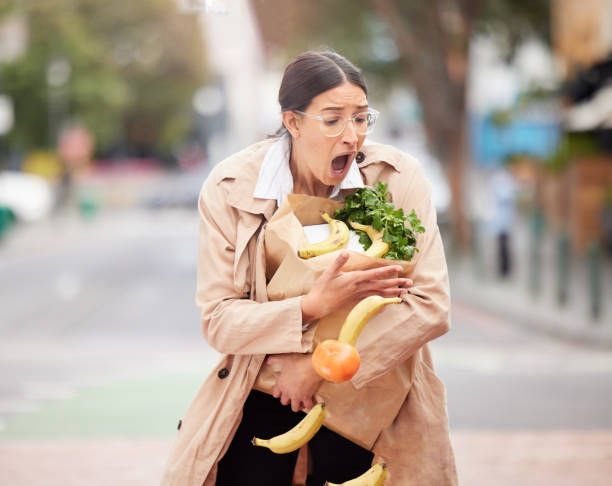
Savannah stood there with grocery bags digging into her arms, staring at the door like it had personally betrayed her. She tried the code again, more forcefully this time, as if the numbers would change their minds if she punched them hard enough.
Red flash. Beep. Denied.
Behind her, the ocean went quiet in that particular way it does at sunset, like it was holding its breath to see what would happen next.
And that’s when I stepped outside, holding my coffee mug, feeling the salt breeze on my face like permission I’d been waiting seventy-three years to receive.
But I’m getting ahead of myself. This story doesn’t start with a locked door or a sunset confrontation. It starts that morning, at breakfast, with two words that sound innocent until you understand what they really mean.
My name is Alberta Quinn. I’m 73 years old, and for most of my life I thought being a good mother meant staying useful, smiling when it hurt, and never taking up too much space in rooms that used to be mine.
That morning in Bar Harbor, Maine, the kitchen smelled like toast and salt air, and Savannah—my daughter-in-law of three years—stood at my kitchen island scrolling through her phone like she was pricing yard-sale lamps.
The kitchen was bright with morning light streaming through the windows that overlooked the water. The house had been Frank’s and mine for forty-two years, bought when Caleb was just a baby and we were young enough to believe the ocean would fix anything that needed fixing.
Frank had been gone for five years now. Heart attack on a Tuesday afternoon, sudden as lightning, leaving me with two properties in Bar Harbor and the weight of all the plans we’d never finished making.
The main house—the one where we stood now—sat on a cliff with views that took your breath away if you remembered to look. Three bedrooms, wraparound porch, the kind of place magazine photographers asked to shoot every summer.
The guest cottage was smaller, tucked back in the trees where the property sloped down toward the cove. Frank had built it himself over three summers, board by board, saying we needed a place for Caleb and his family when they visited. A place that felt like theirs without taking from ours.
Caleb and Savannah had been using it for their visits from Boston—weekends, holidays, the occasional week in August. It was understood, in that quiet family way, that the cottage was theirs to use whenever they wanted. That someday, when I was gone, both properties would pass to Caleb.
But apparently, Savannah had decided “someday” was negotiable.
“Two places on the water is wasteful,” she announced that morning, her voice carrying that particular tone of helpful efficiency she used when she was about to reorganize your life. “We should consolidate. Get rid of the extra one before winter maintenance becomes an issue.”
She said it casually, the way you might suggest switching to a different brand of coffee. Like we were discussing furniture, not a home Frank had built with his own hands.
Caleb was sitting at the table buttering his toast, not looking up, doing that thing he always did when he wanted peace more than truth—pretending not to hear, pretending this was normal, pretending his silence wasn’t a choice.
I’d been reaching for a third plate out of habit—my plate, the one I’d used at this table for four decades—when I realized there were only two place settings. One for Caleb. One for Savannah.
None for me.
I stood there holding the cabinet door, staring at the empty space where my plate should have been.
Savannah noticed and gave me a polite little smile, the kind that looks apologetic but feels practiced. “Oh—sorry, Alberta. I didn’t think you were eating with us. You usually just have coffee, right?”
I’d had breakfast at this table every morning for forty-two years. But apparently, that had been rewritten in Savannah’s version of our family story.
When you’ve been overlooked long enough, “sorry” stops sounding accidental and starts sounding strategic.
I poured myself coffee—using my own mug, at least that hadn’t been redistributed—and carried it onto the porch. I stood there watching gulls drift over the shoreline, telling myself families get stressed during visits, telling myself not to be sensitive, telling myself all the lies we tell when we don’t want to see what’s happening right in front of us.
Behind me, I could hear Savannah talking on the phone, her voice bright and businesslike. Something about “maximizing assets” and “streamlining the portfolio” and other phrases that sounded impressive but meant nothing when applied to a home where my husband had died, where my son had grown up, where forty years of memories lived in every floorboard.
By noon, Savannah had printed something. I heard the printer in the guest cottage running, then saw her walking back to the main house with a neat stack of pages in her hand.
She found me in the garden, where I was deadheading roses that Frank had planted the year before he died. She had that smile again, the helpful one, the one that made you feel like you were being difficult if you questioned anything.
“Alberta, I put together some paperwork,” she said, setting the pages on the patio table and tapping a sticky flag where she’d highlighted lines in yellow. “Just to formalize the property arrangements. Make everything cleaner for estate planning purposes. You’d still have full access to both houses, obviously. This just clarifies ownership structure going forward.”
I set down my garden shears and picked up the papers. They were dense with legal language, but certain phrases jumped out: “transfer of title,” “primary ownership,” “right of occupancy.”
“What is this?” I asked quietly.
“Just estate planning,” Savannah said smoothly. “Our lawyer recommended getting everything organized now rather than leaving it complicated for later. It’s actually better for tax purposes if we transfer the properties into Caleb’s name now, while you’re still here to oversee everything. You’d maintain full residence rights, of course. Nothing would actually change.”
Everything would change. That’s what she wasn’t saying. The papers would make Caleb—and by extension, Savannah—the legal owners of both properties while I was still alive. I’d be living in homes that no longer belonged to me, a guest in the life I’d built.
“When did you and Caleb discuss this?” I asked.
“We’ve been talking about it for a while,” she said, which wasn’t an answer. “Obviously we waited until we had all the information before bringing it to you. We didn’t want to stress you out with half-formed plans.”
“Where’s Caleb?”
“He went into town for some things. But he’s completely on board with this. He actually suggested we handle it this weekend while we’re all together.”
I looked down at the papers again, at the signature lines waiting for my name, and felt something shift inside me. A clarity I hadn’t felt in years, sharp and cold and absolutely certain.
“I’ll think about it,” I said, folding the pages.
“Well, don’t think too long,” Savannah said with a little laugh. “Our lawyer needs these back by Monday to file everything properly.”
“I said I’ll think about it.”
Her smile tightened just slightly. “Alberta, I’m just trying to help. I know paperwork is overwhelming, especially at your age. But this is really in everyone’s best interest—”
“When did you decide I stopped being the one who gets a say in my own property?” I asked, my voice still quiet but with an edge that made Savannah blink.
She laughed softly, like I’d said something charmingly confused. “Alberta, don’t be dramatic. No one’s trying to take anything from you. We’re trying to protect you. Protect all of us, really. This is just good planning.”
Caleb came back then, carrying bags from the hardware store, and Savannah immediately turned to him. “Your mom’s being difficult about the paperwork.”
My son—my boy, who I’d raised alone after Frank died, who’d called me every Sunday for years, who used to tell me everything—finally looked at me. But his eyes slid away quickly, landing somewhere near my shoulder.
“Mom… please,” he said. That was it. Not “What paperwork?” Not “What’s going on?” Just a tired plea for me to make this easier by giving them what they wanted.
So I nodded, folded the pages carefully, and slid them into the hall drawer under the mirror—the one Savannah never opened because nothing in it sparkled or had monetary value.
Then I put on my coat and walked into town like it was any other day.
The diner on Main Street had been there as long as my marriage. Longer, probably. Red vinyl booths, pie that was better than it had any right to be, and Eloise behind the counter—my friend for thirty years, the kind of friend who knew when to talk and when to just pour tea and wait.
She took one look at my face and grabbed the kettle.
We sat in the back booth, and I told her everything. About the breakfast I wasn’t invited to. About the paperwork. About Savannah’s helpful smile and Caleb’s silence and the feeling of becoming invisible in my own home.
When I got to “excess inventory,” Eloise’s mouth went tight. She set her cup down carefully, like she was restraining herself from throwing it.
“That’s not family language,” she said. “That’s business language. She’s treating your home like an asset to be managed.”
“Caleb didn’t stop her.”
“No, he didn’t. And that tells you something too, doesn’t it?”
I stared at my tea, watching the steam rise and disappear. “Frank would know what to do.”
“Frank would tell you to stop being so damn polite,” Eloise said bluntly. “He’d tell you those houses are yours. Your home. Your decision. Not theirs.”
“I don’t want to lose my son.”
“Honey, what do you think is happening right now? They’re not treating you like a mother or a partner in this family. They’re treating you like an inconvenient obstacle to be managed. Sometimes you have to make people uncomfortable to make them see you.”
I pulled out my phone and stared at a number I’d saved years ago. Realty agent. The woman who’d helped Frank and me buy the original house, who’d sold us the land for the cottage, who’d become a friend over decades of holiday cards and occasional lunches.
“What are you thinking?” Eloise asked.
“I’m thinking,” I said slowly, “that if they want to talk about property management and asset consolidation, they should understand what those words actually mean.”
I made the call. Patricia answered on the second ring, her voice warm with recognition. “Alberta! How wonderful to hear from you. How are you?”
“I’m considering a sale,” I said. “Both properties. How quickly could you move on that?”
Silence. Then: “Both? Alberta, are you sure? Those homes are—”
“How quickly?”
“For properties like yours? In Bar Harbor? At this time of year? I could have serious buyers by tomorrow. Cash offers within a week if we price it right. But Alberta, this is a big decision—”
“How much do you think they’re worth? Combined.”
She named a number that made my breath catch. The real estate market in coastal Maine had exploded over the past decade. What Frank and I had paid pocket change for was now worth… considerably more.
“I’ll be at your office in twenty minutes,” I said. “Bring contracts.”
After I hung up, Eloise was staring at me with something between shock and admiration. “You’re really going to do it?”
“They think I’m too old to understand property management. That I don’t know what my own homes are worth. That I’ll just sign whatever they put in front of me because I’m—what did Savannah say?—overwhelmed by paperwork.” I stood up, leaving money for the tea. “They want to treat my life like inventory? Fine. Let’s inventory it properly.”
By late afternoon, I’d signed listing agreements for both properties. Patricia was already scheduling showings for the weekend. “You’re sure about this?” she asked one more time. “Once this goes public, there’s no taking it back quietly.”
“I’m sure,” I said. “And Patricia? I want lockboxes installed today. On both properties. New codes. Only you and I have access.”
Her eyebrows went up. “That’s… unusual. These are your primary residences.”
“They’re my properties. Can you do it or not?”
“I can have someone there in two hours.”
The lockbox installer was efficient and discreet. A small realtor’s lockbox appeared on the rail outside the guest cottage. A new keypad replaced the regular lock on the side door—the one Caleb and Savannah always used because it was closer to where they parked.
I programmed the code myself. Four digits that meant something to me and Frank, nothing to anyone else.
Savannah didn’t notice any of it. She’d been on her phone most of the afternoon, probably already planning what they’d do with “their” properties once I signed her papers. She went into town around four to get groceries, talking loudly about “handling the sale” and “streamlining everything.”
I sat on the main house porch with my coffee, watching the sun start its descent toward the horizon, watching the light turn golden and then pink, watching the ocean turn from blue to silver.
This was my home. My view. My life. And I’d almost let them take it because I was afraid of seeming difficult.
Around sunset, I heard Savannah’s car in the driveway. Heard the car door slam. Heard her footsteps on the gravel, walking toward the cottage with grocery bags, still talking on her phone about square footage and market comparisons.
I watched as she approached the side door, one hand full of bags, the other reaching for where the regular lock used to be.
She stopped. Stared at the keypad. Set down one bag to try the handle.
Locked.
She tried the code they’d been using—probably 1-2-3-4 or something equally thoughtless. The keypad flashed red once. She tried again, slower this time, making sure she was hitting the right numbers.
Red flash. Then again. Then that final little beep that says: not you.
She stood there blinking at the door like it had betrayed her, bags digging into her arms, her phone still pressed to her ear but she’d stopped talking.
She turned slowly, looking from the porch to the main house to the driveway, her face cycling through confusion, annoyance, anger.
“Alberta?” she called out. “The lock isn’t working. Did you change something?”
That’s when I stepped outside onto the porch, my coffee mug warm in my hands, the ocean breeze lifting my hair like it had when I was young, when Frank first brought me here, when the world still felt full of possibilities instead of obligations.
“Yes,” I said calmly. “I changed something.”
Savannah set down her bags and walked toward me, her “helpful” smile back in place but her eyes sharp. “Okay… why would you do that without telling us? How are we supposed to get in?”
“You’re not,” I said. “The cottage is no longer yours to access.”
Her smile faltered. “What?”
“I listed both properties this afternoon. They’re for sale. You called them excess inventory this morning—I took your advice. I’m consolidating my assets.”
The color drained from her face. “You can’t be serious.”
“I’m very serious. Patricia from Coastal Maine Realty has already scheduled showings for this weekend. We’re expecting multiple offers.”
Caleb came outside then, drawn by Savannah’s raised voice. “What’s going on?”
“Your mother locked us out,” Savannah said, her voice rising. “And apparently she’s selling both houses without discussing it with us.”
“Discussing it with you?” I asked quietly. “The way you discussed transferring my properties into your name? The way you discussed selling off my ‘excess inventory’ at breakfast? Tell me, Caleb—when exactly was I supposed to be consulted about my own home?”
My son’s face went red, then pale. “Mom, those papers were just—we were just trying to help with planning—”
“No,” I interrupted, my voice still calm but carrying weight it hadn’t had in years. “You were trying to take my property while I was still alive to sign it over. You were trying to manage me out of my own life.”
“That’s not fair,” Savannah snapped. “We’ve been nothing but respectful—”
“You didn’t set a plate for me at breakfast in my own kitchen,” I said. “You called my home ‘excess inventory.’ You tried to get me to sign away property my husband built without even letting me think about it. If that’s your version of respect, I’d hate to see how you treat people you don’t like.”
“We were trying to protect you!” Savannah’s voice had lost its helpful sweetness entirely. “You’re 73 years old. You can’t maintain two properties. You can barely maintain one. We were trying to take the burden off you—”
“By taking my home?” I set my coffee cup down on the porch rail. “Savannah, I’ve been maintaining these properties for five years since Frank died. I’ve managed contractors, handled repairs, dealt with winter weather and summer tourists and everything in between. I’m not incapable. I’m not confused. I’m not a burden to be managed. I’m a woman who owns valuable real estate, and you thought you could convince me to give it up because I was too polite to say no.”
“Mom.” Caleb’s voice cracked. “Don’t do this. We can talk about this—”
“We tried talking,” I said. “You were too busy buttering toast to listen. So now we’re done talking. Both properties are listed. Patricia expects offers by next week. You have until Sunday to remove your personal belongings from the cottage. After that, everything stays as part of the staging.”
“You’re being vindictive,” Savannah said, tears in her voice now—the kind of tears that appear when manipulation stops working. “You’re hurting your own family—”
“My family hurt me first,” I replied. “You just didn’t notice because I was too polite to say it out loud. I’m done being polite.”
I walked back inside, closed the door, and locked it behind me. Through the window, I watched them stand there in the driveway—Savannah furious, Caleb confused, both of them finally understanding that the nice old lady who smiled and made coffee wasn’t as easy to push aside as they’d thought.
My phone started ringing almost immediately. Caleb. Then Savannah from her phone. Then Caleb again.
I turned it off and went to bed in my own house, in the bedroom I’d shared with Frank, feeling lighter than I had in years.
The next morning, I woke to find a note slipped under my door.
Mom—Please. We can fix this. We’ll tear up the papers. We won’t mention selling. Just don’t sell the houses. Please. –Caleb
I read it twice, then put it in the drawer with Savannah’s unsigned documents.
Patricia called at nine. “Alberta, I have three appointments scheduled for today and five more for tomorrow. Two buyers are already talking cash offers sight unseen. Are you absolutely certain about this?”
“I’m certain,” I said. “Keep the showings scheduled.”
“And if Caleb or Savannah try to interfere?”
“They have no legal standing. The properties are solely in my name. They can’t stop this.”
The first showing was at eleven. A couple from New York, late fifties, looking for a retirement property. They fell in love with the main house immediately, especially the porch and the view.
“We’d keep everything exactly as it is,” the wife said. “It’s perfect.”
They made an offer that afternoon. Twenty thousand over asking.
The second showing was a young family from Portland looking for a summer place. They wanted the cottage—loved the privacy, the trees, the sense of being tucked away while still having ocean access.
They offered asking price, all cash, thirty-day close.
By Sunday evening, Patricia had six offers total. Three for the main house, three for the cottage. All above asking. Two all-cash.
Caleb and Savannah had spent the weekend trying everything. Caleb called every few hours, his voice desperate. Savannah tried showing up with takeout, offering to cook dinner, suggesting we “talk this through like adults.”
I accepted none of it. They’d had two years of weekends to treat me like family. They’d chosen to treat me like inventory instead.
On Monday morning, I accepted both all-cash offers. The New York couple for the main house. The Portland family for the cottage. Combined sale price: $2.3 million.
When Patricia called to confirm, I could hear the smile in her voice. “Alberta, you’re going to be very comfortable. What are you going to do with that kind of money?”
“I’m going to live,” I said. “Really live. Do all the things Frank and I talked about doing after he retired. Travel. Buy a smaller place that’s just mine. Maybe a condo in Portland where I can walk to restaurants and theaters. Maybe a winter place somewhere warm. Maybe I’ll blow it all on experiences and die broke and happy. I’ll figure it out.”
“Your son—”
“Will inherit exactly what I choose to leave him,” I finished. “Which will be considerably more if he learns to treat me like a person instead of an asset. And if he doesn’t… well. There are a lot of good causes that could use the money.”
The closing was scheduled for six weeks out. In the meantime, I packed up forty-two years of life—deciding what mattered, what was memory, what was just stuff taking up space.
Caleb came by once to collect their things from the cottage. He looked exhausted, beaten down. Savannah stayed in the car.
“Mom,” he said quietly, standing in my kitchen one last time. “I’m sorry. I should have listened. I should have stood up to her. I should have—”
“You should have set a plate for me at breakfast,” I interrupted. “You should have told your wife that calling my home ‘excess inventory’ was cruel. You should have asked me what I wanted instead of assuming you knew better. But you didn’t do any of those things, Caleb. And now we’re here.”
“Are you ever going to forgive me?”
“I don’t know,” I said honestly. “Maybe. But forgiveness doesn’t mean pretending it didn’t happen. It doesn’t mean going back to how things were. Those houses are sold. That chapter is done. What happens next depends entirely on whether you can see me as a person instead of a problem to be managed.”
He left without another word.
Two weeks before closing, I bought a condo in Portland. Twelfth floor, water view, walking distance to the art museum and three good bookstores. One bedroom, perfect for me, zero room for people who thought they could tell me what to do with my own life.
I invited Eloise over to see it. We sat on the balcony with wine, watching boats in the harbor, and she raised her glass.
“To excess inventory,” she said.
“To being underestimated,” I added.
We clicked glasses and drank to the sunset, to second acts, to the particular power of being a woman who’d finally stopped being polite.
On closing day, I signed over both properties and walked away with a check that represented not just money, but freedom. The freedom to be difficult. The freedom to take up space. The freedom to live the rest of my life on my own terms instead of everyone else’s convenience.
Caleb called that night. “Did it really happen? Did you really sell them?”
“I did.”
“Where are you?”
“Portland. In my new condo. It’s lovely. You should see the view.”
“Can I?” His voice was small, hopeful. “Can I come see it?”
I thought about it. Really thought about it. About forgiveness and boundaries, about being a mother and being a person, about what I owed my son versus what I owed myself.
“Not yet,” I said finally. “But maybe someday. When you understand why it had to be this way. When you can see me as Alberta, not just as Mom. When you’ve figured out the difference between helping someone and managing them.”
“I love you,” he said, and he sounded like the boy who used to build sandcastles and call it work.
“I love you too,” I replied. “That’s why I’m teaching you this lesson. Because love that requires you to disappear isn’t love at all.”
I hung up and stood on my balcony, twelve stories up, looking out at a city full of possibilities and a life that was entirely, completely, wonderfully mine.
Somewhere, Frank was laughing. I could feel it in the ocean breeze, in the way the light caught the water, in the lightness in my chest that felt like coming home to myself after years of being lost.
I’d spent seventy-three years being useful, smiling, not taking up too much space.
Turned out, I had a lot of space left to take up. And I was just getting started.
THE END

Ethan Blake is a skilled Creative Content Specialist with a talent for crafting engaging and thought-provoking narratives. With a strong background in storytelling and digital content creation, Ethan brings a unique perspective to his role at TheArchivists, where he curates and produces captivating content for a global audience.
Ethan holds a degree in Communications from Zurich University, where he developed his expertise in storytelling, media strategy, and audience engagement. Known for his ability to blend creativity with analytical precision, he excels at creating content that not only entertains but also connects deeply with readers.
At TheArchivists, Ethan specializes in uncovering compelling stories that reflect a wide range of human experiences. His work is celebrated for its authenticity, creativity, and ability to spark meaningful conversations, earning him recognition among peers and readers alike.
Passionate about the art of storytelling, Ethan enjoys exploring themes of culture, history, and personal growth, aiming to inspire and inform with every piece he creates. Dedicated to making a lasting impact, Ethan continues to push boundaries in the ever-evolving world of digital content.