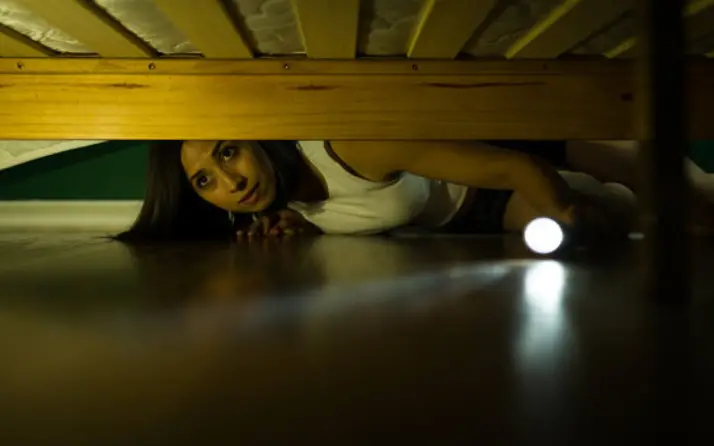
The Box Under the Bed
Immediately after our daughter’s funeral, my husband persistently urged me to throw away her belongings. But when I started cleaning her room, I found a strange note: “Mom, if you’re reading this, it means I’m no longer alive. Just look under the bed.”
When I looked under the bed, I was horrified by what I saw.
Right after our daughter’s funeral, my husband said we needed to clear out her room and get rid of all her things.
She was only fifteen years old.
Our only daughter.
After the funeral, I barely remembered anything. I remember only the white coffin and the feeling that everything inside me had died. People were saying things, hugging me, offering condolences, but I didn’t hear them. I just stood there, staring at one spot, feeling like the ground had opened beneath my feet and I was falling into darkness that had no bottom.
At home, my husband kept repeating the same thing over and over:
“These things need to be thrown away. They only cause pain. We need to move on.”
I couldn’t understand how he could say that.
They weren’t just things.
It was her. Her clothes still holding her scent. Her room where she’d laughed and cried and dreamed. Her books with corners folded on pages she’d loved. Her drawings taped to the wall. Her life, frozen in objects that suddenly felt sacred.
Throwing all of it away would mean betraying my own child.
I resisted for a long time. For almost a month, I didn’t go into her room. I walked past the closed door every day, unable to bring myself to turn the handle. Sometimes I’d stand there with my hand on the doorknob, feeling the cold metal, trying to gather courage that never came.
My husband grew more insistent.
“You’re torturing yourself,” he’d say, his voice tight with something I couldn’t name. “Keeping her room like a shrine won’t bring her back. We need to let go. We need to heal.”
But one day, I finally decided to do it.
When I opened the door, it felt as if time had stopped inside.
Everything was exactly as she had left it that morning before school. The bedspread slightly rumpled where she’d sat putting on her shoes. Notebooks stacked on the desk, the top one open to half-finished math homework. A coffee mug on the nightstand with a faint lipstick mark on the rim. The window she always kept cracked open because she liked fresh air. A faint trace of her vanilla perfume still lingering.
I stood in the doorway and sobbed.
The room was waiting for her to come home.
But she never would.
I began cleaning slowly, forcing myself to touch each item even though it felt like touching fire.
I picked up her favorite dress—the blue one with white flowers she’d worn to her eighth-grade dance. I held it to my face and breathed in, searching for any remaining trace of her. I cried into the fabric until it was damp.
Her hair ties scattered on the dresser. Seventeen of them. I’d counted. She was always losing them.
The fantasy novel she had read over and over again, the spine cracked, pages dog-eared, margins filled with her tiny handwriting commenting on the story.
I pressed everything to my chest and couldn’t let go.
And then, suddenly, as I was paging through one of her schoolbooks—her biology textbook with doodles in the corners—a small folded piece of paper fell out and drifted to the floor.
I immediately recognized her handwriting.
My hands began to shake.
The note was written in blue ink, the letters slightly smudged as if she’d been crying when she wrote it. It said:
“Mom, if you’re reading this, look under the bed. Then you’ll understand everything.”
My breath caught.
I reread those words several times, my mind refusing to process them.
If you’re reading this.
That meant she’d known. She’d known something might happen to her.
My heart was pounding so hard it felt like it would burst out of my chest. What could she have left there? And why was I supposed to understand something?
What was there to understand about a fifteen-year-old girl falling from her bedroom window in what the police had ruled an accident?
For a long time, I didn’t dare to do it.
I just stood in the middle of the room, clutching the note in my trembling hand, staring at her bed. The cheerful yellow bedspread with sunflowers. The stuffed rabbit she’d had since she was three, sitting against the pillow.
Then I knelt down on the carpet—slowly, like my bones had aged a hundred years—and looked under the bed.
There was an old shoebox there.
I knew for certain it hadn’t been there before. I’d helped her organize under the bed just two months ago, and there had been nothing but dust bunnies and a lost sock.
My heart started beating even faster.
I pulled the box out with shaking hands and placed it in front of me on the carpet.
The box was taped shut. Someone—she—had sealed it carefully with clear packing tape, wrapping it multiple times like she was protecting something precious. Or hiding something dangerous.
I used my keys to cut through the tape, my hands trembling so badly I could barely grip them.
Inside were things that didn’t belong.
Not hers.
Men’s items.
A brown leather belt with a distinctive brass buckle shaped like an eagle. A watch with cracked glass, the kind with a heavy metal band. A flash drive. And photographs—printed photographs, which seemed strange in an age when everything lived on phones.
Everything was neatly arranged, as if she had hidden it on purpose so I would find it. So I specifically would find it, not him.
I picked up the flash drive first and sat there for a long time on her carpet, unable to bring myself to move, to stand, to walk to the computer.
When I finally did—when I plugged the flash drive into my laptop and double-clicked the only file, a video labeled “MOM ONLY”—my hands began to tremble so violently I could barely control the mouse.
The video started playing.
On the screen was our daughter.
My beautiful girl.
She was sitting in her room—this very room—the camera positioned on her desk, angled toward her bed where she sat cross-legged. She was wearing her favorite hoodie, the gray one with the pockets she always kept her hands in. She was speaking quietly, barely above a whisper, as if she was afraid someone might hear her through the walls. She was crying, tears streaming down her face, and she kept glancing toward the door, toward the hallway, like she expected someone to burst in at any moment.
“Mom,” she said, her voice breaking, “if you’re watching this, it means I’m no longer here.”
I covered my mouth with my hand so I wouldn’t scream.
“Please believe me,” she continued, wiping her eyes with the sleeve of her hoodie. “I didn’t fall. It wasn’t an accident. Whatever they told you, whatever the police said, it’s not true.”
The world tilted.
My vision blurred.
I heard a sound coming from my own throat—a wounded animal sound.
“That evening,” she said, glancing at the door again, “I had a huge fight with Dad. I wanted to tell you the truth, but I didn’t get the chance. I was going to tell you the next morning, I swear. But I’m afraid I won’t make it that long.”
She pulled up the sleeve of her hoodie.
On her arm was a bruise—dark purple, almost black, in the clear shape of fingers. Someone had grabbed her. Hard.
“He did this,” she said, her voice dropping even lower. “Two days ago. When I told him I was going to tell you everything. He said if I said anything to you or anyone else, he’d make sure I regretted it. He said no one would believe me anyway. That you’d take his side because you always do.”
My stomach lurched.
I wanted to reach into the screen and pull her out, pull her into my arms, tell her I believed her, tell her I was sorry, tell her—
“There’s more,” she said, her voice steadier now, like she’d made a decision. “The belt in the box—that’s his. The one he told you he lost. He didn’t lose it. I took it after… after that night. The night he—”
She stopped.
Took a breath.
Started again.
“The photos are proof. I set up my phone to record when I knew he was going to… when I knew it was going to happen again. I printed them because I was afraid he’d find my phone and delete everything. I hid them where he’d never think to look.”
She looked directly into the camera, her red-rimmed eyes meeting mine across time and death.
“Mom, I love you. I’m so sorry I didn’t tell you sooner. I was scared. I thought maybe I was making too big a deal out of it. I thought maybe it was normal and I was just being dramatic like he always said. But it’s not normal. And I’m not being dramatic. And I need you to know the truth.”
The video ended abruptly.
The screen went black.
I sat on the floor of her room, unable to breathe, unable to think, unable to do anything but stare at the empty black screen.
Everything was spinning in my head.
All the strange moments of the past few months—the past year—suddenly came together into one terrifying picture that had been there all along, hiding in plain sight.
The way she’d become quieter. Withdrawn. The way she’d stopped bringing friends home. The way she flinched sometimes when her father raised his voice or moved too quickly. The way she’d started locking her bedroom door at night, something she’d never done before.
The way I’d asked her if everything was okay, and she’d said yes with eyes that screamed no, and I’d believed the words instead of the eyes because believing the eyes would have meant facing something I wasn’t ready to face.
I remembered how my husband had insisted we get rid of her things as quickly as possible.
How he wouldn’t let me go into her room.
How immediately after the funeral, while I was still numb with grief, he was already talking about moving on, about fresh starts, about how keeping her things would only hurt us.
How he’d offered to clear out her room himself so I wouldn’t have to suffer through it.
He knew everything.
And that was exactly why he wanted me to find nothing.
I looked into the box again with hands that had gone numb.
At the bottom, beneath the photographs I hadn’t yet looked at, was another note.
Short. Direct. In her handwriting, but steadier this time, like she’d written it with purpose rather than fear.
“Mom, if you find this—don’t believe him. Go to the police. He is dangerous. I love you. I’m sorry I wasn’t brave enough to tell you when I was alive. Please be brave enough to tell the truth now that I’m gone.”
I picked up the photographs.
I won’t describe what I saw.
Some things should never be described.
Some things burn themselves into your memory in ways that words can never capture and should never try.
But I will say this: they were proof.
Undeniable, irrefutable, damning proof.
At that moment, I realized I had no choice.
Either I would protect my daughter’s memory and tell the truth, or I would spend the rest of my life next to a man who had destroyed our family and destroyed our child and hoped to get away with it by destroying the evidence.
I put everything back in the box.
I closed the lid.
I stood up on legs that shook, walked out of her room, closed the door gently behind me, and went downstairs where my husband was watching television like it was just another evening.
He looked up when I entered.
“Did you finally start cleaning her room?” he asked. “Good. It’s time. Do you need help bringing things down?”
“No,” I said.
My voice sounded strange. Distant. Like it belonged to someone else.
“I found something.”
His expression changed.
It was subtle—just a flicker in his eyes, a tightening around his mouth—but I saw it.
He knew.
He knew exactly what I’d found.
“What did you find?” he asked carefully.
“The truth,” I said.
I called the police that night.
When they came, my husband tried to explain, tried to convince them I was delusional with grief, that I was imagining things, that our daughter’s death had broken something in my mind.
But then they opened the box.
They watched the video.
They saw the photographs.
They took him away in handcuffs while he screamed that I was destroying our family, that I was betraying him, that I would regret this.
He was wrong.
The only thing I regret is not seeing the truth sooner.
The investigation revealed that her fall hadn’t been an accident.
The angle was wrong. The window screen had been removed from the inside, not broken from outside. There were defensive wounds on her hands—small scratches and bruises the medical examiner had noted but dismissed.
There were text messages on her phone the police had originally overlooked, messages to a friend saying she was afraid to go home, that her dad was getting worse, that she didn’t know what to do.
There was a history.
A pattern.
Evidence that had been there all along, waiting for someone to look at it through the right lens.
The trial lasted three months.
I sat in that courtroom every single day and listened to lawyers dissect my daughter’s life, my marriage, the night she died.
I listened to my husband’s lawyer paint her as a troubled teen, a liar, a girl who made up stories for attention.
I listened to the defense try to explain away the photographs, the video, the bruises, the fear in her eyes.
But the jury saw the truth.
They found him guilty.
Not of murder—the evidence wasn’t quite enough for that, they said, though it was enough for me.
But of years of abuse. Of assault. Of creating the circumstances that led to her death.
He’s in prison now.
Twenty-five years.
He’ll be an old man when he gets out, if he gets out.
I sold our house.
I couldn’t live there anymore, couldn’t walk past her room, couldn’t sleep in the bed I’d shared with a monster I’d somehow convinced myself was just a difficult man.
I moved to a small apartment across town.
I brought her things with me—the things he’d wanted me to throw away.
Her books line my shelves now. Her drawings hang on my walls. Her blue dress with white flowers hangs in my closet where I can see it every morning.
The box is in a storage unit.
Evidence. Sealed by court order.
But I have copies of everything, locked in a safe deposit box, because I need to know it’s real, that I didn’t imagine it, that my daughter’s voice wasn’t silenced forever.
Some days I can’t get out of bed.
Some days the guilt crushes me—the weight of all the signs I missed, all the times I chose comfort over truth, all the moments I looked away because looking directly at the problem would have meant shattering the life I’d built.
But other days, I think about what she said in that video.
Please be brave enough to tell the truth now that I’m gone.
She knew I would find the box.
She knew I would watch the video.
She knew me well enough to know that once I saw the truth, I wouldn’t be able to unsee it.
She believed in me even when I hadn’t believed in myself.
And she was right.
I found the box.
I told the truth.
I was brave enough.
I just wish I’d been brave enough when it mattered.
When she was still alive.
When I could have saved her instead of just avenging her.
But I can’t change the past.
All I can do is honor her memory by making sure her voice is heard, her truth is known, and that her death meant something.
She saved me from a lie I was living.
And even though it cost her everything, I will spend the rest of my life making sure that sacrifice wasn’t in vain.
Every year on her birthday, I visit her grave.
I bring sunflowers—her favorite.
I sit on the grass and I talk to her like she’s still here.
I tell her about the foundation I started in her name, the one that helps kids escape abuse, the one that trains people to recognize the signs I missed.
I tell her that hundreds of children have been helped because of what she documented, because of the courage she showed in those final days.
I tell her I’m sorry.
And I tell her I love her.
And sometimes, when the wind blows just right and the sunflowers sway, I let myself believe she hears me.
THE END
A story about the courage to face unbearable truth, a daughter’s desperate attempt to protect her mother even after death, and the devastating cost of looking away from evil that hides in plain sight.

Lila Hart is a dedicated Digital Archivist and Research Specialist with a keen eye for preserving and curating meaningful content. At TheArchivists, she specializes in organizing and managing digital archives, ensuring that valuable stories and historical moments are accessible for generations to come.
Lila earned her degree in History and Archival Studies from the University of Edinburgh, where she cultivated her passion for documenting the past and preserving cultural heritage. Her expertise lies in combining traditional archival techniques with modern digital tools, allowing her to create comprehensive and engaging collections that resonate with audiences worldwide.
At TheArchivists, Lila is known for her meticulous attention to detail and her ability to uncover hidden gems within extensive archives. Her work is praised for its depth, authenticity, and contribution to the preservation of knowledge in the digital age.
Driven by a commitment to preserving stories that matter, Lila is passionate about exploring the intersection of history and technology. Her goal is to ensure that every piece of content she handles reflects the richness of human experiences and remains a source of inspiration for years to come.