The Blanket’s Secret
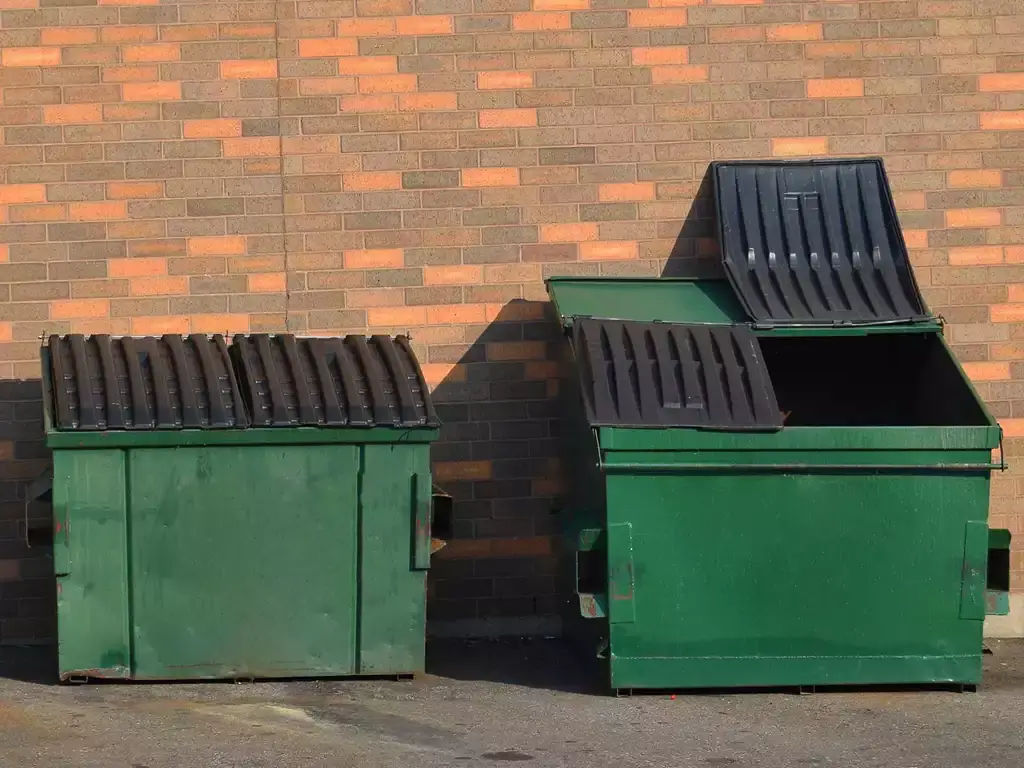
I saw my daughter-in-law throw my granddaughter’s blanket into the trash container. She didn’t just toss it in—she shoved it inside sharply, with a kind of anger, as if she wanted to get rid not of an object, but of the memory itself.
Without thinking, I ran to the container and pulled it out.
It wasn’t just a blanket. I had knitted it myself, back when my granddaughter had just been born. Every stitch—with a prayer, with love, with hope. After the death of my husband, and then my only son, that blanket became one of the few living reminders of the past.
And now it was being thrown away? Just like that?
I brought it home. My hands were trembling. I spread the blanket out on the bed, carefully smoothing the fabric, and suddenly felt something hard right in the center. A distinct rectangular lump, far too regular to be accidental.
My heart started pounding.
I turned the blanket over and saw an almost invisible seam—perfectly straight, stitched with thread exactly matching the color of the fabric. Someone had opened the blanket, placed something inside, and sewn it back up so neatly that no eye would have caught it.
I was scared. I sat there for a long time, staring at that seam as if it were staring back at me.
Then I took the scissors. Every cut was difficult, as if I were breaking a taboo. Thread by thread—and the fabric gave way.
I slipped my fingers inside and felt cold. Metal. A small, heavy object.
I carefully pulled it out, and at that moment my breath caught.
The Discovery
I pulled the object out completely and immediately understood what it was.
A small folding knife. Old, worn, with a stiff mechanism. The blade was neatly folded, as if it had been kept that way for a long time. On the metal were dark stains that time had not washed away. Not bright, not obvious. The kind that remain when someone has tried very hard to clean everything.
I held the knife in my hands for a long time without moving.
In my mind surfaced the police report about the death of my only son, David. “Fall down the stairs.” “Hit his head.” “No signs of a struggle.”
Back then, it seemed strange to me that there were cuts on his palms—as if he had tried to grab onto something sharp. They explained it to me: “He caught himself on the railing.” I believed it.
Now everything fell into place.
The knife was wrapped in a thin baby cloth cut from the same blanket. Someone had carefully hidden it inside and sewn it back up, knowing that I would never cut open something I had knitted for my granddaughter. Someone counted on the fact that one day it would simply be thrown away—along with the secret.
I remembered that evening. The argument. The neighbors had heard shouting. My daughter-in-law, Rebecca, said David was drunk, stumbled, fell. But my son didn’t drink. He’d been sober for three years. And the staircase in their house was too short for such a quick death.
I slowly sat down on the edge of the bed. My hands were shaking.
The knife was not the murder weapon directly. It was evidence of a threat. Or an attempt to defend himself.
Now I understood why she threw the blanket away so abruptly. She wasn’t getting rid of an old thing. She was getting rid of the last piece of evidence.
I carefully put the knife aside. Not back into the blanket. Into a plastic bag.
Because now I knew: my son did not fall.
Someone helped him.
The Decision
I sat at my kitchen table for three hours that night, the plastic bag in front of me, my phone beside it.
The smart thing would be to call the police immediately. But I’d learned something in my sixty-eight years: truth and justice are not the same thing. And the police don’t always care about either.
When David died eighteen months ago, I’d tried to tell them something was wrong. The detective—a tired man with coffee stains on his shirt—had listened politely. Then he’d shown me the medical examiner’s report. “Blunt force trauma consistent with a fall. Blood alcohol level zero point zero-eight. Head injury. These things happen, Mrs. Morrison.”
“He didn’t drink,” I’d insisted. “He was three years sober.”
“Sometimes people relapse,” the detective said gently. Too gently. The tone people use when they think you’re a grieving mother who can’t accept reality.
The case was closed within a week.
Now I had evidence. But evidence of what, exactly? A knife hidden in a blanket proved nothing by itself. The stains could be anything—rust, old food, dirt. And who had hidden it? I had no proof Rebecca put it there. Any defense attorney would tear this apart in minutes.
I needed more. I needed to understand what really happened that night.
I pulled out my phone and scrolled through my contacts until I found the name I was looking for: Margaret Chen. She’d been David’s closest friend since college, a criminal defense attorney who’d helped him through his divorce from his first wife and his subsequent recovery.
If anyone would know what to do, it was Margaret.
I called. She answered on the third ring.
“Eleanor? It’s late. Is everything okay?”
“No,” I said. “I need your help. It’s about David.”
There was a pause. “I’m listening.”
I told her everything. The blanket. The knife. The stains. The too-neat seam. The way Rebecca had thrown it away.
When I finished, Margaret was quiet for a long moment.
“Don’t touch the knife anymore,” she finally said. “Don’t do anything with it. I’m coming over. We need to handle this very carefully.”
Margaret’s Visit
She arrived forty minutes later, still in her work clothes—a sharp gray suit and sensible heels. Margaret was in her early forties, with short black hair and the kind of intense focus that made juries listen when she spoke.
I showed her the knife, still in the plastic bag on my kitchen table.
She didn’t touch it. She leaned close, studying it under my kitchen light.
“Those stains,” she said quietly. “They could be blood. But they could be a lot of things. How long has this blanket been in their house?”
“Since Emma was born. Two years.”
“And you’re sure Rebecca threw it away?”
“I saw her. Through the window. She didn’t know I was there.”
Margaret pulled out her phone and took several photos of the knife through the plastic. Then she sat down across from me.
“Eleanor, I need you to understand something. What you have here is suggestive. But it’s not proof. If we go to the police with this, here’s what happens: they test the stains. Maybe it’s blood, maybe it’s not. Maybe it’s David’s blood, maybe it’s not. Maybe Rebecca put it there, maybe someone else did. Maybe it was hidden a week ago, maybe it was hidden two years ago.”
“But David’s death—”
“Was ruled an accident. To reopen that case, we need more than a knife with mysterious stains. We need a clear connection to the night he died. We need motive. We need timeline. We need Rebecca to make a mistake.”
I felt my hope crumbling. “So we do nothing?”
“No,” Margaret said firmly. “We do something very careful. First, we preserve this evidence properly. Then we investigate. Quietly. Because if Rebecca did this—if she killed David and hid the weapon in your blanket—she’s been living with that secret for eighteen months. And people who carry secrets like that eventually crack. We just need to apply the right pressure.”
The Investigation Begins
Margaret had a contact—a private investigator named James Reeves who specialized in cold cases. Within two days, he was sitting in my living room, taking notes.
“Tell me about the night David died,” he said.
I went through it again. September 15th, a Tuesday evening. David had called me that afternoon, saying he needed to talk about something important. He sounded stressed but wouldn’t say what it was over the phone.
“He was supposed to come over at seven,” I said. “He never showed up. At nine-thirty, Rebecca called to tell me he’d fallen down the stairs. By the time I got to the hospital, he was already gone.”
James wrote in his notebook. “What about the argument the neighbors heard?”
“The police asked the neighbors,” I said. “The couple next door—the Hendersons—heard shouting around seven-fifteen. They couldn’t make out words, just raised voices. A man and a woman.”
“Did they tell you this, or the police?”
“Me. Later. After the funeral. Carol Henderson came over with a casserole and mentioned it. She felt terrible, wondering if she should have called someone.”
James nodded. “What else did she say?”
“She said she heard things being knocked over. Like furniture moving. Then everything went quiet. She figured they’d made up and went back to watching TV.”
“And Rebecca’s story?”
I recited it from memory. “She said David came home around seven. They had a small disagreement about finances. He went upstairs to cool off. She heard a crash. Found him at the bottom of the stairs. Called 911.”
“Small disagreement about finances,” James repeated. “But the neighbors heard shouting loud enough to carry through walls.”
“Rebecca said the neighbors were exaggerating.”
“What about David’s will? Life insurance?”
I nodded slowly. “He had a policy through his work. Two hundred thousand dollars. Rebecca was the beneficiary. And the house was in both their names.”
James looked up. “That’s motive. Not proof, but motive.”
Over the next two weeks, James worked quietly. He pulled the police report, the medical examiner’s findings, the 911 call recording. He interviewed the Hendersons again—this time with a recording device and signed statements. He checked David’s phone records, his bank accounts, his emails.
And slowly, a picture emerged.
The Pattern
“David was planning to leave her,” Margaret said, spreading documents across my dining room table.
It was a Saturday afternoon. James sat beside her, his laptop open.
“Look at this,” Margaret continued. “Three weeks before he died, David opened a new bank account. Just in his name. He started transferring small amounts—two hundred here, three hundred there. Nothing big enough to raise flags, but over three weeks, he’d moved nearly eight thousand dollars into an account Rebecca didn’t know about.”
James pulled up an email on his laptop and turned it toward me.
“And he’d been in contact with a divorce attorney. Sarah Feldman, downtown. She confirmed David had a consultation scheduled for September 18th—three days after he died.”
My hands were shaking. “He was leaving her?”
“That’s what it looks like,” Margaret said gently. “And there’s more. Rebecca had been having an affair.”
She showed me a series of credit card statements. Hotel charges on nights when Rebecca claimed to be at women’s book club meetings. Restaurants in the next town over. Always the same pattern—charged to Rebecca’s personal credit card, which David didn’t have access to.
“The affair had been going on for at least six months,” James said. “Maybe longer. We tracked down the guy—his name is Patrick Brennan. He’s a sales manager at the company where Rebecca works.”
“Does he know about David?”
“We haven’t approached him yet,” Margaret said. “We’re building the timeline first. But here’s what we think happened: David found out about the affair. He confronted Rebecca. She realized he was planning to leave her, which meant losing the house, the insurance, everything. They argued. And something went wrong.”
“The knife,” I whispered.
“The knife might have been David’s,” James said. “A lot of people keep a small knife in their car or pocket for everyday use. If he pulled it out during an argument—maybe to defend himself, maybe just to make a point—and she got it away from him…”
He didn’t finish the sentence.
Margaret leaned forward. “Eleanor, we have enough here to go to the police. The new bank account, the divorce consultation, the affair, the neighbors’ statements—it’s enough to ask them to take another look. But I need you to understand: this is still circumstantial. A good defense attorney will argue that David was preparing to leave, they had an argument, and he fell during the fight. The knife doesn’t prove murder. It proves… complications.”
“What do you recommend?”
Margaret and James exchanged a look.
“We think we should talk to Rebecca,” James said. “Directly. With the knife. See how she reacts.”
The Confrontation
We planned it carefully. Not my house—too emotional. Not Rebecca’s house—too much her territory. Instead, we chose a coffee shop downtown. Neutral ground. Public enough to be safe, private enough to talk.
Margaret called Rebecca and said she needed to discuss David’s estate—some paperwork that had come up. Rebecca agreed to meet, probably thinking it was routine.
I stayed home. This was Margaret and James’s operation. I was too close, too angry. Margaret promised to record everything on her phone.
They met on a Wednesday morning at ten.
According to Margaret’s account later, Rebecca arrived on time, perfectly put together in a navy dress and heels. Professional. Composed.
“Thanks for meeting me,” Margaret said. “I know it’s been a while since we’ve talked.”
“Of course,” Rebecca said, settling into her chair with a coffee. “You said something about paperwork?”
“Actually, I wanted to talk to you about something Eleanor found.”
Rebecca’s expression didn’t change. “What did she find?”
Margaret placed a folder on the table. Inside was a photo of the knife, still in the plastic bag.
“This was hidden inside the baby blanket Eleanor made for Emma. The one you threw away last week.”
For just a moment—maybe two seconds—Rebecca’s composure cracked. Her eyes widened. Her hand went to her throat.
Then she recovered.
“I don’t understand. What is that?”
“It’s a folding knife,” Margaret said calmly. “With what appears to be bloodstains. It was sewn into the blanket. Very carefully. By someone who wanted to hide it.”
Rebecca stared at the photo. “I’ve never seen that before.”
“You threw the blanket away.”
“It was old and falling apart. Eleanor gets too attached to things.”
“Interesting,” James said, speaking for the first time. “Because Eleanor says the blanket was in perfect condition.”
Rebecca’s jaw tightened. “I don’t know what you’re implying.”
“We’re not implying anything,” Margaret said. “We’re asking. Do you know how this knife ended up in the blanket?”
“No.”
“Do you know whose blood that is?”
“I don’t even know if it’s blood.”
“It will be tested,” Margaret said. “The police will test it. And if it’s David’s blood, they’re going to want to know why a knife with his blood was hidden in a blanket in your house.”
Rebecca stood up. “I don’t have to listen to this. David fell. There was an investigation. This is harassment.”
“Sit down,” Margaret said quietly. “Please.”
Something in her tone made Rebecca pause.
“We know about Patrick Brennan,” James said.
Rebecca went pale.
“We know about the affair. We know David was planning to leave you. We know he’d moved eight thousand dollars into a separate account and had a divorce consultation scheduled.”
Rebecca sat down slowly.
“Here’s what we think happened,” Margaret said. “David confronted you about the affair. You argued. Things got physical. Maybe he pulled the knife to protect himself. Maybe you got it away from him. Maybe it was an accident. Maybe it wasn’t. But afterward, you panicked. You hid the knife in the one place you thought Eleanor would never look—inside something she treasured. And you’ve been living with that secret for eighteen months.”
Rebecca’s hands were shaking now. “You can’t prove any of this.”
“We don’t have to prove it,” Margaret said. “We just have to give the police enough reason to reopen the investigation. And once they start looking—really looking—they’ll find things. The affair. The money. The lies you told. The timeline that doesn’t quite add up.”
“I want a lawyer.”
“You should absolutely get one,” Margaret said. “But before you do, I want you to think about something. Emma is two years old. By the time this goes to trial, she’ll be old enough to understand that her mother is on trial for killing her father. Do you want that to be her childhood?”
Rebecca’s eyes filled with tears. “It was an accident.”
The words hung in the air.
Margaret leaned forward. “Tell me what happened.”
The Truth
Rebecca broke.
Not immediately. Not dramatically. But slowly, like a dam with a crack that finally gives way.
“We were arguing,” she said, her voice barely above a whisper. “About Patrick. About the money David was hiding. I knew he was planning to leave. I saw the bank statements.”
She wrapped her hands around her coffee cup, even though it had gone cold.
“He said terrible things. About how I’d ruined his life. How he’d wasted three years on me. How he was going to take Emma and I’d never see her again.”
Margaret said nothing. Just listened.
“I didn’t plan it,” Rebecca continued. “He went upstairs. I followed him. We were shouting. He pulled out that stupid knife—he always carried it, said his dad gave it to him. He wasn’t threatening me. He was just… holding it. Waving it around while he yelled.”
She closed her eyes.
“I grabbed for it. I just wanted him to stop waving it in my face. We struggled. And he… he stepped back. Toward the stairs. I was holding the knife and he stepped back and—”
Her voice broke.
“He fell. Not because I pushed him. Because he lost his balance. But I was holding the knife and when he grabbed for the railing, he…” She touched her own palm. “The cuts on his hands. That’s how he got them. From the knife. From me holding it.”
“And then?” Margaret prompted gently.
“He fell. All the way down. I ran down after him. There was so much blood. From his head. I called 911. But I knew—I knew it looked bad. That I’d been holding the knife. That we’d been fighting. So I… I cleaned the knife. And I hid it. I was going to throw it away but I panicked. I sewed it into the blanket because I knew Eleanor would never look there. Never destroy something she made for Emma.”
“And the alcohol?” James asked.
Rebecca looked down. “I poured whiskey on him. After. Before the ambulance came. Just a little. To make it seem like he’d been drinking. I’m sorry. I’m so sorry.”
She was crying now. Fully crying.
“I loved him,” she said. “I made mistakes. Terrible mistakes. But I loved him. And it was an accident. I didn’t push him. I didn’t kill him. He fell.”
Margaret looked at James. Then back at Rebecca.
“You need to tell this to the police,” she said. “Exactly as you told us. With a lawyer present. Because right now, the police think David fell while drunk. But we know that’s not true. And the truth matters. Even when it’s complicated.”
The Aftermath
Rebecca turned herself in the next day.
With her attorney present, she gave a full statement to the police. She was charged with involuntary manslaughter and tampering with evidence. The prosecutor argued for second-degree murder, but the evidence supported Rebecca’s version—a fight that escalated, a struggle over a knife, a terrible accident.
The trial lasted three weeks.
I sat in the courtroom every day, watching the woman who’d been married to my son, who’d given me my granddaughter, who’d lied at his funeral.
The jury found her guilty of involuntary manslaughter. The judge sentenced her to eight years, with possibility of parole after five.
Emma went to live with Rebecca’s sister, a kind woman named Claire who promised to bring her to visit me regularly.
And I kept the blanket.
Not the knife—that was evidence, locked away in some police storage facility.
But the blanket itself, carefully rewoven where I’d cut it open.
Because it was still made with love. Still knitted with prayers and hope.
The secret it held didn’t change that.
Epilogue: Three Years Later
Emma is five now. She comes to visit every Saturday.
We bake cookies together. I teach her to knit—just simple stitches so far, but she’s proud of every crooked row.
She knows her mother is away. Claire has explained it in gentle, age-appropriate terms. Someday, Emma will know the whole truth. But not yet. Not while she’s still small.
Rebecca writes letters. I don’t read them. I keep them in a box in my closet, sealed. Maybe someday Emma will want them. Maybe she won’t. That will be her choice.
The blanket is folded at the foot of Emma’s bed when she stays over.
She doesn’t know its history. To her, it’s just the blanket Grandma made, soft and warm and safe.
And in a way, that’s what it still is.
Love doesn’t erase tragedy. Truth doesn’t undo loss. Justice doesn’t bring back the dead.
But we do what we can with what remains.
We keep knitting. We keep loving. We keep going.
And sometimes, we find that the hardest truths are the ones that set us free.
THE END
A story about a mother’s instinct, the weight of secrets, and the complicated nature of justice when tragedy strikes close to home. Sometimes the truth we uncover is messier than the lies we were told—but it’s still the truth, and it still matters.

Lila Hart is a dedicated Digital Archivist and Research Specialist with a keen eye for preserving and curating meaningful content. At TheArchivists, she specializes in organizing and managing digital archives, ensuring that valuable stories and historical moments are accessible for generations to come.
Lila earned her degree in History and Archival Studies from the University of Edinburgh, where she cultivated her passion for documenting the past and preserving cultural heritage. Her expertise lies in combining traditional archival techniques with modern digital tools, allowing her to create comprehensive and engaging collections that resonate with audiences worldwide.
At TheArchivists, Lila is known for her meticulous attention to detail and her ability to uncover hidden gems within extensive archives. Her work is praised for its depth, authenticity, and contribution to the preservation of knowledge in the digital age.
Driven by a commitment to preserving stories that matter, Lila is passionate about exploring the intersection of history and technology. Her goal is to ensure that every piece of content she handles reflects the richness of human experiences and remains a source of inspiration for years to come.