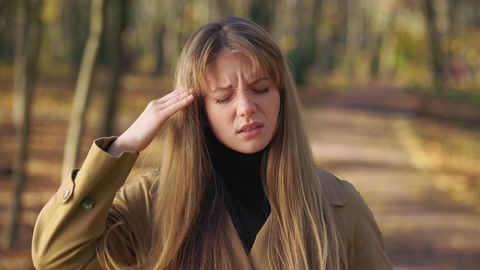
The Land They Never Wanted Me to Have
The tires crunched on gravel, and I knew before I even looked up that my life was about to change again.
I was on the porch of the farmhouse, hands dirty from replanting the herb garden, when I heard it—that particular sound of someone driving too fast on a road they didn’t know, gravel spraying, brakes squeaking as they realized they’d gone too far. Then silence. The engine cut. A car door slammed.
And then, rising through the autumn air like something breaking: “Oh my God. OH MY GOD.”
Olivia’s voice. My sister’s voice, high and sharp with shock.
I stood slowly, wiping my hands on my jeans, and watched as she stumbled back to her Mercedes, phone already pressed to her ear. Her designer heels sank into the soft earth of what used to be my grandparents’ overgrown driveway and was now a proper road lined with young maples I’d planted myself.
“Dad,” she said, her voice carrying across the five acres like she wanted me to hear. “Dad, you need to come here right now. You need to see this. Blake’s—she’s—I can’t even—just come. Now.”
She hung up and stood there staring at my property like it had personally offended her. At the restored farmhouse with its new roof and wraparound porch. At the three guest cabins visible through the trees, their cedar shingles glowing in the afternoon light. At the gravel parking area where six cars were currently parked—guests who’d booked weekend retreats, people who’d paid good money to stay on land my family had written off as worthless.
I could have gone inside. Could have pretended I hadn’t seen her. But I was done pretending, done making myself smaller, done apologizing for taking up space I’d earned.
So I walked down the porch steps and across the lawn I’d seeded myself, and I waited for her to turn around and see me.
When she did, her face went through a series of expressions I might have found funny if there wasn’t so much history sitting between us like a wall.
“Blake,” she said, and it sounded like an accusation.
“Olivia,” I replied evenly. “What are you doing here?”
But I’m getting ahead of myself. This story doesn’t start with my sister’s shock or my father’s impending arrival. It starts thirty-two years ago, with a girl who never quite fit the mold her family had cast for her.
My name is Blake. I’m 32, and for most of my life I was the kind of daughter my parents talked about in careful, disappointed sentences—like I was a problem they couldn’t solve, a mistake they were too polite to name out loud but too frustrated to hide.
I grew up in an upper-middle-class pocket of Connecticut, in a picture-perfect colonial house where the lawns were professionally manicured, the smiles were practiced to perfection, and love felt like something you earned with achievements and trophies and the right kind of success story.
My sister, Olivia, never had to wonder what it felt like to be chosen. She was the golden child in a way that wasn’t even subtle—straight A’s from elementary school through high school, debate team captain, state champion in violin, early admission to Yale. My parents glowed around her success like it warmed them from the inside, like her accomplishments were proof they’d done everything right as parents.
At dinner, I learned how to become invisible without leaving my seat. I’d push food around my plate while they discussed Olivia’s latest achievement—a perfect score on some test, a scholarship offer, a glowing recommendation from a professor. They’d talk about her future like it was already written, already guaranteed, already something they could claim credit for.
“Olivia’s on track for Harvard Law,” my father would say with pride so thick you could spread it on toast.
“Her professor said she’s one of the most talented students he’s seen in twenty years,” my mother would add, her voice warm in a way it never was when she spoke to me.
And I would sit there, seventeen years old, trying to figure out what I’d done wrong just by existing differently.
I wasn’t reckless. I wasn’t “bad.” I wasn’t even particularly rebellious. I was just… different. I loved photography—the quiet click of a shutter, the way a single image could hold a whole emotion without anyone needing to explain it with words. I loved the way light changed throughout the day, the way shadows told stories, the way you could capture a moment that would otherwise be lost forever.
I’d spend hours in the darkroom at school, developing film, watching images emerge from nothing. It felt like magic. It felt like the only place where I could breathe.
But in my family, art wasn’t a plan. It was an excuse. Art was what you did as a hobby, not a career. Art was for people who couldn’t hack it in the “real world” of law and medicine and business.
When I was eighteen and said I wanted to study photography instead of following Olivia to law school, the temperature in our dining room changed like a storm rolling in. My father didn’t yell for long—he was too controlled for extended outbursts. He didn’t have to. He just made it devastatingly simple: if I chose that life, I chose it alone.
“We’re not funding a degree in taking pictures,” he said, his voice cold and final. “If you want to throw away your future, that’s your choice. But don’t expect us to pay for it.”
My mother looked away, silent, which I’d learned was her way of agreeing without having to say it out loud.
Olivia, sitting across from me, had the decency to look uncomfortable. But not uncomfortable enough to say anything in my defense.
So I did what they clearly wanted me to do: I left.
I moved to Brooklyn with a worn Nikon I’d bought with money from a summer job, a duffel bag full of clothes, and a stomach full of nerves that wouldn’t settle for months. I worked early shifts at coffee shops and late nights at restaurants, taking any job that would keep the lights on in my tiny shared apartment in Bushwick. I assisted established photographers for free just to learn. I shot weddings for couples who barely knew my name, who paid me next to nothing but gave me experience I couldn’t get any other way.
I built my career the slow way: one client, one gallery show, one exhausted train ride home at four in the morning at a time. Every small success felt like climbing a mountain with no summit in sight.
Meanwhile, Olivia’s path was paved like a red carpet rolled out specifically for her. Ivy League education fully funded by our parents. Summer internships at prestigious law firms that our father’s connections helped secure. A fiancé she met at a networking event, a man with an equally shiny resume and family money that matched our parents’ aspirations perfectly.
And then—without telling me, without even a courtesy call—my parents handed her $560,000 as a wedding gift to buy her dream house in Westchester.
I found out the way you find out most truths in families like mine: late, accidentally, and with just enough humiliation baked in to make it sting for years.
I was at a coffee shop in Brooklyn, scrolling through my phone between editing sessions, when I saw Olivia’s Instagram post. A photo of a gorgeous Victorian house with a caption about “family support” and “grateful for parents who invest in our future.” The comments were full of congratulations and heart emojis. Someone had even asked “how did you afford this at your age??” and Olivia had responded: “Very blessed to have incredible parents who believe in us! ”
I’d sat there, coffee going cold in my hand, staring at that post until the words blurred.
Half a million dollars. They’d given her half a million dollars.
I thought about my student loans, taken out because they’d refused to co-sign. I thought about the months I’d eaten ramen for dinner because that’s all I could afford. I thought about calling home from a pay phone once, desperate and broke after my camera equipment was stolen, and my father telling me this was what happened when you made “impractical choices.”
It wasn’t the money itself that broke something inside me. It was what the money meant. It meant they believed in her life as if it was an investment worth protecting, worth nurturing, worth celebrating. While mine was a mistake they refused to fund, a wrong turn they wouldn’t enable, a disappointment they’d rather ignore than support.
I waited three days before I called home. I wanted to be calm. I wanted to be rational. I wanted to have a conversation like adults.
I managed about thirty seconds.
“Why didn’t you tell me you gave Olivia over half a million dollars?” I asked, my voice shaking.
My father’s response was immediate and cold. “That’s between us and your sister.”
“I’m your daughter too—”
“Olivia chose the sensible path,” he interrupted. “She worked hard. She earned our support. She’s building a stable life with someone successful, someone with prospects. We’re investing in a future we believe in.”
The implication hung in the air like smoke: unlike you.
“So I get nothing because I didn’t become a lawyer?” My voice cracked. “Because I followed my passion instead of your plan?”
“You made your choices, Blake. You walked away from every opportunity we offered you. You threw away a good education, good connections, a chance at a real career—”
“I have a real career—”
“Taking pictures?” He said it like the words tasted bitter. “That’s not a career, Blake. That’s a hobby that you’re trying to turn into something legitimate because you’re too stubborn to admit you were wrong.”
My mother’s voice came through in the background, muffled but audible: “Don’t make a scene, Blake. Your sister worked very hard—”
I hung up.
And then I blocked their numbers, deleted them from my social media, and made a decision that felt both terrifying and liberating: I was done.
Done reaching for approval that would never come. Done apologizing for being different. Done performing gratitude for scraps of attention while Olivia got the whole feast. Done pretending we were a family when what we really were was a hierarchy, and I’d been at the bottom since birth.
I cut contact completely. No calls. No holidays. No carefully worded emails from my mother pretending everything was normal if I would just “be reasonable” and “understand their position.” I stopped reaching for a door that had never opened for me anyway.
For eight months, I heard nothing from them. I assumed they were relieved.
Then my grandparents died.
My grandmother went first—a stroke that came without warning. My grandfather followed four months later, and everyone said it was a broken heart, but I think it was just that he didn’t know how to live in a world where she wasn’t there.
They were the only people in my family who’d ever looked at me like I was enough. Like I was exactly right just as I was. Growing up, their farmhouse two hours north of our Connecticut home had been my refuge. While my parents pushed Olivia toward perfection and regarded me with disappointment, my grandparents let me exist without judgment.
Grandma taught me to see light and shadow, to notice the way morning sun transformed ordinary things into something beautiful. Grandpa taught me about the land, about growing things, about the patience required to build something lasting.
Their five-acre property had been my sanctuary—woodland and meadow and a weathered farmhouse that smelled like woodsmoke and apple pie. I’d spent countless weekends there, escaping the pressure of my parents’ house, photographing everything from dew on spider webs to the way sunset painted the trees gold.
The funeral was the first time I’d seen my family in over a year. I drove up from Brooklyn in my beat-up Honda, wearing the only black dress I owned, and walked into the church where they were all already seated in the front row like the perfect family they’d always pretended to be.
My father didn’t acknowledge me. My mother gave me a tight smile that didn’t reach her eyes. Olivia looked at me like she wasn’t sure whether to hug me or ignore me, and settled for a brief, awkward nod.
I sat in the back.
After the service, at the reading of the will in the lawyer’s office, something shifted.
The lawyer—a kind-faced woman in her sixties named Ms. Chen—worked through the expected items. Small bequests to friends, donations to charities my grandparents had supported for years. And then she paused, looked directly at me, and said my name like it mattered.
“To my granddaughter Blake, who sees the world the way it truly is and isn’t afraid to capture it honestly, I leave our property at 485 Woodland Road. The house, the land, and everything on it. May it give her the foundation she deserves.”
The room went tight and silent.
Five acres of woodland and meadow. The weathered farmhouse. The barn. Everything.
To me.
My father’s face hardened into something cold and furious. My mother’s mouth became a thin, tight line. Olivia stared at me like she couldn’t decide whether to be shocked or offended, like I’d somehow stolen something that should have been hers.
“That property is worth at least $400,000,” my father said, his voice sharp. “This isn’t fair—”
“It’s what they wanted,” Ms. Chen said firmly. “The will is very clear.”
After the meeting, my father tried to corner me in the parking lot. Not to congratulate me. Not to acknowledge that maybe, finally, someone in our family had recognized my worth. No—he wanted to talk about selling.
“We should put it on the market,” he said in his “reasonable” voice, the one he used when he was about to tell you what you were going to do whether you liked it or not. “Split the proceeds fairly. Olivia should get her share—”
“Olivia got half a million dollars for a house,” I said, my voice steady despite my shaking hands. “I think she’s had her share.”
“That was different—”
“You’re right. It was different. That was you choosing to invest in one daughter and abandon the other. This is Grandma and Grandpa choosing to give me something you never would. And I’m keeping it.”
I drove back to Brooklyn with the deed on the passenger seat like it was a living thing, like it was proof I’d been right all along to believe I was worth something even when they didn’t.
And that night, sitting in my tiny apartment with the deed spread out on my kitchen table, I made a decision I didn’t fully understand yet.
I gave up the city. I gave up my apartment, my coffee shop routines, my familiar Brooklyn streets. I moved onto that land and started rebuilding a life from splintered wood, stubborn hope, and the bone-deep certainty that my grandparents had given me more than property—they’d given me permission to build something entirely my own.
The first six months were brutal.
The farmhouse had been sitting empty for two years before my grandparents died, while they lived in assisted care. The roof leaked. The plumbing was a disaster. The electrical system was a fire hazard. The barn was literally collapsing on one side.
I lived in a camping tent in the yard for the first three weeks while I made the house habitable enough to sleep in. I learned to patch roofs and replace plumbing through YouTube videos and trial and error and more than a few spectacular failures that left me crying in frustration on the bathroom floor.
I hired local contractors when I could afford to, which wasn’t often. I learned to do most of the work myself—not because I was particularly handy, but because I couldn’t afford not to learn.
I documented everything. Every repair, every small victory, every disaster and recovery. I posted photos on my Instagram—not for my family, who I’d blocked months ago, but for the people who’d started following my photography years earlier.
The response surprised me.
“This is so inspiring,” someone commented on a photo of me covered in paint, grinning despite my exhaustion.
“I love watching you build this,” said another.
“Have you thought about offering retreats? I’d pay to stay there.”
That last comment planted a seed.
What if I could turn this property into something more than just my home? What if I could create the kind of space I’d always wished existed—a place for artists and creators to retreat, to work, to breathe?
I spent the next year making that vision real. I renovated the farmhouse, turning it into a main lodge with a commercial kitchen and a large gathering space. I built three guest cabins in the woods—small, simple structures with big windows and wood stoves, designed to be comfortable but not luxurious, places where you could focus on creating rather than being distracted by amenities.
I cleared trails through the woods. I created a small amphitheater in a natural clearing where people could gather for workshops or presentations. I planted gardens—vegetables and herbs and wildflowers that would attract birds and butterflies, things I could photograph and that would make the space feel alive.
I called it Woodland Arts Retreat.
I launched a website. I offered weekend packages—accommodation, meals, and the space to create. I partnered with other artists and teachers to offer workshops in photography, painting, writing, anything that brought people together to make something meaningful.
The first booking came in March. A couple from Boston who wanted a quiet weekend to work on a novel together.
By June, I was booked solid through the fall.
By the following year, I had a waiting list.
The money from bookings let me hire help—a local teenager to help with grounds maintenance, a woman from town who’d been a chef and jumped at the chance to cook for retreat guests. I wasn’t getting rich, but I was making it work. More than that—I was building something I was proud of, something that was entirely mine, something my family had never believed I could create.
I thought about calling them sometimes. Thought about sending photos of what I’d built, proving that I’d made something real out of the land they’d wanted me to sell, out of the “hobby” they’d dismissed.
But I didn’t. Because I realized I didn’t need their validation anymore. I’d stopped performing for their approval. I was finally just living.
For two years, I poured every ounce of myself into that property. I fixed what I could, learned what I didn’t know, and created something steady and real and mine.
And then, on a crisp fall afternoon while I was replanting the herb garden, I heard tires crunching on gravel.
Olivia stood in my driveway, phone still in her hand, staring at my property like it had personally betrayed her.
“What are you doing here?” I asked again, walking toward her slowly.
She turned to face me fully, and I watched her try to reconcile the person standing in front of her—dirty jeans, t-shirt, work boots, hair pulled back in a messy bun—with whatever version of me she’d been carrying in her head for the past two years.
“I was driving to a conference in Albany,” she said, her voice sharp with something between confusion and anger. “I decided to take the scenic route, see the fall colors. I saw the sign for Woodland Arts Retreat and thought it sounded familiar, and then I realized the address…” She trailed off, gesturing at everything around us. “This is Grandma and Grandpa’s place.”
“It’s my place now,” I corrected.
“But you—I thought—” She struggled for words. “We thought you’d sold it. Or that you were just living here. We didn’t know you’d turned it into… into this.”
“Why would you know? You haven’t spoken to me in two years.”
Her face flushed. “You’re the one who cut contact—”
“After Dad made it very clear that I was the family disappointment and you were the golden child who deserved half a million dollars while I deserved nothing.”
“That’s not—that wasn’t about you—”
“It was exactly about me,” I said, my voice calm but firm. “It was about which daughter they believed in and which one they didn’t. And I’m done pretending that didn’t hurt. I’m done pretending any of it was okay.”
She opened her mouth to argue, then closed it. In the distance, I could hear voices from the workshop barn—today’s retreat guests were doing a watercolor class. One of them laughed, the sound carrying across the property.
Olivia’s eyes tracked toward the sound, taking in the guests, the cars, the obvious signs that this wasn’t just me living alone on inherited land. This was a business. A successful one.
“How many people do you have here?” she asked quietly.
“Twelve this weekend. We’re hosting a multi-media arts retreat. Photography, painting, writing. We’re fully booked through next spring.”
“You did this yourself?”
“Yes.”
She looked at me then, really looked at me, and I saw something shift in her expression. Not quite respect, but maybe the beginning of recognition that I’d built something real.
“Dad’s going to lose his mind when I tell him,” she said, and I couldn’t tell if that was a warning or an observation.
“He’s already on his way,” I pointed out. “You called him fifteen minutes ago.”
She had the grace to look sheepish. “I was surprised. I didn’t think—”
“You didn’t think I could do anything worthwhile?” I finished for her.
“That’s not what I meant.”
“Isn’t it?”
Before she could answer, another car came up the driveway. A silver BMW—my father’s car. He drove too fast, as always, and parked at an angle that blocked one of the guest vehicles.
He got out slowly, looking around with an expression I couldn’t quite read. My mother emerged from the passenger side, her face carefully neutral.
For a moment, we all just stood there—my family and me, facing each other across years of silence and hurt and fundamental misunderstanding.
My father spoke first. “Blake.”
“Dad.”
He looked at the farmhouse, at the cabins visible through the trees, at the sign near the road advertising weekend retreats and workshops. His jaw was tight, his hands clenched at his sides.
“You turned Grandma and Grandpa’s place into a business.”
“Yes.”
“Without consulting anyone. Without—”
“Without your permission?” I interrupted. “I didn’t need it. This is my property. Left to me. To do with as I chose.”
“We told you to sell it,” my father said, his voice hard. “To split the proceeds fairly—”
“Fairly?” The word came out sharper than I intended. “You gave Olivia $560,000 and called me a failure. Where was ‘fair’ in that?”
“That was different—”
“You keep saying that. But it wasn’t different. It was exactly the same. It was you deciding which daughter deserved support and which one didn’t. Well, Grandma and Grandpa made a different choice. They saw something in me that you never did. And I’m not apologizing for honoring that.”
My mother finally spoke, her voice soft. “Blake, we never meant—”
“Yes, you did,” I said, and there were tears in my eyes now but I didn’t care. “You meant every word, every dismissal, every time you chose her over me. And that’s fine. I’ve made my peace with it. But don’t stand here and act like you didn’t know what you were doing.”
A guest came walking up the path from one of the cabins—a woman in her fifties who’d booked the retreat to work on a memoir. She saw our tense little family gathering and hesitated.
“Everything okay, Blake?” she called.
I turned toward her, consciously softening my expression. “Everything’s fine, Susan. Just some unexpected visitors. Dinner’s still at six.”
“Great! The watercolor class was amazing, by the way. Tell Chef Maria the lunch was incredible.”
She waved and headed toward the main house, humming to herself.
My father watched her go, then looked back at me. “You have staff?”
“I have help. Local people who needed jobs. A chef, a groundskeeper, a part-time assistant. I pay them fairly. They’re good at what they do.”
I could see him doing the math in his head, calculating what it all meant, what it all cost, what it added up to.
“How much are you making from this?” he asked bluntly.
“Enough,” I said. “Enough to cover expenses, pay my staff, and actually save money for the first time in my adult life. Enough to prove that my ‘hobby’ is more than you ever thought it could be.”
Olivia had been quiet through this exchange, but now she stepped forward. “Blake, I’m sorry. About the money. About not defending you. About—” She stopped, searching for words. “About everything.”
It was the first time she’d ever apologized for any of it.
“Thank you,” I said quietly. “That means something. But it doesn’t change what happened. It doesn’t give me back the years I spent believing I wasn’t good enough, that I was the family failure, that my dreams didn’t matter because they weren’t what you all wanted for me.”
“We were wrong,” my mother said suddenly, her voice cracking. “We were wrong about so many things. About what success looks like. About what matters. About you.”
My father said nothing, but his jaw was working like he was fighting words that didn’t want to come out.
“I’d like to see what you’ve built,” my mother continued. “If you’ll let me. I’d like to understand what you’ve done here.”
I looked at her—really looked at her—and saw something I’d never seen before. Uncertainty. Maybe even remorse.
“Okay,” I said finally. “You can stay for dinner. Meet my staff. See the cabins. But I need you to understand something: this isn’t about proving anything to you anymore. This is my life. The one I built. The one I’m proud of. With or without your approval.”
“I understand,” my mother said softly.
I gave them a tour. Showed them the main house with its gathering spaces and commercial kitchen. Walked them through the workshop barn where guests were finishing up their watercolor class. Took them to each of the three cabins—simple but beautiful, with handmade furniture and large windows overlooking the woods.
My mother cried when she saw Grandma’s old rocking chair that I’d restored and placed in Cabin Two.
My father remained mostly silent, but I caught him running his hand along the porch railing I’d rebuilt myself, examining the craftsmanship with what might have been grudging respect.
Olivia asked questions—about bookings, about profit margins, about how I’d learned to do all this. And for the first time in our lives, she seemed genuinely interested in what I had to say.
At dinner, they met my staff and some of the retreat guests. Chef Maria served her signature autumn soup—butternut squash with sage and cream—and fresh bread still warm from the oven. The conversation flowed easily around the long table I’d built from reclaimed barn wood salvaged from the old barn.
Susan, the memoir writer, was telling a funny story about her first attempts at watercolor that afternoon. James, a photographer from Boston, was sharing tips about shooting in autumn light with a retired teacher from Vermont. Maria joined us for dessert—apple crisp made with fruit from the trees my grandparents had planted decades ago—and the room filled with laughter and the comfortable warmth of people who’d found unexpected community.
My father watched it all with an expression I couldn’t decipher. Not quite approval, but not dismissal either. Something closer to confusion, like he was trying to reconcile what he was seeing with whatever story he’d been telling himself about my life for the past two years.
My mother caught my eye across the table at one point and smiled—a real smile, not the tight, performative one I’d grown up with. She was sitting next to one of my guests, a painter from Philadelphia, listening intently to a story about learning to see color differently after cataract surgery.
Olivia, sitting to my right, leaned close and whispered, “This is really amazing, Blake. I had no idea.”
“I know,” I said, without rancor. “Nobody did.”
After dinner, while Maria and the guests moved to the living room for evening tea and conversation, my father asked if he could see the property by moonlight. It was a strange request—he’d never been interested in nature walks or quiet contemplation of landscapes. But I grabbed two flashlights and led him down the path toward the cabins.
We walked in silence for a while, our lights bobbing through the darkness, illuminating patches of forest floor covered in fallen leaves.
“Your grandfather built this path,” my father said finally. “I remember him working on it when I was a teenager. He’d spend hours moving rocks, evening out the ground, making sure the drainage was right.”
“I repaired it last spring,” I said. “Parts of it had washed out. I used his old notes from the barn to figure out his drainage system.”
My father stopped walking, his flashlight pointing at the ground. “You kept his notes?”
“I kept everything. All his plans for the property, all his sketches and ideas. There’s a whole filing cabinet in the barn office full of his handwriting. I’ve been using them like a manual, trying to honor his vision while making it work for what I’m doing now.”
“He would have liked that,” my father said quietly. “He was always saying how nobody understood this place the way he did. How nobody else saw the potential.”
“He saw potential in me too,” I said. “When nobody else did.”
We reached Cabin Three—the newest one, finished just two months ago. I unlocked it and we stepped inside. It smelled like cedar and woodsmoke from the small stove in the corner.
“You built this yourself?” my father asked, looking around at the clean lines, the careful joinery, the details that made it feel both rustic and refined.
“I had help with the foundation and the roof. But most of the finish work—the cabinets, the trim, the furniture—I did that myself. YouTube became my best friend.” I ran my hand along the bookshelf I’d built into one wall. “Turns out I’m pretty good with my hands. Who knew?”
He was quiet for a long moment, examining the window frame, the door hinges, the way I’d finished the wood. “This is quality work, Blake. Professional quality.”
It was the first compliment he’d given me in as long as I could remember.
“Thank you,” I said, my throat tight.
He turned to face me then, his expression complicated in the dim light from our flashlights. “I owe you an apology.”
I’d imagined this moment so many times over the years—what I’d say, how I’d react, whether I’d accept it or throw it back in his face. But now that it was happening, I found I didn’t have a script prepared.
“When you said you wanted to study photography, I thought you were being foolish,” he continued. “Naive. Unrealistic about how the world works. I thought I was protecting you by being hard on you, by pushing you toward something more practical. I told myself it was tough love.”
“It wasn’t love at all,” I said quietly.
He flinched. “No. I suppose it wasn’t. It was fear. Fear that you’d struggle, that you’d fail, that you’d end up broke and unhappy and blaming us for not stopping you. I thought if I could just make you see reason, make you choose a safer path…” He trailed off. “I was wrong.”
“Yes, you were.”
“Your grandfather tried to tell me. The last time I saw him, before the stroke, he asked me if I’d reached out to you. I told him you’d made your choice and that was that. He got angry with me—really angry, which was rare for him. He said I was throwing away my daughter because she had the courage to be herself. He said I’d regret it.”
I felt tears starting but fought them back. “He told me that too. That you’d come around eventually. I didn’t believe him.”
“I’m not sure I’m ‘around’ yet,” my father admitted. “I’m still… processing this. All of it. But Blake, seeing what you’ve built here, seeing how you’ve honored this land and created something meaningful—” His voice cracked slightly. “I was wrong about you. About your talent, your work ethic, your vision. And I’m sorry it took me this long to see it.”
It wasn’t a perfect apology. There were things left unsaid, wounds that would take more than one conversation to heal. But it was real, and it was more than I’d ever expected to get.
“Thank you,” I said again, and this time I let the tears fall.
He took a step toward me, awkward and uncertain, and then pulled me into a hug. It was stiff at first—we’d never been a physically affectionate family—but then he held on tighter, and I realized he was crying too.
We stood there in that cabin I’d built with my own hands, on land his father had loved and entrusted to me, and for the first time in my adult life, I felt like maybe—just maybe—my father actually saw me.
When we walked back to the main house, my mother was waiting on the porch, wrapped in one of the blankets I kept out for guests on cool evenings.
“Can we stay?” she asked as we approached. “Just tonight. I’d like to experience this place properly. See what it’s like to be one of your guests.”
I looked at her, trying to read her intentions. Was this a genuine request or another performance?
But her eyes were red, like she’d been crying, and her voice held a vulnerability I’d rarely heard.
“Cabin One is available,” I said. “But you’ll have to share it. And there’s no special treatment. Breakfast is at eight with everyone else.”
“That’s perfect,” my mother said.
They stayed not just that night, but the entire weekend.
My father joined the morning meditation session in the meadow, sitting cross-legged on a cushion looking deeply uncomfortable but staying the whole hour. My mother took the watercolor class on Saturday afternoon, and I found her in the workshop barn hours later, still painting, her tongue between her teeth in concentration the way Olivia used to look when she practiced violin.
Olivia had left Friday night—she had commitments back in Westchester—but she called on Saturday morning asking if she could come back the following weekend with her husband.
“I want Mark to see this,” she said. “I want him to meet you. The real you, not the version I’ve been describing to him for years.”
“What version was that?” I asked.
She was quiet for a moment. “The version where you were the family flake. The one who dropped out and gave up and ran away. I told that story so many times I think I started believing it myself. But Blake, that’s not who you are at all. And I’m sorry I couldn’t see it until now.”
On Sunday morning, before they left, my father asked if he could help with the grounds maintenance. I found him two hours later, working alongside my part-time groundskeeper, clearing brush from one of the hiking trails. His expensive dress shirt was dirty and he’d taken off his jacket, working in just his shirt sleeves, and he was smiling in a way I hadn’t seen since I was a child.
My mother asked about my business plan, about my projections for next year, about how I was managing bookings and marketing. She listened carefully to my answers, asking smart questions, offering thoughts from her own experience running the charitable foundation she’d been involved with for years.
“You should apply for some of the small business grants I’ve seen,” she said. “There are funds specifically for rural tourism and arts programming. I could send you information if you’d like.”
“I’d like that,” I said, surprised.
When they finally packed up to leave Sunday afternoon, we stood in the driveway again—the same place where we’d had our confrontation just two days earlier. But everything felt different now.
“Thank you for letting us stay,” my mother said, hugging me properly this time. “This place is special, Blake. What you’ve created here—it’s really special.”
“We’d like to visit again,” my father added. “If you’ll have us. Maybe we could book a weekend properly, as guests. Support what you’re doing here.”
“You can stay in the family cabin,” I offered. “Cabin One. It’s got the best sunrise view, and Grandma’s quilt is on the bed.”
My mother’s eyes filled with tears again. “That would be lovely.”
After they left, I sat on the porch swing my grandfather had built sixty years ago, watching the afternoon light filter through the trees, and tried to make sense of what had just happened.
My phone buzzed with a text from Olivia: “Thank you for giving them a chance. And for giving me one too. I know we have a long way to go, but I’d like to try. Really try this time.”
I typed back: “Me too.”
The rest of the fall passed in a blur of bookings and workshops. My parents came back in November, and my father took my beginner photography workshop, carefully composing shots of autumn leaves with the intensity he once reserved for board meetings.
Olivia and her husband Mark came for Thanksgiving. We cooked together in the commercial kitchen—an easier, more relaxed version of family holidays than I’d ever experienced. Over dessert, Olivia told a story about me organizing an elaborate backyard “art show” when I was eight, displaying my drawings and Grandma’s photographs side by side.
“I’d forgotten that,” my mother said quietly. “You were so proud. You made us all sit and look at every single piece.”
“You were passionate,” my mother said. “And we should have encouraged that instead of dismissing it.”
In December, I received an unexpected package. Inside was a professional camera—a Nikon Z9, top of the line.
The note was in my father’s handwriting: “For the family photographer. We’re proud of you. Love, Mom and Dad.”
I called him, voice shaking. “Dad, this is too much—”
“Consider it eighteen years of missed birthday presents,” he interrupted. “And Blake? I’d like to commission you for a project. Family portraits, here at the property. I want to document what you’ve built. Can you do that?”
“Yes,” I said through tears. “I can do that.”
We scheduled the session for early January. The day turned out perfect—fresh snow, brilliant sunshine, the kind of clear winter light that makes everything look magical.
I photographed them all. My mother in Grandma’s rocking chair. My father on the porch. Olivia and Mark by the trail sign I’d carved myself.
But the photo I treasure most is one Mark insisted on taking—the whole family including me, all of us together on the porch steps with the restored farmhouse behind us. We’re all really smiling, and you can see in that image what’s possible when someone believes in you.
I had it printed large and framed for the main house. Guests often comment on it.
“That’s my family,” I tell them. “It took a while, but we found our way back to each other.”
What I don’t say is how much that journey cost, or how many years I spent believing I wasn’t enough. Because the truth is more complicated. Yes, they hurt me. Yes, they failed me. But they’re learning, changing, trying to be better. And I’m learning too—that forgiveness doesn’t mean forgetting, that family can be rebuilt, that sometimes the people who hurt you most can find their way back if you give them the chance.
My grandparents gave me this land, but they gave me something more important: permission to build a life on my own terms, to value my own vision, to believe I was worth investing in even when the people who raised me didn’t see it.
Standing on this property I’ve transformed from neglected land into a thriving retreat, I finally understand what they knew all along: success isn’t about following someone else’s path or meeting someone else’s expectations.
It’s about having the courage to build something true, even when everyone around you says it’s impossible.
Especially then.
THE END

Adrian Hawthorne is a celebrated author and dedicated archivist who finds inspiration in the hidden stories of the past. Educated at Oxford, he now works at the National Archives, where preserving history fuels his evocative writing. Balancing archival precision with creative storytelling, Adrian founded the Hawthorne Institute of Literary Arts to mentor emerging writers and honor the timeless art of narrative.