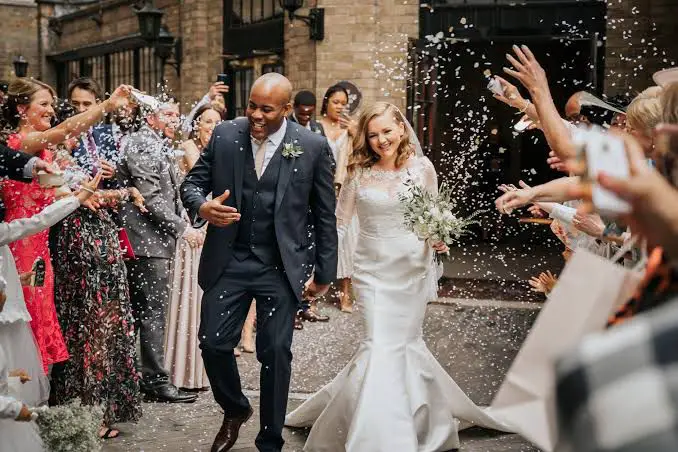
What They Found in the Mail
Their faces froze when they opened the envelope.
I watched it happen from across the restaurant—my mother’s hand going still on her coffee cup, my father’s jaw tightening, the color draining from both their faces as they read the documents inside. Hannah looked between them, confused, her bridal glow dimming as she realized something was very, very wrong.
But I’m getting ahead of myself. This story doesn’t start with that envelope or the moment everything they’d built came crashing down. It starts six months earlier, with a phone call that changed everything.
I’m Audrey Whitaker, 34, an architect outside Boston, and I used to measure my life in clean lines and solid foundations—things that hold, things that last, things you can trust not to shift beneath your feet.
The one place that always held me was a rustic little cabin on Lake Winnipesaukee, New Hampshire. The lake house my grandfather built with his own hands back in 1972, board by board, nail by nail, pouring his heart into every corner. He left it to me in his will when I was twenty-three, and it became my refuge—the place I went when the world got too loud, when client demands piled up, when I needed to remember who I was beneath all the expectations and obligations.
It wasn’t flashy. It was pine boards weathered to a soft gray, a stone fireplace my grandfather had built from rocks he’d collected along the shoreline, windows that caught the morning sun on water, and the kind of quiet that makes you feel like yourself again. There was a dock my grandfather and I had rebuilt together the summer before he died, a small boathouse that always smelled like cedar and lake water, and a porch where I’d spent countless evenings watching the sunset paint the sky in impossible colors.
My sister Hannah never cared about any of that. She cared about moments that could be photographed, about applause, about being the center of attention in rooms full of people watching her shine. In our family, that was normal—Hannah reached for something, my parents rushed to provide it, and I was expected to “be fine” with whatever was left over.
I’d built my career that way too: no drama, no favors asked, no hand held out. Just work. Clean, honest work. I’d made partner at my firm by thirty-two, designed buildings that won awards, earned every dollar of my comfortable life through late nights and early mornings and the kind of dedication that didn’t require anyone’s approval.
So when Hannah got engaged to Marcus—a hedge fund manager with family money and the kind of smile that looked practiced—and the wedding plans started swelling beyond reason, I offered practical help the way I always did. I suggested vendors I’d worked with on projects. I offered to help with the timeline and logistics. I even mentioned that the lake house would make a beautiful location for the rehearsal dinner, intimate and meaningful.
My mom’s smile had been too quick, too bright. “That’s sweet, honey, but we’re thinking something more… formal. You understand.”
My dad had changed the subject immediately, asking about my latest project.
I didn’t push, because I’d spent my whole life learning exactly when pushing would turn me into the problem instead of the person trying to solve it.
The wedding planning consumed the next eight months. Every family dinner became a referendum on flower arrangements and seating charts. Every phone call from my mother included updates about dress fittings and menu tastings. Hannah’s Instagram became a shrine to the upcoming event, complete with a custom hashtag and a countdown.
The budget kept growing. What started as an estimate of $50,000 became $75,000, then $100,000, then $150,000. My parents kept writing checks, kept saying yes to every upgrade and addition, kept assuring Hannah that she deserved her dream day.
I watched from the sidelines, increasingly uneasy but unsure why. My parents were comfortable—my father had done well in commercial real estate, my mother had inherited money from her family—but $150,000 was a staggering amount for a single day. Still, it wasn’t my money, wasn’t my wedding, wasn’t my place to comment.
Then, on a Tuesday afternoon in early March, my phone rang.
“Audrey?” A familiar voice, friendly and casual. Mrs. Patterson, my neighbor at the lake house. “I heard about the sale. I’m sorry to see you letting it go, but I understand these things happen. Will you still come up to visit sometimes? The new owners seem nice.”
My stomach dropped so hard I had to sit down.
“What sale?” I asked, my voice strange in my own ears.
Silence on the other end, the kind that’s full of sudden awkwardness. “Oh. Oh no. I thought… your parents said you’d decided to sell. That you needed the money for something. I’m so sorry, I shouldn’t have—”
“What sale?” I repeated, louder this time.
“The house closed three weeks ago. There’s a couple from Massachusetts who bought it. They’ve been up a few times already, measuring for renovations. I just assumed you knew.”
I don’t remember ending the call. I don’t remember the next few hours very clearly at all—just fragments of sitting on my office floor, staring at my phone, trying to make sense of words that couldn’t possibly be true.
The lake house was mine. Left to me, deeded to me, mine. My parents couldn’t sell it. They had no legal right to sell it.
Except they had.
I drove north the next morning, calling in sick to work for the first time in three years. My hands were sweating on the steering wheel the entire two-hour drive, my mind spinning through possibilities, each one more impossible than the last. There had to be an explanation. A misunderstanding. Something that made sense.
There was a moving truck in my driveway when I arrived.
Strangers were carrying my grandfather’s things out of the house like props from a set being struck. The rocking chair from the porch. The bookshelf he’d built. Boxes labeled in handwriting that wasn’t mine.
I parked and got out on legs that didn’t feel entirely stable.
A couple in their fifties approached me, smiling, friendly. They introduced themselves—Tom and Jennifer Morrison, from Lexington—and said how much they loved the house, how excited they were to make it their own.
“Are you a friend of the previous owners?” Jennifer asked kindly.
“I am the previous owner,” I said, my voice flat. “This house was left to me by my grandfather.”
Their smiles faltered. Tom held up a folder, thick with paperwork. “I’m sorry, but we bought this property fair and square. Everything’s been properly transferred. If there’s some kind of dispute—”
“Can I see the paperwork?” I asked, trying to keep my voice steady.
They exchanged glances but handed over the folder. I flipped through page after page of closing documents, loan papers, transfer deeds. My parents’ signatures were everywhere—Robert Whitaker, Catherine Whitaker, signing as sellers, authorizing the sale.
And then, buried in the middle, a power of attorney document allegedly giving them the right to sell property on my behalf.
My signature was at the bottom.
Except it wasn’t my signature. It was close—close enough to fool someone who didn’t know my handwriting intimately—but it was wrong. The way the ‘A’ curved, the spacing between letters, the pressure of the pen. Someone had forged my name.
Someone being my parents.
“How much did you pay for this house?” I asked quietly.
“Four hundred and twenty thousand,” Tom said. “It’s a fair price for the area, especially with the—”
“I need to make some calls,” I interrupted. “I’m sorry. This isn’t your fault, but there’s been a serious mistake.”
I didn’t scream. I didn’t collapse. I didn’t throw the folder or demand they leave or fall apart the way part of me wanted to. Instead, I did something colder, more calculated, more deliberate.
I started collecting proof.
I took photos of everything—the forged signature, the closing documents, the dates and dollar amounts. I called my bank and confirmed that I’d never received any deposits from a property sale. I called my lawyer, a sharp woman named Linda Chen who I’d worked with on contract disputes, and explained the situation in the emotionless tone I used for client presentations.
“They forged your signature to sell your property?” Linda’s voice was ice. “Audrey, that’s not a family dispute. That’s fraud. That’s potentially criminal.”
“I know,” I said. “That’s why I need you to document everything.”
Over the next two weeks, I built a case the way I built buildings—methodically, carefully, with attention to every detail. Linda subpoenaed records. We traced the money from the sale. Every single dollar had gone directly into my parents’ joint account. And from there, it had flowed out in a steady stream: $15,000 to a wedding venue, $8,000 to a photographer, $12,000 to a catering company.
They’d stolen my inheritance to pay for Hannah’s wedding.
The realization should have destroyed me. Instead, it clarified everything. All those years of being the “easy” daughter, the one who didn’t need attention or support or resources because I was “so capable” and “so independent”—it had never been about my strength. It had been about their convenience.
I was easy because they could take from me without consequence.
Not anymore.
Hannah’s engagement party was scheduled for a Saturday evening in mid-April, at an overlit ballroom in downtown Boston. Crystal chandeliers, champagne flowing like water was free, a string quartet playing in the corner. My parents had spared no expense, naturally.
I arrived exactly on time, wearing a designer dress I’d bought specifically for the occasion—navy blue, elegant, expensive enough to look the part. I smiled at relatives, made small talk with Hannah’s friends, played my role perfectly.
My parents were holding court near the champagne tower, flushed with pride and wine, telling everyone who would listen about the upcoming wedding. About the venue in Newport. About the custom dress from a designer whose name I didn’t recognize but everyone else seemed impressed by. About their daughter’s perfect love story.
Hannah climbed onto a small platform around eight o’clock, glowing in an engagement dress that probably cost more than most people’s monthly rent. She thanked everyone for coming, thanked Marcus for being her soulmate, thanked the universe for aligning in her favor.
Then she thanked my parents for “making her dreams possible.”
The room erupted in applause. People raised their glasses. My mother dabbed at her eyes with a cocktail napkin, overcome with emotion.
And then Hannah found me in the crowd. Her eyes locked on mine, and she lifted her glass higher, her voice carrying across the room.
“And to my sister Audrey,” she said, her tone sweet as frosting on a cake you can’t afford. “For her incredibly generous wedding gift.”
The applause intensified. People turned toward me with warm, approving smiles. Several relatives nodded, clearly impressed by my supposed generosity.
My father, emboldened by champagne and the approval of the room, called out loud enough for the nearest tables to hear: “Thanks for the wedding present, Audrey!”
My mother laughed, delighted, as if this was exactly how she’d scripted it.
My throat went tight with rage and grief and something that felt like grief’s cold, calculated cousin. But I held my expression steady. I let the applause wash over me like static. I raised my glass—small, polite, controlled—while my mind replayed every forged signature, every stolen dollar, every lie they’d told to cover their theft.
Then my mother made her way through the crowd and leaned close, squeezing my arm with one hand while holding her champagne with the other. Her perfume was overwhelming, expensive, probably purchased with money that used to be mine.
“We never properly thanked you,” she murmured, her face glowing with pride and wine and the certainty that she’d gotten away with something. “You understood. You always do. You’re such a good sister.”
I looked at their faces—my father’s satisfied smile, my mother’s warm glow, Hannah’s triumphant expression—and I felt something inside me click into place. Not rage. Something colder. Something final.
I smiled back, just as calm as I’d been all evening.
“You should check your mail tomorrow,” I said quietly, just to my mother. “I sent you something important.”
Her smile didn’t falter. “Oh, honey, I’m sure whatever it is can wait. Tonight is about celebrating!”
“Of course,” I agreed. “Enjoy the party.”
I stayed for another hour, playing my part, before slipping out early with a headache excuse that no one questioned because I was reliable, predictable Audrey who never caused scenes.
The envelope had been mailed that morning, sent certified with signature required. It would arrive tomorrow, a Saturday, when they’d all be home and presumably nursing hangovers from the engagement party.
Inside that envelope were copies of every document Linda had collected. The forged power of attorney. The closing statements showing where the money had gone. The bank records proving I’d never received a cent. And most importantly, a letter from Linda’s firm formally notifying them that they were being sued for fraud, forgery, and theft.
The lawsuit was asking for $420,000 plus interest, legal fees, and damages. It also included a criminal complaint that Linda was filing with the district attorney’s office on Monday morning.
I’d given them one chance to make this right. Three days after discovering the sale, I’d sent a private email asking them to explain, giving them an opportunity to return the money and somehow make amends before involving lawyers.
My father’s response had been three sentences: “The house was too much responsibility for you anyway. We did you a favor. Hannah needed the money more than you needed that old cabin.”
That response was now Exhibit C in my lawsuit.
I didn’t hear from them Saturday. Or Sunday. I spent the weekend working—losing myself in blueprints and specifications, finding comfort in the clean logic of structural engineering where everything had to add up, where you couldn’t build on a foundation of lies.
Monday morning, my phone exploded.
The first call came at 6:47 AM. My mother. I let it go to voicemail.
The second came three minutes later. My father. Voicemail.
Then Hannah. Then my mother again. Then both parents calling from Hannah’s phone.
By 8 AM, I had seventeen missed calls and a string of texts that progressed from confused to angry to panicked to desperate.
Mom: “Audrey, what is this? Call me NOW.”
Dad: “This is insane. You’re suing your own family?”
Hannah: “How could you do this to me? Right before my wedding?”
Mom: “We can talk about this like adults. There’s no need for lawyers.”
Dad: “You’re being vindictive and cruel. Your grandfather would be ashamed.”
That last one almost made me laugh. My grandfather—who’d built that house with his own hands, who’d specifically left it to me because he knew I’d treasure it—would be ashamed of me for defending my inheritance? Not the people who stole it?
I turned my phone off and went to work.
At lunch, Linda called my office line. “They showed up at my office this morning. All three of them.”
“And?”
“Your father tried to intimidate me. Said you were being unreasonable, that this was a family matter. Your mother cried. Your sister mostly looked confused, like she genuinely didn’t understand why you’d be upset.”
“What did you tell them?”
“I told them to get a lawyer and that we’d see them in court. Audrey, they don’t seem to grasp how serious this is. Fraud, forgery—these are felonies. They could go to prison.”
“I know,” I said calmly. “That’s why I filed the complaint.”
“Are you sure you want to proceed? Once the DA gets involved—”
“I’m sure,” I interrupted. “They stole my grandfather’s house to pay for a party. A single day of celebration that will be forgotten in a month, and they destroyed something that was supposed to last generations. I’m done protecting them from the consequences of their choices.”
There was a pause. Then Linda said, “For what it’s worth, I think you’re doing the right thing.”
“Thank you.”
“Although,” she added, “be prepared. This is going to get ugly. Family lawsuits always do.”
She was right.
The next two weeks were a nightmare of voicemails, texts, emails, and attempted interventions. Relatives I hadn’t spoken to in years called to tell me I was being selfish, vindictive, cruel. How could I do this to my family? How could I ruin Hannah’s wedding? Didn’t I understand that family forgives?
My aunt Margaret left a ten-minute voicemail explaining that I was “throwing away relationships over money” and that I’d “regret this forever.”
My cousin David sent an email with the subject line “Disappointed” explaining that he’d always looked up to me but now saw I was “just another bitter, angry woman who couldn’t stand to see her sister happy.”
Hannah created a private Instagram story—which someone helpfully screenshotted and sent to me—explaining that she was “dealing with family drama” and asking for “thoughts and prayers” while she navigated “toxic sibling jealousy.”
Through it all, my parents maintained their position: they’d done nothing wrong. The house had been “too much responsibility” for me. They’d “helped” me by selling it. I should be “grateful” they’d used the money for something meaningful like Hannah’s wedding instead of something selfish.
The cognitive dissonance was stunning.
But there were other voices too. Quieter ones, but they mattered more.
Mrs. Patterson, my lake house neighbor, sent a card saying she hoped I got justice. “Your grandfather loved you so much,” she wrote. “He’d want you to fight for what’s yours.”
A few work colleagues, once they heard what happened, offered support. My boss pulled me aside and said, “Family or not, theft is theft. Don’t let anyone make you feel bad for protecting yourself.”
And Linda, checking in every few days, reminding me that the law was on my side, that we had an airtight case, that justice might be slow but it was coming.
Six weeks after the engagement party, my parents’ lawyer reached out to Linda with a settlement offer.
They would pay me $200,000—less than half what they’d stolen—in exchange for me dropping all charges and signing an NDA preventing me from ever discussing the matter.
“They want to pay you hush money,” Linda said bluntly. “And they want to pay it with money they probably don’t have, which means they’ll need to take out loans or liquidate assets. This is insulting.”
“Counter offer,” I said. “Full restitution of $420,000, a public apology, and they pay all my legal fees. No NDA. They own what they did.”
“They’ll never agree to that.”
“Then we go to trial.”
They didn’t agree. We went to trial.
The courtroom was smaller than I expected, less dramatic than what you see on television. Just fluorescent lights that made everyone look slightly ill, uncomfortable wooden benches, and a judge who looked tired before we even started.
My parents sat on one side with their lawyer—a slick man named Richard Pemberton who wore suits that cost more than most people’s monthly rent and who specialized in making problems disappear for wealthy families. Hannah was there too, sitting directly behind them in the first row, her wedding now just three weeks away. She wore all black, like she was in mourning.
I sat on the other side with Linda, my hands folded calmly in my lap while she presented our case with devastating precision.
The forged power of attorney came first. Linda had brought in a handwriting expert who testified about the differences between my signature and the forged one—the way the ‘A’ curved differently, the spacing between letters, the pressure marks on the paper that indicated someone trying to copy rather than naturally writing.
“This is unquestionably not Ms. Whitaker’s signature,” the expert stated clearly. “Someone attempted to replicate it, but the forensic evidence is conclusive.”
Then the closing documents, which Linda walked through line by line. The date of sale: February 17th. The amount: $420,000. The seller names: Robert and Catherine Whitaker, acting as “authorized agents” for Audrey Whitaker.
“My client was never contacted about this sale,” Linda said. “She received no closing documents, no checks, no correspondence of any kind. Because she wasn’t selling the property. Her parents were—without her knowledge or consent.”
Pemberton tried to argue that it had been a family misunderstanding, that my parents had believed in good faith that they had my permission. “The Whitakers are respected members of their community,” he said smoothly. “They’ve never been in legal trouble. They believed their daughter had verbally agreed to the sale and that the paperwork was merely formalizing that agreement.”
Linda produced a timeline. Emails and text messages I’d sent my parents in the months before the sale, talking about visiting the lake house, about repairs I was planning, about bringing friends up for a weekend. All evidence that I had no intention of selling.
She presented Mrs. Patterson’s written testimony—my neighbor had been too ill to appear in person—stating that my parents had told people I’d agreed to sell before the sale even happened. That they’d been telling this story for weeks, laying groundwork, creating a narrative.
“This wasn’t a misunderstanding,” Linda said firmly. “This was premeditated fraud. The defendants knew exactly what they were doing.”
Then came the money trail. Linda had subpoenaed my parents’ bank records, and she presented them methodically. The $420,000 deposit on February 23rd. And then the withdrawals:
$15,000 to Newport Mansion Rentals on February 25th. $8,000 to Marcus Chen Photography on February 28th. $12,000 to Elegant Affairs Catering on March 3rd. $6,500 to Bella Rosa Florists on March 7th. $18,000 to Vera Wang Bridal on March 10th.
On and on, a steady stream of wedding vendors, each payment time-stamped and documented. By the time Linda finished, she’d traced over $180,000 directly from the house sale to Hannah’s wedding.
“The defense would have you believe this was a misunderstanding,” Linda said, her voice cutting. “But the evidence shows deliberate, calculated theft. The defendants forged my client’s signature, sold her property, and immediately spent the proceeds on their other daughter’s wedding. This wasn’t confusion. This was a choice.”
Pemberton called my father to the stand. Watching him sworn in, promising to tell the truth, felt surreal. This was the man who’d taught me to ride a bike, who’d helped me move into my first apartment, who’d walked me down the aisle at my own wedding eight years ago (a marriage that hadn’t lasted, but that was another story).
“Mr. Whitaker,” Pemberton said smoothly, “can you explain your understanding of the situation with the lake house?”
My father cleared his throat, sitting up straighter. “Audrey had mentioned several times that the house was becoming a burden. The maintenance, the property taxes, the drive up from Boston—it was a lot for a single professional woman to handle. We thought we were helping her by handling the sale.”
“Did she explicitly tell you she wanted to sell?”
A pause. Just a fraction of a second, but I caught it. “We had conversations about it. She expressed concerns about the upkeep.”
“That’s not what I asked,” Pemberton said patiently. “Did she explicitly say she wanted to sell the property?”
“Families don’t always communicate in explicit terms,” my father said. “We understood each other. We always have.”
Linda’s cross-examination was surgical.
“Mr. Whitaker, you testified that you and your daughter ‘understood each other.’ Can you show the court any text message, email, or written communication where Ms. Whitaker expressed a desire to sell the property?”
“We spoke on the phone—”
“Any written communication?” Linda repeated.
“No, but—”
“Can you provide phone records showing calls about the sale?”
“We don’t keep detailed records of every family conversation—”
“So you have no evidence that your daughter agreed to sell her property. Is that correct?”
“We didn’t need evidence. We’re her parents.”
“Parents,” Linda said slowly, “who forged her signature without her knowledge. Parents who sold her property and kept all the money. Parents who spent that money on your other daughter’s wedding. Does that sound like people who had permission?”
My father’s face went red. “We were trying to help both our daughters. Hannah needed support for her wedding, and Audrey needed to be freed from that house—”
“You decided what Audrey needed without asking her?”
“We know our daughter—”
“Except you don’t, do you?” Linda cut him off. “Because if you did, you’d know she loved that house. That it was her sanctuary. That her grandfather specifically left it to her. You’d know that selling it without her knowledge would devastate her. But you didn’t know those things, did you? Or you knew and didn’t care.”
“Objection,” Pemberton called. “Argumentative.”
“Sustained,” the judge said. “Ms. Chen, stick to questions.”
“No further questions,” Linda said, sitting down.
My mother didn’t testify. Pemberton wisely kept her off the stand—she’d have broken down crying, and it wouldn’t have helped their case.
Hannah did testify, though. She took the stand wearing a simple dress, her hair pulled back, makeup minimal. She looked young and scared, nothing like the confident bride-to-be from the engagement party.
“Ms. Whitaker,” Pemberton said gently, “did you know your parents were selling your sister’s house without her permission?”
“No,” Hannah said quietly. “I didn’t know until after it was done. They told me Audrey had agreed to it. That she wanted to help with the wedding.”
“How did that make you feel?”
“I thought it was incredibly generous,” Hannah said, her voice wavering. “I thought she was being an amazing sister. I texted her to thank her, but she never responded. I just thought she was busy with work.”
“Did you ever wonder why Audrey herself never mentioned the gift?”
“I figured she was being modest. She’s always been private about money.”
Linda’s cross-examination was shorter but more pointed.
“Ms. Whitaker, you testified that your parents told you this was a gift from your sister. When was that?”
“In February. Right after they put the deposit on the venue.”
“And you never thought to confirm this with Audrey yourself? To call her and say thank you, to make sure she was comfortable with such a large gift?”
Hannah shifted in her seat. “I texted her—”
“One text,” Linda said. “For a gift supposedly worth over $400,000. One text that she never responded to, and you never followed up.”
“I thought she was busy—”
“Or you didn’t want to ask too many questions because some part of you knew this wasn’t right.”
“Objection!” Pemberton shouted.
“Withdrawn,” Linda said calmly. “No further questions.”
The judge took a recess to review the evidence. We sat in the hallway—my family on one side, me on the other—not speaking, not looking at each other. The space between us felt like a canyon.
When we reconvened, the judge spent less than twenty minutes rendering her verdict.
“This is one of the clearest cases of fraud and forgery I’ve seen in my fifteen years on the bench,” she said, her voice sharp and formal. “The defendants deliberately forged the plaintiff’s signature on legal documents, sold property they had absolutely no legal right to sell, and immediately spent the proceeds for their own benefit. This wasn’t a misunderstanding. This wasn’t a miscommunication. This was theft, pure and simple, made worse by the fact that it was perpetrated by parents against their own daughter.”
She paused, looking directly at my parents. “You violated a fundamental trust. You stole from your own child to benefit your other child, and you’ve shown no remorse. Your only regret seems to be that you were caught.”
The judge ordered full restitution of $420,000 plus 8% interest from the date of sale, which added another $18,000. She ordered them to pay all of my legal fees—which by this point totaled nearly $75,000. And she awarded an additional $50,000 in punitive damages “for the egregious nature of the fraud and the emotional harm caused.”
Total: $563,000.
She also formally referred the case to the district attorney’s office for potential criminal prosecution, noting that forgery and fraud were felonies under Massachusetts law.
When the gavel fell, my mother’s carefully maintained composure shattered. She burst into tears, loud, gasping sobs that echoed in the small courtroom. My father sat rigid, his face gray, his hands gripping the edge of the defendant’s table so hard his knuckles went white.
Hannah looked like she’d been physically struck. She stared at me across the courtroom with an expression I couldn’t read—shock, betrayal, something that might have been the first dawning of understanding.
I felt nothing. Or maybe not nothing—maybe I felt something vast and complicated and years in the making finally settling into its proper shape. Some door closing that had needed to close for a very long time. Some foundation finally solid beneath my feet.
Outside the courthouse, the spring air was warm and carried the smell of flowering trees. I walked toward my car, Linda beside me, both of us silent.
My father caught up to us in the parking lot.
“Audrey.” His voice was shaking with rage barely contained. “I hope you’re happy. You’ve destroyed this family. You’ve ruined your sister’s wedding. You’ve forced us to sell our home. You’ve—”
“You destroyed this family when you forged my signature and stole my inheritance,” I interrupted, turning to face him. My voice was calm, steady, certain. “I just held up a mirror so you could see what you’d become.”
“We gave you everything,” my mother said, appearing beside him, her face blotchy from crying. “We raised you, educated you, supported you—”
“You supported Hannah,” I corrected. “I put myself through graduate school. I built my career without your help. I bought my first house without your money. The one thing—the only thing—I ever inherited that was just mine, you stole. So please don’t stand here and pretend you were generous parents who gave me everything.”
“We’ll never forgive you for this,” my mother said, her voice breaking.
The words should have hurt. Maybe a year ago they would have. But standing there in that parking lot, I felt only a strange sense of relief.
“I don’t need your forgiveness,” I said quietly. “I need you to understand that actions have consequences. That you can’t steal from people just because they’re family. That being someone’s parent doesn’t give you the right to destroy what matters to them. Maybe you should have thought about that before you decided my life mattered less than Hannah’s party.”
My father opened his mouth to respond, but Hannah’s voice cut through the tension.
“Wait.” She approached slowly, her heels clicking on the asphalt. “Audrey, can we talk? Alone?”
I looked at her—really looked at her—for the first time since this had all started. She looked smaller somehow, less certain, like the shiny veneer had cracked to reveal someone more human underneath.
“Okay,” I said.
We walked to the far end of the parking lot, away from our parents and Linda. Hannah leaned against a car, her arms wrapped around herself despite the warm day.
“I didn’t know,” she said finally. “I swear to God, Audrey, I didn’t know they’d done that. If I had known it was your house, that they’d stolen it from you—”
“Would you have given the money back?” I asked. Not angry, just genuinely curious. “If you’d known, in February when there was still time to stop it, would you have canceled the wedding, returned everything, made it right?”
She opened her mouth quickly, then closed it. Struggled with the answer. Finally: “I don’t know. I want to say yes, but honestly… I don’t know. The wedding had become this thing, this huge thing, and everyone was watching, and it felt like if I didn’t have the perfect day then everyone would judge me.”
“Everyone would judge you,” I repeated slowly. “But it was okay for me to lose the only thing I ever inherited? The only place I ever felt truly at home?”
“It’s not the same—” She stopped herself. “No. You’re right. It is the same. I just… I didn’t think about it. I didn’t think about you. I only thought about me.”
It was the most honest thing she’d ever said to me.
“I’m sorry,” Hannah continued, tears streaming down her face. “I’m so sorry. Not just for this, but for… for all of it. For all the years you came second. For all the times Mom and Dad put me first and you just accepted it. For every time I took something from you without even noticing. I’m sorry.”
I wanted to stay angry. Part of me wanted to hold onto that cold fury that had sustained me through depositions and discovery and trial. But standing there looking at my sister—really my sister, not the performance of my sister—I felt something else.
Not forgiveness exactly. But maybe the possibility of it, someday.
“I appreciate you saying that,” I said carefully. “But Hannah, sorry isn’t enough. You get that, right? Sorry doesn’t give me back my grandfather’s house. Sorry doesn’t undo the fact that Mom and Dad committed fraud and you benefited from it.”
“I know.” She wiped at her face. “The wedding’s in three weeks. We’ve already had to scale it back—we can’t afford half of what we planned. Mom and Dad have to sell their house to pay you. Everything’s falling apart.”
“Yeah,” I said. “Consequences tend to do that.”
“I deserve this,” she said quietly. “We all do. But Audrey… do you think we can ever fix this? Not today, maybe not for a long time, but eventually? Can we ever be sisters again?”
I thought about it. Really thought about it. About all the years of being second-best, invisible, expected to be fine while she got everything. About the house I’d lost, the trust that had been shattered, the family that had chosen convenience over honesty.
But I also thought about Linda’s words after the trial: “You won. You got justice. Now you get to decide what comes next.”
“Maybe,” I said finally. “But it has to be different. You have to be different. You have to actually see me instead of just seeing what you can get from me. And Hannah? You have to earn it. Not with words, with actions. Consistent, real, unglamorous actions over a very long time.”
“I can do that,” she said.
“We’ll see,” I replied.
The $563,000 judgment took six months to collect in full. My parents had to sell their house—a four-bedroom colonial in an expensive suburb that they’d bought twenty years ago. They downsized to a two-bedroom condo in Worcester, an hour west of Boston, in a neighborhood that was perfectly nice but nowhere near as prestigious as where they’d lived.
I heard about all this through relatives and through the occasional update from Linda as the settlement was paid out in chunks. I didn’t reach out to my parents. They didn’t reach out to me.
Hannah’s wedding happened. I wasn’t invited, which was fine. I heard it was nice—thirty people instead of two hundred, at a local restaurant with a private room instead of the Newport mansion, a DJ instead of a band. Smaller. Simpler. Maybe more honest.
Most of the extended family took my parents’ side. I received emails and calls from aunts, uncles, cousins—all telling me I’d been too harsh, too unforgiving, too focused on money when I should have prioritized family.
My aunt Margaret sent a particularly pointed message: “Your grandfather would be heartbroken to see what you’ve become. He built that house with love, and you’ve turned it into a weapon to destroy your family.”
I read it once, then deleted it without responding.
But my great-aunt Pauline—my grandfather’s sister, now eighty-seven and sharp as ever—called with a different perspective.
“Your grandfather left you that house for a reason,” she said without preamble. “He knew you’d appreciate it. He knew you’d treasure it. And he knew your parents would push you to sell it or give it away or do something ‘practical’ with it because that’s who they are. I’m proud of you for fighting for it, even though the fight cost you so much.”
“They say I destroyed the family,” I told her.
“They destroyed themselves,” she corrected firmly. “You just refused to help them cover it up. There’s a difference.”
With the settlement money, I did what I’d been planning since the moment I’d discovered the theft: I bought property on Lake Winnipesaukee. Not my grandfather’s house—that was gone forever, renovated by the Morrisons into something I wouldn’t recognize—but a different lot just down the shore.
It was smaller than my grandfather’s place. Just two acres instead of five, and the existing structure was a 1980s A-frame that needed serious work. But it had the same view of the water, the same quality of light, the same feeling of peace I’d been chasing since the day I lost the original house.
I spent the next year renovating. I hired contractors for the major structural work but did much of the interior myself—learning to tile, to install cabinets, to finish drywall. It was hard, physical work, and every evening I’d collapse exhausted and satisfied in a way my office job never made me feel.
I built a new dock with help from local teenagers who needed summer work. I planted gardens using my grandfather’s old notes that I’d kept in storage. I created a stone fireplace using rocks from the property, and I had his favorite quote engraved on the mantle: “Build things that last.”
It wasn’t my grandfather’s house. But it was mine. Really, truly mine—bought with money I’d fought for, built with my own hands, a foundation that couldn’t be stolen because I’d defended it.
Hannah started texting me around the six-month mark. Short messages at first: “Thinking of you.” “Hope you’re well.” “Miss you.”
I responded politely but distantly. I wasn’t ready to forgive, wasn’t ready to let her back in. Maybe I never would be.
But then she sent a longer message: “I started therapy. Working through a lot of stuff about family dynamics and entitlement and the way I was raised to think I deserved everything. I’m realizing how much I didn’t see, how much I took from you without noticing. I know you don’t owe me anything, but I want you to know I’m doing the work to become someone who deserves a sister like you.”
I read it three times before responding: “Good. Keep going.”
It wasn’t forgiveness. But it was a door left slightly open. Not for her to rush through, but for her to approach slowly, carefully, earning each step.
My parents never apologized. The closest they came was a brief email from my mother, eight months after the trial: “We only ever wanted what was best for both our daughters. We’re sorry you can’t see that.”
Even then, even after everything, they couldn’t admit what they’d done was wrong. It was always my perception that was the problem, never their actions.
I blocked their numbers and moved on.
On a Saturday morning in late September, almost exactly two years after I’d first learned about the theft, I sat on my new dock, watching the sun rise over Lake Winnipesaukee. The air was cool, autumn just beginning to touch the trees with gold and red. The water was still and perfect, reflecting the sky like polished glass.
My phone buzzed. A text from Linda: “Just saw your parents’ condo listed. They’re downsizing again. Financial impact of the settlement is still hitting them.”
I read it once, acknowledged it with a simple “Thanks for letting me know,” and set my phone down.
I’d thought a lot about revenge in the past two years. About whether destroying my parents financially made me feel better. About whether winning in court had filled the hole losing the house had created.
The answer was complicated. It hadn’t brought my grandfather back. It hadn’t restored the original house or erased the betrayal. It hadn’t made my family love me the way I’d always wanted to be loved.
But it had done something else. Something more important.
It had taught me that I was worth fighting for. That my needs mattered. That being the “easy” daughter who never asked for anything had only taught people I was safe to take from.
My grandfather had known that. That’s why he’d left me the house in the first place, with a note in his will I’d read a hundred times since: “For Audrey, who knows the difference between building something that lasts and building something that just looks good in pictures.”
He’d seen me. Really seen me. And he’d given me something permanent, something solid, something that said: you matter.
When my parents stole that, they weren’t just taking property. They were taking proof that I mattered, that someone had chosen me first for once.
Getting it back—not the exact house, but the value, the acknowledgment, the justice—had been about reclaiming that proof. About refusing to accept less than I deserved.
The sun cleared the horizon, turning the entire lake into liquid light. I breathed in deep—air that smelled like pine and water and the particular quality of peace that only comes at dawn.
My phone buzzed again. Hannah this time: “Mark and I are coming up to NH this weekend. Would you be willing to meet for coffee? No pressure. Just asking.”
I thought about it for a long moment. Thought about all the ways she’d hurt me, all the ways she’d taken without giving. Thought about the trial and the money and the family torn apart.
But I also thought about her texts over the past year, consistent and real, admitting fault without making excuses. About the therapy she was doing. About the wedding that had been scaled back, about the humility that had replaced the entitlement.
Not forgiveness. Not yet. Maybe not ever. But maybe a conversation.
I typed back: “Sunday morning, 9am, Lakeside Diner. One hour.”
Her response came immediately: “Thank you. I’ll be there.”
I set my phone aside and went back to watching the sunrise. Behind me, the house I’d built stood solid and real, a foundation that was finally, truly mine. Not because someone had given it to me, but because I’d fought for it. Because I’d valued myself enough to demand justice when I was wronged.
I’d spent thirty-four years being the daughter who didn’t need anything, who understood, who was fine. The daughter who made herself small so everyone else could be comfortable.
And the one thing my grandfather had given me—the one inheritance that said “you matter, I see you, you’re worthy”—they’d stolen without a second thought.
But they hadn’t stolen who I was. They’d just revealed who they were.
And I’d built something new from that truth. Something that lasted. Something real.
The sun rose higher, warming my face, and I smiled.
I’d chosen myself. And I’d do it again.
THE END

Ethan Blake is a skilled Creative Content Specialist with a talent for crafting engaging and thought-provoking narratives. With a strong background in storytelling and digital content creation, Ethan brings a unique perspective to his role at TheArchivists, where he curates and produces captivating content for a global audience.
Ethan holds a degree in Communications from Zurich University, where he developed his expertise in storytelling, media strategy, and audience engagement. Known for his ability to blend creativity with analytical precision, he excels at creating content that not only entertains but also connects deeply with readers.
At TheArchivists, Ethan specializes in uncovering compelling stories that reflect a wide range of human experiences. His work is celebrated for its authenticity, creativity, and ability to spark meaningful conversations, earning him recognition among peers and readers alike.
Passionate about the art of storytelling, Ethan enjoys exploring themes of culture, history, and personal growth, aiming to inspire and inform with every piece he creates. Dedicated to making a lasting impact, Ethan continues to push boundaries in the ever-evolving world of digital content.