The House in Milbrook Heights
They showed up at my door demanding to come inside, their faces pressed against the glass like children at a candy store they’d been told they couldn’t afford.
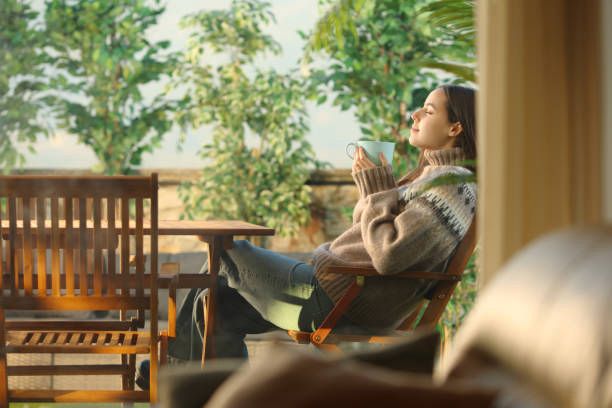
I watched them from my porch swing, tea cooling in my hands, and felt nothing. Not triumph. Not vindication. Just the quiet certainty that I’d finally stopped performing for an audience that had never wanted me to succeed.
But I’m getting ahead of myself. This story doesn’t start with their arrival. It starts two years earlier, at a Thanksgiving table where my mother said the words that would change everything.
She said it like it was a harmless prediction, not a sentence designed to stick in my ribs for years. My sister Victoria smirked into her wine glass, and my dad stared at his plate like silence could maintain peace if he just held it long enough.
“Winona, honey…” My mother’s voice had that particular tone she used in front of neighbors, the one that sounded warm until you realized the warmth never reached her eyes. “You’re still renting?”
I was twenty-five, sitting at the end of the table—the seat closest to the kitchen, the one that wasn’t really part of the main gathering. I’d been placed there so many times over the years that I’d stopped questioning it, the way you stop noticing a bruise you’ve had too long.
“Yeah,” I said, because what else was there to say?
Victoria laughed, and the sound was sharp and practiced. She was three years older, the daughter my mother introduced first, always, like she was presenting credentials. “Victoria, my eldest, she’s a lawyer. Just bought the most beautiful house in Riverside Park.”
My mother turned back to me, still wearing that smile that looked like kindness from a distance. “You’ll never own a house like your sister.”
The words hung in the air above the cranberry sauce and stuffing. My aunt Linda shifted uncomfortably. Uncle Richard suddenly became very interested in his dinner roll. Victoria took another sip of wine, satisfied.
I didn’t argue. I’d learned years ago that arguing with my family never changed the outcome—it just gave them ammunition to call me “emotional” or “dramatic” or “too sensitive.” I smiled instead, a small, tight smile that I’d perfected over two decades of Thanksgivings and birthdays and family gatherings where I was present but never quite included.
That smile wasn’t surrender. It was a door closing.
The drive back to my apartment took forty minutes, and I made it thirty-seven minutes before I had to pull over. I sat in a grocery store parking lot and cried so hard my chest hurt, my hands gripping the steering wheel until my knuckles went white.
But here’s the thing they didn’t know: I wasn’t crying because I was weak. I was crying because something had finally snapped loose inside me, some fundamental belief that if I just tried hard enough, loved them enough, made myself small enough, they would finally see me the way they saw Victoria.
I was crying because I was done auditioning for love I was never going to get.
The next morning, I woke up in my cramped studio apartment—the one my mother had visited exactly once, staying for twelve minutes before claiming she had another engagement—and I made a decision.
For two years, I’d been freelancing after my day job. Logos, brand packages, websites for scrappy startups that actually paid on time and said thank you. The kind of clients who didn’t treat my talent like a cute hobby or ask if I could do it “for exposure” or “as a favor.”
I’d been calling it a “side thing” to make other people comfortable. My mother would ask about my “real job” at the advertising agency, dismissing the freelance work with a wave of her hand. Victoria had once said, “It’s sweet that you have a little creative outlet,” in the same tone someone might use to praise a child’s finger painting.
That week, I registered an LLC. Winona Hartley Design. I raised my rates to actual market value—numbers that made my hands shake when I typed them into my proposal templates, but numbers that reflected the value I was providing. I stopped apologizing for my prices. I stopped offering discounts to people who “might have more work in the future.”
The first month, I lost two potential clients who balked at my new rates. The second month, I booked three new clients who paid without negotiating. The third month, my freelance income exceeded my agency salary for the first time.
I sat at my tiny desk in the corner of my studio, staring at the spreadsheet until the numbers felt real. My hands were shaking again, but this time from something that felt suspiciously like hope.
By month six, I was making double my agency salary from freelance work alone. I gave my two weeks’ notice with a calm voice that surprised even me, walking out of that office for the last time with my personal belongings in a cardboard box and my head held high.
My mother’s response when I told her I’d quit: “Are you sure that’s wise? What about benefits? What about stability? Victoria would never take such a risk.”
I stopped calling her after that. Not dramatically—I just… stopped picking up as often. Stopped volunteering information. Stopped seeking her approval like it was oxygen I needed to breathe.
Six months into running my business full-time, I had a meeting with my accountant. Richard was a patient man in his fifties who’d been helping me navigate the labyrinth of self-employment taxes and quarterly payments.
He looked at my numbers—really looked at them—and said something that flipped my stomach: “Have you considered real estate? As an investment, but also… Winona, you can afford a house. You know that, right?”
I’d been so conditioned to think of myself as the struggling artist, the daughter who would never measure up, that I hadn’t even considered it. I’d been saving aggressively, living in that studio apartment, eating ramen more often than I needed to, all because some part of me still believed my mother’s narrative about who I was allowed to be.
That night, I opened Zillow for the first time in years. And there it was, glowing on my screen like a dare: Milbrook Heights.
The neighborhood my mother used to point at through the car window when I was a child. “That’s where successful people live, Winona. Lawyers, doctors, business owners. People who made something of themselves.”
The unspoken implication: not people like you.
I scrolled through listings with my heart pounding. Most were out of my range, but then I saw it. A pale yellow Victorian with a turret, stained glass windows, and a wraparound porch. It had been on the market for three months—too quirky for most buyers, needing cosmetic updates that scared away people looking for move-in ready.
But I saw past the outdated wallpaper and the scuffed hardwood floors. I saw the bones of the house, the natural light pouring through those stained glass windows, the turret room that would make the perfect office.
The asking price was exactly at the top of what I could afford with the mortgage pre-approval I’d gotten (just to see, just to know). The house had been built in 1904, had three bedrooms, two bathrooms, and a history I could feel the moment I walked through the door.
I stood in the empty living room, sunlight streaming through the windows, and whispered to no one: “This is it. This is my office. This is my home.”
The offer process was terrifying. I’d never done anything like this before, never navigated inspections and appraisals and negotiations. But I had a patient real estate agent named Carmen who talked me through every step, who didn’t laugh at my questions or make me feel stupid for not knowing things.
When the offer was accepted, I sat in my car outside the house and called my best friend Maya.
“I bought it,” I said, and then I started crying again, but these were different tears. “I actually bought it.”
“You absolute badass,” Maya said, her voice warm with pride. “When do I get to see it?”
“After closing. I want to fix it up first. Make it mine.”
I didn’t tell my family. I didn’t post about it on social media. I’d learned that some victories are sweeter when they’re quiet, when you don’t give people the chance to diminish them or find the flaw or explain why it doesn’t really count.
The closing happened on a Tuesday morning in October. I signed more papers than I’d ever seen in my life, my hand cramping by the end, and walked out with keys that felt impossibly heavy with meaning.
The renovations took three months, and every day of it felt like reclaiming a piece of myself I’d lost somewhere along the way.
I started with the hardwood floors. They were original to the 1904 house, scuffed and stained from decades of neglect. I rented a floor sander and spent a weekend on my hands and knees, watching the layers of old varnish and damage disappear to reveal the beautiful oak underneath. My back ached. My arms trembled. But when I finished and applied the new finish, watching the grain of the wood glow in the afternoon light, I understood why people talked about renovation as transformation.
The wallpaper came next. Every room had layers of it—floral patterns from the seventies, geometric designs from the eighties, something that might have been fashionable in the nineties but just looked dated now. I started in what would become my office, the turret room. I steamed and scraped for hours, peeling back decades to reveal the original plaster walls.
Maya came over one Saturday to help. We worked in comfortable silence, scraping wallpaper and drinking coffee, until she said, “You know what you’re doing, right? With all this?”
“Removing wallpaper?” I said, deliberately misunderstanding.
“No. You’re stripping away everything they told you that you were. Every time you peel back a layer, you’re getting closer to what’s actually underneath. The real thing.”
I stopped scraping and looked at her. “That’s weirdly profound for nine in the morning.”
“I have my moments.” She grinned. “But seriously, Winona. Are you okay? This is huge. You’re doing something huge.”
“I’m terrified,” I admitted. “Every day I wake up and think this is the day the other shoe drops. That I’ll lose a client or the market will crash or I’ll realize I can’t actually afford this and I’ll have to sell and everyone will know I failed.”
“But you’re doing it anyway.”
“I’m doing it anyway,” I confirmed.
The kitchen renovation was the biggest project. The original 1904 kitchen had been updated sometime in the 1970s with avocado green appliances and Formica countertops. I wanted to honor the house’s history while making it functional for modern life.
I hired a contractor named Tom, a patient man in his sixties who’d been renovating old houses for forty years. He walked through with me, pointing out original features worth preserving—the butler’s pantry, the breakfast nook with built-in seating, the old servants’ bell system that still worked.
“You’ve got good instincts,” he told me on the first day of demolition. “Most people want to gut everything, make it modern. But these old houses, they have character you can’t replicate. You’re showing it respect.”
We kept the original layout but updated everything else. New appliances that looked vintage but functioned perfectly. Marble countertops salvaged from an estate sale. A farmhouse sink I’d found on Facebook Marketplace. Custom cabinets painted a soft sage green that complemented the house’s yellow exterior.
I was there every day after work, watching the transformation. Sometimes I’d sit on the floor of the gutted kitchen, eating takeout surrounded by sawdust, and try to reconcile this reality with the version of myself I’d believed in for so long—the daughter who would never measure up, who would never be enough.
While the house was being renovated, my business was exploding in ways I hadn’t anticipated. Word of mouth was bringing in clients faster than I could take them. I was working twelve-hour days, managing projects, having discovery calls, creating proposals.
One client stands out from that period. Her name was Dr. Sarah Chen, and she was launching a mental health practice focused on treating women who’d experienced family trauma. She’d found me through a referral and called for a consultation about her branding.
“I want women to walk into my office and feel safe,” she told me in our first meeting. “I want the design to communicate that they’re allowed to take up space, that their stories matter, that healing is possible.”
I understood that assignment on a cellular level.
I created a brand identity for her that was warm but professional, using soft colors and organic shapes that felt nurturing without being patronizing. The tagline I developed—”Your story deserves space”—came from something my therapist had told me years ago, when I was first starting to unpack my family dynamics.
When I presented the final designs to Dr. Chen, she cried.
“This is exactly what I wanted but couldn’t articulate,” she said. “You understood something fundamental about what I’m trying to do. How did you know?”
I almost told her the truth—that I understood because I’d lived it, because I was actively rebuilding myself from the rubble of family expectations. But instead, I just smiled and said, “Good design requires empathy. I’m glad it resonates.”
She became one of my best clients, referring other therapists and healthcare providers to me. Within six months, healthcare branding had become a significant part of my business, and it was the work that felt most meaningful.
As the house came together, I started making decisions about furnishing it. Every piece was chosen deliberately, with intention. I wasn’t trying to impress anyone or prove anything. I was building a space that felt like home.
The living room got a deep green velvet couch I’d been coveting for months. I paired it with a vintage Persian rug from an estate sale and built-in bookshelves that I filled with art books, novels I’d always meant to read, and framed photographs of people I actually liked.
My bedroom became a sanctuary. White linens, blackout curtains, a reading nook by the window with a chair comfortable enough to get lost in for hours. I hung botanical prints on the walls—nothing expensive or impressive, just things that made me happy when I looked at them.
The dining room got a table I’d found at an antique shop. It was solid oak, could seat twelve people comfortably, and had clearly hosted decades of family dinners. The shopkeeper told me it had come from an estate sale—an elderly woman who’d hosted Sunday dinners for her entire extended family for forty years.
“She wanted it to go to someone who’d use it,” the shopkeeper said. “Not someone who’d just want it for show.”
I ran my hand along the smooth surface, imagining all those dinners, all those conversations, all that life lived around this table. “I’ll use it,” I promised.
And I did. Even before I officially moved in, I’d have Maya over for dinner. We’d sit at opposite ends of this enormous table, eating pasta and drinking wine and talking about everything and nothing. It felt like practice for a future I was building, one meal at a time.
The turret room—my office—was the last space I finished. I wanted it perfect. I had custom shelves built to fit the curved walls. I invested in a desk that was both beautiful and functional. I hung inspiration boards, installed perfect lighting, added plants that thrived in the abundant natural light.
The day I set up my computer and sat down to work in that space for the first time, I cried. Not sad tears. Overwhelmed tears. I-can’t-believe-this-is-real tears.
I took a photo and sent it to Maya with the caption: “Made it.”
She responded immediately: “You didn’t just make it. You exceeded it. I’m so proud of you.”
I was proud of me too, in a way I’d never been before. Not proud of impressing others or meeting expectations, but proud of building something that was authentically mine.
I moved in on a Saturday in January, two years and two months after that Thanksgiving dinner. Maya helped me unpack, and we christened the house with Thai takeout and cheap champagne on my new living room floor.
“Your mom’s going to lose her mind when she finds out,” Maya said, raising her plastic cup in a toast.
“If she finds out,” I corrected. “I’m not sure I’m going to tell her.”
But of course, someone told her. Someone always does.
Two weeks after I moved in, my phone rang. Mom. I stared at the screen for three rings before answering.
“Winona.” Her voice was clipped, sharp, already angry. “I heard you bought a house.”
I felt that old reflex kick in—the urge to downplay it, to minimize my achievement, to make myself smaller so she wouldn’t feel threatened. But I was standing in my living room, in my house, in the life I’d built despite her predictions, and something in me had fundamentally shifted.
“I did,” I said simply.
“From who? Who gave you money? Did you borrow from your father without telling me?”
The assumption that I couldn’t have done it myself. Of course.
“I bought it with my own money, Mom. From my business.”
A pause. I could hear her recalculating, trying to find the angle that would let her maintain the narrative she’d built about me.
“Well, where is it? It can’t be anywhere decent if you could afford it on… whatever it is you make.”
There it was. The dismissal. The certainty that anything I accomplished must be lesser by definition.
I hesitated for one second, felt that familiar pull to protect myself by keeping her at a distance. But then I thought: Let her see. Let her know exactly what I built without her approval, without her support, without her belief in me.
“Milbrook Heights,” I said. “342 Oak Street.”
Silence. Real silence, the kind that meant I’d genuinely surprised her.
“That’s not possible,” she said finally. “Houses in Milbrook Heights are—”
“Expensive?” I finished. “Yes. I know. I live here now.”
“Give me the address again.” Her voice had gone cold, controlled. “I’m coming to see it.”
“I just gave you the address.”
“Right now. I’m coming right now.”
She hung up before I could respond.
I sat on my porch swing with a cup of tea, watching the light move through the oak trees, and waited. Part of me wanted to panic, to rush around making sure everything was perfect, proving that I deserved this. But I was done performing for her.
An hour later, a Mercedes pulled up to my curb. My mother got out of the driver’s seat. Victoria emerged from the passenger side. My father stayed in the back seat.
They stood on the sidewalk, staring up at my house. I watched my mother’s face cycle through emotions—disbelief, confusion, and then something that looked almost like anger.
Victoria pulled out her phone, and I knew she was looking up property values. Her face went carefully blank when she found what she was looking for.
They approached the porch. My mother’s heels clicked on the wooden steps I’d refinished myself.
“Winona,” she said, and her voice was strange, tight. “We need to come inside. We need to see this.”
Not “Congratulations.” Not “We’re proud of you.” Just the demand for access, for proof, for the chance to inspect and evaluate and find whatever flaw would let them maintain their version of reality.
I took a sip of my tea and looked at them over the rim of my cup. My mother in her designer coat. Victoria in her lawyer outfit, even on a Saturday. Both of them looking at my house like it was an affront, a mistake, something that needed to be explained or corrected.
“Why?” I asked simply.
My mother blinked. “What do you mean, why? You’re my daughter. I want to see where you’re living.”
“You didn’t want to see my apartment. You stayed twelve minutes the one time you visited.”
“That was different. That was a rental. This is…” She gestured at the house, struggling. “This is real estate. This is an investment. We need to make sure you weren’t taken advantage of, that you didn’t make a mistake—”
“I didn’t make a mistake,” I said calmly. “I made a choice. And I’m very happy with it.”
Victoria spoke for the first time. “The property records say you paid cash. Where did you get that kind of money, Winona?”
I smiled, and it was genuine this time. “I earned it. From my business. The one you called a ‘cute creative outlet.'”
My mother’s jaw tightened. “Let us inside.”
“No.”
The word hung in the air. I watched it land, watched them process that I’d actually refused them.
“Excuse me?” My mother’s voice went up an octave.
“This is my home. Mine. I built this life without your help, without your encouragement, without your belief that I could do it. You told me I’d never own a house like Victoria’s. You were right—I don’t own a house like Victoria’s. I own one better.”
Victoria’s face flushed red. “You can’t be serious. This is childish, Winona. We’re your family—”
“Family supports each other,” I interrupted. “Family celebrates each other’s successes. Family doesn’t show up demanding proof because they can’t believe you could accomplish something on your own. You didn’t come here to congratulate me. You came here to find the flaw, to figure out how I did something you decided I couldn’t do, to take me down a peg so you could go home feeling comfortable again.”
My mother’s eyes were cold. “After everything we’ve done for you—”
“What have you done for me?” I asked, genuinely curious. “You paid for the state school I chose, the one you said wasn’t good enough. You’ve critiqued every choice I’ve made. You’ve compared me unfavorably to Victoria for as long as I can remember. You’ve made it clear that I’m the daughter who disappoints you simply by existing. So tell me, Mom, what exactly have you done for me that gives you the right to stand on my porch and demand access to my home?”
She stared at me, mouth opening and closing, no words coming out.
My father finally got out of the car. He walked slowly up the path, taking in the house, the garden I’d started planting, the porch swing where I was sitting.
“It’s beautiful, Winona,” he said quietly. “Really beautiful. You should be proud.”
Something in my chest cracked a little. “Thank you, Dad.”
He looked at my mother. “Margaret, let’s go. She doesn’t want us here, and frankly, I don’t blame her.”
“Richard—” my mother started, but he shook his head.
“We’ve said enough. We’ve done enough. Let’s go.”
He walked back to the car without another word. My mother looked between him and me, her face a mask of conflicting emotions. Victoria was already heading back to the car, her phone out, probably texting someone about this humiliation.
My mother lingered for another moment. “You’ll regret this,” she said, but her voice lacked conviction.
“Maybe,” I said. “But it’ll be my regret, in my house, in my life. And that’s more than I ever had with you.”
She turned and walked away, her heels clicking down my front steps for what I suspected would be the last time.
I watched them drive away, and then I sat on my porch swing for a long time, listening to the wind in the oak trees, feeling the weight of what I’d just done settle into my bones.
Maya called twenty minutes later. “How’d it go?”
“I didn’t let them in.”
“Oh my God. What happened?”
I told her everything, and by the end, she was laughing and crying at the same time. “Winona Hartley, you absolute legend. I’m so proud of you.”
“I’m proud of me too,” I said, and realized it was true.
The weeks that followed were strange. My mother didn’t call. Victoria sent one text: “You made Mom cry. Hope you’re happy.” I didn’t respond.
My dad, though. My dad started calling every Sunday. At first, the conversations were awkward, stilted. But slowly, we found our way to something real. He asked about my business, about the house, about my life. He listened when I talked. He apologized, eventually, for all the years he’d stayed silent.
“I told myself I was keeping the peace,” he said one Sunday morning. “But I was just taking the easy way out. You deserved better from me.”
“Thanks, Dad. That means a lot.”
“Your mother’s having a hard time with all this,” he continued. “She doesn’t know how to process that you succeeded without her approval. It challenges everything she built her identity on.”
“That’s not my problem to fix,” I said gently.
“No,” he agreed. “It’s not. But Winona? I’m proud of you. I should have said it years ago, but I’m saying it now. I’m proud of who you’ve become.”
I cried after that call, but they were good tears.
Six months after that Thanksgiving confrontation on my porch, my business had grown so much I needed to hire help. I brought on two junior designers and a project manager. We worked from the turret office, and sometimes I’d look around at this team I’d built, in this house I’d bought, in this life I’d created, and feel overwhelmed by how far I’d come.
One year after I moved in, I hosted Thanksgiving at my house for the first time. Maya came, along with her girlfriend. My college roommate drove in from Milwaukee. A few other friends, the kind of chosen family you build when your biological family doesn’t make space for you.
My dad called that morning. “I know you’re having people over. I just wanted to say… I’m thankful for you, Winona. For your strength. For not letting us make you smaller than you were meant to be.”
“Do you want to come?” I asked impulsively. “It’s not too late. There’s plenty of food.”
He was quiet for a moment. “Your mother wouldn’t understand.”
“I’m asking you, Dad. Not Mom.”
“I know. And I appreciate it. But I’m not ready yet. Someday, maybe. But not yet.”
“Okay,” I said. “The offer stands.”
We had seventeen people in my dining room that night, crowded around a table I’d bought specifically because it was big enough for exactly this. We ate too much food and laughed too loud and told stories until midnight. No one made me feel less than. No one compared me to anyone else. No one questioned whether I deserved the life I’d built.
As I cleaned up that night, putting away leftovers and washing dishes, I thought about that Thanksgiving two years earlier. The one where my mother had said I’d never own a house like Victoria’s.
She was right, in the end. I didn’t own a house like Victoria’s.
I owned one where I was happy. Where I was celebrated. Where I was enough, exactly as I was.
And that made all the difference.
Two years after I bought the house, Victoria got divorced. I heard about it through my dad—her lawyer fiancé had been having an affair with a paralegal at his firm. The perfect porch-swing life had been a façade.
My mother called me for the first time in eighteen months.
“Winona,” she said, and her voice was different. Smaller. “Victoria is having a hard time. She’s moving out of the house. She needs… she needs support.”
“I’m sorry she’s going through that,” I said honestly. “Divorce is hard.”
“She wants to talk to you. She thinks… she thinks you might understand what it’s like to feel like you’ve failed.”
The old me would have jumped at the chance for reconciliation, would have set myself on fire to keep them warm. But I’d learned something important in these two years: you can have compassion for someone without sacrificing yourself for them.
“I’m happy to talk to her if she calls me,” I said. “But Mom? I need you to hear something. I didn’t fail. I succeeded. I built a business. I bought a house. I created a life I love. The fact that it doesn’t look like what you imagined for me doesn’t make it failure.”
“I know,” she said quietly, and I almost dropped the phone. “I know that now. I see what you’ve done, Winona. And I… I was wrong. About so many things.”
It wasn’t an apology, not exactly. But it was the closest thing to one I’d ever gotten from her.
“Thank you for saying that,” I said.
We talked for twenty minutes, the longest conversation we’d had in years. It wasn’t perfect. We didn’t magically repair two decades of damage. But it was a start.
When Victoria called the next day, we talked for an hour. Really talked, maybe for the first time in our adult lives. She apologized for all the years of smirking and dismissal. I told her I was sorry her marriage had ended the way it did.
“Your house,” she said at one point. “I looked it up after that day we came by. It’s worth almost twice what you paid for it now. The market in Milbrook Heights has exploded.”
“I know,” I said. “But I didn’t buy it as an investment. I bought it as a home.”
“I’m starting to understand the difference,” she said quietly.
Five years after I bought the house in Milbrook Heights, I hosted Thanksgiving again. But this time, my dad came. He brought my mother, who stood in my entryway looking uncomfortable and out of place, holding a pie she’d clearly bought from a bakery.
“Thank you for having us,” she said formally.
“Thank you for coming,” I replied.
It was awkward. It was uncomfortable. We were all too aware of the years of damage, the words that couldn’t be unsaid, the wounds that had scarred even if they’d healed.
But we sat at my table—the same table that had held seventeen chosen family members years before—and we ate together. We didn’t talk about the past. We talked about my business, about my dad’s retirement plans, about Victoria’s new apartment and her career pivot into nonprofit law.
My mother looked around my house, at the art on the walls and the furniture I’d chosen and the life I’d built, and said, “You have a beautiful home, Winona.”
“Thank you,” I said.
“I was wrong,” she continued, and everyone at the table went silent. “What I said, at that Thanksgiving years ago. I was wrong. You didn’t just own a house like Victoria’s. You built something better, because it’s completely yours.”
I felt Maya squeeze my hand under the table. My dad was smiling at his plate, his eyes suspiciously bright.
“I appreciate you saying that, Mom,” I said.
We weren’t fixed. You don’t undo twenty-five years of dysfunction over turkey and stuffing. But we were trying, and that was something.
After everyone left that night, I stood on my porch with a cup of tea, looking up at my house—my pale yellow Victorian with its turret and stained glass and all the dreams I’d poured into it.
The house hadn’t made me whole. It hadn’t fixed my family or erased the hurt or proven anything to anyone.
But it had given me something more important: a place to stand. A foundation I’d built myself. A life I’d created despite all the voices telling me I couldn’t, I wouldn’t, I’d never.
I’d never own a house like my sister’s, my mother had said.
And she was right.
I owned one like mine.
THE END

Ethan Blake is a skilled Creative Content Specialist with a talent for crafting engaging and thought-provoking narratives. With a strong background in storytelling and digital content creation, Ethan brings a unique perspective to his role at TheArchivists, where he curates and produces captivating content for a global audience.
Ethan holds a degree in Communications from Zurich University, where he developed his expertise in storytelling, media strategy, and audience engagement. Known for his ability to blend creativity with analytical precision, he excels at creating content that not only entertains but also connects deeply with readers.
At TheArchivists, Ethan specializes in uncovering compelling stories that reflect a wide range of human experiences. His work is celebrated for its authenticity, creativity, and ability to spark meaningful conversations, earning him recognition among peers and readers alike.
Passionate about the art of storytelling, Ethan enjoys exploring themes of culture, history, and personal growth, aiming to inspire and inform with every piece he creates. Dedicated to making a lasting impact, Ethan continues to push boundaries in the ever-evolving world of digital content.