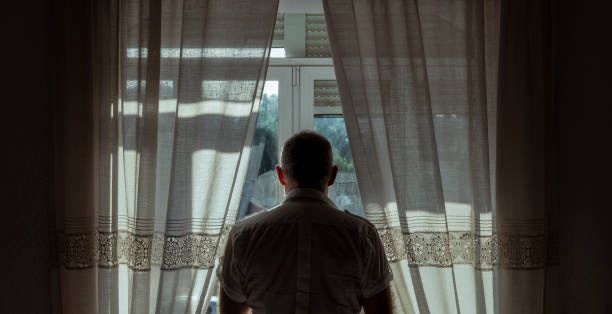
The Man in My House
The shadow of his legs stopped right next to the bed, and I could hear him breathing—steady, calm, like he had every right to be there.
Under the bed, pressed against the cold hardwood floor with dust in my nose and terror in my throat, I held my breath and prayed he wouldn’t look down.
But I’m getting ahead of myself. This story doesn’t start with me hiding under my own bed like a frightened child. It starts the day before, with Mrs. Halvorsen and an accusation that should have been impossible.
When I came home that Wednesday afternoon, my neighbor Mrs. Halvorsen was waiting on her porch like a sentinel. She was seventy-three, a widow who’d lived next door for as long as I could remember, and she had the kind of sharp eyes that missed nothing.
Her arms were crossed, her expression somewhere between concerned and irritated.
“Marcus,” she called out before I’d even made it halfway up my driveway. “We need to talk about your house.”
I paused, grocery bags cutting into my hands. “Is something wrong?”
“Your house gets so loud during the day,” she said, walking to the edge of her property line. “Someone is shouting in there. I’ve heard it three times this week.”
I blinked, trying to process what she was saying. “That’s impossible. I live alone, and I’m at work all day. There’s nobody home.”
She shook her head vigorously, her gray curls bouncing. “Well, someone’s in there. I heard yelling again around noon today. A man’s voice, angry, shouting about something. I knocked on your door, but no one answered.”
Her insistence unsettled me more than I wanted to admit. Mrs. Halvorsen wasn’t the type to imagine things. She was practical, observant, the kind of person who noticed when you forgot to put your trash cans away or when your grass got too long.
“Maybe it was the TV?” I offered, forcing a laugh that sounded hollow even to my own ears. “I sometimes leave it on to deter burglars. The noise makes it seem like someone’s home.”
“I know the difference between a television and a real person, Marcus,” she said sharply. “This was real. Someone is getting into your house during the day.”
“I’ll check it out,” I promised, already backing toward my front door. “Thanks for letting me know.”
But as I walked inside, the air felt wrong. Heavier somehow, like the house was holding its breath. I set my groceries down on the kitchen counter and stood there for a moment, listening.
Silence. Complete, absolute silence.
I walked through every room methodically. The living room with its worn couch and the TV I rarely watched. The kitchen with dishes still in the sink from breakfast. My home office, exactly as I’d left it that morning—laptop closed, papers stacked neatly, coffee cup half-full.
The bathroom. The spare bedroom I used for storage. My bedroom with the unmade bed and clothes draped over the chair.
Everything was exactly where I’d left it. No open windows. No signs of forced entry. No footprints on the hardwood floors that I’d been meaning to refinish for two years. Nothing missing, nothing moved, nothing out of place.
I checked the locks on every door and window. All secure. I even went down to the basement, a space I avoided because it was damp and full of boxes from when my ex-wife and I split up three years ago. Nothing there either, just the furnace humming and spiders claiming their territory.
I convinced myself Mrs. Halvorsen had simply misheard something. Maybe a TV from another neighbor’s house. Maybe teenagers cutting through yards. Maybe her hearing was starting to go and she didn’t want to admit it.
I unpacked my groceries, made dinner, watched some mindless show on Netflix, and went to bed.
But I barely slept.
Every creak of the house settling made me tense. Every sound from outside—a car passing, a dog barking, wind in the trees—had me straining to listen. Around three in the morning, I finally drifted off, only to wake at six feeling exhausted and unsettled.
The next morning, I stood in my kitchen drinking coffee and trying to decide what to do. The rational part of my brain said Mrs. Halvorsen was mistaken, that there was a logical explanation, that I was being paranoid.
But the other part—the part that couldn’t stop thinking about her certainty, her insistence that she’d heard a man shouting—that part said I needed to know for sure.
At 7:30, I called my manager.
“Hey, Tom. I’m not feeling great. Think I’m coming down with something. I’m going to work from home today.”
“No problem, Marcus. Feel better. Just keep your phone on in case we need you.”
“Will do.”
I hung up and immediately felt ridiculous. What was I doing? Playing detective in my own house? But I couldn’t shake the feeling that something was wrong, that Mrs. Halvorsen had heard something real, that I needed to know what.
At 7:45, I executed my plan. I opened the garage door, started my car, and backed it out into the driveway just enough that anyone watching would assume I was leaving for work. Then I turned off the engine, put the car in neutral, and quietly pushed it back into the garage, closing the door behind me.
I went back inside through the side door, moving as quietly as possible. If someone was watching the house, waiting for me to leave, I wanted them to believe I was gone.
My bedroom was at the back of the house, overlooking the small yard. I closed the curtains, leaving just enough gap to let in a sliver of light. Then I got down on my hands and knees and slid under the bed, pulling the comforter down just enough to hide myself completely.
The space under the bed was cramped and dusty. I could feel the cold hardwood against my back, the box spring inches from my face. My heart was pounding so loudly I worried it would give me away if anyone came close enough to hear it.
I checked my phone: 8:03 a.m. Then I set it to silent and waited.
Minutes crawled by with agonizing slowness. I could hear everything—the furnace kicking on, the refrigerator humming from the kitchen, birds outside the window, a neighbor’s lawn mower in the distance.
Nine o’clock came and went. Then ten. My back started to ache from lying on the hard floor. My legs cramped. Dust tickled my nose, and I had to fight the urge to sneeze.
By eleven, I was beginning to feel foolish. This was ridiculous. I was a forty-year-old man hiding under my own bed like a child afraid of monsters. Mrs. Halvorsen had been mistaken. There was nothing—
The sound of the front door opening stopped that thought cold.
Slow. Careful. The distinct click of the lock turning, then the quiet creak of hinges that I’d been meaning to oil for months.
Someone was in my house.
My entire body went rigid. I stopped breathing, straining to hear over the thunder of my own heartbeat.
Footsteps moved through the entryway. Not hurried, not sneaking. Casual. Confident. The footsteps of someone who believed they had every right to be here.
Shoes on hardwood—a familiar scraping sound that I couldn’t immediately place but that sent ice down my spine because I knew I’d heard it before.
The footsteps moved through the living room. I heard the soft thud of something being set down—a bag maybe? Then the footsteps continued, coming closer, moving down the hallway toward the bedrooms.
Toward my bedroom.
I pressed myself flatter against the floor, barely breathing, every muscle locked in terror.
The footsteps entered my bedroom, and through the gap where the comforter didn’t quite reach the floor, I could see shoes. Men’s shoes. Work boots, actually, with dried mud on the soles.
A man’s voice—low, irritated—muttered, “You always leave such a mess, Marcus…”
My blood ran cold.
He knew my name. And the voice—God, the voice was impossibly familiar. I knew that voice. I heard it every day. I heard it in my head, in recordings, in—
No. No, that was impossible.
The shadow of his legs moved around the room. I watched the boots walk to my dresser, heard drawers opening and closing. Then he moved to the closet, and I heard the distinctive sound of hangers sliding across the rod.
“Where did you put it?” the voice muttered, frustrated now. “I know it’s here somewhere.”
The boots moved back across the room, stopped at my bedside table. I heard the drawer open, heard him rummaging through the contents—old receipts, a book I’d been meaning to read, charging cables, spare change.
“There you are,” he said with satisfaction, and I heard something being pulled out of the drawer.
Then the boots turned. Moved toward the bed. Stopped right next to it, so close I could have reached out and touched them.
I held my breath until my lungs burned.
“Always such a mess,” the voice said again, and I heard the soft thump of something being tossed onto the bed above me.
The boots moved away, back toward the door. The footsteps retreated down the hallway, through the living room. I heard the front door open again, then close.
Silence.
I stayed under the bed for another ten minutes, too terrified to move, too shocked to process what had just happened. When I finally crawled out, my whole body was shaking.
I looked at the bed. Lying on top of the rumpled comforter was a USB drive—the one I kept in my bedside drawer for backing up important files.
Why would someone break into my house to steal a USB drive, then return it?
I grabbed my phone and called the police with trembling hands.
Officer Sarah Chen arrived twenty minutes later, a no-nonsense woman in her late thirties who listened to my story with a carefully neutral expression.
“And you were under the bed the whole time?” she asked, writing in her notebook.
“Yes.”
“Did you see his face?”
“No. Just his shoes. Work boots with mud on them.”
“But you recognized the voice?”
I hesitated. This was the part that sounded insane. “It sounded like… it sounded like me.”
Officer Chen’s pen stopped moving. “Like you?”
“I know how that sounds. But I swear, it sounded exactly like my voice. Like hearing a recording of myself, but… different somehow. I can’t explain it.”
She closed her notebook. “Mr. Peterson, is there any chance you have a twin? A brother who might have access to your house?”
“I’m an only child.”
“Is anyone else supposed to have a key to this house? Ex-wife, girlfriend, friend?”
“My ex turned in her key three years ago. I watched her do it. And I haven’t dated anyone seriously since then.”
Officer Chen walked through my house, checking the same things I’d checked the day before. Locks, windows, doors. Everything was secure. No signs of forced entry.
“I’ll file a report,” she said finally. “But Mr. Peterson, without evidence of forced entry or stolen property, there’s not much we can do. I’d recommend changing your locks and maybe installing a security camera.”
After she left, I sat on my couch and tried to make sense of what had happened. Someone who sounded exactly like me had broken into my house, searched through my belongings, taken a USB drive, then returned it.
Why?
I picked up the USB drive and plugged it into my laptop. The files were all there, exactly as I’d left them. Work documents, photos, nothing sensitive or particularly valuable.
I was missing something. There had to be an explanation.
That’s when I noticed the timestamp on one of the folders had changed. Modified today at 11:34 a.m.—right around the time the intruder had been in my house.
I opened the folder. Inside was a new file I didn’t recognize: “Marcus_Read_This.txt”
My hand hovered over the mouse. Every instinct screamed not to open it. But I had to know.
I double-clicked.
The file opened. One sentence, in plain text:
“Stop pretending you don’t remember.”
I stared at those five words until they started to blur. Stop pretending I don’t remember what? I didn’t know what this person was talking about. I didn’t know who they were or why they sounded like me or how they kept getting into my house.
I called a locksmith. He came that afternoon and changed every lock in the house. I installed security cameras—one at the front door, one at the back, one in the living room.
That night, I barely slept again. Every sound had me checking the camera feeds on my phone, watching grainy night-vision footage of my empty house.
The next day was Friday. I actually went to work this time, but I couldn’t focus. Every few minutes, I’d check the security camera app, watching my empty house, waiting for the intruder to appear.
Nothing happened all day.
I came home, checked every room, found nothing disturbed. Maybe the new locks had worked. Maybe whoever it was had given up.
Saturday morning, I slept in until nine—the first decent sleep I’d had in days. I made coffee, sat at my kitchen table, and finally felt like I could breathe again.
Then I checked my security cameras.
The front door camera had captured something at 3:47 a.m. I clicked the recording with dread pooling in my stomach.
The footage showed my front door opening. A man walked in—tall, same build as me, wearing a hooded jacket that hid his face. He looked up at the camera briefly, and even though the hood shadowed most of his features, I could see his mouth.
He smiled.
Then he reached up and turned the camera to face the wall.
The recording ended.
I ran to the front door. It was locked, just as I’d left it. But I checked the camera, and sure enough, it was now pointed at the wall instead of the door.
He’d been here. Inside my house. While I was sleeping upstairs.
I checked the other cameras. Both had been turned to face the walls at exactly 3:47 a.m.
My hands shaking, I called Officer Chen.
“He was here again,” I said when she answered. “Last night. At 3:47 in the morning. I have it on camera.”
“Did you see his face?”
“No, he was wearing a hood. But he knew about the cameras. He turned them all away.”
“I’m sending someone over.”
This time, two officers came—Chen and a younger officer named Rodriguez. They watched the footage multiple times, examining every frame.
“The way he moves,” Rodriguez said, frowning at the screen. “The height, the build… Mr. Peterson, are you absolutely certain you don’t have a twin?”
“I’m certain.”
“Because this man has your exact body type. Same height, same build, even the way he walks—”
“I know,” I interrupted. “I noticed that too.”
Officer Chen looked at me with an expression I couldn’t read. “Mr. Peterson, I need to ask you something, and I need you to be completely honest with me.”
“Okay.”
“Is there any chance you’re doing this yourself? Sleep-walking, maybe? Some kind of dissociative episode?”
“What? No! I was asleep. The cameras show—”
“The cameras show someone who looks exactly like you, who has a key to your house, who knows where your cameras are.” She spoke gently but firmly. “Have you been under unusual stress lately? Any major life changes, any history of—”
“I’m not crazy,” I said, hearing my voice rise. “I’m not doing this to myself. Someone is breaking into my house. Someone who looks like me, sounds like me, but it’s not me.”
Chen exchanged a glance with Rodriguez. “We’ll increase patrols in your area. But Mr. Peterson, I really think you should talk to someone. A therapist. Not because I think you’re crazy, but because this situation is clearly causing you significant distress.”
After they left, I sat alone in my house and tried to think rationally. Was there any possibility they were right? Could I be sleepwalking? Having blackouts?
No. I’d been awake, hiding under my bed when the intruder came. I’d heard him clearly. That wasn’t a dissociative episode or a hallucination.
This was real. Someone who looked like me, sounded like me, was breaking into my house.
But who? And why?
I pulled up the security footage again, watching the hooded figure walk in. The way he moved was familiar—the slight hitch in his left leg from an old basketball injury, the way he favored his right hand, even the way he reached up to turn the camera.
It was like watching myself.
A thought occurred to me, so absurd I almost dismissed it. But I couldn’t shake it.
I went to my bathroom and looked in the mirror, really looked at myself for the first time in days. Forty years old, graying at the temples, tired eyes with dark circles underneath. A scar above my right eyebrow from a childhood accident.
Then I pulled out my phone and examined the security footage again, zooming in on the brief moment when the hooded man looked up at the camera.
I could see part of his face in shadow. The shape of his jaw. His mouth. And there, barely visible—
A scar above his right eyebrow.
My phone slipped from my hands and clattered to the floor.
I didn’t sleep at all that night. I couldn’t. I sat in my living room with all the lights on, a baseball bat across my lap, watching the security cameras on my laptop.
At 3:47 a.m.—the exact same time as the night before—my front door opened.
He walked in, same hooded jacket, same confident stride. But this time, instead of turning the cameras, he looked directly at the living room camera. He looked directly at me.
Then he reached up and pulled back his hood.
I was staring at my own face.
Not similar. Not close. Exact. Same scar, same graying temples, same tired eyes. It was like looking in a mirror, except the reflection was standing in my hallway while I sat frozen on my couch.
He spoke, and the voice came through the camera’s audio crystal clear: “You can’t hide from yourself forever, Marcus.”
Then he turned and walked toward the stairs. Toward me.
I gripped the baseball bat and stood up, my legs shaking. “Who are you?” I shouted. “What do you want?”
He appeared at the bottom of the stairs, and seeing him in person—not through a camera, not hidden under a bed, but standing right there—was surreal and terrifying in equal measure.
“You know who I am,” he said calmly. “You’ve known since the accident.”
“What accident? I don’t know what you’re talking about—”
“The accident eighteen months ago. The one you don’t remember because you chose not to.”
Eighteen months ago. Something tugged at my memory, distant and hazy. There had been an accident. I’d been driving home from work, and…
Nothing. I couldn’t remember anything after that for almost a week. The doctor said I’d had a concussion, possible memory loss, but that it would come back eventually.
It never did.
“Who are you?” I asked again, my voice barely a whisper.
He smiled sadly. “I’m you, Marcus. The you who died in that accident. The you who didn’t make it.”
“That’s impossible.”
“Is it? You don’t remember the accident because you weren’t there. Not really. You’re what came after. The replacement. The continuation. But I’m still here. Still living in the spaces you don’t look at. Still trying to hold onto what we were.”
I shook my head, backing away. “You’re crazy. You’re some kind of stalker, or—”
“Check your scar,” he said. “The one above your eyebrow. When did you get it?”
“I was seven. I fell off my bike.”
“Did you? Or is that just what you remember? Check the medical records, Marcus. There are no records of that injury. Because it didn’t happen to you. It happened to me.”
“Stop it.” I was shaking now, the bat raised uselessly. “Just stop.”
“I’ve been trying to get your attention for months. Leaving signs. Moving things. Leaving messages. All the things I knew you’d notice if you were paying attention. But you kept ignoring it, kept pretending everything was normal, kept living my life like it was yours.”
“Get out of my house.”
“It’s my house too,” he said, taking a step closer. “It was my house first. My life. My memories. You’re the one who doesn’t belong.”
I ran. Dropped the bat and ran for the front door, fumbling with the locks with shaking hands. Behind me, I could hear him walking—not running, just walking calmly—following me.
I got the door open and ran outside, into the pre-dawn darkness, running across my lawn in my pajamas. I ran to Mrs. Halvorsen’s house and pounded on her door.
“Mrs. Halvorsen! Call the police! Please!”
Lights came on. The door opened, and she stood there in her bathrobe, squinting at me. “Marcus? What on earth—”
“There’s someone in my house. Someone who looks exactly like me. Please, call 911.”
She looked past me at my house, standing quiet and dark. “Marcus, there’s no one there. I’ve been watching your house like you asked. No one’s gone in or out since you came home.”
“No, he’s there right now. I just saw him. We were talking—”
“Sweetheart, you were alone. I saw you through your window, pacing around talking to yourself. I was getting worried about you.”
I turned back to look at my house. Through the living room window, I could see the empty room, exactly as I’d left it.
“He was there,” I whispered. “He was right there.”
Mrs. Halvorsen put a gentle hand on my arm. “I think you should come inside. I’ll make some tea, and we’ll call someone to talk to, okay?”
They found me three hours later, sitting in Mrs. Halvorsen’s living room, still shaking.
Officer Chen came personally. “Mr. Peterson, we checked your house. There’s no one there. No signs of forced entry, nothing disturbed.”
“But the cameras—”
“The cameras show you, Marcus. Walking around your house alone. Talking to yourself. That’s all.”
“No. That’s not possible. I saw him. He looked exactly like me, said he was me, said I died in an accident—”
Chen’s expression shifted from concerned to something else. Pity, maybe. “Mr. Peterson, do you remember the accident eighteen months ago?”
“I… no. I had a concussion. Memory loss.”
“You were in a coma for six days. When you woke up, you were… different. The hospital recommended psychiatric evaluation, but you refused.”
“What are you talking about?”
She pulled out her phone and showed me a medical report I’d never seen. My name at the top. Diagnosis: dissociative identity disorder, possible traumatic brain injury, recommended for immediate psychiatric evaluation.
“The accident was severe, Marcus. You almost didn’t make it. And when you woke up, there were two of you. Two distinct personalities. One that remembered the accident, one that didn’t. Your doctor tried to explain it to you, but you refused treatment, said you were fine.”
“No. No, that’s not… I’m not crazy. There’s someone else. Someone who looks like me—”
“It is you, Marcus,” she said gently. “The part of you that remembers the accident. The part you’ve been trying to suppress. He’s been trying to get your attention, trying to make you acknowledge him, remember what happened. But you keep pushing him away, keep pretending he doesn’t exist.”
I looked at Mrs. Halvorsen. She nodded sadly. “I’ve heard you, dear. Talking to yourself, arguing with yourself. Different voices, but both yours. I didn’t know how to tell you.”
The world tilted. I thought about the voice I’d heard, the face I’d seen, the way he moved exactly like me.
Because he was me.
“What… what do I do?” I asked, my voice breaking.
“You get help,” Chen said. “Real help. You talk to someone who specializes in this. You work through the trauma of the accident instead of running from it.”
“And the other me?”
“He’s not going away, Marcus. Not until you acknowledge what happened. Not until you integrate the parts of yourself you’ve been trying to forget.”
That was six months ago.
I’m writing this from a chair in Dr. Morrison’s office, where I’ve been coming three times a week. Learning about dissociative identity disorder. Learning about trauma and the brain’s ways of protecting itself. Learning to remember.
I remember the accident now. The truck that ran the red light. The impact. Dying, or almost dying, or some space in between. Waking up different. Incomplete.
The other me—the one I’ve been calling the intruder—he’s still here. But we’re talking now. Learning to coexist. He has memories I don’t, experiences that are mine but feel foreign. We’re slowly becoming one person again.
Mrs. Halvorsen still keeps an eye on my house. But now it’s out of friendship, not concern.
The cameras are gone. I don’t need them anymore.
Sometimes, I still hear him—hear myself—talking in the quiet hours. But it’s not frightening anymore. It’s just conversation. Two parts of the same person, finding their way back to wholeness.
My house doesn’t get loud during the day anymore.
But I’m learning that sometimes, the loudest confrontations are the ones we have with ourselves.
THE END

Sophia Rivers is an experienced News Content Editor with a sharp eye for detail and a passion for delivering accurate and engaging news stories. At TheArchivists, she specializes in curating, editing, and presenting news content that informs and resonates with a global audience.
Sophia holds a degree in Journalism from the University of Toronto, where she developed her skills in news reporting, media ethics, and digital journalism. Her expertise lies in identifying key stories, crafting compelling narratives, and ensuring journalistic integrity in every piece she edits.
Known for her precision and dedication to the truth, Sophia thrives in the fast-paced world of news editing. At TheArchivists, she focuses on producing high-quality news content that keeps readers informed while maintaining a balanced and insightful perspective.
With a commitment to delivering impactful journalism, Sophia is passionate about bringing clarity to complex issues and amplifying voices that matter. Her work reflects her belief in the power of news to shape conversations and inspire change.