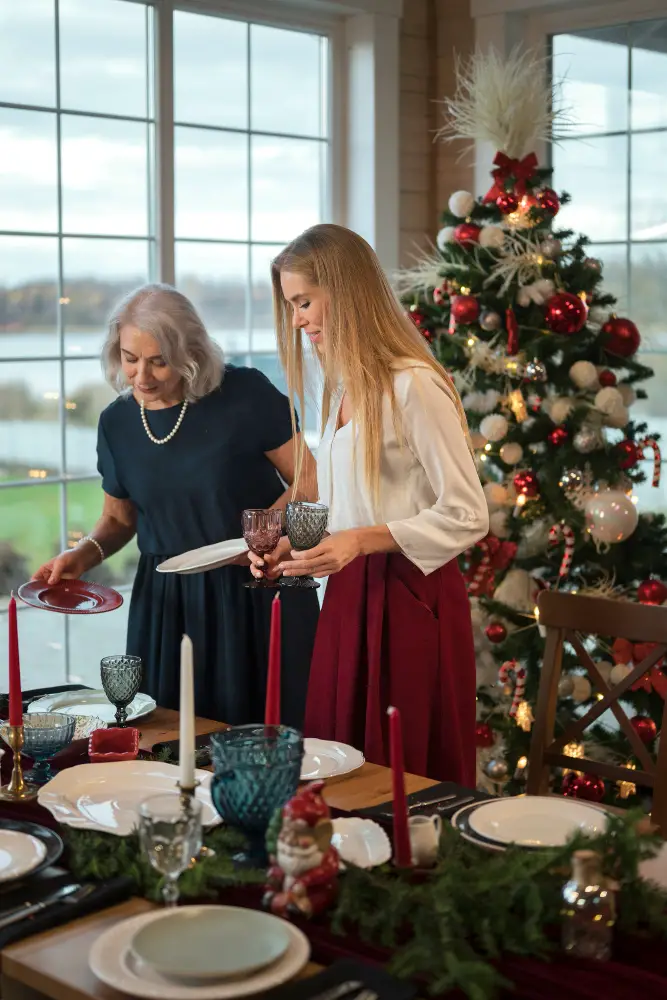
The Price of Family
I sat there watching my mother hand out gifts to everyone at the table, stopping right before she reached me. The whole room laughed, unaware those presents had been purchased with my money. I didn’t argue or cry. Instead, I went home, opened my banking app, and hit cancel like I was cutting oxygen to a burning house.
Two weeks later, they stood outside my door in Seattle, banging on the wood and screaming my name like I was their salvation.
Part One: The Performance
My name is Violet Parker. I’m thirty-two years old, and up until ten days ago, I believed that blood meant something.
I live in Seattle—a city of gray skies and sharp coffee—where I work as a senior strategist for Crescent and Alder Media. I analyze consumer behavior, identify bleeding revenue streams, and tell companies exactly why nobody loves them anymore. It’s ironic that I could spot a failing brand strategy from a thousand miles away but couldn’t see the rot in my own family until it was served to me with a side of overcooked turkey.
The summons came three weeks ago via group text: “Early Christmas dinner combined with Thanksgiving. Everyone home by 4. Do not be late.” No question mark. A command from Denise Parker, who liked to be efficient with her emotional labor.
I packed light for the Dayton trip, telling myself this was just an obligation—a box to check so I could spend the actual holidays alone with good wine and zero drama. But the daughter in me, the part that desperately wanted to be seen, spent four hours baking a bourbon pecan pie from scratch. European butter. Hand-shelled pecans. Something tangible that said I cared enough to make an effort.
I arrived at 3:45 PM to a driveway packed with cars. My father’s truck taking up two spaces. Uncle Rick’s sedan parked on the lawn, leaving deep tire tracks in the mud. Nobody came to the door. I had to shoulder it open while balancing the pie box and my suitcase.
The wall of sound hit first—television blasting football, my father Mark shouting at the screen, Uncle Rick’s raspy laugh grating on my nerves. My younger sisters Tessa and Belle sprawled on the sofa, phones in hand, legs draped over armrests.
“I’m here,” I announced.
“Move the car, Vi. You’re blocking the view,” my father said without turning around.
“I parked on the street, Dad.”
“Oh. Well, don’t let the cold in.”
That was my greeting.
In the kitchen, my mother Denise stirred gravy with frantic energy. The room smelled of roasted meat and sage, but underneath lurked the stale scent of unresolved tension.
“I brought a pie,” I said.
She glanced at the box, then at me. “Store-bought.”
“No. I made it from scratch.”
“We have plenty of dessert. Just put it on the counter and don’t clutter up the island.” She turned back to the stove, dismissing me.
I set the pie down next to a pile of unopened mail—credit card bills, utility notices, late warnings. The familiar tightness squeezed my chest, the instinct to reach for my checkbook and fix everything. I pushed the feeling down. Not today. Today I was just a guest.
Dinner was a masterclass in exclusion. The turkey was dry. The conversation was chaotic overlapping voices, none interested in listening. Uncle Rick dominated with contractor stories I’d heard six times before. Tessa and Belle whispered and giggled, glancing at me.
“So Violet, still doing that computer thing?” Rick boomed, spraying stuffing onto the tablecloth. “What is it—Facebook for dogs?”
“I work in digital marketing strategy. We handle branding for tech firms.”
“Sounds fake,” Belle chimed in. She was twenty-four and perpetually between jobs. “Like, you just sit on Instagram all day. I could do that.”
“It involves data analysis and market projection,” I said, cutting my turkey into precise squares.
“Boring,” Tessa sang out. “Hey, did you see the new car Mom wants?”
“We can’t afford a new car,” my father grumbled.
“Oh Mark, stop it,” my mother snapped. “Let’s not talk about money. It’s rude when we have guests.”
Guests. I was the guest—the one who’d wired them two thousand dollars last month when the water heater broke, who paid for the family cell phone plan they were currently using to text under the table.
Then came the performance.
My mother stood and tapped her wine glass. The sharp ding-ding-ding cut through the football noise still blaring from the other room.
“Since we’re all here together and we won’t see Violet at actual Christmas because she’s too busy for us…” She paused for effect. “I decided we should do our gift exchange now.”
A warm spark ignited in my chest. Gifts. Maybe they did care.
She pulled out a massive shiny red bag overflowing with wrapped packages. She looked like a game show host.
“First one is for Mark.” A rectangular box. High-end golf polo, the brand with the little tiger logo. Eighty-five dollars, I knew instinctively.
“For Tessa.” A designer smartwatch band. “Oh my God, this is the one I sent you the link for—the rose gold one!” Sixty dollars.
“For Belle.” Expensive athletic leggings. “Yes! Finally.” Ninety-eight dollars.
“For my big brother Rick.” Blue label bourbon. “You spoil me, Denise.” One hundred twenty dollars.
I sat with my hands folded in my lap, wearing a polite frozen smile I used in boardroom meetings when clients said incredibly stupid things.
My mother reached into the bag one last time. “And this is for—” She looked at the tag. “Oh! This is for me from Dad.” She tore open perfume, spraying it delicately on her wrist.
Then she set the red bag down. It folded in on itself. Empty.
The room went quiet—not peaceful silence, but vacuum. My heart hammered against my ribs, physical pain echoing in my ears.
I cleared my throat. “Is there anything for me?”
My mother looked up, eyes clear and blue and completely devoid of warmth. She didn’t look embarrassed. She looked annoyed that I’d interrupted her moment.
“Oh, Violet. You’re an adult. You have a job. You can buy whatever you want.”
“But Dad has a job. Rick has a job.”
“It’s different,” she snapped. “They have expenses. You live the high life out there in the city.” She leaned forward. “Besides, you should be grateful you’re even sitting here. We adjusted our entire schedule for you.”
Uncle Rick laughed. “She’s got you there, Vi. Rich girl like you asking for handouts. That’s rich.”
The table erupted—not a roar, but a ripple of laughter. My father chuckled. Belle giggled. My mother smiled, a tight satisfied smile that said she’d won a game I didn’t know we were playing.
I knew the prices. The shirt: $85. The watch band: $60. The leggings: $98. The bourbon: $120.
I knew because I paid the credit card bill.
The card my mother used for “household emergencies” was a supplementary card on my account. I’d given it to her five years ago for groceries and gas. Over time, “emergency” had expanded. I just kept paying it every month because I wanted them to be happy. I wanted them to love me.
I was paying for the very gifts they were using to exclude me.
The urge to cry vanished, replaced by cold, hard clarity. I saw them not as family but as a failed investment—a liability.
I stood up.
“Where are you going?” my mother asked sharply. “We haven’t had coffee yet.”
“I’m leaving.”
“Don’t be dramatic. Sit down. You’re ruining the mood.”
“I’m not being dramatic. I’m just going.”
“If you walk out that door,” my father said, finally looking up, face reddening, “don’t expect us to come running after you.”
I looked at the man whose mortgage I’d saved twice. “I don’t expect anything from you, Dad. Not anymore.”
I walked through the living room, grabbed my coat and suitcase. I walked out into the freezing Ohio night. The air was biting, stinging my cheeks, but it felt clean. Real.
I walked to the rental car. I saw the pie box on the passenger seat—the bourbon pecan pie, the European butter, three hours of labor. I picked up the box, walked to the trash can at the end of the driveway, lifted the lid, and dropped it inside. It landed with a heavy, wet thud.
I started the engine. I didn’t look back at the warm yellow light spilling from the windows. I drove straight to the airport, paid the $200 change fee without blinking, and boarded the red-eye to Seattle.
As the plane climbed into the dark sky, I stared out the window at Dayton fading into scattered lights below.
I didn’t feel sad. I felt light.
I felt the way I felt when I finally cut a non-performing asset from a client’s portfolio.
Part Two: The Autopsy
The flight back was turbulence and pressurized air. Arriving at my Harborview Lofts apartment at 3:00 AM felt like stepping into a cryotherapy chamber—expensive, curated silence.
I sat on the cold kitchen tile floor, leaning against the dishwasher, staring at the blinking microwave clock. My phone was heavy in my hand. The family group chat was waiting—probably roasting me right now about being too sensitive, about city life making me soft.
I called Cara Wittman instead. My best friend, an ER nurse on graveyard shift, always awake.
“Vi. You’re supposed to be in Ohio. Did the plane crash?”
“I left early. They gave everyone gifts. Mom got perfume. Dad got a shirt. Rick got bourbon. The girls got designer gear.”
“And you got nothing,” Cara said.
“I got told I should be grateful to be sitting at the table.”
Silence. Then: “Violet, that’s not a family quirk. That’s aggression. That’s public humiliation.”
“I know. But the worst part? I’m ninety percent sure Mom used my credit card to buy that stuff.”
“Okay,” Cara said, voice sharp. “We’re done crying. Open your banking app right now. Put me on speaker. You need to see the damage before you can cut it out.”
I opened the app. Face ID let me in. The bright blue interface loaded—checking, savings, two credit cards. One was mine. The other was authorized for my mother.
“Go to transaction history,” Cara commanded. “Filter by recurring payments and authorized users.”
The list populated. It was a long scroll.
“Gold’s Gym in Dayton. Forty-nine a month.”
Two years ago, Mom had called crying. Pre-diabetic. Needed to exercise. “It’s for my health, Violet.”
“Keep going.”
“Streaming services. Netflix, Hulu, Disney Plus, HBO Max, Spotify Family Plan. About eighty a month total.”
Dad had wanted to watch the playoffs. “Just put it on your card for this month, Vi. I’ll send you a check.” Three years ago. There was never a check.
“What else?”
“Fresh Door meal kits. One-twenty a week.”
“A WEEK?” Cara shouted. “That’s almost five hundred a month.”
“Mom said she was too tired to cook after volunteer work. Said it was temporary.”
“When?”
“Last March.”
I kept scrolling. Amazon Prime. Car wash subscription. Beauty box for Tessa and Belle. Bengals tickets in October—four tickets, three hundred dollars. I wasn’t invited. Didn’t even know they went.
“There’s an Uber account linked. Rides Saturday nights. Downtown to home. Frequent.”
“Tessa and Belle going to bars,” Cara said. “So you’re paying for their drinks, their rides, their food, their entertainment, their gym. And in return, you get kicked in the teeth.”
“Cell phone family plan,” I whispered, seeing another line. “Two-forty a month. Everyone.”
I did the math in the margin of the legal pad I’d grabbed. Roughly a thousand a month. Twelve thousand a year. Over five years: sixty thousand dollars.
That was a down payment on a house. That was my retirement fund.
“Cara, I feel sick.”
“Good. Use that. You’re going to go silent. You’re going to cut the cord. They don’t treat you like a person—they treat you like a utility company. Let’s prove it. When the service gets shut off, they’ll notice.”
After we hung up, I sat in the dark for ten more minutes. Then I stood and walked to my home office. I grabbed a yellow legal pad and began to write. Not a diary entry. A ledger.
Column one: service. Column two: cost. Column three: user.
When I finished the list, the total was staggering. Roughly a thousand a month in recurring charges alone. That didn’t count the “emergencies”—the water heater, car repairs, the “I’m short on rent” texts from Belle.
Over five years, I’d given them seventy-two thousand dollars.
I stared at the number. That was an MBA. That was a year of travel. That was my freedom.
I picked up my phone and opened the banking app. My finger hovered over the credit card settings.
I thought about the Christmas dinner. The empty red bag. The look on my mother’s face—not malice, but total indifference.
“If they really love me,” I said aloud to the empty room, “they’ll call to ask how I’m doing before they ask why the card was declined.”
I pressed Remove User.
The screen loaded. Then: a green checkmark. User removed.
I went to recurring payments.
Netflix: Cancel. Hulu: Cancel. Meal kits: Cancel. Gym: Cancel.
One by one, down the list. I wasn’t angry. I was efficient. I was the senior strategist at Crescent and Alder Media, cutting overhead costs.
When I finished, I put the phone down and took a deep breath. The apartment felt different—fortified.
I walked to the window and looked out at the Seattle skyline, city lights blinking back at me. I was alone, thousands of miles from the people who shared my DNA.
For the first time in my life, that distance didn’t feel like exile. It felt like safety.
Part Three: The Siege
The silence lasted exactly forty-eight hours.
Saturday morning, my phone started buzzing with Unknown Caller, No Caller ID, area codes I vaguely recognized from Ohio relatives. I stopped answering. I let everything go to voicemail, then listened to collect intelligence.
The first wave was medical guilt.
“Violet,” my mother’s voice quavered on Tuesday morning. “I’m at urgent care. Blood pressure one-eighty over one-hundred. Hypertensive crisis. The doctor asked if I’ve been under severe stress. I had to tell him my own daughter kicked me out like a dog. If I have a stroke… if I die… I hope your money keeps you warm at my funeral.”
I checked the timestamp: 10:00 AM Tuesday.
Then I checked her best friend Aunt Linda’s Facebook. Posted at 11:00 AM Tuesday: a photo of Mom and Linda at Panera, smiling over soup bowls. Caption: “Lunch with my bestie. Staying strong despite the heartache.”
I saved the voicemail. I screenshotted the Facebook post. Evidence of fabrication.
My father’s voicemail was clipped and cold. “You’re making a scene, Violet. People are talking. Aunt Sarah called asking why you set police on us. You’re embarrassing this family. Fix this today.”
Not worried about me. Worried about PR.
Then came the public campaign. Cara sent me a TikTok link Wednesday night. “Do not engage. Just watch.”
Belle sat in her bedroom, wearing a hoodie, filter making her eyes bigger and watery. Melancholic piano music played.
“You grow up thinking your big sister is your hero,” she whispered to the camera. “Then money changes people. She moved to the city, got a big job, and just cut us off. Called the cops on our parents when they just wanted to give her a Christmas gift. I don’t understand how someone trades their blood for a bank account.”
Caption: “When family becomes strangers. Toxic. Money changes people.”
I scrolled to comments, expecting hundreds calling me a monster.
Instead: “Parents don’t usually get cops called unless they’re doing something crazy.” “I smell missing reasons.” “Money changes people = She stopped letting us use her wallet.”
Belle had weaponized the internet, but the internet was full of people tired of toxic families. She wanted sympathy. She got scrutinized.
Then the coup de grâce: my cousin Beth messaged me a shaky video filmed through a peephole. My hallway in Seattle. My mother red-faced, kicking my door.
“I gave birth to you! You will die alone!”
My father grabbing her arm. Security guard stepping off the elevator. Them fleeing.
Caption: “Rich boomers losing it at the lofts. Public freakout.”
They’d tried to paint themselves as sad, abandoned elderly parents. The video showed violent, entitled people attacking a door. The truth was out.
I created a new spreadsheet tab: Harassment Log. Every voicemail, every TikTok, every threat—logged with date, time, method, content, witness.
Turning their emotional storm into data points. If it was on the spreadsheet, it was manageable.
But I needed legal protection. I called the attorney Cara recommended—Mr. Sterling, a man who looked carved from granite.
He listened without interruption. Watched the video. Reviewed the spreadsheet.
“Two separate issues,” he said. “Financial fraud—that’s criminal. The harassment and physical altercation give us grounds for an anti-harassment protection order in Washington State.”
“Do it,” I said.
“It will enrage them. Final severance.”
“The severance happened when they stole my identity. This is just paperwork.”
Then I did one final sweep of my credit report. Everything looked normal until I saw it:
A request for a credit limit increase on the department store card ending in 4022. The card I’d found on my report—one I’d supposedly closed years ago but they’d fraudulently reactivated.
Request date: today. Requested limit: $15,000. Current status: pending verification.
My blood ran cold. Even after the hallway scene, they were still doing it. They’d gone home and tried to triple the limit—trying to cash out before I shut them down completely.
The income field showed: $180,000. My salary. They were claiming to be me.
I looked at the address: 242 Maple Drive, Dayton, Ohio. Their house. They were using their own address to commit a felony, assuming I’d never actually press charges against my parents.
I called Mr. Sterling.
“They just tried again. An hour ago. Tried to triple the limit on the stolen card.”
“Send me the screenshot.”
“Mr. Sterling, when you file the police report in Ohio, make sure the address is correct. I want the police to go to the right door.”
242 Maple Drive used to be home. Now it was just the scene of the crime.
Part Four: The Reckoning
I boarded the plane to Dayton on a Tuesday morning with a briefcase, not a suitcase. Inside: my laptop, a hard drive with three gigabytes of financial records, printed affidavits.
Mr. Sterling sat beside me, billing four hundred dollars an hour. For the first time in five years, I was happy to pay a bill. He wasn’t just counsel. He was a witness.
I’d rented a conference room at the airport Marriott—neutral ground with cameras and security. I emailed my parents the location. “10:00 AM. Do not be late.”
When Mr. Sterling and I walked in, I stopped dead.
They hadn’t come alone.
Sitting around the oval table: my mother and father, Uncle Rick, Aunt Linda, cousins Beth and Sarah, even Great-Aunt Martha in her wheelchair.
An intervention.
The room was set with pastries and coffee, like a birthday party instead of a legal deposition.
My mother stood, arms open, wearing a soft blue cardigan. “Violet. Look—everyone’s here. We all love you so much. We just want to fix this.”
I didn’t hug her. I walked past to the head of the table.
“Who is this?” Uncle Rick asked, gesturing at Mr. Sterling with a half-eaten donut. “Your therapist?”
“This is Mr. Sterling. He’s my attorney. He’s recording this meeting.” Sterling set a digital recorder on the table. The red light blinked on.
The room shifted.
My father stood, face flushing. “We’re family. We don’t need lawyers. We brought everyone to remind you what matters. Can’t we put this ugliness behind us?”
“That depends,” I said, plugging my laptop into the projector. “Are you ready to talk about the truth?”
“The truth is you’ve lost your way,” my mother said, turning to the relatives. “She’s been under so much pressure. She forgot family is about sacrifice. She forgot we supported her when she was nothing. Now she has money and thinks she’s better than us.”
Heads nodded. Great-Aunt Martha tutted.
“She called the police on us,” Mom continued. “Her own parents—just because we wanted to visit. We’re so worried about her mental state.”
“I’m not having a mental health crisis,” I said, voice cutting through the room. “I’m having a financial crisis. And the cause is sitting right there.”
I pointed at my parents.
“So you paid a few bills,” Uncle Rick scoffed. “Big deal.”
“Let’s look at the numbers.” I clicked the remote.
The spreadsheet appeared on screen, font large enough for Great-Aunt Martha to read.
Total financial outflow (5 years): $72,415
Gasps circled the room. Seventy-two thousand dollars wasn’t “a few bills” in Dayton. It was a fortune.
“This is a lie,” my father shouted. “She’s making that up.”
“I have bank statements for every line item. Gym memberships, streaming, groceries, vacations, car repairs. But that’s not why we’re here.”
I clicked to the next slide. Transaction log for the department store credit card.
“Two weeks ago at dinner, Mom gave gifts to everyone. Rick, you got blue label bourbon, right?”
Rick blinked. “Yeah. So?”
“Dad got a designer polo. Tessa and Belle got accessories.”
“Mom is generous,” Belle said, crossing her arms. “Unlike you.”
“Mom didn’t pay for those gifts.” I pointed to the screen, highlighting the date.
November 14th. Blue label bourbon — $120 — charged to credit card in name of Violet Parker. Polo shirt — $85 — charged to Violet Parker. Rose gold watch band — $60 — charged to Violet Parker.
Deadly silence.
“That card was opened in my name without my knowledge. The statements went to their house so I wouldn’t see them. You stole my identity, bought gifts for yourselves, handed them out in front of me while leaving me out—while telling me I should be grateful to sit at the table.”
I looked at Aunt Linda. “You were there, Linda. You saw me ask. You saw Mom tell me I didn’t deserve one. A gift she bought with my own stolen money.”
Linda looked at my mother, mouth open. “Denise… is that true?”
“No. She gave me permission. She’s twisting it.”
“I did not. And I have the fraud department affidavit to prove it.”
“It was a misunderstanding,” Rick boomed nervously. “Who cares? It’s Christmas.”
“A misunderstanding?” I repeated. “Is that what we’re calling it?”
“We’re done listening,” my father snapped. “Come on, everyone. We’re leaving.”
“Sit down,” Mr. Sterling said. A courtroom voice. “We have one more piece of evidence regarding the restraining order.”
“Restraining order?” Beth whispered.
I clicked the next file. The video from my hallway. My mother screaming filled the speakers.
“I gave birth to you! You will die alone with your money!”
On screen, she kicked the door. Security appeared. They fled.
I let it play to the end, pausing on the crumpled gift bag on my doormat.
Suffocating silence. Great-Aunt Martha had her hand over her mouth. Beth stared at the table.
The perfect family portrait had shattered.
“This,” I said, “is why I called the police. Not because I hate you. Because I’m afraid of you.”
Mr. Sterling stood. “The police report for identity theft has been filed. The bank fraud investigation is active. Further attempts to access Ms. Parker’s credit will result in federal charges. This is not a family dispute. This is a criminal matter.”
My father slumped in his chair, suddenly very old. “Violet,” he whispered. “Please.”
“Please what?”
“The loan. The refinancing—the deadline is Friday. If we don’t get the signature, the bank takes the house. We’re three months behind. The refinancing was the only way.”
There it was. That’s why they came to Seattle. They needed my signature.
“Just sign the paper, Violet. We’ll pay you back. Just sign and we can fix the credit card thing later.”
The pivot. From “we love you” to “give us what we want.”
I closed my laptop. The screen went black.
“No,” I said.
“What?” my mother hissed.
“No. I will not sign. I will not attach my name to your debt ever again.”
“You’re going to let us be homeless?” my father asked, voice shaking.
“I’m letting you handle your own finances. You have an income. You have assets. Sell the cars. Sell the stuff you bought with my money. But I’m not bailing you out.”
I turned to Mr. Sterling. “We’re leaving. Here are my conditions for not pressing charges: One, admit to the family what you did. Two, stop the smear campaign. Three, never contact me except through Mr. Sterling. Four, apologize in writing. If you do those things, I’ll ask the bank not to prosecute.”
I started to walk out.
“You monster!” my mother screamed, standing, shaking, face purple. “You planned this! You came here to humiliate us! You’re destroying this family for revenge!”
I stopped at the door and looked back. “I didn’t destroy this family, Mom. I just turned on the lights.”
I walked out. The door closed behind me.
I didn’t hear sobbing. I heard shouting—Uncle Rick asking if it was true about the house, Aunt Linda asking how they could do that to their daughter.
“That went well,” Mr. Sterling said dryly as we walked down the corridor.
“Did it?”
“You kept your cool. Got the truth on record. Now we see if they sign the admission or choose to fight.”
“They won’t sign,” I said. “They’d rather lose the house than admit they were wrong.”
I was right.
Epilogue: Freedom
Three months later, Seattle was blooming. Cherry blossoms at the University of Washington turned the gray city into soft pink canvas.
I sat on a restaurant balcony overlooking the sound with Cara and two other friends—people who didn’t know my family, who liked me for my jokes and strategy insights, not my credit limit.
We were celebrating my promotion. Director at Crescent and Alder. Without the mental load of managing my parents’ chaos, without the financial drain, I’d focused entirely on work and landed a massive campaign.
My phone buzzed. An email from Denise Parker.
Subject: Checking in
I opened it.
“Violet, we moved into a condo. It’s small. Dad is working at a hardware store to make rent. It’s hard. We miss the house. I hope you’re happy in your big city. I just wanted you to know we’re surviving. Even though you didn’t help, we still love you. Even if you don’t love us.”
Not an apology. A guilt trip wrapped in an update. She was still the victim, still rewriting history. No responsibility for fraud, lies, theft.
A year ago, I would have replied with paragraphs of defense. Would have sent money for rent.
Today, I typed:
“Mom, I’m glad you found a place. I’m happy. If you want a real conversation, refer to the conditions I left with Mr. Sterling regarding therapy and accountability. Until then, I wish you the best. Violet”
I hit send. Then I archived the email into a folder named: Family — Read Only.
“Everything okay?” Cara asked, holding up rosé.
I looked at her. At the sunset reflecting off water. I thought about the seventy-two thousand dollars, the pie in the trash, the lock on my door.
“Yeah,” I said, picking up my glass. “Everything is perfect.”
I realized then that I’d won. Not because I’d punished them. Not because they were suffering in a small condo.
I’d won because they could no longer hurt me.
I’d taken back the pen. And for the first time in my life, I was writing my own story.
Sometimes the most satisfying revenge isn’t making them pay. It’s simply closing your wallet, locking your door, and letting them face the one thing they spent a lifetime avoiding: the consequences of their own actions.
I was thirty-two years old. I had a promotion, real friends, and an apartment with a view. I had seventy-two thousand reasons to never go back.
And for the first time since I could remember, when I looked in the mirror, I saw someone worth protecting.
I saw someone who finally chose herself.
And that was worth more than any gift they could have given me at that table—even if they’d bothered to try.

Lila Hart is a dedicated Digital Archivist and Research Specialist with a keen eye for preserving and curating meaningful content. At TheArchivists, she specializes in organizing and managing digital archives, ensuring that valuable stories and historical moments are accessible for generations to come.
Lila earned her degree in History and Archival Studies from the University of Edinburgh, where she cultivated her passion for documenting the past and preserving cultural heritage. Her expertise lies in combining traditional archival techniques with modern digital tools, allowing her to create comprehensive and engaging collections that resonate with audiences worldwide.
At TheArchivists, Lila is known for her meticulous attention to detail and her ability to uncover hidden gems within extensive archives. Her work is praised for its depth, authenticity, and contribution to the preservation of knowledge in the digital age.
Driven by a commitment to preserving stories that matter, Lila is passionate about exploring the intersection of history and technology. Her goal is to ensure that every piece of content she handles reflects the richness of human experiences and remains a source of inspiration for years to come.