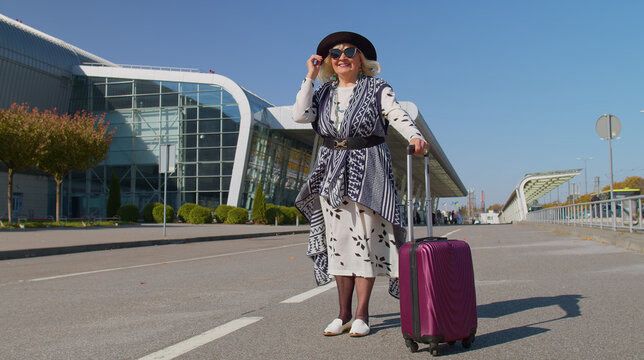
The Woman Who Became Visible
At seventy, I flew home from the funeral of the man I spent forty-three years with. I texted our family group chat asking if anyone could pick me up from the airport. My son told me to call an Uber. My daughter-in-law asked why I hadn’t planned better. I thought my relationship with my kids was frozen for good—until my face showed up on the news. That’s when everything changed.
But I’m getting ahead of myself.
The story really begins on an ordinary Tuesday that became anything but ordinary, though I didn’t know it at the time.
I woke up in a hotel room three states away from home, in a city where my husband had spent his final days. The curtains were that particular shade of beige that exists only in hotels, and the morning light came through them weak and apologetic, like it knew better than to be cheerful.
Robert had been sick for six months. The kind of sick where you watch someone disappear in increments—first their energy, then their appetite, then their hope, and finally everything else. I’d spent those months in hospitals and specialists’ offices, in rental apartments near treatment centers, in waiting rooms that all smelled the same regardless of which state they were in.
Our children had visited. Once. Early on, when the diagnosis was new and the prognosis still had qualifiers like “if” and “possibly.” They’d stayed for a weekend, looked appropriately concerned, hugged their father carefully like he might break, and then returned to their lives three states away.
I understood. They had jobs, responsibilities, children of their own. Life doesn’t pause for illness, even terminal illness. I told myself this repeatedly, like a mantra that might eventually feel true.
But when the end came—sudden despite months of warning, the way these things always are—I was alone. Holding Robert’s hand in a sterile room while machines beeped their final notes and a nurse I’d never seen before checked monitors with professional detachment.
I called my son from the hospital parking lot, sitting in a rental car I’d have to return eventually, though I couldn’t remember where I’d gotten it or what the terms were.
“Dad’s gone,” I said when he answered.
There was a pause. Traffic sounds in his background. He was driving somewhere, doing something, living his regular Tuesday.
“I’m sorry, Mom,” he said, and he sounded like he meant it. “Do you need anything?”
I needed everything. I needed my husband back. I needed my children to materialize and handle the decisions I couldn’t make. I needed someone to tell me what came next.
“The funeral home needs information,” I said instead. “And I have to make arrangements.”
“Right,” he said. “Of course. Listen, I’m pulling into a meeting, but text me the details and we’ll figure out our schedule.”
Our schedule. Like my husband’s funeral was a calendar conflict to be managed.
“Okay,” I said.
“Love you, Mom,” he added, already distracted.
The call ended before I could respond.
I sat in that parking lot for twenty minutes, watching people come and go. Some crying, some relieved, some moving with the exhausted shuffle of those who’d been there too long. Everyone had a story, but nobody looked at anyone else. Hospitals teach you to mind your own tragedy.
Eventually, I went back inside and made decisions. Cremation, because Robert had said once—years ago, in the abstract way healthy people discuss death—that he didn’t see the point of taking up real estate forever. A simple service, because elaborate felt performative and I was too tired for performance. A Thursday afternoon, because the funeral home had availability and I couldn’t think of a reason to wait.
I texted my son the details.
He responded six hours later: “Thursday works. We’ll fly in Wednesday night.”
My daughter texted separately: “So sorry, Mom. Can’t get away from work. Will send flowers.”
She didn’t send flowers.
The service was small. Robert’s brother came, looking older than I’d ever seen him, grief making him fragile in a way that surprised me. A few colleagues from Robert’s career, people who’d retired years ago but remembered him fondly. A neighbor from the old neighborhood, two states back, who’d somehow heard and made the drive.
My son and daughter-in-law arrived fifteen minutes late, apologizing about traffic and hotel checkout times. They sat in the back row. Left immediately after, citing an early flight the next morning.
“We should get together soon,” my daughter-in-law said, hugging me briefly. “Maybe for Thanksgiving?”
Thanksgiving was seven months away.
“Maybe,” I said.
And then they were gone, and I was alone again with the administrative aftermath of death. Certificates to file. Accounts to close. Belongings to sort. A whole life reduced to boxes and paperwork and decisions nobody else wanted to make.
I stayed in that hotel for three more days, paralyzed by the weight of what came next. Going home meant returning to a house that would be too empty, too full of absence, too much evidence that my life had been split into before and after.
But hotels are expensive and I couldn’t stay there forever, so I booked a flight home.
That’s when I sent the text to the family group chat.
The chat was my daughter-in-law’s creation, started two years earlier with enthusiasm and emoji. “The Harrison Family!” it was called, with a little house icon. She’d added everyone—me, Robert, my son, herself, my daughter, even my teenage granddaughter who never posted anything.
It was supposed to represent closeness, I think. Connection. The modern version of family dinners and phone calls. Instead, it became a place where people posted photos of backyard barbecues I wasn’t invited to, vacation pictures from trips I didn’t know about, casual mentions of gatherings that somehow never included me.
“We should get together soon!” appeared regularly, always followed by nothing.
I’d learned to scroll past without comment. Learned to like the appropriate photos, respond to direct questions, and otherwise exist quietly on the periphery of my own family’s digital life.
So when I texted asking for a ride from the airport, I wasn’t expecting enthusiasm. But I suppose I was expecting basic consideration. The kind of response you’d give a stranger, let alone your widowed mother returning from your father’s funeral.
“Call an Uber,” my son wrote.
Three words. No apology, no explanation, just a directive delivered like I’d asked him to explain something obvious.
My daughter-in-law added: “Why didn’t you plan better?”
I stared at those messages for a long time. Read them multiple times, trying to find a charitable interpretation that didn’t exist.
Why didn’t you plan better.
As if planning was something I’d been capable of while watching my husband die. As if arranging my own transportation was the priority while coordinating a funeral alone. As if the request itself was unreasonable rather than a basic expression of need from a grieving parent.
I could have responded. Could have explained that planning requires mental capacity I didn’t currently possess. Could have pointed out that I’d just spent six months managing Robert’s care and death without asking them for anything. Could have said that sometimes people need help even when it’s inconvenient.
Instead, I typed: “No problem.”
Two words that meant everything except what they said.
I put my phone in my purse and waited for my flight, surrounded by other people’s reunions and hellos and the casual warmth of families who showed up for each other.
When I landed at six p.m., the terminal was crowded with the usual chaos. Families reuniting, drivers holding signs, couples embracing like they’d been separated for years instead of hours.
I collected my single carry-on bag and made my way to the exit, moving slowly because grief makes everything heavy, including your own body.
Outside, the pickup lanes were busy. Cars cycled through in endless rotation, doors opening, people climbing in, laughter and relief and the simple pleasure of being collected by someone who cared enough to come.
I could have called an Uber. I knew how. I’d used the app before. It wasn’t about capability.
It was about the fact that nobody had said, “Of course I’ll pick you up, Mom.” Nobody had said, “You shouldn’t have to deal with that right now.” Nobody had treated my request like it mattered.
I stood there for maybe ten minutes, watching other people’s families work the way families are supposed to work, and then I called a taxi. Old-fashioned, requiring a phone call to an actual person, but somehow that felt appropriate. At least the dispatcher was kind.
The driver was a woman about my age who asked if I’d had a good trip. I said yes, because what else do you say? She filled the silence with pleasant commentary about traffic and weather and a restaurant that had just opened downtown.
When we pulled up to my house—the house Robert and I had bought twelve years ago, when we’d moved to be closer to our son, back when that seemed like it mattered—the porch light was off. I’d forgotten to leave it on before I’d left, and now the house looked dark and uninviting, like it knew it was empty.
I paid the driver, included a generous tip because kindness deserves reward, and carried my bag inside.
The house was exactly as I’d left it. Coffee cup in the sink from my last morning here. Mail piled on the counter. Robert’s reading glasses on the side table, still waiting for him to need them again.
The silence was absolute.
I put my bag down and stood in the entryway, trying to decide what to do next. Unpack? Eat something? Sleep? None of it seemed important or possible.
Instead, I sat on the couch and stared at nothing, thinking very clearly: This is what family looks like now. This is what I should expect.
I believed that was my new reality. That I’d reached the age and circumstance where you become invisible to your own children, where your needs become inconveniences, where you exist on the margins of other people’s priorities.
I was wrong.
Not about my family’s priorities—I was right about that. But about remaining invisible.
Because two days later, I became very visible indeed.
It started with a phone call I didn’t answer because I didn’t recognize the number. Then another. Then a knock on my door that I answered reluctantly, expecting a delivery or perhaps a neighbor with casserole-based condolences.
Instead, I found a young woman with a microphone and a man with a camera.
“Mrs. Harrison?” the woman said. “I’m Jennifer Park from Channel 7 News. Do you have a few minutes to talk about what happened at the grocery store?”
I stared at her, completely confused. “The grocery store?”
“You haven’t seen the video?”
“What video?”
She pulled out her phone and showed me footage I didn’t remember being recorded. Footage of me, in the cereal aisle of my local grocery store, apparently from the day before.
I’d gone shopping because the house was empty and I needed to do something normal. I’d been standing there, staring at cereal boxes without really seeing them, when I’d noticed a woman nearby struggling to reach something on the top shelf while managing two small children who were actively trying to escape the cart.
Without thinking much about it, I’d grabbed what she was reaching for and handed it to her.
She’d thanked me. We’d exchanged a few words—I honestly didn’t remember what, something about children and patience and how time goes faster than you think.
One of her kids had asked why I looked sad.
I’d said something like, “Sometimes grown-ups have sad days, but that’s okay.”
The woman had asked if I was alright. I’d said I was fine, just tired. She’d looked at me with the kind of concern that suggested she didn’t believe me, and then we’d both continued shopping.
I’d forgotten about it entirely.
But apparently, she hadn’t.
The video, which she’d apparently recorded on her phone afterward and posted to social media, showed me walking through the store alone. The caption told a story I hadn’t known I was visible enough to have: a story about a seventy-year-old woman who’d been kind to a stranger despite obvious grief, who’d helped without being asked, who’d been gracious to children even while carrying her own sadness.
The woman had added context: she’d seen my airport message to my family in the group chat. Somehow—and I still don’t fully understand the technical details—my daughter-in-law had posted a screenshot to her own social media, complaining about “demanding family members who don’t understand boundaries.”
The screenshot included my message asking for a ride, my son’s response, and her own question about planning.
Someone had connected the woman from the grocery store video to the woman in the screenshot. The internet did what the internet does—spread the story like wildfire.
By the time the news crew arrived at my door, I’d been labeled “Airport Grandma”—a trending topic about family, neglect, and the way we treat our elderly.
“I don’t understand,” I said to Jennifer Park. “Why is this news?”
“Because people are responding to your story,” she said gently. “May we come in?”
I let them in because I was too confused to refuse.
The interview was surreal. Jennifer asked about Robert, about the funeral, about my relationship with my children. She was kind but persistent, the way journalists are when they’ve found a story people care about.
I answered honestly because I was too tired to do anything else. Yes, I’d asked my family for a ride. Yes, they’d told me to call an Uber. Yes, I’d just returned from my husband’s funeral. No, they hadn’t offered to help.
“How did that make you feel?” she asked.
“Invisible,” I said, and the word came out before I could consider whether it was too honest. “Like I didn’t matter enough to inconvenience anyone.”
The interview aired that evening.
By morning, I was national news.
My phone, which had been mostly silent for days, suddenly wouldn’t stop ringing. Voicemails from reporters, producers, people claiming to be distant relatives I’d never heard of. Text messages from friends I hadn’t spoken to in years, all expressing shock and support.
And finally, inevitably, a call from my son.
“Mom,” he said when I answered. “What the hell is going on?”
“I’m not sure I know,” I said honestly.
“You’re all over the news. People are calling me, calling Sarah, showing up at my office. They’re saying we abandoned you, that we’re terrible children, that we—” He stopped, breathing hard. “Why would you do this?”
“I didn’t do anything,” I said calmly. “Someone recorded me being kind to a stranger. Someone else connected it to your wife’s social media post. I had nothing to do with any of it.”
“Sarah shouldn’t have posted that,” he admitted. “But going to the media—”
“I didn’t go to the media. They came to me. And I answered their questions honestly.”
“You made us look bad.”
“I told the truth,” I corrected. “If the truth makes you look bad, perhaps that’s something to reflect on.”
There was a long silence.
“We’re getting death threats, Mom. People are calling us monsters.”
That surprised me. I didn’t want that. Didn’t want strangers harassing my children, however hurt I was by them.
“I’m sorry that’s happening,” I said. “But I can’t control what other people do with the information I provided.”
“Can you at least post something saying we’re not terrible people?”
“Are you?” I asked quietly.
Another silence, longer this time.
“I should have picked you up from the airport,” he said finally. “I was busy, and I didn’t think about what you’d been through, and I just… I should have come.”
“Yes,” I said. “You should have.”
“I’m sorry.”
The words sounded genuine. But apologies are easy when the world is watching.
“Thank you for saying that,” I said. “But I need to think about what I want to happen next. For now, I need some space.”
I hung up before he could respond.
Over the next week, my story continued to spread. Think pieces were written about elder care and family obligation and the invisible labor of grief. Support groups for elderly parents shared my story as an example of a larger problem. Social media debates raged about whether my children owed me a ride, whether I was being manipulative by sharing my story, whether family obligations were reasonable or outdated.
I didn’t participate in any of it. I stayed home, ignored most calls, and tried to process what had happened.
The grocery store woman—her name was Maria—reached out with an apology for starting everything. I told her she had nothing to apologize for. She’d simply noticed something real and shared it. That wasn’t wrong.
“People need to see these things,” she said. “Need to remember that everyone has a story, that kindness matters, that we’re all dealing with more than we show.”
She was right, though I wished it hadn’t been my story that demonstrated the point.
Two weeks after the initial video, my daughter called.
“I’m sorry I didn’t come to Dad’s funeral,” she said without preamble. “I was scared. Of seeing him gone, of dealing with it, of being there with all that grief. So I made an excuse about work, and I let you handle everything alone, and that was wrong.”
“Yes,” I said. “It was.”
“I don’t know how to fix it.”
“Neither do I,” I admitted. “But acknowledging it is a start.”
We talked for an hour. Really talked, for the first time in years. About Robert, about our relationship, about the distance that had grown between us and whether it could be bridged.
It wasn’t a solution. But it was something.
My son and daughter-in-law came to visit a month later. They drove from the airport instead of renting a car, a small gesture that felt significant. We had dinner at my house—nothing fancy, just pasta and salad and conversation that was stilted at first but gradually became easier.
My daughter-in-law apologized for her social media post.
“I was frustrated about something else entirely,” she said. “And I took it out on you, and that wasn’t fair. None of this has been fair to you.”
“No,” I agreed. “It hasn’t.”
“Can we start over?” my son asked.
“I don’t think you can start over,” I said carefully. “But you can start from here. From honest acknowledgment of what happened and a commitment to do better going forward.”
“We want to do better,” he said.
“Then show me,” I said simply. “Not with words or grand gestures. Just show up. Call sometimes. Remember that I exist even when it’s inconvenient. Treat me like I matter.”
They promised they would.
Time will tell if they keep that promise. I’m not naive enough to believe one conversation fixes fifteen years of gradual neglect. But I’m also not cynical enough to believe people can’t change when they’re genuinely motivated to do so.
The media attention eventually faded, as it always does. The internet moved on to other stories, other outrage, other moments of connection that briefly made everyone feel something.
But some things remained changed.
My relationship with my children is different now. More honest, if nothing else. We talk more. They visit occasionally. My son calls every Sunday, a new routine he initiated without me asking.
It’s not perfect. We’re still working through decades of patterns and assumptions. But it’s better than it was.
I also started volunteering at a local senior center, helping other elderly people navigate the complicated terrain of aging while your family gets busy with their own lives. I’m not a counselor, just someone who understands what it feels like to be invisible.
Turns out there are a lot of us.
Maria, the grocery store woman, became a friend. We meet for coffee sometimes, talk about our kids, share the particular challenges of loving people who don’t always know how to love you back.
And I think about Robert, who would have found this whole situation darkly funny. He always said I was stronger than I gave myself credit for, that I had a spine of steel hidden under all that accommodation and peacekeeping.
Maybe he was right.
I didn’t set out to become “Airport Grandma.” Didn’t want the attention or the controversy or the weird celebrity that came with having my grief made public.
But I also didn’t hide from the truth when asked about it. Didn’t make excuses for my children or pretend everything was fine when it wasn’t.
And somehow, that honesty resonated with people. Made them look at their own families, their own assumptions, their own invisibility or the invisibility they’d imposed on others.
If something good came from all this pain, maybe it’s that: a reminder that we need to see each other. Really see each other, not just when it’s convenient or when the world is watching, but especially in the ordinary moments when someone needs help and asking shouldn’t be hard.
I’m seventy years old. I buried my husband. I asked my family for help and was told to plan better.
I shouldn’t have had to become a viral news story for them to realize I mattered.
But at least now they know.
And maybe, just maybe, other families will learn from our example—will see their own parents, their own grandparents, their own loved ones before a stranger with a camera has to point out what should have been obvious all along.
We’re all here, living our lives, carrying our grief, doing our best.
The least we can do is show up for each other.
Especially the people who raised us.
Especially when they ask for something as simple as a ride home.
THE END

Ethan Blake is a skilled Creative Content Specialist with a talent for crafting engaging and thought-provoking narratives. With a strong background in storytelling and digital content creation, Ethan brings a unique perspective to his role at TheArchivists, where he curates and produces captivating content for a global audience.
Ethan holds a degree in Communications from Zurich University, where he developed his expertise in storytelling, media strategy, and audience engagement. Known for his ability to blend creativity with analytical precision, he excels at creating content that not only entertains but also connects deeply with readers.
At TheArchivists, Ethan specializes in uncovering compelling stories that reflect a wide range of human experiences. His work is celebrated for its authenticity, creativity, and ability to spark meaningful conversations, earning him recognition among peers and readers alike.
Passionate about the art of storytelling, Ethan enjoys exploring themes of culture, history, and personal growth, aiming to inspire and inform with every piece he creates. Dedicated to making a lasting impact, Ethan continues to push boundaries in the ever-evolving world of digital content.