The CEO They Called a Disgrace
My name is Ruby Lawson. I was born and raised in Prescat, Oregon, the kind of small town where college diplomas hanging on walls meant more than kindness or passion. In my household, there was no room for vague dreams, only the plan: graduate with honors, get into a prestigious university, pursue one of the respectable careers—law, medicine, or academia.
My father, Douglas, was a veteran political science lecturer at Oregon State University. He always stood straight, dressed sharply, and spoke as if constantly addressing a classroom. My mother, Linda, was the principal of the town’s only high school. She believed every mistake could be avoided if people just followed discipline and tradition.
To them, the perfect child was my sister, Natalie. She recited the Declaration of Independence at age four and got into Harvard Medical School at eighteen with a full-ride scholarship. When she announced it, the whole family threw a party. Relatives from all over Oregon and Washington filled my grandparents’ old Craftsman house with the smell of roasted turkey and apple pie.
My father raised his glass, eyes gleaming with pride. “This is the future of America. That online business nonsense—just childish distractions.”
That comment was clearly aimed at me.
I didn’t hate studying, but from a young age, I was far more fascinated by what happened behind the screen than by copying theorems into notebooks. At twelve, I fixed a neighbor’s jammed printer for ten dollars. By fifteen, I’d written my first lines of code to build a simple website for Miss Martin’s flower shop. She got her first online order three days later.
The day I bought my first cheap “founder outfit” with money I’d earned myself, I stood in front of my streaked bedroom mirror and felt like I could change my life. I thought my parents would be proud.
Instead, my mother frowned. “You should focus on the SAT. These little hobbies won’t get you into Columbia.”
My father was blunter. He stared at the laptop I was setting up for a client and said coldly, “If you want to be a lifetime tech support girl, keep it up. But don’t expect a single dime from us.”
At every meal, Natalie’s name was repeated like a sacred chant. “Natalie was chosen to present at the Boston Symposium.” “Professor Landon said she has natural leadership potential.”
And me? I was asked, “Ruby, are you retaking the math section of the SAT a third time?”
In May of my senior year, our family sat around the polished oak dinner table, surrounded by college application packets my father had arranged with almost ceremonial care. Stanford, Princeton, Yale. Their crests stared up at me like judging eyes.
My heart raced as I said the words I’d been holding inside for months.
“I’m not applying to college. I want to start my own business. I already have a plan, my first client, and nearly four thousand dollars saved from designing websites.”
A fork clattered onto a plate.
My father slowly stood, his voice slicing through the air like a razor. “That’s not happening. Not under this roof.”
I’ll never forget the look in his eyes. It wasn’t concern. It was disgust.
I didn’t cry. I quietly stood, walked to my room, and started packing.
A week later, I left home with three suitcases, an old laptop, and my determination fully intact. No one saw me off at the Greyhound station. No one said good luck. They were sure I’d come crawling back, ashamed and begging for forgiveness.
My first apartment was on the third floor of a run-down building in Portland, barely 450 square feet, with creaky floors and windows that let in a constant draft. But it was the first space I could truly call my own.
The kitchen was so narrow I could touch both walls with my arms stretched out. I placed a secondhand table under the only outlet in the living room and turned it into a makeshift office. Each morning I brewed coffee with a faded drip machine from a thrift store, then worked before sunrise until the streetlights flickered on.
I called my platform Rustic Cart—a simple idea helping local artisans sell their products online. I built basic websites and took a 5% commission from sales. The rest belonged to the seller.
In those early weeks, I coded by day and sent cold emails by night to small craft stores from Portland to Eugene. Most never replied. Some asked, “What college are you attending?” When I said I’d never been to college, they fell silent.
My bank account emptied faster than I expected. I lived on cup noodles, boiled eggs, and canned beans. Once, I called my mother just to hear her voice. When I told her I hadn’t gone back to school, her answer was immediate: “Then don’t expect anyone to be waiting for you.”
Three months after launching, Rustic Cart had exactly two clients. One was Josie, a soap maker. The other was Walter, an elderly woodcarver who called me “computer girl” and paid me twenty dollars a month to manage his orders.
Thanks to them, I covered my first electric bill without borrowing from a credit card.
Then one February morning, I was rear-ended at an intersection. My old Honda refused to start again. The repair estimate was nearly eight hundred dollars—money I didn’t have.
That evening, I decided to attend a local small business meetup at the downtown library. That’s where I met Marcia Bennett, a woman in her fifties who founded LedgerFlow, a business accounting software company in Seattle.
When the Q&A ended, I nervously handed her my homemade business card.
“I’m Ruby. I run a small platform helping artisans sell online. No degrees, no funding, but I have real clients and real revenue, even if it’s small.”
Marcia scanned my laptop spreadsheets, then said, “You don’t need more individual sellers. You need B2B clients. Instead of selling one bar of soap at a time, why not sell your order management software to fifty craft stores? Same goal—helping them—but on a larger scale.”
We talked until nearly 10 p.m. A door had opened, and I was ready to walk through it.
I renamed the company Craft Logic Solutions and pivoted from consumer retail to building supply chain management software for small-to-midsize artisan businesses.
The first month post-pivot, I averaged three hours of sleep per night. I rewrote the entire system and launched an email campaign targeting independent retail stores across the West Coast.
Every new contract helped pay off my car debt, cover hosting expenses, and eventually hire a part-time intern. We worked out of my apartment, used boxes of instant noodles as makeshift desks, and hung a whiteboard on the fridge door.
After more than a hundred failed cold calls, I received an email from Maple and Sage, a handcrafted furniture chain with thirty-six locations across six states. They needed new management software.
I built a live demo in five sleepless days. When the operations director called back, she didn’t hesitate. “We need this deployed within sixty days. Can you deliver?”
I glanced at my intern. He gave me a thumbs up.
“Yes.”
The final contract was signed for $420,000, with $150,000 paid up front.
I sat motionless in the taxi back to my hotel, staring at the Denver skyline, clutching my backpack like it held an entire new chapter of my life.
From that moment, everything changed rapidly.
After delivering on our first project, Maple and Sage referred us to three more chains. Within two years, Craft Logic had offices in Portland, Denver, and San Diego. We served over sixty retail chains.
In our third year, revenue surpassed $1.2 million. By year four, I was invited to speak at the Women in Tech West Coast Conference in San Francisco.
After my speech, a man handed me his business card. “I’m Michael Davis, chief strategy officer at Bright Access Ventures. If you’re open to an M&A conversation, we have a proposal.”
The following week, I received three acquisition offers. The highest valued the company at $36 million.
I declined all three—not because the money wasn’t enough, but because Craft Logic was proof of the path I chose. The path my family had completely rejected.
Even as the company thrived, I maintained extreme discretion in my personal life. I still drove my old Subaru, lived in a modest apartment, and whenever someone asked about work, I simply said, “I build small software tools for craft shops.”
My family only seemed to remember me when discussing disappointment. My mom called monthly to update me on how Natalie had been appointed chief resident at a major hospital, or how her husband published another paper.
But everything changed when my father was laid off after twenty-eight years at Oregon State. Budget cuts eliminated his department. One week later, my mother was diagnosed with an autoimmune thyroid disorder requiring long-term treatment with specialty medication not fully covered by insurance.
When Natalie heard the news, her response was flat. “I’m swamped at the hospital. I can’t help.”
I sat quietly in my office one evening, staring at a bank statement my mother had accidentally sent to an old email. One line stood out: “This month’s mortgage payment not received, overdue by 16 days.”
No one in the family reached out for help. But I knew if no one stepped in, they would lose their home.
I contacted my attorney and set up a trust fund called Spring Hill Holding, disguised as a support grant from a nonprofit education initiative. Within a week, Spring Hill began sending monthly payments to cover their mortgage.
At the same time, I established a shell company, Brightstone Consulting, and signed a fake contract with my father to write an education curriculum. Compensation: $2,000 per month.
My dad began bragging to friends that he’d been appointed as a state-level educational adviser.
When Natalie gave birth to twins and couldn’t afford the bilingual daycare she wanted, two scholarships appeared worth $9,500 each.
Natalie posted on Facebook: “IT’S A MIRACLE. GOD ALWAYS PROVIDES.”
I read it and gave a dry smile.
Over three years, I spent more than $120,000 maintaining every form of support—housing, medication, tuition, income. All legal. All carefully masked.
I lived two lives. At work, I was Ruby Lawson, the CEO. To my family, I was still the dropout daughter.
Every Christmas, I came home in a basic rental car, wearing an old coat, listening to my mom ask, “Still haven’t reconsidered going back to college?”
I said nothing. Still silent. Still paying the bills.
Last Thanksgiving, I decided enough was enough. I came home with a bottle of wine, a forty-page color-printed folder, and a USB drive containing my Seattle Tech Conference presentation.
I had waited long enough.
Dinner started at exactly 6:00 p.m. As usual, my father delivered a speech on Natalie’s contributions to the medical field, how lucky we were to have Matthew as a son-in-law, and the joy of watching their grandchildren exceed developmental benchmarks.
Not a single word about me.
As everyone began carving into the turkey, I gently placed the stack of documents on the table.
“I’d like to share something today,” I said.
I pulled one sheet from the stack: a copy of Techbridge Weekly featuring my photo, the headline in bold: “Ruby Lawson, Founder and CEO of Craft Logic Solutions, the Software Platform Reshaping America’s Artisan Market.”
My father picked it up, flipping through like he was searching for signs of forgery.
“Where did you get this?” he asked coldly.
“From my own life. I’ve been running Craft Logic for eight years. The company employs over 180 people across three cities. It’s currently valued at $47 million. And I’m the one behind every bit of support this family has received over the past four years.”
I opened the folder. Bank transfer records. Health insurance documents. The fake contract. Scholarship award letters.
All with proof.
The room froze.
My father pushed back his chair and stood abruptly, face flushed. “You’re making this up. A college dropout suddenly becomes a software millionaire. Lie to the world if you want, but don’t insult our intelligence.”
“You’re the one lying to yourself,” I said quietly. “I stayed quiet because I thought the family needed to keep its pride. But I’m tired of hiding just to be tolerated.”
My mother whispered, “Why didn’t you tell us sooner?”
“Because every time I spoke, you looked at me like I was an outsider. So I chose to help without asking for acknowledgement.”
Natalie leaned forward coldly. “I’ve worked fourteen-hour days to become a doctor, and you write code at home and suddenly you’re a celebrated CEO. That’s laughable.”
“I don’t deny your hard work. But you’re not the only one who struggled. I’ve fallen asleep on my keyboard, eaten dry ramen because I couldn’t afford to boil water. I built this from nothing.”
My father slammed his hand on the table. “Enough. You’re a fraud, a disgrace to this family. Someone like you could only make money through deceit.”
I stood up. I didn’t yell. I didn’t cry.
“So that’s it. You don’t want to know who I really am. You just want the ideal version you made up. Fine.”
I gathered the documents. As I turned toward the door, my mother gently grabbed my wrist.
“Ruby, what about next month’s support?”
I looked at her, my voice barely above a breath. “Mom, people who see me as a disgrace can’t keep living off my money. As of today, it ends.”
I stepped out into the rain. Every drop that fell on my shoulders felt impossibly light.
I left Salem the next morning. My flight to Florida departed at 6:15 a.m. I sat by the window, watching thin clouds dissolve over the Oregon sky I once thought I belonged to.
Not anymore.
Three years earlier, I’d bought a vacation home on the outskirts of Clearwater—a three-bedroom house with a red tile roof, white paint, and a backyard full of grapefruit trees. This time, I wasn’t there to take a break. I came to start over.
I authorized my attorney to send official notices terminating all previously arranged financial supports. Spring Hill ceased all mortgage payments. Brightstone terminated its consulting contract. The scholarships wouldn’t be renewed.
No explanations. None needed.
Two weeks later, I stepped into Craft Logic’s new headquarters in Clearwater’s West Bay District—ninth floor, glass building, ocean view. I reunited with three key team members from Portland who’d volunteered to relocate.
“We’re resetting everything, right?” Rachel asked during our first meeting.
“That’s right. No more anonymity, no more double life. This is the freest chapter for the company and for me.”
Craft Logic didn’t just survive—it thrived. We secured three new Florida clients in the first quarter. An investment fund proposed a new valuation: $59.7 million.
I no longer wore cheap jeans to stay humble. No longer hid my expensive smartwatch. I didn’t have to pretend to fail just to be temporarily forgiven for being different.
I was Ruby Lawson in every sense.
I became active in the local business community. At a Women in Tech networking event, I met Caleb Meyer, a digital transformation consultant. We talked about using tech to connect young founders in rural areas, then about the best Thai restaurant in Clearwater.
Three weeks later, we had dinner for the third time. We walked barefoot on the beach, sharing earbuds, playing our favorite songs.
I didn’t have to explain what my company did. I didn’t have to dodge financial questions.
“You’re the only person I know who built an entire company and managed to keep it secret,” Caleb said.
I laughed. “Maybe because I used to think if they knew, they’d try to turn me into someone else. Now if someone can’t accept who I really am, they don’t get to be part of my life.”
I started thinking about people like me—young individuals without fancy degrees but filled with big ideas. So I started the Ruby Foundation, with its first program called the Forge Forward Grant—financial aid and mentorship for young founders without college degrees.
We didn’t ask where they studied. We only cared what they wanted to build and why.
The fund’s announcement took place in a small auditorium at the Clearwater TechHub. I stepped onto the stage with no papers, no teleprompter.
“There are people who can craft the perfect wooden chair at sixteen. Others who develop algorithms without taking a single computer science course. If we deny them a chance just because they don’t have the right diploma, then we’re the ones lacking.”
We received nearly five hundred applications in six weeks.
Forge Forward isn’t just a fund. It’s a heartfelt response to the nineteen-year-old version of me who once curled up in a tiny apartment, wishing someone would just believe in her.
One afternoon in June, my phone rang. The screen said Natalie. I almost let it go to voicemail, but I answered.
“It’s me,” she said. Her voice wasn’t sharp anymore. It was lower, slightly shaky. “How have you been?”
“I’m okay.”
The silence stretched.
“I’m not calling to beg. I just wanted to say thank you for everything you’ve done. And I’m sorry—not some generic apology, a real one. I’m sorry I didn’t see you.”
“Thanks for calling,” I said.
After that, I didn’t throw open every door, but I started replying to messages—asking about the kids’ health, sending birthday wishes—from a comfortable distance.
Then one Sunday morning, I received a handwritten envelope. The sender: Douglas Lawson.
The letter began, “Ruby, I don’t know where to begin, so I’ll be direct. I was wrong. Wrong to believe there’s only one path to success. Wrong to let pride blind me to your efforts. When you spoke the truth that night, I fell apart. Not because you did anything wrong, but because I realized I was no longer the man you needed me to be. If you don’t want to forgive me, I understand. But I hope you know I’m proud.”
I read it ten times. No tears fell, but my throat tightened.
I didn’t call back right away. But a few days later, I mailed a postcard from Sarasota. “Thank you for writing. I’m building the life I’ve always dreamed of. If you’d like to be part of it, the only condition is respect.”
One early summer afternoon, my phone rang again. “It’s Mom. Linda. Your father and I are planning to come to Florida next month. We were wondering if we could see you.”
“In what capacity?” I asked calmly. “As the daughter you once cast out, or the CEO no one can ignore?”
“As my daughter. Just my daughter, if you’ll allow it.”
I didn’t answer that day. I needed time.
Three weeks later, I chose a small coffee shop by the shore in Clearwater. I arrived early, ordered a cold brew, and waited.
At exactly 9:00 a.m., my parents arrived. Douglas walked more slowly than I remembered, his hair nearly all white. Mom wore a beige floral dress, her face softer.
They sat. Silence lingered for nearly a minute.
My father broke it first. “I read your recent interview in Founders Weekly. What you’ve built—it’s impressive.”
I nodded, unsmiling. “Thank you.”
Mom placed her hand on the table. “It took us a long time to understand that you never needed to be anyone’s copy.”
“No,” I cut in. “You don’t need to say that if it’s not true. I didn’t come here for another polished speech.”
She lowered her eyes.
My father said quietly, “You once asked me, if I didn’t see you as the pride of this family, then what was I seeing. Today I want to answer: you’re proof that I was wrong.”
“Dad, Mom,” I said softly, “I no longer live for approval. I didn’t build this life to earn praise or seek redemption. I’ve spent the past two years living truthfully. And nothing about that makes me want to go back to any older version of myself.”
Mom nodded. Not with anger—just nodded.
We stayed another twenty minutes, talked about the weather, the seaside park, Natalie’s kids.
As we left, Mom reached out to hug me. Not too tightly, no tears, but long enough for me to feel—for the first time—that she was hugging me without trying to mold me into anything.
They flew back to Salem that evening. I walked along the shore and texted Caleb: I did it.
He called right away. “Did what?”
“I sat in front of them with no anger, no need, and still fully myself.”
His voice softened. “Then you’ve already won, Ruby.”
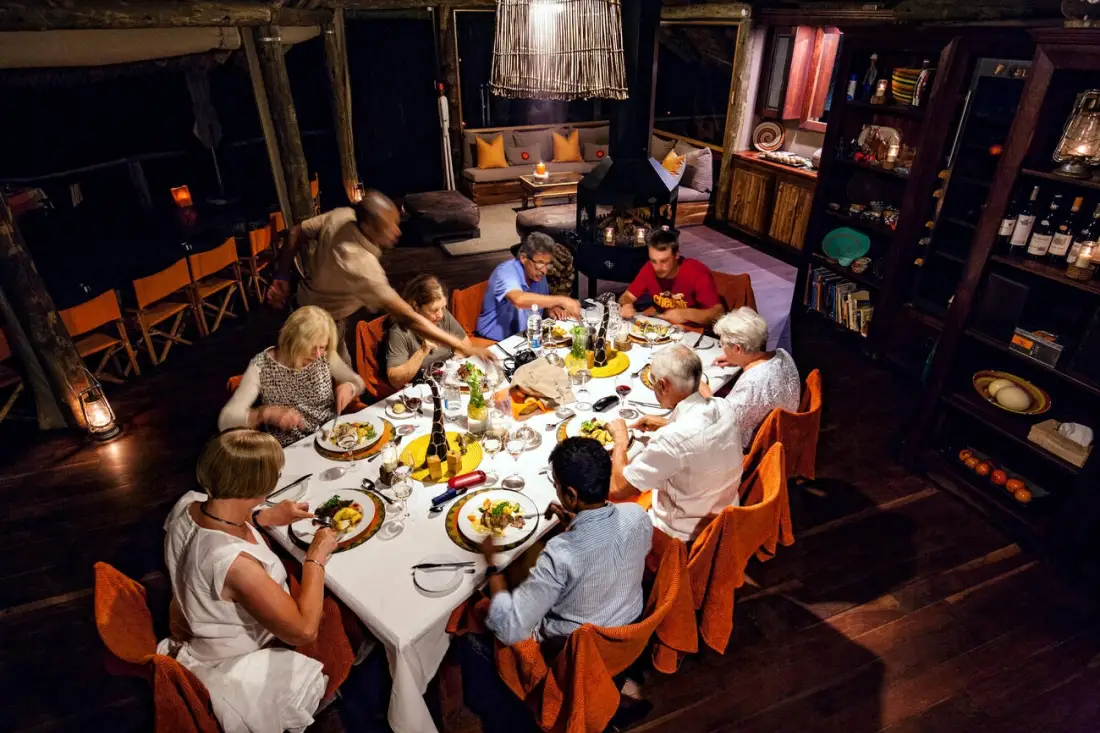
Every Sunday night now, I host a small dinner in my backyard. A long table, string lights glowing, homemade bread and shared wine. There’s Caleb. There’s my team. There are young founders from the Forge Forward Fund.
We don’t talk about payroll or valuations. We talk about purpose, choices, and living honestly.
I don’t need a family to take me back. I have a community that chose to stand with me from the beginning. No conditions.
And I understand now, more clearly than ever: no one needs to be born into a perfect family to live a full life. They only need the courage to create it for themselves.
I didn’t forgive because they changed. I forgave so I could be free.
And for the first time in my life, I’m not moving forward to prove anything.
I’m moving forward because I’m already whole.
Ruby’s story isn’t just about building a successful startup. It’s a powerful reminder that self-worth doesn’t come from family approval or prestigious degrees. Healing doesn’t always come from being forgiven—it comes from choosing not to endure anymore.
Success isn’t about proving something. It’s about living freely, honestly, and without fear. It’s about building the life you deserve, even when the people who should support you can’t see your value.
And sometimes, the greatest victory isn’t changing their minds. It’s realizing you no longer need them to.

Lila Hart is a dedicated Digital Archivist and Research Specialist with a keen eye for preserving and curating meaningful content. At TheArchivists, she specializes in organizing and managing digital archives, ensuring that valuable stories and historical moments are accessible for generations to come.
Lila earned her degree in History and Archival Studies from the University of Edinburgh, where she cultivated her passion for documenting the past and preserving cultural heritage. Her expertise lies in combining traditional archival techniques with modern digital tools, allowing her to create comprehensive and engaging collections that resonate with audiences worldwide.
At TheArchivists, Lila is known for her meticulous attention to detail and her ability to uncover hidden gems within extensive archives. Her work is praised for its depth, authenticity, and contribution to the preservation of knowledge in the digital age.
Driven by a commitment to preserving stories that matter, Lila is passionate about exploring the intersection of history and technology. Her goal is to ensure that every piece of content she handles reflects the richness of human experiences and remains a source of inspiration for years to come.