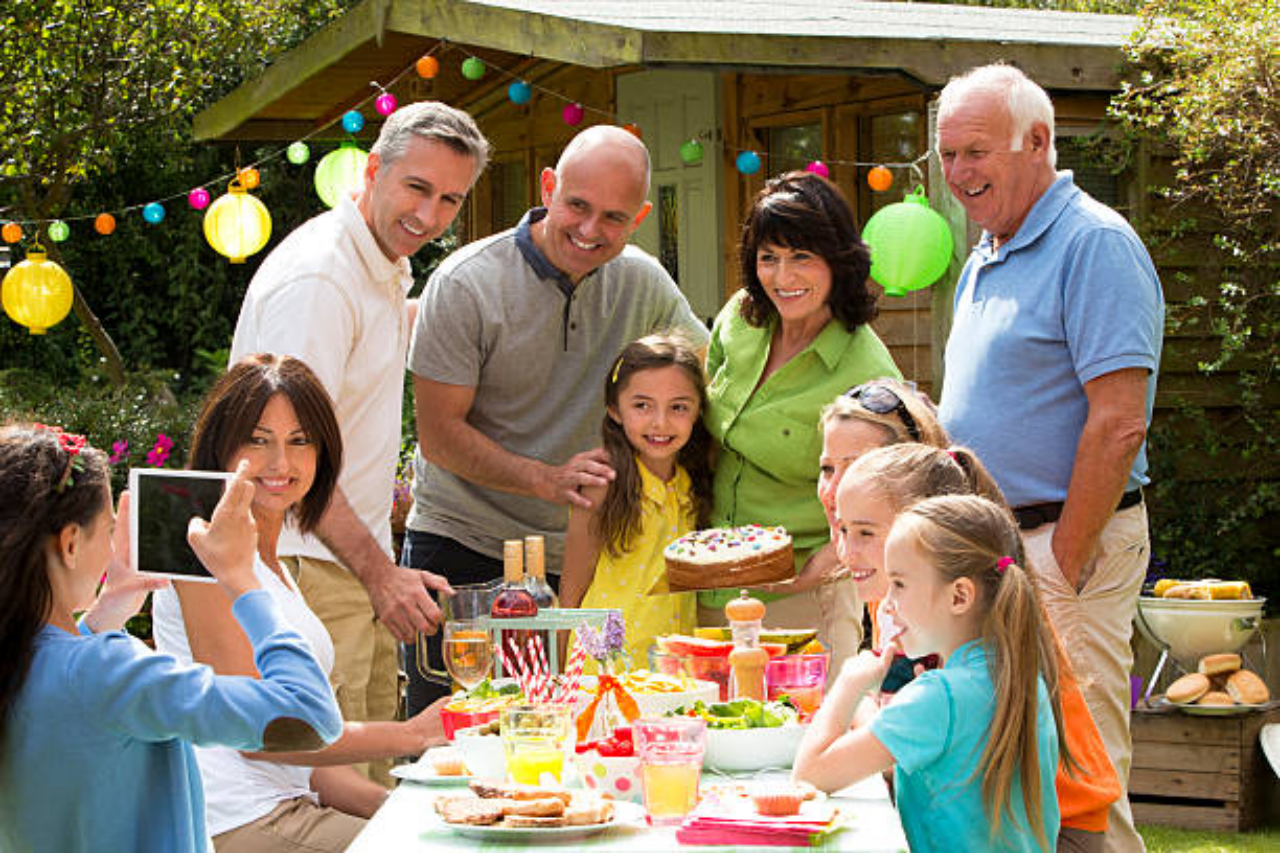
My daughter had just turned thirteen, and I’d spent my entire Friday lunch break driving across town to pick up the galaxy cake she’d circled in the bakery catalog three weeks ago. Dark blue frosting swirled with purple, tiny edible sugar stars scattered across the surface like distant suns, and a silver metallic “13” topper that caught the light just right. When Lena first saw the sample photo, her eyes went wide and she’d whispered, “Mom, that’s perfect,” in the same reverent tone other kids reserve for ponies or PlayStations.
I’d ordered it special. Paid extra for the hand-piped constellations. Made sure they understood that the frosting had to be that exact shade of midnight blue, not navy, not royal—midnight. Because Lena had been obsessed with space since she was seven, had constellation maps taped to her bedroom ceiling, and had announced last month that she wanted to study astrophysics when she grew up. This wasn’t just any birthday cake. This was a thirteen-year-old girl’s careful dream made edible.
We’d hung purple streamers in the living room that morning, Lena standing on the step stool while I held the tape, both of us laughing when one end came loose and draped across her head like a ridiculous crown. She’d made a playlist the night before—some mix of pop songs I didn’t recognize and a few older tracks she’d stolen from my Spotify. The dining table was covered with pizza rolls arranged on aluminum trays, cut fruit in bowls because Lena hated greasy fingers on her drawings, and little cups of ranch dressing she’d insisted on pouring herself because presentation mattered.
Everything was exactly how she wanted it. I’d made sure of that. Because I’m good at making sure things are exactly how they’re supposed to be. That’s what I do—at work, at home, in my family. I’m Mia, thirty-nine, living in Columbus, Ohio, working as a recruiter for a healthcare network, which is a polite way of saying I spend my days reading resumes and convincing overqualified people to accept jobs that pay slightly more than they think they’re worth. I’m a single mom. Lena’s dad and I split when she was six, and he moved two states away to Tennessee with a woman he met at a software conference. He calls most Sundays. Sometimes he remembers birthdays.
My family—my dad, my mom, my older brother Adam—all live within fifteen minutes of me, which is both a blessing and a curse depending on the week. Growing up, I was the responsible one. My mom used to joke, “If we put Mia in charge of the pantry, we’ll never run out of beans,” which was her way of saying I paid attention to details other people ignored. When I started making decent money in my late twenties, that dynamic shifted into something more complicated. Suddenly I was the one people called when they needed a loan, needed resume help, needed someone to cosign something they probably shouldn’t be buying.
“Ask Mia, she knows how to handle bills.” “Mia’s good with paperwork.” “Mia will figure it out.”
I’d spent years figuring it out. And on Lena’s thirteenth birthday, I’d figured out every detail of the party she wanted—the one milestone birthday she’d been talking about since November when she announced that thirteen meant she was officially a teenager and things should feel different.
The cousins arrived around two-thirty. My brother Adam showed up with his wife Jenna and their kids: Oliver, who was nine, and his younger sister Becca, who was six and spent most of her time attached to Jenna’s leg. My cousin Tasha brought her daughter Mara, who was Lena’s age and probably her closest friend in the family. A few girls from Lena’s school came—quieter kids who drew manga in notebooks during lunch and talked about anime I’d never heard of. My parents arrived last, my dad carrying a card with twenty dollars inside because that’s what he always did for birthdays, my mom holding a gift bag stuffed with tissue paper.
The living room filled with noise and motion. Kids laughing, music playing, someone asking where the bathroom was. I moved through it all making sure everyone had something to drink, making sure no one was standing awkwardly alone, making sure Lena felt seen and celebrated.
Oliver was front and center at the table, already vibrating with that restless energy he gets when he knows adults will clean up after him. He’d knocked over a cup of fruit punch twenty minutes earlier and Jenna had just wiped it up without saying anything to him. He’d grabbed three pizza rolls off someone else’s plate and stuffed them in his mouth whole. Adam had given him a vague, “Oliver, manners,” but that was it.
I lit the candles—thirteen of them, thin and silver, arranged in a circle around the edge of the galaxy. Lena stood at the head of the table, tucking a loose strand of dark hair behind her ear, her cheeks flushed pink all the way up to her eyes. She was wearing the sweater I’d bought her last month, the one with stars embroidered on the sleeves, and she looked so much older than twelve that it made my chest ache.
Everyone started to sing. Off-key, enthusiastic, the way families sing when they’re all slightly embarrassed but doing it anyway.
Lena took a breath, her face lit by the glow of thirteen candles.
She leaned forward to blow them out.
Oliver reached across the table and slammed his hand into the middle of the cake.
Full palm. Full force. Like he was trying to break through to the other side.
Frosting shot up and out in dark blue globs. The silver topper tilted, slid sideways, and fell onto the tablecloth. The carefully piped constellations collapsed under his hand, leaving a crater where the center used to be. His fingers were buried knuckle-deep in what was supposed to be the Milky Way.
“Boring!” he yelled, loud and delighted, like he was the host of some chaotic television show and this was the punchline everyone had been waiting for.
A few guests actually chuckled. Nervous laughter, the kind people make when they’re not sure if something is supposed to be funny but don’t want to seem uptight.
My dad—Grandpa to the kids—let out a little snort laugh and shook his head in that indulgent way he’s perfected over the years. Boys will be boys. That’s what the laugh meant. Kids do silly things. Lighten up.
I looked at Lena.
Her mouth had gone flat. Not sad, exactly. Not angry in the way you’d expect from a teenager. Just… empty. Like someone had reached inside and turned off a light.
She didn’t cry. She didn’t speak. She just stared at the ruined cake like she was trying to will time to rewind, to go back thirty seconds to when the candles were still lit and her birthday was still hers.
My throat got tight the way it does right before I say something I can’t unsay. My hands started to shake. I put the lighter down on the counter very carefully, concentrating on the small task of setting it down without dropping it, because if I focused on that I wouldn’t focus on the rage building in my chest.
I looked around the room.
Oliver still had frosting smeared across his shirt. He was wiping his hands on the tablecloth, laughing, looking around for approval. No one had told him to stop. No one had told him to go wash up. Adam was looking at his phone. Jenna was adjusting Becca’s ponytail. My mom was fussing with the gift bag she’d brought.
“Party’s over,” I said.
My voice came out calm. Not loud. Not shrill. Just flat and final.
“Please leave.”
The room went completely still. Like someone had hit pause on a movie.
My brother’s eyebrows shot up. “Mia, come on—”
“Please leave,” I repeated.
A few of Lena’s school friends glanced at each other, already reaching for their jackets with the survival instinct of kids who know when adults are about to explode. Tasha, who’s always been the most emotionally intelligent person in our family, squeezed my arm gently and started quietly helping the younger kids find their shoes without making it a whole production.
Oliver was still wiping frosting on the tablecloth, oblivious.
“Adam,” I said, looking directly at my brother, “get him to the car.”
My dad was still half-smirking, like this was all some overblown reaction he couldn’t quite take seriously. “Mia, don’t be dramatic,” he said, his tone hovering somewhere between amusement and condescension. “It’s just cake. We’ll get another one.”
I walked to the front door and held it open. I didn’t trust myself to say anything else. If I opened my mouth, I’d start yelling, and I didn’t want Lena to remember her thirteenth birthday as the day I screamed at Grandpa.
Chairs scraped against the floor. Coats rustled. Someone muttered an awkward “Happy birthday, Lena” on their way out. Lena stood very small in the corner of the room, arms wrapped around herself.
When the last person stepped onto the porch—my mother, who squeezed my hand and whispered, “Call me later,” with worried eyes—I closed the door and turned the lock.
The house went quiet except for the steady tick of the kitchen clock.
I took two deep breaths in the entryway, hands pressed flat against the door, trying to calm the shaking that had spread from my hands to my whole body.
I should have known. I should have seen this coming. Oliver had been escalating for months—knocking things over, interrupting conversations, grabbing things that didn’t belong to him—and every time, Adam and Jenna made excuses. He’s energetic. He’s spirited. He’s just being a boy.
And every time, I’d bitten my tongue because that’s what I did. I kept the peace. I smoothed things over. I didn’t make waves.
But not today.
Tasha had stayed behind just long enough to hug Lena and murmur something kind, then slipped out with Mara, giving me a look that said, I understand, and I’m proud of you.
I wiped my hands on a dish towel and walked to the sink, staring out the window at the dark yard. The sun was setting early this time of year, casting long shadows across the grass.
My laptop sat open on the dining table under a tangle of purple streamers.
I already knew what I was going to do.
But first, I turned to Lena. She was still standing in the corner, looking at the destroyed cake like it was a crime scene.
“I’m so sorry, sweetheart,” I said quietly.
She looked up at me, eyes red but dry. “Why did he do that?”
“I don’t know. But it wasn’t okay.”
“Grandpa laughed.”
“I know.”
She nodded slowly, processing. “Can we still eat some of it? Like, the edges that aren’t smooshed?”
My heart broke a little. Even now, she was trying to salvage something. “Yeah. We can definitely eat the edges.”
We cut away the destroyed center and salvaged what we could, putting slices on paper plates. We sat on the couch and ate galaxy cake with our hands, frosting smeared on our fingers, the house quiet around us.
“This was still the best birthday,” Lena said after a while, and I knew she was lying to make me feel better, which made it somehow worse.
After she went to bed, I opened my laptop.
The emails started within an hour of the party ending. My mom: “Mia, I think you overreacted. Oliver is just a child.” Adam: “Seriously? You kicked everyone out over a cake? Lena will forget about this in a week.” Jenna: “I’m really disappointed in how you handled that. You embarrassed Oliver in front of everyone.”
I read each one twice, feeling the familiar weight of expectation settle on my shoulders. This was the part where I was supposed to apologize. Where I was supposed to smooth everything over, explain that I’d been stressed, that I shouldn’t have made such a big deal out of it.
This was the part where I made it easy for everyone else.
Instead, I started typing.
The first email went to my brother:
Adam, Oliver destroyed Lena’s birthday cake on purpose. Not by accident. On purpose. And instead of correcting him, you looked at your phone. Jenna wiped up his earlier mess without a word. Dad laughed. I will not teach my daughter that her feelings and her celebrations matter less than a nine-year-old boy’s impulse to get attention. I’m not apologizing. If you’d like to discuss this like adults, I’m available. But I will not pretend this was okay.
The second went to my parents:
Mom and Dad, I love you. But I’m setting a boundary. Oliver’s behavior has been escalating for months and no one addresses it. I will not host family events if that behavior is going to be excused or laughed off. Lena deserves better. I deserve better. When you’re ready to have a real conversation about this, I’m here. Until then, I need space.
I hit send on both before I could second-guess myself.
Then I closed the laptop and sat in the dark living room, surrounded by purple streamers and the faint smell of frosting.
The responses came fast.
My mom called twice. I didn’t answer. She left a voicemail: “Mia, honey, I think you’re being too hard on everyone. These things happen. Family is family. Call me back.”
Adam texted: “Wow. You’re really going to blow up the whole family over this? Grow up.”
Jenna sent a long email about how I’d always been judgmental, how I’d never understood how hard parenting was, how Oliver was going through a phase and I’d just traumatized him.
My dad didn’t reach out at all.
Tasha texted: “I’m so proud of you. Boundaries are love. Let me know if you need anything.”
I read Tasha’s message three times, feeling something loosen in my chest.
The days after were strange. Quiet. My mom left another voicemail, this one more conciliatory: “Maybe we can talk about this. I didn’t realize you were so upset.”
I didn’t call back right away. I sat with the silence. I let myself feel the anger and the grief and the relief all at once.
Lena asked, “Are we still going to see Grandma and Grandpa?”
“Eventually,” I said. “But not right now.”
“Because of the cake?”
“Because of a lot of things. The cake was just the last thing.”
She thought about that. “I’m glad you kicked them out.”
“Yeah?”
“Yeah. It made me feel like you were on my team.”
That’s when I cried. Not in front of her—I waited until she was asleep—but I cried hard, alone in the kitchen, because my thirteen-year-old daughter shouldn’t have to wonder if I was on her team. That should have been obvious from day one.
A week later, my mom showed up at the house unannounced. I answered the door, and we stood there looking at each other.
“Can I come in?” she asked.
I hesitated, then stepped aside.
We sat at the kitchen table. She looked tired.
“I’ve been thinking about what you said,” she started. “And I talked to your father. We didn’t handle things well at the party.”
“No, you didn’t.”
“We’ve always just… let things go. Kept the peace. You know how it is.”
“I do know. I’ve been doing the same thing my whole life. But I’m done.”
She nodded slowly. “What do you need from us?”
It was the first time anyone in my family had asked me that question in years.
“I need you to take Lena’s feelings seriously. I need you to hold Oliver accountable when he’s out of line. I need you to stop expecting me to manage everyone’s emotions and fix everything.”
“Okay.”
“Okay?”
“Okay. I can do that. Your father… he’ll take longer. You know how he is.”
“Then he’ll take longer. But I’m not compromising on this.”
She reached across the table and squeezed my hand. “I’m sorry, Mia. I should have said something at the party. I should have backed you up.”
It wasn’t everything I needed to hear, but it was a start.
Adam took longer. He didn’t apologize—not really—but he did send a text three weeks later: “Oliver is seeing a counselor. Jenna and I are working on discipline strategies. Can we talk?”
We met for coffee without the kids. It was awkward at first, both of us circling the real conversation.
Finally, I said, “I need you to understand why I reacted the way I did.”
“It was just a cake, Mia.”
“No. It was Lena’s one birthday wish. It was her feeling safe and celebrated. And when Oliver destroyed that, everyone minimized it. Everyone made excuses. And I realized I’d been making excuses my whole life. For all of you. I’m done.”
He was quiet for a long time. “I didn’t think about it like that.”
“I know.”
“I don’t know if I agree with how you handled it, but… I get why you were pissed.”
It wasn’t a full apology, but it was acknowledgment. That mattered.
“Oliver needs boundaries,” I said. “Real ones. Not suggestions.”
“We’re working on it.”
“Good.”
We didn’t hug when we left, but we didn’t part angry either.
My dad never apologized. Not directly. But a month after the party, he showed up with an envelope containing a check for two hundred dollars and a note: “For Lena’s next birthday. Something special.”
It was his version of I’m sorry, and I decided to accept it.
Three months after the party, we had a small family dinner—just my parents, Lena, and me. Adam and his family weren’t there. We were rebuilding slowly, carefully.
Lena showed my mom her constellation maps. My dad asked about school. We ate pasta and salad and things felt almost normal.
As they were leaving, my mom pulled me aside. “I’ve been thinking about what you said. About managing everyone’s emotions.”
“Yeah?”
“I did that to you. Your whole childhood. I made you the responsible one because it was easier for me.”
“Mom—”
“No, let me finish. I’m sorry. You deserved to just be a kid. And Lena deserves to just be a kid. I’m working on it.”
I hugged her then, really hugged her, and felt something shift.
Lena turned fourteen in a quiet celebration—just the two of us, Tasha and Mara, and two friends from school. We got cupcakes from a local bakery. No one ruined anything. She blew out her candles and smiled, really smiled, and afterward she said, “This was perfect.”
And it was.
Not because it was elaborate or expensive or Instagram-perfect. But because it was safe. Because she knew I would protect her joy. Because she knew her feelings mattered.
I’m still the responsible one in my family. I still help with resumes and give advice and show up when people need me.
But I’m not the one who fixes everything anymore. I’m not the one who swallows my anger to keep the peace.
I’m the one who sets boundaries. Who says no. Who teaches my daughter that her feelings matter more than everyone else’s comfort.
The galaxy cake is a story we tell now—not a sad one, but a turning point. The day Mom kicked everyone out. The day things changed.
Lena doesn’t remember the ruined frosting as much as she remembers that I chose her. That when it mattered, I was on her team.
And honestly? That’s the only birthday gift that ever really mattered.

Adrian Hawthorne is a celebrated author and dedicated archivist who finds inspiration in the hidden stories of the past. Educated at Oxford, he now works at the National Archives, where preserving history fuels his evocative writing. Balancing archival precision with creative storytelling, Adrian founded the Hawthorne Institute of Literary Arts to mentor emerging writers and honor the timeless art of narrative.