The Billion-Dollar Birthday Party
Part 1: The Ghostwriter
The icing on the chocolate cake was thick and uneven, a testament to my amateur baking skills and my complete lack of patience for perfection. I wiped a smudge of fudge from my cheek with the back of my hand, adjusting the “World’s Okayest Mom” apron that hung loosely over my gray sweatpants.
To the world, or at least to the neighbors who saw me dragging the recycling bin to the curb every Tuesday, I was Sarah Reynolds: freelance writer, single mom, and connoisseur of boxed wine. My house was a modest, single-story bungalow with a porch that needed painting and a lawn that was more clover than grass. The shutters were faded blue, the mailbox tilted slightly to the left, and the garden gnome by the front steps had lost an ear to last winter’s snowstorm.
It was comfortable. It was quiet. And most importantly, it was mine.
“Mom! Is he here yet?”
Leo, my ten-year-old son, bounded into the kitchen. His face was already smeared with a pre-emptive taste of frosting, chocolate evidence smudged across his chin like a suspect at a crime scene. He was vibrating with the specific frequency of birthday adrenaline—that particular energy that makes ten-year-olds capable of running through walls.
“Any minute, bug,” I said, smoothing his hair down where it stuck up in three different directions. “Do me a favor? Try not to wipe your hands on the sofa this time.”
“That was one time!” he protested, grinning.
“It was three times,” I corrected, kissing the top of his head. “And the cleaning bill was not cheap.”
The doorbell rang, cutting through our banter like a knife through butter.
Leo gasped, his eyes going wide with excitement and something else—nervousness. He always got nervous before seeing his father. I hated that. I hated that my son had to mentally prepare himself for his own dad’s attention.
He sprinted toward the door, his sneakers squeaking on the hardwood floor I’d spent last weekend refinishing myself, watching YouTube tutorials at midnight.
I took a deep breath. I mentally armor-plated my emotions. I smoothed my apron one more time, checked my ponytail in the reflection of the microwave, and prepared myself for the performance.
Mark was here.
I walked to the door just as Leo threw it open, nearly taking it off its hinges in his enthusiasm.
“Daddy!”
Mark stood on the porch, looking like he had stepped out of a GQ spread titled “Men Who Take Themselves Too Seriously.” His suit was a charcoal three-piece, tailored to within an inch of its life, probably costing more than most people’s monthly rent. His shoes were polished to a mirror shine—I could literally see Leo’s excited face reflected in them. On his wrist was a Rolex Submariner that cost more than my car. I knew because he’d sent me a photo of it when he bought it, with the caption: Finally made it.
Hanging onto his arm like an expensive accessory was Chloe.
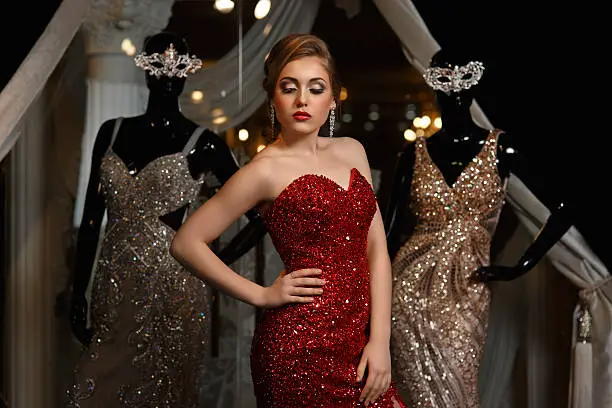
She was younger—significantly younger than Mark’s forty-two years. I’d guess twenty-eight, maybe thirty if I was being generous. Blonde, of course, because Mark had always had a type, and apparently that type was “looks good in Instagram photos.” She was dressed in a way that screamed “I have money” without whispering “I have taste.” Logos were everywhere—Gucci belt with the interlocking Gs big enough to be seen from space, Prada bag swinging from her elbow, Chanel sunglasses perched atop her perfectly blown-out hair despite the fact that the sun was already setting.
Her dress was white and tight, the kind of outfit you wear when you want everyone to look at you and also when you have no intention of sitting on anything that might wrinkle.
“Hey, kiddo,” Mark said, patting Leo on the head without actually hugging him, careful not to wrinkle his jacket or get chocolate frosting on his custom Italian fabric. He checked his watch—of course he checked his watch. “Happy double digits. Big milestone.”
“Thanks, Dad!” Leo beamed, trying to grab his hand.
Mark smoothly side-stepped, adjusting his cufflinks. “Let’s keep the hands clean, champ. Daddy’s got an event later.”
The light in Leo’s eyes dimmed just a fraction. Just enough that only a mother would notice.
“Hi, Mark,” I said, leaning against the doorframe with practiced casualness. “Chloe. You found the place okay?”
It was a small dig. They’d been here exactly twice before—once for the custody agreement signing, once to drop Leo off three hours late from a weekend visit. Mark had never bothered to remember the address.
Chloe wrinkled her nose as she stepped inside, her eyes scanning the living room with the kind of assessment people do when they’re mentally calculating how much your entire life costs. She took in the scuffed coffee table I’d bought at a yard sale, the pile of clean laundry on the armchair waiting to be folded, the bookshelf made of cinder blocks and wood planks, and the general lived-in chaos of a home occupied by a ten-year-old boy and his overworked mother.
Her expression said everything. Pity mixed with superiority, with just a dash of smugness.
“It wasn’t hard,” Chloe said, her voice thin and airy, like she was sighing each word. “Though the GPS kept trying to take us to the service road behind the shopping center. It’s… cozy, Sarah. Really. Very… rustic.”
Rustic. That was a new one.
“It’s home,” I said simply.
We walked through to the backyard, where I’d strung up some lights and set out folding chairs and a cooler full of drinks. A few of my friends were already gathered, talking and laughing. To Mark, I knew exactly what they looked like.
They looked like losers.
There was Ben, wearing a faded Metallica t-shirt with a hole near the collar and cargo shorts that had seen better days, nursing a beer from a can. His beard was scruffy, his hair was too long, and he wore flip-flops to a birthday party like some kind of beach bum who’d wandered into the wrong zip code.
There was Maya, in yoga pants and a messy bun, laughing loudly near the cooler, her voice carrying across the yard with unrestrained joy. She wore no makeup, her t-shirt had a stain on it that looked suspiciously like coffee, and she was eating chips directly from the bag.
There was James, my neighbor, in his wheelchair, wearing a Hawaiian shirt so bright it could probably be seen from orbit, telling an animated story with his hands.
There was Patricia, my college roommate, with her two kids running around the yard screaming about dinosaurs, her sensible mom-jeans and oversized sweater completing the picture of suburban mediocrity.
To Mark, they were just part of my “struggling artist” circle. The kind of people who talk about their passions and their dreams while working jobs that barely pay rent. The kind of people he’d left behind on his climb to the top.
Mark didn’t know that Ben had just sold his cybersecurity startup for $400 million and was currently on the cover of Forbes’ “30 Under 30” issue—well, he was thirty-two, but they’d made an exception. He didn’t know that Maya was a Pulitzer Prize-winning journalist who was currently writing the authorized biography of a sitting President and had been offered her own show on CNN. He didn’t know that James was a bestselling novelist writing under a pen name, with three books optioned by Netflix. He didn’t know that Patricia was a renowned trauma surgeon who volunteered at children’s hospitals on her days off.
To Mark, they were just extras in my small, sad life.
“We can’t stay long,” Mark announced, not bothering to greet anyone else or acknowledge the table full of gifts or the clearly homemade decorations. “We have the Metropolitan Museum Gala tonight. Very exclusive. $25,000 a plate. The mayor will be there. Some actors. Very A-list crowd.”
He said it loudly enough that everyone could hear. He wanted them to know. He wanted them to feel the gap between his world and theirs.
“Sounds fancy,” I said, cutting a slice of cake with my dollar-store knife.
“It is,” Chloe chimed in, flicking a speck of dust from her sleeve with a manicured nail. “The dress code is black-tie. I’m wearing Versace. Custom. They flew someone in from Milan to do the final fitting.”
She paused, waiting for someone to be impressed.
No one was.
She continued anyway, her voice taking on that particularly grating quality of someone who mistakes bragging for conversation.
“So, Sarah… still doing the little… blogging thing? Mark told me you write for some online magazines. Lifestyle stuff?” She said it the way someone might say “sewer maintenance” or “roadkill removal.” “He mentioned you make, what, maybe thirty thousand a year? Before taxes? That must be so stressful, raising Leo on such a… tight budget. It’s brave, really. I don’t know how you do it.”
I smiled. I thought about the contract I had signed that morning while drinking coffee in my pajamas at 6 AM. The acquisition of a European media house for $15 million. Pocket change, really, in the grand scheme of my portfolio. I thought about the text message from my CFO, Richard, confirming the wire transfer had gone through.
I thought about the fact that my “tight budget” could buy Mark’s apartment building twelve times over.
“It pays the bills, Chloe,” I said, handing Leo a plate with an extra-large slice. “Barely. But we get by. Leo doesn’t mind hand-me-down clothes, do you, bug?”
Leo, bless him, was too focused on his cake to respond.
Mark laughed, a sharp, dismissive bark that cut through the pleasant hum of conversation. Several of my friends glanced over, their expressions carefully neutral.
“Well, if you ever need financial advice, let me know,” Mark said, puffing up like a peacock. “I just closed a deal that netted my firm $3 million in fees. The market is bullish right now, but you need capital to play. Not that you’d understand high finance. No offense. It’s just a different world.”
“I’m sure I wouldn’t understand,” I said, taking a sip of my boxed wine from a red solo cup. “It sounds very complicated.”
“It is,” Mark said seriously, missing the sarcasm entirely. “It takes years of experience. An MBA from a top school. Connections. You have to know people. You have to be someone.”
Ben coughed into his beer, trying not to laugh.
Mark pulled out a small, flat envelope from his jacket pocket and handed it to Leo with the air of someone bestowing a great gift.
“Here, son. It’s a savings bond. Two hundred dollars. It matures when you’re thirty. Maybe one day, if you work hard like your dad, you won’t have to live in a place like this.” He gestured vaguely at my house, at my yard, at my entire life with a wave of his hand that somehow managed to be both dismissive and pitying.
Leo took the envelope, his small fingers closing around it.
“Thanks, Dad,” he said quietly.
I glanced at the gift table set up near the fence. At the bottom of the stack sat a box wrapped in heavy, gold foil. It wasn’t from the other guests. It was wrapped differently—professionally. The bow was real silk, the paper embossed with subtle patterns that caught the light.
It wasn’t for Leo.
It was a parting gift I had prepared for Mark and Chloe.
“Thank you, Mark,” I said, my voice steady. “That’s very… practical. Very thoughtful.”
“We try,” Chloe sniffed, examining her nails. “We believe in teaching financial responsibility early. It’s important.”
Part 2: The Socialite’s Sting
The party moved along with the awkward, halting rhythm of an engine misfiring. Mark checked his phone every three minutes, his face illuminated by the blue glow, his thumbs scrolling through what I assumed were work emails or stock prices or whatever it is that men like Mark obsess over. Chloe refused to sit down on the lawn chairs, hovering near the fence as if afraid the mediocrity of my backyard might be contagious, might somehow stain her designer dress or infect her with the disease of ordinariness.
She kept checking her own phone, taking selfies against the backdrop of my garden, angling herself so the house wasn’t visible. I watched her delete and retake the same photo seven times, adjusting her smile, her hair, her pose.
Leo, bless his heart, just wanted his dad’s attention.
He’d been talking nonstop about this party for weeks. “Dad’s coming, right? He promised. He said he wouldn’t miss it.” Every night before bed, he’d ask me to confirm. Every morning, he’d count down the days.
And now that Mark was here, he was desperate to make the most of it.
“Daddy! Look at the Lego set Uncle Ben gave me!” Leo shouted, running across the grass with the enthusiasm only a ten-year-old can muster. His hands were blue from the frosting on his cupcake, sticky with sugar and joy. “It’s the Millennium Falcon! The big one! Seven thousand pieces! Want to help me build it later? We could do it together! You could come over next weekend and—”
He reached out, his small, sticky, excited hand aiming for Mark’s pristine charcoal sleeve, wanting to pull his father toward the table where the massive box sat waiting.
Chloe moved faster than I thought possible in four-inch stilettos.
She stepped between them like a Secret Service agent intercepting a threat. She didn’t gently guide his hand away. She didn’t redirect him with words.
She swatted it.
Smack.
The sound of her palm hitting Leo’s small hand echoed across the yard like a gunshot.
It wasn’t hard enough to bruise. It wasn’t hard enough to leave a mark. But it was hard enough to sting. Hard enough to shock. Hard enough to stop every conversation in the backyard.
The sound was sharp. It was the sound of rejection. It was the sound of a line being crossed.
“Don’t touch him!” Chloe snapped, her voice losing all its airy pretense, her face contorting into something ugly. She recoiled dramatically, brushing imaginary dirt off her own arm like Leo’s touch had contaminated her. “This is a custom Armani suit! Do you know what that means? It’s Italian silk, Leo. We don’t do sticky hands. We don’t do—”
She gestured at him, at his frosting-covered fingers, at his messy hair and his grass-stained knees, with a look of pure disgust.
“—this.”
Leo froze.
His smile evaporated like water on hot pavement. The light went out of his eyes. He looked at his hand—the hand that had just been slapped—then at his father, confusion and hurt welling up in his eyes, threatening to spill over.
“Mark?” Leo whispered, his voice so small it broke my heart.
This was the moment. This was when a father steps in. This was when a father says, “Hey, that’s not okay. Don’t touch my son like that.” This was when a father chooses his child over his girlfriend, over his suit, over his image.
Mark didn’t step forward.
He didn’t reprimand her. He didn’t defend his son. He didn’t even look uncomfortable.
He looked down at his jacket, checking for stains, brushing off the sleeve that Leo hadn’t even touched.
“She’s right, Leo,” Mark said, his voice cool and detached, like he was explaining a basic math problem to a slow student. “Be careful. You need to be more aware. Your father works in high society now. We have an image to maintain. We can’t show up to the Met looking like we’ve been at a…” He glanced around with barely concealed disdain. “…picnic.”
The word “picnic” sounded like an insult in his mouth.
“That’s for people like you,” Chloe sneered, looking directly at me now, her eyes narrowed. “And your mother. People who don’t understand the value of things. People who shop at Target and think boxed wine is acceptable. People who—”
The air in the backyard shifted instantly.
The chatter died. The laughter stopped. Even the birds seemed to stop singing. The string lights swayed slightly in the breeze, casting moving shadows across the suddenly silent gathering.
Ben, the billionaire in the Metallica shirt, slowly lowered his beer, his expression hardening. Maya stopped laughing, her face going very still. James set down his plate. Patricia’s hand tightened on her wine glass.
They looked at me.
They knew who I really was. They knew what I was capable of. They had seen me negotiate billion-dollar deals. They had watched me dismantle corporate boards. They had witnessed me build an empire from nothing but intelligence and relentless drive.
They were waiting for the signal.
I felt a coldness spread through my chest, moving outward like ice forming on a winter lake. It wasn’t anger. Anger is hot and messy and uncontrolled. Anger makes you sloppy.
This was clarity.
This was the moment when everything became very, very simple.
For years, I had played nice. I had kept my success hidden to avoid alimony battles that would have dragged on for years. I had kept it hidden to keep Leo grounded, to prevent him from growing up entitled and spoiled. I had kept it hidden to avoid the very toxicity that was currently standing in my garden, touching my son with contempt.
But they had crossed the line.
You can insult my house. You can insult my clothes. You can insult my wine and my lawn and my car and my life choices.
But you do not touch my son.
I walked over to Leo with measured steps. I pulled a wet wipe from my pocket—I always carried wet wipes; I was a mom, after all—and gently cleaned his hands, wiping away the blue frosting with slow, deliberate care.
“It’s okay, baby,” I whispered, making sure only he could hear. “Go play with Uncle Ben. He wants to show you something cool.”
Leo ran off, sniffing back tears, his shoulders hunched in a way that made me want to burn the whole world down.
Ben intercepted him, scooping him up easily despite being shorter than average. “Hey, little man. Want to see a magic trick? I learned it from a guy in Tokyo who does street magic for billionaires.”
I stood up slowly. I smoothed my apron. I took a breath.
When I turned to face Mark and Chloe, I wasn’t wearing my “tired mom” face anymore.
I was wearing the face I wore in boardrooms. The face I wore when I was about to destroy someone’s quarterly earnings. The face that had made grown men cry during negotiations.
“You’re right, Chloe,” I said, my voice dangerously calm, each word precisely enunciated. “Appearance is everything. Image matters. Quality speaks for itself. Which is why I saved the very best gift for last.”
Part 3: The Bait
Mark looked confused, his forehead wrinkling. “Gift? What gift? For who?”
“For Chloe,” I said, walking toward the gift table with purpose. “Since she’s joined high society now, since she understands the value of things, I thought she’d appreciate something truly exclusive. Something rare. Something that money usually can’t buy.”
I picked up the heavy, gold-wrapped box. The weight of it felt satisfying in my hands. I had personally wrapped it three days ago, taking my time, making sure every corner was perfect, every fold crisp.
I held it out toward Chloe.
Her eyes lit up instantly. The greed was instantaneous and ugly, spreading across her face like a stain. She assumed, in her shallow calculus of the world, that I was trying to buy her favor. Maybe it was a family heirloom I was surrendering in defeat. Maybe it was jewelry—something valuable that I was offering as tribute to the new queen.
She took the box eagerly. It was heavy, substantial. She could feel that it was expensive.
“Oh,” she said, her tone softening slightly, a smile creeping onto her glossy lips. “Well. That’s… unexpected. Very unexpected.”
She didn’t open it immediately. She held it, wanting to savor the moment, wanting to be the center of attention. She wanted everyone to watch. She wanted to make a show of accepting my “surrender.”
“You know,” she said loudly, addressing the silent group of my friends like she was giving a TED talk. “This is very sweet, Sarah. Very kind. I’m sure it’s modest, given your… situation. Given your budget. But I appreciate the gesture. I really do. I’m not a snob. I can appreciate thoughtfulness, even from people who are… struggling.”
She paused, letting the word hang there.
“Actually,” she continued, warming to her audience, “I should tell you all some exciting news. Since we’re celebrating and all. I’m actually in talks with Lumina Magazine right now.”
My ears perked up. Lumina. The crown jewel of the Apex Media empire.
My empire.
The magazine that dictated trends, launched careers, and destroyed reputations. The magazine that had been my first acquisition fifteen years ago, when I was twenty-three and hungry and brilliant and angry at the world.
“Really?” I asked, taking a sip of my boxed wine, playing my role perfectly. “Lumina? That’s impressive. That’s the biggest lifestyle publication in the world. The circulation is, what, five million?”
“Six million,” Chloe corrected smugly. “Global distribution. It’s very exclusive. Very hard to get into. But they want to feature me as the ‘New Face of Philanthropy.’ My charity work is getting a lot of buzz right now. I raised seventeen thousand dollars last year for… various causes.”
Seventeen thousand dollars. I had donated more than that to the animal shelter last month without even thinking about it.
“The Editor-in-Chief and I are basically best friends,” Chloe continued, her voice taking on that name-dropping quality that insecure people use when they’re lying. “We text all the time. We have lunch. She absolutely loves my aesthetic. She says I’m exactly what the magazine needs. Fresh energy. New perspective.”
I raised an eyebrow, taking another sip of wine to hide my smile. “Is that so? The Editor of Lumina? That’s impressive, Chloe. Really impressive. What’s her name?”
Chloe hesitated for a fraction of a second—just long enough that I knew she was scrambling.
“Oh, she keeps a very low profile,” she said quickly. “Very private person. You wouldn’t know her. She doesn’t do public appearances. She only deals with the elite. But trust me, we’re very close. She even sent me an advance preview of next month’s cover. Confidential, of course.”
“Of course,” I murmured.
“I see,” I said, glancing at Maya, who was biting her lip so hard to keep from laughing that I thought she might draw blood. “And Mark, you must be very proud. You’re investing in Chloe’s public image? Supporting this venture?”
“Absolutely,” Mark beamed, putting an arm around Chloe’s waist and pulling her close like she was a trophy he’d won. “We’re going to be a power couple. Once Chloe hits that cover next month, we’ll be untouchable. Doors will open that you can’t even imagine, Sarah. Doors that have been closed to you your whole life.”
He said it with such satisfaction, such certainty that he was finally, definitively better than me.
“Next month?” I asked, my voice carefully neutral. “You’re on the cover next month? That’s very specific. They already confirmed?”
“It’s practically a done deal,” Chloe lied smoothly, her confidence growing with each false word. “My publicist is finalizing the contract as we speak. The shoot is scheduled for next week. They’re flying in a photographer from Paris. It’s going to be iconic.”
The lies were piling up now, one on top of the other, building a tower of deceit that was about to come crashing down.
I looked at my watch—a simple Timex I’d bought at CVS for $29.99.
“Well then,” I said, setting down my wine cup. “You should definitely open the box. I think it will help with your… cover story.”
Part 4: The Editorial
Chloe smirked. She tore off the gold paper with a manicured nail, letting the shredded wrapping fall to the grass like confetti.
Underneath the foil was a sleek, matte-black box. Embossed in silver on the lid was a logo that I knew she would recognize: a stylized mountain peak with clean, modern lines.
Apex Media Group.
Chloe’s breath hitched. She recognized the logo immediately. Everyone in New York recognized that logo. It was on every magazine rack, every billboard, every media acquisition announcement for the past decade.
It was the parent company of Lumina, Vogue, Elle, GQ, and a dozen other publications that shaped culture and dictated taste across the Western world.
“Apex?” she whispered, her voice suddenly small. She looked at Mark with confusion clouding her arrogance. “Mark, this is… this is corporate. This is official. How did she afford this? Did she steal a sample from a newsstand? Is this some kind of joke?”
Mark grabbed the box from her hands, turning it over, examining it for signs of forgery or theft.
“Where did you get this, Sarah?” he demanded.
“Open it,” I commanded softly, my voice carrying across the silent yard.
Chloe lifted the lid with shaking hands.
Inside, nestled in black tissue paper, lay a single magazine. It was pristine, glossy, and smelled of fresh ink—that particular scent of a magazine so new it hadn’t even hit the stands yet.
It was the advance copy of next month’s Lumina. The issue that wasn’t due on newsstands for another two weeks. The issue that only about fifty people in the world currently possessed.
“I don’t understand,” Chloe stammered, picking it up like it might bite her. Her hands were shaking badly now. “How do you have this? This hasn’t been released yet. How did you—”
“Read the Editor’s Letter, Chloe,” I said, each word dropping like a stone into still water. “Page three.”
Chloe’s fingers fumbled as she flipped to the page. Her eyes scanned the text, moving left to right, her lips moving slightly as she read.
From the Desk of the Editor-in-Chief
She read the first paragraph. Then the second. Her face began to pale, the color draining from her cheeks as if someone had pulled a plug.
She read faster, her breathing becoming shallow.
Then she got to the photo at the bottom of the page.
It wasn’t a stock photo. It wasn’t some anonymous corporate headshot. It was a professional portrait, shot by Annie Leibovitz herself at my request. A woman in a white power suit, sitting behind a massive glass desk in a corner office overlooking Manhattan. Floor-to-ceiling windows revealed the skyline behind her—the Empire State Building, the Chrysler Building, Central Park spread out like a green carpet.
The woman’s hair was styled immaculately, pulled back in a sleek bun. Her makeup was flawless, done by the same artist who worked with Anna Wintour. Her gaze was sharp and commanding, the look of someone who owned the room, the building, the entire city block.
But the face was undeniable.
Even without the gray sweatpants and messy ponytail, even without the apron and the frosting-smudged cheek—the face was unmistakably, undeniably mine.
Underneath the photo, in crisp, black serif font, the text read:
Sarah J. Reynolds Founder and CEO, Apex Media Group
Chloe gasped. The sound was strangled, desperate. She dropped the magazine as if it were burning hot, as if it were radioactive. It hit the grass with a slap, pages splaying open.
“You?” she choked out, her voice rising an octave. “You? You own Lumina? You own… you can’t… this is…”
She looked at me, then at the magazine, then back at me, her brain refusing to reconcile the two images.
Mark snatched the magazine from the ground, grass stains already forming on the pristine white pages. He stared at the photo. He stared at me. He looked at my sweatpants, my apron, my modest house with the tilted mailbox, and then back at the woman in white who controlled the cultural narrative of the Western world.
His mouth opened and closed like a fish drowning in air.
He flipped through the pages frantically, looking for… what? Evidence that it was fake? Proof that this was an elaborate prank?
On page ten, there was a highlighted article. The title was set in bold, large letters:
The Billion-Dollar Ghost: How Sarah Reynolds Built an Empire from Her Living Room
The subheading read: The reclusive CEO of Apex Media reveals, for the first time, how she transformed a failed blog into the world’s largest media conglomerate—and why she’s been hiding in plain sight for fifteen years.
Mark’s hands shook as he read the first paragraph. I had written it myself, three months ago, sitting at this very kitchen table while Leo did his homework.
“People ask me why I kept it secret,” begins Sarah Reynolds, the 38-year-old founder of Apex Media Group, as she sips tea in her modest suburban home. “The truth is simple: I wanted to know who would love me when they thought I was worthless.”
“Freelance writing?” Mark whispered, his voice cracking like ice under pressure. He looked up at me, his eyes wide with disbelief and something else—the dawning realization of how badly he’d miscalculated. “You told me you were freelance writing! You said you made thirty thousand a year! You said—”
“I write my own checks, Mark,” I said, stepping forward, shedding the “tired mom” demeanor like a snake shedding skin. I stood taller, shoulders back, chin up. “And the ‘high society’ you’re so desperate to join? I own the printing press that prints the invitations. I own the publications that decide who gets mentioned and who gets forgotten.”
I paused, letting it sink in.
“I am the gatekeep, Mark. I am the door you’ve been trying to get through.”
Chloe looked like she was going to be sick. Her perfectly painted face had gone green around the edges. She had just spent the last ten minutes bragging about being best friends with the Editor-in-Chief…
…to the Editor-in-Chief.
She had just lied about being on the cover…
…to the woman who decided the covers.
She had just sneered at the woman who could, with one phone call, erase her from cultural existence.
“Sarah,” Mark started, sweat beading on his forehead now, his expensive suit suddenly looking too tight. “We… we didn’t know. How could we have known? Why didn’t you say anything? We could have… we could have worked together! We could have been partners! Think about it—my financial expertise, your media empire—we could have—”
“I didn’t tell you,” I replied, my voice cutting through his desperate scrambling, “because I wanted to see if you’d be a good father without a price tag attached. I wanted to see if you respected me when you thought I was nothing. I wanted to see if you loved your son more than you loved appearances.”
I looked at Chloe, who was now crying, black mascara running down her cheeks in rivers.
“You failed,” I said simply. “Both of you.”
I reached into the black box and pulled out a second document. It was a single sheet of cream-colored paper with the Apex letterhead embossed at the top—paper so expensive it practically glowed.
“And Chloe? Regarding your feature in the magazine…”
Part 5: The Blacklist
“What is that?” Chloe whispered, staring at the paper in my hand like it was a venomous snake.
“This,” I said, holding it up so everyone could see, “is an internal memo to my editorial staff. It went out this morning at 9 AM. All departments received it. All publications under the Apex umbrella. Global distribution.”
I read it aloud, my voice clear and carrying across the silent backyard.
“Subject: Global Blacklist Addition
Effective immediately, the individual known as Chloe Marie Vance is placed on the Apex Global Blacklist. She is not to be featured, photographed, quoted, or mentioned in any publication under the Apex Media Group umbrella. This includes but is not limited to: print magazines, digital platforms, social media accounts, event coverage, and party photography.
No gala photos. No society pages. No ‘who wore it best’ segments. No charity event mentions. No Instagram features. No TikTok collaborations.
She is to be rendered culturally invisible.
Any photographer, journalist, or editor who violates this directive will face immediate termination.
This blacklist is permanent and non-negotiable.
Signed, Sarah J. Reynolds Founder and CEO”
The silence that followed was absolute.
Chloe burst into tears. Not delicate, pretty crying. Ugly, heaving sobs that shook her whole body. Her carefully applied makeup ran in black and brown streams down her face. Her nose ran. She gasped for air between wails.
“You can’t do that!” she screamed, her voice breaking. “I have a brand! I have forty thousand Instagram followers! I have sponsorships! I have a collaboration with a jewelry company! Who do you think you are? You can’t just—”
“I’m the woman whose son you slapped,” I said, my voice cold enough to freeze water. “I’m the woman whose home you mocked. I’m the woman you called ‘struggling’ and ‘pitiable.’ But most importantly, I’m the woman who decides what ‘high society’ even means.”
I stepped closer to her, close enough that she had to look up to meet my eyes.
“You wanted to be in high society, Chloe? Well, in my society, we have standards. We have rules. And cruelty to children? That’s not on the guest list.”
Chloe’s sobs grew louder. She turned to Mark, grabbing his arm, her acrylic nails digging into his expensive jacket.
“Mark! Do something! Call someone! You know people! You have connections! Fix this!”
Mark stood frozen, his brain clearly trying to calculate a way out, trying to find an angle, trying to see if there was any play left on the board.
He stepped forward, putting on his ‘investment banker’ smile—the one he used when he was trying to sell a bad deal, the one he’d practiced in the mirror until it looked almost genuine.
“Sarah,” he said, holding out his hands in a placating gesture, his voice smooth like oil on water. “Honey. Sweetheart. Let’s not be rash. Let’s think about this like adults. Think about Leo. Think about his future.”
He took another step closer.
“Having a father with connections, with access to your world—think of what we could do for him. Together. As a team. We could give him everything. The best schools, the best opportunities. I could—”
“Leo has a mother with an empire,” I cut him off, my voice like a blade. “He doesn’t need your connections, Mark. He doesn’t need your ‘access.’ His trust fund earns more interest in an hour than your entire portfolio earns in a year.”
I let that sink in for a moment. I watched the color drain from Mark’s face as he did the math in his head, realizing just how far beneath me he actually was.
“The college fund you thought I was struggling to build? It’s worth eight million dollars. The ‘hand-me-down clothes’ he wears? I buy them at Target because I want him to understand the value of money, not because I can’t afford Gucci.”
I pointed to the garden gate, my arm steady.
“Get out. Take your savings bond with you. Take your girlfriend. Take your pity and your condescension and your Rolex. And if you ever, ever touch my son with anything other than genuine love and respect again, I won’t just blacklist your wife.”
I paused, making sure he was listening.
“I will buy your bank, Mark. I’ll buy the firm you work for, liquidate your department, and make sure every headhunter in the industry knows exactly what kind of father you are.”
Mark opened his mouth to argue, to fight, to assert some kind of dominance. But then he looked around the backyard.
Ben had stood up, his posture shifting from casual to alert. He wasn’t a scruffy guy in a Metallica shirt anymore. He was a man worth $400 million who had built an empire of his own.
Maya had her phone out, her fingers flying across the screen—probably texting her editor at the Washington Post, I realized. A journalist’s instinct to document everything.
James was watching with the calm, analytical gaze of someone who turned human behavior into bestselling novels.
Patricia had moved her children behind her, protective, her doctor’s instinct to shield the innocent kicking in.
Mark realized, with a sickening jolt of recognition and horror, that he was the poorest person in the backyard.
He was outgunned. Outclassed. Outnumbered. And out of options.
He grabbed Chloe’s arm roughly, his fingers digging into her skin.
“We’re leaving,” he said through clenched teeth.
“But my magazine cover!” Chloe wailed as he dragged her toward the gate, her expensive shoes sinking into the grass, leaving divots in the lawn. “My feature! My brand! You have to fix this, Mark! You promised me—”
“It’s over, Chloe!” Mark snapped, his composure finally cracking completely. “It’s all over! Shut up and walk!”
They stumbled toward the side gate, Chloe crying, Mark sweating, both of them desperate to escape the backyard that had become their undoing.
They exited the way they came—past the recycling bins they’d judged, past the tilted mailbox they’d sneered at, their expensive shoes sinking into the mud of the lawn I owned free and clear, on the property whose mortgage I’d paid off in cash fifteen years ago.
As they disappeared around the corner, Chloe’s wailing faded into the distance like a siren driving away.
Part 6: The Real Value
The sun began to set, casting long, golden shadows across the grass. The tension that had filled the backyard like smoke finally dissipated, replaced by the soft sounds of evening—crickets beginning their song, the distant sound of someone’s lawn sprinkler, the rustle of leaves in the breeze.
The party had wound down naturally after the dramatic exit. My friends had stayed for another hour, talking in quiet, supportive voices, making sure I was okay, making sure Leo was okay.
Ben had played Legos with Leo for forty-five minutes, building an entire X-wing fighter and making spaceship sounds that had Leo laughing so hard he nearly choked on his juice.
Maya had given me a long hug and whispered, “I’m writing about this. With your permission. The world needs to know this story.”
James had simply nodded at me with respect and said, “I couldn’t have written it better myself.”
Patricia had hugged Leo and told him, “Your mom is the coolest person I know. Don’t ever forget that.”
Now it was just the two of us—Leo and me—sitting on the porch swing, eating the leftover cake straight from the platter with two forks because washing dishes could wait.
The black Apex Media box still sat abandoned on the lawn, forgotten in Chloe’s panic. The magazine lay open, fluttering in the breeze, my photograph staring up at the darkening sky.
“Mom?” Leo asked, his voice small in the gathering dusk. He was holding the Millennium Falcon box, the half-assembled pieces scattered around us on the porch. “Is Dad mad because you’re the boss?”
I put my arm around him and pulled him close, feeling his small, warm body nestle against mine. He smelled of chocolate and grass stains and childhood—that particular scent that you can never quite capture or preserve, that exists only in the moment and in memory.
“Dad isn’t mad because I’m the boss, Leo,” I said softly, choosing my words carefully. “Dad is mad because he forgot what’s important. He likes shiny things. He thinks the wrapping paper matters more than the gift inside. He thinks being seen is more important than being real.”
I looked at the black box abandoned on the lawn, at the magazine with my face on it, at the evidence of the secret I’d kept for so long.
“But we’re different, aren’t we?” I asked.
“We like real things,” Leo said, leaning his head on my shoulder, his hair tickling my chin.
“Exactly,” I said, kissing the top of his head. “We like real things. Real friends. Real laughter. Real cake made by real moms who can’t frost evenly.”
Leo giggled. “The cake is lumpy.”
“The cake is lumpy,” I agreed. “But it’s made with love, and that’s the only ingredient that actually matters.”
We sat in comfortable silence for a while, the swing creaking gently beneath us, the string lights beginning to twinkle as the sun dropped below the horizon.
My phone buzzed in my pocket. I pulled it out reluctantly, expecting an email from my CFO or a notification from one of my editors.
Instead, it was a text from Mark.
Sarah, look. I’m sorry. Things got heated. Can we grab coffee next week? We really should discuss your portfolio. I can help you manage that level of wealth. It’s complicated. You need professional advice. Let me help you. For Leo’s sake.
I stared at the screen, rereading the words three times to make sure I wasn’t misinterpreting them.
Even now, after everything—after being exposed, after being outclassed, after watching his girlfriend get blacklisted—he still thought I needed him.
He still thought he could maneuver his way back in.
He still thought he was the expert and I was the amateur who’d stumbled into money through luck.
The audacity was almost impressive.
I didn’t reply.
I tapped the info icon. I scrolled down to the bottom of the screen.
Block Caller.
Confirm.
I put the phone face down on the porch table beside the swing.
“High society is boring anyway,” Leo mumbled, yawning, his eyes getting heavy. “They don’t eat cake with their hands.”
I laughed, wiping a smudge of frosting from his nose with my thumb. “No, baby. They certainly don’t.”
I looked out at my modest yard—the clover-grass lawn, the crooked garden gnome, the fence that needed staining. I thought about the office waiting for me in Manhattan on Monday morning. The corner office with floor-to-ceiling windows. The glass desk where billion-dollar decisions were made. The power I wielded with a single phone call.
And I thought about which world felt more real.
This one. This porch. This moment.
I opened my laptop, which had been sitting on the porch table all evening, waiting patiently. The screen glowed to life, showing my half-finished editorial for next month’s issue.
I highlighted the title and hit delete.
I typed a new one:
The Ex-Factor: Why Quiet Luxury is the Loudest Revenge
The subtitle practically wrote itself:
How living authentically became my greatest power move—and why the best wealth is the kind nobody knows you have.
I hit ‘Send’ to my publisher.
Who was, of course, myself.
The world would know the story soon enough. The article would run. The interviews would be scheduled. The speaking engagements would flood in. My carefully maintained anonymity was over.
But I’d chosen the moment to step into the light. I’d done it on my terms. I’d done it to protect my son.
And that made all the difference.
For now, the only thing that mattered was the little boy falling asleep on my shoulder, his breathing evening out into the soft rhythm of childhood sleep. The only thing that mattered was the quiet, unshakeable truth that the best revenge isn’t living well.
It’s living free.
Free from the need to impress.
Free from the hunger for approval.
Free from the prison of appearances.
I carried Leo inside, his arms wrapped around my neck, his body heavy with sleep. I tucked him into bed, pulled the covers up to his chin, and kissed his forehead.
“I love you, bug,” I whispered.
“Love you too, Mom,” he mumbled, already half-asleep. “Best birthday ever.”
I walked back outside to clean up, gathering paper plates and empty cups. The magazine still lay on the grass, my face staring up at the stars that were beginning to appear in the darkening sky.
I picked it up, brushing off the grass stains, and took it inside.
Tomorrow, the world would change. Tomorrow, the calls would start, the interviews would be requested, the speaking fees would be negotiated.
Tomorrow, I would step out of the shadows and into the light as Sarah J. Reynolds, CEO.
But tonight, I was just Mom.
And that was the greatest title I’d ever earned.
THE END
A story about knowing your worth, choosing authenticity over appearance, and understanding that the people who love you when they think you’re worthless are the only ones worth keeping—and sometimes, the sweetest revenge is simply letting someone discover how badly they underestimated you.

Lila Hart is a dedicated Digital Archivist and Research Specialist with a keen eye for preserving and curating meaningful content. At TheArchivists, she specializes in organizing and managing digital archives, ensuring that valuable stories and historical moments are accessible for generations to come.
Lila earned her degree in History and Archival Studies from the University of Edinburgh, where she cultivated her passion for documenting the past and preserving cultural heritage. Her expertise lies in combining traditional archival techniques with modern digital tools, allowing her to create comprehensive and engaging collections that resonate with audiences worldwide.
At TheArchivists, Lila is known for her meticulous attention to detail and her ability to uncover hidden gems within extensive archives. Her work is praised for its depth, authenticity, and contribution to the preservation of knowledge in the digital age.
Driven by a commitment to preserving stories that matter, Lila is passionate about exploring the intersection of history and technology. Her goal is to ensure that every piece of content she handles reflects the richness of human experiences and remains a source of inspiration for years to come.