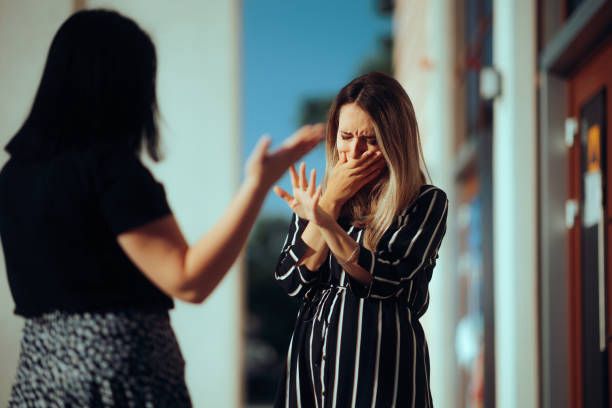
The House That Taught Me Boundaries
The lawyer helping me prepare one of my properties for sale called and said, “You need to come by today. The house isn’t empty like we expected.” Those words changed everything I thought I knew about family, boundaries, and the difference between keeping the peace and protecting what matters.
My name is Claire Whitmore. I’m thirty-eight years old, and I work as a data analyst for a healthcare company in Charlotte, North Carolina. It’s steady work, detail-oriented, the kind of job where precision matters and assumptions can cost you everything. I’ve always appreciated that clarity—knowing exactly what the parameters are, what’s expected, what belongs where.
If only family worked the same way.
The phone call came on a Tuesday afternoon while I was reviewing quarterly reports at my desk. My lawyer, Patricia Chen, didn’t usually call unless something required immediate attention, so when her name appeared on my screen, I felt that familiar tightening in my stomach that comes with unexpected complications.
“Claire,” she said without preamble—Patricia was always efficient. “We have a situation with the Asheville property. You need to come by today if possible.”
The Asheville property. My grandmother Eleanor’s A-frame house, tucked among tall pines and mountain laurel about two hours west of Charlotte. She’d left it to me when she passed away eight months ago, a beautiful gesture that had surprised everyone in the family because my grandmother had three children and seven grandchildren, and conventional wisdom suggested she’d divide things equally or leave everything to my mother, her eldest.
Instead, she’d left the house specifically to me, along with a handwritten note that simply said: “You’ll understand why when you need to.”
I hadn’t understood then. The house had felt like a responsibility I wasn’t quite ready for—a beautiful burden filled with memories and maintenance requirements and decisions about whether to keep it or sell it or rent it out.
After months of indecision, I’d finally chosen to sell. The market was good, I didn’t use the house enough to justify keeping it, and the money would allow me to pay off my condo and invest in my future. Practical. Sensible. The kind of decision my grandmother, who’d been nothing if not pragmatic, would have understood.
“What kind of situation?” I asked Patricia, already closing my laptop and gathering my things.
“The house isn’t empty,” she said carefully. “There are people inside. Living there, from what I can tell. They answered the door when I arrived for the walkthrough.”
My first thought was squatters. The house had been vacant for months while I’d been sorting through estate details and making decisions. It wasn’t impossible that someone had broken in and set up residence.
“Did you call the police?” I asked.
“No,” Patricia said, and something in her tone made me pause mid-reach for my car keys. “I think you should come see for yourself first. I’ll wait here until you arrive.”
The two-hour drive to Asheville gave me plenty of time to imagine scenarios. Strangers who’d broken in. Tenants my grandmother had arranged before her death that somehow no one knew about. Some kind of administrative error where the wrong property had been listed.
What I didn’t imagine—what never even crossed my mind—was what I actually found when I pulled up to the familiar A-frame house with its steep roof and large windows looking out over the wooded mountainside.
Patricia was standing in the driveway beside her silver sedan, and she wasn’t alone.
My sister Jasmine was there, leaning against a newer-model SUV I didn’t recognize, looking relaxed and unconcerned in the way she always did when she’d done something questionable but expected it to work out fine because things usually did for Jasmine.
I parked and got out slowly, trying to process what I was seeing.
“Claire!” Jasmine called out, waving like this was a planned family gathering. “Patricia said you were coming. You didn’t need to rush out—everything’s fine.”
I walked toward them, my confusion evident. “Jasmine, what are you doing here?”
“We’ve been staying here for a bit,” she said, gesturing toward the house with the casual ease of someone explaining something obvious. “It was just sitting empty, and we needed a place while our house renovation is happening. It seemed silly to let it sit unused when family could benefit from it.”
We. She’d said we.
As if on cue, the front door of the house opened and Jasmine’s husband Marcus stepped out, holding one of my grandmother’s old drinking glasses—the vintage green Depression glass she’d collected over decades. He was chatting on his phone, looking completely comfortable and at home.
“Claire,” Patricia said quietly, stepping closer to me. “I didn’t realize they were your family when they answered the door. They said they had permission to be here.”
I turned to look at my sister. “Permission from whom?”
Jasmine had the grace to look slightly uncomfortable, but only slightly. “Well, I assumed it would be fine. You weren’t using it, and we’re family. I thought you’d understand once the renovation was done and we were out. No harm, no foul.”
“You assumed,” I repeated slowly. “You assumed you could move into a house that belongs to me without asking me first?”
“It’s not like you’re living here,” Jasmine said, a defensive edge creeping into her voice. “And it’s family property. Grandma would have wanted family to use it.”
Marcus had ended his phone call and joined us, extending his hand with an easy smile. “Claire, good to see you. Sorry for the surprise. We really thought Jas had cleared this with you. Miscommunication on our part.”
I didn’t shake his hand. I was too busy trying to understand how my sister—my younger sister by three years, who I’d always helped and supported and made excuses for—could possibly think this was acceptable.
“How long have you been here?” I asked.
Jasmine and Marcus exchanged a glance. “About six weeks,” Marcus admitted. “Our contractor said the renovation would take three months total, so we figured we’d stay here during the worst of it. The house was just sitting here, and honestly, we’re taking good care of it. If anything, we’re doing you a favor by keeping it occupied and maintained.”
A favor. They’d moved into my house without permission and were framing it as a favor.
I turned to Patricia. “Can I see inside?”
“Of course,” she said, relief evident in her voice that I was staying calm. “That’s what we were here for originally—the final walkthrough before listing.”
I walked toward the house, Jasmine and Marcus trailing behind, offering explanations and justifications that I wasn’t really listening to.
The moment I stepped through the door, I felt it—that peculiar sensation of displacement, of something fundamentally altered.
The house looked superficially the same. Same A-frame architecture with the vaulted ceiling and exposed beams. Same large windows flooding the space with mountain light. Same basic layout with the open-plan living area, the loft bedroom visible above, the cozy kitchen tucked to one side.
But everything else was different.
My grandmother’s furniture had been moved around—the reading chair she’d positioned perfectly to catch afternoon light was now pushed against a different wall. Her bookshelves had been cleared of her carefully curated collection and now held Jasmine and Marcus’s belongings. The kitchen, which my grandmother had kept meticulously organized with her vintage mixing bowls and copper pots, was now filled with modern appliances and random grocery items.
The warmth my grandmother had cultivated—that sense of intentional comfort, of a space designed for rest and reflection—had been replaced by something impersonal and temporary. Like a vacation rental being passed through rather than a home being lived in with care.
“We haven’t changed anything permanent,” Jasmine said quickly, misreading my silence for anger. “Everything can go back exactly how it was. We’re just… borrowing the space.”
I walked through the rooms slowly. The guest bedroom where I’d spent countless weekends as a child now held Jasmine and Marcus’s clothes scattered across surfaces. The bathroom had been stocked with their toiletries, my grandmother’s vintage soap dishes shoved to the back of cabinets. The loft bedroom—my grandmother’s private sanctuary—had been converted into what looked like a home office, complete with Marcus’s work setup and filing cabinets.
They’d erased her. Casually, thoughtlessly, they’d taken a space that had been distinctly Eleanor’s and made it generically theirs.
I returned to the main living area where Patricia waited. Jasmine and Marcus stood nearby, starting to look less confident now that I hadn’t immediately accepted their explanations.
“Here’s what I don’t understand,” I said quietly, keeping my voice level. “At what point did you think this was okay? At what point in the process of packing your belongings, driving here, unlocking the door, and moving in did you think, ‘I should probably ask Claire if this is alright’?”
“Claire, come on,” Jasmine said, attempting a laugh. “Don’t be dramatic. It’s not like we stole anything. We’re family.”
“That’s not an answer to my question.”
Marcus stepped forward, clearly trying to de-escalate. “Look, I take responsibility. I told Jasmine it was fine, that you were planning to sell anyway, that it wouldn’t matter if we stayed here temporarily. I thought we were helping by keeping the utilities on and the place occupied. If I was wrong, we can work this out.”
“You were wrong,” I said simply. “This house is in my name. Not family property, not shared space—mine. My grandmother left it specifically to me, and whatever her reasons were for that choice, they deserve to be respected.”
“Grandma would have wanted family to use it,” Jasmine repeated, falling back on her earlier argument. “She wasn’t the kind of person who’d want it sitting empty.”
“Grandma was the kind of person who made very deliberate choices about her property,” I countered. “She could have left this house to all of us. She could have created shared ownership. She didn’t. She left it to me, specifically and exclusively. There was a reason for that.”
I was starting to understand what that reason was.
I turned to Patricia. “What are our options here?”
Patricia, who’d been watching this exchange with professional detachment, consulted her tablet. “Since they don’t have a lease and you didn’t provide written permission for them to occupy the property, they’re technically trespassing. You could pursue legal eviction, which would take thirty to sixty days. Or—” she looked at Jasmine and Marcus “—they could leave voluntarily, which would be faster and less complicated for everyone.”
“Eviction?” Jasmine’s voice rose. “You’d actually evict your own sister?”
“You actually moved into my house without asking,” I responded evenly. “So yes, if that’s what it takes to establish clear boundaries about what belongs to whom, then yes.”
The word hung in the air: boundaries. Something I’d never been particularly good at maintaining with my family. Something my grandmother, I was starting to realize, had tried to teach me by example but I’d been too focused on keeping peace to fully understand.
“Can we talk about this privately?” Jasmine asked, glancing at Patricia and Marcus. “Just you and me?”
I nodded. We walked out to the deck that wrapped around the back of the house, overlooking the mountain view my grandmother had loved.
Jasmine immediately went on the offensive, which was her usual strategy when cornered. “I can’t believe you’re being like this. It’s just a house, Claire. A house you were going to sell anyway. We needed a place to stay and this was sitting empty. What’s the big deal?”
“The big deal is that you didn’t ask. You made a decision about something that wasn’t yours to decide.”
“We’re family—”
“Family doesn’t mean you get to take what isn’t yours without permission,” I interrupted. “Family should actually mean the opposite—that you respect each other’s property and boundaries enough to ask first.”
Jasmine was quiet for a moment, and when she spoke again, her voice was smaller, more genuine. “I didn’t think you’d care. You never cared about the house the way some of us did. You barely visited Grandma here. You were always too busy with work, with your life in Charlotte. And then she left it to you anyway, even though some of us spent way more time here, and it felt… unfair.”
There it was. The real issue underneath the assumption of permission.
“So this is about the inheritance,” I said.
“Not entirely,” Jasmine said quickly. “But yeah, kind of. You got the house. Mom got the money. The rest of us got jewelry and furniture and sentimental items. And you got this whole beautiful property that you don’t even want.”
“You don’t know what I want,” I said quietly. “You assumed I don’t care about this place because I don’t use it the same way you would. But that’s not the same thing as not caring.”
“Then why are you selling it?”
I looked out at the mountains, at the view my grandmother had chosen carefully when she’d built this house forty years ago. “Because it’s mine to sell or keep or do whatever I want with. That’s what ownership means. And I’m selling it because right now, in my life, that’s the choice that makes sense for me. But that doesn’t give you the right to move in without asking.”
“So what happens now?” Jasmine asked, defeat creeping into her voice.
“Now you pack up your things and leave,” I said. “Today. And then I continue with my original plan to sell the property.”
“Our renovation won’t be done for another six weeks.”
“Then you find a rental. A hotel. An Airbnb. Something that belongs to you or that you’ve actually arranged permission to use.”
“Claire—”
“No,” I said firmly. “This isn’t up for negotiation. This is me establishing a boundary that should have been obvious from the start. You leave today, or Patricia initiates eviction proceedings tomorrow. Those are your options.”
We stood in silence for a long moment, the mountain breeze moving through the pines, carrying the scent of the forest my grandmother had loved.
Finally, Jasmine nodded. “Fine. We’ll leave today.”
I didn’t feel victorious. I didn’t feel angry. I just felt tired—the particular exhaustion that comes from having to enforce boundaries you shouldn’t have needed to enforce in the first place.
We went back inside. Marcus had clearly been listening, or had guessed how the conversation would go, because he was already starting to gather their belongings.
“We’ll need a few hours to pack everything,” he said, avoiding eye contact.
“That’s fine,” I said. “Patricia and I will come back tomorrow to complete the walkthrough. I expect the house to be empty and returned to the condition it was in when you arrived.”
“Define ‘condition,'” Marcus said carefully.
I walked to the bookshelf where my grandmother’s books had been removed. “I want her books back on these shelves. Her furniture returned to where it was. Her kitchen items put back. Everything that was here when my grandmother died, I want it back in place.”
“We didn’t keep track of exactly—”
“Then you’ll do your best to approximate,” I said. “Because if I come back tomorrow and find that anything is missing or damaged, we’re going to have a very different conversation about restitution.”
I didn’t wait for a response. I turned to Patricia. “Let’s go.”
We left them there and drove to a coffee shop in Asheville where we could talk privately.
“That was impressively calm,” Patricia said, stirring her coffee. “Most people would have lost their temper.”
“I learned from my grandmother,” I said. “She never raised her voice, never made scenes. But she had very clear boundaries about what was acceptable and what wasn’t.”
“Is that why she left you the house? Because she knew you’d protect it?”
I considered that. “Maybe. Or maybe she knew I needed to learn how to protect things. How to say no. How to establish boundaries even with family.”
“Are you still planning to sell?”
I stared out the window at the mountains in the distance. “I don’t know anymore. This whole situation has made me think about why she left it to me specifically. About what she was trying to teach me.”
“Which is?”
“That some things are worth protecting. Not because they’re valuable or useful, but because they represent something important. And that protecting them sometimes means being willing to upset people who expect you to just go along with whatever they’ve decided is convenient.”
We finished our coffee and Patricia walked me to my car. “Call me tomorrow after you’ve done the walkthrough. We can decide then whether to continue with the listing or put it on hold.”
I drove back to Charlotte in the fading light, thinking about my grandmother. About the way she’d lived deliberately, made choices carefully, protected what mattered to her without apology.
About the note she’d left me: “You’ll understand why when you need to.”
I was starting to understand.
The next day, I returned to the house alone. Jasmine had texted me that they were gone, that everything was “back to normal,” and that she hoped we could “move past this.”
I didn’t respond to the text.
The house was indeed empty. They’d removed their belongings, cleaned surfaces, even made an attempt to return my grandmother’s things to their original places. The books were back on the shelves—not in the right order, but present. The furniture had been moved back to approximate positions. The kitchen items were returned to cabinets, though not necessarily the right ones.
It wasn’t perfect. But it was a genuine effort, and I appreciated that.
I walked through the quiet house, feeling its energy settle back into something familiar. In the loft bedroom, I found something Jasmine had left—intentionally, I suspected, because it was placed prominently on the desk where I couldn’t miss it.
A framed photograph I’d never seen before. My grandmother, maybe thirty years younger, standing on this very deck with her arm around a younger woman I didn’t immediately recognize. On the back, in my grandmother’s handwriting: “Eleanor and Claire, 1985.”
My mother. Named Claire, just like me.
I’d known I was named after my grandmother’s best friend who’d died young, but I’d never seen a photograph of her before.
I took the picture downstairs and sat in my grandmother’s reading chair—back in its proper position by the window—and studied the image. My grandmother looked happy, relaxed, her arm around someone she clearly loved deeply.
My phone rang. My mother’s name on the screen.
“Jasmine called me,” she said without preamble. “She’s upset. Says you kicked her out of Grandma’s house.”
“I didn’t kick her out. She was never supposed to be there in the first place.”
“She’s family, Claire. She needed help and the house was empty. I don’t understand why you’re being so rigid about this.”
“Because it’s mine,” I said simply. “Because boundaries matter. Because assuming you can use other people’s property without asking isn’t help—it’s entitlement.”
My mother sighed. “You sound just like your grandmother.”
“Thank you,” I said, surprising her.
“That wasn’t exactly a compliment. Your grandmother could be very… unforgiving about these things.”
“Or maybe she just knew that some things are worth protecting,” I said, looking at the photograph. “Tell me about Claire. Your friend. The one I’m named after.”
The change of subject caught my mother off guard. “What brought that up?”
“I found a photo. Grandma and Claire in 1985. You never talk about her.”
My mother was quiet for a long moment. “She died when I was twenty-six. Car accident. It devastated your grandmother. They’d been friends since childhood.”
“Why did Grandma name me after her?”
“Because you were born the same year Claire died. Grandma said it was a way to honor her memory. And because she saw something in you, even as a baby, that reminded her of Claire. That same quiet strength. That same ability to know what mattered and protect it.”
After we hung up, I sat in the chair for a long time, holding the photograph, understanding finally why my grandmother had left me this house.
Not because I’d earned it or deserved it more than my siblings.
But because she’d known I’d need to learn what it meant to protect something worth protecting. To establish boundaries. To say no even when it was uncomfortable. To choose what mattered over what was easy.
I called Patricia. “Take the house off the market.”
“You’re keeping it?”
“I’m keeping it,” I confirmed. “At least for now. I need time to think about what I want to do with it. But I know I’m not ready to sell it yet.”
“Your family isn’t going to be happy about that.”
“They’ll survive,” I said. “And maybe they’ll learn something about respecting boundaries in the process.”
Six months later, I was sitting on that same deck, watching the sun set over the mountains, when Jasmine’s name appeared on my phone.
I almost didn’t answer. But curiosity won out.
“Hey,” she said, sounding tentative. “How are you?”
“I’m good. You?”
“Better. The renovation is finally done. We’re back in our house.”
“That’s great.”
Awkward silence. Then: “Claire, I wanted to apologize. Really apologize, not the half-hearted thing I did when we moved out. I was wrong. About all of it. Moving in without asking, assuming it would be fine, getting defensive when you confronted me. It was entitled and disrespectful and I’m sorry.”
I waited, letting her words settle.
“I’ve been thinking a lot about why you got the house,” she continued. “And I think I understand now. Not that Grandma loved you more or anything like that. But that she knew you’d protect it. That you’d make thoughtful decisions about it instead of just assuming things belonged to everyone.”
“Thank you for saying that,” I said. “It means a lot.”
“Are you ever there? At the house?”
“Most weekends now,” I said. “I’ve been fixing it up, making it mine while keeping Grandma’s spirit alive. It’s peaceful. Helps me think.”
“Could I visit sometime? Just to see it again, to remember her there?”
I thought about boundaries. About protection. About the difference between shutting people out and setting clear expectations.
“Yes,” I said. “But call first. And this time, actually wait for me to say yes before you show up.”
She laughed, a little shakily. “Deal.”
After we hung up, I sat watching the mountains turn purple in the fading light, feeling my grandmother’s presence in the space she’d loved and protected and ultimately trusted me to understand.
The house wasn’t just property. It was a lesson about knowing what matters and being willing to protect it even when protection requires difficult conversations and uncomfortable boundaries.
My grandmother had known I’d need to learn that lesson.
And she’d given me the perfect place to learn it.
Sometimes the strongest response isn’t force or anger or dramatic confrontation.
Sometimes it’s just clarity. Quiet, unwavering clarity about what belongs to you and what doesn’t, what you’ll accept and what you won’t, what’s worth protecting and what isn’t.
That clarity—that’s what she’d left me.
And it turned out to be more valuable than any house could ever be.
THE END

Sophia Rivers is an experienced News Content Editor with a sharp eye for detail and a passion for delivering accurate and engaging news stories. At TheArchivists, she specializes in curating, editing, and presenting news content that informs and resonates with a global audience.
Sophia holds a degree in Journalism from the University of Toronto, where she developed her skills in news reporting, media ethics, and digital journalism. Her expertise lies in identifying key stories, crafting compelling narratives, and ensuring journalistic integrity in every piece she edits.
Known for her precision and dedication to the truth, Sophia thrives in the fast-paced world of news editing. At TheArchivists, she focuses on producing high-quality news content that keeps readers informed while maintaining a balanced and insightful perspective.
With a commitment to delivering impactful journalism, Sophia is passionate about bringing clarity to complex issues and amplifying voices that matter. Her work reflects her belief in the power of news to shape conversations and inspire change.