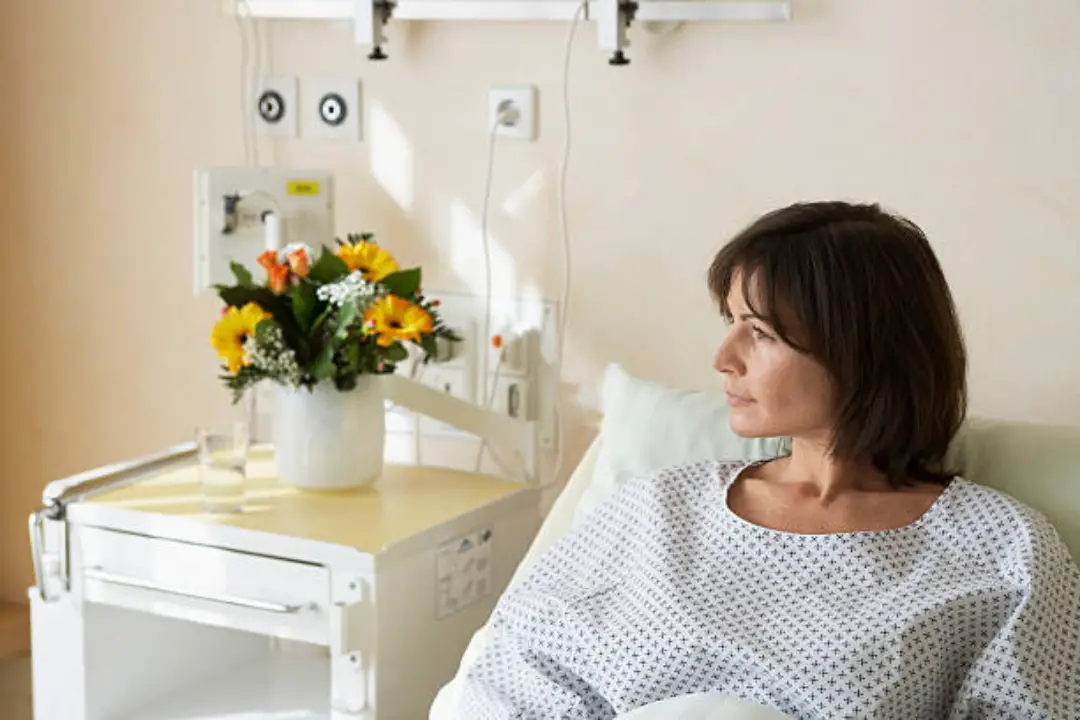
When my mother called, I was still strapped to a backboard in the emergency room at County Hospital, my vision blurring with each fluorescent light that passed overhead as the gurney rattled down the hallway. The world around me was a cacophony of voices—nurses calling out numbers, the squeak of shoes on linoleum, machines beeping their urgent warnings. My chest burned with every breath I tried to take, a deep ache radiating from what I would later learn were three broken ribs. Blood pooled sticky and warm in my hair on one side. My left shoulder throbbed with a hot, electric pain that made me nauseous.
But worse than any of that was the fear. The all-consuming terror about my baby.
I was twenty-three weeks pregnant, and the car that had T-boned me at the intersection had hit my driver’s side door with enough force to spin my sedan completely around before it crumpled against a light pole. I’d been conscious through it all—the screech of metal, the explosion of the airbag, the eerie silence that followed broken only by the hiss of my destroyed radiator and someone screaming for help. It took me a full minute to realize that someone was me.
My hand instinctively tried to reach for my stomach, but the straps pinned me down. Panic surged. “The baby—” I croaked, the words scraping like broken glass against my throat.
Sarah, the paramedic with kind blue eyes and freckles scattered across her nose, squeezed my hand. “We know, Harie. They’re going to ultrasound you as soon as we get you stabilized. Try to stay still for me, okay?”
Then my phone started ringing.
The tinny chime cut through the chaos, insistent and familiar. Sarah glanced at the screen where it lay on a tray beside my head. “Do you want me to answer? It says ‘Mom.'”
Of course it was. My mother’s name had been listed as my emergency contact on every form I’d filled out since I was sixteen. That’s what mothers were supposed to be—the person they called when disaster struck, the one who dropped everything and rushed to your side.
Except mine had never worked that way.
“Put it on speaker,” I whispered.
Sarah hesitated, clearly uncertain if this was a good idea given my condition, but something in my expression must have convinced her. She swiped to answer and held the phone near my face.
The background noise hit first—blow dryers humming, pop music thumping, the chatter of multiple conversations overlapping. Then my mother’s voice cut through it all, sharp and impatient.
“Harie, don’t be dramatic. If you’re going to be incapacitated, you need to transfer the forty-two hundred right now. I can’t have my card declining in first class.”
Those were the first words my mother said to me while I lay broken and bleeding on a hospital gurney, twenty-three weeks pregnant, fresh from a car accident that could have killed me and my baby.
She didn’t ask if I was okay. She didn’t ask about my injuries. She didn’t ask about her grandchild.
She demanded money.
“You’re due today,” she continued, her voice carrying that edge of inconvenience I knew so well. “I already told them to hold my luggage, and the flight leaves in an hour. So could you please not make a production out of this? Just do the transfer.”
Sarah’s eyes widened in disbelief. She looked down at me, then back at the phone, her lips pressing into a thin line.
I stared at the ceiling tiles, counting the dead flies trapped in the fluorescent light cover because if I focused on them, I wouldn’t scream. “I’m in the emergency room,” I managed, each word an agony. “Car accident. They’re checking the baby. I—”
My mother exhaled dramatically, that signature Pamela Miller sound that meant you are inconveniencing me. “Oh, for God’s sake. If you were dead, someone else would be answering, wouldn’t they? Transfer the money before they wheel you off for whatever. My appointment is in twenty minutes and I can’t reschedule. Do you have any idea how hard it is to book Valentina’s on short notice?”
Behind my eyes, something shifted—not quite breaking, but fundamentally changing shape. Sarah’s hand tightened around mine, her thumb pressing gentle circles into my palm like she was trying to keep me tethered to reality.
My mother kept talking. About her luggage. About the salon. About the “kind of credit” her stylist would accept. She mentioned herself at least a dozen times in two minutes.
She did not mention me once. Not my injuries. Not my baby. Not whether the doctors thought I’d be okay.
Just the forty-two hundred dollars she considered her monthly entitlement for the burden of having raised me.
“Ma’am,” Sarah said tightly, unable to hide her disgust. “Your daughter was just in a serious accident. We’re treating her. We need to go.”
A hiss came through the speaker. “Who is this?”
“I’m the paramedic who pulled her out of a crushed car,” Sarah said, her professionalism barely masking her anger. “We need to end this call.”
“Well then you can tell her to make that transfer while she’s still conscious,” my mother snapped. “If she can stare at a ceiling, she can use a banking app.”
Sarah hung up. Just stabbed the red button and set the phone down with exaggerated care, as if she didn’t trust herself not to throw it.
In the silence that followed, I felt something inside me click into place—a puzzle piece I’d been trying to force into the wrong spot for twenty-nine years finally finding its proper position.
I wasn’t her daughter. I was her ATM.
And I was done.
The next three hours passed in a blur of X-rays and ultrasounds and doctors murmuring reassurances that felt distant and dreamlike. My ribs were cracked but not displaced. My collarbone was fractured. I had a mild concussion. But the baby—my stubborn, miraculous baby—had a heartbeat strong enough to make the ultrasound technician smile.
“Tough little fighter,” she said, and I cried then, finally, from relief so profound it hurt worse than my ribs.
They moved me to a recovery room eventually, got me stabilized, started a morphine drip that dulled the worst of the physical pain but left my mind strangely sharp and focused. As the medication took hold, I asked Sarah for my phone.
She hesitated, clearly thinking I wanted to call my husband—who was unreachable on a work site in another state—or a friend. “Do you want me to call someone for you?”
“No,” I said. “I just need the phone. Please.”
Something in my expression convinced her. She placed it carefully in my palm.
I didn’t go to my contacts. I didn’t compose a text. I opened my banking app with trembling but determined fingers.
Nine years ago, when I was twenty and freshly employed as a nurse, my mother had given me a speech about “family safety nets.” She’d made it sound so reasonable: link our accounts so her card would never be declined at an inopportune moment, just a backup for emergencies.
That safety net had turned into a siphon. Every month, forty-two hundred dollars. For nine years. Almost half a million dollars total—my money, my paychecks, my overtime shifts and missed meals and sacrificed vacations, all funneled directly into funding my mother’s lifestyle while I clipped coupons and worried about grocery budgets.
I’d told myself I was being a good daughter. That this was what family did.
But lying there with my chest taped and my baby miraculously alive and my mother’s voice still echoing in my head—transfer the money, I can’t have my card declining—I finally saw the truth.
This wasn’t love. This was extraction.
I navigated to Settings. Linked Accounts. Found the line with her name.
Active linked account: Pamela Miller
My finger hovered over it for only a second before I tapped.
“Revoke Authorization?” the screen asked in red text. “Removing this guarantor will cancel overdraft protections for the linked account. Are you sure you want to proceed?”
I pressed Confirm without hesitation.
The little green dot next to my mother’s name turned gray.
Status: Unlinked
I hadn’t transferred anything. I hadn’t blocked her card. I’d simply removed myself from the equation and let gravity do its work. For the first time in nine years, when she tried to charge something to that platinum card, the bank would check her balance instead of mine.
“I’m ready for the pain medication now,” I told the nurse who’d been waiting with a syringe. As the morphine flooded my system, I closed my eyes and pictured my mother at the salon checkout counter, her card extended, waiting for the familiar beep of approval.
Only this time, there would be silence. Then: “I’m sorry, ma’am. Your card has been declined.”
I smiled despite the pain. I’d just eliminated her emergency fund.
Forty minutes later, my phone exploded with texts.
MY CARD DECLINED. THE SALON IS HOLDING MY LUGGAGE. FIX IT. NOW.
I KNOW YOU’RE READING THIS. IF YOU DON’T TRANSFER THE MONEY IN FIVE MINUTES I’M COMING DOWN THERE.
I didn’t respond. Instead, I asked Sarah for help preparing my room. “My mother is going to come here,” I explained. “Not to see if I’m okay—to fix her money problem. And she’s going to bring help. Probably a lawyer. I need them to think I’m too sedated to understand what they’re doing.”
Sarah studied my face for a long moment, then nodded. “What do you need?”
Ten minutes later, my room looked like a scene from a medical drama. Lights dimmed, isolation sign on the door, oxygen mask over my face even though my levels were fine, heart monitor volume turned down. I looked like I was barely conscious.
In reality, I was wide awake and waiting.
They arrived like a hostile invasion—the sharp click of my mother’s heels on linoleum, the measured tread of expensive shoes behind her, a third lighter set trying to keep pace. I heard my mother’s voice cut through the nurse’s protests: “I am her mother. You will not keep me away from my own child.”
A man’s voice, smooth and professional: “This is Mr. Sterling, our family attorney. If you’d like him to call the board about your refusal of access to an immediate family member…”
The nurse capitulated. The curtain snapped open.
Three shapes loomed over me: my mother in her designer clothes and expensive perfume, my older sister Rebecca looking uncomfortable, and a man in a suit carrying a briefcase.
I kept my eyes closed, my breathing slow and even beneath the oxygen mask.
“She looks like hell,” Rebecca said softly.
“Don’t be melodramatic,” my mother snapped. “She’s sedated. Hopefully she’ll stay that way for the next fifteen minutes.”
Sterling’s voice: “Based on her chart, she shouldn’t be able to give meaningful consent. Which is, in this case, convenient.”
My mother lifted my wrist from the bed, the movement rough and careless. “Her hands are a mess. You’d think they’d clean up patients before visitors arrive.”
The sound of a briefcase opening. Papers rustling.
“Power of Attorney for Medical Incapacitation,” Sterling recited. “Once we capture the biometric signature, we can reinstate the overdraft protections and move liquid assets into the trust.”
“Under my control?” my mother asked, and I could hear the smile in her voice.
“Under our control,” he corrected smoothly. “For the benefit of the family.”
“Get the tablet ready,” my mother ordered. “We need her thumbprint.”
Something cold and damp wiped across my thumb. They were sanitizing it, preparing my hand like a piece of equipment. I felt the cool glass of a tablet press against my skin, felt my mother’s grip tighten as she tried to force my thumb onto the sensor.
“Get your hands off me,” I said.
My voice cut through the room like a scalpel—clear, sharp, fully conscious.
My mother gasped and jerked backward, dropping my hand. Rebecca fumbled the tablet. Sterling went very still.
I pulled the oxygen mask down around my neck. “I heard everything. Every single word.”
For a heartbeat, no one spoke.
Then my mother found her voice, blustering and indignant: “You were supposed to be sedated! We were just trying to help you—”
“Help yourself to my money, you mean,” I said.
She flushed red. “After everything I’ve done for you, this is how you repay me? By humiliating me in public? Do you know how it felt to have my card declined?”
“Yes,” I said quietly. “I know exactly how it feels. I’ve worked twelve-hour shifts and then stared at my account wondering if we’d have groceries because I sent you the mortgage payment early.”
Before she could respond, the curtain pulled back fully. Sarah stood there with the hospital administrator, two security guards, and—most importantly—my grandfather.
Grandpa George looked smaller than I remembered, leaning heavily on his cane, but his eyes were as sharp as ever. In his free hand, he carried a blue folder.
“Is this where the vultures are roosting?” he asked, looking directly at my mother.
She recoiled. “Daddy, what are you doing here?”
“Funny,” he said. “I was about to ask you the same question.”
He walked to my bedside and set the folder on the tray table with a decisive thump. “How much did you manage to get her to sign before she woke up?”
Sterling cleared his throat. “Mr. Miller, I wasn’t aware you were involved in the family’s arrangements.”
“You should have been,” Grandpa said. He pulled out a document and handed it to the administrator, who scanned it and nodded.
“Ms. Miller,” the administrator said to me, “is this your signature?”
I looked at the page—my name, dated two years earlier. “Yes, it is.”
The power of attorney was simple and devastating. It named one person as my medical and financial decision-maker in case of incapacitation.
Not my mother. My grandfather.
My mother stared at it like it was written in a foreign language. “You went behind my back? After everything I’ve done? You chose her over me?”
“I chose the person who wouldn’t try to rob her in a hospital bed,” Grandpa said flatly.
Sterling, recognizing a losing battle, made a strategic retreat. “Given this information, I believe I should withdraw from the current conversation.”
“Smart man,” Grandpa muttered.
My mother watched him leave, her composure finally cracking. “You can’t leave! We still have to fix—”
Grandpa brought his cane down on the floor with a sharp crack. “Enough.”
The word landed like a gavel.
“For years,” he said, his voice low but carrying, “I have watched you bleed this child dry. You dangled affection like a treat. You used her income as your personal fund. And now you stroll in here with a lawyer to steal what’s left while she’s in a hospital bed? Not in my lifetime.”
He turned to the security guards. “These two are no longer welcome in this room unless my granddaughter explicitly requests them.”
My mother’s face went ugly with rage. “Harriet Marie Miller, you ungrateful little—”
“I revoked your access,” I said calmly. “To my account. To everything. An hour ago. While you were getting your hair done.”
Her mouth fell open. “You can’t—”
“I can. And I did.”
Rebecca spoke up, voice shaky: “What are we supposed to do? Our rent is due. Mom’s card got declined—”
“Then get jobs,” I said.
My mother pointed a trembling finger at me. “You owe me. All those years. The food you ate. The clothes on your back. You think that was free?”
I looked at her designer handbag, her expensive blouse, her professionally styled hair. I thought of all the years I’d heated canned soup while she complained about migraines from her couch. I thought of working extra shifts to pay for school fees while she bought new patio furniture.
“And what about what I did for you?” I asked quietly. “Who pays me back for that?”
“Security will escort you out,” I said. “If you try to come back without being invited, I’ll have them treat it as harassment.”
The guards stepped forward. My mother lifted her chin and stalked toward the door, radiating offended dignity.
“I hope you enjoy your little victory,” she threw over her shoulder. “When you’re alone with no family, don’t come crawling back.”
“I didn’t lose a family today,” I said. “I lost a payroll department.”
She left. Rebecca trailing behind her, the guards following.
Silence flooded the room.
“Well,” Grandpa said, sinking into the visitor’s chair. “That was dramatic.”
I laughed, a raw sound that made my ribs protest. “Worth it though.”
Two hours later, my phone buzzed again. Another text from my mother.
I WANT MY MONEY. YOU CAN’T JUST CANCEL NINE YEARS LIKE IT’S NOTHING. IT WASN’T A GIFT, HARRIET. IT WAS RENT. FOR RAISING YOU. IF YOU DON’T START PAYING AGAIN, I WILL TAKE YOU TO COURT FOR BACK PAY. ALL 453,000 OF IT.
I stared at that message for a long time.
Rent for motherhood. She’d put it in writing.
And if it was rent—if she truly believed those payments were income she’d earned—then she should have reported them to the IRS.
I opened a new note on my phone and started typing. Dates. Amounts. Descriptions. Nine years of transfers, regular as clockwork, like a salary.
“What are you doing?” Grandpa asked.
“Documenting,” I said. “For the IRS.”
Rent is income. Income has to be reported. If it’s not… well, the government takes that sort of thing personally.
Over the next few weeks, while I recovered at Grandpa’s house, we compiled the report. Every transfer. Every text where she demanded payment. Every bank statement. And finally, the screenshot where she explicitly called it “rent” and demanded “back pay.”
I submitted it all to the IRS whistleblower program.
Then I stopped thinking about her finances and focused on my own recovery. My bones healed. My belly grew. My daughter was born healthy and furious, all seven pounds of outrage and tiny fists.
Holding her against my chest, I swore she would never wonder if my love had a price tag.
Eighteen months after the accident, an envelope arrived from the U.S. Department of the Treasury.
Inside was a check for forty-one thousand, three hundred fifty dollars.
A whistleblower reward. The IRS had investigated, found unreported income spanning nine years, assessed penalties and interest, and seized assets to cover the debt. I was entitled to a percentage of what they recovered.
Not everything I’d lost. Not even close. But enough for a down payment on a small house with a yard where my daughter could learn to walk. Enough for a savings account in her name. Enough to start over, really start, with something wholly mine.
I hear things occasionally through extended family. My mother works retail now. Minimum wage. Standing for eight-hour shifts, folding clothes, swallowing her pride every time a customer speaks to her the way she used to speak to waiters.
Sometimes I feel a flicker of something that isn’t quite sympathy but isn’t satisfaction either. Mostly, I just feel… free.
Freedom is quiet. It doesn’t feel like fireworks. It feels like waking up in a room where no one is waiting to demand something of you the second your feet hit the floor. It feels like looking at your bank statement and seeing only your own name. It feels like holding your child and knowing that whatever you sacrifice for them—money, time, sanity—are gifts freely given, not receipts you’ll wave in their face decades later.
I didn’t lose a mother in that hospital room.
I lost a bill collector.
And in exchange, I got my life back.

Adrian Hawthorne is a celebrated author and dedicated archivist who finds inspiration in the hidden stories of the past. Educated at Oxford, he now works at the National Archives, where preserving history fuels his evocative writing. Balancing archival precision with creative storytelling, Adrian founded the Hawthorne Institute of Literary Arts to mentor emerging writers and honor the timeless art of narrative.