You’re not going to believe what I did when my son asked me to pay his mortgage for the third time this year, and how a single fur coat became the symbol of me finally remembering I was a person, not just a walking ATM. This is the story of how I went from being the “convenient mom” to being the woman who chose herself, and why sometimes the most loving thing you can do for your children is teach them you’re not their personal bank.
My name is Catherine, I’m fifty-two years old, and for most of my adult life, I believed that being a good mother meant making myself smaller so my children could be bigger. I worked as an accountant, lived modestly, counted every penny – not because I was greedy, but because I’d spent so many years thinking about everyone except myself that I’d forgotten I was allowed to want things too.
I have a son, Mark, who’s thirty-two, and a daughter, Sarah, who’s twenty-nine. Mark is married to Emma, who’s twenty-eight – young, modern, ambitious, with a mortgage that stretches them thin and a lifestyle that always seems to cost more than they make.
For years, I’d been their safety net. When Mark needed a laptop for work, I bought it. When Sarah’s car broke down, I fixed it. When they wanted to take vacations they couldn’t afford, somehow I found a way to help make it happen. I told myself this was love. I told myself this was what mothers did.
But that Friday evening in November changed everything.
I’d just gotten home from work, my feet aching from a long day of dealing with quarterly reports and demanding clients. I was still in my hallway, hadn’t even taken off my boots, when my phone rang. Mark’s name flashed on the screen, and my stomach immediately clenched.
You see, Mark had two different voices when he called me. There was his regular voice – warm, conversational, the voice of a son who actually wanted to talk to his mother. And then there was his “money voice” – careful, cautious, the voice he used when he needed something.
This was definitely the money voice.
“Mom, hi…” he started, and I could hear Emma talking in the background. “There’s a situation. We’re short on the mortgage this month. Emma didn’t get her bonus like we expected, my car needed repairs, and we’re just… we’re in a tight spot. Could you help us out? It’s not much – just ten thousand.”
Just ten thousand. Like it was pocket change.
I sat down right there in the hallway, still wearing my coat, and felt something shift inside my chest. Not anger, exactly. More like exhaustion. Deep, bone-deep weariness.
This wasn’t the first time. It wasn’t even the third time this year.
In January, they’d needed help with credit card payments after Christmas. In March, it was an unexpected tax bill. In June, Emma’s student loans had suddenly become “unmanageable.” Each time, I’d transferred the money without question, telling myself it was temporary, telling myself they were just getting on their feet.
“Mom? Are you there?” Mark’s voice had shifted to impatience. “We need it by Monday. The bank won’t give us another extension.”
And suddenly, I heard myself say something I’d never said before in my life.
“No.”
Silence. Complete, shocked silence.
“What do you mean, ‘no’?” Mark sounded genuinely confused, like I’d spoken in a foreign language. “You have money. You told me yourself you got a bonus last month.”
“I did get a bonus,” I replied, surprised by how calm my voice sounded. “But I spent it.”
I lied. The money was sitting in my savings account, all $12,000 of it. Six months of setting aside whatever I could, denying myself small luxuries, planning for… what? I’d never really decided what I was saving for. Maybe that was the problem.
“You spent it on what?” Emma’s voice came through the phone now – she’d grabbed it from Mark. “Catherine, we’re talking about our house here. Our home. Surely whatever you bought isn’t more important than that.”
And that’s when it hit me. The assumption. The entitlement. The absolute certainty that my money, my time, my life existed primarily to serve their needs.
For twenty-five years, I’d been the mother who always said yes. The mother who put her children’s wants before her own needs. The mother who wore the same winter coat for five years because Mark needed money for his apartment deposit. The mother who ate peanut butter sandwiches for lunch so Sarah could afford her wedding dress.
I’d become convenient. A mom-bank. A resource to be tapped whenever life got expensive.
And the scariest part? I’d trained them to expect it.
“I’m sorry,” I said, and for the first time in years, I actually meant it. Not sorry that I couldn’t help, but sorry that it had taken me this long to say no. “You’ll have to figure this out on your own.”
I hung up before they could argue.
The next morning, I woke up feeling strange. Anxious, yes, but also something else. Something I hadn’t felt in so long I’d almost forgotten what it was: free.
I was afraid Mark would call again, would try guilt or manipulation or outright anger to change my mind. I was afraid I wouldn’t be strong enough to hold my ground. So I did something I rarely did – I left my apartment just to walk, with no destination in mind.
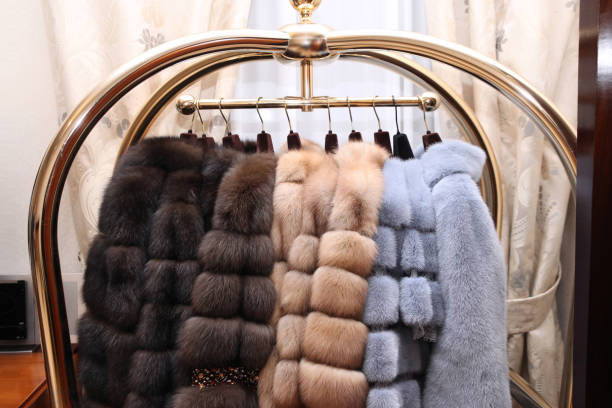
My feet carried me to the mall downtown, the one with all the expensive stores I usually walked past without looking. But that day, something made me stop in front of the fur salon. In the window was the most beautiful coat I’d ever seen – deep brown mink, elegant, luxurious, the kind of thing I’d always admired from a distance but never imagined owning.
“Would you like to try it on?” the saleswoman asked, appearing beside me.
I almost said no automatically. Almost muttered something about just looking, just dreaming. But instead, I heard myself say, “Yes. Please.”
The moment I put on that coat, I didn’t recognize the woman in the mirror. For years, I’d seen myself as tired, practical Catherine – sensible shoes, discount clothes, someone who blended into the background. But wearing that coat, I saw someone else. Someone elegant. Someone worthy of beautiful things.
Someone who mattered.
The price tag made my hands shake: $8,000. More than I’d ever spent on myself at one time. More than some people made in months. But as I stood there, wrapped in that gorgeous fur, something crystallized in my mind.
I had the money. I’d saved it through months of careful budgeting and self-denial. And for the first time in decades, I was going to spend it on myself.
“I’ll take it,” I said.
The saleswoman smiled, probably thinking I was crazy to buy such an expensive coat on what appeared to be impulse. She didn’t know this was the least impulsive thing I’d ever done. This was twenty-five years of putting myself last finally coming to an end.
I walked out of that store carrying a bag that contained more than just a coat. It contained my self-respect. My sense of worth. The radical idea that I deserved beautiful things too.
For the first time in years, I was smiling.
A week passed before Mark called again. I’d been dreading it, but also anticipating it. When his name appeared on my phone, I answered calmly.
“Hi, Mark.”
“Mom.” His voice was strained. “We managed to work something out with the bank. Got a short-term loan. But Emma’s really upset about this whole situation.”
“I’m sorry she’s upset,” I said, and I meant it. I didn’t want anyone to suffer. But I wasn’t going to sacrifice myself to prevent their discomfort anymore.
“She thinks… we both think you’re being selfish. We’re your family.”
“You’re absolutely right,” I said. “You are my family. And I love you. But Mark, loving someone doesn’t mean bankrupting yourself for their convenience.”
“It’s not convenience, Mom. It’s emergencies. Real problems.”
“I know they feel real to you,” I said gently. “But son, you’re thirty-two years old. Your car is worth more than my entire annual salary. You and Emma eat out more in a month than I spend on groceries. These aren’t emergencies – they’re consequences of living beyond your means.”
He was quiet for a long moment. Then: “We’re having dinner Sunday. You should come. We can talk about this like adults.”
I almost said no. Almost declined to put myself in a situation where I’d be outnumbered and pressured. But then I thought about my coat, hanging in my closet like a beautiful reminder of my worth.
“Okay,” I said. “I’ll be there.”
Sunday arrived gray and cold, perfect weather for my new coat. I put it on and looked at myself in the mirror one more time. The woman looking back at me was confident, elegant, unapologetic. She was someone who knew her value.
Emma opened the door when I arrived, and I watched her eyes immediately go to the coat. Her smile was bright and sharp, like broken glass.
“Wow, Catherine,” she said, her voice dripping with false sweetness. “That’s quite a coat. Very… expensive-looking.”
Mark appeared behind her, and I saw the exact moment he understood what I’d done. His face went through several emotions – surprise, confusion, and then something darker.
“Mom,” he said slowly, “did you buy a fur coat?”
“Yes,” I said simply. “It’s beautiful, isn’t it?”
“Beautiful?” His voice rose. “Are you serious right now? We came to you for help, and you went out and bought yourself a fur coat?”
“Yes, I did,” I repeated. “With my money. That I earned.”
“Your money?” Emma stepped closer, and I could smell her expensive perfume. “Catherine, we’re family. When family needs help, you help them. You don’t go shopping for luxury items.”
And that’s when something inside me snapped. Not with anger, but with clarity. Crystal-clear, undeniable truth.
“Let me ask you something,” I said, looking between my son and his wife. “When was the last time either of you asked me how I was doing? Not what I could do for you, but how I was actually doing?”
They both started to speak at once, but I held up my hand.
“When was the last time you invited me to dinner just because you wanted my company? When was the last time you offered to help me with anything – my car, my apartment, my health, my happiness?”
Silence.
“I’ll tell you when,” I continued. “Never. In the three years since your wedding, Emma, you’ve never once asked me about my life unless it related to what I could provide for yours. Mark, you call me when you need money, when you need babysitting for your friends’ kids, when you need someone to cover for you with your grandmother. But when I had the flu last winter and missed a week of work, neither of you even called to check on me.”
Mark’s face was flushing red. “That’s not fair, Mom. We’re busy. We have our own lives.”
“Exactly,” I said. “You have your own lives. And I have mine. And for the first time in twenty-five years, I’m going to start living it.”
“This is ridiculous,” Emma interjected. “You’re being dramatic. We’re not asking you to sacrifice your life – just to help us out when we need it.”
“When you need it,” I repeated. “But what about when I need it? What about when I need to feel valued, need to feel like I matter for who I am instead of what I can give? What about when I need to buy myself something beautiful just because I worked hard and I deserve it?”
“You deserve it?” Mark’s voice was incredulous. “Mom, we’re about to lose our house, and you’re talking about what you deserve?”
“Are you, though?” I asked. “Are you really about to lose your house? Or are you just unwilling to make the lifestyle changes necessary to afford it?”
I walked to their kitchen window, looked out at the driveway where two cars sat – Mark’s BMW and Emma’s Audi. “You have two car payments that together cost more than my rent. You eat at restaurants I can’t afford to look at. Emma, that purse you’re carrying costs more than I spend on groceries in three months.”
“Those are necessities,” Emma protested. “We need reliable transportation. We need to maintain professional appearances for our careers.”
“And I need to maintain my sanity,” I shot back. “I need to remember that I’m a person, not a bank account with legs.”
The room fell silent. Mark was staring at me like he’d never seen me before. Maybe he hadn’t. Maybe the woman standing in their kitchen, wearing a beautiful fur coat and speaking her truth, was someone entirely new.
“Twenty-five years,” I said quietly. “Twenty-five years I’ve been the mother who says yes to everything. The mother who puts everyone else’s needs first. The mother who works overtime to fund other people’s dreams while putting my own on hold indefinitely.”
I thought about all the times I’d said no to myself. The vacation to Italy I’d dreamed of but never took because Sarah needed money for her master’s degree. The photography class I’d wanted to take but skipped because Mark needed help with his wedding expenses. The countless small luxuries I’d denied myself because someone else’s crisis always seemed more important than my happiness.
“Do you know,” I continued, “that I haven’t bought myself a new winter coat in six years? Six years, Mark. I’ve been wearing the same threadbare jacket through every winter while making sure you had everything you needed. And now, the first time I spend money on something beautiful for myself, you act like I’ve committed a crime.”
“It’s the timing, Mom,” Mark said, but his voice had lost some of its heat. “We’re in crisis mode here.”
“You’re always in crisis mode,” I replied. “There’s always some emergency, some unexpected expense, some reason why I need to open my wallet and close my mouth. But here’s what I’ve realized: your crises aren’t my responsibility anymore.”
Emma was scrolling through her phone now, probably calculating how much my coat had cost, probably building her argument about how that money could have solved their problems. But I wasn’t interested in her arguments anymore.
“I raised you to be independent, capable adults,” I said to Mark. “But somewhere along the way, I taught you that my job was to rescue you from every difficult situation. That was my mistake, and I’m correcting it now.”
“By abandoning us?” Mark’s voice cracked slightly. “By choosing a piece of clothing over your own son?”
“By choosing myself for once,” I corrected. “By remembering that I’m allowed to want things, to buy things, to exist for reasons other than solving other people’s problems.”
I looked around their beautiful home – the granite countertops I’d helped pay for, the hardwood floors that had been installed with my “loan,” the furniture that somehow always needed to be replaced right when I got a bonus.
“I love you both,” I said finally. “But I can’t love you at the expense of hating myself anymore. I can’t keep giving and giving until there’s nothing left of me but an empty bank account and a pile of regrets.”
Emma finally looked up from her phone. “So what, we’re supposed to figure everything out on our own now?”
“Yes,” I said simply. “You are. You’re both college-educated adults with good jobs. You’re supposed to be able to manage your own finances without calling mommy every time things get tight.”
“And if we can’t?” Mark asked. “If we really do lose the house?”
“Then you’ll downsize. You’ll sell one of your cars. You’ll eat at home more. You’ll make the same kinds of sacrifices I’ve been making for years.” I paused. “You’ll figure it out, because you’re smart and capable and you don’t actually need me to save you from your own choices.”
I could see the anger building in both of their faces, but underneath it was something else. Something that looked almost like respect.
“I’m leaving now,” I said, pulling my beautiful coat tighter around me. “Thank you for dinner, but I think I’ll eat at home tonight.”
As I walked toward the door, Mark called after me. “Mom, wait.”
I turned back.
“This isn’t how families are supposed to work,” he said, and for the first time, he sounded more confused than angry.
“You’re right,” I agreed. “Families are supposed to take care of each other. Not drain each other dry.”
I left them standing in their perfect kitchen, probably already discussing how unreasonable I was being, how selfish I’d become. But for the first time in decades, their disapproval didn’t make me want to change my mind.
It made me want to go home and plan what I’d spend my next paycheck on. For myself.
The weeks that followed were strange. Mark didn’t call, didn’t text, didn’t check in. Part of me worried that I’d damaged our relationship beyond repair. But a bigger part of me felt something I hadn’t experienced in years: peace.
I used the silence to rediscover who I was when I wasn’t constantly managing other people’s financial crises. I signed up for that photography class I’d been postponing for three years. I bought fresh flowers for my apartment every week. I went to movies by myself and enjoyed every minute of it.
I wore my coat everywhere. To work, to the grocery store, to my photography class. It became my armor, my reminder that I was worth investing in.
Three weeks after our confrontation, I got a text from Mark: “Mom, we worked out a payment plan with the bank. We’re keeping the house.”
I texted back: “I’m proud of you for solving it yourselves.”
His response came an hour later: “We sold Emma’s car. Bought a used one with cash. It’s actually kind of liberating not having that payment.”
Progress.
A month later, he called. Not for money, not for help, but because he’d seen a photography exhibition downtown and thought I might be interested. We met for coffee, and for the first time in years, we talked about my life – my hobbies, my dreams, my interests that had nothing to do with my bank account balance.
“You look different,” he said as we were leaving. “Happy.”
“I feel different,” I told him. “I feel like myself again.”
That spring, Emma got a promotion that came with a significant raise. Mark started freelance work on weekends to supplement his income. They began inviting me to dinner again, but now the invitations came with offers to cook for me, not requests for financial assistance.
One evening, as we were cleaning up after a meal Emma had prepared herself, she said quietly, “I owe you an apology, Catherine. I think I forgot that you were a person with your own needs and dreams. I saw you as… I don’t know. A safety net. A resource.”
“We all did,” Mark added. “Including me. Especially me.”
“I love being your safety net emotionally,” I told them. “I love being the person you call when you’re scared or sad or confused. But I can’t be your financial safety net anymore. It’s not good for any of us.”
“I’m starting to see that,” Mark said. “We were using you as an excuse not to grow up, not to take full responsibility for our choices.”
That conversation happened six months ago. Since then, our relationship has changed completely. My children see me as a whole person now, not just as a walking solution to their problems. They ask about my photography, my travel plans, my dating life (yes, at fifty-two, I started dating again, and it’s wonderful).
Last month, for my birthday, they surprised me with a weekend trip to a spa resort – something I’d mentioned wanting to try but never made time for. Emma said, “We wanted to give you something for yourself, not something practical or useful. Something just for you.”
I cried. Happy tears, grateful tears, tears of recognition that my children had finally learned to love me as a person, not just as a provider.
People ask me sometimes if I regret buying that coat, if I think it was worth the temporary rift with my family. The truth is, that coat saved my life. Not literally, but spiritually. It was the first step in remembering that I mattered, that my needs counted, that love doesn’t require self-erasure.
I still have the coat. I wear it proudly. And every time I put it on, I remember the woman I used to be – the convenient mom, the human ATM, the person who gave so much of herself away that she almost disappeared entirely.
But I also remember the woman I became – the woman who chose herself, who set boundaries, who taught her children that real love means seeing each other as whole, valuable human beings.
The coat wasn’t just a piece of clothing. It was a declaration of independence. A statement of worth. A reminder that mothers are allowed to be more than just mothers – we’re allowed to be people too.
And if that makes me a “selfish” mother, I can live with that. Because for the first time in twenty-five years, I’m actually living instead of just existing.
The most important lesson I learned? Teaching your children to value you isn’t cruel – it’s the most loving thing you can do. Because children who learn to respect their parents’ humanity grow up to be adults who can build healthy, balanced relationships.
My relationship with Mark and Emma is stronger now than it’s ever been. Not because I always say yes to their requests, but because I taught them that love works both ways.
And it all started with one beautiful, perfectly selfish fur coat.
Sometimes the most important word a mother can say isn’t “yes.”
Sometimes it’s “no.”
And sometimes, it’s “I matter too.”

Adrian Hawthorne is a celebrated author and dedicated archivist who finds inspiration in the hidden stories of the past. Educated at Oxford, he now works at the National Archives, where preserving history fuels his evocative writing. Balancing archival precision with creative storytelling, Adrian founded the Hawthorne Institute of Literary Arts to mentor emerging writers and honor the timeless art of narrative.