The Day the Ground Gave Way
My father’s voice sounded thin and annoyed through the satellite phone, like I’d interrupted him in the middle of something sacred instead of what it really was—a cosmetic consultation.
“Stop being dramatic, Morgan. We are in the middle of a VIP consultation for your sister’s nose.”
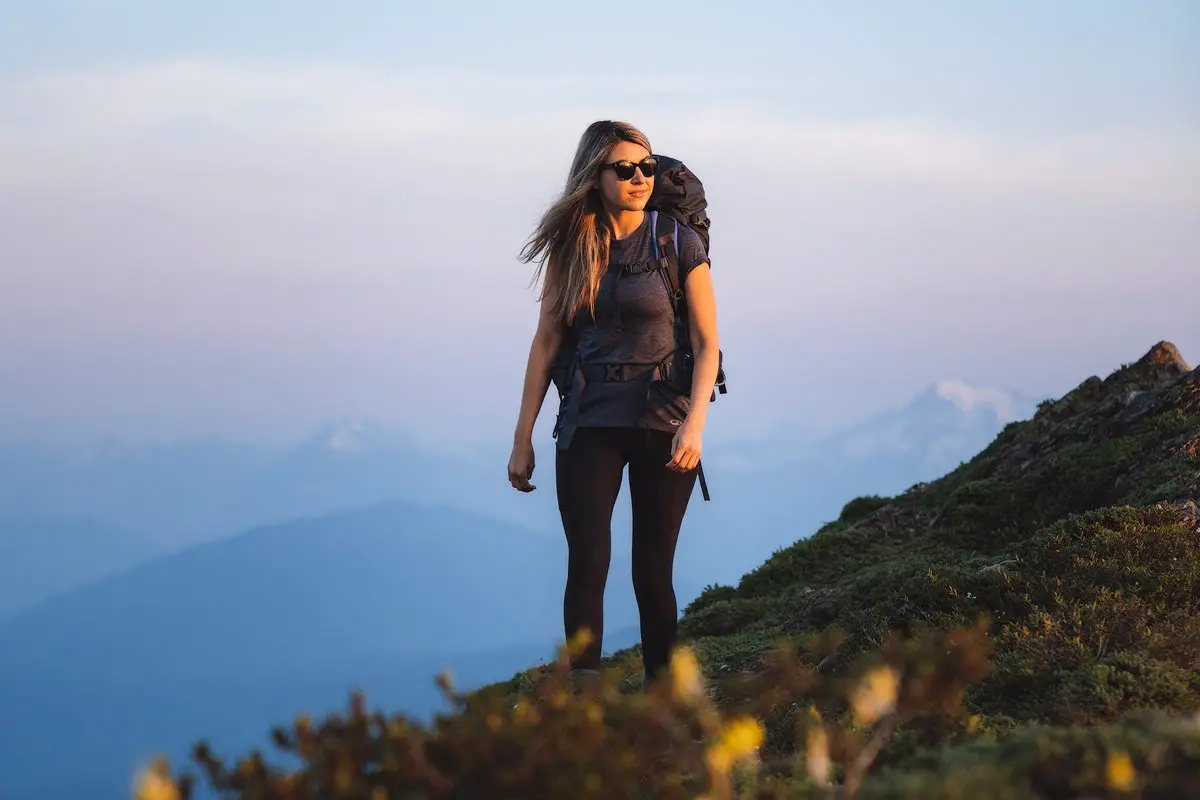
For a second, I couldn’t breathe, and it wasn’t just because the air at five thousand feet was razor-thin and laced with grit. I was half-buried in a landslide, pinned in place by compacted mud and scattered rock, my legs twisted into an angle my orthopedic surgeon would later describe as “miraculously non-fatal.” Wind screamed around the fractured ridge above me, hurling shards of ice and dust against my helmet.
But none of that compared to the image of my son crumpled on a linoleum floor three hours away.
“Dad,” I choked out, fighting to keep my voice steady. “Listen to me. Noah is in anaphylactic shock. He’s at school. The nurse needs you to authorize the EpiPen. Mom’s not answering her phone. They cannot inject him without a guardian. You are ten minutes away. Just get in the car and—”
He sighed. Not a gasp. Not an oh my God, is he breathing? A sigh. The same exasperated exhale he used when a waiter brought his cocktail with the wrong garnish.
“Morgan, really. You always overreact. The nurse can handle it.”
“She can’t handle it without your consent!” My throat scraped. “Dad, he’s allergic to peanuts. He is blue. They need you to sign off on the injection. Please. I am stuck on a mountainside in a mudslide. I cannot get to him. You are down the street.”
There was a murmur of voices behind him—my mother’s bright laugh, my sister’s nasal whine, a plastic surgeon’s smooth baritone explaining bridge refinement. I could almost see them: my father in his tailored blazer, my mother in oversized sunglasses despite being indoors, Chinmayi studying her profile in a mirror.
“Morgan, we are in the middle of something important. You can’t expect us to just walk out. We have a consultation fee on the line. Don’t be selfish.”
Selfish.
The word hit me harder than the rock that had slammed into my ribs when the slope gave way. I stared up at the slab of gray sky visible between the jagged edges of the rockfall. Snowflakes drifted down, melting into the mud streaking my face.
“Dad, he could die,” I whispered.
“Look, we’ll call when we’re done. I’m sure it’s not that serious. Children are always dramatic about allergies. You were the same. We are talking about your sister’s face. Try to have some perspective.”
Then, impossibly, he hung up.
The satellite phone beeped in my gloved hand, the line going dead. For a moment, I saw double: the ridge above me and the school’s fluorescent hallway. Noah’s thin arms. The freckles dusting his nose. His lips swelling, his throat closing.
I realized two things in that suspended silence.
My son might die because of a nose job.
And I was done being the daughter who begged.
I didn’t scream. Screaming wasted oxygen, and up here, oxygen was equity. I braced my shoulders against the mud and scrolled through the satellite phone to a number labeled EXTRACT.
“RidgeLine Extraction Services. This is Ortiz.”
“Dr. Gregory,” I said, keeping my tone crisp. “Client ID MG-047. I’m on site at Falcon Ridge, sector E7. Landslide event. I’m pinned, lower extremities trapped. I need emergency extraction.”
Keys tapped beneath the howl of the gale.
“Copy that, Doctor. Any other injuries?”
“Possible fractured ribs. Left ankle compromised. I can feel my toes but can’t move them. You need to know—my son is in anaphylaxis in town. I need to know how fast you can get me out.”
Ortiz exhaled. “The weather’s rough. We’re looking at a minimum charge of forty-five hundred for high-risk deployment. Possibly more—”
“Charge me whatever you want,” I snapped. “Run my AMX black. I authorize the transaction now. Just get here.”
High-risk extraction. Strangers willing to risk their lives for me. That, apparently, was worth more urgency than my father could muster for his grandson.
“Understood. We’re coming.”
The next three hours blurred into wind and ice and the constant awareness of breath. Voices crackled through the phone. The ridge groaned ominously. I counted backwards, recited soil classifications. Alfisols, Andisols, Aridisols. Anything to keep from spiraling.
He is not dying, I told myself. Someone is breaking rules for him. Someone is stepping up where my parents stepped out.
When the first thump of rotors cut through the wind, I almost sobbed. Ropes descended. A helmeted face appeared above me.
“Dr. Gregory? I’m Cole. We’ve got you.”
Strangers dug me out of the mountain my parents always imagined I belonged to. They worked with ruthless efficiency, every movement a chorus of careful commands. When they hoisted me into the chopper, the world narrowed to the vibration of rotors and the tightness of straps across my chest.
Each foot lower was another inch closer to my son.
My boots still oozed mud when I reached Noah’s room.
He looked impossibly small in the hospital bed, curly hair plastered to his forehead with sweat. A monitor beeped steadily. His lips were no longer blue. Pink had returned to his cheeks.
The nurse looked up, surprise flashing across her face as she took in my state—helmet under one arm, jacket torn, face streaked with grit.
“You must be Noah’s mom. He’s stable. The EpiPen worked.”
“Who authorized it?” The words came out sharply. “His grandparents?”
The nurse’s expression tightened. “No. We couldn’t reach them. We contacted emergency services directly. The paramedics made a judgment call. Technically, we’re not supposed to without consent, but… he was crashing. We weren’t going to let a signature kill a child.”
Something in my chest unclenched. There were still people who chose humanity over protocol.
“Thank you,” I whispered.
I sat beside Noah’s bed and watched his chest rise and fall. My regular phone buzzed weakly as it reconnected to civilization. Messages flooded in, then a notification I almost swiped away.
Fraud alert: Unusual activity detected on Family Support Card ending in 1298.
The Family Support Card. The one I’d set up for my parents years ago, tied to an account I funded silently every month. “Use this when it’s critical,” I’d said. “Food, heat, medicine.”
I tapped the notification.
$5,000 – Beverly Hills Aesthetics.
The timestamp was forty minutes earlier.
Forty minutes ago, I had been screaming into a satellite phone, begging my father to sign off on medication that would save his grandson. Forty minutes ago, my mother had been sitting in a leather chair while a surgeon explained possibilities for her youngest daughter’s face.
My parents had used my money to buy the silence that almost killed my child.
I stared at the screen until the text blurred. I looked at Noah’s chest rising and falling, at the thin cannula under his nose, at the bruising where the EpiPen had punched into his thigh.
In my line of work, we talk about root rot. It’s a fungal disease that starts underground. On the surface, plants look fine—leaves green, flowers bright. But below, the roots turn soft and black. The fungus eats away at structural integrity until one day a breeze snaps the plant in half.
Root rot can take down entire orchards before anyone realizes there’s a problem.
My parents were root rot.
For years, I had been the invisible nutrient source. While they stood tall at country clubs and cosmetic clinics, I had been pumping anonymous financial support into the ground beneath them. I paid overdue utilities. I covered credit cards. I refinanced their mistakes in secret.
They mocked my work, my boots, my truck. “Mud girl,” they called me. Not doctor, not scientist.
They never understood that the mud they despised was the only thing holding their lives together.
I pulled my laptop from my bag.
I had built their financial ecosystem like a careful lattice. A blind trust here, a discreet refinance there. I’d brokered deals through proxies, letting them believe they’d negotiated generous rates by sheer charisma instead of by the weight of my credit score.
I’d done it because I thought I could manage the rot, control it.
I was wrong.
Rot doesn’t negotiate.
I logged into the banking portal and went straight to the backend. With a few keystrokes, I froze the Family Support Card. But I didn’t stop there. I began shutting down the scaffolding I had built around their house, their business, their life.
If they wanted to treat me like dirt, I would show them what happens when the ground gives way.
Six years earlier, I had developed a fungal-resistant soil treatment that changed the game for commercial agriculture in the Pacific Northwest. Vineyards and orchards licensed my formula. Every time a field was treated, a deposit landed in my account. I held the intellectual property.
I wore beat-up work boots and drove a ten-year-old truck because I preferred reliability over appearance. My parents, on the other hand, spent forty years chasing the illusion of wealth, layering debt over debt to maintain the image.
They were drowning. I knew because I was the one keeping their heads above water.
Three years earlier, when their adjustable-rate mortgage reset and their payment jumped, they’d called me.
“It’s these banks,” my father had grumbled. “They trick people. We’re just a little tight.”
I knew better. They weren’t in a rough patch; they were running on fumes. If I handed them a lump sum, they’d burn it on something shiny.
So I set up a blind trust. Through a broker, under a name that meant nothing to them, I bought their debt. Their mortgage was refinanced by a mysterious private equity group.
“Money finds its level,” my father had said afterward. “People can tell when a man has potential.”
I’d smiled into my coffee and said nothing.
But in that hospital room, I stopped lying to myself. I hadn’t done it for them. I’d done it for the fantasy that if I saved them enough times, they might see someone worth respecting.
You can’t buy respect from people who measure worth in nose jobs.
I took a breath and called Marcus, the face of my private investment portfolio.
“It’s time,” I said when he answered.
“Everything all right?”
“No. It’s time to execute the contingency plan on the Gregory asset.”
He went quiet. “You’re sure? Once we initiate the commercial bridge loan, there’s no going back.”
“I know. Draft the paperwork. Offer them two hundred eighty thousand. Make the interest rate attractive enough that they bite, but strict enough that they choke. Capital improvements only. Make that clause airtight.”
Marcus exhaled slowly. “Understood. I’ll have the offer drawn up by morning.”
I ended the call and closed my laptop. I reached out and brushed Noah’s hair off his forehead. He stirred, eyes fluttering open.
“Hey, baby.”
“Mom? You look… dirty.”
I laughed shakily. “I had a little accident at work. But I’m okay. You’re okay. That’s what matters.”
As he drifted back to sleep, I listened to the monitors. I wasn’t scared. I was something harder.
I was done feeding the rot.
It didn’t take long for greed to do what it always does.
Two days later, my phone rang while I was in my office, ankle wrapped, ribs bruised, Noah home playing with LEGOs. The caller ID flashed GREGORY HOME.
“You’re not going to believe this,” my father said without preamble. His voice was electric with triumph. “I just closed a huge deal.”
No “How’s Noah?” No reference to the incident at school. Just pure self-congratulation.
“What kind of deal?”
“Some private equity group. Recognized my potential. Offered me a bridge loan for the consulting firm. Two hundred and eighty thousand. The paperwork was a joke. They practically begged me to take it.”
He believed it. He genuinely believed a firm had looked at his failing business and declared him a financial savant.
“That’s impressive. So what will you do with the money? Pay off the house?”
He laughed. “Don’t be small-minded, Morgan. You have to spend money to make money. I need to project success. This is for growth.”
My jaw tightened. “Did you read the terms? Bridge loans usually restrict how you use the funds. Capital improvements only.”
“Oh please. I know how to handle these people. Wrote a check to your uncle’s construction company for foundation work. He’ll cash it, take a cut, and give me the rest back. It’s called leverage. Maybe if you spent less time in the dirt, you’d understand high finance.”
He was bragging about felony-level fraud like a man explaining how he’d gotten extra ice cream.
“You bought a car,” I said quietly.
“A Porsche Panamera. Black on black. Top trim. I’m picking it up this afternoon. You should see the way people look at you when you pull up in something like that. It’s respect, Morgan.”
Respect. The word tasted bitter.
“Enjoy lunch. Really. Enjoy every bite.”
I hung up.
He had just confessed to breaching the loan contract. He’d funneled capital improvement funds through a fake invoice and turned them into cash for a luxury car.
When you sign as a commercial borrower, you often waive consumer protections. My father had “negotiated” a lower rate by agreeing to terms he hadn’t read—terms that included a confession of judgment clause. If he violated the contract, he automatically admitted liability. No trial. Just a stamp.
I waited until I knew he’d be at the country club, basking in reflected approval. At twelve-thirty, I called Marcus.
“Is the Porsche confirmed?”
“Registered this morning. Paid in cash. He even sent our loan officer a photo to brag.”
I closed my eyes. “File it. Execute the confession of judgment. Start foreclosure proceedings. Seize the vehicle as collateral.”
“On it. The county clerk will sign off within the hour.”
There was a time when the thought of kicking my parents out would have broken me. That house had been my whole world once—the carpet I watched cartoons on, the banister I slid down, the kitchen table where my father taught me that tears were manipulation.
Now, it was an asset. A line in a spreadsheet.
Ten minutes later, Marcus texted: Deed transferred. Property recorded under Morgan Holdings LLC. Process server en route.
The process server, Dani, told me later what happened.
“He was leaning against the car. Sun behind him. He had an audience—three guys in polos. You could tell he was in his element.”
She showed me the photo. My father’s posture was relaxed, expression smug.
“I walked up. ‘Mr. Gregory?’ I handed him the envelope. ‘You’ve been served.'”
She sipped her beer. “His face went from pink to gray in three seconds. ‘What is this?’ I kept my voice clear. ‘Eviction notice, sir. Foreclosure has been executed. The keys to this vehicle and the house now belong to Morgan Holdings LLC.'”
She grinned. “You could have heard a pin drop. One of his friends stepped away like financial ruin was contagious.”
I imagined my father clutching the papers, scanning language he didn’t understand. Default. Breach. Confession of judgment.
They didn’t call me that day or the next. Three days after the eviction, I got my first response: a thick envelope from a strip-mall law office.
They were suing me.
Gregory v. Morgan Holdings LLC.
My father had retained an attorney and filed a complaint claiming the loan terms were unconscionable, that he’d been misled, and that the foreclosure had inflicted emotional distress worth three million dollars.
They didn’t even know I was the lender.
My broker called, anxious. “They’ve filed a lis pendens. It clouds the title. They could drag this out for two years. You might need to settle.”
“I’m not settling,” I said. “Force discovery. Demand every receipt for capital improvements. Every invoice. Every check. And put our forensic accountant on standby.”
Scientists don’t guess. We verify.
Two weeks later, their lawyer submitted a folder of invoices from “Cresswell Concrete & Foundations, LLC” detailing tens of thousands in foundation work. On paper, it looked legitimate.
My forensic accountant, Sarah, scanned the PDFs.
“This is adorable,” she murmured. “Look. They didn’t even change the metadata.”
“What do you mean?”
She pulled up document properties. “These invoices were supposedly generated four months ago. But the file creation date is two weeks ago. Same day they filed the lawsuit. The tax ID belongs to a dry cleaner in Nevada that closed five years ago.”
She clicked through more pages. “The logo is a stock image. The address is a strip mall that doesn’t list any concrete company. This isn’t sloppy record-keeping. This is forgery.”
My father hadn’t just misused the funds. He’d manufactured a paper trail and submitted it as evidence in a civil case.
Wire fraud. Federal.
We packaged everything—loan documents, bank statements, the photo of the Porsche, the bragging email, the fake invoices, the metadata reports.
We sent it to the U.S. Attorney’s office and the FBI.
One Tuesday morning, while teaching Noah how to identify soil horizons in a vineyard, my phone buzzed.
They’re raiding the house.
I leaned against the truck, vineyard around us bare in winter light. Noah poked at the earth with a small trowel, delighted when he spotted a worm.
“What’s a raid?” he asked.
“Nothing you need to worry about. Focus on the worms, buddy.”
In my parents’ neighborhood, unmarked cars pulled up. Agents in jackets with yellow letters stepped out. They knocked on the door.
My mother tried to slam it. “This is a misunderstanding. We’re good people.”
The agents produced the warrant. They went inside anyway.
They seized computers, pulled files, impounded the Porsche, froze accounts. They didn’t arrest anyone that day, but they peeled back the glossy surface and exposed the mold underneath.
Four hours later, my father collapsed in his lawyer’s office while screaming about injustice.
Massive hemorrhagic stroke.
My mother called from the hospital in a voice I’d never heard from her—ragged, stripped of pretense.
“This is your fault. You’ve killed him. Are you happy now? Your father is lying on a table and they say he might not wake up, and it’s because you couldn’t just let things go.”
I stood at my kitchen window, watching Noah in the backyard building a castle out of dirt.
“What happened?”
“He had a stroke! The stress—” Her voice broke. “They need to do surgery. It’s expensive. Everything is frozen because of those awful people you hired. You have to pay. You’re his daughter.”
Behind her words, I could hear beeping machinery, the hospital announcer, nurses murmuring.
“I didn’t kill him. His choices did. His rage did. His refusal to take responsibility did. All I did was stop protecting him from consequences.”
“How can you be so cruel? We raised you. We fed you. This is how you repay us?”
“What did the doctor say?”
“That they need authorization to proceed with surgery. They need someone with financial responsibility. The insurance is lapsed. The accounts are frozen. You have money. You owe him. He’s your father.”
“I’m not his proxy. Legally or financially. I’m his landlord, and I’m the complaining witness in a federal fraud investigation. I can’t authorize anything and I won’t pay. The hospital has procedures for indigent patients.”
Silence, then my mother began to howl. Actual, animal howling.
“You’re a monster! No wonder nobody loves you. No wonder you have to play in the dirt. You’re sick, Morgan.”
I waited until she ran out of breath.
“Goodbye, Mom.”
I hung up.
I leaned forward, resting my forehead against the cool cabinet door. My hands shook. Not because I regretted it, but because some deep, conditioned part of me expected the sky to fall when I refused them.
It didn’t come.
Outside, Noah looked up and saw me in the window. His face lit, and he waved enthusiastically.
I waved back.
Six months later, the house sold at auction.
The winning bid came from a couple who owned a local organic market and wanted to start an urban farm. They had two young kids and dreams of raised beds and chicken coops.
I didn’t keep the proceeds.
Instead, I met with the dean of agriculture and set up a scholarship: The Gregory Soil Sciences Fund. Full ride for first-generation students in soil science or mycology whose families actively discouraged their career choice.
The irony wasn’t lost on me, but it felt right.
Somewhere, in some future graduation ceremony, a student whose family refused to attend might walk across a stage funded by the people who had refused to attend mine.
As for my parents, the investigation crawled forward. My father survived the stroke but didn’t fully recover. He lost mobility on one side, his speech came out slurred. The prosecution took that into account. White-collar crime cases don’t always end in dramatic perp walks. Sometimes justice looks like plea agreements and restitution plans and permanent disqualification.
I didn’t attend any hearings. I didn’t visit the hospital. I didn’t send flowers.
I focused on my son and my work.
Noah bounced back faster than I did. Children are resilient in ways adults forget how to be. We worked with his allergist to adjust his emergency care plan. We trained his teachers to move faster if it happened again.
We also started spending more weekends in the vineyards I worked with.
On a late winter afternoon, we stood at the edge of one such vineyard, the vines bare and gnarled. I knelt in the loamy soil with Noah beside me, scooping up a handful of earth.
“See this? This is topsoil. It’s where most of the plant’s food comes from.”
“It smells weird,” Noah said, wrinkling his nose but leaning closer.
“That’s life. Good soil smells like things growing and breaking down. When it smells like this, it’s healthy.”
He grabbed a clump, imitating me. “You’re the mud girl. But you’re not dirty. You’re… cool.”
My throat tightened. “I’ll take that.”
He fell quiet, eyes on the rows of vines. “We don’t see Grandma and Grandpa anymore.”
“No. We don’t.”
“Because they didn’t help me when I couldn’t breathe?”
The air was crisp. In the distance, the vineyard manager’s truck rumbled along a dirt road.
“Because they didn’t act like safe grown-ups. Safe grown-ups protect you, even if it’s inconvenient. They listen when you’re in trouble. They show up.”
“Like the nurse did. And the ambulance people.”
“Exactly. And like the people who pulled me out of the mud.”
He considered that. “So… we only keep safe grown-ups. We prune the others.”
Prune.
In vineyards, pruning is everything. You cut away shoots that zigzag in the wrong direction. You remove diseased wood. It looks harsh in winter, an army of bare sticks, but it’s the only way to get healthy grapes in the fall.
“That’s right. We prune the others.”
He nodded, satisfied, and went back to poking worms.
That night, after he’d fallen asleep, I sat at my kitchen table with my laptop. On the screen was the spreadsheet I’d kept for thirty-two years—a meticulous record of every dollar I’d given my parents, every bill I’d covered, every “loan” I’d forgiven. Beside the numbers, I’d listed insults. Mud girl. Waste of potential. Embarrassment. Overreacting. Dramatic.
I’d told myself I kept it as documentation. Proof I wasn’t crazy.
Now it looked like a catalog of my own complicity.
I scrolled to the bottom row. The foreclosure proceeds had been accounted for. The scholarship established. Every cell was filled.
My cursor blinked in the empty space below, waiting for the next entry.
There wasn’t going to be one.
Some rot you can treat. You can trim infected roots, apply fungicide, adjust moisture. Some plants bounce back if you catch it early.
But when the disease has turned everything soft and black, when the structure is gone, the only humane thing to do is cut it out completely. Not because you’re cruel, but because you want anything else in the garden to have a chance.
I moved the cursor to the top and selected all.
My finger hovered over the delete key for a long moment. It felt like I was erasing evidence, like I might need this to defend myself.
But I didn’t.
I hit delete.
Cells vanished. Years of numbers and words collapsed into blankness.
I saved the empty document and closed it.
The silence afterward wasn’t empty. It was spacious. There was room to breathe.
I poured myself a glass of water and stepped onto the small back porch. The sky was clear, stars pricked into deep velvet. The air smelled of damp earth and wood smoke.
I thought of my father in his hospital bed, furious at a world that finally refused to bend. I thought of my mother, too attached to her narrative of victimhood to see the part she’d played. I wished them no harm, but I no longer felt responsible for their outcomes.
I had cut away the rot.
Inside, Noah stirred and sighed in his sleep.
I had cleared the ground so my son could bloom in healthier soil.
If you’ve ever had to prune your own family tree to save yourself, you’re not alone. It’s brutal. It feels wrong at first, hacking away at branches you were raised to believe were sacred. People will tell you you’re cruel. That you owe endless second chances. That blood is thicker than boundaries.
But I know this much: plants do not thrive when their energy is drained by diseased wood. Children do not flourish when their safety depends on someone else’s vanity.
I was trapped in a landslide the day my son almost died on a school floor, and I called my father for help. He chose a nose over a heartbeat.
That was the day the ground gave way.
Everything that came after—the loan, the Porsche, the foreclosure, the lawsuit, the investigation—was just gravity doing what it always does.
I can’t change the soil I came from.
But I can choose what I grow from it.
THE END

Lila Hart is a dedicated Digital Archivist and Research Specialist with a keen eye for preserving and curating meaningful content. At TheArchivists, she specializes in organizing and managing digital archives, ensuring that valuable stories and historical moments are accessible for generations to come.
Lila earned her degree in History and Archival Studies from the University of Edinburgh, where she cultivated her passion for documenting the past and preserving cultural heritage. Her expertise lies in combining traditional archival techniques with modern digital tools, allowing her to create comprehensive and engaging collections that resonate with audiences worldwide.
At TheArchivists, Lila is known for her meticulous attention to detail and her ability to uncover hidden gems within extensive archives. Her work is praised for its depth, authenticity, and contribution to the preservation of knowledge in the digital age.
Driven by a commitment to preserving stories that matter, Lila is passionate about exploring the intersection of history and technology. Her goal is to ensure that every piece of content she handles reflects the richness of human experiences and remains a source of inspiration for years to come.