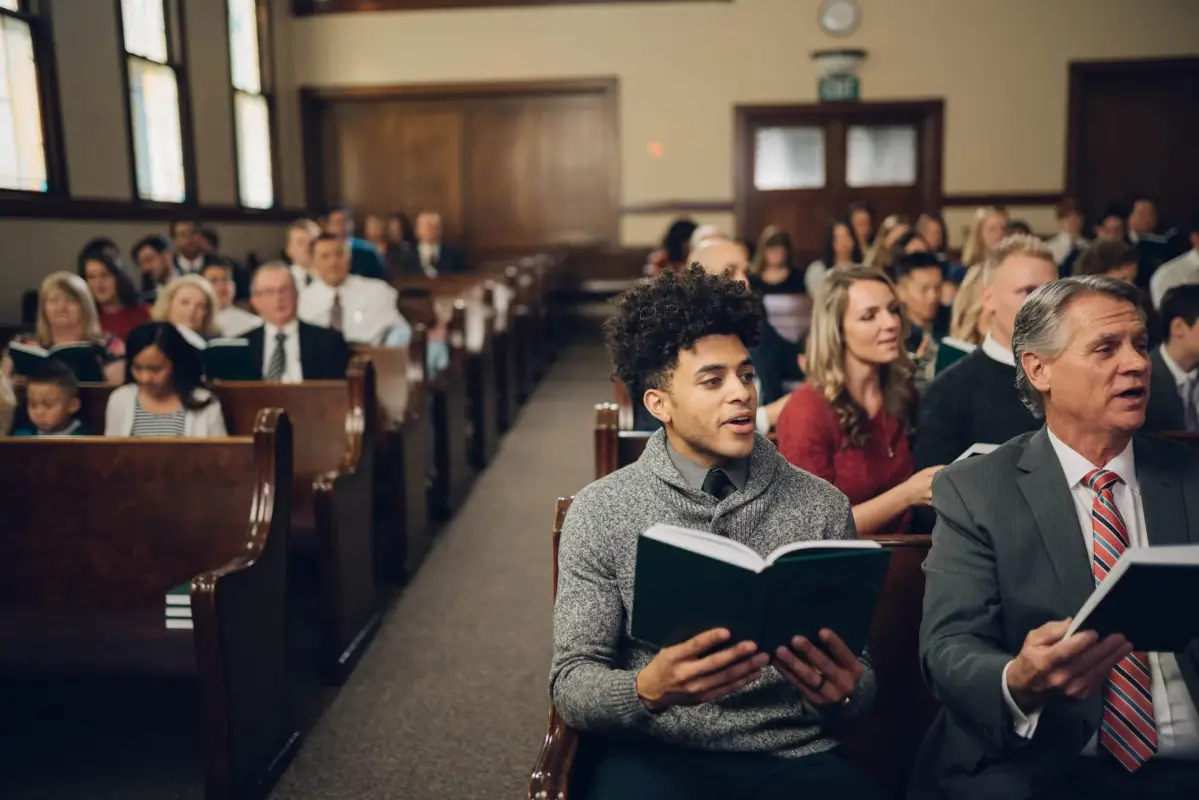
The Truth at the Funeral
The chapel smelled of lilies and freshly polished wood, the kind of stillness that presses against your chest and makes every breath feel deliberate. I stood beside Mark’s casket, my hands numb and cold despite the warmth of the crowded room, staring at the closed lid as if it might suddenly open and undo the last seven days.
Seven days since the phone call.
Seven days since I’d watched the paramedics wheel him out of our house, knowing from their faces that he was already gone.
Seven days since my world had fractured into before and after.
Mark had been forty-two. Steady. Unassuming. The kind of man who fixed things quietly—the leaky faucet, the garage door, the homework problems that made Evan cry—and never asked for praise or acknowledgment. He went to work as an electrical engineer, came home, kissed my forehead, asked about my day, and meant it when he listened.
He was gone now, and the chapel was filled with people who believed they understood him.
His mother, Diane Carter, stood near the front row, her black dress perfectly pressed, her silver hair swept into an elegant updo. She looked composed, dignified, the picture of a grieving mother. But I’d known Diane for twelve years, and I knew the difference between grief and performance.
She’d been watching me all morning—small, measuring glances that made my skin crawl. During the eulogy, when the pastor spoke about Mark’s devotion to family, she’d stared at me with an expression I couldn’t quite read. Contempt? Vindication? Blame?
When the service concluded and people began to file past the casket, murmuring condolences, Diane remained seated. Waiting.
The chapel began to empty slowly. Some people lingered, whispering in clusters. Others approached me with gentle words and awkward hugs. My sister Rebecca stood beside me, her hand on my shoulder, a silent anchor.
Then Diane stood.
She walked to the front of the chapel with measured steps, her heels clicking against the marble floor. The remaining mourners—maybe forty people—fell silent, sensing something about to happen.
Diane stopped three feet from me. She fixed her eyes on mine with chilling calm, her voice cutting through the hushed space like a blade.
“It’s better he’s gone than forced to live with the shame she caused him.”
The words landed like a physical blow. My breath caught. The room seemed to tilt.
A few relatives murmured in agreement. Mark’s uncle nodded. An aunt I’d met twice whispered something to the woman beside her. The validation spread like poison through the crowd.
“She never deserved him,” Diane continued, her voice gaining strength from the support. “Always working late, always too busy for family dinners, always putting herself first. The stress she caused—it’s no wonder his heart gave out.”
My throat closed. I wanted to speak—to defend myself, to remind them of the hospital nights I’d sat vigil, the extra shifts I’d worked to pay for the medical bills insurance wouldn’t cover, the years I’d spent loving a man who’d loved me back completely.
But grief had locked my words somewhere deep inside, and all I could do was stand there, frozen, while my mother-in-law dismantled my character in front of Mark’s casket.
Rebecca’s grip on my shoulder tightened. “Diane, that’s enough.”
“Is it?” Diane’s eyes flashed. “Is it enough that my son is dead? That he spent his last years exhausted and stressed because of her selfishness?”
I felt tears beginning to blur my vision. The chapel walls seemed to close in.
Then I felt a small hand touch my arm.
Evan.
My eight-year-old son stood up from the pew where he’d been sitting quietly beside Rebecca’s husband. His black suit hung awkwardly on his thin, growing frame—we’d bought it two sizes too large, thinking we’d have years before he needed it. His face was pale, the freckles across his nose standing out starkly, but his expression was composed in that intense way he had when he was focusing on something important.
In his hands, he held Mark’s phone. The black case was worn from years of use, a crack spiderwebbing across one corner from when Mark had dropped it in the garage three months ago.
Three months. When Mark had still been alive. When our biggest problem had been deciding what to watch on Netflix and whether Evan was old enough for a later bedtime.
“Grandma,” Evan said clearly, his voice cutting through the murmurs.
Diane turned toward him, her expression softening slightly. “Not now, sweetheart. Go back to your seat.”
“Grandma,” Evan repeated, his voice steady despite the trembling in his hands, “do you want me to play the recording Dad made about you last week?”
The change in Diane’s face was instantaneous. Color drained from her cheeks. Her mouth opened slightly. Her eyes, which had been hard and certain moments before, went wide with something that looked like fear.
“Sit down,” she snapped, then seemed to catch herself, softening her tone. “This is not appropriate, Evan. This is your father’s funeral. Show some respect.”
Evan didn’t sit. Instead, he looked at me, silently asking permission, his brown eyes—Mark’s eyes—searching my face for guidance.
My heart pounded against my ribs. I had no idea what recording he was talking about. Mark had never mentioned recording anything. But I knew my husband, and I knew he did nothing without purpose. If he’d left something for Evan to use, there was a reason.
I nodded.
“You don’t understand what you’re doing,” Diane said quietly, taking a step toward Evan. Her hands were shaking now. “You’re just a child. You don’t know what’s on that phone.”
Evan’s thumb hovered over the screen. Around us, the chapel had gone completely silent. The minister shifted uneasily near the altar. Someone coughed nervously. Chairs creaked as people leaned forward, trying to hear.
“Dad said,” Evan continued, his voice gaining confidence, “that if you ever lied about Mom, I should press play.”
He did.
For a moment, there was only static. Then Mark’s voice filled the chapel—steady, familiar, impossibly alive.
“If you’re hearing this, it means my mother finally crossed a line.”
I felt my knees weaken. Rebecca’s hand moved from my shoulder to my elbow, supporting me.
The room froze. People stopped breathing. Diane’s hands flew to her mouth.
“And I’m done shielding her,” Mark’s voice continued. “My name is Mark Carter. I’m recording this on October 15th because my mother, Diane Carter, threatened to spread lies about my wife unless I kept paying her bills and covering for her mistakes.”
Gasps rippled through the crowd. Someone said, “Oh my God.” Someone else whispered, “Is this real?”
Diane stumbled backward, reaching for a pew to steady herself.
Mark’s voice remained calm, methodical—the same tone he used when explaining a complex electrical problem or teaching Evan how to build something.
“For the past eight years,” he said, “my mother has been manipulating me financially and emotionally. It started small. A few hundred dollars here and there. ‘Just until I get my Social Security straightened out,’ she’d say. ‘Just until the insurance pays out.’ But it never stopped.”
He paused, and in that pause, I heard the weight of years.
“In 2018, she took out a credit card in my name. She said it was an emergency—that she needed it for medical expenses. I found out six months later when I was denied a mortgage because my credit score had dropped two hundred points. She’d maxed out the card and stopped making payments.”
I remembered that. The mortgage denial. Mark had been devastated, furious in a quiet way that scared me more than yelling ever could. He’d told me it was identity theft, that someone had stolen his information. He’d said he was handling it.
He’d been protecting her even then.
“I paid it off,” Mark continued. “Twenty-three thousand dollars. I took a loan against my 401k to clear it because I didn’t want it on my record. My mother promised it would never happen again.”
The phone’s speaker crackled slightly. I could hear Mark take a breath.
“But it did. Last year, she told me she needed fifteen thousand dollars for a surgery. She showed me paperwork from a hospital. I later found out the surgery was elective—cosmetic work she wanted but couldn’t afford. She used my money for a facelift while I was taking on extra projects to pay for Evan’s allergy treatments.”
Diane was crying now, but silently, her shoulders shaking.
“Three months ago,” Mark’s voice dropped lower, more tense, “when I told her I couldn’t keep supporting her financially—that we had our own medical bills, that Evan needed braces, that we were barely making ends meet—she threatened me.”
The chapel was so quiet I could hear the heating system clicking on.
“She said if I cut her off, she’d tell everyone that my wife was having an affair. That she’d make sure the whole family knew what a terrible person I’d married. She’d spread lies, ruin my wife’s reputation, turn everyone against her.”
My hands were shaking. Rebecca wrapped her arm around my waist.
“My wife,” Mark said, and his voice finally cracked with emotion, “is the best person I know. She works sixty-hour weeks as a nurse. She comes home exhausted and still makes time to help Evan with his homework. She holds my hand during scary doctor’s appointments. She laughs at my terrible jokes. She is kind and patient and devoted.”
Tears were streaming down my face now.
“My wife didn’t make me sick,” Mark said firmly. “Carrying my mother’s secrets did. The stress of lying. The shame of stealing from my own retirement to cover her debts. The constant fear that she’d destroy my marriage if I didn’t comply.”
He paused again. When he spoke next, his voice was steadier.
“I’m recording this because I’m done. I’ve documented everything. Bank transfers. Text messages. Voicemails where she explicitly threatens to destroy my wife’s reputation. I’ve saved screenshots of the credit card statements, the fake medical bills, the forged loan documents. It’s all in a folder labeled ‘Evidence’ on my laptop. The password is Evan2015.”
The year Evan was born.
“I love my mother,” Mark said softly. “I really do. But love doesn’t mean allowing someone to harm the people you’re supposed to protect. It doesn’t mean sacrificing your family’s wellbeing to enable someone else’s manipulation.”
Another pause. The recording was almost over.
“If my son is hearing this, it means she went through with her threats. Evan, buddy, I’m sorry you have to be the one to do this. But remember what I always told you: the truth isn’t disrespect. It’s protection. You’re protecting your mom the way I should have protected her years ago.”
The recording ended.
Silence pressed down on the chapel like a physical weight. Forty people sat frozen, staring at an eight-year-old boy holding his dead father’s phone.
Then, slowly, people began to move.
Chairs scraped. Someone stood. Then another. Then five more. They walked out quietly, their faces flushed with embarrassment or anger or shock. They didn’t look at Diane as they passed.
Mark’s uncle, who had nodded in agreement with Diane’s accusations minutes earlier, stopped at the end of our pew. “I’m sorry,” he said, not to Diane, but to me. “I’m so sorry.”
My sister-in-law Karen approached, tears streaming down her face. “I didn’t know,” she whispered, gripping my hands. “Oh God, I didn’t know. She told us—she said you were cold, that you neglected him, that you—” Her voice broke. “I’m so sorry I believed her.”
Diane remained collapsed in the front pew, her face buried in her hands. Her carefully constructed facade had shattered, leaving behind only a small, broken woman who’d gambled everything and lost.
The minister approached her cautiously. “Mrs. Carter, perhaps you should—”
“He promised me,” Diane murmured, her voice hollow. “He promised he wouldn’t say anything. He said as long as I didn’t act on the threats, he’d keep it quiet.”
“He promised to protect us,” I said, my voice stronger now. “And he did.”
After the service officially ended, people approached me differently. Not with pity or polite condolences, but with genuine remorse. Some apologized for believing the rumors. Others admitted they’d heard Diane making accusations for months but hadn’t questioned them.
A family friend—an accountant named Robert—pulled me aside in the church parking lot.
“You should have this reviewed by a financial attorney,” he said gently, gesturing to the phone still clutched in Evan’s hand. “If what Mark said is true—and I have no reason to doubt him—there are crimes here. Identity theft. Fraud. You might be able to recover some of what was stolen.”
I nodded numbly, not quite ready to think about legal proceedings when I was still processing the fact that my husband was gone.
But Robert was right. The recording wasn’t just Mark defending me. It was evidence.
Diane left the reception early, escorted out by her sister. She didn’t look at me. Didn’t try to explain or apologize. She simply walked to her car, climbed into the passenger seat, and was driven away.
Her authority—the power she’d wielded over family gatherings and holiday plans, the influence she’d used to control Mark for years—was gone. Shattered by the truth in her son’s own words.
Evan slipped his hand into mine as we watched her go.
“Was Dad mad at Grandma?” he asked quietly.
“No, buddy,” I said, kneeling down to his level. “He loved her. But sometimes loving someone means setting boundaries to protect other people. Your dad loved Grandma, but he loved us enough to stop letting her hurt us.”
Evan nodded slowly, processing. “Did I do the right thing?”
I pulled him into a tight hug. “You did exactly what your dad asked you to do. You were so brave.”
That night, after the reception, after the last relative had left, after I’d tucked Evan into bed and sat with him until he fell asleep, I sat in Mark’s office.
The room still smelled like him—coffee and the sandalwood soap he always used. His jacket hung on the back of his chair. Papers covered his desk in organized chaos.
I turned on his laptop and entered the password: Evan2015.
There was a folder on the desktop labeled “Evidence,” just as he’d said. Inside were subfolders organized by year, each containing bank statements, screenshots of text messages, photos of documents, and detailed notes in Mark’s precise handwriting.
2016: Credit card opened without permission. $23,450 charged.
2017: “Loan” of $8,000 for “car repairs.” Car never repaired. Money never returned.
2018: $15,000 for “medical procedure.” Later discovered to be cosmetic surgery.
2019: Multiple small requests totaling $12,000. Threats began when I questioned frequency.
The list went on. In total, over the past eight years, Diane had taken nearly $80,000 from us. Eighty thousand dollars that could have gone to Evan’s college fund, to our retirement, to the medical bills that had piled up during Mark’s illness.
But there was another folder too. This one labeled “For After.”
Inside was a letter addressed to me.
Sarah,
If you’re reading this, I’m gone, and you know the truth about my mother. I’m sorry I didn’t tell you sooner. I’m sorry I let this go on as long as I did. I thought I could manage it—keep her at bay, protect you from her manipulation, maintain peace.
I was wrong.
The stress of keeping these secrets contributed to my health problems. The doctor told me stress was a major factor in my blood pressure, my heart issues. I was literally letting my mother kill me to avoid conflict.
I recorded that message three weeks ago, right after my last physical. The doctor said I needed to eliminate stress. I realized that meant finally standing up to her.
I told Evan about the recording because I knew she’d strike at you the moment I was gone. I knew she’d try to rewrite history, paint you as the villain, make herself the victim. She always does.
I trust our son to defend you when I can’t.
I’ve documented everything because I want you to have options. You can pursue legal action if you want. You can recover some of what was stolen. Or you can walk away and never speak to her again. Either choice is valid.
Just promise me you’ll take care of yourself and Evan. Promise me you’ll stop feeling guilty for my mother’s actions. Promise me you’ll remember that you were the best part of my life.
I love you. I’m sorry I waited so long to protect you properly.
Mark
I read the letter three times, tears blurring the words, before I finally closed the laptop and let myself cry—really cry—for the first time since he’d died.
The weeks that followed were both harder and easier than I expected.
Harder because grief is relentless, showing up in unexpected moments—when I reached for his coffee mug, when a song he loved played on the radio, when Evan laughed and sounded exactly like his father.
Easier because the truth had lifted a weight I hadn’t realized I was carrying. People stopped giving me pitying looks tinged with judgment. The whispers stopped. Mark’s coworkers reached out with genuine condolences instead of awkward distance.
Robert, the accountant, helped me file reports with the police and the credit bureaus. A lawyer explained my options for civil action.
“You have documentation of identity theft, fraud, and financial exploitation,” she said, reviewing the evidence. “You could pursue criminal charges if you want. Or you could file a civil suit to recover the money. Or you could do nothing.”
I thought about it for a long time.
Diane sent one message, two weeks after the funeral. A text, not a call, because she was too much of a coward to speak to me directly.
I’m sorry things got out of hand. I never meant for any of this to happen. Mark made it sound worse than it was. I hope we can move past this for Evan’s sake.
No acknowledgment of the theft. No real apology. Just excuses wrapped in victim language, trying to minimize what she’d done.
I didn’t respond.
Instead, I blocked her number. I instructed the lawyer to send a formal cease-and-desist letter. I made it clear: she was not welcome in our lives unless she was willing to acknowledge what she’d done, apologize genuinely, and make financial restitution.
She never responded to the letter.
That was fine. Some relationships aren’t worth saving.
Evan asked questions, honest ones, and I gave honest answers.
“Why did Grandma take Dad’s money?” he asked one evening while doing homework at the kitchen table.
“Because she made bad choices and didn’t want to face the consequences,” I said. “So she made them your dad’s problem instead.”
“Is that why Dad was always tired?”
The question broke my heart. “Part of it, yeah.”
“Did Dad love Grandma?”
“Very much. But sometimes loving someone means protecting yourself and the people you care about, even if it’s hard.”
Evan nodded thoughtfully, then went back to his math homework, accepting the complexity of it in the way children sometimes do better than adults.
Mark’s recording changed more than just one thing. It changed everything.
At work, colleagues who had been distant after Mark’s death—because Diane had spread rumors, because they’d heard I was “difficult”—began reaching out again. One nurse squeezed my shoulder in the break room and said simply, “He stood up for you. That matters.”
Karen, Mark’s sister, became one of my closest allies. She’d believed her mother for years, and the guilt ate at her.
“I should have questioned it,” she said over coffee one afternoon. “All those stories about you being cold or neglectful—they didn’t match the person I saw at family gatherings. But Mom was so convincing, and it was easier to believe her than to confront her.”
“You didn’t know,” I said.
“But I should have asked. I should have paid attention.”
We built a new relationship from that honesty—one based on truth instead of Diane’s manipulation.
One Saturday afternoon, three months after the funeral, I finally opened the spare folder Mark had mentioned in his recording. It was a physical folder, tucked in the back of his filing cabinet, labeled simply: “Important.”
Inside were neatly organized documents, each one carefully labeled.
There was a college savings account for Evan that I hadn’t known existed—Mark had been contributing $200 a month for years, money he’d somehow scraped together despite Diane’s demands.
There was a list of people who’d offered to help after his death—names, phone numbers, and notes about what they’d offered. “Karen—childcare when needed.” “Robert—financial advice.” “Tom from work—lawn mowing, car maintenance.”
There was a birthday card for Evan’s ninth birthday, pre-written and sealed. “Open on March 8, 2024,” the envelope read. I put it away carefully, a gift from beyond the grave.
And there was a final note to me, handwritten on a card with a photo of us from our wedding day.
Sarah,
I’m sorry I waited. I’m proud of you. You’re stronger than you think. Evan is lucky to have you. I was lucky to have you.
Don’t let my mother’s poison make you doubt yourself. You were always enough.
I love you. I’m sorry I’m not there to say it in person.
Mark
I cried reading it, but they were different tears—not just grief, but also gratitude. Gratitude that I’d had him at all. Gratitude that he’d protected us, even in death.
We set boundaries with the rest of Mark’s family. Diane could see Evan only with me present, in public places, after demonstrating genuine change.
She declined.
That was her decision. Ours was to move forward.
Grief didn’t disappear. It learned how to behave. Some days it was quiet, lurking in the background. Other days it was loud and overwhelming, hitting me when I least expected it.
But the truth gave us ground that didn’t crumble beneath our feet. We had Mark’s words, his evidence, his love protecting us even after he was gone.
At school, Evan wrote an essay about bravery for his English class. He didn’t write about funerals or recordings. He wrote about telling the truth when it’s difficult, about protecting people you love, about being brave even when your hands are shaking.
His teacher emailed me: “Your son’s essay was remarkable. You’re raising a good man.”
I printed the email and put it in Evan’s baby book, right next to the first photo Mark had taken of him in the hospital—a scrunched, red-faced newborn who’d grown into a brave eight-year-old willing to stand up to his grandmother in a chapel full of people.
A year after Mark’s death, Karen and I organized a scholarship in his name at the local technical college for students studying electrical engineering. We funded it partially with money recovered through the civil suit—Diane had been ordered to repay $40,000, though we’d only received $12,000 so far and would likely never see the rest.
But it was enough. Enough to help students who reminded us of Mark—quiet, steady, dedicated people who fixed things without asking for praise.
Evan was there when we announced the scholarship, standing beside me as the college president spoke about Mark’s contributions to his field and his community.
“Your dad would be proud,” I whispered.
“I know,” Evan said. Then, after a pause: “I miss him.”
“Me too, bug. Every single day.”
“But we’re okay, right?”
I looked at my son—taller now, growing into his features, Mark’s eyes staring back at me with that same steady intelligence.
“Yeah,” I said. “We’re okay.”
And we were.
Not because the grief was gone. Not because everything was perfect. But because the truth had set us free from Diane’s manipulation, from the lies, from the weight of secrets that had literally killed my husband.
Mark’s voice no longer lived on a phone. It lived in our daily choices. In the boundaries we set. In the honesty we practiced. In the way Evan stood up for what was right, even when it was scary.
If you’ve ever been silenced to preserve appearances, remember this: telling the truth isn’t betrayal. It’s protection. It’s love with limits. It’s choosing your own wellbeing over someone else’s comfort.
And children understand far more than we give them credit for.
Mark taught me that. Even in death, he was still teaching me—about courage, about boundaries, about the difference between love and enabling.
Two years after his death, I was cleaning out the garage when I found one last piece of Mark—a toolbox with a note taped inside the lid.
For Evan, when he’s old enough. Teaching him how things work was one of my greatest joys. -Dad
I sat on the garage floor and cried, holding the wrench Mark had used to fix our bathroom sink three weeks before he died.
Then I stood up, wiped my eyes, and called for Evan.
“Want to learn how to fix the screen door?” I asked.
His face lit up. “Really?”
“Really. Your dad left you his tools. I think it’s time we put them to use.”
We spent the afternoon working together, Evan carefully holding pieces while I followed the YouTube tutorial, both of us laughing when we got it wrong and trying again.
That’s what Mark had left us. Not just evidence or recordings or money recovered from his mother’s theft.
He’d left us truth. He’d left us strength. He’d left us each other.
And that was enough.
THE END
A story about the courage it takes to tell the truth, even after death—and the freedom that comes when secrets can no longer poison the people we love.

Lila Hart is a dedicated Digital Archivist and Research Specialist with a keen eye for preserving and curating meaningful content. At TheArchivists, she specializes in organizing and managing digital archives, ensuring that valuable stories and historical moments are accessible for generations to come.
Lila earned her degree in History and Archival Studies from the University of Edinburgh, where she cultivated her passion for documenting the past and preserving cultural heritage. Her expertise lies in combining traditional archival techniques with modern digital tools, allowing her to create comprehensive and engaging collections that resonate with audiences worldwide.
At TheArchivists, Lila is known for her meticulous attention to detail and her ability to uncover hidden gems within extensive archives. Her work is praised for its depth, authenticity, and contribution to the preservation of knowledge in the digital age.
Driven by a commitment to preserving stories that matter, Lila is passionate about exploring the intersection of history and technology. Her goal is to ensure that every piece of content she handles reflects the richness of human experiences and remains a source of inspiration for years to come.
I love this story. I cried so much. The son was such a brave boy. God bless this family. The father would never leave them,Great story.
Another well written post by Lila Hart. Enjoy it.