The Night Everything Changed
My name is Pamela, and last Saturday night, a security guard told me I couldn’t walk through the front door.
Not just any door. Not just any building.
But I’m getting ahead of myself.
Let me start three days earlier, when I found out about my sister’s engagement party the same way a stranger might—scrolling through social media at midnight, unable to sleep, a glass of wine going warm on my nightstand.
There it was. The photo. Professional lighting, perfect angles, her hand extended just so to catch the light on that massive diamond. The caption was simple, almost humble in its brevity: “She said yes! Celebration coming soon ❤️”
I stared at that screen for what felt like an hour but was probably only five minutes. Waiting for the text. The call. The follow-up message that said, “Can’t wait for you to celebrate with us!”
It never came.
When my phone finally did ring the next morning, I practically lunged for it, convinced it would be Natalie, apologizing for the impersonal announcement, laughing about how crazy the last few days had been.
It was Mom.
“The party is at the Sterling on Saturday,” she said, no greeting, no warmth in her voice. Just facts. “Wear something appropriate. Please don’t do anything to make your sister uncomfortable.”
I held the phone away from my ear for a second, staring at it like it might suddenly start making sense.
“Mom, I—”
“Seven o’clock. Don’t be late. And Pamela?” She paused, and I could hear her sighing, that particular sigh that meant she was already tired of me before the conversation had really begun. “This is an important night. Natalie’s marrying into a very respected family. Bradley’s parents will be there. Just… try to blend in, okay?”
The line went dead.
Try to blend in.
I sat there on the edge of my bed, still in my pajamas, still holding that silent phone, and felt something old and familiar settle into my chest. That hollow feeling. The one that whispered I was always going to be the footnote in someone else’s story.
I’m 34 years old. I shouldn’t still feel like this.
But here’s the thing about families—they know exactly which buttons to push because they installed them in the first place.
To understand what happened Saturday night, you need to understand how I got here. Not just physically, but the whole winding road that led me to that moment on those steps, looking through glass at a life I was never quite invited to join.
When Natalie and I were kids, people always said we looked alike. Same dark hair, same green eyes, same small nose that we inherited from Dad’s side of the family. But somewhere around middle school, the comparisons stopped being about appearances and started being about everything else.
Natalie was focused. Natalie was driven. Natalie knew exactly what she wanted and how to get it.
I was… exploring. Trying things. Changing my mind.
Mom called it “drifting.”
When Natalie got into her first-choice college, there was a party. Champagne, relatives, a photo that still sits framed on Mom’s mantle. When I got into mine—a smaller school, less prestigious, but one with a program I actually cared about—Mom said, “That’s nice, honey,” and went back to planning Natalie’s going-away dinner.
The pattern continued.
Natalie graduated with honors and immediately landed a position at a consulting firm. I graduated with decent grades and spent a year backpacking through Europe, working odd jobs, sleeping in hostels, trying to figure out what I actually wanted from life.
Mom told people I was “finding myself,” and the way she said it made it sound like a diagnosis.
When Natalie turned 25, Mom helped her with a down payment on a beautiful condo in the city. Exposed brick, high ceilings, walking distance to everything. I remember visiting once, watching Natalie give me the tour, seeing how proud she was. And I was happy for her. I really was.
When I turned 25, I’d found something I loved. A tiny bed and breakfast in a small town about three hours away was going up for sale. It was run-down, needed work, but I could see the potential. I could see the life I wanted—helping people, creating a warm space, building something with my own hands.
I called Mom, nervous but excited, and asked if she might help me the way she’d helped Natalie.
She laughed.
Not a chuckle, not a polite deflection. An actual laugh.
“Pamela, sweetheart, you can’t even commit to a hairstyle for more than six months. You want to run a business? You need to be realistic. You drift too much for anything that serious.”
I remember standing in my tiny apartment, phone pressed to my ear, feeling something inside me crack. Not break—crack. Like a windshield that’s been hit by a rock but is still holding together, spiderweb fractures spreading across the glass.
“Okay,” I said quietly. “I understand.”
“You’re not upset, are you?” Mom asked, already moving on. “I’m just being honest. That’s what mothers do. Maybe in a few years, when you’ve settled down a bit—”
“I need to go,” I said, and hung up before she could hear my voice shake.
I went to the bank the next week. Alone. I wore my best interview outfit and brought every piece of documentation I could think of. Tax returns, employment history, a business plan I’d written and rewritten until the pages were soft from handling.
The loan officer was skeptical. I was young, unproven, asking for what felt like an impossible amount of money. But I must have said something right, or maybe he just saw something in me that my own mother couldn’t see, because he approved it.
The interest rate was brutal. The repayment terms were terrifying. But it was mine.
I called the bed and breakfast owner that night and made an offer.
Three weeks later, I had the keys to my first property.
That was nine years ago.
Nine years of eighteen-hour days and learning on the fly. Nine years of fixing toilets at midnight and charming difficult guests and slowly, painfully, learning how to read spreadsheets and manage inventory and negotiate with suppliers who thought they could take advantage of a young woman who didn’t know what she was doing.
I got married somewhere in there. Daniel. He was a guest who came back three times in two months, and by the third visit, we both knew it wasn’t just about the breakfast I served. He was kind, funny, supportive of my dreams. We got married at the courthouse with two witnesses we borrowed from the coffee shop next door.
Mom was “disappointed we didn’t do something proper.” Natalie sent a card.
The marriage lasted four years. Not because we didn’t love each other, but because I loved the work more, and Daniel deserved someone who could turn off at the end of the day. He found someone like that, eventually. Someone who wanted kids and white picket fences and Sunday dinners that didn’t get interrupted by kitchen emergencies.
I signed the papers, wished him well, and meant it.
And then I put my head down and worked harder.
By the time I was 32, I didn’t just have the one bed and breakfast anymore. I had three small hotels. Nothing fancy, nothing that would make headlines, but they were mine, and they were successful, and I was proud of them in a way I’d never been proud of anything else.
When I turned 33, I did something crazy.
I bought the Sterling.
The Sterling Hotel wasn’t just any property. It was the kind of place people dreamed of. Historic building, prime location in the heart of the city, the kind of lobby that made you want to take pictures. It had fallen into disrepair under the previous owners, lost its shine, started hemorrhaging money.
I saw what it could be.
The previous owners were desperate enough to sell to someone with a vision and enough capital to make it work. It took every dollar I’d saved, every favor I could call in, and a partnership with two investors who believed in my track record.
But I got it.
We spent eight months renovating. Restoring the original woodwork, updating the rooms while keeping the historic charm, training a new staff who understood that luxury was about making people feel seen, not just giving them expensive soap.
We reopened six months ago.
The reviews were glowing. Bookings were strong. I finally felt like I’d made it, like I’d proven something—not to my family, because they didn’t know, but to myself.
I never told them.
At first, it was because I was busy. Then it was because they never asked. Mom called once every few weeks, usually with some story about Natalie’s latest achievement, occasionally remembering to ask how my “little inn” was doing. I’d say “fine” and she’d say “that’s nice” and we’d move on.
Natalie and I talked even less. A text on birthdays. A like on a social media post. The kind of relationship that looked normal from the outside but felt hollow in the middle.
I told myself I didn’t care. That I’d outgrown needing their approval.
I was lying to myself, but it was a comfortable lie.
Saturday arrived with the kind of crisp autumn weather that makes everything feel like it’s part of a movie. Golden light, leaves just starting to turn, that perfect temperature where you don’t need a jacket but you carry one anyway.
I spent the morning doing a final walkthrough of the Sterling. Marcus, my manager, gave me a knowing look when I mentioned I’d be attending an event there that evening.
“Everything will be perfect,” he said. “It always is.”
“I know,” I replied. “I just… it’s my sister’s engagement party.”
His eyebrows went up. “Your sister chose the Sterling?”
“Apparently.” I didn’t tell him the rest—that she had no idea who owned it, that my whole family had no idea. It felt too complicated to explain.
“Will you be introducing yourself?” he asked carefully. Marcus had been with me for two years. He knew enough about my family situation to tread lightly.
“I don’t know,” I admitted. “Maybe. We’ll see how it goes.”
I went home to change, standing in front of my closet for longer than I wanted to admit. I wanted to look nice, but not like I was trying too hard. I wanted to fit in, but I also wanted to feel like myself.
I settled on a simple black dress, elegant but understated, and my grandmother’s pearl earrings. They were the only thing of hers I had—Mom had given everything else to Natalie, saying she was the one who would “appreciate nice things.”
I looked at myself in the mirror and tried to imagine how the night would go. Maybe Natalie would hug me, genuinely happy I came. Maybe Mom would introduce me to Bradley’s parents with pride instead of that apologetic tone she always used. Maybe this would be the beginning of something better.
I was still lying to myself.
The Sterling looked beautiful as I pulled up, the way it always did in the evening light. The old stone facade glowed warm, and through the windows, I could see the chandelier in the main lobby, the one we’d spent weeks restoring, casting soft light across the marble floors.
My hotel. My work. My achievement.
And I was about to walk through it like a stranger.
I parked and took a deep breath, smoothing down my dress, checking my hair in the rearview mirror one last time. It was going to be fine. I was going to walk in, congratulate my sister, smile at my mother, maybe even enjoy myself.
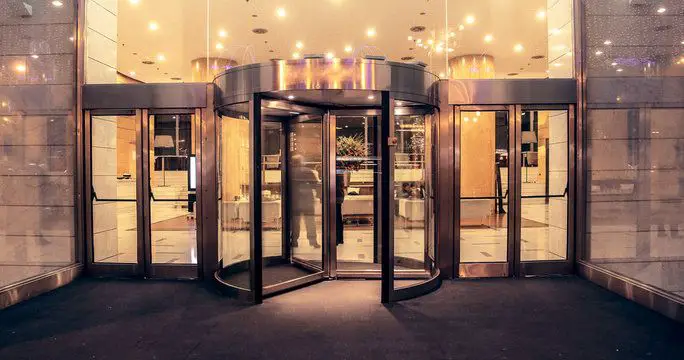
The front steps were lit with small lanterns. Beautiful touch—I’d approved that design myself. I climbed them slowly, trying not to think too hard about what I was walking into.
That’s when the security guard stepped in front of me.
He was young, new—I didn’t recognize him, which meant he’d been hired in the last few weeks. Professional looking, polite smile, doing exactly what he was supposed to do.
“Good evening, ma’am. Name, please?”
“Pamela Seard,” I said, expecting him to check his list, nod, and step aside.
Instead, his expression changed. Just slightly, just for a second, but I saw it. His jaw tightened. His eyes flicked to someone inside, then back to me.
“I’m going to have to ask you to use the service entrance,” he said, his voice quiet, almost apologetic.
For a moment, I didn’t understand. The words made sense individually, but together, they didn’t compute.
“I’m sorry?” I said.
“The service entrance, ma’am. It’s around back. Those are the instructions for your name.”
The world tilted slightly. “Instructions from whom?”
“The event organizer, ma’am. I’m sorry, but I can’t let you through the front entrance.”
I looked past him, through the glass doors, into the lobby that I’d personally redesigned. And there, standing under the chandelier in an elegant evening gown, was my mother.
She was looking right at me.
Our eyes met through the glass, and I waited for something—confusion, surprise, concern. Some indication that this was a mistake, that she’d rush over and fix it.
Instead, she smiled.
Not a big smile. Just that small, satisfied curve of her lips that I’d seen a thousand times before. The smile that said “everything is exactly as it should be.”
She saw me standing there, being turned away from the front door like I was nothing.
And she smiled.
Then she turned away.
Behind her, deeper in the lobby, I caught a glimpse of Natalie. Cream silk dress, her hand on Bradley’s arm, accepting congratulations from a cluster of well-dressed guests. She glanced toward the door, just for a second, just long enough for our eyes to meet.
She saw me too.
And then she deliberately turned her back.
I stood there for what felt like an eternity but was probably only seconds. The security guard was waiting, uncomfortable now, probably hoping I wouldn’t make a scene.
I could have. God, I could have made such a scene.
One sentence. That’s all it would have taken. “I own this hotel.” Five words, and everything would change. The guard would apologize profusely, my mother’s smile would crack, Natalie would realize exactly how badly she’d miscalculated.
The words were right there, sitting on my tongue, ready.
“Fine,” I heard myself say instead. “I’ll go around.”
I don’t know why I said it. Pride, maybe. Or some broken part of me that still wanted to see how far they’d go. Or maybe I just wanted to give them enough rope to hang themselves with.
I walked back down those steps, my steps, past my own lanterns, toward the service entrance of my own hotel.
The service hallway was exactly as I’d designed it—clean, well-lit, functional. It smelled like fresh bread from the kitchen and the lemon-scented cleaning solution my head of housekeeping preferred. The walls were a soft gray, and there were carts lined up neatly, ready for the evening’s service.
I’d walked this hallway a hundred times, checking on things, talking to staff, making sure everything ran smoothly. But I’d never walked it like this. Not as a guest who’d been turned away. Not as someone who didn’t belong.
When I pushed through the kitchen door, the noise hit me first. The clatter of pans, the rush of water, the controlled chaos of a team preparing for a major event. Then everyone saw me.
The sous chef dropped a ladle. A line cook froze mid-chop. Even the dishwasher stopped and stared.
“Ms. Seard?” Chef Antonio said, his accent thickening with confusion. He looked like he’d seen a ghost. Or worse, like he’d seen his boss being treated like an intruder in her own establishment.
I forced a smile, the kind I’d perfected over years of dealing with difficult situations. “Don’t worry about it, Antonio. Tonight I’m just a guest. Please, everyone, keep working. Everything looks beautiful.”
But I could feel their eyes following me as I crossed the kitchen. I could feel their confusion, their concern, maybe even their pity. These people knew who I was. They knew I’d fought for every inch of this place. And now they were watching me slink through the back door like I was ashamed.
I pushed through the final door and into the service corridor that led to the ballroom.
The ballroom was transformed. I’d seen the event plan, of course, had approved it in the way I approved all major events. But seeing it in person, knowing it was for Natalie, made it different somehow.
Gold tablecloths, crystal everywhere, flowers that must have cost a fortune. A string quartet in the corner, playing something classical and beautiful. At the far end, a massive backdrop with elegant script: “N & B” intertwined with trailing flowers.
It was, objectively, stunning.
I slipped into the room and made my way to a corner, half-hidden behind a large floral arrangement. From there, I could see everything without being too obvious about it.
Natalie was holding court near the center of the room, radiant in her cream silk dress. Bradley beside her, tall and handsome in an expensive suit, the kind of man who looked like he’d been born in a country club. Around them, a constellation of well-dressed people, all vying for a moment of the happy couple’s attention.
Mom was at a table near the front, surrounded by what I assumed were Bradley’s parents and other important relatives. She was laughing, gesturing, completely in her element. This was the life she’d always wanted—high society, important connections, a daughter marrying up.
I was watching a dream come true.
Just not my dream.
A waiter passed by with champagne. I took a glass, more for something to hold than because I wanted it. The room was filling up now, guests finding their seats, the energy building toward the speeches that I knew would be coming soon.
I saw people I vaguely recognized—distant cousins, family friends, people who’d been at holidays and weddings over the years. A few of them glanced my way, squinting like they thought they knew me but couldn’t quite place me. None of them came over.
The quartet finished their piece, and a man I didn’t know—probably Bradley’s father—tapped a knife against his glass. The room quieted.
“Thank you all for being here,” he said, his voice carrying that particular confidence of someone used to being listened to. “We’re here to celebrate two extraordinary people who found each other, and to welcome Natalie into our family.”
Applause. Smiles. Natalie beaming.
“Bradley has always had excellent judgment,” his father continued, getting a few chuckles. “And when he introduced us to Natalie, we knew immediately that he’d found someone special. Someone with ambition, with grace, with the kind of character that makes a family strong.”
More applause. I took a sip of champagne that tasted like nothing.
Bradley spoke next, talking about the moment he knew Natalie was the one, how she challenged him, how she made him want to be better. It was sweet, genuinely so, and I found myself hoping that he meant it, that he would be good to her.
Then Natalie took the microphone.
She looked beautiful standing there, confident and glowing, every inch the successful woman she’d worked so hard to become. I felt a complicated tangle of emotions—pride, jealousy, love, resentment, all mixed together into something I couldn’t quite name.
“I want to thank everyone for being here tonight,” she began, her voice steady and clear. “Family is so important to me. Family is about the people who really show up for you, who support you, who understand what commitment means.”
She paused, and her eyes swept across the room. For a second, I thought she was looking for me. For a second, I thought she might acknowledge me, might include me in this moment.
“Some people don’t quite understand that kind of commitment,” she continued, and her gaze moved past me like I wasn’t even there. “They drift through life, never quite settling, never quite finishing what they start. But tonight is about real love. Real commitment. The kind that lasts.”
A few people laughed, like she’d made a joke. A few others looked uncomfortable, glancing around like they suspected there was a target to this barb but couldn’t quite identify it.
I felt every word like a physical blow.
Then Mom stood up. Of course she did.
“I’d like to say a few words about my daughter,” she said, and I actually felt a moment of hope. Irrational, stupid hope that maybe she’d mention both of us, maybe she’d acknowledge that she had two daughters, maybe—
“Natalie has always been my pride and joy,” Mom said, her voice warm with genuine affection. “From the time she was a little girl, she knew what she wanted and went after it. No hesitation, no second-guessing. Just pure determination.”
She paused, taking a sip of her champagne, and I saw it coming before she even said it.
“I have another daughter,” she continued, and my heart actually skipped. “She’s… well, she’s still figuring herself out. Still drifting, as she’s always done. But Natalie—Natalie is everything a mother could hope for.”
The words hung in the air.
I heard a woman at a nearby table whisper to her companion, “Wait, I thought she had two daughters? Where’s the other one?”
People started looking around. Some eyes found me in my corner, half-hidden behind flowers, and I saw the recognition dawn. I saw the pity. I saw the awkward realization that they’d just heard someone’s mother dismiss her other child in front of a room full of people.
I wanted to disappear. I wanted to storm out. I wanted to scream.
I did nothing.
The speeches ended. The quartet started up again. People returned to their conversations, the moment passing for them but still echoing in my head.
I should have left then. I should have walked out, gone home, blocked all their numbers and never spoken to any of them again.
But I stood there, frozen, like some part of me still needed to see how much worse it could get.
Natalie made her way through the room, accepting congratulations, laughing at jokes, the perfect bride-to-be. She was coming closer to my corner, flanked by two friends I vaguely remembered from her college days.
When she finally reached me, her smile tightened. Not disappeared—Natalie was too well-trained for that—but tightened, like she’d just spotted something unpleasant but was determined to handle it gracefully.
“Pamela,” she said, her voice a careful mix of surprise and condescension. “You actually came. I wasn’t sure you would.”
“Of course I came,” I said, keeping my voice steady. “You’re my sister.”
“I was worried this would all be… a lot for you,” she continued, gesturing vaguely at the room. “This kind of event, these kinds of people. I know it’s not really your scene.”
“I’m fine,” I said.
She looked me up and down, taking in my simple black dress, my grandmother’s pearls, probably comparing them to the designer labels and expensive jewelry scattered around the room.
“You look nice,” she said, in a tone that made it sound like she was surprised I’d managed to dress myself. “Simple, but nice.”
One of her friends giggled.
Natalie leaned in slightly, her voice dropping to that confidential tone that somehow made everything worse. “Listen, I hope you understand about the entrance situation. Bradley’s family is very particular about image and presentation. His mother specifically requested that we… manage the guest list carefully. Keep things elegant. You understand, right?”
I understood perfectly.
“Sure,” I said. “Very elegant.”
“Good,” she said, straightening up, her public smile returning. “I’m glad you’re not upset. That’s very mature of you.”
She started to turn away, then paused. “Oh, and maybe don’t seek out Bradley’s parents? They don’t really need to meet everyone, and I think it might be better if… well, you know.”
She didn’t wait for an answer, just glided away, her friends trailing behind her like she was a queen and they were her court.
I stood there, champagne glass still in my hand, and wondered how I’d become so invisible to my own family.
I was seriously considering leaving when I saw Mom heading toward me, her expression tight with that particular kind of anger that she always tried to disguise as concern.
She grabbed my arm and pulled me toward a small alcove near the service hallway, away from the main party.
“What are you doing here?” she hissed, her voice low but fierce. “This is Natalie’s night. Her special night. Why can’t you just let her have this without making it about you?”
I blinked at her. “Making it about me? Mom, I’m literally hiding in a corner. I haven’t talked to anyone. I haven’t done anything.”
“Your presence is disruptive,” she said, like that made perfect sense. “People are asking questions. ‘Where’s the other daughter?’ ‘Why isn’t she at the family table?’ You’re making things complicated.”
“I was sent to the service entrance,” I said quietly. “Did you know about that?”
Her expression flickered—just for a second—and I saw that she had known. Of course she had known.
“Natalie was just trying to keep things smooth,” she said. “Bradley’s family has certain expectations. You have to understand—”
“I understand,” I interrupted. “I understand perfectly.”
“Don’t take that tone with me,” she snapped. “I’m your mother. I’m trying to help you understand that not everything is about you. Sometimes you need to step back and let other people shine. Natalie has worked so hard for this, and she deserves—”
“Ms. Seard?”
We both turned. Marcus was walking toward us, his expression calm but purposeful, the way he always looked when something important was happening.
Mom barely glanced at him. “Can’t this wait? We’re in the middle of a private conversation.”
Marcus didn’t even acknowledge her. He looked straight at me.
“Ms. Seard,” he said again, his voice clear and carrying just far enough for nearby tables to hear. “I apologize for the interruption, but we need your decision on an important matter regarding the hotel.”
My mother blinked. “Your what?”
Marcus continued, professional and unwavering. “There’s an issue with the reservation system for next month’s conference, and as the owner, you’re the only one who can approve the changes to—”
“Owner?” Mom’s voice was sharp. “What are you talking about?”
The tables nearest us had gone quiet. People were turning, listening now, because there was something in Marcus’s tone that suggested this was going to be interesting.
I looked at Marcus, at his calm, steady expression, and realized he’d done this on purpose. He’d seen me relegated to the service entrance of my own hotel, had probably heard from staff about what happened, and decided enough was enough.
Bless him.
“I own the Sterling Hotel,” I said clearly, my voice steady for the first time all night. “Have for about six months now.”
My mother’s face went through several interesting shades. “You… what?”
“I own this hotel,” I repeated. “Along with three others. I’ve been running them for the past nine years.”
People were definitely listening now. Chairs were turning. The table closest to us had gone completely silent, every ear tuned in.
Mom was staring at me like I’d suddenly started speaking another language. “That’s impossible. You run a little bed and breakfast. You drift. You can’t even—”
“I haven’t run a bed and breakfast in seven years,” I said. “I own four hotels now. This is my flagship property. I personally oversaw its renovation and reopening.”
Natalie had appeared at the edge of the alcove, Bradley beside her, both of them looking confused and increasingly concerned.
“What’s going on?” Natalie demanded.
“Your sister,” Mom said, her voice tight, “is claiming she owns this hotel.”
“I’m not claiming anything,” I said calmly. “I do own it. Marcus, would you mind confirming?”
Marcus nodded. “Ms. Pamela Seard is the primary owner and CEO of Seard Hospitality Group, which owns and operates the Sterling Hotel, along with three other properties. She’s been my boss for two years.”
The silence that followed was absolutely delicious.
Natalie’s face had gone pale. “That’s… that’s not possible. You never said anything. You never…”
“You never asked,” I said simply. “None of you ever asked what I actually did. Mom calls it my ‘little inn’ and you all just accepted that version because it fit what you wanted to believe about me.”
“But… but the service entrance,” Natalie stammered. “The instructions…”
“Were your instructions,” I said. “You told Bradley’s family I wasn’t important enough for the front door. You literally had your own sister sent around back at her own hotel.”
Bradley was looking between us, clearly trying to piece together what was happening. “Natalie, what is she talking about?”
But I wasn’t finished. Nine years of being dismissed, being underestimated, being treated like I was still that drifting twenty-something who didn’t know what she wanted—it all came pouring out.
“When I was 25 and asked for help buying my first property, Mom laughed at me,” I said, looking directly at her. “Said I was too much of a drifter to run anything serious. So I did it myself. I got a brutal loan, worked eighteen-hour days, learned everything the hard way. And I succeeded. And then I did it again. And again.”
Mom’s mouth opened and closed, but no sound came out.
“I got divorced because I worked too hard. I missed holidays because I was building something. I stopped trying to explain what I did because none of you cared enough to listen. And you know what? I was fine with that. I didn’t need your approval. I’d learned to stop expecting it.”
“Pamela—” Mom started, but I held up a hand.
“But this?” I gestured around the ballroom. “Sending me to the service entrance like I’m an embarrassment? Giving speeches about how I’m still drifting, still figuring myself out, while standing in a hotel I own? That’s new, even for you.”
Natalie looked like she might cry. Or scream. Or both. “You should have told us. How were we supposed to know if you never told us?”
“I posted about it on social media,” I said. “Business accomplishments, openings, events. You never liked or commented on a single one. Mom, I sent you an invitation to the grand reopening of the Sterling. You said you were busy and asked how the ‘inn’ was doing.”
That was apparently too much for Mom. “Don’t you dare make this about me. I’ve been nothing but supportive—”
“You literally told a room full of people that I’m a disappointment,” I said, my voice finally rising. “Thirty minutes ago. I heard you. Everyone heard you.”
Bradley’s mother had materialized beside us, looking concerned. “Is there a problem? Natalie, darling, what’s going on?”
Natalie looked at her future mother-in-law, then at me, then back again, and I could see her calculating. Trying to figure out how to spin this, how to maintain control of the narrative.
“It’s a family misunderstanding,” she said quickly. “My sister is confused about—”
“I’m not confused,” I said. Then I looked at Marcus. “Would you mind bringing the property deed? I think we need to clear up any confusion.”
Marcus actually smiled. “Of course, Ms. Seard. I’ll get it immediately.”
As he walked away, I looked at the growing crowd around us—family, friends, Bradley’s relatives, all of them watching this spectacular implosion of what was supposed to be a perfect evening.
“I’m sorry,” I said, addressing Natalie directly. “I didn’t mean to ruin your party. I really didn’t. I came here tonight hoping that maybe, just maybe, things could be different between us. That you’d see me as an equal instead of a disappointment.”
“Pamela—” she started, but I shook my head.
“The truth is, you sent me to the service entrance because you were ashamed of me. Because in your mind, I was still that drifter who couldn’t get her life together. And rather than standing up for myself immediately, I went along with it. Because some part of me still wanted your approval so badly that I’d walk through the back door of my own hotel just to be here.”
Tears were streaming down my face now, but my voice was steady.
“But I’m done. I’m done trying to be small enough to fit into your idea of who I should be. I’m done apologizing for succeeding in ways you didn’t expect. I’m done being invisible.”
Marcus returned with a folder, which he handed to me. I pulled out the property deed and held it up.
“This is the deed to the Sterling Hotel,” I said. “My name is right there. Along with my business partners. We bought this place, renovated it, and turned it into one of the most successful hotels in the city. And you chose it for your engagement party without even knowing that.”
I handed the deed to Bradley’s mother, who took it with shaking hands and actually read it, her eyes widening.
“It’s real,” she said quietly. “She really does own this.”
Natalie had gone from pale to flushed, her hands clenched at her sides. “You’re making a scene. On my engagement night. This is exactly the kind of thing—”
“The kind of thing what?” I asked. “The kind of thing a drifter would do? The kind of thing an embarrassment would do? Please, finish that sentence.”
She couldn’t.
Mom finally found her voice again. “This is unacceptable. Pamela, I don’t care what you own or what you’ve done—you’re being deliberately hurtful. After everything we’ve done for you—”
“What have you done for me?” I asked, genuinely curious. “Because from where I’m standing, you’ve dismissed me, discouraged me, and spent tonight treating me like an inconvenient relative you have to tolerate. So please, tell me what you’ve done for me.”
She sputtered, searching for words, but came up empty.
I took a deep breath and addressed the room at large. “I apologize for disrupting the celebration. This is between me and my family. Please, enjoy the party. The food is excellent—I should know, I hired the chef. The wine is spectacular. And despite everything, I do wish Natalie and Bradley all the happiness in the world.”
I meant that last part. Despite everything, she was still my sister, and I didn’t actually want her to be miserable.
I turned to leave, to walk out of the ballroom with what remained of my dignity, when Bradley spoke up.
“Wait,” he said, his voice cutting through the murmurs. “Is it true? About the service entrance?”
Natalie turned to him, her expression pleading. “Bradley, she’s exaggerating. I just wanted to keep things organized—”
“Did you or did you not have your own sister directed to the service entrance?” he asked, his voice careful but firm.
She hesitated too long.
Bradley looked at his mother, then at Natalie, then at me. “That’s not okay,” he said quietly. “That’s really not okay.”
“Bradley, please,” Natalie said, reaching for his hand. “You don’t understand—”
“I understand that you lied to me,” he said, pulling away slightly. “You told me your sister was… difficult. That she had problems. That she might cause issues. You made it sound like she was unstable, like we needed to manage her. But she’s not any of those things, is she?”
Natalie’s carefully constructed world was crumbling, and I almost felt bad for her.
Almost.
“She’s successful,” Bradley continued, looking at me with something like respect. “She owns hotels. She built a business from nothing. And you sent her to the back door because you were what? Embarrassed? Jealous?”
“I wasn’t jealous,” Natalie snapped, her composure finally cracking. “She’s always been the one who had to be different, who had to do things her own way, who couldn’t just be normal—”
“She’s standing right there,” Bradley interrupted. “Stop talking about her like she’s not here.”
He turned to me. “I’m sorry. I didn’t know. If I had known the truth, none of this would have happened.”
I nodded, not trusting my voice.
Bradley looked at Natalie, and I saw something shift in his expression. Not hatred, not even anger exactly, but reassessment. Like he was seeing her clearly for the first time and wasn’t entirely sure he liked what he saw.
“We need to talk,” he said to her. “Privately.”
As they walked away, I found myself standing in the middle of the ballroom, surrounded by stunned guests, with my mother staring at me like she’d never seen me before.
“I can’t believe you did this,” she finally said. “On your sister’s special night.”
I laughed. I actually laughed, because what else was there to do?
“You still don’t get it,” I said. “You still think I’m the problem here. That I’m the one who ruined tonight.”
“You are,” she insisted. “You could have just kept quiet. You could have let Natalie have her moment. But no, you had to make it all about you—”
“I kept quiet for nine years!” I said, my voice echoing in the suddenly silent ballroom. “Nine years of you all assuming I was a failure because it was easier than actually paying attention to my life. Nine years of being dismissed and discounted and treated like I was still that confused twenty-something. I kept quiet through all of that. But I will not keep quiet about being sent to the service entrance of my own hotel. I will not keep quiet about being called a disappointment in front of a room full of strangers. There’s a limit, Mom. And you all found it.”
I grabbed my purse from where I’d tucked it under a chair and headed for the door. The real door. The front door.
“Where are you going?” Mom called after me.
“Home,” I said without turning around. “To my apartment. The one I own. In the building I own. Thanks for asking.”
I walked out of that ballroom, through the lobby I’d restored, past the chandelier I’d hung, out the front doors I’d refinished, down the steps I’d had repaired.
My hotel. My work. My achievement.
And I finally felt like I could breathe.
The next morning, my phone exploded.
Texts from relatives I hadn’t heard from in years, all suddenly very interested in my hotels. A voicemail from Natalie, crying, asking how I could do this to her. Three missed calls from Mom, each voicemail progressively angrier.
And one text from Bradley: “I’m sorry about last night. You deserved better. For what it’s worth, the engagement is off. Natalie and I have a lot to work through before we’re ready for marriage. Thank you for being honest, even when it was hard.”
I stared at that message for a long time.
I hadn’t wanted to ruin Natalie’s engagement. I really hadn’t. But I also couldn’t quite bring myself to feel guilty about what had happened. Actions have consequences, and they’d finally faced the consequences of how they’d treated me.
Around noon, there was a knock on my door. I considered not answering, but curiosity won out.
It was Mom.
She looked smaller somehow, standing in my hallway in jeans and a sweater instead of her evening gown. Older. Tired.
“Can I come in?” she asked quietly.
I stepped aside.
We sat in my living room—the one with the view of the city, the one I’d decorated myself, the one that felt like mine in a way no place had ever felt before. Mom looked around, taking in the tasteful furniture, the art on the walls, the obvious signs of success.
“I didn’t know,” she finally said. “I genuinely didn’t know you’d done all this.”
“I tried to tell you,” I said. “Multiple times. You weren’t interested in listening.”
“I know.” She twisted her hands in her lap. “I know, and I’m sorry. I got so caught up in Natalie’s life, in her achievements, that I just… assumed you were still struggling. It was easier to believe that than to actually pay attention.”
“Why?” I asked. “Why was it easier?”
She was quiet for a long time. When she finally spoke, her voice was barely above a whisper.
“Because if you were doing well, it meant I’d been wrong about you. And I didn’t want to be wrong.”
The honesty of it took my breath away.
“I told you that you’d fail,” she continued. “I laughed when you asked for help. I told you that you drifted too much, that you weren’t serious enough. And then you went out and succeeded anyway, without my help, without my approval. And instead of being proud of you, I just… ignored it. Because acknowledging it would mean acknowledging that I’d failed you as a mother.”
Tears were running down her face now.
“I’m so sorry, Pamela. I’m sorry for dismissing you, for underestimating you, for standing by while Natalie treated you terribly. I’m sorry for that speech last night. I’m sorry for all of it.”
I wanted to stay angry. Part of me wanted to hold onto this hurt, to make her feel as small as she’d made me feel for so many years.
But I was tired. So tired of carrying this weight.
“I needed to hear that,” I said finally. “But I need you to understand—I can’t just forgive and forget. This wasn’t one mistake. This was years of being treated like I didn’t matter. Years of being invisible to my own family.”
“I know,” she said. “I know, and I’m not asking you to forget. I’m just asking for a chance to do better. To actually see you for who you are, not who I assumed you were.”
“I need time,” I said. “I need time to figure out what I want our relationship to look like going forward. If I even want one.”
She nodded, wiping her eyes. “I understand. Take all the time you need.”
She stood to leave, then paused at the door.
“For what it’s worth,” she said, “I’m proud of you. I should have said that years ago, but I’m saying it now. I’m proud of what you’ve built. I’m proud of how strong you are. I’m proud to be your mother, even though I don’t deserve to be.”
After she left, I sat in my living room for a long time, watching the city below, thinking about families and forgiveness and the long road ahead.
My phone buzzed. A text from Marcus: “The Sterling is running perfectly, as always. Take the day off, boss. You’ve earned it.”
I smiled.
Maybe I hadn’t set out to prove anything to my family. Maybe I’d just been trying to prove something to myself all along. That I wasn’t a drifter. That I wasn’t a disappointment. That I could build something real and lasting and beautiful.
And I had.
With or without their approval, I had succeeded.
The realization settled over me like a warm blanket. I didn’t need them to see me anymore. I already saw myself.
And that, I realized, was enough.
Three months later, I stood in the lobby of my newest acquisition—a small boutique hotel in need of renovation. Marcus was beside me, clipboard in hand, already making notes about necessary repairs.
My phone rang. Natalie.
We’d been talking, slowly, carefully. She’d apologized, genuinely apologized, and we were trying to rebuild something. It wasn’t the sister relationship I’d dreamed of as a kid, but it was real, and it was honest, and maybe that was better.
“Hey,” I answered.
“Hey,” she said. “Are you busy?”
“Always. What’s up?”
“I was wondering… could we get coffee? There’s something I want to talk to you about. And before you worry, it’s not bad. I just… I’ve been thinking about my career, about what I really want to do, and I wanted your advice.”
“My advice?” I couldn’t keep the surprise out of my voice.
“Yeah,” she said, and I could hear her smiling. “You’re kind of an expert at building something from nothing. I could learn from that.”
I looked around the lobby, at the potential hidden under years of neglect, and felt that familiar spark of excitement.
“Coffee sounds great,” I said. “I know a perfect place.”
Because that’s what I did now. I built things. I made spaces for people. I created something beautiful out of what others had given up on.
And maybe, just maybe, I could help rebuild a relationship too.
THE END

Lila Hart is a dedicated Digital Archivist and Research Specialist with a keen eye for preserving and curating meaningful content. At TheArchivists, she specializes in organizing and managing digital archives, ensuring that valuable stories and historical moments are accessible for generations to come.
Lila earned her degree in History and Archival Studies from the University of Edinburgh, where she cultivated her passion for documenting the past and preserving cultural heritage. Her expertise lies in combining traditional archival techniques with modern digital tools, allowing her to create comprehensive and engaging collections that resonate with audiences worldwide.
At TheArchivists, Lila is known for her meticulous attention to detail and her ability to uncover hidden gems within extensive archives. Her work is praised for its depth, authenticity, and contribution to the preservation of knowledge in the digital age.
Driven by a commitment to preserving stories that matter, Lila is passionate about exploring the intersection of history and technology. Her goal is to ensure that every piece of content she handles reflects the richness of human experiences and remains a source of inspiration for years to come.