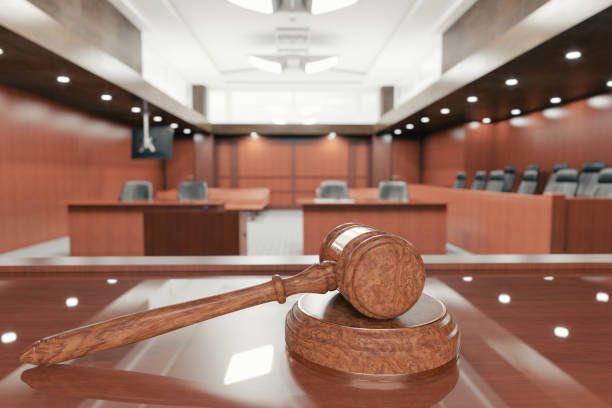
The Inheritance Case Where My Family Tried to Frame Me—Until the Judge Revealed His True Identity
I never told my family that my quiet, modest husband William was the Chief Judge of the Superior Court. When they sued me for “stealing” Grandma’s inheritance, demanding the harshest judge possible, they got exactly what they asked for. What happened when they presented fake evidence in his courtroom will haunt them forever.
Chapter 1: The Will That Started a War
The reading of Grandma’s will should have been simple. A quiet goodbye, maybe some tears, definitely some awkward family moments. But in my family, everything was a performance, and even grief had to be dramatic enough for an audience.
We sat in Mr. Henderson’s law office, surrounded by the smell of leather and old money. My sister Sarah dabbed at bone-dry eyes with a lace handkerchief she’d bought specifically for this occasion. My parents, Richard and Caroline, sat rigidly in their designer black outfits—Armani and Chanel bought on credit cards that were maxed out three months ago.
I wore the same gray wool sweater I’d worn to the hospital every day for six months. No designer clothes, no fake tears, no performance. My grief was real and private, spent during those quiet midnight hours holding a hand that grew colder every day.
“Shall we begin?” Mr. Henderson adjusted his glasses and broke the seal on the envelope.
“Just give us the numbers,” Dad grunted, checking his Rolex. “We know how it breaks down. The market’s volatile—we need to liquidate quickly.”
They’d already spent the money in their heads. Sarah wanted a yacht. My parents planned to pay off their gambling debts and buy a vacation home in Tuscany. They saw Grandma’s death as a financial opportunity, not a loss.
Henderson cleared his throat and began reading. “I, Martha Elizabeth Vance, being of sound mind and body…”
The standard opening bored them. They shifted impatiently, waiting for their windfall.
Then came the distribution.
“To my son Richard and his wife Caroline, I leave my collection of antique thimbles, as a reminder that patience is a virtue you never possessed.”
Dad froze. “What?”
“To my granddaughter Sarah, I leave my etiquette books, in the hope that you may one day learn manners.”
Sarah’s mouth fell open. “Is this some kind of joke?”
Henderson’s voice softened. “And to my granddaughter Elena, who held my hand when everyone else was at the country club. Who washed my hair when I could no longer lift my arms. Who listened to my stories when no one else had time. To Elena, I leave the remainder of my estate. The house, the investments, the cash, and the entirety of the trust.”
For ten seconds, absolute silence. The kind of silence that comes before an explosion.
Then chaos erupted.
Sarah shot to her feet, knocking over her heavy oak chair. “This is fraud! You manipulated her! You twisted her mind!”
Mom turned to me, eyes cold as flint. “You little snake. You poisoned her against us. You played nursemaid just to steal our inheritance!”
“I didn’t steal anything,” I said quietly. “I just loved her.”
“Love?” Dad spat, towering over me. “You’re a parasite, Elena. You haven’t worked a real job in years. You lived off her kindness, and now you want everything?”
He leaned closer, his voice venomous. “You’ll sign this over to us right now. We’ll contest this will. We’ll drag you through court until you’re bankrupt. You can’t afford a lawyer to fight us. You and your… whatever he is… that clerk husband of yours.”
I looked down at my trembling hands. Not from fear, but from the sheer ugliness of their greed.
They had no idea who William really was. To them, he was just “that paralegal” or “some office worker” I’d married three years ago. Quiet guy who wore off-the-rack suits and sat in corners at family gatherings, drinking iced tea while Dad bragged about investments that were secretly failing.
They never asked about his work. Never asked about his recent promotion.
They didn’t know that three days ago, William had been sworn in as the youngest Chief Judge of the Superior Court in our state’s history.
“Do what you have to do,” I said, meeting Dad’s glare.
“We will bury you,” Sarah pointed a manicured finger at my chest. “You’ll be begging on the street when we’re done.”
I gathered my purse and walked out without looking back.
Three weeks later, the subpoena arrived.
Chapter 2: The Trap They Set for Themselves
I opened our front door to find a process server chewing gum. He handed me a thick stack of legal papers.
“You’ve been served.”
I carried the lawsuit into William’s study—a room lined with legal texts, case studies, and historical biographies. He was reviewing files under the warm glow of his desk lamp, still in his work clothes.
I placed the papers on his desk.
He scanned the cover page, then stopped cold. His eyes went dark, a dangerous storm gathering in those gray irises.
“District 4,” he said calmly. “That’s my district.”
“They filed in your court.”
A dry, humorless smile touched his lips. “They really didn’t check the docket, did they? They saw the venue was close to their country club and just filed.”
“They think you’re a clerk, William. They think I’m defenseless.”
William stood and walked to the window overlooking our garden. “Arrogance is blinding. It keeps you from seeing the cliff you’re walking toward.”
He turned back to me. “I’ll have to recuse myself, of course. I can’t judge my own wife’s case.”
“Wait,” I said. “Read the filing. They requested a ‘Special Circumstance’ hearing because of the estate’s value. They specifically requested the Chief Judge because they believe he’ll be ‘harsh on fraud.'”
William read again. His laugh was sharp, dangerous. “They requested me?”
“They requested the position. They don’t know the position is you.”
“Then let’s not tell them,” William said softly. “Not yet. Since they specifically requested the Chief Judge… the Chief Judge they shall have.”
Chapter 3: The Day of Reckoning
The courthouse was a massive marble structure designed to intimidate. My family arrived in a black limousine like celebrities at a premiere. Sarah wore a magazine-featured dress that cost more than my car. Mom wore fur despite the mild weather.
They were flanked by Mr. Sterling, their attorney—a shark known for winning by any means necessary.
I arrived alone in my ten-year-old sedan, wearing a simple black suit and carrying only a small folder.
“Ready to surrender?” Sarah whispered as she passed me in the hallway. “Sterling’s going to tear you apart. Just sign the settlement—we might even let you keep the cat.”
“I don’t have a cat, Sarah,” I said. “Grandma did. And you hated it.”
I sat at the defense table, feeling outnumbered. The plaintiff’s table was crowded with my family, Sterling, and two junior associates. They were laughing, confident, relaxed.
Officer Miller, the bailiff who’d known William for ten years, stood by the door. He gave me a subtle wink.
“All rise!” Miller’s voice boomed. “The Superior Court is now in session. The Honorable Chief Justice William Thorne presiding.”
My family froze.
I watched recognition hit them like a physical blow. They knew my husband’s name was William. They knew his last name was Thorne. But in their minds, those facts lived in separate boxes labeled “Irrelevant.”
The door behind the bench opened.
William entered in his black robes, looking taller, broader, more imposing than the quiet man who’d kissed me goodbye that morning. He looked like the Law incarnate.
“Is that…?” Mom whispered, her voice carrying in the silent room.
“Coincidence,” Sarah hissed back, though uncertainty crept into her voice. “Common name. Look at him—he’s stern. William’s a doormat. That guy we met at barbecues wore baseball caps and flipped burgers. This guy looks like he eats nails for breakfast.”
William’s gaze swept the courtroom, taking in Sterling, my parents, the nervous energy.
“In the matter of the Estate of Martha Vance,” his voice was deep and resonant. “Counselor Sterling, you may proceed.”
Sterling stood, buttoning his jacket. “Thank you, Your Honor. We intend to prove that the defendant used undue influence and coercion to force a senile woman to alter her will. We’re asking for the will to be voided.”
William looked at me. “And the defendant? Do you have counsel?”
I stood. “I am representing myself, Your Honor.”
Sterling chuckled. Dad smirked. Self-representation was usually legal suicide.
“Proceed,” William said simply.
Chapter 4: The Web of Lies Unravels
Sarah was their first witness. She walked to the stand like she was accepting an award, performing for an invisible audience even though the jury box was empty.
“Ms. Vance,” Sterling asked, “describe your relationship with your grandmother.”
Sarah sniffled and dabbed her eyes. “We were so close. Best friends, really. I tried to visit every weekend.”
“And were you able to?”
“No!” Sarah sobbed dramatically. “Elena wouldn’t let me! She locked the doors. She told Grandma we hated her. She poisoned her mind! I would stand outside windows crying, just wanting to hold her hand one last time.”
I sat motionless, hands folded, fighting waves of nausea at the blatant lies. William took notes, his hand moving steadily. I knew him well enough to see the slight tightening of his jaw, the way his left eyebrow twitched when suppressing anger.
He knew Sarah hadn’t visited in three years. He knew because he was there every weekend, helping me install wheelchair ramps, sitting on the porch reading to Grandma while I cooked. The only time Sarah “visited” was to drive by and honk for money.
“Did the deceased ever express fear of the defendant?” Sterling asked.
“Yes,” Sarah lied, looking straight at William. “She called me once, whispering. She said, ‘Elena’s making me change the will. I’m scared. She says if I don’t give her the money, she’ll put me in a home.'”
William slowly set down his pen. The click echoed in the silent room.
“She called you?” he asked.
“Yes, Your Honor.”
“When was this call?”
“About two weeks before she died,” Sarah said confidently.
“I see.” William made a note. “Proceed.”
Dad testified next, painting me as a jewelry thief who isolated Grandma from her advisors. He described a sinister mastermind controlling a helpless victim.
Each time they finished, I declined to cross-examine. “No questions, Your Honor.”
My silence unnerved Sterling. He’d expected screaming, objections, breakdown. Instead, he got calm acceptance that he mistook for guilt.
“Your Honor,” Sterling said, walking to center stage, “the prosecution has one final piece of evidence. A diary entry written by the deceased just days before she died.”
He held up a battered, floral-print notebook.
My blood went cold. Grandma’s hands were crippled with arthritis in her final days. She couldn’t hold a spoon, let alone write. This was criminal forgery.
William leaned forward. “A diary?”
“Yes,” Sterling said triumphantly. “May I read the entry?”
“Please,” William said. “Enlighten us.”
Chapter 5: The Fake Evidence Explodes
Sterling put on reading glasses and cleared his throat dramatically.
“October 14th,” he read. “I am so afraid. Elena is threatening me again. She says I have to sign the papers or she’ll leave me to die alone. She took my phone. I miss Sarah. I miss Richard. I just want my family.”
The courtroom erupted in whispers. Gallery observers looked at me with disgust.
Sarah jumped up like the star of a courtroom drama. She pointed a trembling finger across the room.
“SHE DECEIVED GRANDMA AND STOLE EVERYTHING FROM US! SHE’S A MONSTER!”
Mom started wailing. Dad slammed his fist on the table. “Justice! We demand justice!”
Chaos filled the courtroom. In any other court, bailiffs would be shouting for order.
But William didn’t bang his gavel. He didn’t shout.
He simply stared.
He stared at Sarah with such profound, terrifying disappointment that the room slowly quieted, suffocated by his presence.
“Are you finished?” His voice wasn’t loud, but it cut through noise like a blade through silk.
Sarah froze, finger still pointing. “Excuse me?”
“That diary,” William gestured to the notebook in Sterling’s hand. “You claim it was written on October 14th?”
“Yes, Your Honor,” Sterling said, confidence wavering. “The date is clearly marked.”
“Interesting,” William leaned back. “Because on October 14th, the deceased had lost nearly all motor function in her hands due to advanced rheumatoid arthritis. I know this because I was the one feeding her soup that day.”
Dead silence. You could hear the air conditioning hum.
Sterling dropped the notebook. It hit the floor with a slap.
“Your Honor?” he stammered, face draining of color. “You… you were present?”
“I was,” William said calmly. “From 8:00 AM until 8:00 PM. My wife was at the pharmacy getting prescriptions. I sat by Martha’s bedside. We watched Jeopardy. She didn’t write in a diary. She couldn’t hold a pen.”
Sarah’s eyes went wide. She looked at William—really looked—and the pieces clicked into place. The robed man. The name Thorne. The “office worker” husband.
“You…” she whispered. “You’re William.”
“I am,” William said. “And I was also present when Martha asked me to install a digital recording device in her bedroom. She was lucid, Ms. Vance. She was sharp. And she knew you would do exactly this.”
He looked at Officer Miller. “Please play the audio recording marked ‘Exhibit A’ for the Defense. Filed under seal this morning.”
My family looked at me. I hadn’t moved. I just watched them realize the trap they’d walked into.
Chapter 6: Grandma’s Final Word
The courtroom speakers crackled. Then Grandma’s voice filled the room—weak and raspy, but unmistakably hers.
“It’s October 14th. Sarah’s calling again, leaving another message asking for money. She says if I don’t give it to her, she’ll tell everyone I’m crazy and have me declared incompetent.”
Sarah gripped the table edge, her face ash-colored.
The recording continued. “William, Elena… if you’re listening to this, they tried to fight the will. I want everyone to know why they get nothing. Richard only calls when his gambling debts are due. Caroline only visits to show off new cars. They left me to rot. Only Elena stayed. Only Elena cared.”
Her labored breathing filled the silence before the tape ended.
“I… I can explain,” Sarah stammered.
“Explain?” William stood, towering over the bench. “You just committed perjury in a capital court. You presented forged evidence. You lied under oath about the deceased’s mental state.”
He turned to Sterling. “Counselor, did you know this diary was forged?”
“No, Your Honor!” Sterling shouted, backing away from Sarah like she was radioactive. “I had no idea! I withdraw as counsel immediately!”
“Good choice,” William said. “Because I’m declaring a mistrial on the civil suit due to blatant fraud.”
He looked at Miller. “Officer Miller, take the plaintiffs into custody.”
“Custody?” Mom shrieked. “For what?”
“Perjury. Attempted fraud. Filing false instruments. I’m referring this to the District Attorney immediately.”
Officers moved in. Handcuffs clicked. Dad started shouting.
“You can’t do this! He’s your husband! This is a conflict of interest!”
William smiled coldly. “Actually, I disclosed my relationship to the estate and defendant in the initial filings. Page one, paragraph two. Your lawyer didn’t bother reading it because he was too busy counting his contingency fee.”
Sterling looked sick. He’d missed the disclosure completely.
As officers marched Sarah past my table, she looked at me with wild, desperate eyes.
“Elena! Help us! Tell him to stop! We’re family!”
I stood slowly, gathered my purse, and looked at her—then at my parents being led away in disgrace.
“Family,” I said softly, “doesn’t leave you to die alone.”
I looked up at the bench and nodded to my husband. “I’ll see you at home for dinner, Your Honor.”
William’s eyes softened just slightly. “Court is adjourned.”
The gavel fell with finality.
Chapter 7: The Quiet After the Storm
That evening, gentle rain tapped our windows. The news played softly: “Prominent Local Family Arrested in Inheritance Fraud; Chief Justice Recuses After Exposing Forgery.”
William changed from his suit into a comfortable sweater, looking tired but satisfied. He poured two glasses of wine and sat beside me on the couch.
“Sorry for the dramatics,” he said. “But that diary… it was insulting to her memory.”
“It was necessary,” I replied, leaning against his shoulder. “They mistook silence for weakness. Modesty for poverty.”
“They mistook a lot of things,” William agreed. “They thought law was a weapon they could buy. They forgot it’s a shield for truth. And they forgot the most important rule of litigation.”
“What’s that?”
“Know who’s sitting on the bench.”
I thought about Sarah in her holding cell, stripped of designer clothes, finally understanding that the “useless” sister was married to the most powerful man in the room. About my parents facing years of legal battles and bankruptcy.
On the mantle, Grandma’s photo seemed to wink in the firelight.
“To Grandma,” I raised my glass.
“To Grandma,” William clinked his against mine. “And to reading the fine print.”
The storm raged outside, but inside our home, everything was warm and safe. The case was closed. The will was secure. My family was gone—not by my hand, but by their own greed and lies.
Justice had been served, not by revenge, but by truth. Sometimes the best victory is simply letting people destroy themselves while you watch from a position they never bothered to understand.
In the end, they got exactly what they asked for: the harshest judge possible. They just never imagined he’d be coming home to me for dinner.
Epilogue: What I Learned
Six months later, my parents and sister were convicted of fraud and perjury. Sarah got two years. My parents got eighteen months each. Sterling lost his license to practice law.
The estate settled quietly. I donated half of Grandma’s money to charities for elderly care and kept the house where she’d been happiest. William and I tend her garden together on weekends.
I learned that sometimes the best response to cruelty is patience. Sometimes justice doesn’t require your participation—just your willingness to let truth speak for itself.
My family spent years underestimating me because I was quiet. Because I didn’t flaunt wealth or demand attention. Because I chose love over performance.
They thought humility meant weakness. They thought my husband’s modest demeanor meant he was powerless. They thought they could steamroll us with lies and expensive lawyers.
They were wrong about everything.
The most dangerous opponent isn’t the one who screams the loudest. It’s the one who listens carefully, prepares thoroughly, and strikes precisely when the moment is right.
If this story resonated with you, remember: never underestimate someone just because they choose kindness over cruelty, or quiet dignity over loud demands. The most powerful people in any room are often the ones you’d least expect.

Lila Hart is a dedicated Digital Archivist and Research Specialist with a keen eye for preserving and curating meaningful content. At TheArchivists, she specializes in organizing and managing digital archives, ensuring that valuable stories and historical moments are accessible for generations to come.
Lila earned her degree in History and Archival Studies from the University of Edinburgh, where she cultivated her passion for documenting the past and preserving cultural heritage. Her expertise lies in combining traditional archival techniques with modern digital tools, allowing her to create comprehensive and engaging collections that resonate with audiences worldwide.
At TheArchivists, Lila is known for her meticulous attention to detail and her ability to uncover hidden gems within extensive archives. Her work is praised for its depth, authenticity, and contribution to the preservation of knowledge in the digital age.
Driven by a commitment to preserving stories that matter, Lila is passionate about exploring the intersection of history and technology. Her goal is to ensure that every piece of content she handles reflects the richness of human experiences and remains a source of inspiration for years to come.
Awesome story enjoyed to the end.