The Camera I Forgot to Mention
The notification appeared on my phone at 9:47 a.m.
“Camera system online.”
I stared at it for a moment, my coffee cooling in my hand, trying to remember what it meant.
Then it clicked.
The technician. The security camera repair I’d scheduled three days ago. The young man who’d come while I was out getting groceries, fixed the system, left a note saying everything was working, and charged my credit card $180.
I’d completely forgotten to mention it to anyone.
It was a quiet January morning in my small house in suburban Michigan. The kind of morning where the neighborhood still looks like it’s recovering from the holidays—a few tired decorations hanging on, the Christmas tree pickup scheduled for tomorrow, that post-celebration exhaustion settling over everything.
I’m Sarah Chen. I’m sixty-eight years old. And until about six months ago, I lived alone in this house quite happily.
Then my son Caleb convinced me I needed help.
But to understand what I saw on that camera feed—what I watched for ten terrible minutes before something unexpected happened—you need to understand how I got here.
How a woman who’d been independent her entire life ended up with her son and daughter-in-law living in her house, going through her papers, planning something I was never supposed to discover.
My husband David died eleven years ago. Heart attack, sudden, the kind that doesn’t give you time to say goodbye. We’d been married for thirty-six years. He was my partner in everything.
After he died, I grieved hard. Then I rebuilt.
I kept the house—paid off years earlier, modest but mine. I volunteered at the library. I took art classes. I traveled a bit—nothing extravagant, just small trips to see friends, visit museums, breathe in different air.
I managed my finances carefully. David had been a planner, left me comfortable. Not wealthy, but secure. The house was paid for. I had social security, David’s pension, some savings, and a life insurance policy that had paid out when he died.
I was fine. More than fine.
Caleb is my only child. He’s forty-two now, married to a woman named Melissa for the past eight years. They live—or lived—about forty minutes away.
I love my son. But I’ve never been blind to his flaws.
He’s always been impulsive with money. Even as a teenager, he’d spend his paycheck before he got it, always have some reason why he needed to borrow from us, always have some plan that would “totally pay off” but never did.
As an adult, it got worse. Failed business ventures. Credit card debt. A bankruptcy six years ago that he blamed on bad luck and a dishonest partner.
Melissa is… difficult to read. She’s always been pleasant to my face, always said the right things, but there’s a calculation behind her eyes that makes me uncomfortable. Like she’s always measuring what she can get from a situation.
They’ve never had children. They’ve told me it’s by choice, that they want to focus on their careers and their freedom.
But I’ve wondered if it’s because children would be expensive, and they’re already barely managing their own finances.
I helped them occasionally over the years. A loan here and there, which Caleb always promised to pay back but never did. I told myself it was fine—he was my son, and parents help their children.
But I also set boundaries. I didn’t give them access to my accounts. I didn’t cosign loans. I didn’t let their financial chaos become mine.
And I certainly never planned to have them move in with me.
Six months ago, Caleb started calling more often.
At first, it was nice. He’d check in, ask how I was doing, tell me about his life. I thought maybe he was finally growing up, finally learning to prioritize family.
Then the suggestions started.
“Mom, you’re living alone in that big house. Don’t you get lonely?”
“Mom, what if something happened to you? Who would know?”
“Mom, have you thought about what you’d do if you fell or got sick?”
I brushed it off initially. “Caleb, I’m sixty-eight, not ninety-eight. I’m perfectly capable of taking care of myself.”
But he persisted. And then one day, he showed up unannounced.
He and Melissa stood in my living room, looking concerned and serious.
“Mom, we’ve been talking,” Caleb said. “Melissa lost her job last month, and our lease is up in two weeks. We’re thinking of moving somewhere smaller, saving money. And we thought… why don’t we move in with you? Just temporarily. We can help around the house, make sure you’re okay, and we’ll save on rent.”
I was so surprised I didn’t know what to say.
“You want to move in here?”
“Just for a few months,” Melissa added quickly. “Until we get back on our feet. We’d help with groceries, maintenance, everything. You wouldn’t have to worry about being alone anymore.”
The way she said it made being alone sound like a problem I hadn’t realized I had.
“I don’t know,” I said slowly. “I’ve lived alone for eleven years. I’m used to my space, my routine—”
“Mom, please,” Caleb interrupted. “We really need this. And honestly, we’re worried about you. You’re getting older. What if something happens?”
The guilt was subtle but effective. What kind of mother turns away her son when he needs help? What kind of person refuses to let family stay when they’re in trouble?
Against my better judgment, I said yes.
“Just for a few months,” I repeated. “Until you get back on your feet.”
“Of course,” Caleb said, hugging me. “Thank you, Mom. You won’t regret this.”
They moved in three weeks later.
At first, it was fine. They took the spare bedroom, kept their things organized, helped with dishes and groceries like they’d promised.
But small things started to change.
Melissa began rearranging my kitchen. “This makes more sense, Sarah. Trust me.”
Caleb started going through my mail. “Just checking if you missed any bills, Mom.”
They’d have conversations in low voices that stopped when I entered the room.
I told myself I was being paranoid. They were just settling in. Adjusting. Trying to be helpful.
But then I started noticing other things.
Papers in my office looked like they’d been moved. My filing cabinet, which I always kept locked, was sometimes unlocked when I came home from errands.
Once, I found Melissa in my bedroom, going through my dresser.
“I was looking for an extra blanket,” she said smoothly. “Hope you don’t mind.”
The blankets were in the hall closet. Always had been.
I mentioned these incidents to Caleb, gently, trying not to sound accusatory.
“Mom, Melissa was just trying to help. You’re being a little paranoid, don’t you think?”
“I’m not paranoid, I just—”
“You’ve been alone a long time. Maybe you’re not used to having people around anymore. Give it time. You’ll adjust.”
He made it sound like my discomfort was the problem, not their behavior.
Two months in, they still hadn’t moved out.
“The job market is terrible,” Caleb explained. “And we want to save up a good cushion before we get our own place. You understand, right?”
I understood that I’d made a mistake.
But getting them to leave wasn’t as simple as asking. They’d established residency. They got mail at my address. And every time I suggested they might want to start looking for their own place, Caleb got defensive.
“I thought you wanted us here. I thought you were lonely.”
“I never said I was lonely—”
“So you don’t want us around? After everything we’ve done to help you?”
It was manipulative, and I knew it. But I also knew that pushing too hard might damage our relationship permanently.
So I waited. And watched. And started to feel like a guest in my own home.
Three weeks ago, something happened that changed everything.
I was at the library, volunteering for my regular Tuesday shift. I came home early because I wasn’t feeling well—a headache, nothing serious.
I came in through the back door, quietly, not wanting to disturb anyone.
I heard voices in the living room. Caleb and Melissa, talking in those low tones they used when they thought I wasn’t around.
I stood in the kitchen, frozen, listening.
“…has to be worth at least three hundred thousand,” Melissa was saying. “Maybe more, depending on the market.”
“But she’s not going to sell,” Caleb replied. “She’s stubborn about this house.”
“She doesn’t have to sell it while she’s alive.”
The silence that followed that statement was deafening.
“What are you saying?” Caleb asked.
“I’m saying she’s sixty-eight. She won’t live forever. And when she’s gone, this house goes to you. To us.”
“Melissa—”
“I’m just being realistic. She’s old. She could have a fall, a stroke, anything. And when that happens, we need to be prepared. We need to make sure everything is in order.”
My blood ran cold.
“What kind of order?” Caleb asked.
“Power of attorney. Updated will. Maybe we should be on the deed, just in case. That way, if something happens, there’s no probate, no delay. We can take care of everything smoothly.”
I backed out of the kitchen, carefully, quietly, and left through the back door. Sat in my car in the driveway, shaking.
They were planning for my death. Actively planning. Making sure they’d inherit everything without complications.
Maybe it was just practical estate planning. Maybe I was overreacting.
But the way Melissa had said “She won’t live forever”—cold, calculating, like she was discussing a business transaction rather than her mother-in-law’s mortality.
I didn’t confront them. I was too shaken, too unsure.
Instead, I did something I’d been considering for a while.
I called a lawyer.
Attorney Patricia Morrison was in her fifties, sharp and no-nonsense. I explained my situation—not the overheard conversation, just that I was concerned about my estate planning and wanted to make sure everything was protected.
She asked pointed questions.
“Do you have a current will?”
“Yes, but it’s old. From before my husband died.”
“Does your son have power of attorney?”
“No.”
“Good. Let’s keep it that way unless you actively want to grant it. And let’s update your will to reflect your current wishes.”
She helped me draft a new will. I left the house and a portion of my savings to Caleb, but I also established a trust with specific conditions. He couldn’t sell the house for at least five years after my death. The remaining savings would go to charities I cared about.
It wasn’t about punishing him. It was about protecting myself, protecting my assets from being liquidated the moment I was gone.
“One more thing,” Patricia said. “If you’re concerned about your safety or about people trying to manipulate you, consider documenting everything. Keep a journal. Install security cameras. Create a paper trail.”
Security cameras.
The house had an old system that David had installed years ago, but it had stopped working months back. I’d never bothered to fix it because I’d been living alone and felt safe.
But now…
I called a technician. Scheduled a repair for three days ago.
And then, in the chaos of daily life, with Caleb and Melissa always around, always talking, always needing something, I completely forgot to mention it.
That brings me to this morning.
Caleb came downstairs, dressed in his “job hunting” outfit—nice jeans, a button-down shirt.
“I’m heading out to look for work,” he announced. “Might be gone a few hours.”
Melissa appeared a moment later. “I’m running to the store. Need anything, Sarah?”
“No, thank you. Just be safe.”
They left together, Caleb’s car pulling out of the driveway, and I settled in with my coffee and the morning paper.
Then my phone buzzed.
“Camera system online.”
I stared at the notification, remembering suddenly about the repair.
Curious to see if it was actually working, I opened the app.
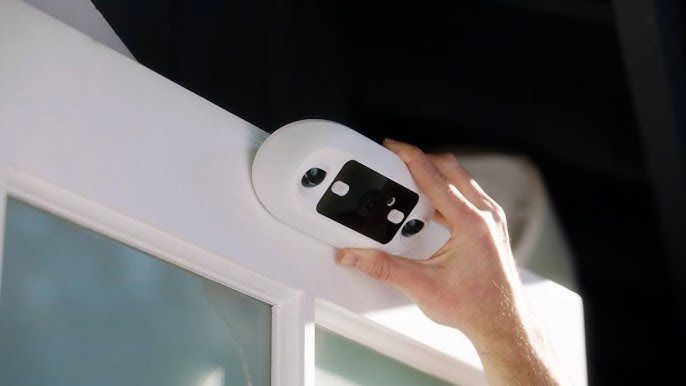
The feed loaded immediately, showing multiple camera angles—front door, back door, living room, hallway.
Everything looked normal.
Then I saw them.
Caleb and Melissa. In my living room. They hadn’t left at all.
I watched, frozen, as they moved around my living room with the casual familiarity of people who’d done this before.
My papers were spread across the coffee table. Not just any papers—the folder I kept in my locked bedroom desk. The one with my important documents. Deed to the house. Bank statements. Insurance policies.
The folder I had definitely locked away this morning.
Melissa was sitting on the couch, reading through documents, making notes on a pad of paper.
“Where’s the original house document?” she asked, her voice clear through the camera’s audio.
Caleb was standing near the bookshelf, pulling books down, checking behind them. “It has to be here. She keeps everything.”
“And Mr. Evans said we need the original,” Melissa replied. “Otherwise the paperwork won’t match.”
Mr. Evans. I didn’t know any Mr. Evans.
But the way she said “the paperwork won’t match” sent ice through my veins.
What paperwork? What were they planning?
Caleb walked down the hallway toward my bedroom. The camera in the hallway caught him entering, heard him opening drawers.
“She won’t read it,” he said, loud enough for Melissa to hear in the living room. “We’ll tell her it’s routine paperwork. She’ll sign where we indicate.”
My hands tightened around my phone.
They were planning to forge something. To trick me into signing something I wouldn’t read carefully.
Transfer of deed? Power of attorney? What?
I watched for ten minutes.
Ten minutes of them searching my house, discussing how to manipulate me, treating my home and my life like it was already theirs to control.
Melissa found something—a document I couldn’t see clearly on camera—and smiled. “This is it. The original deed. Mr. Evans can work with this.”
“What about the other thing?” Caleb asked.
“The power of attorney form? We’ll present it with her medical bills. Tell her it’s just to help manage her healthcare. She’ll sign it without reading—she trusts you.”
“And if she doesn’t?”
Melissa’s smile was cold. “Then we move to plan B. She’s old, Caleb. Old people have accidents. They fall. They forget their medication. Things happen.”
The casual way she said it—like my death was just an inconvenient possibility they’d planned for—made me feel sick.
Then something unexpected happened.
Caleb stopped in the middle of the living room, mid-sentence, and looked up.
Directly at the camera.
His expression changed. Confusion, then realization, then fear.
“Melissa,” he said quietly. “The camera.”
She looked up too. Saw the small red light that indicated the system was active and recording.
“When did she fix that?” Melissa’s voice was sharp.
“I don’t know. It’s been broken for months.”
They stared at the camera, both of them clearly trying to calculate how long it had been on, how much it had recorded, whether I was watching.
Caleb walked directly to the camera, reached up—
And I did something I should have done ten minutes earlier.
I called 911.
“911, what’s your emergency?”
“My name is Sarah Chen. I’m at 847 Maple Street. I’m watching my home security camera feed, and my son and daughter-in-law are in my house, going through my private documents without permission. They’re discussing forging paperwork and—” I swallowed hard, “—and they just mentioned that if I don’t cooperate, I might have an ‘accident.'”
“Ma’am, are you in the house currently?”
“No, I’m in my car, parked down the street. I left and then checked the camera.”
“Are you safe?”
“Yes. But they don’t know I’m watching them.”
“Stay on the line. I’m dispatching officers to your location now.”
The dispatcher kept me talking, asking questions, keeping me calm while help was on the way.
On my phone screen, I watched Caleb try to disable the camera. But the technician had installed it high on the wall, and Caleb couldn’t quite reach it without a ladder.
“Should we just leave?” Melissa was saying. “If she’s been watching—”
“If she was watching, the cops would already be here,” Caleb interrupted. “It’s probably just on a timer or something. She doesn’t even know how to use her smartphone half the time.”
They had no idea I’d spent the last three weeks learning every feature of the security system app.
“Just find what we need and get out,” Melissa said. “We can say we came back because you forgot your wallet.”
They kept searching, and I kept recording.
The police arrived six minutes later—two squad cars, lights off, pulling up quietly.
I met the officers on the sidewalk and explained everything quickly. Showed them the live camera feed on my phone, showed them Caleb and Melissa going through my papers, played back the audio where they discussed forging documents and “accidents.”
The lead officer, a woman named Rodriguez, listened carefully.
“Ma’am, we’re going to go in and talk to them. I need you to stay here.”
“This is my house,” I said. “I want to be there.”
“I understand. But for your safety and ours, please wait until we’ve secured the situation.”
I watched from the sidewalk as four officers entered my house.
Through the camera feed on my phone, I watched Caleb and Melissa’s faces when the police walked in.
Shock. Fear. Melissa actually tried to smile, tried to play it off.
“Officers, is there a problem? This is my mother-in-law’s house. We live here.”
“Ma’am, the homeowner has reported that you’re going through her private documents without permission and discussing forging legal paperwork. We need you both to step outside.”
“That’s ridiculous,” Caleb said, his voice rising. “This is a misunderstanding. My mother is confused—she’s getting older, she forgets things—”
“Sir, we have video evidence of you and your wife discussing forging documents and threatening the homeowner. Please step outside.”
I watched as they were escorted out, both of them looking around for me, trying to figure out where I was, how I knew.
Officer Rodriguez came to get me. “Ms. Chen, we need to take your statement. And we’ll need access to that video footage.”
“Of course.”
The next few hours were a blur of statements and evidence collection.
The police reviewed all the camera footage. They photographed the papers spread across my coffee table, documented everything Caleb and Melissa had pulled from my locked desk.
They found the folder Melissa had been holding—a blank power of attorney form, partially filled out with my information.
They found emails on Caleb’s phone to someone named Mr. Evans—a notary who’d apparently agreed, for a fee, to witness my signature on documents without actually verifying my identity or intent.
They found searches on Melissa’s phone: “How to transfer property deed,” “Making someone incompetent,” “Senior falls at home.”
Everything I’d feared, documented in black and white.
Caleb and Melissa were arrested. Charged with attempted fraud, conspiracy, and—based on that “accidents” comment—a preliminary investigation for attempted harm.
I stood in my living room, surrounded by police officers and evidence bags and the scattered remains of my violated privacy, and felt completely numb.
My lawyer, Patricia, arrived within an hour of my call.
She helped me navigate the legal aftermath. Restraining orders against both Caleb and Melissa. Documentation for the criminal case. Securing my house and my documents.
“Sarah, I need you to understand something,” she said gently. “Your son was planning to defraud you. Potentially harm you. This isn’t a misunderstanding or a family squabble. This is serious criminal activity.”
“I know,” I whispered. “I just… he’s my son.”
“I understand. But he made his choices. You did the right thing by protecting yourself.”
The hardest part was calling my sister, Linda, who lives in California.
“Sarah, oh my god. Are you okay?”
I told her everything. The moving in. The overheard conversation. The camera footage. The arrest.
“I can’t believe Caleb would do this,” she said, her voice shaking. “I mean, I always knew he had issues, but this?”
“I don’t know what I did wrong,” I said. “How did I raise someone who could—”
“Stop,” Linda interrupted firmly. “You didn’t do this. He did. He made these choices. You were a good mother. He’s an adult who chose to be a criminal.”
It helped, hearing that. But it didn’t make it hurt less.
The trial took four months.
Caleb and Melissa both pleaded guilty to fraud and attempted exploitation of a vulnerable adult. Caleb got two years, Melissa got eighteen months.
The prosecutor told me I was lucky I’d caught them when I did.
“Based on their communications, they were days away from executing their plan. The forged power of attorney, the property transfer. If they’d succeeded, it would have been much harder to untangle.”
I updated my will again. Caleb will get nothing. Everything goes to charities, to Linda’s children, to organizations I care about.
I changed all my locks. Upgraded the security system. Installed cameras inside and outside.
And I’m learning to live alone again. Really alone this time, by choice.
It’s been eight months since that January morning.
I still have nightmares sometimes. I dream about Melissa’s cold smile when she talked about “accidents.” I dream about Caleb going through my bedroom, casual and entitled.
But I also feel stronger than I have in years.
I protected myself. I trusted my instincts. I didn’t let guilt or family obligation override my safety.
My friends at the library ask sometimes about Caleb. I tell them the truth: he’s in prison for trying to defraud me.
Some people are shocked. Some people say they always had a bad feeling about him. Some people just nod, like they understand that family can be the most dangerous people in your life.
I’ve started volunteering more. Traveling more. I’m planning a trip to visit Linda next month.
And I check my security cameras every day. Not out of fear, exactly. More like… awareness.
I’m sixty-eight years old. I live alone. And I’m safer now than I was when my son and daughter-in-law were sleeping down the hall.
That’s the part I think about most.
I was in more danger from family than I’d ever been from strangers.
But I survived. I fought back. I protected myself.
And I’m still here, in my house, living my life on my own terms.
Last week, I got a letter from Caleb. Prison mail, forwarded through my lawyer.
I almost didn’t open it. Almost threw it away.
But curiosity won.
The letter was short:
“Mom,
I know sorry isn’t enough. I know what I did was unforgivable. Melissa and I convinced each other that we were helping, that you needed us, that we deserved something for taking care of you.
But we were lying. To you and to ourselves.
We weren’t taking care of you. We were trying to steal from you.
I don’t expect you to forgive me. I don’t expect anything.
I just wanted you to know that you were right to turn us in. You were right to protect yourself. And I’m sorry it took me ending up in prison to realize what I’d become.
I love you. I always will. But I understand if you can’t love me back anymore.
Caleb”
I read the letter three times.
Then I put it in a drawer and went about my day.
Maybe someday I’ll forgive him. Maybe someday I’ll be able to look at him and see my son instead of the man who planned to rob me, who discussed my death like a business transaction.
But that day isn’t today.
Today, I’m just grateful for a technician who fixed my camera system and for my own forgetfulness that led me to check it at exactly the right moment.
Today, I’m grateful to be alive, in my own house, safe and free.
And that’s enough.
THE END

Adrian Hawthorne is a celebrated author and dedicated archivist who finds inspiration in the hidden stories of the past. Educated at Oxford, he now works at the National Archives, where preserving history fuels his evocative writing. Balancing archival precision with creative storytelling, Adrian founded the Hawthorne Institute of Literary Arts to mentor emerging writers and honor the timeless art of narrative.