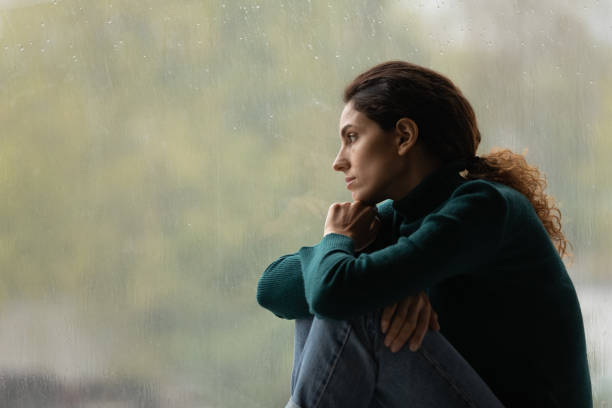
The Evidence
I never believed a life could unravel in a single afternoon—until the day I logged into my bank accounts and saw that every single one was empty.
My daughter’s college fund. My emergency savings. My small business account. All wiped clean.
$56,000. Gone.
My name is Natalie Brooks, and after a brutal divorce that left me with nothing but debt and a broken lease, I had spent five years rebuilding everything from scratch. That money wasn’t just numbers on a screen—it was five years of discipline and sacrifice. Five years of saying no to everything that wasn’t essential. No vacations. No new clothes unless something wore out completely. Double shifts at the hospital where I worked as a nurse, followed by weekend consulting work for a healthcare marketing firm. Sundays spent meal-prepping instead of resting, clipping coupons, buying generic brands, cutting every comfort so my ten-year-old daughter, Emma, would always feel safe and provided for.
And the person who took it?
My own sister, Rachel.
Three days earlier, I’d flown to Seattle for a three-day marketing summit—my first business trip in years, a chance to finally build the consulting side of my career into something sustainable. Rachel had been staying with us temporarily after yet another toxic breakup, this time with a man who’d left her financially devastated and emotionally shattered. She’d shown up at my door with two suitcases and tears streaming down her face, and I’d welcomed her without hesitation because that’s what family does.
She adored Emma, and Emma worshipped her right back, so I trusted her completely. Before I left for Seattle, Rachel had asked for my banking password “just in case something went wrong with Emma or the house.”
I hesitated for exactly three seconds.
Then I gave it to her.
Standing alone in my kitchen now, phone shaking in my hands as I stared at the string of zero balances on my screen, I understood with sickening clarity: Rachel hadn’t been asking for emergency access.
She was the emergency.
Rachel and her boyfriend, Tyler—a man I’d met exactly twice and instinctively disliked both times—were gone. Their room was stripped completely bare. Clothes missing. Toiletries gone. Car vanished from the driveway. The only thing left behind was a scrap of notebook paper shoved into the back of the kitchen junk drawer, written in Rachel’s rushed, slanted handwriting:
I’m sorry. I had no choice. Please forgive me.
It felt like my chest had been split open with a dull knife.
I couldn’t breathe properly. Couldn’t think clearly. Every financial safety net I’d built over five years of relentless work had been stolen by the person I’d trusted most in the world after my daughter.
The college fund I’d been building since Emma was born—gone.
The emergency savings that represented my only protection against disaster—gone.
The business account that held deposits from three different clients—gone.
Everything I’d sacrificed for, everything I’d worked toward, everything that stood between my daughter and the kind of poverty I’d grown up in—erased in a few clicks by my own sister.
When Emma came home from school that afternoon, backpack bouncing against her shoulders, face bright with whatever fourth-grade drama had consumed her day, I forced myself to stay calm long enough to sit her down and explain the truth in the simplest terms I could manage.
“Honey, Aunt Rachel did something very wrong,” I said, my voice shaking despite my best efforts. “She took money from our bank accounts. A lot of money. All of it. She and Tyler are gone.”
I expected tears. Rage. The kind of inconsolable grief that comes when a child’s hero falls from grace. Questions about why her favorite aunt would do something so terrible.
Instead, Emma sat perfectly still on the couch beside me, her small hand sliding over mine with a calmness that seemed far too old for her age.
“Mom,” she said quietly, her brown eyes serious and clear, “it’s okay. I already fixed it.”
I stared at her, certain I’d misheard. “Fixed what?”
Emma stood up, disappeared into her room for less than a minute, and came back holding my old iPhone—the one I’d given her six months ago after upgrading, wiped clean except for a few approved games and educational apps.
What she showed me next made my blood run cold.
Videos. Dozens of them.
Saved in a hidden folder she’d created, uploaded to the cloud, organized by date.
She’d been recording conversations for weeks—whispers in the kitchen late at night when she was supposed to be asleep, tense arguments outside her bedroom door, Tyler pacing in the backyard while talking on the phone in a voice that didn’t match his usual relaxed demeanor.
“I started recording after I heard Tyler say something scary,” Emma explained, her voice matter-of-fact in the way children can be when they don’t fully understand the weight of what they’re revealing. “He said he ‘needed serious money fast’ and that Aunt Rachel’s sister—that’s you, Mom—was ‘sitting on almost sixty grand like it doesn’t even matter.'”
She clicked on the first video.
The footage was shaky, clearly filmed from Emma’s bedroom doorway at night, pointed toward the kitchen where Rachel and Tyler stood illuminated by the overhead light. The audio was surprisingly clear.
Tyler’s voice, low and urgent: “Your sister’s sitting on almost sixty thousand dollars in savings and she lives like she’s broke. We take it and disappear before she even gets back from Seattle. She’ll survive. She’s got a good job. She’ll rebuild.”
Rachel’s voice, thick with tears: “I can’t do that to her. She’s my sister. She took me in when I had nowhere to go.”
Tyler’s laugh was harsh. “Like you have a choice? You remember what happened in Orlando, right? You want me to remind you what you owe? Because those people don’t forget, Rachel. They don’t forgive. They just collect.”
The video ended.
Emma clicked on another one.
This footage was from two weeks ago, filmed from behind the couch where Emma must have been hiding with her tablet. Rachel was crying, Tyler was pacing, and the conversation was even more damning.
“I’m not asking you, I’m telling you,” Tyler said, his voice hard. “You get me that banking information, or I make one phone call and your sister finds out exactly who you really are. Every lie you’ve told her. Every secret you’ve been hiding. You think she’ll still love you when she knows what you did?”
Rachel sobbed. “Please don’t do this. There has to be another way.”
“There isn’t,” Tyler said flatly. “Get me the password, or I destroy you both.”
But the worst video was the last one Emma showed me—footage recorded from my laptop webcam, activated remotely through an app Emma had apparently taught herself to use.
Tyler stood in my bedroom, standing at my desk where I kept my password notebook—a stupid, outdated security risk I’d always meant to fix but never had.
He was photographing each page with his phone, zooming in on the banking passwords, smiling like he’d just won the lottery.
The timestamp showed it was recorded the morning I left for Seattle.
By the time the last clip ended, I was shaking so badly I could barely hold the phone. My ten-year-old daughter had documented an entire criminal conspiracy without anyone knowing. She’d created evidence that would be admissible in court. She’d protected us in a way I hadn’t even known we needed protecting.
Emma looked up at me with those serious brown eyes and said, “I saved everything to the cloud so they can’t erase it even if they take my tablet. And I made copies on your laptop too, in a folder they won’t find. I remembered what you said about backing up important things.”
That was the moment shock hardened into something else entirely.
The betrayal shattered me—Rachel’s theft, her lies, her willingness to destroy everything I’d built.
But the evidence changed everything.
Before I could speak, before I could even process the magnitude of what my daughter had done, my phone rang.
Rachel.
I answered, my hand shaking, and put her on speaker so Emma could hear.
Rachel was hysterical. Screaming. Crying so hard I could barely understand her words.
“Natalie, please! They arrested Tyler! The police came to the motel and they took him and they’re coming for me next! You have to help me! Please, I’m your sister, you have to help me!”
I looked at Emma, then back at the phone. “You stole fifty-six thousand dollars from me and my child,” I said, my voice eerily calm. “What exactly are you asking for?”
“You don’t understand!” Rachel sobbed. “Tyler owed dangerous people. He said they’d kill him if he didn’t pay. He said they’d come after me too. I didn’t have a choice!”
“You always had a choice,” I said quietly. “You chose him over me. Over Emma. Over everything I’ve done for you your entire life.”
“I was scared!” Rachel screamed. “I was terrified! He had things on me, Natalie. Things I can’t—things you don’t know about. He was blackmailing me. I didn’t want to do this!”
I closed my eyes. Part of me wanted to believe her, wanted to think my sister had been a victim too. But the videos told a more complicated story.
“I’m calling the police,” I said. “You need to turn yourself in.”
“No! Please, Natalie, please don’t—”
I hung up.
Emma was watching me with that same serious expression. “Are you okay, Mom?”
I pulled her into my arms and held her tighter than I’d held anyone in my entire life. “I am now, baby. Because of you.”
The next morning, Emma and I went straight to the police station. Detective Laura Simmons, a sharp-eyed woman in her forties who’d seen too many family betrayal cases to be shocked by much, reviewed every single video Emma had recorded.
When Tyler said his real name in one of the videos—”They know me as Tyler Barnes, but the money goes under Evan Miller, so there’s no paper trail”—Detective Simmons stopped the playback and looked at me with something like pity.
“Evan Miller is a known con artist,” she said. “Multiple identities across four states. He targets vulnerable women, usually through family connections. Gains trust, isolates them, then orchestrates financial crimes using them as accessories. Your sister isn’t the first woman he’s done this to, Mrs. Brooks. She won’t be the last unless we stop him.”
Within forty-eight hours, authorities located them in a motel outside Reno, Nevada. Evan was arrested at a casino where he’d been gambling with my money—my daughter’s college fund turned into blackjack losses and slot machine pulls. Rachel was detained in the motel room shortly after, surrounded by shopping bags full of new clothes and electronics that she’d apparently bought in some kind of desperate, delusional shopping spree.
The evidence Emma had collected was ironclad. Every conversation. Every threat. Every moment of planning. It was more than enough for the district attorney to file charges.
But Rachel could potentially face less prison time if she agreed to testify against Evan and cooperate fully with the investigation.
She begged to see me.
I said no three times before Detective Simmons convinced me that hearing Rachel’s side might be necessary for my own closure, if nothing else.
When I walked into the interview room at the county jail, Rachel looked like a stranger. No makeup. Hair pulled back in a greasy ponytail. Orange jumpsuit hanging off her frame. Hands trembling as they rested on the metal table between us.
“I’m sorry,” she whispered, and her voice was so small and broken that for a moment she sounded like the little sister I’d protected from bullies in elementary school. “I’m so sorry, Natalie. I know that doesn’t mean anything now, but I need you to know I’m sorry.”
I sat across from her and said nothing.
Rachel started talking, the words pouring out in a desperate rush. She told me everything—how Evan had seemed perfect at first, charming and attentive and different from all the other men who’d used her. How he’d slowly isolated her from friends, from me, from everyone who might have warned her. How he’d gotten her involved in a credit card scheme in Orlando that she’d thought was legal until it wasn’t, and how he’d held that over her head ever since, threatening to turn her in unless she did exactly what he said.
“He told me you had so much money that you wouldn’t even miss it,” Rachel said, tears streaming down her face. “He said you were selfish for hoarding it while I struggled. He made me believe I was entitled to it, that you owed me for all the times you made me feel worthless by being so perfect and put-together.”
She looked up at me with red, swollen eyes. “But I knew it was wrong. The whole time, I knew. And I did it anyway because I was too scared of him and too ashamed to ask you for help. I’m not making excuses. I just need you to know I knew it was wrong.”
I listened as she confessed everything—the manipulation, the blackmail, the fear, the shame. Not excuses. Just truth, raw and ugly and painful.
When she finally stopped talking, I said, “The prosecutor is offering you a deal if you testify against Evan and help them build a case against his entire operation. You’ll still serve time, but less than if you go to trial.”
Rachel nodded, wiping her eyes. “I know. They told me. But I wanted to talk to you first. I wanted you to know I’ll do whatever you think is right. If you want me to take the full sentence and refuse the deal, I will. I’ll do whatever you say.”
“This isn’t about what I want,” I said. “This is about you taking responsibility for your choices. You need to decide who you want to be, Rachel. The person who keeps letting men like Evan control her, or the person who stands up and faces the consequences of what she’s done.”
Rachel took a shaky breath. “What would you do?”
“I’d take the deal,” I said. “I’d testify. I’d help put him away so he can’t do this to anyone else. And then I’d serve my time, get help, and spend the rest of my life trying to be better.”
“Okay,” Rachel whispered. “Okay. I’ll do it.”
I stood up to leave.
“Natalie,” Rachel called out, her voice breaking. “Do you think you’ll ever forgive me?”
I looked back at her—this woman who was my sister, who I’d loved and protected and trusted, who had betrayed me in the worst possible way.
“I don’t know,” I said honestly. “But I hope someday I can.”
Evan Miller was sentenced to twelve years in federal prison after Rachel’s testimony revealed a pattern of financial crimes spanning eight years and at least seven known victims. Rachel served eighteen months in a minimum-security facility and was ordered to pay full restitution, though the prosecutor acknowledged that only a portion of the stolen money would ever be recovered.
Insurance eventually reimbursed me for about $30,000 of the loss. The rest was simply gone.
Healing didn’t come quickly or easily. Emma started seeing a child psychologist who specialized in family trauma, processing the complicated feelings of having her beloved aunt turn into someone dangerous and untrustworthy. I went to therapy too, working through my own grief, anger, and the reluctant compassion I still felt for my sister despite everything.
The therapist helped me understand that loving someone and holding them accountable aren’t mutually exclusive. That forgiveness doesn’t mean forgetting or excusing. That family bonds can be rebuilt, but only on foundations of honesty and genuine change.
After her release, Rachel moved to a different city, found steady work as a pharmacy technician, attended weekly counseling sessions, and made monthly restitution payments without fail. She wrote letters to Emma and me—not asking for forgiveness, not making excuses, just sharing her progress and accepting responsibility.
I kept my distance for nearly a year.
Then Emma surprised me one evening, holding one of Rachel’s letters.
“Mom, can I write Aunt Rachel back?” she asked. “She said she’s been volunteering at a women’s shelter, helping other people who got trapped like she did. I think that’s good. Don’t you think that’s good?”
I looked at my daughter—this incredible child who’d saved us, who’d been braver and smarter than any adult in this entire mess—and I said yes.
Slowly.
Carefully.
With clear boundaries and honest conversations about safety and trust.
Eventually, after months of letters and supervised phone calls, we agreed to meet in person at a public park. Neutral ground. Safe. Emma wanted to see her aunt. I wanted my daughter to understand that people can change, that redemption is possible, that family doesn’t have to mean blind trust but it can mean giving someone a chance to earn their way back.
Rachel showed up early, waiting on a bench near the playground, looking nervous and hopeful and genuinely different. Thinner. Older. Quieter. She’d cut her hair short and wore simple clothes—no designer labels purchased with stolen money, just practical jeans and a sweater.
When Emma ran up to her, Rachel burst into tears.
“I’m so sorry,” she said, kneeling down to look Emma in the eye. “I’m so sorry for scaring you and hurting your mom and breaking your trust. I know ‘sorry’ isn’t enough. But I’m going to spend the rest of my life trying to be the aunt you deserve.”
Emma hugged her carefully, like she was testing whether it was safe.
I stood a few feet away, watching. Ready to intervene. Ready to protect.
Rachel looked up at me over Emma’s shoulder. “I’m not asking for forgiveness,” she said. “Just a chance to earn my place back. However long that takes.”
I didn’t promise anything.
But I didn’t walk away.
Over the following months, we built something new. Not the relationship we’d had before—that was gone, destroyed by betrayal and prison time and fundamental broken trust. But something different. Something more honest. Rachel came to Emma’s school concerts and soccer games, always asking permission first, always respecting boundaries, always proving through consistent action that she meant what she said about changing.
She paid back every dollar she could, even when it meant working double shifts and living in a tiny studio apartment with secondhand furniture. She attended therapy faithfully. She cut off contact with anyone from her old life who represented the person she used to be.
And slowly—painfully slowly—I started to believe that people could change.
Not because they promised to. Not because they said the right words.
But because they showed up, day after day, doing the work.
THREE YEARS LATER
I stood in the kitchen of our new house—a modest three-bedroom in a good school district that I’d been able to afford after my consulting business finally took off—watching Rachel help Emma with her algebra homework at the dining room table.
The college fund had been rebuilt, though not to its original amount. The emergency savings existed again, though smaller and harder-won. The business account was healthy, protected by better security and a financial advisor who’d helped me understand that trusting people didn’t mean giving them access to everything.
Emma was thirteen now, confident and brilliant and still the person who’d saved us all with her quick thinking and unexpected courage. She’d written an essay about the experience for her eighth-grade English class—not about the trauma of betrayal, but about the importance of paying attention, trusting your instincts, and understanding that love sometimes means holding people accountable.
She’d won first place in a citywide writing competition.
Rachel had been there at the awards ceremony, sitting in the back row, crying with pride.
Life doesn’t heal in straight lines. It bends. It fractures. It leaves scars that ache on rainy days and hurt when you least expect them.
But it also teaches you things about resilience and redemption that you can’t learn any other way.
I learned that trust, once broken, can be rebuilt—but it takes time and proof and consistent action, not just words.
I learned that forgiveness doesn’t mean pretending something didn’t happen. It means choosing not to let it define every moment that comes after.
I learned that the bravest person in a crisis isn’t always the adult who survives it.
Sometimes it’s the child who sees the truth first and saves everyone else.
Emma looked up from her homework and caught me watching. “Mom, are you okay?”
“I’m perfect, sweetheart,” I said, and I meant it.
Rachel smiled at me across the table—tentative, grateful, genuine.
I smiled back.
Not because everything was fixed. Not because the past had been erased.
But because we’d all chosen to become better versions of ourselves, to build something new from the ruins of what had been destroyed.
And that, I’d learned, was enough.
EPILOGUE: FIVE YEARS AFTER THE THEFT
The conference room at the Portland Civic Center was packed with women—some young, some middle-aged, all carrying the particular kind of weariness that comes from surviving financial abuse and family betrayal.
I stood at the podium, looking out at faces that reminded me of my own reflection five years ago: broken, angry, struggling to understand how someone they loved could have hurt them so deeply.
“My name is Natalie Brooks,” I said, “and five years ago, my sister stole fifty-six thousand dollars from me while I was out of town on a business trip. She emptied my daughter’s college fund, my emergency savings, and my business account. She did it to please a man who was manipulating her, blackmailing her, and using her as a pawn in a larger criminal scheme.”
I paused, letting them absorb it.
“For a long time, I thought that was the end of the story. That I’d been destroyed by the person I trusted most, and that I’d never recover financially or emotionally. But I was wrong. Because my ten-year-old daughter had been paying attention in ways I hadn’t. She’d been documenting evidence. She’d saved us both by being braver and smarter than any of the adults involved.”
I clicked to the next slide in my presentation—a photo of Emma at her eighth-grade graduation, smiling and confident.
“This is Emma now, at fifteen. She’s a sophomore in high school, an honor student, and a peer mentor for younger kids dealing with family trauma. She’s also the reason I started the Brooks Foundation, a nonprofit that helps families recover from financial crimes committed by people they trusted.”
The slide changed to show the foundation’s logo and mission statement.
“Over the past three years, we’ve helped forty-seven families navigate the legal, financial, and emotional aftermath of family theft and fraud. We provide legal referrals, financial counseling, therapy resources, and a support network of people who understand what it’s like to be betrayed by someone you love.”
I looked directly at the audience.
“We also work with former offenders who want to make amends and rebuild their lives. My sister Rachel is now our director of community outreach. She speaks at prisons and rehabilitation programs about the psychology of financial abuse and how to break free from toxic relationships. She’s helped twelve women leave dangerous situations and start over safely.”
I showed a photo of Rachel speaking at a women’s shelter, her face serious and passionate.
“Healing isn’t linear. Redemption isn’t guaranteed. But I’ve learned that if we’re willing to do the hard work—to set boundaries, demand accountability, and give people a chance to prove they’ve changed—we can build something better than what we lost.”
The presentation ended. The room was silent for a moment before someone started clapping, and then everyone joined in.
After the presentation, a young woman approached me, tears streaming down her face.
“My brother stole my identity and destroyed my credit,” she said. “I haven’t spoken to him in two years. I don’t know if I ever can. But hearing your story… it helps to know I’m not alone.”
I handed her a tissue and a business card. “You’re not alone. And you don’t have to figure this out by yourself. That’s what we’re here for.”
As I drove home that evening, I called Emma.
“How was the presentation?” she asked.
“Good. Really good. We signed up twelve new families for the support group.”
“That’s amazing, Mom.”
I smiled. “It is. And Em? Thank you. For everything. For being the person who saved us. For being the reason I learned how to forgive without forgetting. For showing me that courage doesn’t always look like what we expect.”
Emma was quiet for a moment. “Mom, you know I didn’t do anything special, right? I just paid attention.”
“That’s exactly what made it special,” I said.
When I got home, Rachel was waiting on my porch with a folder.
“The restitution is officially complete,” she said, handing me the paperwork. “Every dollar I owed you has been paid back with interest, as of this month. It’s done.”
I looked at the final payment receipt—$56,000 plus interest, repaid over five years through relentless work and sacrifice.
“Thank you,” I said simply.
Rachel nodded, her eyes shining. “I know money doesn’t fix what I broke. But it’s a start.”
“It’s more than a start,” I said. “It’s proof that you meant what you said about changing.”
We stood there on the porch, two sisters who’d been broken and rebuilt, who’d learned that family isn’t just about blood or shared history.
It’s about accountability. Consistency. Choosing each other, over and over, even when it’s hard.
“Want to stay for dinner?” I asked.
Rachel smiled. “I’d like that.”
And for the first time in five years, when I looked at my sister, I didn’t see the person who’d betrayed me.
I saw the person she’d chosen to become.
And that made all the difference.
THE END
A story about betrayal and redemption, about the courage it takes to forgive without forgetting, and about the child who saved everyone by simply paying attention. Sometimes the bravest thing you can do is hold people accountable while still leaving room for them to change.

Lila Hart is a dedicated Digital Archivist and Research Specialist with a keen eye for preserving and curating meaningful content. At TheArchivists, she specializes in organizing and managing digital archives, ensuring that valuable stories and historical moments are accessible for generations to come.
Lila earned her degree in History and Archival Studies from the University of Edinburgh, where she cultivated her passion for documenting the past and preserving cultural heritage. Her expertise lies in combining traditional archival techniques with modern digital tools, allowing her to create comprehensive and engaging collections that resonate with audiences worldwide.
At TheArchivists, Lila is known for her meticulous attention to detail and her ability to uncover hidden gems within extensive archives. Her work is praised for its depth, authenticity, and contribution to the preservation of knowledge in the digital age.
Driven by a commitment to preserving stories that matter, Lila is passionate about exploring the intersection of history and technology. Her goal is to ensure that every piece of content she handles reflects the richness of human experiences and remains a source of inspiration for years to come.
Good story of redemption! !!!