The Neighbor Who Changed Everything
The knock at my door came at 6:47 PM on a Tuesday, right in the middle of Lily’s dinner tantrum. She was four years old and had decided that mac and cheese was suddenly the enemy, flinging orange noodles across my tiny kitchen like confetti.
“Mama, I don’t want it!” she wailed, her face red and streaky with tears.
“Lily, please,” I begged, kneeling beside her booster seat. “We don’t have anything else tonight, baby. Mama goes grocery shopping tomorrow.”
That was a lie. I went grocery shopping when I had money, which wouldn’t be for another six days when my waitressing paycheck hit the bank. Until then, we had mac and cheese, some crackers, and half a jar of peanut butter.
The knock came again, more insistent this time.
I wiped Lily’s face with a paper towel and smoothed down my own hair, which probably looked like I’d stuck my finger in an electrical socket. “Just a minute, sweetheart,” I called.
I opened the door expecting to see Mrs. Rodriguez from across the street, maybe needing to borrow something, or the teenage boy who delivered pizzas to the wrong address at least once a week.
Instead, I found Eleanor Whitford.
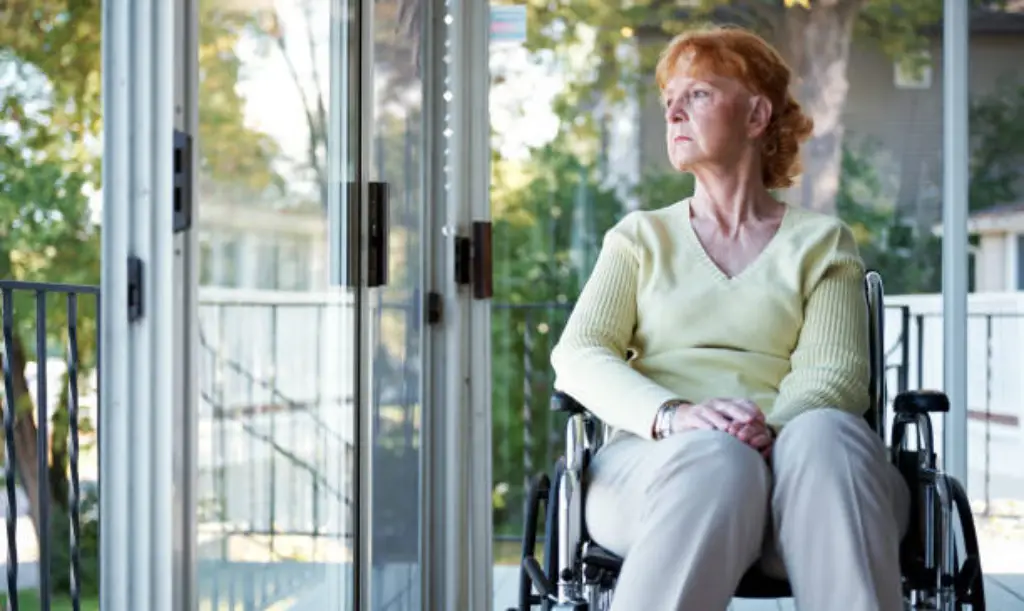
She stood on my doorstep like a bird that had gotten lost in a storm—small, fragile, wearing a wool coat that had probably been expensive twenty years ago but now hung loose on her shrinking frame. Her silver hair was pulled back in a neat bun, and her pale blue eyes held something I couldn’t quite identify. Loneliness, maybe. Or hope.
I’d lived next door to Eleanor for three years, ever since I’d moved into this run-down duplex with its leaky faucets and drafty windows. In all that time, we’d exchanged maybe twenty words total. Polite hellos over the fence. Comments about the weather. She kept to herself, tending her immaculate garden while I struggled to keep dandelions from taking over my small patch of grass.
“I’m sorry to bother you,” she said, her voice soft and careful, like she was afraid of using up too much air. “I smelled something cooking, and I wondered… do you happen to have any extra food? I can pay you, of course.”
My heart clenched. This woman, who lived in the nicest house on our shabby street, was asking me—someone who counted pennies at the grocery store—for food.
“Of course,” I said immediately. “Come in, please. We’re just having dinner.”
She hesitated at the threshold. “I don’t want to intrude…”
“You’re not intruding at all.” I stepped back, gesturing her inside. “Lily, we have a guest!”
My daughter had stopped crying and was staring at Eleanor with wide, curious eyes. Mac and cheese still decorated her face and the table around her high chair, but she’d forgotten about her dinner tantrum.
“Hello, little one,” Eleanor said softly, and something in her voice made Lily smile for the first time all day.
I busied myself in the kitchen, heating up more mac and cheese and slicing some bread I’d been saving for tomorrow’s lunch. It wasn’t much, but it was what we had, and I’d learned that sometimes sharing what little you have creates more abundance than hoarding ever could.
“Please, sit anywhere,” I said, clearing magazines and Lily’s toys off our secondhand couch. “I’m Anna, by the way. Anna Brooks. And this messy little monster is Lily.”
“Eleanor,” she said, settling carefully onto the couch like she wasn’t sure it would hold her. “Eleanor Whitford. We’ve been neighbors for quite a while, haven’t we?”
“Three years,” I confirmed, bringing her a steaming bowl. “I’ve always meant to introduce myself properly, but…”
“Life gets busy,” she finished, accepting the bowl with hands that shook slightly. “Especially when you’re raising a child alone.”
There was no judgment in her voice, just understanding. I wondered how she knew I was alone, then realized it was probably obvious. No man’s clothes on the line, no second car in the driveway, no masculine voice ever heard through the thin walls.
We ate together in my cramped living room, Lily chattering about her day at preschool while Eleanor listened with the kind of attention most adults never gave children. She asked questions about Lily’s drawings, her favorite colors, her stuffed animals. She made my daughter feel heard and important in a way that made my chest tight with gratitude.
“This is delicious,” Eleanor said, though I knew it was just boxed mac and cheese with some salt and pepper. “I haven’t had a home-cooked meal in… well, longer than I care to admit.”
“Don’t you cook for yourself?” I asked, then immediately regretted the question. Maybe it was too personal.
But Eleanor smiled sadly. “Cooking for one person feels pointless sometimes. I usually just heat up a can of soup or make toast.”
I understood that feeling intimately. Before Lily, I’d lived on cereal and takeout, too tired from work to bother with real meals. Having someone to cook for—even a picky four-year-old—had taught me the ritual of caring that came with preparing food.
“Well, you’re welcome to eat with us anytime,” I heard myself say. “I always make too much anyway.”
That wasn’t true. I carefully measured every portion to make our groceries last. But something about Eleanor’s careful politeness, her obvious loneliness, made me want to take care of her.
After dinner, Eleanor helped me clean up despite my protests. She washed dishes with the methodical precision of someone who’d spent decades keeping house, while I wiped down surfaces and wrestled Lily into her pajamas.
“Thank you,” Eleanor said as I walked her to the door. “This was… this was lovely. I’d forgotten what it felt like to have dinner conversation.”
“Thank you for joining us,” I said. “Lily loved having someone new to talk to.”
Eleanor reached into her purse and pulled out a twenty-dollar bill. “For the food.”
“Absolutely not,” I said, gently pushing her hand away. “You’re our neighbor. Neighbors don’t charge each other for sharing a meal.”
She looked like she wanted to argue, but something in my expression must have stopped her. “Then let me return the favor soon. Please.”
“You don’t need to—”
“I want to,” she said firmly, and I heard an echo of steel beneath her soft voice. “Tomorrow night? Both of you?”
I hesitated. Lily and I had a routine—dinner at six, bath at seven, stories and bed by eight. Disrupting that routine usually meant a meltdown that lasted hours.
But Eleanor was looking at me with such hopeful expectation that I couldn’t refuse.
“We’d love to,” I said.
The next morning, I found a handwritten note tucked under my windshield wiper.
Dear Anna, Thank you for the lovely evening. Would you and Lily like to come for dinner at six? I promise to have something more exciting than mac and cheese. Warmly, Eleanor
The handwriting was elegant and careful, the kind they used to teach in schools decades ago. I folded the note and slipped it into my purse, feeling something flutter in my chest that might have been anticipation.
All day at the diner where I worked, I found myself wondering what Eleanor’s house looked like inside. From the outside, it was clearly the nicest property on our street—a small Victorian with pristine white paint, flower boxes under every window, and a garden that looked like something from a magazine. But I’d never been past her front gate.
“You seem distracted today,” said Maria, the other waitress working the lunch shift. “Everything okay?”
“Just dinner plans,” I said, refilling sugar dispensers. “With a neighbor.”
“That’s nice. You don’t get out much.”
She was right. Between work and Lily, I barely had time for friends, let alone dating. Most nights, I fell into bed exhausted after reading Lily her bedtime story, too tired to even watch TV.
At five-thirty, I bundled Lily into her cleanest dress and brushed her unruly curls until they almost looked tame. I changed into the one good blouse I owned—navy blue, professional, the kind of thing I’d bought for job interviews before giving up on careers that required more education than I had.
“Where are we going, Mama?” Lily asked as we walked across the yard.
“To have dinner with Miss Eleanor. Remember her from last night?”
“The nice lady who listened to my stories?”
“That’s right, baby. She’s very nice, so we need to use our best manners, okay?”
Lily nodded solemnly, taking my hand as we approached Eleanor’s front door.
When Eleanor answered, she’d transformed. Gone was the fragile woman in the oversized coat. She wore a simple but elegant dress in deep green, her silver hair was styled in soft waves, and she’d applied just enough makeup to bring color to her pale cheeks. She looked like someone who’d once moved in different circles than our working-class neighborhood.
“Anna, Lily, welcome,” she said, stepping back to let us in. “I’m so glad you could come.”
I stepped into her living room and stopped dead.
This wasn’t the modest home of an elderly woman living on Social Security. This was something else entirely.
The furniture was real wood—mahogany and cherry, pieces that had weight and history. The sofa was upholstered in cream silk that looked like it had never known a juice box spill or a crayon mark. Bookshelves lined two walls from floor to ceiling, filled with leather-bound volumes that looked like they’d been collected over a lifetime. Oil paintings in heavy gold frames depicted landscapes and portraits of people from another era.
In the corner by the bay window sat a baby grand piano, its black surface polished to a mirror shine. Sheet music was scattered across the bench—Chopin, I thought, though I couldn’t read music.
“This is…” I struggled for words that wouldn’t sound rude. “Your home is beautiful.”
“Oh, it’s just an old house,” Eleanor said dismissively, the way people with money always downplayed their wealth. “Most of this furniture belonged to my late husband’s family. I keep meaning to get rid of some of it, but…”
She trailed off, and I understood. These weren’t just possessions; they were memories made tangible.
“I like the piano,” Lily announced, gravitating toward it like iron filings to a magnet.
“Do you play, little one?” Eleanor asked.
“No, but I want to learn. Mama says maybe someday when we have more money.”
My cheeks burned. I’d forgotten how brutally honest four-year-olds could be about family finances.
But Eleanor just smiled. “Would you like me to play something for you?”
Lily nodded eagerly, and Eleanor sat down at the bench. Her fingers, which had seemed frail and uncertain the night before, moved across the keys with surprising strength and grace. The melody that filled the room was hauntingly beautiful—something classical that I didn’t recognize but that made my chest tight with emotion.
“That was gorgeous,” I said when the last notes faded. “You play beautifully.”
“I’m out of practice. Charles—my husband—used to love listening to me play after dinner. But there’s no joy in performing for an empty room.”
The sadness in her voice was so profound that I instinctively moved closer. “How long has he been gone?”
“Five years next month.” Eleanor’s fingers traced the piano keys without making sound. “Forty-three years of marriage, and then… nothing. Just silence.”
I wanted to say something comforting, but what comfort could I offer? I’d never experienced that kind of love or that kind of loss. Lily’s father had disappeared before she was born, leaving me with nothing but hurt and a positive pregnancy test.
“Come,” Eleanor said, standing abruptly. “Let’s eat before everything gets cold.”
The dining room was as elegant as the living room—a mahogany table that could have seated eight, set with china that looked antique and probably priceless. But Eleanor had set only three places, clustered together at one end of the table like we were intimate friends sharing a casual meal.
The food was incredible. Roasted chicken with herbs, garlic mashed potatoes, green beans that actually tasted like vegetables instead of mush, and warm dinner rolls that melted in your mouth. It was the kind of meal I’d dreamed about making for Lily someday when we had a real kitchen and a real budget.
“This must have taken you all day,” I said, taking a second helping of everything because it was too good to stop eating.
“I enjoyed it,” Eleanor said. “I’d forgotten how much I love cooking for people. Charles always said I should have opened a restaurant.”
“Why didn’t you?”
She was quiet for a moment, watching Lily carefully cut her chicken into tiny pieces. “Different times. Different expectations. Women like me didn’t have careers; we had husbands.”
There was no bitterness in her voice, but I heard the weight of choices not made, paths not taken.
After dinner, we moved back to the living room. Eleanor made tea while Lily explored, touching everything with the careful reverence of a museum visitor.
“She’s well-behaved,” Eleanor observed, settling beside me on the silk sofa.
“She has her moments,” I said, thinking of the mac and cheese tantrum just twenty-four hours earlier. “But mostly she’s good. She’s had to grow up faster than most kids.”
“Because of her father?”
I tensed. This was the part of my story I usually avoided, the messy reality that made people uncomfortable. “He’s not in the picture. Never was, really.”
Eleanor nodded without judgment. “That must be difficult.”
“Some days more than others.” I watched Lily examine a music box on the side table, her small fingers tracing the delicate painted flowers. “I worry about what I can’t give her. Music lessons, art classes, a house with a yard where she can run around. College someday.”
“She has something more important than any of those things,” Eleanor said quietly.
“What’s that?”
“A mother who loves her completely. Who puts her first. That’s rarer than you might think.”
Something in her tone made me look at her more closely. “Do you have children?”
Eleanor’s face went very still. “We tried for many years. It never happened. Charles said it wasn’t meant to be, that we were meant to be each other’s whole world. But I always wondered…”
She didn’t finish the sentence, but I could hear the echo of old grief in her voice.
We sat in comfortable silence, watching Lily discover the treasures scattered throughout the room. A crystal paperweight that threw rainbows on the wall. A collection of miniature porcelain horses. A jewelry box that played a tinkling melody when opened.
“Anna,” Eleanor said suddenly, her voice soft but serious. “May I ask you something personal?”
My stomach tightened. “Of course.”
“Have you ever thought about leaving this neighborhood?”
The question surprised me. “I… well, sure. Sometimes I dream about it. But I can’t afford to move. Most months I can barely afford groceries.”
Eleanor folded her hands in her lap, studying them carefully. “What if someone helped you?”
“Eleanor, I appreciate the thought, but I don’t accept charity.” The words came out sharper than I’d intended, but the idea of being someone’s pet project made my skin crawl. “I take care of my daughter and myself.”
“This wouldn’t be charity,” she said gently. “It would be… partnership. Mutual benefit.”
I frowned. “I don’t understand.”
Eleanor stood and walked to an antique secretary desk in the corner. She returned with a manila folder tied with a blue ribbon, her hands shaking slightly as she placed it on the coffee table between us.
“I haven’t told anyone this,” she said, her voice trembling with either fear or excitement. “But Charles left me very comfortable financially. More than comfortable, actually. More money than one person could spend in several lifetimes.”
My heart started beating faster. “Eleanor…”
“I never used most of it because I never had anyone to share it with. No children to send to college, no grandchildren to spoil. Just me, rattling around in this big house with more money than purpose.”
She untied the ribbon and opened the folder. Inside were legal documents covered in dense text that made my eyes swim.
“These are trust fund documents,” she explained. “One for Lily’s education and future. And another one… for you.”
I stared at her, feeling like the world had tilted sideways. “Eleanor, this is insane. We barely know each other.”
“Do we?” she asked quietly. “Because last night, for the first time in five years, I felt like I was part of a family again. And tonight, watching Lily explore my house, seeing her excitement over simple things like a music box… it reminded me what joy feels like.”
She reached across the table and took my hand. Hers was soft and warm, with the thin skin of age but surprising strength.
“I’m not offering to solve all your problems, Anna. I’m asking for companionship. Purpose. A reason to wake up in the morning that isn’t just habit.”
Tears stung my eyes. “This is too much. It’s too generous. I don’t deserve—”
“Don’t you dare,” Eleanor interrupted, her voice sharp for the first time. “Don’t you dare tell me you don’t deserve good things. You work two jobs to support your daughter. You share your food with lonely neighbors even when you can barely feed yourself. You’ve raised a kind, curious, well-mannered child completely on your own. If that doesn’t deserve reward, then nothing does.”
I looked down at the documents, trying to process what she was offering. Financial security. A future for Lily that I’d never dreamed possible. A chance to stop worrying about rent and groceries and broken-down cars.
But it also meant accepting something I’d never been able to accept: help.
“I need time to think,” I whispered.
“Of course. There’s no pressure, no deadline. Just… consider it. Please.”
I promised I would.
But as I tucked Lily into bed that night, I had no idea how little time we would actually have.
Three days later, I was folding laundry in my living room when I heard the sirens.
At first, I didn’t pay attention. Our neighborhood wasn’t exactly upscale, and emergency vehicles were a regular soundtrack. Police cars chasing down domestic disturbances. Fire trucks responding to kitchen fires in apartments where people cooked on hot plates because the stoves didn’t work.
But these sirens were getting louder, closer. And then they stopped.
Right outside my window.
I dropped the towel I’d been folding and rushed to the front door, my heart hammering against my ribs. Through the glass, I could see an ambulance parked directly in front of Eleanor’s house, its red and white lights painting the afternoon shadows in urgent colors.
“Lily!” I called. “We need to go next door right now!”
She came running from her bedroom, clutching her favorite stuffed rabbit. “What’s wrong, Mama?”
“I think Miss Eleanor is hurt. We need to check on her.”
I grabbed my keys and Lily’s hand, and we rushed across the yard. The front gate to Eleanor’s garden was standing open—the first time I’d ever seen it that way. Paramedics were wheeling a stretcher out of her house, and even from a distance, I could see Eleanor’s silver hair spread across the pillow, her face pale as paper.
“Wait!” I called, running toward the ambulance. “Wait, please!”
One of the paramedics—a young woman with kind eyes—paused. “Are you family?”
“I’m her neighbor. Her friend.” The word felt inadequate but true. “What happened?”
“She collapsed in her backyard. Looks like a stroke, but we won’t know for sure until we get her to the hospital.”
Eleanor’s eyes fluttered open at the sound of my voice. She turned her head slightly, and when she saw me, her lips moved.
“Anna,” she whispered, her voice barely audible over the idling ambulance engine. “Stay close.”
Then her eyes closed, and the paramedics loaded her into the vehicle. The doors slammed shut with a finality that made my chest ache, and within seconds, they were gone, leaving nothing but the echo of sirens and the lingering smell of exhaust.
I stood in Eleanor’s front garden, holding Lily’s hand, feeling utterly helpless.
“Is Miss Eleanor going to be okay?” Lily asked, her voice small and scared.
“I don’t know, baby. But we’re going to find out.”
I strapped Lily into her car seat and followed the ambulance to St. Mary’s Hospital, my ancient Honda struggling to keep up with traffic. The emergency room was a chaos of fluorescent lights and antiseptic smells, filled with people in various stages of crisis.
The receptionist was a harried-looking woman who barely glanced up when I approached her desk.
“I’m looking for information about Eleanor Whitford,” I said. “She was just brought in by ambulance.”
“Are you family?”
“I’m her neighbor. Her emergency contact.” I had no idea if that was true, but it felt like it should be.
The woman consulted her computer. “I don’t have anyone listed as her emergency contact. Are you sure you have the right name?”
My heart sank. Of course Eleanor wouldn’t have listed me. We’d only really known each other for a few days.
“She lives next door to me,” I said desperately. “She doesn’t have any other family. Please, I just need to know if she’s okay.”
The receptionist’s expression softened slightly. “I’m sorry, but I can only give information to family members. You can wait in the general waiting area if you’d like.”
So I waited. Lily curled up in my lap, eventually falling asleep despite the uncomfortable plastic chairs and the constant stream of people coming and going. I stared at the doors marked “AUTHORIZED PERSONNEL ONLY” and willed someone to come out with good news.
Hours passed. Lily woke up hungry and cranky. I bought overpriced snacks from vending machines and tried to keep her entertained with games and stories, all while watching those doors for any sign of Eleanor.
Finally, at nearly ten o’clock at night, a doctor emerged. He was middle-aged with graying hair and tired eyes, wearing scrubs that had seen better days.
“Is anyone here for Eleanor Whitford?” he called.
I shot to my feet so quickly that I nearly dumped Lily off my lap. “I am. How is she?”
He looked at me curiously. “Are you family?”
“I’m her neighbor. Her friend.” I was getting tired of that question, but I tried to keep the frustration out of my voice. “She doesn’t have any family. How is she?”
The doctor—his name tag read Dr. Michaels—studied me for a moment, then glanced around the waiting room as if making sure no one was listening.
“She’s stable,” he said quietly. “It was a mild stroke, caught early enough that we don’t expect permanent damage. But she’s unconscious, and we won’t know the full extent of her recovery until she wakes up.”
Relief flooded through me so quickly that my knees went weak. “Can I see her?”
“Visiting hours are over, and again, you’re not family…”
“Please.” I hefted Lily higher on my hip, feeling her weight like an anchor. “She told me to stay close. Those were her last words before they put her in the ambulance. I don’t think she has anyone else.”
Dr. Michaels looked at Lily, who was staring at him with wide, serious eyes, then back at me. Something in his expression shifted.
“Room 314,” he said. “But just for a few minutes.”
Eleanor looked impossibly small in the hospital bed, surrounded by machines that beeped and hummed with mechanical precision. Her silver hair was spread across the pillow like spun silk, and her face was pale but peaceful. She looked like she was simply sleeping, waiting for someone to wake her up and tell her it was time for tea.
I pulled a chair up beside her bed and took her hand. It was cool and light, like holding a bird.
“I’m here,” I whispered. “Lily and I are both here. You’re going to be okay.”
I wasn’t sure if she could hear me, but I talked to her anyway. I told her about Lily’s day at preschool, about the new waitress at the diner who couldn’t remember orders, about anything and everything that came to mind. Lily had fallen asleep again, curled in my lap like a cat, her breath warm against my neck.
A nurse came in to check Eleanor’s vital signs—a young man with gentle hands and a soft voice.
“Are you her daughter?” he asked.
The question should have been simple to answer. But sitting there in the dim light, holding the hand of a woman who’d offered me everything and asked for nothing but companionship in return, the answer felt complicated.
“Something like that,” I said.
He nodded and made notes on her chart. “Talk to her. Even when patients are unconscious, they can often hear familiar voices. It helps with recovery.”
So I talked. I told Eleanor about the trust fund documents she’d shown me, how they’d kept me awake for the past three nights thinking about possibilities I’d never dared dream of. I told her about my fears—that I wasn’t smart enough or strong enough to deserve what she was offering, that I’d somehow disappoint her.
“But mostly,” I whispered, “I told her about how lonely I’ve been. How hard it is to carry everything by yourself, to make every decision alone, to never have anyone to share the good moments with.”
Eleanor’s fingers twitched in mine. So slightly that I almost missed it.
“Eleanor?” I leaned forward. “Can you hear me?”
Her eyelids fluttered but didn’t open.
“I’m here,” I said again. “We’re both here, and we’re not going anywhere.”
I spent the next four days practically living at the hospital.
Maria covered my shifts at the diner without complaint, and Mrs. Rodriguez from across the street watched Lily when I needed to run home for clean clothes and showers. The hospital staff stopped questioning my presence after the first day, accepting me as Eleanor’s de facto family.
On the second day, a man in an expensive suit arrived asking for Eleanor Whitford.
He was tall and distinguished, with silver hair and the kind of confident bearing that came from years of handling other people’s money. His business card identified him as Michael Dean, Attorney at Law.
“Are you Anna Brooks?” he asked when he found me in the waiting room.
My stomach dropped. “Yes. Is something wrong?”
“On the contrary.” He sat down beside me, his briefcase balanced on his knees. “Mrs. Whitford listed you as her emergency contact in her medical directive. She also gave me specific instructions about what to do if she was ever incapacitated.”
I stared at him. “She listed me as her emergency contact?”
“Two days before her stroke. Along with several other legal documents that she asked me to update.” He opened his briefcase and pulled out a folder that looked similar to the one Eleanor had shown me. “She wanted to make sure you and your daughter were taken care of, regardless of what happened to her.”
“I don’t understand.”
Michael—he insisted I call him Michael—spread the documents across the small waiting room table. “Mrs. Whitford came to my office last week and updated her entire estate plan. As of five days ago, you and Lily are her primary beneficiaries.”
The words hit me like a physical blow. “That’s impossible. We’d only known each other for a few days when she did that.”
“I tried to talk her out of it,” Michael admitted. “Or at least to wait longer, make sure she was certain. But she was adamant. She said she’d spent five years alone, and in one evening with you and your daughter, she’d remembered what it felt like to have a family.”
I thought about that first night, when Eleanor had knocked on my door asking for food. How we’d shared mac and cheese and conversation, how Lily had chattered about her day while Eleanor listened with the kind of attention that made my daughter glow.
“She said you treated her like a person instead of an obligation,” Michael continued. “That you saw her, really saw her, for the first time in years.”
Tears started flowing down my cheeks. “I just… I just shared dinner. It wasn’t anything special.”
“Sometimes the simplest gestures mean the most.” He handed me a tissue from a box on the side table. “Especially to someone who’s been invisible for too long.”
“How much?” I asked, then immediately felt guilty for asking. “I mean, what kind of… how big is her estate?”
Michael was quiet for a moment, studying my face. “Approximately eight point three million dollars. Plus the house and its contents, which are worth another million and a half.”
The waiting room tilted sideways. I gripped the arms of my chair, feeling like I might pass out.
“That’s…” I couldn’t finish the sentence. The numbers were too big, too incomprehensible.
“Life-changing,” Michael said gently. “For you and for Lily.”
I thought about my daughter, asleep in the hospital room down the hall. About the dreams I’d given up because they seemed impossible. College funds and music lessons and a house with a backyard where she could run around safely.
“She might recover completely,” I said desperately. “She might wake up and be fine, and then this won’t matter.”
“She might,” Michael agreed. “But she wanted these arrangements in place regardless. She said she’d found her family, and she wanted to make sure her family was protected.”
That night, I sat by Eleanor’s bedside and told her everything. About the lawyer, the will, the impossible generosity that I still couldn’t fully comprehend.
“I don’t know how to accept this,” I whispered to her still form. “I’ve never had anyone take care of me before. I’ve always been the one doing the taking care of.”
Eleanor’s breathing was steady and quiet, the machines around her beeping their electronic lullabies.
“But maybe that’s the point,” I continued. “Maybe taking care of each other is what makes us family. Not blood or marriage certificates or legal documents. Just… showing up. Seeing each other. Being present.”
I fell asleep in the chair, Lily curled in my lap, our hands intertwined with Eleanor’s.
I woke to the sound of a voice calling my name.
“Anna?”
My eyes flew open. Eleanor was looking at me with clear, alert eyes, her face still pale but fully conscious.
“You stayed,” she said, her voice hoarse but strong.
“Of course I stayed.” I leaned forward, careful not to disturb Lily, who was still sleeping. “How do you feel?”
“Like I’ve been hit by a truck.” Eleanor tried to smile, but the effort seemed to exhaust her. “But alive. Definitely alive.”
“You scared us,” I said, tears starting again. “I thought… I was afraid…”
“I’m not going anywhere,” Eleanor said firmly. “Not when I finally have something to stay for.”
Over the next week, as Eleanor recovered and regained her strength, we talked about everything. The trust funds, the inheritance, the future that was suddenly possible for Lily and me.
“I want you to understand,” Eleanor said during one of our afternoon conversations, “this isn’t about charity or pity. It’s about family. Chosen family.”
She was sitting up in bed, looking more like herself every day, her silver hair brushed and her color returning.
“You and Lily have given me something I thought I’d lost forever,” she continued. “Purpose. Joy. A reason to plan for tomorrow instead of just enduring today.”
“But what do we give you in return?” I asked. “What could we possibly offer that’s worth millions of dollars?”
Eleanor smiled—the first real smile I’d seen from her since before the stroke.
“Dinner conversation,” she said. “Piano recitals for an audience of two. Someone to cook for. Someone to worry about. Someone to love.”
She reached for my hand. “I’ve had money for years, Anna. What I haven’t had is family. You and Lily are worth more than all the money in the world.”
Two weeks later, Eleanor came home from the hospital.
I helped her settle back into her beautiful house, and she insisted that Lily and I stay for dinner. As we sat around her elegant dining room table, sharing another home-cooked meal, I realized that this was what family felt like.
Not perfect or conventional, but real. Built on choice and care and the simple act of showing up for each other.
“So,” Eleanor said, cutting into her roast chicken, “have you thought about what you’d like to do first? With the trust fund, I mean.”
I looked at Lily, who was carefully arranging her peas into small piles on her plate, then back at Eleanor.
“Actually,” I said, “I was wondering if you’d teach Lily to play piano. If you’re up for it.”
Eleanor’s eyes lit up with something that looked like pure happiness.
“I would love nothing more,” she said.
And for the first time in my adult life, I felt like I was exactly where I belonged.
That night, after Lily was asleep in her own bed, I sat in my small kitchen and looked at the trust fund documents that would change everything. College funds and down payments and possibilities I’d never dared dream of.
But the real treasure wasn’t the money. It was the knowledge that Lily would grow up knowing what it felt like to be chosen, to be valued, to be part of something bigger than herself.
She would never wonder if she was wanted, because Eleanor had looked at both of us and decided we were worth everything she had to give.
That was a gift beyond price.
The next morning, I woke to find another handwritten note slipped under my door.
Dear Anna and Lily, Thank you for making an old woman remember what it means to be alive. Welcome to the family. All my love, Eleanor
I pressed the note to my chest and smiled through my tears.
Sometimes the most extraordinary changes begin with the simplest gestures. A shared meal. An open door. The decision to see someone who has been invisible for too long.
Eleanor had knocked on my door asking for food, but what she’d really been asking for was connection. And in giving her that, we’d all found something we didn’t know we were missing.
We’d found each other.
True wealth isn’t measured in dollars or possessions, but in the connections we make and the love we choose to share. Eleanor discovered that the most valuable inheritance she could leave wasn’t money—it was the gift of belonging, of being chosen, of finding family in the most unexpected places.

Lila Hart is a dedicated Digital Archivist and Research Specialist with a keen eye for preserving and curating meaningful content. At TheArchivists, she specializes in organizing and managing digital archives, ensuring that valuable stories and historical moments are accessible for generations to come.
Lila earned her degree in History and Archival Studies from the University of Edinburgh, where she cultivated her passion for documenting the past and preserving cultural heritage. Her expertise lies in combining traditional archival techniques with modern digital tools, allowing her to create comprehensive and engaging collections that resonate with audiences worldwide.
At TheArchivists, Lila is known for her meticulous attention to detail and her ability to uncover hidden gems within extensive archives. Her work is praised for its depth, authenticity, and contribution to the preservation of knowledge in the digital age.
Driven by a commitment to preserving stories that matter, Lila is passionate about exploring the intersection of history and technology. Her goal is to ensure that every piece of content she handles reflects the richness of human experiences and remains a source of inspiration for years to come.