The Price of Protection
My name is Lily Morgan. I’m thirty-three years old, and I’m a corporate real estate attorney in Denver. That condo Samuel wanted his name on? I bought it at twenty-seven with money saved from three brutal years at a law firm that didn’t think women belonged in commercial real estate. The Range Rover he wanted transferred? I paid thirty-eight thousand dollars cash at thirty-one. The savings account he wanted access to? Six figures that took a decade to build—every vacation I didn’t take, every dinner I skipped, every weekend I worked while my friends were living their lives.
I learned about financial independence from my mother, though not the way most people learn things from their parents. I learned it from watching what happens when you don’t have it.
My mother died when I was twenty-five, right before I passed the bar exam. Ovarian cancer that showed no mercy. In those final weeks, she grabbed my hand and said something I’ve never forgotten: “Lily, wealth isn’t about what you earn. It’s about what you keep and what you protect. Don’t ever let anyone make you feel guilty for building something solid. And don’t ever give someone else control over what you’ve built.”
She was talking about my father, though she didn’t say his name. He’d left when I was twelve, and my mother discovered she had nothing in her own name. No credit cards. No savings account. No property. At forty-two, she had to start completely from scratch. She rebuilt herself, got her real estate license, worked two jobs, eventually became successful. But she never forgot what those early years felt like—the vulnerability, the powerlessness, the sick feeling of realizing you’d trusted someone with everything and they’d left you with nothing.
When I bought my condo at twenty-seven, I was honoring her. For the next four years, I lived like a college student in that beautiful space. Cheap furniture, no vacations, cooking every night. Every raise, every bonus, every tax refund went straight toward that mortgage principal. When I made that final payment at thirty-one, I sat alone and cried. Relief tears. Freedom tears.
That condo was mine. Completely, totally mine. Then I bought the Range Rover—used, but I paid the full thirty-eight thousand in cash. By thirty-two, I had that six-figure savings account and a partnership track at one of Denver’s most prestigious commercial real estate firms.
But I was also lonely in a way I didn’t admit to anyone. I’d come home every night to that beautiful, quiet condo and wonder if I’d made the wrong choices. All my college friends were married or engaged. I had property and professional respect and financial security, but I didn’t have anyone to share it with.
That’s when I met Samuel Brennan eighteen months ago at a charity gala. He was thirty-five, charming, working in what he called “finance consulting”—which I later learned meant he advised startups that never seemed to secure funding. Those first months felt effortless. He’d show up with coffee during late nights. He’d listen when I talked about difficult clients. He seemed genuinely impressed by my career, by what I’d built.
My best friend Rachel was skeptical from the beginning. “There’s something performative about him,” she’d say. “Watch how he talks about you around other people. It’s always about what you have, not who you are.”
But I was tired of being alone. So I ignored the small warning signs—the way Samuel always steered conversations toward my assets, how he’d casually mention “our place” or “our car” when legally everything was mine, how he never offered to contribute equally but always had money for expensive electronics.
Ten months into dating, he moved into my condo. His lease was ending, and he started contributing fifteen hundred a month for utilities and groceries. But things shifted within weeks. My minimalist aesthetic became “cold and corporate.” He started redecorating without asking, inviting friends over constantly for poker nights that left beer stains on my coffee table. Then came comments about my career—how I worked too much, how maybe I should consider something “less stressful.”
Eight months ago, I proposed to him. Yes, I got down on one knee and presented a ring that cost two months of my salary. He cried, said yes, and immediately started posting photos with captions about being “set for life” and “finding his forever home.” Not forever person—forever home. That should have registered as strange.
I threw myself into wedding planning. My half of the expenses climbed to thirty-five thousand—venue at the Denver Botanic Gardens, photographer, caterer, florist, string quartet. Samuel would occasionally mention costs but never offered to split anything equally. Rachel’s skepticism intensified. “He’s not in love with you,” she said one night. “He’s in love with what you’ve built.”
Then Samuel sat down in my home office and delivered his ultimatum.
Transfer the condo. Transfer the car. Give him access to my savings. All of it, or the wedding was off.
I looked at him across my desk—the desk I’d bought with my first bonus, in the office I’d created in the condo I’d purchased alone—and something crystallized. He didn’t want to build a life with me. He wanted to take possession of the life I’d already built.
“Let me think about it,” I said, keeping my voice steady.
“Don’t take too long,” he replied. “We’ve got vendor deadlines.”
That night, I lay in bed replaying his words—not just the ultimatum itself, but the way he delivered it. The casual tone, like he was asking me to pick up groceries. The prepared quality, like he’d rehearsed it. The immediate escalation to threats when I didn’t agree instantly. This wasn’t spontaneous. This was calculated.
Sunday morning, I met Rachel for our usual trail run at Washington Park. I unloaded everything before we’d even finished the first mile. She stopped mid-stride, hands on her knees. “Say that again. He wants what?”
“The condo. The car. Access to my savings. All of it transferred into his name or at minimum joint ownership.”
Her expression shifted to pure anger. “Lily, that’s not a partnership request. That’s a heist with a ceremony attached. My sister went through this exact thing six years ago. Her ex wanted his name on her car and condo ‘to prove she trusted him.’ She did it because she loved him. Two years later, during the divorce, she had to buy him out of assets he never contributed a single cent toward. He walked away with eighty thousand of her equity.”
I felt something cold settling in my chest. “I don’t know what to do.”
“You call a lawyer today. Not a wedding planner, not a therapist. A lawyer who specializes in asset protection. And you don’t tell Samuel you’re doing it.”
Monday morning, I called Jonathan Hastings, a family law partner at my firm. I explained the situation clinically—the ultimatum, the timing, the specific assets Samuel wanted access to. The silence on the other end lasted so long I thought the call had dropped.
“Jonathan?”
“I’m here. Lily, I’ve been practicing family law for thirty years. I’ve seen this scenario play out more times than I can count, and it never ends well for the person with assets. If you transfer these assets before marriage, you’re making a gift with zero legal protection. The timing is the biggest red flag—an ultimatum three months before a wedding, after you’ve already paid deposits? That’s not love talking. That’s strategy.”
He asked detailed questions about Samuel’s financial situation, his contributions, his work history. With each answer, I could hear the concern growing in his voice.
“Document everything from this point forward,” he said before we hung up. “Keep records of conversations, texts, financial contributions. If this goes sideways, you’ll need proof.”
Wednesday night, we had dinner at home. “I’ve been thinking about what you said,” I started carefully, “about the asset transfers. I want to talk to a financial adviser first. Make sure we’re structuring everything properly.”
Samuel’s face changed. The guardedness shifted to something harder, colder. “You’re overthinking this. People who love each other don’t need financial advisers to trust each other.”
“I’m being cautious with major assets. That’s responsible.”
He stood up abruptly. “You know what this tells me? That you don’t actually want to marry me. You want a prenup, a financial adviser, probably separate bank accounts too. That’s not a marriage, Lily. That’s a business arrangement where you keep all the power.”
He grabbed his keys. “I’m going to stay at Marcus’ place for a few days. Maybe you’ll figure out what you actually want.”
The door closed behind him, and my phone buzzed with texts designed to make me feel guilty, to make me question my judgment. I turned off my phone and sat in my living room—my living room—and let myself feel what I’d been avoiding. This wasn’t right. None of this was right.
Samuel stayed at Marcus’s for two nights. Wednesday evening, I came home exhausted from a brutal lease negotiation—twelve straight hours fighting over liability clauses. All I wanted was wine and silence. Instead, I walked into my condo and found Samuel sprawled on my couch with Marcus, sports blaring at a volume that made my headache worse.
Samuel didn’t look up when I entered. “We’re planning bachelor party details. Marcus found a place in Vegas.”
I headed toward the kitchen, too tired for confrontation. The open floor plan I’d loved—the seamless flow between living room and kitchen—was about to become the design choice that changed everything.
Because that’s when I heard Marcus’s voice carrying clearly from the living room.
“Have you told her about the Vegas budget yet? That’s going to be expensive as hell.”
I froze just inside the kitchen, wine glass in hand.
Samuel’s laugh came next—darker, more calculating than the one he used with me. “Not yet. She’ll cover it. She always does.”
My hand tightened on the glass.
“Dude, you’ve got her trained,” Marcus said. “My girlfriend would murder me if I pulled that.”
“That’s because your girlfriend doesn’t have a paid-off condo in Cherry Creek and a hundred grand in liquid savings. Lily’s good for it. She works constantly anyway. Might as well benefit from it.”
I set the wine glass down silently, carefully. My attorney brain kicked in—the part that knew evidence when I heard it.
Marcus’s voice dropped lower. “And the asset transfer thing? Bro, that’s brilliant. Once your name’s on that condo and the car, you’ve got real security. Even if things go sideways, you walk away with something substantial.”
“I know. My dad suggested it, actually.”
Everything inside me went cold.
“Your dad told you to do this?” Marcus asked.
“Yeah. He went through a messy divorce and his ex-wife’s name wasn’t on anything. He walked away broke, starting from scratch at forty. He told me, ‘Never marry someone with assets without protecting yourself first. If she turns out to be difficult or controlling, you’re not starting from zero.'”
Then Samuel added the part that made my blood turn to ice.
“Plus, once I have access to her savings account, I can finally launch that cryptocurrency fund I’ve been planning. She won’t even notice if I move fifty grand into the initial investment. By the time she figures it out, it’ll have doubled—hopefully tripled—and I’ll be the one with the empire.”
Marcus laughed. “That’s cold, man. But I respect the hustle. She works, what, eighty hours a week? Probably won’t even notice the money’s gone.”
“That’s the plan. She checks her balance maybe once a month. By the time she realizes fifty grand is missing, I’ll be able to explain it as an investment in our future.”
I stood in my kitchen listening to my fiancé plot my financial destruction with the casual ease of people planning a vacation. Samuel hadn’t just asked for asset transfers on a whim. His father had coached him—a strategy based on his own divorce. This was premeditated. And the cryptocurrency scheme—he’d already decided to steal fifty thousand from my savings. Not borrow. Steal.
I forced myself to move, walking back through the living room like I’d heard nothing. Samuel gave me a smile that would have seemed warm if I hadn’t just heard what I’d heard. “Long day?”
“Brutal,” I managed. “I’m going to take a shower.”
I sat on my bed, feeling like someone had handed me architectural plans for my own destruction. But he’d made one critical mistake—planning this entire scheme while living in the home of a corporate attorney who’d spent ten years learning how to protect assets, identify fraud, and document evidence.
I turned the shower as hot as it would go and let the scalding water burn away the last remnants of doubt. By the time I walked back out, composed and calm, I’d already started building my counterattack.
“Feeling better?” Samuel asked from the couch, beer in hand.
“Much better,” I said. And I meant it.
Samuel and Marcus left around midnight. After they stumbled out, I stood in my living room looking at the beer bottles they’d left, the rings on my coffee table. Then I cleaned it all up—methodically, completely. It felt symbolic, taking back my space, erasing evidence of their presence.
Thursday morning, I was at my desk by seven. I had Jonathan on the phone by eight, telling him everything I’d overheard word for word.
“Lily, you need to protect everything today,” he said. “Not tomorrow. Today. Change every password on every account. Change your locks. All of them. Write down everything you remember from that conversation. Create a spreadsheet of what you owned before Samuel versus what you purchased together. Take photographs of every room. Back everything up to encrypted cloud storage.”
By nine, I’d changed every password on every financial account. By ten, I’d updated all security questions to answers Samuel would never guess. At eleven, I called my building’s property manager.
“Patricia, I need to change all the locks in my unit. Today if possible.”
“Is everything okay, Lily?”
“I’m ending my engagement. My fiancé has keys and I need them to stop working immediately.”
“I understand completely. With the smart lock system, it’s going to run about twelve hundred for everything. Can they do it tomorrow?”
“That’s fine.”
I opened a new spreadsheet documenting everything. The condo: one hundred percent mine, purchased six years ago, mortgage paid off two years ago. The Range Rover: one hundred percent mine, purchased three years ago with cash. Furniture: approximately ninety-five percent mine. Joint purchases: a coffee maker, cookware, decorative pillows, a TV—total about fifteen hundred dollars out of an estimated two hundred fifty thousand in assets.
Another spreadsheet tracking Samuel’s contributions since moving in: fifteen hundred monthly for ten months, total fifteen thousand for utilities and groceries. Nothing toward the mortgage that no longer existed. Nothing toward property taxes or HOA fees. Nothing toward actual ownership of anything.
Then I went room by room with my phone, photographing everything. I encrypted it all and uploaded it to secure cloud storage, sending copies to Jonathan and Rachel with a simple subject line: documentation.
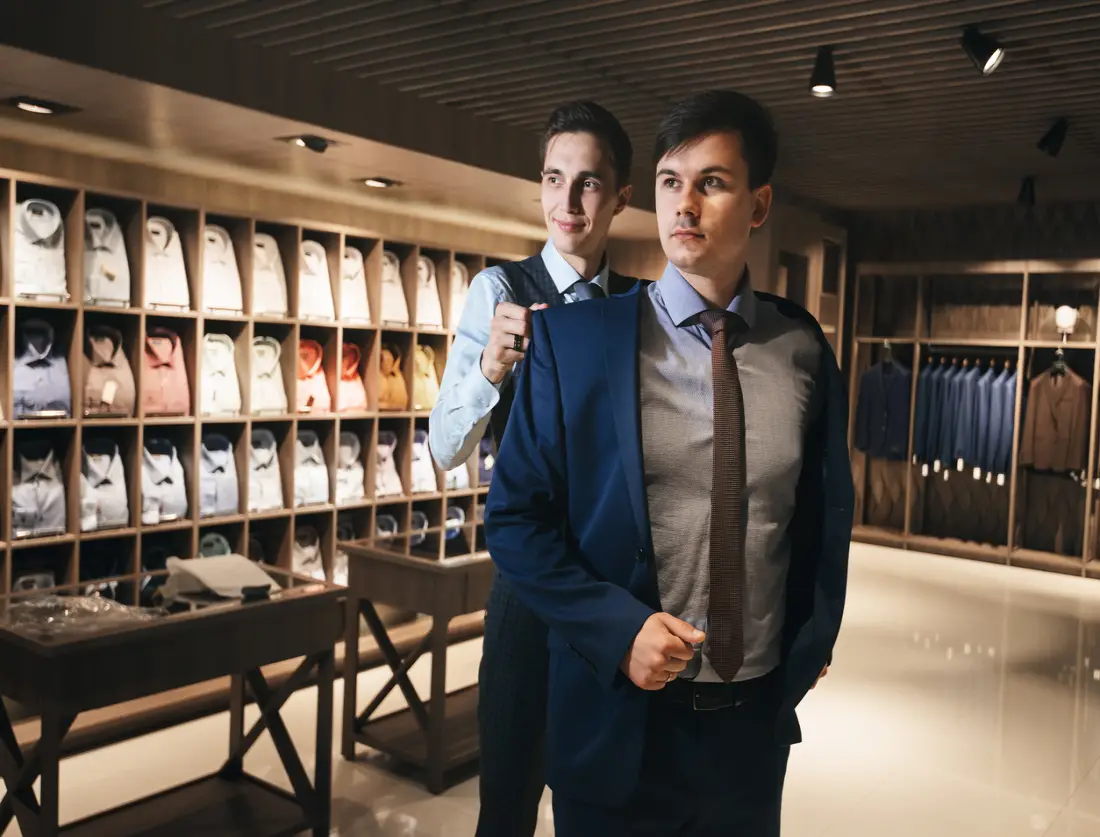
Friday afternoon, while Samuel was supposedly at work, I made a call that felt both petty and absolutely justified. I called Douglas, the owner of the men’s boutique where Samuel’s custom wedding suit was being held.
“Douglas, this is Lily Morgan. The wedding’s off. We broke up. I’d like to donate the suit.”
Silence. “I’m sorry. Donate it?”
“You partner with a veterans’ charity, correct? I paid for that five-thousand-dollar suit. I want it donated to a veteran who actually needs it—someone who will wear it with honor to job interviews instead of using it as a costume for a fraudulent wedding.”
“If you paid for it, legally it’s yours to donate. But he’s going to be very upset when he shows up Monday and discovers it’s gone.”
“That’s the point.”
Saturday morning, I systematically canceled every wedding vendor. The venue, photographer, caterer, florist, string quartet. By noon, I’d spent twenty-three thousand canceling a wedding to a man who’d planned to steal fifty thousand from my savings. Still cheaper than what he’d intended.
As I was finishing with the venue coordinator, she mentioned something that stopped me. “A young couple inquired about your October date last week. Both elementary school teachers. They loved the garden, but it was beyond their budget. The bride actually cried.”
“What would make it affordable for them?”
“If someone covered about eight thousand of the venue cost, they could probably manage the rest.”
My hand shook slightly as I wrote another check. “Apply this to their booking. Anonymous donor.”
Her eyes filled with tears. “You’re going through a breakup and you’re paying for strangers to get married?”
“I’m paying for good people to have something beautiful. Samuel was going to use my money to fund cryptocurrency gambling. This feels infinitely better.”
Sunday morning, I packed all of Samuel’s belongings. Every piece of clothing, every electronic device, his cryptocurrency magazines that now felt like evidence. Every physical trace of him. I labeled each box and stacked them in my assigned parking space.
Then I drafted a text message. I wrote it seventeen times before I got it right.
“Samuel, I’ve thought carefully about your proposal regarding asset transfer. You’re right—we need to be on the same page about this marriage. I’ve realized we have fundamentally different definitions of partnership. You see assets to acquire and exploit. I see a life’s work to protect. I’ve canceled the wedding and all vendors. Your belongings are boxed in parking space 23. I’ve changed all locks and access codes. Collect your things by Monday noon, after which everything will be donated. I wish you clarity about what partnership actually means.”
I hit send, powered off my phone completely, and called Rachel. “Pack a bag. We’re going to Breckenridge for the weekend. Right now.”
We stayed in a small cabin in the mountains. We hiked trails where the aspen trees were turning gold, drank wine by a fireplace, and talked about everything except Samuel.
Sunday evening, driving back to Denver, I finally turned my phone on. It took thirty seconds for all the notifications to load. Eighty-seven missed calls. Sixty-two texts. Fifteen voicemails.
I started reading through the texts, watching Samuel’s mental state deteriorate in real time.
First came confusion: “What are you talking about? Is this a joke?”
Then panic: “I just tried my key and it doesn’t work. What’s going on?”
Then anger: “You can’t just cancel our wedding without discussing it. This is insane.”
Then rage: “Everyone’s going to know what kind of person you really are. Controlling. Incapable of trust. You’re going to die alone in that condo you care about more than actual human beings.”
Then bargaining: “Lily, I’m sorry. Let’s just talk. Forget the asset thing. Let’s talk about a prenup instead. I’ll sign whatever you want. I love you, not your condo.”
There were texts from his father threatening legal consequences for “financial abuse.” Texts from Marcus calling me cold. Texts from numbers I didn’t recognize saying I’d humiliated Samuel.
I scrolled through them all, feeling nothing. No guilt. No second thoughts. Just distant curiosity about how someone could be so completely delusional about their own behavior.
Monday morning, I did something petty and perfect. I called in sick to work and drove to Larimer Square, parking across the street from Douglas’s boutique. Samuel’s final fitting was scheduled for two o’clock.
At exactly two, Samuel’s Honda Civic pulled up. He walked into the boutique with confident strides.
At 2:06, the door burst open and Samuel came storming out, phone at his ear, face dark red with rage. Even from across the street, I could hear him yelling. “What do you mean, donated?”
Then something happened I hadn’t anticipated. A man walked out of the boutique behind Samuel—late forties, military posture, close-cropped hair going gray.
And he was wearing the suit. Samuel’s suit. The charcoal Tom Ford with burgundy lining.
The man stopped in front of the window, looking at his reflection with wonder. He touched the lapels gently, like he was afraid it might disappear. Turned to see the fit from different angles. Stood taller.
Douglas came out, walked over to the man, shook his hand warmly.
That’s when Samuel turned and saw him. His face went through remarkable transformation—confusion, recognition, then pure rage.
“That’s my suit!” he screamed.
Douglas stepped between them. “This suit was donated by the person who purchased it.”
“I don’t care who technically paid for it,” Samuel yelled. “That’s my wedding suit. Mine!”
The veteran started to shrug out of the jacket. Douglas cut him off firmly. “You absolutely will not give it back. The suit is yours. Earned and deserved.”
Samuel screamed at no one in particular: “You can’t do this! That suit cost five thousand dollars!”
Douglas raised one eyebrow. “You’re welcome to pursue legal action. However, Ms. Morgan provided extensive documentation proving she paid for the entire ensemble. You’ll be suing the person who purchased it for donating their own property.”
Samuel stood there, face red, fists clenched, looking between Douglas, the veteran in his suit, and the people filming. Then he stormed to his Honda Civic and peeled out so aggressively his tires squealed.
I watched the veteran go back inside with Douglas, still touching the jacket like he couldn’t believe it was real. The best part wasn’t Samuel’s humiliation—though that felt satisfying. The best part was knowing a good man was wearing that suit, a man who would use it to rebuild his life, who deserved it infinitely more than Samuel ever had.
The weeks that followed were strange. Not difficult—just strange. Like adjusting to silence after living next to construction noise. My condo felt like mine again. I rearranged furniture, donated the pieces Samuel had brought in, replaced his cryptocurrency magazines with books I’d been meaning to read.
Rachel came over one Friday with wine. “You seem different. Lighter. Like you’ve been holding your breath for a year and finally exhaled.”
She wasn’t wrong.
Samuel’s smear campaign started within days. His social media transformed into a performance of heartbreak. “Sometimes you discover someone’s true colors when you ask them to treat you as an equal partner.” “Narcissists weaponize their success to control and discard people.” “Financial abuse is real, and it’s not always the man doing it to the woman.”
His friends piled on. I was the controlling corporate shark who’d manipulated Samuel emotionally, then cruelly discarded him. The narrative spread through Denver’s professional community faster than I’d anticipated.
That’s when Margaret Keating stepped in. She was our senior partner—sixty-eight, silver hair, four decades of family law experience, zero patience for financial manipulation.
Thursday afternoon, she appeared in my office doorway. “Close your door. I’ve been hearing things about you and your ex-fiancé. About how you supposedly abused him financially.”
My stomach dropped. “Margaret, I—”
She held up one hand. “I’m not asking you to defend yourself. I’m telling you I’ve already started correcting the record. Last night at a bar association mixer, someone tried to paint you as a monster. So I told them the truth—that Samuel tried to manipulate you into transferring assets, that you overheard him planning to steal fifty thousand for cryptocurrency, that you protected yourself and ended it.”
“You didn’t have to do that.”
“Yes, I did. I’ve spent forty years watching women get financially exploited. You did exactly the right thing, and I’m not sitting quietly while some con artist tries to destroy your reputation for protecting what you built.”
Within a week, people who’d initially sympathized with Samuel were calling to apologize. But the most unexpected call came two weeks later—from Marcus, Samuel’s college roommate.
“Lily, can we talk? Can I buy you coffee?”
We met at a coffee shop in Capitol Hill. Marcus looked uncomfortable. “I need to apologize for encouraging Samuel. For being in your living room that night, talking about his plans like it was all some game.”
He ran his hand through his hair. “Samuel’s telling everyone you’re a monster. But I was there. I heard him talking about the asset transfer, the cryptocurrency fund, his dad’s coaching. And I’ve seen him do this before. In college, he had a girlfriend named Ashley—convinced her to cosign a business loan. He defaulted within six months and destroyed her credit. She spent years rebuilding.”
“Why tell me this now?”
“Samuel and his dad found a lawyer. They’re planning to sue you for the suit and emotional distress. And I can’t stay silent about that.” He pulled out his phone, showing me texts from Samuel bragging about the crypto fund he’d launch with “Lily’s money,” about how I’d “never notice fifty grand missing.”
“I’m willing to testify if it goes to court. About what I heard him say. What his actual plans were.”
I took photos of the texts. “Thank you. This helps.”
Within forty-eight hours, Jonathan had drafted a legal letter that was essentially a surgical strike. Eight pages outlining exactly what discovery would reveal if Samuel proceeded—documented evidence of his plan to drain my savings, testimony from multiple witnesses, proof I’d paid all expenses, bank records showing his minimal contributions. A proposed counter-suit for attempted fraud.
Jonathan sent it Tuesday. By Friday, Samuel’s attorney had withdrawn. Samuel’s father called one last time, voice tight with rage. “You think you’ve won? Everyone will eventually see what you really are.”
“Everyone already sees what your son really is,” I replied. “You coached him to exploit me and now you’re angry it didn’t work. If you contact me again, I’ll add harassment to the counter-suit.”
Silence. Then the call ended. I blocked both their numbers.
Three months after the breakup, Margaret called me into her office. “The partnership committee met yesterday. We’d like to offer you junior partner, effective immediately.”
I stared at her. “I thought that wasn’t until next year.”
“It wasn’t. But I made the case that your judgment under personal pressure demonstrated exactly the clear thinking we value in partners. You documented everything, protected your assets, handled the aftermath with professionalism.”
I said yes.
Six months later, something arrived that changed everything. A large envelope from Douglas’s boutique. Inside was a note: “Thought you should see this.” And a card.
The handwriting was careful and deliberate. “Thank You” on the front in elegant script.
Inside: “Ms. Morgan, Mr. Douglas gave me your work address and said it would be okay to write. I’m James Patterson, the veteran who received the suit. I wanted you to know what that gift meant. I got the corporate security job I interviewed for. I’ve been promoted twice in six months. But more than the job, that suit gave me something I’d lost: confidence, dignity, the feeling that I belonged in professional spaces again. I don’t know what happened between you and whoever that suit was originally for. But I want you to know your generosity changed my life. I’m including a photo from my first day of work. With deepest gratitude, James Patterson.”
The photo showed a man standing tall in front of a corporate building, wearing the charcoal Tom Ford suit with burgundy lining. He stood with shoulders back, chin up, eyes clear. He looked like he belonged exactly where he was.
I framed the photo and hung it in my home office, right above my desk. During late nights reviewing contracts, I’d look up and see James Patterson standing proud in that suit and remember that sometimes the best revenge is making sure something beautiful ends up in the right hands.
Nine months after the breakup, I saw Samuel at a downtown restaurant with a woman I didn’t recognize. She was attractive, professional, laughing at something he’d said. I watched him use the exact same gestures he’d used with me.
When she got up to use the restroom, I did something impulsive. I followed her.
“This is going to sound insane,” I said, “but are you dating Samuel Brennan?”
She turned, surprised. “Yes. For about four months. Why?”
“I was engaged to him until eight months ago. I’m not here to cause drama, but please be very careful with your financial information. Don’t let him pressure you into transferring assets. And if he gives you an ultimatum about proving your love through property transfer… please run.”
She stared at me. “He told me you were a controlling ex who couldn’t handle his ambition.”
“I’m sure he did.” I pulled out my business card, writing my cell number on the back. “I’m just asking you to protect yourself. Trust your instincts. If anything feels off—if you ever need to talk—call me.”
She took the card slowly. “Thank you for this. I don’t know what I’ll do with it, but… thank you.”
Two weeks later, my office phone rang. “This is Victoria Chen. We met at a restaurant. I need to talk.”
We met for coffee. Victoria had done research after our encounter. Found Samuel’s college girlfriend Ashley, learned about the business loan that destroyed her credit. Found the woman before me. Found another woman who’d let him onto her car insurance.
“There’s a pattern,” Victoria said, spreading papers across the table like evidence. “He targets financially independent women, moves in quickly, systematically tries to get his name on their assets. With you, he got sophisticated. The wedding ultimatum was leverage. But it’s always the same goal.”
“You broke up with him?”
“Yesterday. He screamed at me for over an hour. Then he said something revealing—’I would have made you wealthy anyway.’ Like access to my money was always the plan.”
Victoria pushed a folder across the table. “I documented everything. His attempts to get my banking information. Pressure to add his name to my car. If you ever need this for anything legal, it’s yours.”
“Thank you for warning me,” Victoria said. “You probably saved me from making a terrible mistake.”
“Someone should have warned me. I’m just glad you listened.”
October arrived—the month that should have been my wedding. Rachel insisted we go to the Botanic Gardens on what would have been my wedding day. We arrived to find a wedding in progress—the young teachers I’d anonymously sponsored.
The ceremony was simple, beautiful. The bride cried during her vows—real tears, not performance tears. The groom held her hands like she was something precious. Their friends and family filled the garden with genuine laughter.
Rachel and I watched from a distance, and something in my chest that had been tight for months finally loosened. “That’s what it’s supposed to look like,” Rachel said quietly.
“Yeah. It is.”
The venue coordinator spotted us. “The bride specifically asked me to thank you if I ever saw you. She said someone believing in their love when they couldn’t afford to celebrate it meant more than the money.”
I watched the couple’s first dance, and for the first time since the boutique incident, I cried. Not from sadness or regret, but from something like closure. My money had created actual joy instead of funding a fraudulent performance.
The year that followed blurred together in the best possible way—not the exciting blur of crisis, but the peaceful blur of a life running smoothly. Work consumed me, but healthily. Without Samuel’s constant criticism, without monitoring my accounts, without defending my choices, I had energy I’d forgotten existed.
I mentored younger associates. When a twenty-six-year-old named Emily came worried about her boyfriend’s sudden interest in her inheritance, I didn’t hesitate. “Has he asked you to add his name to anything?”
Emily nodded. “He said it would show I trust him.”
“Don’t do it. And if he makes it an ultimatum, that tells you everything you need to know.”
A month later, Emily thanked me for the advice. “You probably saved me from a huge mistake.”
“Someone should have warned me. I’m glad I could warn you.”
Rachel and I started hosting monthly dinners—single professional women sharing resources and support. An informal network where we could talk honestly about red flags, financial independence, navigating dating while successful.
Eighteen months after the breakup, Douglas called. “Mr. Patterson—the veteran who received the suit—has been asking if I could connect you two. He wants to take you to lunch to say thank you. Would you be comfortable?”
I agreed. James showed up with his wife Karen, which immediately made everything comfortable. They were both warm and genuine.
“I don’t know the full story,” James said after we’d ordered. “But I need you to know what that suit did for me. I’d been out of work for eight months after leaving the military. Wearing that suit to the interview changed everything—not just how others saw me, but how I saw myself.”
“He came home that day and cried,” Karen said, squeezing my hand. “Said a stranger had given him dignity when he was running out of hope.”
“It wasn’t just the job,” James continued. “Though I did get it, and I’ve been promoted twice. It was getting my confidence back. That suit became my interview uniform. It reminds me I deserve to be there.”
They became real friends—people who invited me to their daughter’s graduation, who texted photos of vacations, who genuinely cared about my life. James and Karen reminded me that good people existed.
Two years after I changed those locks, I woke up on a random Tuesday morning and realized something had shifted. I made coffee in my kitchen, looking out at the Denver skyline through windows I’d chosen when I bought this place. The morning light hit the hardwood floors just right.
I hadn’t thought about Samuel in weeks—not with anger or regret or even curiosity. He’d simply become irrelevant, a person who used to exist in my life but didn’t anymore.
I looked around my condo. Every piece of furniture I’d chosen. Every bit of art from local Colorado artists. The minimalist aesthetic that was mine, not compromised. The office where I worked on cases I cared about. The bedroom where I slept soundly.
My Range Rover sat in the garage, paid off. My savings account had grown past six figures again. My career was exactly where I wanted it. Most importantly, I’d learned to trust my instincts again—to hear warning bells and actually listen.
That morning, drinking coffee in my peaceful home, I finally understood what my mother had tried to teach me. Wealth isn’t just about money. It’s about dignity. Boundaries. Self-respect. The wisdom to recognize when someone wants to take rather than build. The courage to walk away from people who see you as an opportunity instead of a partner.
I looked up at the framed photo above my desk—James on his first day of work, proud and confident in that charcoal suit.
Real revenge wasn’t about destruction or humiliation. Real revenge was refusing to be the victim someone had planned for me to be. It was protecting what I’d built and moving forward without carrying manipulation as baggage. It was sleeping soundly every night, knowing I’d chosen self-respect over social convenience.
That, as it turned out, was the sweetest revenge of all.
I finished my coffee, got dressed for work, and left my condo with my head high. Samuel Brennan had tried to take everything I’d built. Instead, I kept it all—every single piece.
And I’d never felt more powerful in my life.

Lila Hart is a dedicated Digital Archivist and Research Specialist with a keen eye for preserving and curating meaningful content. At TheArchivists, she specializes in organizing and managing digital archives, ensuring that valuable stories and historical moments are accessible for generations to come.
Lila earned her degree in History and Archival Studies from the University of Edinburgh, where she cultivated her passion for documenting the past and preserving cultural heritage. Her expertise lies in combining traditional archival techniques with modern digital tools, allowing her to create comprehensive and engaging collections that resonate with audiences worldwide.
At TheArchivists, Lila is known for her meticulous attention to detail and her ability to uncover hidden gems within extensive archives. Her work is praised for its depth, authenticity, and contribution to the preservation of knowledge in the digital age.
Driven by a commitment to preserving stories that matter, Lila is passionate about exploring the intersection of history and technology. Her goal is to ensure that every piece of content she handles reflects the richness of human experiences and remains a source of inspiration for years to come.