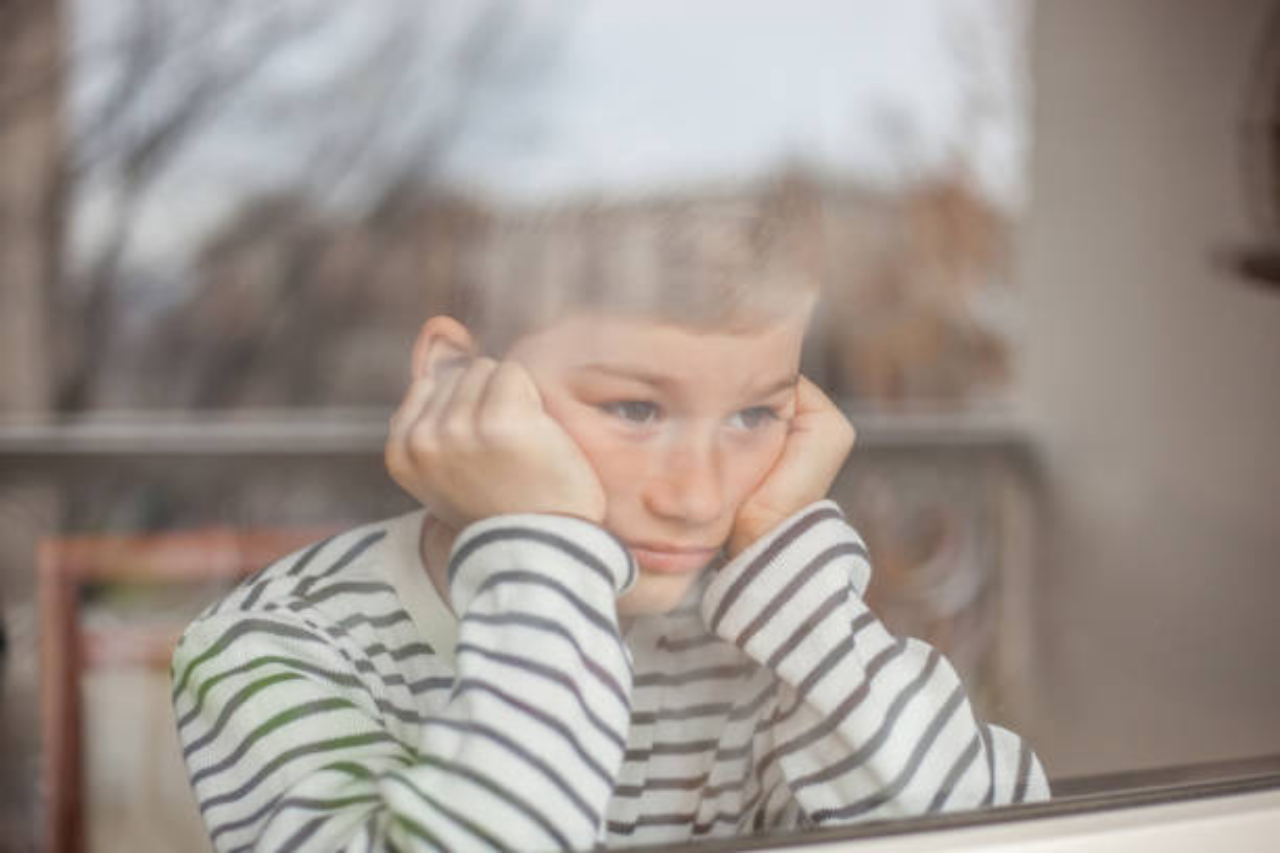
The assignment in Thailand was supposed to run another full week, but Julian Hunt had gathered the evidence he needed faster than anticipated. Twelve years of tracking illegal wildlife trafficking rings across Southeast Asia had taught him efficiency—how to observe, document, and extract information from people who made their living through deception. The poaching network he’d been investigating had collapsed after his documentation led to seventeen arrests across three countries. By the time the last suspect was in custody, Julian was already on a military transport heading back to the States, eager to surprise his nine-year-old son Matthew for his birthday.
He’d missed three of Matthew’s birthdays in the past five years. Not this one.
The Pennsylvania humidity hit him like a wall when he stepped off the plane, so different from Thailand’s heat yet somehow just as oppressive. It was nearly nine o’clock on a Tuesday evening when he pulled into the driveway of their modest two-story home on the outskirts of Harrisburg. The house stood dark except for the porch light that ran on a timer—no other cars, no lights in the windows, no sounds of life that should have filled a home with a fourth-grader and his mother.
Julian felt the first stirrings of unease as he unlocked the front door, his fieldwork instincts prickling at something he couldn’t yet name. “Brandy?” he called into the empty foyer. “Matthew?”
Only silence answered him, thick and complete.
He moved through the house methodically, the way he’d approach a suspected poacher’s camp in the jungle—careful, observant, cataloging every detail. The living room was pristine in a way that felt wrong for a house with a nine-year-old boy. No scattered Lego pieces, no video game controllers draped over the couch arm, no half-finished drawings on the coffee table. Matthew was a creative kid, always building something or sketching in the notebooks Julian bought him by the dozen. This sterile cleanliness was unnatural.
His wife’s closet hung half-empty, clothes missing from their usual spots. Matthew’s room looked untouched, the bed made with hospital corners that his son would never manage on his own. Everything was too neat, too arranged, like a stage set rather than a lived-in space.
On the kitchen counter, he found a note written in Brandy’s precise handwriting: “Taking Matthew camping with Dad at the cabin. Back Tuesday. Don’t worry.”
Tuesday was four days away.
Julian stared at the note, his unease crystallizing into something sharper. Matthew hated camping. His son was the kid who preferred sketching birds to hunting them, who’d rather read about forests than hike through them. The one time they’d gone camping as a family, Matthew had cried the entire second night because he felt bad for the fish they’d caught.
And there was something else—a memory surfacing from the argument they’d had before Julian left for Thailand six weeks ago.
Brandy had wanted to send Matthew to a wilderness therapy program that her father Dale had been recommending. Some place in Montana that promised to “toughen up” boys who were “too soft.” Julian had shut the conversation down immediately, his voice harder than he usually used with his wife.
“Matthew is nine years old,” he’d said firmly. “He’s sensitive and artistic and thoughtful, and there’s absolutely nothing wrong with that. He doesn’t need to be fixed.”
“He cries over everything,” Brandy had insisted, her face tight with frustration. “He won’t even try sports. All the other boys think he’s weird. Dad says he needs discipline, structure, consequences that actually mean something—”
“I don’t care what Dale says.” Julian had cut her off, recognizing the echo of his father-in-law’s voice in her words. “Matthew is exactly who he’s supposed to be. Let him be a kid.”
The argument had ended there, or so he’d thought. Now, standing in the empty kitchen holding that note, he realized Brandy had simply waited until he was on the other side of the world to act.
Dale Hobbs owned a hunting cabin three hours north, deep in state forest land where cell service was spotty and neighbors were measured in miles rather than yards. Julian had been there twice over the years, both visits uncomfortable experiences where Dale had held court on the superiority of military discipline and the weakness of modern parenting. The man had served twenty years in the Army, coming home with a chest full of medals and a worldview that divided humanity into warriors and victims, with no middle ground permitted.
Julian grabbed his go-bag from the truck—the one that never fully unpacked between assignments—and headed north into the darkness.
The July heat had broken into a thunderstorm, rain hammering his windshield as he drove through increasingly rural roads that turned from paved to gravel to rutted dirt. His phone lost signal after the first hour, leaving him navigating by memory through pine forests that pressed close on both sides. By midnight, he was creeping down the final approach road with his headlights off, years of surveillance work making him cautious even as urgency clawed at his chest.
The cabin appeared through the trees, a dark shape against darker forest. Dale’s pickup truck sat in the clearing, mud-splattered and empty. No sign of Brandy’s sedan anywhere.
Then he heard it—a sound that transformed his unease into ice-cold terror. A child, crying. Muffled, hoarse, the kind of crying that comes after you’ve already cried yourself raw.
Julian moved toward the sound, circling around the cabin’s east side, his eyes adjusting to the darkness. When his flashlight beam found what was waiting behind the structure, rage unlike anything he’d ever experienced flooded through every nerve in his body.
Matthew was chained to a massive oak tree twenty feet from the cabin’s rear wall.
His son wore only shorts. No shoes, no shirt, no protection from the elements or the insects that had clearly been feasting on him for days. Even in the darkness, Julian could see the welts covering Matthew’s thin arms, the countless mosquito bites forming angry red constellations across his chest and back, the way his lips were cracked and bleeding from dehydration. A length of heavy chain wrapped around the tree trunk, connected to a shackle locked around Matthew’s ankle—the kind of restraint you’d use on a dangerous animal, not a fourth-grader who still slept with a nightlight.
“Matthew,” Julian breathed, already running forward, his hands shaking as he pulled his multi-tool from his belt.
His son’s head jerked up, eyes wide with disbelief that cycled rapidly through hope, relief, and desperate fear. “Daddy,” Matthew croaked, his voice barely recognizable. “Daddy, please help me. I can’t take it anymore.”
Julian was already on his knees, working the shackle’s lock with fingers that wanted to tremble but couldn’t afford to. “How long have you been out here?” he asked, keeping his voice steady despite the screaming fury in his chest.
“Three days,” Matthew whispered, and the number hit Julian like a physical blow. “Grandpa said I needed to learn to be tough. He said I couldn’t come inside until I stopped crying. But I can’t stop, Dad. I’m so thirsty and my leg hurts and the bugs won’t stop biting me and—”
The lock gave way with a click that sounded too small for the magnitude of what it meant. Julian caught his son as Matthew’s leg gave out completely, unable to support weight after three days locked in one position. The boy weighed nothing, all ribs and sharp angles, and Julian lifted him easily into his arms.
But Matthew grabbed his father’s shirt with surprising strength, his fingers digging in desperately. “Daddy, there’s someone behind the cabin,” he whispered urgently against Julian’s neck. “In the shed. I heard crying at night—not me, someone else. A girl, I think. She was crying for her mama. Grandpa told me to shut up or I’d end up in the shed too.”
Every instinct Julian had developed over twelve years of investigative work started screaming warnings. He carried Matthew to his truck first, got him wrapped in an emergency blanket from his go-bag, and made him drink water in small, careful sips. “Stay here and lock the doors,” Julian said, his voice calm but allowing no argument. “If I’m not back in five minutes, or if anyone else comes, you drive away. You remember how I taught you to drive, right?”
Matthew nodded, terror and trust warring in his expression. But underneath both, Julian saw something else—relief that his father was here, that someone was finally going to do something.
Julian approached the shed behind the cabin with his flashlight and the hunting knife he always carried in the field. The structure was small, maybe ten by twelve feet, and a cheap padlock secured the door from the outside. He cut through it with bolt cutters from Dale’s own truck bed, and when the door swung open, the smell hit him first—urine, sweat, and the particular stench of fear that he recognized from raided poacher camps.
Inside, huddled on a pile of filthy blankets in the corner, was a girl about twelve years old. She had dark hair matted into tangles, wore a stained t-shirt and shorts, and when Julian’s flashlight found her face, she screamed and tried to press herself further into the corner, as though she could somehow push through the wooden wall and escape.
“It’s okay,” Julian said, keeping his voice low and calm the way he’d learned to speak to traumatized witnesses. “I’m not going to hurt you. I’m here to help. My name is Julian. What’s yours?”
“Sophia,” she whispered after a long moment. “Sophia Morrison. Please don’t tell him I talked to you. He said if I talked to anyone—” Her voice broke into sobs.
“Sophia, I need you to tell me—how long have you been here?”
“I don’t know anymore. Weeks, I think. My mom’s boyfriend brought me. He said I needed to learn respect, that I talked back too much, that I needed consequences.” She was crying harder now, words tumbling out in a rush. “He paid the old man, signed papers, said he’d pick me up when I was fixed.”
Julian felt something cold and calculating settle over him, the same mindset he adopted when documenting criminal networks. This wasn’t just one man’s cruelty. This was systematic. Organized. And if there were two children here, there were likely more elsewhere.
He pulled out his phone—no signal, as expected this deep in the forest—and focused on immediate priorities. “Sophia, where is he right now? The man who locked you in here—where is he?”
“Inside,” she whispered, pointing toward the cabin. “He drinks whiskey every night and passes out on the couch. That’s when I can hear the other kids sometimes, crying from wherever else he keeps them. There are more, I think. He talks on the phone about his ‘rehabilitation program,’ about parents paying him to fix their problem children.”
Julian’s jaw clenched hard enough to make his teeth ache. “How many children do you think he has?”
“I don’t know. Six? Seven? I heard him talking once about camps in Maryland and Virginia too, other men who work with him. He was bragging about how many families they’d helped, how much money they were making from parents desperate enough to pay thousands of dollars to have their kids broken and rebuilt.”
Julian had documented human trafficking operations across Southeast Asia. He’d seen the aftermath of poachers who slaughtered endangered species for profit. He’d witnessed corruption that destroyed entire communities. But this felt different, more visceral, because one of these children was his son. And his own wife had delivered Matthew to this nightmare.
“Stay here just a moment longer,” he told Sophia, his voice gentle despite the rage coursing through him. “I need to make sure it’s safe, and then I’m taking you and my son away from here. I promise you’re going to be safe.”
He approached the cabin from the back, moving silently across wet ground, years of field experience making him nearly invisible in the darkness. Through a window, he could see Dale Hobbs sprawled on a worn couch, an empty whiskey bottle on the floor beside him. The man was sixty-two, thick-shouldered and barrel-chested despite his age, his gray hair cut in a military buzz. He snored loudly, oblivious to the world collapsing around him.
Julian tried the back door—unlocked, because Dale was arrogant enough to believe himself untouchable out here. He slipped inside, his eyes immediately cataloging everything with the systematic attention he’d honed over years of evidence gathering.
A desk in the corner held a computer and scattered papers. A filing cabinet stood against one wall. And on the wall itself, a detailed map of Pennsylvania, Maryland, and Virginia with red pins marking different locations. Julian’s stomach turned as he realized each pin likely marked another site like this one, another place where children were being tortured under the guise of wilderness therapy.
He photographed everything with his phone, knowing the images would save locally even without signal. Then he opened the filing cabinet, and what he found made his hands shake with barely contained fury.
Folders, each labeled with a child’s name. Inside were contracts—official-looking documents with legal language about “wilderness rehabilitation therapy” and “behavioral modification programs.” Payment records showing thousands of dollars changing hands. Parental signatures authorizing Dale to take custody for sixty to ninety days. Liability waivers. Medical consent forms dressed up to look legitimate.
It was all designed to appear legal, to give desperate or misguided parents the illusion that they were helping their children rather than abandoning them to torture.
Matthew’s folder sat near the front. Brandy had signed the contract two weeks ago—the day after Julian left for Thailand. The stated program objective made him want to vomit: “Eliminate crying behavior, increase masculine resilience, establish dominance response patterns.”
Julian photographed every page with mechanical precision, his training overriding his emotions. Then he found another folder marked “Network Associates” and discovered this went even deeper than he’d feared.
Inside were names, addresses, phone numbers for fifteen men running similar operations across five states. Some were Dale’s former Army buddies. Others appeared to be parents who’d put their own children through the program and then decided to franchise the business model. Contact logs showed regular communication, discussions of “problem clients,” strategies for avoiding scrutiny from social workers and law enforcement.
This was an organized criminal enterprise, and Dale Hobbs was just one node in a much larger network of systematic child abuse.
Julian heard movement behind him and spun to find Dale lurching upright on the couch, his eyes blurry with alcohol and interrupted sleep. For a moment, confusion clouded the older man’s expression. Then recognition hit, followed quickly by anger.
“The hell?” Dale’s voice was rough, gravelly. “Julian? You’re not supposed to be back until—”
“I found my son chained to a tree,” Julian said quietly, and the deadly calm in his own voice surprised him. It was the same tone he used in the field just before coordinating a raid on a poaching operation—cold, controlled, absolutely certain of the next moves.
Dale stood, swaying slightly but drawing himself up with military bearing. “Boy needed discipline. Brandy agreed. You’re never around to do the hard work of raising him, so someone had to step up and—”
“There’s a twelve-year-old girl locked in your shed,” Julian interrupted. “And according to your own files, you’re running a child abuse network across five states. I’ve documented everything. Photographed your records, your financial transactions, your list of locations and associates.”
Julian held up his phone, though the gesture was mostly symbolic without signal. “I’m taking my son. I’m taking Sophia Morrison. And then I’m going to systematically dismantle everything you’ve built here.”
Dale moved faster than Julian expected for a drunk sixty-two-year-old, lunging for a gun cabinet mounted on the far wall. But Julian had been tracking violent criminals for over a decade, and he’d already calculated the likely moves. He intercepted Dale mid-lunge, and they crashed into the desk, papers scattering across the floor.
Dale got his hands on a hunting rifle, but Julian had anticipated that too. He swept the older man’s legs out from under him with a move he’d learned from close-quarters combat training required for fieldwork in dangerous regions. Dale went down hard, the rifle clattering away across the wooden floor.
“You think you can stop this?” Dale spat blood from a split lip, his teeth stained red. “You think you understand anything? These kids need to be broken down and rebuilt properly. Their parents know it. Society knows it. You’re part of the problem, Julian—you and all the other weak men raising weak children who can’t handle the real world.”
Julian looked down at this man who’d tortured his son, who’d built a business on breaking children, and felt nothing but cold contempt. “I’ve spent twelve years taking down criminal organizations far more sophisticated than your little torture ring,” he said evenly. “I know exactly how to dismantle what you’ve built. And I’m going to make absolutely certain that everyone knows what you are.”
He used zip-tie restraints from his go-bag—equipment he always carried for securing suspects in the field—and bound Dale’s hands and feet. Then he gagged him with a kitchen towel and began methodically gathering evidence.
Every file. Every piece of paper. Every electronic device. He loaded it all into Dale’s pickup truck, along with Matthew and Sophia, who clung to each other in terrified silence.
As they drove away from the cabin, headlights cutting through the darkness and rain, Matthew huddled against Julian’s side while Sophia sat wrapped in blankets in the back seat. Both children trembled with shock and exhaustion, their breathing the only sound beyond the engine and the rain.
“Where are we going?” Matthew finally asked, his voice so small it barely carried over the storm.
Julian’s jaw set in a hard line, his hands gripping the steering wheel with controlled force. “First, we’re getting you both checked by doctors. Then I’m making some calls. And then your grandfather and everyone associated with him are going to pay for what they’ve done.”
There was a long pause before Matthew spoke again, even quieter than before. “What about Mom?”
The question hung in the air between them, heavy with implications neither of them was ready to fully process. Julian didn’t answer immediately because the truth was complicated and devastating—Brandy hadn’t been deceived or manipulated. She’d signed the contracts. She’d lied about where Matthew was. She’d knowingly delivered their son to be tortured.
But Matthew didn’t need to process his mother’s betrayal yet. First, they needed safety. Then medical care. Then truth. And finally, justice.
“We’ll figure it out,” Julian said, which was both a promise and an evasion. “But right now, you’re safe. I’ve got you, and nobody is ever going to hurt you like that again. Do you understand me? Never again.”
In the rearview mirror, he could see the cabin disappearing into darkness and rain behind them, but in his mind, he was already three steps ahead, planning exactly how he would destroy Dale Hobbs and everyone who’d enabled his crimes.
This wasn’t about revenge. This was about justice—systematic, thorough, and absolutely inevitable. And Julian Hunt was uniquely qualified to ensure that justice would be served.
The emergency room at Clearfield Hospital was quiet at three in the morning when Julian carried Matthew through the automatic doors, with Sophia walking beside them wrapped in his jacket. The triage nurse’s eyes widened in shock at the sight of them—Matthew’s torso covered in insect bites, the deep bruising and raw flesh around his ankle from the shackle, Sophia’s malnourished frame and haunted expression.
“I need doctors immediately,” Julian said with calm authority. “These children have been held against their will and systematically abused. I also need police and child protective services contacted right away.”
The hospital erupted into controlled chaos as nurses swept both children into separate examination rooms. Julian found himself giving a preliminary statement to a sheriff’s deputy named Kevin Bond, a heavy-set man in his forties who’d clearly been roused from sleep but was alert and taking detailed notes.
“Let me make sure I understand this correctly,” Deputy Bond said, his pen hovering over his notebook. “Your son was chained to a tree for three days as part of some kind of wilderness therapy program? And you found another child locked in a shed on the same property?”
“Yes. And this is just one location.” Julian pulled out his phone and began showing the photographs he’d taken of Dale’s files. “Dale Hobbs is running a network across five states—at least fifteen locations that I’ve documented. Possibly dozens of children. Parents are paying him thousands of dollars to torture their kids under the guise of behavioral modification therapy.”
Bond’s expression shifted from professional skepticism to genuine horror as he scrolled through the images. “Jesus Christ,” he muttered. “We need to call the FBI. This is way beyond county jurisdiction.”
“I was hoping you’d say that,” Julian replied. “But there’s something else you need to know. My wife, Brandy Hunt, signed the contract that put my son in this situation. She knew what she was doing. She’s complicit in this.”
“Where is she now?”
“I don’t know. She wasn’t at the cabin when I arrived.”
Bond made another note, his jaw tight. “We’ll issue a BOLO for her. Mr. Hunt, I need you to understand that what you’ve uncovered here is going to trigger multiple federal investigations—FBI, state police, child protective services across multiple states. This is going to get very complicated very quickly.”
“I understand,” Julian said flatly. “I work as a field investigator for the International Conservation Coalition, documenting wildlife trafficking. I’ve worked with federal agencies before. I know how multi-jurisdictional cases operate.”
This caught Bond’s attention in a new way. “You’re a professional investigator?”
“Twelve years of experience. I’ve taken down poaching rings operating across four continents. I know how to build cases that hold up in court.”
Bond studied him with new respect and perhaps a touch of sympathy. “Then you probably already know that your wife could face serious criminal charges. Conspiracy to commit child abuse, endangerment, possibly even human trafficking depending on how the DA interprets the evidence.”
“Good,” Julian said coldly, and meant it.
A doctor emerged from Matthew’s examination room—a tired-looking woman in her fifties with kind eyes and gray hair pulled back in a practical bun. “Mr. Hunt? I’m Dr. Carolyn Metcalf. I need to talk to you about your son’s condition.”
Julian stood immediately, his heart rate accelerating despite his outward calm. “How bad is it?”
“Physically, he’s severely dehydrated and malnourished. The shackle left deep bruising and lacerations around his ankle—we’re concerned about possible nerve damage, though it’s too early to tell for certain. He has over two hundred mosquito bites, with at least a dozen showing signs of infection. He’s showing symptoms of mild hypothermia from three nights of exposure. We’re running comprehensive blood work, but I expect he’ll make a full physical recovery with proper treatment and time.”
“And psychologically?” Julian asked, though he already knew the answer would be worse.
Dr. Metcalf’s expression darkened. “That’s going to take much longer, Mr. Hunt. Your son is deeply traumatized. He keeps asking if he’s in trouble for crying. He apologizes every time he shows any emotion. He’s convinced that being sensitive or gentle or afraid is somehow wrong, that he needs to be ‘tougher’ or he’ll be punished again. Whatever your father-in-law did to him, it was systematic psychological abuse specifically designed to break his spirit and reshape his personality.”
Julian felt his hands curl into fists at his sides, rage threatening to break through his carefully maintained control. “Can I see him?”
“Of course. He’s been asking for you constantly.”
Matthew lay in a hospital bed looking impossibly small beneath the white sheets, an IV drip feeding fluids into his thin arm. When he saw Julian enter the room, tears started immediately—and then his whole face crumpled in panic.
“I’m sorry,” he gasped out, his voice rising with fear. “I’m sorry, I know I’m not supposed to cry, I’ll be tougher, I promise I’ll be tougher, please don’t—”
Julian was at his bedside instantly, gathering his son carefully against his chest and holding him with fierce protectiveness. “Matthew, listen to me very carefully,” he said, his voice firm but gentle. “You cry as much as you need to. There is absolutely nothing wrong with crying. There is nothing wrong with being sensitive or kind or gentle. Your grandfather was wrong about everything. Do you hear me? He was completely, utterly wrong.”
Matthew buried his face in Julian’s shoulder and sobbed—three days of terror and pain and confusion releasing in shuddering gasps. Julian held him through it, one hand stroking his son’s hair, whispering reassurances that it was over, that he was safe, that nobody would ever hurt him again.
When Matthew finally exhausted himself into silence, Julian eased him back onto the pillows. “I need to ask you some questions. It’s important. Can you do that for me?”
Matthew nodded, wiping his eyes with the back of his hand.
“Did Grandpa hurt any other kids while you were there?”
“There was Sophia in the shed. And I heard others sometimes at night, crying or screaming from somewhere I couldn’t see. Grandpa would go check on them with his flashlight and come back angry. He told me that’s what happened to kids who didn’t learn their lessons fast enough.”
Julian’s jaw tightened, but he kept his voice calm. “When your mom dropped you off, did she know what was going to happen? Did she see where you’d be staying?”
Matthew’s eyes dropped to the blanket, his small fingers picking at the fabric. “She and Grandpa talked before she left. I heard some of it. She said she couldn’t deal with having a son who was weak, that I embarrassed her in front of other parents. Grandpa told her he’d fix me, make me normal. She said good, and then she left.”
The words hit Julian like physical blows, each one confirming what he already knew but had hoped might somehow be wrong. The betrayal was complete and conscious. Brandy hadn’t been fooled. She’d been an active, willing participant in torturing their child.
“Did you hear anything else while you were there? Any names your grandfather mentioned, or anything about the other locations?”
Matthew thought hard, his face scrunching with concentration. “He talked on the phone a lot. He mentioned someone named Marvin and someone called Vernon. He said they were having problems at some camp in Maryland because a social worker was asking questions, and they needed to move kids before anyone came to inspect.”
Julian filed the information away—Marvin and Vernon had both appeared in Dale’s network associates folder. Marvin Fischer and Vernon Rasmussen, with addresses in Maryland. The fact that they were moving children meant the network was aware of potential scrutiny and actively working to evade it.
Before he could ask anything else, there was a knock on the door. Deputy Bond entered with a woman in a dark suit—mid-forties, sharp eyes, federal law enforcement written in every line of her bearing.
“Mr. Hunt, this is Special Agent Elizabeth Stafford with the FBI,” Bond said. “I briefed her on the situation, and she’s mobilizing a multi-state task force.”
Agent Stafford wasted no time on pleasantries. “Mr. Hunt, what you’ve uncovered is potentially one of the largest organized child abuse networks we’ve encountered in the past decade. I’m going to need copies of all the evidence you collected from Dale Hobbs’ cabin. We’re coordinating simultaneous raids on every location in his network before they have a chance to move children or destroy evidence.”
“You’ll have everything I documented,” Julian said immediately. “But I want to be involved in taking them down.”
Stafford raised an eyebrow. “You’re a victim’s family member. We can’t have civilians participating in—”
“I’m a professional investigator with twelve years of experience in international criminal networks,” Julian interrupted, his voice hard. “I speak four languages, I have contacts in federal agencies on three continents, and I know my father-in-law’s psychology and operational methods better than anyone else alive. You can use me as a consultant and resource, or I’ll run my own parallel investigation and you’ll be tripping over me at every turn. Your choice.”
Stafford and Bond exchanged glances. Finally, Stafford gave a curt nod. “Consultant basis only. You follow our operational protocols. No vigilante actions. Are we clear?”
“Perfectly clear.”
“Good. Because we have another immediate problem.” She pulled out her phone and showed Julian a text message chain. “One of Dale’s network associates sent out a group message about two hours ago. It reads: ‘Hobbs cabin compromised. Initiate containment protocol immediately.'”
Julian’s blood went cold. “What’s containment protocol?”
“We’re interpreting it as instructions to move or hide the children, possibly destroy evidence. We’re talking about potentially dozens of kids scattered across fifteen locations. Some of them may have been at these sites for months. If the network goes into full defensive mode, we might never find all of them.”
“Then we need to move fast,” Julian said. “Hit all the locations simultaneously before they can coordinate a response.”
“That’s exactly what we’re doing,” Stafford confirmed. “Teams are mobilizing now. We’ll have agents hitting every documented location within the next six hours.”
Over the following days, Julian’s life became a blur of FBI briefings, interviews with investigators, and long hours sitting with Matthew as his son slowly began to process the trauma. The FBI raids across five states recovered forty-three children from various network locations—some had been missing for months, their parents told they were at legitimate therapeutic boarding schools. Others, like Matthew, had been enrolled by parents who knew exactly what they were signing up for but considered breaking their children’s spirits preferable to accepting who they naturally were.
Sophia Morrison’s mother arrived at the hospital in tears, having been told by her boyfriend that Sophia was at a two-week summer camp. The boyfriend—who’d paid Dale three thousand dollars—was arrested trying to flee to Canada. Brandy was located at her sister’s house in Harrisburg and taken into custody. According to Agent Stafford, she initially tried to claim ignorance about the full nature of Dale’s program, but the contracts she’d signed and the text messages on her phone told a different story.
Dale Hobbs, along with fourteen of his network associates, were charged with dozens of counts including conspiracy to commit child abuse, false imprisonment, kidnapping, and fraud. Two of the network locations had evidence suggesting children had died from “accidents” during the abuse, which added manslaughter charges to the list.
Throughout the legal proceedings, Matthew slowly healed under Dr. Metcalf’s care and with the help of a trauma specialist. He still had nightmares. He still apologized too quickly when he made small mistakes. But gradually, with Julian’s constant reassurance, he began to understand that gentleness wasn’t weakness, that crying didn’t make him less of a person, that being himself was not only acceptable but valuable.
Julian took a leave of absence from his conservation work and accepted a consulting position with the FBI’s Crimes Against Children unit—helping them identify and dismantle abuse networks before they could grow to the scale of Dale’s operation. It meant staying domestic, being home every night, and being there when Matthew woke from nightmares or needed reassurance that he was truly safe.
Six months after that terrible night, Julian sat in a federal courtroom watching as Dale Hobbs received a life sentence without possibility of parole. Brandy received thirty years. The other network associates received sentences ranging from fifteen to forty years. By the time the trials concluded, every person involved in the network had been held accountable.
Outside the courthouse, Matthew stood with Julian, holding his father’s hand as reporters shouted questions they ignored. They walked to their car in silence, and only when they were safely inside did Matthew speak.
“Is it really over?” he asked quietly.
“It’s over,” Julian confirmed. “They can’t hurt anyone anymore.”
“Can we go home now?”
Julian looked at his son—this brave, gentle, artistic child who’d survived something no one should have to endure—and made a decision. “Actually, I was thinking we could go somewhere new. Fresh start. New town where nobody knows what happened. Just you and me. What do you think?”
Matthew considered this seriously, the way he considered everything. “Will you be there? Or do you have to go back to Thailand?”
“I’ve taken a different job. One that keeps me in the country. I’ll be home every single night.”
A small smile crossed Matthew’s face—the first genuine smile Julian had seen in weeks. “Then yes. Let’s go somewhere new.”
They moved to a small town in Vermont, far from Pennsylvania and all its terrible memories. Julian worked remotely for the FBI, helping dismantle other abuse networks while being present for Matthew’s healing. His son started at a new school where his artistic sensitivity was valued rather than mocked, made friends with other gentle kids, and slowly—so slowly—began to reclaim his childhood.
Three years later, Julian stood in the backyard of their Vermont home, watching Matthew play with their golden retriever Scout. His son was laughing as the dog bounded through fallen leaves, the sound pure and unguarded in a way it hadn’t been for so long after the rescue.
Julian’s phone buzzed—a text from Agent Stafford about a potential new case in Oregon, a suspected abuse network showing similar patterns to Dale’s operation. He looked at Matthew’s happy face, at the normal childhood his son was finally getting to experience, and typed back: “Send me the files. I’ll review tonight.”
Because Julian Hunt had learned something crucial in that Pennsylvania forest when he found his son chained to a tree. He’d learned that evil flourished when good people looked away, that monsters often wore respectable faces, that sometimes justice required people willing to wade into darkness to pull innocence back into the light.
And he’d learned that being a father meant more than providing or protecting—it meant teaching by example that strength comes in many forms, that compassion is courage, that standing up for those who can’t stand for themselves is the truest form of heroism.
Dale Hobbs had tried to break Matthew, but instead revealed his own brokenness. Brandy had tried to change her son into something he wasn’t, and lost him forever. The entire network had tried to profit from cruelty, and ended up destroyed.
And Julian Hunt—the man who’d spent twelve years protecting wildlife from poachers—had discovered his most important mission had been waiting at home all along: protecting his son, and making sure no other child suffered what Matthew had endured.
As the sun set over their Vermont home, Julian called Matthew inside for dinner. His son came running, Scout bounding beside him, both of them muddy and happy and safe.
“Hey Dad,” Matthew said as they washed up together. “You know what? I’m really glad you came home early that day.”
Julian pulled his son into a hug, holding him close. “Me too, buddy. Me too.”
And somewhere in a federal prison, Dale Hobbs lay on a narrow cot staring at a ceiling, wondering how everything had fallen apart so quickly. He’d thought he was building something, teaching strength, creating warriors.
Instead, he’d created his own destruction by underestimating Julian Hunt—and that had been his fatal mistake.
The war was over. Justice had been served. And Matthew Hunt was finally, truly free to be exactly who he was meant to be: gentle, artistic, sensitive, and absolutely perfect.

Ethan Blake is a skilled Creative Content Specialist with a talent for crafting engaging and thought-provoking narratives. With a strong background in storytelling and digital content creation, Ethan brings a unique perspective to his role at TheArchivists, where he curates and produces captivating content for a global audience.
Ethan holds a degree in Communications from Zurich University, where he developed his expertise in storytelling, media strategy, and audience engagement. Known for his ability to blend creativity with analytical precision, he excels at creating content that not only entertains but also connects deeply with readers.
At TheArchivists, Ethan specializes in uncovering compelling stories that reflect a wide range of human experiences. His work is celebrated for its authenticity, creativity, and ability to spark meaningful conversations, earning him recognition among peers and readers alike.
Passionate about the art of storytelling, Ethan enjoys exploring themes of culture, history, and personal growth, aiming to inspire and inform with every piece he creates. Dedicated to making a lasting impact, Ethan continues to push boundaries in the ever-evolving world of digital content.
I couldn’t stop reading, very riveting and heartfelt at the same time, I would kill if I saw anyone hurt a child, worse than that, I’m a very gentle senior however no one ever crosses my family especially children. I would rather have people being saved than some of the sappy stuff – needs pulp, there are too many pansy A__ stories. Hit upon some of the graft so your readers get educated, this stuff shouldn’t be glossed over. Be up front – it is corruption and ruining America.