The Inheritance I Earned
They say that grief comes in waves, but when my grandfather, Richard Ashford, died, I didn’t feel a wave. I felt a hollow, aching silence. It wasn’t the silence of absence, but the silence of the only voice that had ever spoken up for me suddenly going quiet forever.
Richard Ashford was a man of mahogany desks, the smell of pipe tobacco and old vanilla, and a laugh that could rattle the windows of his study. To the world, he was a tycoon, a formidable force in commercial real estate who’d built an empire of office towers and shopping centers across three states. To my parents, Diana and Mark, he was a walking ATM, a bank vault they were perpetually waiting to crack open.
But to me? He was just Grandpa. The only person who had ever really seen me.
I stood at the back of the funeral service, watching the rain streak against the stained glass of the chapel like tears the building was crying on my behalf. The windows depicted scenes of angels and redemption, biblical stories about mercy and justice that felt bitterly ironic given the performance happening at the front of the room.
My parents were in the front row, naturally. They’d arrived early to claim those seats, to position themselves where everyone could see their grief.
Diana was wearing a black Chanel dress that cost more than my entire semester’s tuition at the state school I’d attended on scholarships. She dabbed at perfectly dry eyes with a lace handkerchief that probably cost more than my monthly rent, the picture of a bereaved daughter-in-law. Every few minutes, she’d let out a small, theatrical sob—just loud enough for the people around her to hear and offer sympathetic pats on the shoulder.
Mark stood when people came to offer condolences, shaking hands with a solemn, dignified expression, playing the role of the grieving son to absolute perfection. He had the right words ready, the right somber tone, the right amount of pause before speaking as if overcome with emotion.
It was a performance. A masterclass in hypocrisy.
I knew the truth. The last time they’d visited Richard was six months ago—I knew because I’d been there, reading to Grandpa in his study while they’d barged in unannounced. They hadn’t come to check on his health or spend time with him. They’d come to ask for a loan to cover a bad investment in some luxury condo development in Miami that had gone sideways.
Grandpa had refused. Told them he was tired of financing their mistakes. They’d left in a fury, Diana’s heels clicking sharply against the marble floors, Mark slamming the door so hard a picture frame had fallen off the wall.
I’d picked up the frame—a photo of Grandpa and me at my high school graduation, the only family member who’d shown up—and hung it back on the wall while he’d sat in his leather chair, looking older and more tired than I’d ever seen him.
“They’ll never understand, Ethan,” he’d said quietly. “Money is a tool to them, not a responsibility. They think wealth means you deserve more. I tried to teach your father differently. I failed.”
Now I stood in the shadows at the back of the chapel, just as I had stood in the shadows my entire life, wanting to scream. I wanted to march up the aisle and overturn the whole charade, to tell everyone assembled that the grieving children in the front row hadn’t visited their father when he was dying, hadn’t called to check on him, hadn’t cared until they realized his death meant the reading of a will.
But I didn’t. I stood still and silent, watching the rain and remembering.
In the Ashford family hierarchy, I had always been the ghost. The disappointment. The family failure.
I wasn’t aggressive enough for Mark, who’d built his career on hostile takeovers and ruthless negotiations. I wasn’t social enough for Diana, who collected charity board positions like trading cards and measured her worth in country club memberships and society page mentions.
I was Ethan—quiet, observant, “soft.” Those were the words they used. Soft. Weak. Unsuited for the cutthroat world of high finance and commercial real estate.
“The boy reads poetry,” my mother had once said to her tennis partners, and I’d heard the way she said it, like it was a diagnosis of terminal illness. “He writes in journals. He wants to study English literature, for God’s sake. Can you imagine?”
They couldn’t imagine. And neither could I, by the time I was eighteen and applying to colleges. I’d chosen accounting instead, chosen something practical and profitable, hoping that maybe if I could speak their language they’d finally see me as something other than a disappointment.
If only they knew how much strength it takes to stay soft in a house built of stone.
The memories came unbidden as I stood in that chapel: being twelve years old at a family dinner, trying to tell my parents about the short story I’d written that won a school competition, only to have my father interrupt to talk about a deal he was closing. Being fifteen and overhearing my mother tell her sister that she was “worried about Ethan” because he spent too much time alone, as if solitude was a character flaw rather than a refuge.
Being twenty and coming home for Thanksgiving after my first corporate internship, only to have them spend the entire meal talking about themselves, never once asking me about my experience.
Grandpa had been different. He’d asked questions and actually listened to the answers. He’d wanted to know what I thought about books, about politics, about life. He’d treated my opinions as if they mattered, as if I mattered.
Those weekends I’d spent at his estate reading to him when his eyes started failing weren’t a burden. They were the highlight of my week. We’d work through classic literature together—Dickens and Austen and Hemingway—and he’d stop me periodically to discuss themes and characters, to share his own interpretations, to challenge mine.
“You’ve got a good mind, boy,” he’d say, puffing on his pipe in that leather chair. “Don’t let anyone tell you that thinking deeply is a weakness. The world has enough people who react. It needs more people who reflect.”
Now he was gone, and I was alone with my parents and their performance and the hollow ache where his voice used to be.
The summons to the reading of the will came exactly one week after we’d lowered his casket into the earth.
I walked into the law offices of Harper & Associates on a gray Tuesday morning, feeling entirely out of place in my off-the-rack suit from Men’s Wearhouse. The office was everything I’d expected—polished hardwood floors, leather furniture that looked like it cost more than my car, walls lined with law books that probably hadn’t been opened in decades but looked impressive.
The space smelled of lemon polish and serious money, that particular scent of old wealth and established power.
My parents were already there, seated in matching wingback chairs, looking like they owned the place. Diana had dressed for the occasion in what I assumed she thought appropriate for inheriting a fortune—Armani suit, perfectly coiffed hair, enough jewelry to make a statement without looking gaudy. Mark wore his most expensive suit, the one he saved for closing major deals.
They didn’t acknowledge me when I walked in. Didn’t even look up. I was invisible to them, as always.
Sitting behind an imposing oak desk was Mr. Glenn Harper, my grandfather’s oldest friend and attorney. They’d known each other for forty-seven years, since before my father was born, since the early days when Grandpa was just starting out in real estate.
Glenn looked tired. His eyes, usually sharp and bright with the kind of intelligence that missed nothing, were rimmed with red. He’d been crying, I realized. Actually crying, unlike the theatrical production my parents had put on at the funeral.
“Ethan,” he said, his voice gravelly with emotion. “Thank you for coming.”
“Of course, Mr. Harper.”
My parents shifted in their seats, annoyed that Glenn had greeted me first, had acknowledged me at all.
Glenn hesitated, his weathered hand resting on a thick folder sealed with a red wax stamp bearing the Ashford family crest—a lion rampant, symbolizing strength and courage. Ironic, given how little of either quality my parents possessed.
“Your grandfather loved you very much,” Glenn said, looking directly at me. “You know that, don’t you?”
The lump in my throat made it hard to speak. “I know. He was the only one who did.”
My mother made a small sound of protest, but Glenn’s sharp look silenced her.
“He worried about you,” Glenn continued. “About what would happen when he was gone. About whether you’d be protected. He wanted to ensure you had a future that was… yours. Independent. Free.”
Diana leaned forward. “Glenn, we’re all family here. Whatever Richard left, we’ll make sure Ethan is taken care of—”
“Mrs. Ashford,” Glenn interrupted, his voice hardening in a way I’d never heard before, “I’m going to ask you to remain silent while I read the will. You’ll have time to speak afterward.”
He cracked the wax seal. The sound was like a gunshot in the quiet room, final and irreversible.
“The Last Will and Testament of Richard James Ashford,” Glenn began, his voice taking on the formal cadence of legal proceedings. “Being of sound mind and body, I hereby declare this to be my final will, superseding all previous versions.”
My father was practically vibrating with anticipation. I could see him mentally calculating, probably already planning how he’d invest his inheritance.
“To my son, Mark Ashford, and his wife, Diana Ashford,” Glenn read, and I saw my parents lean forward, “I leave the family legacy—specifically, the debts and obligations incurred through the mismanagement of the Ashford subsidiary companies they were entrusted to oversee.”
The silence that followed was deafening.
“I’m sorry,” my father said slowly, “what?”
“Richard invested approximately $3.2 million in various ventures that you and your wife managed,” Glenn explained, looking at my father with something close to contempt. “The Miami condo development, the restaurant franchise, the tech startup. All of which failed due to poor oversight and reckless decision-making. He covered those losses personally. Now, upon his death, those debts—approximately $1.8 million—are legally assigned to you.”
My mother’s face had gone white. “That’s not… he can’t…”
“He can, and he did,” Glenn said flatly. “And to his grandson, Ethan Richard Ashford…”
My middle name. I’d never used it, but Grandpa had given it to me, insisted on it, despite my parents’ objections.
“…he leaves the remainder of his liquid assets, his private property holdings, and his investment portfolio. Totaling approximately five million dollars.”
The room spun. The air left my lungs in a rush that left me dizzy.
Five. Million. Dollars.
It was a number that existed in theory but not in reality, not in my reality. It was enough to disappear, to start over, to build whatever life I wanted without ever having to ask anyone for permission or approval. Enough to start that publishing house I’d dreamed about. Enough to travel the world. Enough to buy a cabin in the woods and never hear my mother’s cutting remarks about my life choices again.
“I… I don’t understand,” I stammered, my voice barely above a whisper.
“He wanted you to be free, Ethan,” Glenn said softly, and there was something like fatherly pride in his expression. “He told me that explicitly. ‘Make sure the boy is free.'”
My father had recovered from his shock and was now turning red, a vein pulsing in his temple the way it always did when he was about to lose his temper.
“This is insane!” Mark shouted, standing up so fast his chair fell backward. “He left his own son with debts and gave everything to… to him?”
“Richard left you exactly what your decisions earned you,” Glenn said calmly. “And he left Ethan what his character deserved.”
My mother was crying now, but these weren’t the theatrical tears from the funeral. These were real, bitter tears of someone watching their meal ticket evaporate.
“We’ll contest this,” Diana said, her voice shaking. “Richard was obviously not in his right mind. He was sick, confused—”
“He was perfectly lucid,” Glenn interrupted. “I have medical documentation from three separate physicians confirming his mental competency at the time this will was drafted.”
Then Glenn’s face hardened in a way that made even my father take a step back. He closed the folder and leaned forward across his desk, his eyes narrowing.
“But I need to tell you something else,” Glenn said, his voice devoid of warmth. “Your parents have already filed a legal contestation of this will.”
My stomach dropped like I’d been pushed off a cliff. “What?”
“I received the filing yesterday,” Glenn confirmed. “They’re claiming Richard was mentally unfit when he drafted this will six months ago. They’re alleging undue influence—that you manipulated a vulnerable elderly man into cutting them out of his estate.”
The accusation hit me like a physical blow, stealing my breath. Manipulated? I had spent my weekends reading to him when his eyes failed, driving him to doctor’s appointments when my parents were “too busy,” sitting with him through chemotherapy treatments when they were on vacation in the Maldives posting photos of sunsets and cocktails.
I had held his hand while he coughed up blood, while he struggled to breathe, while he cried about dying and being afraid and feeling alone despite living in a mansion.
“They’re suing me,” I whispered, the reality sinking in.
“They are,” Glenn confirmed grimly. “And Ethan, you need to understand what you’re facing. They’ve hired Vance Clydesdale.”
I knew the name. Everyone in legal circles knew the name. Clydesdale was a shark in a thousand-dollar suit, the lawyer you hired when you wanted to destroy someone, not just win a case. He was famous for character assassination, for finding the weakest point in an opponent and hammering it until they broke.
“They’re going to tear you apart in court,” Glenn warned, and I could see genuine concern in his eyes. “They will lie. They will manipulate. They will drag your name through the mud and try to prove you’re a predator who preyed on a dying man for money.”
I looked down at my hands. They were trembling, shaking like leaves in a storm.
I had spent my entire life avoiding conflict with my parents. I had spent twenty-four years making myself smaller, quieter, less visible so I wouldn’t be a target for their criticism or disappointment or casual cruelty.
Every instinct I had was screaming at me to run, to hide, to make this go away.
“Do you want to settle?” Glenn asked gently, and I could hear that he wouldn’t judge me either way. “We could offer them half. Maybe they’d take it and go away. You’d still have more than enough to build a good life.”
I thought about Grandpa Richard. I thought about the night six months ago when he’d called me to his study, when he’d looked at me with those tired eyes and said:
“Ethan, I need you to listen carefully. Your parents are going to come after you when I’m gone. They’re going to try to take what I’m leaving you. And you’re going to want to give in, because that’s who you are—you’re kind, you avoid conflict, you want peace.”
“But kindness without boundaries isn’t kindness, boy. It’s self-destruction. And I need you to promise me something.”
“Anything, Grandpa.”
“Promise me you’ll fight for what I’m giving you. Not because of the money—money’s just paper and numbers. But because it represents your freedom. Your chance to be who you actually are instead of who they tried to make you. Promise me you won’t let them make you small again.”
“Never let them make you feel small, Ethan,” he’d said that night, reaching across his desk to grip my hand with surprising strength. “You have a spine of steel, boy. You just haven’t had to use it yet.”
I looked up at Glenn Harper. The trembling in my hands stopped, replaced by something else. Something harder. Something I’d never felt before.
Steel.
“No,” I said, and my voice didn’t shake. “No settlement. They don’t get a single dime.”
Glenn smiled—a slow, predatory smile that reminded me he’d been practicing law for forty years and had probably buried more opponents than I could count.
“Good answer, Ethan. That’s exactly what Richard hoped you’d say.”
The day of the hearing arrived too quickly and not quickly enough.
The courthouse loomed like a fortress of gray stone against a bleak November sky, all sharp angles and barred windows that made it look more like a prison than a hall of justice. I stood on the steps for a long moment, staring up at it, trying to find the courage to walk inside.
A year ago, I would have run. Six months ago, I would have settled.
But Grandpa Richard’s words kept echoing in my mind: You have a spine of steel, boy.
I walked in alone. Glenn had offered to meet me in the lobby, but I’d declined. I needed to do this part myself, needed to walk through those doors on my own feet, carrying my own weight.
My parents were already there, standing near the metal detectors like they were holding court. They looked like exiled royalty preparing to reclaim their throne—Diana in a white wool coat that screamed “innocence and victimhood,” Mark in his most expensive suit, checking his Rolex with an air of bored irritation as if this entire proceeding was beneath him.
When they saw me, the temperature in the lobby seemed to drop ten degrees.
Diana didn’t wave. Didn’t say hello. Didn’t acknowledge me as her son. She just smirked—a tiny, cruel curling of her perfectly painted lips that said: You’re out of your depth, little boy. You’re going to be destroyed, and I’m going to enjoy watching it happen.
Mark leaned in as I passed, his voice a low hiss that only I could hear. “You really thought you’d get away with it? Stealing from your own family?”
I kept walking, staring straight ahead, my heart hammering but my steps steady. “I didn’t steal anything, Father. Grandpa gave me what he wanted me to have.”
“He was sick!” Mark snapped, loud enough that a security guard looked over, hand drifting toward his radio. “He didn’t know what he was doing, and you took advantage of him like the pathetic leech you are. You manipulated a dying man, Ethan. You’re disgusting.”
Each word was meant to cut, to make me doubt myself, to trigger all those old wounds from growing up invisible.
But I just kept walking.
I pushed through the double doors of Courtroom 4B, my hands steadier than I expected them to be.
The courtroom was heavy with the scent of old wood and anxiety, that particular smell of generations of human drama soaked into wooden benches. I took my seat at the defendant’s table next to Glenn, who gave me a reassuring nod.
On the other side of the aisle, Vance Clydesdale was arranging his papers with the precision of a surgeon preparing for an amputation. He was exactly what I’d expected—silver hair, expensive suit, the kind of confident posture that came from winning cases other lawyers wouldn’t touch.
He looked at me once and smiled. It wasn’t friendly.
“All rise!” the bailiff bellowed, his voice echoing off the high ceilings.
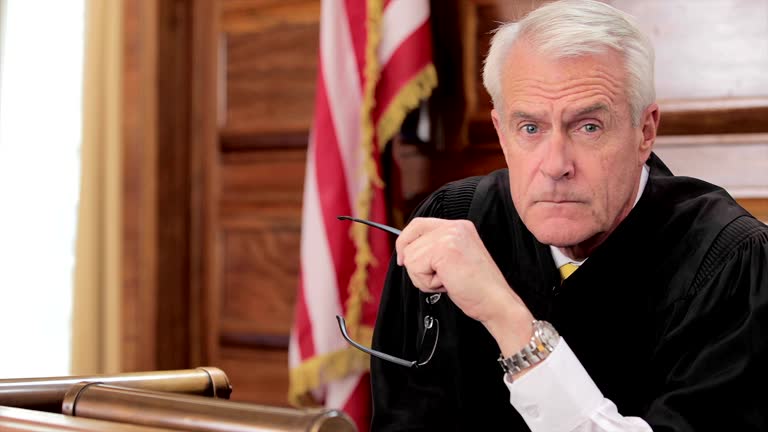
The door behind the bench opened, and Judge Malcolm Reyes entered.
He was a terrifying figure—tall, probably six-foot-three, with graying hair cropped close in a military cut and eyes that seemed to see through walls and lies and straight into the core of who you were. He moved with sharp, efficient energy, each step deliberate and purposeful. This was not a man who tolerated nonsense or wasted time.
He sat down, adjusting his black robes with a precise movement, and opened the file in front of him with the kind of care that suggested he’d already read every page multiple times.
“Estate of Richard Ashford versus Ashford,” Judge Reyes read, his voice a deep baritone that filled the courtroom. “The plaintiffs allege lack of testamentary capacity and undue influence. Mr. Clydesdale, you may begin your opening statement.”
Clydesdale stood up, buttoning his suit jacket with a theatrical flourish. He didn’t look at the judge when he spoke; he looked at the gallery, at the people who’d come to watch, performing for an audience.
“Your Honor,” Clydesdale began, his voice smooth as oil, practiced and perfect, “we are here today because of a tragedy. Not just the death of a great man, Richard Ashford, but the tragedy of his exploitation in his final months.”
Diana dabbed at her eyes with that same lace handkerchief from the funeral. It was Oscar-worthy.
“We will paint a picture for you today, Your Honor,” Clydesdale continued, pacing slowly in front of the bench like a professor giving a lecture. “A picture of a lonely, confused elderly man suffering from early-onset dementia. A man who built an empire but was losing his grip on reality. And we will show you the grandson—” he turned to point at me, and I forced myself not to flinch, “—unemployed, desperate, deeply in debt, who systematically isolated this vulnerable man from his loving children to rewrite a will in his favor.”
Every word was a carefully crafted lie, but God, he made it sound plausible.
“We have witnesses who will testify to Richard Ashford’s confusion and declining mental state,” Clydesdale said. “We have financial records showing the grandson’s complete lack of income and mounting student loans. We have testimony from caregivers who observed him spending unusual amounts of time alone with the deceased. This was not the natural relationship between a grandfather and grandson. This was a calculated con. A long con. And it worked because Richard Ashford was too vulnerable to see what was happening.”
I felt sick. Every word was a lie, but they were lies wrapped in just enough truth to seem credible. Yes, I had student loans. Yes, I’d been between jobs. Yes, I’d spent time with Grandpa.
But they were twisting it all, turning love and care into manipulation and greed.
Judge Reyes listened without expression, his face a mask of stone. He took notes, his pen scratching loudly in the heavy silence, but gave no indication of what he was thinking.
When Clydesdale finished with a final flourish—”We ask this court to void the will and distribute the estate according to state intestacy laws, which would rightfully give the majority to the deceased’s son”—the room felt suffocating.
My parents looked triumphant. Mark was practically beaming. Diana had stopped the fake crying and was smiling slightly, already imagining how she’d spend the money.
“Mr. Harper?” Judge Reyes looked at our table.
Glenn stood up, steady and calm. “Your Honor, we contest these allegations entirely. Mr. Richard Ashford was of sound mind and body when he executed his will. We have medical documentation—”
Judge Reyes raised his hand, cutting Glenn off mid-sentence. The room froze, everyone holding their breath.
But the judge wasn’t looking at Glenn anymore. Wasn’t looking at Clydesdale.
He was staring directly at me.
His eyes narrowed behind his reading glasses, studying my face with an intensity that made my skin prickle. He tilted his head slightly, like he was seeing something that didn’t quite match what he expected.
The silence stretched, becoming uncomfortable, tense.
“Wait…” Judge Reyes said slowly, and his voice had completely changed. The professional detachment was gone, replaced by something else. Recognition. Disbelief.
He squinted, looking from me to the file in front of him, then back to me.
“You’re… Ethan Carter, aren’t you?”
A ripple of confusion went through the courtroom like a wave. My mother frowned, whispering urgently to Mark. Clydesdale looked genuinely perplexed.
“No, Your Honor,” Diana spoke up, her voice sharp and shrill with irritation at this interruption. “His name is Ethan Ashford. He’s our son.”
Judge Reyes ignored her completely. Didn’t even glance in her direction. His attention was locked entirely on me, and I could see his mind working, connecting pieces of a puzzle.
“You were in my courtroom four years ago,” Reyes said slowly, his voice filled with growing certainty. “Not as a defendant, not as a plaintiff. You testified as a witness.”
His expression shifted—surprise giving way to recognition, recognition giving way to respect.
“It was the OmniCorp embezzlement case.”
My parents looked completely blank, confusion written across their faces. They had no idea what he was talking about.
Of course they didn’t. They’d never asked about my life, never cared about what happened to me after I left for college. I could have told them about the case, about what happened, about the price I’d paid.
But they’d never been interested enough to listen.
I stood up slowly, my legs feeling shaky but holding. “Yes, Your Honor. I was there.”
Judge Reyes nodded, and something like warmth entered his expression. “You were the forensic accounting intern at Peterson & Associates. Fresh out of college. You’re the one who found the hidden ledger embedded in the sub-server.”
“I was,” I said, and my voice was gaining strength now, steadier with each word.
“You discovered that senior management at OmniCorp was cooking the books,” Reyes continued, reciting the facts as if they were written on the wall behind me. “They were hiding debt to artificially inflate stock prices before a major merger. You realized your own supervisors at the accounting firm were complicit, that they were helping bury the evidence.”
He paused, letting the weight settle.
“And you came forward anyway. You testified against a Fortune 500 company and your own employer, knowing it would cost you your career. You broke a non-disclosure agreement to report a crime. You lost your job. You were blacklisted from the accounting industry. Several firms that had offered you positions rescinded them. You became unemployable in your field.”
The courtroom had gone deadly silent. Even the court clerk had stopped typing.
My father’s jaw was hanging open. He was looking at me like he’d never seen me before, struggling to process that his “failure” of a son—the soft, weak disappointment—was actually a whistleblower who’d taken down corporate criminals.
“I never forget a face,” Judge Reyes said, his voice softer now. “But you look different. Older. Harder.”
“It’s been a difficult few years, Your Honor,” I said quietly, and that was the understatement of the century.
What I didn’t say: That after testifying, I’d received death threats. That I’d had to move three times because reporters and angry investors kept finding me. That I couldn’t get hired anywhere because “whistleblower” on your resume was career suicide. That I’d survived on odd jobs and freelance work, living in a studio apartment smaller than my parents’ walk-in closet, eating ramen and wondering if I’d made the biggest mistake of my life.
That the only person who’d stood by me through all of it, who’d told me I did the right thing, who’d helped me financially when I was about to be evicted, was Grandpa Richard.
Judge Reyes sat back in his chair, and when he looked at my parents and Vance Clydesdale, all warmth had vanished from his face. His expression was ice.
“So,” the judge said, his voice dangerously low, controlled fury barely contained, “let me make sure I understand correctly. We have established that this young man has a documented history of sacrificing his own financial well-being, his entire career, for the sake of ethical truth. A man who gave up everything to expose corporate fraud because it was the right thing to do, even knowing it would destroy his future in his chosen field.”
He leaned forward, his eyes boring into Clydesdale.
“And yet, you are telling this court that he suddenly decided to manipulate his grandfather—a man who supported him through the aftermath of his whistleblowing—for money?”
Clydesdale cleared his throat, tugging nervously at his collar. For the first time, he looked uncertain. “Your Honor, with respect, character evidence from a previous matter is not necessarily—”
“It speaks to credibility, Counsel!” Reyes snapped, and the thunder in his voice made Diana physically jump in her seat. “And credibility is the cornerstone of this entire case!”
Mark couldn’t help himself. He stood up, his face turning red, that vein in his temple pulsing. “This is ridiculous! What does some old case have to do with my father? With my inheritance? Ethan is a liar! He brainwashed a sick old man!”
“Sit down, Mr. Ashford,” Judge Reyes ordered, his voice sharp as a whip.
“I will not!” Mark shouted, completely losing his composure, all pretense of dignity gone. “We are the victims here! We are the parents! We have rights to that money! It’s ours by blood!”
“You have the right to remain silent unless you are addressed by this court,” Judge Reyes warned, his words like chips of ice. “Now sit down, or I will hold you in contempt.”
Mark sat, breathing heavily, his face still red but his mouth finally closed.
Judge Reyes took a visible breath, composing himself, then turned back to Glenn. “Mr. Harper, you mentioned evidence regarding the deceased’s mental state?”
“Yes, Your Honor.” Glenn stepped forward, looking significantly more confident now. He opened his briefcase with calm precision. “I have notarized affidavits from Dr. Samuel Aris and Dr. Patricia Chang, Mr. Ashford’s primary care physician and neurologist respectively. Both certify that he was fully cognizant and mentally competent on the date the will was signed. Both conducted cognitive assessments specifically for this purpose at Mr. Ashford’s request.”
He handed the papers to the bailiff, who passed them to the judge.
“Furthermore,” Glenn continued, and I saw a slight smile play at the corners of his mouth, “we have the voicemails.”
My mother froze. Her hand flew to her throat, and for the first time, I saw genuine fear in her eyes.
“Voicemails?” Judge Reyes asked, looking up from the medical documents.
“Recovered from Richard Ashford’s cloud backup account,” Glenn explained, pulling out a USB drive sealed in a plastic evidence bag. “Messages dating from two months before his death to two weeks prior. They are from the plaintiffs, Diana and Mark Ashford.”
“Objection!” Clydesdale practically shouted, rising from his seat. “Privacy violation! Those messages were private communications—”
“Overruled,” Reyes said instantly, not even pausing to consider. “The phone belonged to the deceased. As part of his estate, all data stored on that device or in associated cloud accounts is now property of the estate executor. There is no privacy violation. Play them.”
The court clerk took the drive, plugged it into the courtroom’s audio system. A moment later, my mother’s voice filled the room.
But it wasn’t the sweet, sad voice she’d been using in court. It wasn’t the gentle tone she put on for her society friends. This was something else entirely—sharp, venomous, cruel.
“Richard, pick up the goddamn phone! You stubborn old bastard, you can’t just cut us off! We need that liquidity for the Coral Gables deal—the bank won’t extend our line of credit! If you don’t sign the transfer by Friday, I swear to God, we’ll put you in that nursing home on 4th Street. You know the one. The one that smells like bleach and piss and death. The one where they leave people in their own filth. Don’t test me, old man. We’re done playing games with you!”
The recording ended.
The silence that followed was absolute. The silence of a tomb.
Someone in the gallery gasped. A woman in the back row covered her mouth with both hands.
Diana had sunk into her chair, her face a mask of absolute horror. Not remorse—just horror at being caught, at having this side of her exposed in public.
“Your Honor,” Clydesdale tried weakly, “taken out of context—”
“Play the next one,” Judge Reyes ordered, his voice flat and cold.
The clerk complied. This time it was my father’s voice, and it was somehow worse.
“Dad, stop playing these fucking games with us. Ethan is a loser. He’s nothing. A failure who couldn’t even keep a job after college. You think he cares about you? You think he spends time with you out of love? He just wants a handout. He’s using you, and you’re too senile to see it. Now, I need you to sign those papers transferring the Portland properties by Monday, or you’ll never see either of us again. You’ll die alone in that big house like the miserable old man you are. Your choice, Dad.”
Judge Reyes held up his hand, signaling the clerk to stop the playback. He looked like he’d tasted something rotten.
He turned to my parents, and I’d never seen such contempt in another human being’s eyes.
“You claimed,” Judge Reyes said, his voice trembling with barely suppressed rage, “that you were the loving, devoted children. That you were worried about his mental state and wellbeing. That you wanted only to protect him.”
“Your Honor, I can explain,” Clydesdale tried to interject, but he looked like he wanted to be literally anywhere else on the planet. “Families sometimes say things in the heat of emotion—”
“Those were not heated words spoken in emotion,” Reyes cut him off. “Those were calculated threats. There is nothing to explain. This is not a will contestation. This is evidence of attempted extortion and elder abuse.”
My father looked like he was about to have a stroke. His face had gone from red to purple. “That’s… it was tough love! We were trying to motivate him to think clearly—”
“You threatened a dying man with abandonment and institutionalization,” I said.
The words came out before I could stop them. I hadn’t meant to speak. But they were true, and someone needed to say them.
Mark spun on me, his eyes bulging with fury. “You ungrateful little piece of—”
“Mr. Ashford!” Judge Reyes slammed his gavel down so hard I thought the block might crack. The sound echoed like a gunshot through the courtroom. “One more word—one more syllable—and I will hold you in contempt and have you removed from this courtroom! Do you understand me?”
Mark clamped his mouth shut, breathing heavily through his nose like an angry bull.
Judge Reyes took a long breath, visibly composing himself. When he looked at me, his expression softened.
“Ethan,” he said gently, “your attorney mentioned there was a letter?”
I nodded. I reached into my jacket’s inner pocket and pulled out an envelope. It was worn soft from handling, the edges frayed. I’d read it so many times I had it memorized, but seeing Grandpa’s handwriting still made my chest tight.
“May I read it to the court, Your Honor?”
“Please do,” Reyes said quietly.
I stood up. My hands were steady now. Rock steady. I looked at my parents—really looked at them for what might be the last time—and I saw them for what they were. Not powerful figures to be feared or pleased. Just people. Greedy, small people who’d mistaken cruelty for strength.
I unfolded the letter, smoothing it carefully.
“My dearest Ethan,” I read, my voice clear and strong.
“If you are reading this, then I am gone, and the vultures are circling. I am so sorry for that. I am sorry I didn’t protect you more when you were younger, when you needed it most. I watched them treat you like a shadow in your own home, like an inconvenience to be tolerated, and I was too much of a coward to intervene. I told myself it wasn’t my place, that parents raise their children how they see fit. I was wrong. I should have fought for you harder.”
My voice caught, but I pushed through.
“But these last few years, you showed me what family actually means. It isn’t blood or a last name or shared DNA. It’s the person who brings you soup when you can’t stand up. It’s the person who reads to you when your eyes fail and your hands shake too much to hold the book. It’s the person who stays when there is absolutely nothing to gain, who sits with you in the dark when you’re afraid of dying, who holds your hand and tells you it’s okay to be scared.”
“Diana and Mark see me as a bank account, as a resource to be tapped. You saw me as a man. A person. Someone worth spending time with even when I had nothing left to offer but stories and stubbornness.”
I had to pause, blinking back tears.
“I am leaving you everything not to spite them, though God knows they deserve spite. I am leaving it to you to empower you, to give you the freedom to become whoever you’re meant to be without their voices telling you you’re not enough. You are enough, Ethan. You are more than enough. You are the best of us. The only true Ashford left who understands that wealth is a responsibility, not a right.”
“Don’t let them take your kindness. It isn’t weakness, though they’ve told you it is your whole life. It is your greatest weapon. But kindness must have boundaries, or it becomes self-destruction. So fight for this, boy. Fight for your future. I’ll be watching, and I’ll be proud.”
“Love always, Grandpa Richard.”
When I finished, I folded the letter carefully and placed it gently on the table in front of me.
Judge Reyes had removed his glasses. He was wiping his eyes, not bothering to hide it.
He looked at Vance Clydesdale, and his voice was gentle but final. “Counsel, do you really wish to proceed with this contestation?”
Clydesdale stood, closed his briefcase, and straightened his jacket. “No, Your Honor. Given the evidence presented, the plaintiffs withdraw their claim.”
“I’m not finished,” Judge Reyes said, and his voice hardened again.
He turned his full attention to Diana and Mark, and I watched them physically shrink under his gaze.
“The will stands,” he declared. “The estate of Richard Ashford belongs to Ethan Ashford in its entirety, exactly as the deceased intended. But based on the evidence presented in this courtroom—specifically the recorded threats made to the deceased—I am taking additional actions.”
He paused, and for the first time, I saw genuine terror in my mother’s eyes.
“I am referring this matter to the District Attorney’s office for investigation into attempted extortion and elder abuse under state law. These are serious criminal allegations that warrant prosecutorial review.”
“And furthermore,” Judge Reyes continued, “I am issuing a protective restraining order effective immediately. Neither Diana Ashford nor Mark Ashford is to contact Ethan Ashford in any way—no phone calls, no emails, no text messages, no third-party communications. They are not to come within five hundred feet of his residence or place of work. This order is effective for a minimum of five years, subject to review and extension.”
“You can’t do that!” Diana shrieked, jumping to her feet. “We’re his parents! You can’t keep us from our own son!”
“Being a parent,” Judge Reyes said, and his voice had the weight of absolute authority, “is a privilege, not a right. It is a responsibility that must be earned and maintained through love and care. And you have forfeited that privilege through your actions.”
He raised his gavel.
“Case dismissed.”
The crack of wood on wood was final as a grave closing.
The walk out of the courthouse felt like I was moving through a different world.
The air wasn’t heavy anymore. It was crisp and cold and clean, like the first breath after being underwater. The rain had stopped, and weak November sunlight was breaking through the clouds in patches.
Glenn walked beside me down the courthouse steps, his hand on my shoulder. “You did good, kid. Really good.”
“He knew,” I said, looking up at the sky. “Grandpa knew they’d do exactly this. He planned for it.”
“He did,” Glenn agreed. “That’s why he hired me twenty years ago. That’s why he kept such meticulous records. That’s why he wrote that letter and made me promise to give it to you only if they contested. He knew his son. He knew your mother. And he wanted to make sure you’d be protected.”
My parents came out of the side exit a few minutes later, emerging like criminals fleeing a crime scene. They were arguing with Clydesdale, gesturing wildly, Diana’s voice shrill and desperate, Mark’s face still purple with rage.
When they saw me standing by the curb waiting for Glenn’s car, they stopped.
For a moment, I thought they might come over. I thought they might scream, or beg, or try one last manipulation, one final attempt to make me feel guilty or small or responsible for their choices.
But then they saw the bailiff standing a few feet behind me, arms crossed, watching them with the kind of attention that said any violation of the restraining order would be immediately enforced.
They turned away. They walked to their Mercedes, got in, and drove off without looking back.
I realized in that moment that I wasn’t just watching my parents leave. I was watching my entire past drive away. The anxiety that had lived in my chest for twenty-four years. The constant need for approval that never came. The feeling of being invisible, of not mattering, of being a disappointment.
All of it was in that car, disappearing into traffic.
I wasn’t the invisible boy anymore.
I was Ethan Ashford. And I had five million dollars, a clear conscience, and the rest of my life ahead of me.
That night, I sat in my small studio apartment for what I knew would be one of the last times. I made a cup of Earl Grey tea—the same kind Grandpa used to drink, loose leaf in a proper pot—and sat by the window watching the city lights flicker like distant stars.
I thought about the strange, unexpected truth of life: sometimes the people who raise you aren’t the ones who protect you. Sometimes the family you’re born into is just a starting point, not a destination. Sometimes you have to find or build your own family from the people who actually see you, who value you for who you are rather than what you can provide them.
I didn’t get five million dollars because I was lucky. I didn’t get it because I schemed or manipulated or lied.
I got it because one man—one grandfather who’d watched his son become someone he didn’t recognize—decided to give his grandson the tools to build a different kind of life. A ladder out of the snake pit. A chance at freedom.
I took a sip of tea. It tasted like dignity. Like choice. Like the future I got to decide for myself.
The money would let me start that small publishing house I’d dreamed about, focusing on literary fiction and poetry—the kind of books my parents thought were worthless. It would let me help other whistleblowers who’d sacrificed their careers for truth. It would let me live quietly, deliberately, on my own terms.
But more than the money, Grandpa had given me something else: the proof that I mattered. That I was worth protecting. That I had value beyond what I could provide or achieve or become for someone else’s benefit.
So here’s my question to you, reading this right now: If you were in my place—knowing they were your flesh and blood, knowing they were desperate and facing their own debts—would you have given them a second chance? Or would you have let the gavel fall and walked away forever?
I know my answer.
I walked away.
And for the first time in my life, I walked toward something instead of away from it.
Toward freedom. Toward myself. Toward the life Grandpa Richard had always believed I deserved.
His last gift wasn’t money.
It was permission to finally, fully, become who I actually was.
And that was worth more than five million dollars could ever measure.

Lila Hart is a dedicated Digital Archivist and Research Specialist with a keen eye for preserving and curating meaningful content. At TheArchivists, she specializes in organizing and managing digital archives, ensuring that valuable stories and historical moments are accessible for generations to come.
Lila earned her degree in History and Archival Studies from the University of Edinburgh, where she cultivated her passion for documenting the past and preserving cultural heritage. Her expertise lies in combining traditional archival techniques with modern digital tools, allowing her to create comprehensive and engaging collections that resonate with audiences worldwide.
At TheArchivists, Lila is known for her meticulous attention to detail and her ability to uncover hidden gems within extensive archives. Her work is praised for its depth, authenticity, and contribution to the preservation of knowledge in the digital age.
Driven by a commitment to preserving stories that matter, Lila is passionate about exploring the intersection of history and technology. Her goal is to ensure that every piece of content she handles reflects the richness of human experiences and remains a source of inspiration for years to come.
Great moving indepth story of more than greed. But how to make it through hard times to a better life.