The Livestream That Exposed Everything
They said they were too sick to come to Thanksgiving dinner. Then my daughter showed me their social media posts from the most expensive restaurant in town. Sometimes the truth needs a sixteen-year-old’s courage to set it free.
My name is Rebecca Walsh, and I’m forty-two years old. For most of my adult life, I’ve been the family peacekeeper—the one who smooths over awkward situations, who makes excuses for other people’s bad behavior, who sets the table with hope even when experience tells me better.
Last Thanksgiving, my sixteen-year-old daughter Chloe taught me something I should have learned decades ago: sometimes the kindest thing you can do for yourself is to stop being kind to people who take advantage of that kindness.
This is the story of a holiday dinner that nobody came to, a lie told via text message, and the social media post that finally forced my family to face the truth about how they’d been treating me for years. It’s about discovering that your child has been watching you get hurt and deciding she’s old enough to step in and defend you.
But mostly, it’s about the moment I learned that dignity doesn’t require permission from the people who’ve been trampling on it.
The Preparation
Thanksgiving has always been my holiday. Not because I’m particularly religious or sentimental, but because it’s the one day of the year when I can create the kind of family gathering I never had growing up—warm, welcoming, abundant with both food and love.
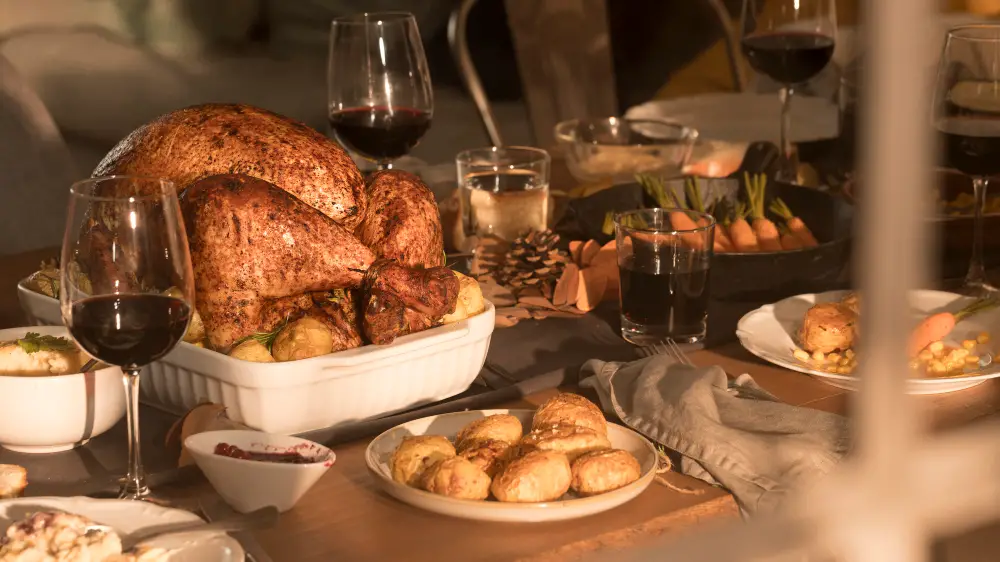
I started planning this year’s dinner in October. I ordered a twenty-pound turkey from the specialty farm forty minutes outside town. I ironed the linen napkins my grandmother had left me until they were crisp enough to cut paper. I polished the silverware until my own reflection looked back at me, distorted but recognizable.
Chloe and I had been cooking since dawn. She moved through our small galley kitchen with the practiced efficiency of someone who’d grown up helping me host family gatherings that too often became one-person shows. We worked in comfortable synchronization—she prepped vegetables while I seasoned the turkey, she stirred the cranberry sauce while I whipped the potatoes.
“Mom,” she said around noon, pausing in her mashing duties. “You set five places.”
I glanced at the dining room table, which I’d set with my best china the night before. “Grandma, Grandpa, and Aunt Lauren are coming.”
Chloe didn’t look up from the potatoes. “Did they actually confirm?”
I hesitated, the baster dripping turkey juice back into the roasting pan. The honest answer was complicated. My mother had said “We’ll see how everyone feels.” My father had said “Depends on Lauren’s schedule.” My sister Lauren had said nothing at all.
But I’d been setting holiday tables for three decades, and I’d learned to interpret their non-commitments as eventual yeses. I believed—with the kind of faith that borders on delusion—that if I just made the house warm enough, the food perfect enough, the atmosphere inviting enough, they would show up and act like the loving family I needed them to be.
“They said they’d try,” I told Chloe, which was technically true.
By six o’clock, the turkey was golden brown and resting on the kitchen counter. The candles were lit throughout the house. The wine was breathing. The smell of sage and rosemary filled every room, creating the kind of atmosphere that promises belonging.
That’s when my phone buzzed against the marble countertop.
The Text
The sound was sharp in our quiet house. I wiped my hands on my apron and looked at the screen.
Lauren: I’m sick, so I’m sitting this one out. Mom and Dad are staying home to take care of me. Sorry.
I stared at those words until they blurred. Lauren had been “sick” for my thirtieth birthday party. She’d been “sick” for Chloe’s eighth-grade graduation. She was always “sick” when the event wasn’t centered on her, or when she didn’t feel like driving thirty minutes to what she’d once called my “cramped” house.
Chloe was watching my face with the careful attention of someone who’d seen this pattern before. “Aunt Lauren isn’t coming?”
“She’s not feeling well,” I said, forcing brightness into my voice. “And Grandma and Grandpa are staying to help take care of her.”
I texted back something appropriately understanding—Feel better. We’ll save you leftovers—because I’d spent most of my adult life swallowing obvious lies to keep family harmony intact.
Chloe and I sat down at the table anyway. The dining room felt cavernous with just the two of us. Three empty chairs pushed against the table like embarrassed witnesses to our abandonment.
I tried to make conversation. Asked about her history project, her weekend plans, anything to fill the silence. But Chloe had inherited my ability to read emotional atmospheres, and she wasn’t buying my performance.
“Mom,” she said gently, setting down her fork. “It’s okay to be hurt.”
“I’m not hurt,” I said automatically. “Family is complicated. People get sick.”
“Family is rude,” Chloe corrected, her voice carrying an edge I rarely heard from her. “They do this every year. It’s a power play. They want you to know you’re their backup option.”
I wanted to argue with her, to defend my parents and sister the way I always did. But the words felt hollow before I could speak them.
At 6:42 p.m., Chloe’s phone buzzed.
The Discovery
She didn’t pick it up immediately. Chloe finished her bite of turkey, chewed thoughtfully, then glanced at her screen. Her expression changed instantly—not just surprise, but something closer to physical recoil.
“Mom,” she whispered. Her voice was tight, vibrating with suppressed emotion. “You need to see this.”
“See what?”
“Just… look at this livestream.”
She turned her phone toward me, and the world tilted sideways.
The screen showed a Facebook Live video with crystal-clear HD quality. The setting was immediately recognizable: Le Jardin, the most expensive French restaurant in the city. I knew those gold recessed lights, those heavy velvet curtains, those crystal glasses that caught the light like diamonds.
And there, at the center of the frame, sitting at a table laden with seafood towers and bottles of wine I couldn’t afford, were my parents.
And my sister.
Lauren wasn’t curled up in bed nursing a migraine. She was leaning toward the camera with a champagne flute in her hand, her cheeks flushed with health and laughter. She wore a sequined dress I’d never seen before, her hair professionally styled.
“To family!” Lauren shouted over the ambient jazz music, raising her glass.
My mother clinked champagne flutes with her, beaming with the kind of adoring smile she’d never directed at me. My father was laughing—relaxed and satisfied in a way I hadn’t seen in years.
A caption floated above the video in cheerful script: “Thanksgiving with my favorite people! Life is good! ❤️ #Blessed #FamilyFirst”
My stomach turned to ice. The dining room spun around me. The smell of my homemade bread suddenly made me nauseous.
“They’re at Le Jardin,” I whispered, the words scraping my throat raw. “They’ve been planning this.”
You don’t get a table at Le Jardin on Thanksgiving night without reservations made months in advance. While I’d been buying the turkey, ironing the napkins, sending them potential menu options, they’d known they weren’t coming. They’d been planning their real celebration all along.
Chloe watched my face carefully. Then she did something I didn’t expect. She didn’t throw her phone or storm out of the room. Instead, she tapped the screen and turned it black.
“Mom,” she said very quietly. “I’m going to handle this.”
I stared at her, confused and frightened by the calmness in her voice. “Chloe, what do you mean?”
She didn’t answer immediately. She picked up her fork, took a deliberate bite of mashed potatoes, and swallowed. The display of control was both impressive and terrifying.
“They think you won’t do anything because you’re nice,” she said finally, meeting my eyes. “They count on your kindness. They use your politeness as a weapon against you.”
My throat tightened. “Sweetheart, please don’t start drama. If we say something, they’ll just deny it or claim I’m being jealous. They’ll say it was a last-minute decision when she felt better.”
“That’s exactly why we’re not going to argue with them,” Chloe said. “We’re just going to let the truth speak for itself.”
She reached across the table and covered my trembling hand with hers. Her touch was warm and certain.
“I’m not going to let them keep humiliating you,” she said softly. “Not anymore. You taught me to be honest, right? So let’s be honest.”
In that moment, I realized the cruelest part of betrayal: it forces your child to stop being a child. It turns them into your protector when they should still be the protected.
The Response
Chloe stood up with purpose. She cleared her plate like this was any ordinary Tuesday, carrying dishes to the sink with quiet focus.
“What are you planning?” I asked, following her to the kitchen on unsteady legs.
She turned on the water and began rinsing her plate. “I’m planning to stop them from controlling the story.”
“The story?”
“Aunt Lauren just told the world she’s having a perfect family Thanksgiving,” Chloe explained, her voice steady. “But she told us she was too sick to come. If you post anything about being hurt, you look pathetic. If you complain, you look crazy. They get to control the narrative.”
She dried her hands methodically. “Remember when Grandpa was in the hospital last year and Aunt Lauren posted about ‘taking care of family’ even though she never visited once? Everyone commented about what a saint she was.”
I swallowed hard, remembering.
“I learned something that day,” Chloe continued. “People believe what they see first. And people hate being lied to.”
She pulled out her phone and opened the screen recording app. With surgical precision, she captured the full minute of Lauren’s toast, complete with timestamp and restaurant location clearly visible.
Then she took a screenshot of the text message Lauren had sent: I’m sick, so I’m sitting this one out.
She opened her social media apps—Facebook, Instagram, Twitter—and uploaded both pieces of evidence side by side.
She typed a single sentence and showed me the screen before posting:
“Happy Thanksgiving. Just a reminder: if someone says they’re ‘too sick’ to come to your house but you see them livestreaming from a 5-star restaurant an hour later, you’re not imagining the disrespect. Trust your eyes, not their texts.”
No names mentioned. No direct tags. No emotional pleading or dramatic language. Just cold, undeniable evidence presented without commentary.
“Chloe,” I whispered, terrified and impressed in equal measure. “This will start a war.”
She shrugged slightly, her finger hovering over the post button. “They started the war, Mom. They just expected you to surrender without fighting back.”
She pressed post.
The first few minutes were silent. Chloe cut two slices of pumpkin pie as if nothing momentous had just happened.
“I can’t eat,” I said.
“You should,” she replied. “We made really good pie. It would be a shame to waste it.”
Then my phone began buzzing.
First, a comment from my cousin Sarah: OMG is this real?
Then a message from my neighbor: Honey, I am so sorry. That is absolutely shameful.
Within ten minutes, my screen was lighting up with notifications. Friends, relatives, neighbors, coworkers—all witnessing the gap between Lauren’s lie and her reality.
Then the angry responses started.
Lauren: DELETE THAT RIGHT NOW.
Lauren: ARE YOU INSANE? MY BOSS FOLLOWS YOU.
Lauren: YOU’RE RUINING THANKSGIVING FOR EVERYONE.
My mother called next. I watched her name flash on the screen and felt the familiar reflex—the urge to answer, apologize, smooth things over.
Chloe looked at my phone, then at me.
“Don’t answer yet,” she said gently. “Let them feel what it’s like when they can’t control the conversation. Let them sit in their panic for five minutes.”
The phone stopped ringing, then started again. My father this time.
“They’re panicking,” Chloe observed, serving our pie. “Because the lie is visible now. The timestamps don’t lie, and they can’t spin this.”
When my mother left a voicemail, I played it on speaker:
“Why are you doing this to us? We were going to stop by later! It was supposed to be a surprise! You’re making us look terrible in front of everyone. Lauren is crying. Take it down right now!”
“A surprise visit,” Chloe repeated flatly. “After a five-course meal at Le Jardin? With leftovers? Like we’re a charity case getting their scraps?”
She saved the voicemail as evidence, just in case they tried to deny it later.
The Boundary
My father texted: Your sister has been stressed. This was a business dinner. Don’t be petty.
Petty. The word they used whenever I asked for basic respect. The word they deployed when I requested to be paid back for loans. The word they wielded whenever I dared to have feelings about their treatment of me.
Chloe saw the text. Instead of anger, her expression was sad.
“Mom,” she said softly, “this isn’t about revenge. It’s about boundaries. If you don’t draw a line tonight, they’ll walk over you forever. And eventually, they’ll walk over me too.”
That sentence hit harder than the livestream discovery. They’ll walk over me too.
I looked at my daughter—strong, brilliant, kind—and realized I was teaching her that love meant being a doormat. That family meant accepting disrespect. That her worth was negotiable.
“Give me the phone,” I said.
I opened our family group chat and typed one message. My fingers didn’t shake:
“Chloe and I had Thanksgiving dinner ready at 6. Lauren said she was sick. We now know you chose to be elsewhere. We’re not angry that you went to dinner; we’re done with being lied to. We won’t be available for calls tonight. Please don’t come by later. We are enjoying our holiday.”
I hit send.
Then I did the scariest thing I’d ever done: I turned my phone off completely.
“Your turn,” I told Chloe.
She smiled—genuine and proud—and powered down her phone too.
The silence that filled our kitchen wasn’t heavy anymore. It was peaceful. The quiet of a sanctuary with the drawbridge finally pulled up.
The Peace
We finished our pie by candlelight, talking about normal things. Chloe’s history project. A possible trip to the coast next summer. The way our cat had been eyeing the turkey all day.
For the first time in years, Thanksgiving felt peaceful instead of performative.
“I’m proud of you,” I told Chloe as we cleaned up. “What you did tonight… it was brave.”
“I learned from watching you,” she said. “You’re brave every day. You just needed permission to stop being brave on everyone else’s behalf.”
The next morning, I turned my phone back on to dozens of messages. Some angry, some supportive, some confused. But mixed in with the family drama were messages from friends I hadn’t heard from in months:
“I had no idea your family treated you this way. You deserve so much better.”
“Thank you for sharing this. My sister does the same thing to me and I thought I was crazy.”
“You and Chloe are welcome at our table anytime.”
My parents and Lauren demanded apologies, of course. They insisted the whole thing was a misunderstanding, that I’d embarrassed them publicly, that I owed them private explanations for my “outburst.”
But here’s what I discovered: when you stop accepting crumbs, people become furious that you noticed you were starving.
They eventually tried to rugswеep the incident, suggesting we “move past this” and “focus on what really matters.” But Chloe’s post had created a public record. The truth was visible now, and visibility makes it harder to gaslight people into forgetting their own experiences.
The New Normal
Six months later, my relationship with my family has found a different equilibrium. We still talk, but on my terms. I no longer host elaborate gatherings for people who might or might not show up. I don’t over-apologize for other people’s poor planning. I don’t accept last-minute cancellations disguised as emergencies.
Lauren still gets “sick” when she doesn’t want to attend something, but now nobody pretends to believe her. My parents still play favorites, but they can no longer do it while pretending they don’t.
Chloe is still sixteen, but she’s also still my fiercest defender. She taught me that truth doesn’t require permission from the people it embarrasses. That love doesn’t mean accepting lies. That sometimes the most protective thing you can do for someone is refuse to let them be hurt quietly.
Last month, we hosted a small dinner party—just a few close friends who actually show up when they say they will. Chloe made her famous chocolate cake. I made conversation that didn’t require managing anyone’s emotions or making excuses for anyone’s behavior.
It was everything a family gathering should be: honest, warm, and built on mutual respect rather than obligation.
As I watched my daughter laugh with our chosen family around our table, I realized something profound: I hadn’t lost my family that Thanksgiving night. I’d finally stopped performing the exhausting role of being grateful for people who treated my love like it was optional.
The truth didn’t destroy our family. It revealed that what I thought was family had actually been a one-woman show where I played every part except the lead.
Now I’m the star of my own story, and the supporting cast actually supports me.
—Rebecca Walsh
Mother, Truth-Teller, Boundary-Setter
To anyone still setting tables for people who might not show up: your love deserves to be reciprocated, not just convenient. Your hospitality deserves gratitude, not exploitation. And sometimes the most loving thing you can do—for yourself and your children—is to stop accepting treatment that you’d never tolerate them accepting.

Lila Hart is a dedicated Digital Archivist and Research Specialist with a keen eye for preserving and curating meaningful content. At TheArchivists, she specializes in organizing and managing digital archives, ensuring that valuable stories and historical moments are accessible for generations to come.
Lila earned her degree in History and Archival Studies from the University of Edinburgh, where she cultivated her passion for documenting the past and preserving cultural heritage. Her expertise lies in combining traditional archival techniques with modern digital tools, allowing her to create comprehensive and engaging collections that resonate with audiences worldwide.
At TheArchivists, Lila is known for her meticulous attention to detail and her ability to uncover hidden gems within extensive archives. Her work is praised for its depth, authenticity, and contribution to the preservation of knowledge in the digital age.
Driven by a commitment to preserving stories that matter, Lila is passionate about exploring the intersection of history and technology. Her goal is to ensure that every piece of content she handles reflects the richness of human experiences and remains a source of inspiration for years to come.