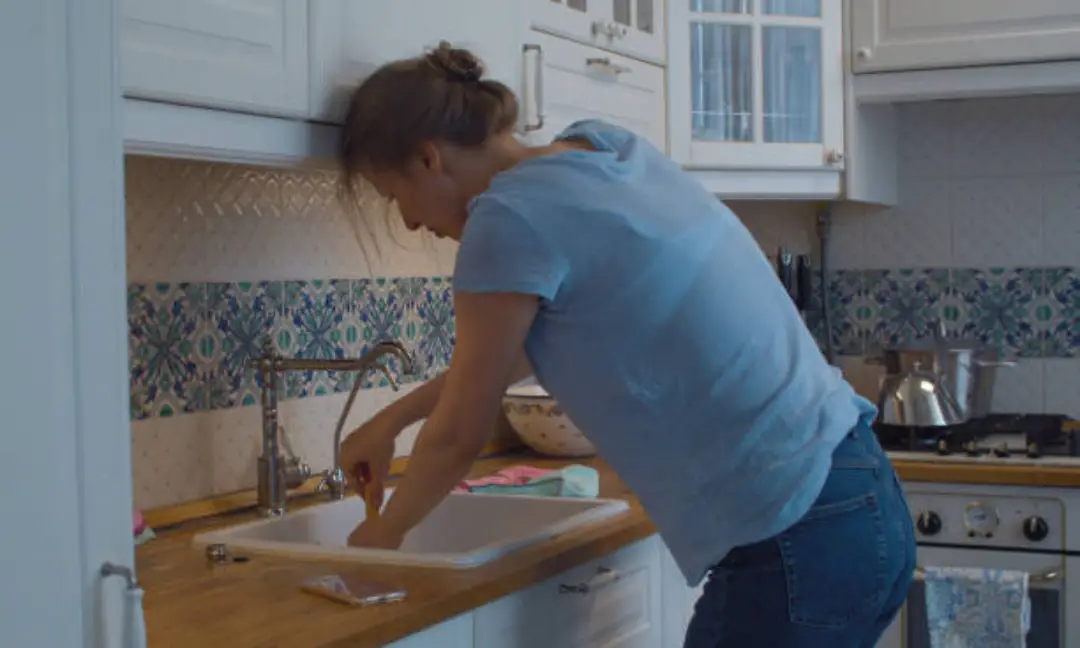
The night he said it, I was on the kitchen floor of our Seattle apartment, halfway under the sink with a wrench in my hand, hair tied up in a messy knot, jeans stained from crawling around in the maintenance shaft at work. I heard the front door slam hard enough to rattle the picture frames on the wall—the ones he’d chosen, I realized later, without ever asking my opinion.
When I slid out from under the cabinet, wiping grease from my hands, Derek was standing in the doorway with his arms crossed in that particular way he’d perfected over our two years together. The stance that said “I’ve made a decision and I’m about to tell you how it’s going to be.” Like a manager about to deliver news you won’t like but are expected to accept with grace and professionalism.
“We need to talk about Saturday,” he said without preamble.
Saturday. Our housewarming party. The event I’d been planning for three weeks—coordinating schedules, ordering food, creating playlists, trying to make our apartment feel like something that belonged to both of us instead of just him with my things awkwardly fitted into available spaces.
“What about it?” I asked, setting the wrench on the counter where it made a small metallic sound that seemed too loud in the sudden tension filling the room.
He straightened his shoulders, and I recognized the body language immediately. He’d rehearsed this. Practiced it in his head, maybe even in front of the bathroom mirror, perfecting the delivery.
“I invited someone,” he said, his voice carrying that careful tone people use when they’re about to say something they know will cause problems. “She’s important to me, and I need you to be calm and mature about it. If you can’t handle this… well, then we’re going to have a serious problem.”
The way he said it—not “we need to discuss this” or “I hope you’ll understand”—but a directive followed by an ultimatum. My stomach tightened with a feeling I’d been ignoring for months, the sensation of being managed rather than loved.
“Who?” I asked, though some part of me already knew.
“Nicole.”
His ex-girlfriend. The one from all the stories he still told at parties. The one whose Instagram photos he still liked because, as he’d explained when I’d mentioned it once, “blocking people is immature and makes you look insecure.” The one who’d left him two years ago and who he insisted he was “totally over” while simultaneously bringing her up in conversation at least once a week.
I set the wrench down more carefully this time, watching my own hand move as if it belonged to someone else. “You invited your ex-girlfriend to our housewarming party,” I said slowly, making sure I’d heard correctly.
He didn’t flinch, didn’t show any sign that he understood why this might be problematic. “We’re still friends. Good friends, actually. She’s an important part of my life. If that bothers you, maybe you’re not as confident as I thought you were.”
There it was—not a conversation but an accusation. Not a discussion but a test. He was framing my reasonable discomfort as a character flaw, my boundaries as evidence of insecurity.
“I need you to stay calm and mature about this,” he repeated, his eyes locked on mine like a teacher waiting to see if a student would comply with instructions. “Can you do that, or are we going to have an issue here?”
He was ready for a fight. I could see it in the set of his jaw, the slight forward lean of his body. He was prepared to call me jealous, dramatic, controlling, insecure—all the words men use when they want to make women’s reasonable feelings sound like personality disorders.
Instead, I smiled. It was a calm, steady smile that felt foreign on my own face, like I was watching myself from a distance. “I’ll be very calm,” I said. “And very mature. I promise.”
His eyes flickered with confusion. That wasn’t the script he’d prepared for. “Really? You’re okay with this?”
“Absolutely,” I said, my voice even and pleasant. “If she’s important to you, then of course she’s welcome in our home.”
He searched my face for sarcasm, for hidden anger, for any sign that I was setting a trap. He found nothing but that strange, serene smile.
“Great,” he said, relief flooding his features. “I’m really glad you’re not going to make this weird. I knew you’d understand once I explained it properly.”
While he walked away already pulling out his phone—probably to text Nicole or brag to one of his friends about his “mature” girlfriend who didn’t get jealous—I picked up my own phone and opened my messages.
Hey Ava, I typed to my best friend from college. That spare room you’re always offering… is it still available?
Her reply came back in seconds: Always. What’s going on?
I stared at the blinking cursor for a moment, my thumb hovering over the screen. I’ll tell you Saturday. Just need a place to stay for a while.
Door’s open whenever you need it. No questions asked.
I set my phone down and looked around the apartment—at the furniture Derek had chosen, the color scheme he preferred, the wall art he’d selected. I’d been living here for six months, but nothing in this space was really mine except the toolbox in the closet and a few framed photos on the bedroom dresser. Somewhere along the way, I’d become a guest in my own life.
My name is Maya Chen, and I’m twenty-nine years old. I fix elevators for a living, which means I spend my days in dark shafts and cramped maintenance rooms, solving mechanical puzzles that most people never think about until something breaks and they’re stuck between floors. I’m good at my job because I’m patient, methodical, and I don’t panic when systems fail. I assess the problem, identify the solution, and execute the repair.
I met Derek Holloway two years ago at a mutual friend’s backyard barbecue. He was charming in that effortless way some people manage—good-looking without being intimidating, funny without trying too hard, attentive in a way that made you feel like you were the only person in the room. He worked in tech marketing, told engaging stories about his job, remembered small details from conversations. He made me feel seen, which is a powerful thing when you’re used to being invisible in your coveralls and steel-toed boots.
Six months ago, we’d moved in together. His idea, his timing, his apartment that became “ours” in name but never really in practice. Looking back now with the clarity that only comes from having your face rubbed in an uncomfortable truth, I could see that I’d been making myself smaller for months. Working around his schedule because his job was “more demanding.” Watching his shows because he “really wanted to share them” with me. Eating at his favorite restaurants because he had “strong preferences” and I was “easy to please.” Somewhere in the slow erosion of tiny compromises, I’d stopped being the lead character in my own life and become a supporting actress in his.
And now he’d invited his ex-girlfriend to our housewarming party and told me that if I couldn’t be “mature” about it, we’d have a problem.
The next morning, I woke up before Derek—which wasn’t unusual since I started work at seven and he rolled into his office around nine-thirty—and lay there in the pre-dawn darkness thinking about everything that had led to this moment. Not just the Nicole invitation, but the pattern it represented. The way he’d steamroll my suggestions about where to eat dinner, then act like I’d agreed with his choice all along. The jokes he made at my expense in front of his friends: “Maya’s great, but she has no sense of direction. Gets lost in parking lots.” Everyone would laugh, including me, because what else do you do when you’re being gently humiliated in a social setting?
There was the time I’d gotten severe food poisoning and spent twelve hours in the bathroom while he sighed about how this was “really bad timing” because he’d wanted to go hiking that weekend. Not “are you okay” or “what do you need,” but disappointment that my illness had inconvenienced his plans.
The way he’d started sentences with “If you were more…” and filled in the blank with whatever quality he’d decided I was lacking that day. More social. More spontaneous. More understanding. More flexible. Always more something, never quite enough as I was.
And now this—inviting his ex to our home and framing my entirely reasonable discomfort as a personal failing, a sign of weakness, evidence that I wasn’t the confident woman he’d thought he was dating.
I’d been so focused on being the “cool girlfriend” that I’d forgotten to ask myself if this relationship was actually making me happy.
My friend Ava had seen it months ago, over coffee at our favorite Capitol Hill cafe. She’d looked at me across her latte and asked, point-blank, “Are you happy with Derek?”
I’d given her the standard response, the automatic one. “Yeah, of course. Why wouldn’t I be?”
“Because you don’t seem like yourself anymore. You seem like you’re performing a role instead of just… being Maya.”
I’d brushed it off, told her she was reading too much into things, insisted that all relationships required compromise and adjustment. But she’d been right. I had been performing, playing a character Derek had written without ever asking if I wanted the part or could even see the script.
The next few days passed in a strange dual reality. On the surface, everything looked normal. Derek buzzed around planning the party, texting me updates about who had confirmed, what snacks to buy, which playlist would work best. He was excited, energized by the prospect of showing off “our” space to friends and colleagues. He never mentioned Nicole again—in his mind, that issue had been successfully “handled.”
Underneath that normal surface, I was methodically preparing for something he couldn’t see. During my lunch break, I sat in my work van and made a list of what was actually mine in that apartment. My clothes—not much, since I mostly wore work uniforms. My tools and equipment from the shop. My laptop. Some photographs of my grandfather who’d raised me after my parents divorced, who’d taught me everything I knew about fixing things. His watch, a simple Timex he’d left me when he died, the only object I owned that I couldn’t replace.
The list was surprisingly short. I’d moved into Derek’s furnished apartment, adapted to his aesthetic, fit myself into the available spaces between his existing life. I’d been living there, but I’d never really made it home.
After work on Thursday, I stopped by the bank. My name wasn’t on the lease—another thing I’d let slide in the name of not being “difficult” or “moving too fast.” I made sure I’d paid my share of rent through the end of the month, transferred to an account Derek didn’t have access to. I moved most of my savings to a separate account at a different bank. I packed a gym bag with essentials and slid it behind the seat in my van where Derek would never think to look.
When I got home, he was surrounded by shopping bags and decorations, grinning like a kid planning his birthday party. “Can you help me hang these lights?” he asked, holding up strings of Edison bulbs that would look “so good” in photos.
“Sure,” I said, and spent the next hour helping him decorate the apartment for a party I knew I wouldn’t finish attending.
He leaned in the doorway admiring the result, the warm glow of lights reflecting off his pleased expression. “Don’t you think this looks amazing? People are going to love it. This is such a new beginning for us.”
“Oh, it’s definitely a turning point,” I said, meaning it in a way he couldn’t possibly understand.
That night, eating takeout pizza on the couch while he scrolled through the guest list on his phone, he looked up suddenly. “Nicole just confirmed. She’s bringing really good wine, apparently.”
“How thoughtful of her,” I said, taking another bite of pizza.
He frowned, studying my face. “You’re really calm about this whole thing.”
“You asked me to be mature,” I replied evenly. “I’m doing exactly what you asked.”
He watched me for another moment, searching for cracks in my composure, then shrugged and returned to his phone. Crisis averted, in his mind. Difficult girlfriend successfully managed through firm but fair leadership.
I spent the rest of the evening mentally cataloging what I’d leave behind and what I couldn’t live without. It turned out there wasn’t much overlap between those two categories. Most of what filled that apartment was his—his furniture, his dishes, his vision of how a home should look. I was just living in it, like a long-term houseguest who’d overstayed her welcome without realizing it.
Saturday arrived with the kind of perfect Pacific Northwest weather that makes you forget the nine months of gray rain. Sunny, warm but not hot, a gentle breeze that felt like a gift. By four o’clock, the apartment was packed with people—his coworkers from the marketing firm, friends from his gym, a handful of my colleagues from the elevator company and my softball league teammates. Music played through the expensive speakers he’d insisted we needed. Glasses clinked. People laughed. It looked exactly like what it was supposed to be: a successful young couple celebrating their life together.
I moved through the crowd with a smile, refilling drinks, offering appetizers, playing the role of gracious hostess in a space that had never actually felt like mine. More than one person pulled me aside with variations of the same whispered question: “So his ex is really coming? And you’re actually okay with that?”
“Just keeping things friendly,” I’d say with a small, enigmatic smile.
My friend Jenna, who’d known me since high school, cornered me in the kitchen where I was opening another bottle of wine. “Maya. Something is off here. This whole thing feels like his party, not yours.”
“Because it is his party,” I said quietly, looking at her directly so she’d understand I meant it. “Listen, do me a favor. Don’t leave early. And keep your phone on you.”
“What are you planning?” Her eyes widened with concern and something that might have been excitement.
“Nothing dramatic. I promise. Just… trust me, okay?”
She studied my face for a long moment, then nodded slowly. “Okay. But I’m not leaving your side.”
Around five o’clock, the energy in the room shifted in a way everyone could feel even if they couldn’t identify the source. Derek checked his phone for the third time in ten minutes. He smoothed his shirt down, adjusted his collar, repositioned himself casually but deliberately near the door. People started glancing at each other with knowing looks, conversations trailing off mid-sentence. Everyone understood that something was about to happen.
Then the doorbell rang, and the entire apartment seemed to hold its breath.
Conversations dipped to murmurs. People glanced over their drinks toward the entryway. The music suddenly felt too loud, too cheerful for the tension crackling through the air.
Derek started toward the door, but I moved faster, weaving through clusters of guests with the kind of efficiency you develop from years of navigating tight spaces in elevator shafts.
“I’ve got it,” I said, my voice carrying just enough that people turned to watch.
I felt his eyes on my back as I reached for the door handle. Felt thirty pairs of eyes on me, actually, everyone in that apartment suddenly fascinated by the girlfriend meeting the ex-girlfriend at the door of their shared home. This was the moment everyone had been waiting for, the tension that had been building since word got around about who was coming.
I turned the knob and pulled the door open with a smile I’d been practicing for three days.
Nicole stood in the hallway looking exactly how I’d expected—effortlessly beautiful in designer jeans and a silk blouse that probably cost more than my monthly car payment, holding an expensive bottle of wine like an offering. Her hair fell in perfect waves, her makeup looked professionally applied, and her smile was warm and genuine in a way that made me understand immediately why Derek hadn’t gotten over her.
“Hi!” she said brightly, projecting friendly confidence. “You must be Maya. I’ve heard so much about you.”
I’ll bet you have, I thought. I wonder what version of me he’s been telling you about.
“Nicole,” I said warmly, stepping aside to let her in. “Please, come in. We’re so glad you could make it.”
I watched her walk past me, watched Derek materialize at her side immediately like a moon caught in gravitational pull, all smiles and welcoming gestures that he rarely showed me anymore.
“Nicole! You made it. Come on, let me introduce you to everyone.”
He took the wine bottle from her hands—a gesture intimate enough to be noticed by everyone watching—and guided her into the living room with his hand hovering near the small of her back, not quite touching but protective, attentive in a way he hadn’t been with me in months.
I closed the door and leaned against it for just a moment, watching them. The way he angled his body toward hers. The way she laughed at something he said, her hand touching his arm briefly. The way his entire presence seemed to brighten and expand in her orbit, like he was finally in the company of someone who made him feel like his best self.
Jenna appeared at my elbow. “Maya, are you—”
“I’m fine,” I said, and I meant it. “Actually, I’m better than fine. Watch what happens next.”
For the next hour, I was the perfect hostess. I made sure Nicole had a fresh drink. I introduced her to people as “Derek’s good friend Nicole.” I smiled and nodded as Derek told stories about their “epic road trip through Oregon” and “that crazy night we got lost in Vancouver.” Every story about their past together, told with animated gestures and nostalgic laughter while I stood three feet away holding a tray of cheese and crackers.
Every ten minutes or so, Derek would glance at me, checking for signs of jealousy or anger, waiting for me to break character and give him permission to be disappointed in me. Each time, I just smiled serenely and continued my conversations with other guests.
It was driving him crazy, I could tell. This wasn’t the script he’d written. I was supposed to be upset, quietly simmering with jealousy, making passive-aggressive comments he could call out as immature. Then he could comfort Nicole about the “awkward situation,” roll his eyes to his friends about “girlfriend drama,” and position himself as the reasonable one dealing with an insecure partner who couldn’t handle his friendship with an ex.
Instead, I was calm. Pleasant. Unreadable. And it was destroying the narrative he’d been building.
Around six-thirty, I found them on the balcony together, Nicole laughing at something on Derek’s phone, their heads bent close together in that casual intimacy that comes from shared history. The golden hour sunlight made them look like a photograph, like something curated and perfect.
I walked out with a fresh bottle of wine, the expensive one Nicole had brought. “Refills?” I asked cheerfully.
They both straightened up immediately, guilt flickering across their faces before being replaced by casual friendliness. Like teenagers caught doing something they shouldn’t but not technically wrong.
“Thanks, babe,” Derek said, using the pet name he knew I hated, had asked him to stop using, but that he persisted with because he liked how it sounded. Another small test.
I poured their wine carefully, then raised my own glass in a toast. “Actually, I want to make an announcement,” I said, loud enough that people inside could hear through the open balcony door.
The party noise dimmed. People drifted toward the balcony, sensing something significant was about to happen.
Derek’s eyes narrowed slightly. This wasn’t planned. This wasn’t part of the schedule he’d so carefully orchestrated.
“I want to toast Derek,” I said, smiling directly at him. “For teaching me exactly what I deserve in a relationship.”
Confused murmurs rippled through the crowd. Uncertain smiles. Derek’s jaw tightened almost imperceptibly.
“And to Nicole,” I continued, turning to her with the same warm smile. “For giving me perfect clarity on a Saturday evening in June.”
I drained my glass in one long swallow, set it on the balcony railing with a decisive clink, and pulled my phone from my pocket.
“I have an announcement to make,” I said, projecting my voice so everyone could hear clearly. “I’m moving out. Tonight.”
The silence that crashed over the balcony was so complete I could hear someone’s ice cubes clinking in their glass three feet away.
Derek’s face cycled through several expressions in rapid succession—confusion, disbelief, embarrassment, and finally settling on anger poorly disguised as concern. “What are you talking about?” he said, forcing a laugh that came out strangled. “Maya, you’re being ridiculous. You’re embarrassing yourself.”
“Actually, I think I’m being quite mature,” I said. “Exactly as mature as you asked me to be.”
I turned to address the crowd that had gathered on and around the balcony, all eyes fixed on me like I was performing a play they hadn’t expected to see.
“Three days ago,” I said clearly, “Derek invited his ex-girlfriend to our housewarming party. When I expressed some hesitation about this plan, he told me that if I couldn’t handle it maturely, we would have a problem. He said I needed to be calm and understanding.”
People shifted uncomfortably. Nicole’s face had gone pale, her wine glass frozen halfway to her lips. A few people were openly filming now, phones out and recording.
“So I thought about what a mature person would do in this situation,” I continued. “A mature person would recognize when they’re not valued or respected. A mature person would understand that someone who truly loved them wouldn’t invite an ex to their shared space and then threaten them for having normal human feelings about it. A mature person would recognize that they deserve better. So that’s what I’m doing. I’m being mature. I’m leaving.”
“Maya, stop,” Derek said, his voice low and dangerous now, all pretense of casual friendliness gone. “You’re making a scene. You’re embarrassing both of us.”
“I’m embarrassing you,” I corrected gently. “But that’s not my responsibility anymore.”
I looked at Nicole, who seemed to want to sink through the floor and disappear. “He’s all yours now. Good luck. You’re going to need it more than you realize.”
Then I walked back inside, Jenna materializing at my side like she’d been waiting for this exact moment.
“My bag’s already in my van,” I said quietly. “Everything else in this apartment is his anyway.”
“I’m coming with you,” she said firmly.
Derek followed me to the bedroom, where I grabbed my grandfather’s watch from the nightstand—the only thing in that room that actually mattered to me. Everything else could be replaced or, more accurately, had never been mine to begin with.
“You can’t just walk out in the middle of a party,” Derek hissed, closing the bedroom door behind him. “What the hell is wrong with you? After everything I’ve done for you?”
“Nothing is wrong with me,” I said, turning to face him directly. “That’s actually the point of all this.”
“This is about Nicole? After I specifically told you to be mature about it? After I explicitly asked you not to make this weird?”
“This is about you,” I said, surprised by how calm I felt. “This is about how you value a woman who left you two years ago over the woman who’s been here supporting you. This is about how you’d rather prove a point than build an actual partnership. This is about how you treat my feelings like character flaws that need to be corrected instead of information about what I need to feel safe and loved.”
“You’re completely overreacting,” he said, falling back on his usual script. “God, I knew you’d do this eventually. I knew you couldn’t handle a mature adult relationship.”
“Then you should be relieved I’m leaving,” I said, sliding the watch onto my wrist.
I tried to walk past him, but he grabbed my arm—not hard, but enough to stop me, his fingers circling my wrist just above the watch.
“Don’t make this bigger than it needs to be,” he said, his voice carrying that particular tone of forced patience he used when he thought he was dealing with an irrational woman. “You’re going to regret this tomorrow. You’ll calm down and realize you overreacted.”
I looked at his hand on my arm, then slowly up at his face. “Let go of me,” I said quietly.
He did immediately, his hand dropping like I’d burned him. For all his emotional manipulation, Derek wasn’t physically aggressive. He didn’t need to be—he’d perfected subtler methods of control.
I walked back through the apartment one final time. The party had fractured into awkward clusters of people who didn’t know whether to leave or pretend nothing had happened. Some were trying to resume conversations. Others were openly staring. The music kept playing cheerfully, completely disconnected from the tension saturating the room.
Nicole stood in a corner near the bookshelf, looking like she desperately wished she could rewind the last twenty minutes. I stopped in front of her, and she met my eyes with something that might have been apology or might have been guilt.
“Quick piece of advice,” I said, keeping my voice low enough that only she could hear. “When he starts asking you to be more understanding about things that genuinely hurt you, when he starts framing your reasonable feelings as character flaws? That’s your exit sign. Don’t ignore it like I did.”
Then I walked out, Jenna right behind me, down the stairs and out to my work van in the parking lot. We sat there for a moment in the gathering darkness, engine running, heat slowly warming the cab against the cool evening air.
“Are you okay?” Jenna asked gently.
I thought about it. Really thought about it. My relationship had just ended dramatically in front of thirty people. I was essentially homeless, heading to crash at a friend’s apartment with nothing but a gym bag and a toolbox. Half the people at that party probably thought I’d lost my mind.
But I also felt lighter than I had in months, like I’d been carrying something heavy I hadn’t realized the weight of until I finally set it down.
“Yeah,” I said, starting to smile. “I actually am okay. Maybe for the first time in a long time.”
“Where to?” Jenna asked.
“Ava’s place in Fremont. She’s expecting me.”
“Then let’s get you there.”
As I pulled out of the parking lot, I glanced up at the windows of the apartment, still glowing with party lights and the shadows of people trying to figure out what to do now that the guest of honor had walked out of her own housewarming.
I didn’t feel angry or sad or even particularly vindicated. I just felt free.
And that, I realized, was the most mature feeling I’d had in years.
Three weeks later, I moved into a small one-bedroom apartment in Fremont, close enough to walk to work, with good natural light and a landlord who didn’t ask questions about why a twenty-nine-year-old woman was signing a lease alone after a breakup. It had hardwood floors that creaked in the morning, a kitchen window that looked out onto a maple tree, and exactly enough space for one person who was learning how to take up room again.
Derek texted me that first night—seventeen messages that evolved through predictable stages. Anger first: You made a scene. That was completely embarrassing. You humiliated me in front of everyone I know. Then bargaining: Come back. We can talk about this like adults. Then blame: You’re being ridiculous. Nicole is just a friend and you couldn’t handle it. Then dismissal: Fine. Be that way. See how far you get alone. And finally, around three in the morning, something that might have been remorse: I’m sorry. I should have told you before inviting her. Can we please just talk?
I didn’t respond to any of them. What would I have said? That I wasn’t coming back? He already knew that. That he’d hurt me? He’d demonstrated clearly that my hurt feelings were my problem, not his. There was nothing left to discuss, no middle ground to find between “I deserve basic respect” and “your feelings are inconvenient.”
Jenna had stayed at the party for another hour after I left, gathering intelligence like a friendly spy. According to her report, Nicole left about fifteen minutes after I did, apparently uncomfortable with being the unwitting catalyst for a breakup. The remaining guests trickled out over the next half hour, leaving Derek alone in his apartment with string lights and uneaten appetizers and the slowly dawning realization that his attempt to assert dominance had backfired spectacularly.
My work friend Marcus, who’d been at the party, texted me the next day: That was the most badass thing I’ve ever witnessed. Respect.
Even people I barely knew reached out. Apparently my exit had become legendary in our shared social circles, the story evolving and expanding with each retelling but maintaining its essential truth: woman refuses to compete for basic consideration, walks out with dignity intact, becomes instant folk hero.
Two weeks later, Derek showed up at my new apartment building. I saw him through the peephole—standing in the hallway holding flowers from the grocery store, looking appropriately apologetic, clearly having rehearsed what he planned to say.
I opened the door but didn’t invite him in, just stood in the doorway with my arms crossed.
“Maya,” he started, the flowers drooping slightly in his grip. “I made a mistake. I see that now. I took you for granted and I’m genuinely sorry.”
“Okay,” I said.
He blinked, clearly thrown by my response. “Okay? That’s it?”
“I appreciate the apology. Thank you for stopping by and saying that. It means something.”
“So… you’ll give me another chance?” The hope in his voice was almost painful to hear.
I leaned against the doorframe, choosing my words carefully. “Derek, you didn’t make a mistake. You made a choice. Multiple choices, actually. You chose to invite your ex to our home. You chose to prioritize her comfort over mine. You chose to gaslight me when I expressed completely reasonable discomfort. You chose to threaten me with relationship consequences if I couldn’t perform the emotional labor of being okay with something that hurt me. Those weren’t mistakes or accidents. Those were deliberate decisions that showed me exactly how you think relationships should work.”
“I was trying to prove that you could trust me with her,” he said, like this made perfect sense.
“By making me prove I was okay with something that made me uncomfortable? That’s not trust, Derek. That’s a loyalty test. And I’m done taking tests in my own relationships.”
“So that’s it? Two years together, and you’re just… done? After one argument?”
I thought about the woman I’d been two years ago when we met. Confident, independent, clear about her boundaries and her worth. Then I thought about who I’d become over those two years—constantly second-guessing myself, swallowing discomfort to keep the peace, performing emotional contortions to avoid being labeled “difficult” or “jealous” or “immature.”
“Yeah,” I said. “I’m done. Not because of one argument, but because of the pattern that argument represented. Because you showed me who you are, and I believe you now.”
He stood there for another moment, flowers wilting in his hand, waiting for me to change my mind the way I’d done so many times before when he pushed boundaries and I backed down to keep the peace.
When I didn’t, when I just stood there calm and certain, he finally nodded. “I guess this is really happening then.”
“It is,” I confirmed.
He walked away without another word, and I closed the door, locked it, and made myself a cup of tea in my own kitchen in my own apartment where every single thing belonged to me and reflected my choices.
Six months later, Ava and I were having brunch at our favorite spot in Capitol Hill—the kind of leisurely Sunday morning that feels like a gift, with mimosas and French toast and sunlight streaming through big windows.
“So,” Ava said, cutting her food with studied casualness that told me she had gossip. “Have you heard about Derek?”
“Heard what?” I asked, genuinely curious but not particularly invested.
“He and Nicole broke up. Apparently it got pretty messy.”
I paused with my mimosa halfway to my lips. “You’re kidding.”
“Jenna heard it from Marcus who heard it from someone at Derek’s gym. Apparently Nicole mentioned staying friends with one of her exes, and Derek completely lost it. Started accusing her of not being over the guy, checking her phone, demanding she cut off contact. The whole controlling jealous boyfriend routine.”
The irony was so rich I could practically taste it. “Wow.”
“Right?” Ava raised her glass. “Karma’s real.”
We clinked glasses, and I felt something inside me finally settle into place. Not vindication exactly—more like confirmation that leaving had been absolutely the right choice. Because Derek hadn’t changed. He’d just found a different woman to try the same patterns with, and this time it had backfired faster.
Here’s what I learned in those six months living alone, building a life that was entirely mine:
The right person doesn’t make you prove your worth by creating situations designed to make you uncomfortable. The right person doesn’t test your maturity by seeing how much disrespect you’ll tolerate. The right person doesn’t invite their ex to your shared space and then frame your feelings about it as a character flaw that needs correction.
The right person just… treats you right. Makes space for you. Respects your feelings as data about what you need rather than obstacles to their desires.
I’d spent two years shrinking myself to fit into Derek’s life, and in one Saturday evening I’d chosen to take up space again. To be whole instead of diminished. To walk away from someone who saw my feelings as problems instead of information.
One year after the housewarming party that changed my life, I met James at a work conference in Portland. He was a consulting engineer for a competing elevator company, and we bonded over shop talk and mutual frustration with outdated building codes that hadn’t been updated to reflect modern technology.
We went for coffee. Then dinner. Then he drove two hours from Portland to Seattle just to take me to a documentary screening about urban infrastructure that he thought I’d enjoy. He was right—I loved it.
Three months in, he met my friends. Ava pulled me aside in the kitchen after dinner, her evaluation clear in her expression. “He’s good,” she said. “Like, actually good. Not performing good.”
She was right. James asked questions and genuinely listened to the answers. He remembered details about my work, my family, my interests without me having to remind him. He made space for me in his life without asking me to shrink to fit in it.
When I eventually told him about Derek—about the housewarming party and my dramatic exit—he listened quietly, then said something I’ll never forget: “I’m glad you knew your worth before I met you. Saved me the trouble of convincing you.”
Six months into our relationship, James suggested we look for a place together. I hesitated, the ghosts of my last cohabitation attempt still fresh in my mind.
He noticed immediately. “What’s wrong?”
“I just need to make sure we’re on the same page,” I said carefully. “About what living together means. About how we handle conflict and respect boundaries and make decisions together.”
“Tell me what you need,” he said simply.
So I did. I told him about feeling like a guest in Derek’s apartment, about the small ways I’d been made to feel like my comfort didn’t matter, about learning the hard way that compromise and erasure are two very different things.
He listened to all of it, didn’t interrupt or defend or explain. When I finished, he said: “We’ll find a place together. Something that’s ours from the start, that we both choose. And Maya, if I ever make you feel like your feelings don’t matter, I want you to tell me immediately. Don’t let it build up. Just tell me, and we’ll figure it out together.”
“What if you think I’m being overly sensitive or dramatic?”
“Then I’m wrong, and we need to talk about why I’m wrong. Your feelings aren’t negotiable. They’re information. They’re telling us something important about what you need to feel safe and loved. I’d rather overcorrect and respect them too much than underreact and lose you.”
I’d been so conditioned to defend my right to have feelings that I’d forgotten what it felt like when someone just accepted them as valid without requiring proof.
We found a townhouse in Ballard with a garage for my tools and enough space that we could each have our own areas while sharing the common spaces. The first night there, unpacking boxes in the kitchen, James said something casual that made me stop and just look at him.
“Your friend Ava is great. We should have her over for dinner once we’re settled in. And Jenna too—I want to get to know the people who are important to you.”
Such a simple concept. Such a revelation to experience.
Three months into living together, we hosted our first dinner party. Ava and her partner, Jenna and her husband, Marcus and his boyfriend, my parents who drove up from Olympia.
I cooked my grandfather’s recipe for braised short ribs, the one he’d taught me when I was twelve. James set the table and made sure we had enough wine and created the perfect playlist. During dinner, my dad told an embarrassing story about me getting stuck in a tree as a kid. Everyone laughed, and James squeezed my hand under the table, his thumb tracing circles on my palm.
Later, while we were cleaning up, Jenna cornered me in the kitchen.
“You’re different,” she said. “Lighter somehow. Happier.”
“I am,” I said.
“It’s him, isn’t it? He’s good for you.”
“He’s good to me,” I corrected. “And I’m good to myself now. That’s the actual difference. He just makes that easier instead of harder.”
She hugged me tight. “I’m so proud of you,” she whispered. “For knowing when to walk away from Derek. For finding this.”
Standing in my own kitchen, in a home I’d chosen, with a partner who respected me, surrounded by people who genuinely cared about my happiness, I realized something important: that moment at the housewarming party when I’d announced I was leaving hadn’t been the end of something. It had been the beginning.
The beginning of choosing myself. The beginning of understanding that maturity isn’t staying calm when someone hurts you—it’s recognizing that you deserve better and having the courage to walk toward it.
Sometimes the most mature thing you can do is say “no thank you” to a relationship that requires you to shrink, and then walk through a different door entirely—the one that leads back to yourself.
I still think about that Saturday evening sometimes, about standing at the door watching Derek and Nicole on the balcony, about the moment I decided I was done performing. I think about the look on Derek’s face when I made my announcement, the shocked silence of thirty people watching me choose myself.
But mostly I think about what came after. The life I built in the space I created by leaving. The relationship I found when I stopped accepting less than I deserved. The person I became when I stopped trying to be whoever someone else needed me to be.
That red duffel bag sitting packed in my van, ready for an exit I’d been planning in silence—that wasn’t defeat. That was strategy. That was self-preservation. That was me, finally learning that the most mature response to disrespect isn’t tolerance.
It’s walking away.
And I’ve never looked back.

Lila Hart is a dedicated Digital Archivist and Research Specialist with a keen eye for preserving and curating meaningful content. At TheArchivists, she specializes in organizing and managing digital archives, ensuring that valuable stories and historical moments are accessible for generations to come.
Lila earned her degree in History and Archival Studies from the University of Edinburgh, where she cultivated her passion for documenting the past and preserving cultural heritage. Her expertise lies in combining traditional archival techniques with modern digital tools, allowing her to create comprehensive and engaging collections that resonate with audiences worldwide.
At TheArchivists, Lila is known for her meticulous attention to detail and her ability to uncover hidden gems within extensive archives. Her work is praised for its depth, authenticity, and contribution to the preservation of knowledge in the digital age.
Driven by a commitment to preserving stories that matter, Lila is passionate about exploring the intersection of history and technology. Her goal is to ensure that every piece of content she handles reflects the richness of human experiences and remains a source of inspiration for years to come.