“Your daughter is embarrassing. Your sister needs a drama-free day.”
We were headed to the airport. Bags packed. Hope intact.
I didn’t cry or beg. I took action.
When they saw us again, they went pale.
My parents said, “Don’t come to Thanksgiving.” Not as a suggestion. Not as a gentle nudge wrapped in family logistics. An instruction delivered with the sort of casual authority that assumes obedience is the natural state of things.
It landed in my life with the weight of a slammed door—the kind that rattles the picture frames even after it shuts.
The irony was almost funny, in a way that wasn’t funny at all. There I was, doing the beautiful thing—trying to bring my child home to the people who were supposed to love her by default. And they were already rewriting the holiday without us in it.
The worst part wasn’t that they said no. It was how easy it sounded. Like canceling a reservation. Like returning an item that didn’t fit their aesthetic.
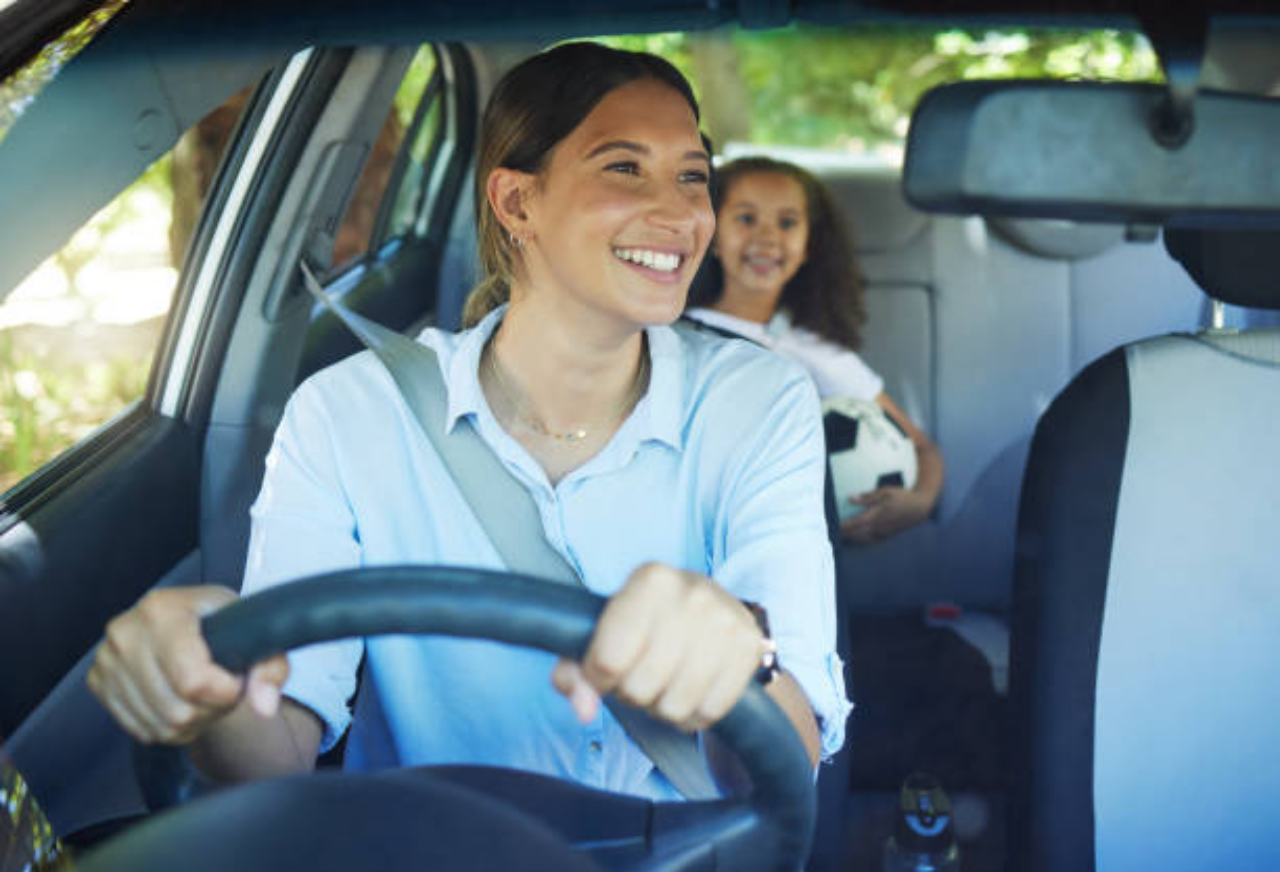
My six-year-old daughter Ivy and I were already on the way to the airport when the call came. We were past the point of theory and intention, past the packing lists and careful folding. The suitcase was already jammed into the trunk with the stubborn zipper that always fought back. Ivy’s small backpack was beside her in the back seat, stuffed with crayons and a book she never finished and the kind of snacks that crumble into every seam of your car forever.
We were already committed in the way that matters—in motion, on asphalt, time ticking forward.
Ivy had been glowing all morning. Her excitement buzzed off her like static. She’d been talking about Grandma’s house as if it were a place where magic happened on purpose, where there were unlimited cookies and laughter that didn’t have an edge.
And in some corner of me, small and embarrassingly persistent, something hopeful had been leaning toward that idea too. Not because I believed in sudden transformations, but because hope apparently can survive a lot.
Then my mother’s voice made it clear it wasn’t going to survive this.
I still remember the exact second my stomach dropped. My hands were on the steering wheel and I had nowhere to put the feeling. There are moments that imprint themselves like burns—instant, permanent, impossible to rub out. Mine happened with both hands locked at ten and two, knuckles whitening, the wheel faintly gritty beneath my palms.
The drop in my stomach wasn’t metaphorical. It was physical, like gravity had shifted inside my torso. My throat tightened. My skin went cold. My brain did that frantic, useless scramble it does when something impossible has just happened and it’s trying to find the version of reality where it didn’t.
But there wasn’t anywhere to put it. No space to fall apart. No privacy. No pause button.
I was driving. My child was behind me. Traffic was still traffic. The world insisted on continuing like nothing had changed, which felt obscene.
And I remember thinking, sharp and sudden, that my parents had always been good at that—continuing, smiling, acting like the person who was excluded had simply evaporated.
We were on the freeway headed to the airport. It was the day before Thanksgiving. Gray sky. Traffic moving just fast enough to make you think you might actually be on time, which is always how airports lure you into optimism before humbling you at security.
The sky was that flat, damp shade of November that makes everything look slightly exhausted. The clouds hung low like they were pressing down on the tops of buildings. The light had no warmth to it—just a dull, washed-out brightness that turned the world into muted colors.
My dashboard clock blinked its quiet insistence. I could almost taste the metallic anxiety that always comes with travel—the imagined line at security, the worry about forgetting something, the half-formed dread that you’ll sprint for a gate and still somehow be too late.
And still, until my phone rang, I’d been letting myself believe we’d get there. Like we deserved to.
Ivy was in the back in her booster seat, kicking her feet like she had springs in her shoes. She’d been counting down to this trip the way kids do, like it was a holiday and a birthday and a unicorn sighting all rolled into one.
“Do you think Mason will play with me this time?” she asked.
Her shoes thumped the back of the seat in that rhythmic, absent-minded way kids have when their bodies can’t contain their feelings. She swung her legs and made a little tune under her breath—the kind that wasn’t quite a song but belonged to joy anyway.
Her cheeks were pink. Hair slightly messy from the way she’d tossed and turned in bed last night, too excited to sleep properly. Her eyes were bright in the rearview mirror when she leaned forward, searching my face for reassurance.
There was innocence in the question that hurt even before I knew why it would. Ivy still believed people would meet her where she stood. She still believed that if she wanted to be liked badly enough, the wanting itself might make it happen.
And I hated, suddenly, how much she’d learned to ask. Not demand. Ask.
Mason was my sister Allison’s son. He was seven, and he treated Ivy like a mildly interesting app he could close whenever he got bored.
“I’m sure he will,” I said in the voice mothers use when they’re lying for peace.
Mason’s attention had always come with conditions. He could be charming for exactly as long as it benefited him, and then he’d flick Ivy away with a look, a shrug, a sigh so exaggerated it seemed rehearsed.
Ivy would hover on the outskirts of his games, trying to insert herself with that careful politeness kids learn when they’ve been gently rejected enough times. I’d watched it happen before, felt my own discomfort rise like heat in my chest, wanted to scoop Ivy up and leave. But I also wanted to prove—again—that she could win them over if everyone just tried harder.
That was the family script. If something hurt, it was because I hadn’t performed correctly.
“And Paige is going to show me her new Barbie,” Ivy continued, undeterred.
Her excitement didn’t trip over my lie. It ran right past it, bright and determined. Ivy had always had that quality—like she could build an entire future out of one good possibility and live in it comfortably.
Paige was Allison’s daughter, nine years old, and already practicing the kind of facial expressions you see in people who review restaurants for a living. Paige’s looks could slice. She had that early mastery of disdain, the ability to communicate entire criticisms without saying a word.
But Ivy didn’t seem to register that yet. Or maybe she did and kept going anyway. Either way, it was something like courage.
Ivy hummed to herself, hugging the little stuffed fox she’d insisted on bringing “so he can have Thanksgiving too.” She’d made place cards at school—actual little folded pieces of paper with our names and drawings of turkeys that looked like they’d survived a small explosion.
The fox’s fur was worn in patches from being loved too much. One ear drooped at a stubborn angle. Ivy held him with both hands, fingers pressed into his sides as if anchoring herself with something familiar.
The place cards were tucked into her backpack, creased from being opened and closed a dozen times to admire them. She’d shown me the turkeys with pride—scribbled feathers, lopsided eyes, bright colors that refused realism.
She kept saying “Grandma’s house” like it was a magical location with enchanted snacks.
I was hopeful. Not in a naive way. More in a maybe-this-year-everyone-will-behave-like-adults-for-four-hours way. A cautious, fragile optimism, like balancing a glass ornament on a moving bus.
The truth was, I’d been running on that kind of hope for years—small, breakable, handled carefully. It wasn’t the hope of someone who’d never been disappointed. It was the hope of someone who’d learned to expect disappointment and still showed up anyway.
Then my phone rang. The screen lit up with “Mom.”
I smiled automatically. It was instinct, muscle memory. My face moved before my mind did, like my body was still trying to be the good daughter, the safe daughter, the agreeable daughter.
“Hey,” I said, tapping the button and putting it on speaker.
The sound filled the car immediately, my mother’s presence suddenly in the small space with us. I told myself speaker was practical—driving, laws, safety. But there was another part of me that did it because I still, in some stubborn corner, wanted Ivy to hear her grandmother’s voice and feel that warmth.
“Hi, Sarah,” my mother said.
Her tone was careful. Not warm. Not casual. Controlled, like a hand resting lightly on a lid to keep something from boiling over.
I felt my smile falter just a fraction. My eyes flicked to the road as if staying focused could prevent whatever was coming.
“Hi, Mom,” I said, keeping it light, keeping it normal. “We’re on the way. I think we’re going to make it with—”
“Listen.”
She cut in, and my optimism shattered into tiny, glittery pieces.
That one word—listen—was a command, not an invitation. It was the tone she used when I was a kid and she’d already decided the conversation was over before it began.
My stomach clenched hard enough to make me nauseous. The freeway noise seemed to fade behind the sudden thud of my heartbeat.
“We’ve been talking,” she said. “And we think it’s best if you don’t come this year.”
For a second, the world tilted. The sentence hung there in the air of the car like smoke. My eyes blinked automatically, like that could clear it away, like vision was the problem, not what I’d heard.
“What?” I said. The word came out small, stupid. I hated how it sounded, hated that my first instinct was confusion instead of anger.
“It’s just…” she continued, like she was explaining the weather. “Your daughter is embarrassing.”
The highway didn’t change. Cars kept going. The gray sky stayed gray. But something inside me cracked—clean, brutal.
My breath caught, sharp. I felt heat rush into my face and then drain away so quickly my fingertips tingled.
“We don’t want her there. Allison needs a drama-free day.”
There are moments where you can feel your body make a decision without consulting you. Mine decided right then that if I stayed on the road, we were going to end up inside someone’s trunk.
My hands tightened on the wheel until my wrists ached. The lane lines blurred for a moment, my vision narrowing as if my body was trying to protect me by focusing on anything else.
I flicked on my hazards and eased onto the shoulder, half parking, half abandoning the concept of traffic laws out of sheer survival. The car shuddered slightly as we hit the rougher edge of the road. Gravel pinged against the underside. Wind buffeted the side mirror.
Ivy’s voice came from the back seat, small and immediate. “Mom?”
That one syllable was a lifeline and a knife.
I stared straight ahead at the blurred line of the road, my chest tight, trying to swallow the panic that wanted to climb out of me and spill everywhere.
My mother was still talking through the speaker, but my brain had zoomed in on one thing: Ivy heard it.
The second I realized that, I tapped the screen and took the call off speaker so fast it was basically a reflex—like snatching a knife off the floor before a child steps on it.
“Mom,” I hissed, because whispering makes everything better, apparently. “I’m driving. Ivy is in the car. We’re on the way to the airport. What are you talking about?”
“You heard me,” my mother said, and the careful tone vanished like it had never existed. “It’s better this way.”
Better for who? The question burned behind my teeth.
I looked in the mirror again. Ivy wasn’t kicking her feet anymore. She was just staring straight ahead, fox hugged tight to her chest like it was armor. Her little fingers pressed into the plush so hard her knuckles looked pale.
Her face had gone still—the way children’s faces go still when they’re trying to understand something too big for them. The innocence was gone from her eyes, replaced by a tentative fear, like she’d stepped into a room where the adults were suddenly dangerous.
I didn’t trust my mouth to stay safe in front of her for even one more sentence.
“Hold on,” I said, clipped. “One second.”
Then I leaned back just enough to keep my voice gentle for Ivy. “Sweetheart, stay buckled. I’ll be right outside the door.”
My hand trembled as it reached for the door handle. I moved quickly—not because I wanted to leave her, but because I needed to put distance between her and the poison in my ear.
Before she could answer, I was already out of the car, door shut. Cold air hit my cheeks like a slap. The roar of the freeway swallowed everything—a constant, furious sound, like the world itself was shouting.
One step away from my kid. One step closer to the truth.
I lifted the phone again. The screen felt slick under my thumb. My breath came out in a thin cloud.
“Okay,” I said, low and steady. “Say it again.”
My mother didn’t even pretend to soften it. “Allison doesn’t want the stress. She has guests. We’re not doing this.”
“Guests,” I repeated, and it came out flat, like the word had lost meaning.
I could taste something bitter at the back of my throat. My eyes stung from the wind and from the sudden, humiliating urge to cry. I forced myself not to—not here, not where Ivy might see, not where my mother would hear it and file it away as evidence.
“So Ivy is what?” I said. “A bad look?”
My mother made that little irritated noise she makes when I name the thing she’s hiding. “Don’t start.”
“I’m not starting,” I said, the words tight. “I’m clarifying. You just told me my six-year-old is embarrassing.”
“She’ll get over it,” my mother said, like she was talking about a spilled drink.
A car blasted past close enough that the wind yanked at my coat and made my hair slap my face. I stared at my own door like it was the only solid thing in the world.
“We already have flights,” I said. One sentence. No begging. “We’re literally on the way.”
“And now you’re not,” she snapped. “Allison needs a drama-free day.”
There it was again. Drama-free. Like my child was an unregulated substance.
My jaw clenched so hard my teeth hurt. I swallowed the ache that rose in my throat, swallowed the familiar urge to make myself smaller, easier, less inconvenient.
“So that’s it.”
“It’s better this way,” my mother said, final. “We’ll see you another time.”
A pause hung there just long enough for me to wait for the part where she said, I’m sorry.
She didn’t. She did what she always did when I didn’t immediately fold myself into whatever shape she needed—she ended the call.
The silence afterward was worse than the words.
I stared at the dark screen for half a second, like maybe it would light back up and say, Just kidding. I love my granddaughter. I’ve lost my mind.
It didn’t.
So I did the only thing left. I called the person whose comfort apparently ran the holiday calendar.
Allison picked up on the second ring. “What?” she said, already annoyed, like I’d interrupted something important. Breathing, probably.
“Did you tell Mom not to let us come?” I asked. “Because of Ivy?”
A beat. Then a sigh—one of those sighs designed to make you feel embarrassing for speaking at all.
“Sarah,” Allison said, “I have people coming.”
“People?” I echoed, and my voice sounded strange even to me—too steady, too thin.
“Justin has clients,” she added quickly, like that made it noble, like it was charity work to host Thanksgiving for the commercially important.
My stomach went cold, like ice water poured straight through me.
“So you didn’t want questions?” I said.
There was silence just long enough to count as an answer.
“I don’t want a scene,” Allison’s voice sharpened.
“My child exists,” I said. “That’s the scene.”
“You’re doing it right now,” Allison snapped. “This is why nobody can deal with you. You make everything dramatic.”
I didn’t argue. I didn’t explain. I didn’t try to teach empathy to someone who treated it like an elective.
“Okay,” I said, and my voice was calm enough that even I didn’t recognize it. “Got it.”
I ended the call before she could reply.
I stood there on the shoulder of the freeway for a few more seconds, because I needed to breathe, because my hands were shaking, and I didn’t want Ivy to see that either. Didn’t want her to believe she was powerful enough to break her mother.
I pressed my palm briefly against my thigh, grounding myself in the pressure, the cold seeping through my jeans. Then I opened the door and climbed back in.
The car smelled faintly of strawberry hand sanitizer and the sweet, stale crumbs of Ivy’s snacks. The hazards blinked on and off, on and off—a steady pulse that felt like a distress signal.
Ivy’s eyes flicked to my face immediately, searching for clues the way kids do when they don’t have words yet. Her gaze was too grown-up for six, too careful.
I forced my face into calm—the kind of calm mothers learn in hostage situations.
“Hey,” I said softly.
Ivy didn’t hesitate. “They don’t want me.”
The words dropped into the car like a stone.
My throat tightened so fast it felt like my body had slammed a door from the inside. I had a sudden, vivid urge to scream into the steering wheel, to make a sound big enough to match what I was feeling.
But Ivy was watching me. And I had one job.
“No,” I said automatically.
“Don’t lie,” Ivy said, voice wobbling. “I heard it. Grandma said I’m embarrassing.”
The shame on her face was unbearable. Like she was already turning the blame inward, already trying to figure out what about her was wrong. Her shoulders curled slightly, as if making herself smaller might fix it.
I sat back and stared at the highway. My hazards blinked steady and bright, like my car was quietly calling for help.
“I’m sorry,” I said, and it came out rough.
I hated that those were the words. I hated that sorry was what I had, when what I wanted was to reach back through time and shield her from ever hearing it at all.
Ivy hugged her stuffed fox tighter, like she could protect it from shame.
I stared at the airport signs in the distance, and I realized something with a kind of stunned clarity: I could still make this day about us. Not about their rejection, not about Allison’s clients, not about my mother’s cruel efficiency. About us.
I put my hands back on the steering wheel, feeling the faint vibration of the engine. I signaled—absurdly polite, as if the world hadn’t just cracked open—and merged back into traffic.
Then I turned the car around.
Ivy didn’t say anything for a while. That was the scariest part. A quiet six-year-old is never a good sign. The silence in the car had weight, pressing against my ears.
I kept glancing in the mirror, wanting to catch her eye, wanting to reassure her without turning it into a lecture. But there were no clean words for what had happened.
I drove us to an ice cream shop because I didn’t know what else to do with a broken heart and a child who still believed in grandparents.
The shop was bright inside—fluorescent and warm against the gray afternoon. The air smelled like sugar and waffle cones, like childhood, like comfort. A bell jingled when we walked in, the sound almost too cheerful.
“Pick whatever you want,” I said.
“Two scoops?” Ivy asked, voice small, cautious, like she was asking permission to take up space.
I crouched a little so I could see her face fully. Her eyes were shiny, lashes clumped slightly from the tears she hadn’t let fall yet.
“Two scoops,” I said. “Yes.”
She looked at me, testing the edges of this new reality.
“Even sprinkles?” she whispered.
“Especially sprinkles,” I said, and forced my mouth into a smile that felt like stretching a bruise.
We sat by the window. The glass was cold when my elbow leaned against it. Outside, cars passed and people hurried with grocery bags—holiday errands, lives that looked so normal it made my chest ache.
Ivy stared at her sundae and didn’t eat it. The ice cream began to soften at the edges, glossy, melting, sprinkles slowly sliding down the sides like tiny bright confetti that couldn’t hold itself together.
Ivy’s spoon lay untouched. She stared at it like it might offer an answer if she waited long enough.
Then I noticed the table next to us. An older couple, their daughter, a little girl about Ivy’s age. They were just together—easy, like nobody had to earn their place.
The little girl laughed with her whole body, leaning into her mother without hesitation. The older man reached across the table and wiped a smudge off the child’s cheek with a napkin, like it was the most natural thing in the world.
My throat tightened. I looked away fast, like that would stop it. It didn’t.
The older woman leaned over, gentle. “Hey,” she said. “Are you okay?”
I opened my mouth to say fine. Nothing came out. The truth was lodged somewhere in my chest, too heavy to move smoothly.
I swallowed, but my throat stayed tight.
Ivy sniffed beside me, quiet, like she was trying to be small enough to not cause trouble.
That broke something. Because no child should learn that lesson—not at six, not ever.
The older woman looked from Ivy to me and softened. “Would you two like to sit with us?”
Before I could answer, their little girl slid off her chair and walked over to Ivy.
“I’m Mia,” she said. “Do you like unicorns?”
Ivy blinked, like she couldn’t quite believe she’d been addressed so simply, without judgment.
“Yeah,” she said, and the word was shy but real.
“Come on,” Mia said, and Ivy followed her to the play corner like her body remembered how to be a kid.
The relief that hit me was immediate and painful. My shoulders dropped a fraction. My lungs finally took a deeper breath.
The older woman smiled. “I’m Barbara. This is Walter, and that’s our daughter, Julia.”
“Sarah,” I said. “And Ivy.”
Barbara didn’t lean in like we were about to do a deep dive. She just nodded toward the play corner where Ivy and Mia were already arguing over a plastic spoon like it mattered.
“She’s got a good kid vibe,” Barbara said, like that was all she needed to know.
Walter slid a napkin toward me without making it a thing—small gesture, big impact. The napkin was plain white, nothing special, but the way he offered it quietly, without pity, made something in my chest loosen.
I dabbed at the corner of my eye before I could stop myself, furious at my own weakness, grateful at the same time that someone was pretending it wasn’t weakness at all.
Julia gave me a quick sympathetic look. “Holidays can be a lot.”
I let out a breath that wasn’t quite a laugh. “That’s one way to put it.”
Barbara watched me for a second, quiet, not nosy, and asked gently, “Are you okay?”
I should have said yes. I should have said just tired, moved on like I always do. But my mouth betrayed me.
“Not really,” I admitted.
And then, because the dam was already cracked, one sentence slipped out. “We were supposed to fly home for Thanksgiving, and my mom called and told us not to come.”
Barbara’s expression changed—not dramatic, but immediate, like the words had landed in her body the way they’d landed in mine.
“Because of Ivy?” Julia asked softly, like she already knew the answer but didn’t want to assume.
I stared at my hands, my fingers wrapped around my cup, the warmth seeping into my skin. I watched the way my thumb rubbed the rim in a small unconscious circle.
“Yeah,” I said.
Walter’s jaw tightened. Barbara’s voice dropped, careful. “What did she say?”
I hesitated. I could feel the old instinct—protect them, protect my mother’s image, protect the story that kept me tolerable.
Then I swallowed. “That Ivy was embarrassing.”
Nobody spoke for a beat. The ice cream shop noise filled the space—spoons clinking, a child squealing, the hiss of an espresso machine. But at our table, everything went quiet, sharp.
Barbara didn’t ask for a life story. She didn’t demand details. She just said quietly, like she couldn’t help it, “How could anyone say that about a child?”
And that was the problem. Because the real answer wasn’t one sentence. It wasn’t just one phone call. It was years of being measured, found lacking, years of being told—explicitly or not—that love was something you had to earn by being convenient.
After a long pause, Barbara said something that would change everything.
“Come to our Thanksgiving tomorrow.”
I stared at her, certain I’d misheard.
“We’d love to have you,” Walter added, his voice warm and steady.
Julia nodded. “Seriously. We have plenty of food, and Mia would be thrilled.”
I felt tears prick my eyes again, but this time they weren’t from pain. They were from something I’d almost forgotten existed—kindness without conditions.
That’s how Ivy and I ended up spending Thanksgiving with strangers who treated us better than family ever had.
Barbara’s house smelled like actual Thanksgiving—roasting turkey, butter, cinnamon, something baking that made the whole place feel warm before anyone even spoke to you. The scent hit me immediately when the door opened, rich and layered, like comfort made tangible.
Walter opened the door with a grin like we were expected, not accommodated. “Sarah,” he said, like my name belonged in his house. “You made it.”
Ivy hovered behind me at first, clutching her stuffed fox like a shield, her eyes darting around, taking in the unfamiliar space, the unfamiliar voices. Her body was tense, ready to retreat, ready to be told she was too loud, too much, in the way.
Then Mia appeared and said, “You’re here!” like it was the best news of her life.
Ivy’s shoulders dropped one inch, then another.
Barbara handed me a glass of something warm and said, “Kitchen’s that way. Shoes wherever.” Like it was the simplest truth in the world.
She added, “You’re family today.”
That phrase could have been corny. Coming from Barbara, it felt like truth.
The day was perfect in the way real things are perfect—messy, loud, full of laughter that didn’t have an edge. Ivy played with Mia without fear. Walter asked her about school like her answers mattered. Barbara ruffled her hair with genuine affection.
And for the first time in her life, my daughter experienced what it felt like to be wanted exactly as she was.
Later that evening, while we were washing dishes, Barbara said quietly, “You know you’re welcome here anytime, right? Not just holidays. Anytime.”
I looked at her, this woman who had known me for less than twenty-four hours and had already shown me more kindness than my own mother had in thirty-four years.
“Thank you,” I said, and my voice cracked.
She pulled me into a hug, and I let myself cry—really cry—for the first time since that phone call on the highway.
That Thanksgiving was a year ago. In the time since, everything has changed.
Barbara and Walter became Grandma and Grandpa to Ivy—not by blood, but by choice. The kind of grandparents who show up to school plays, who remember her favorite snacks, who call just to hear about her day.
Julia became the sister I always needed—the one who shows up when life gets hard, who celebrates my wins without jealousy, who loves my kid like her own.
And I met Lucas at one of Julia’s single-parent meetups. He came with his son Leo, and somehow, slowly, carefully, we built something real. Something based on respect and partnership and the radical idea that love shouldn’t require you to shrink yourself.
My biological family stayed silent for a year. No calls. No texts. No apologies.
Until last week, when my mother called about our wedding.
“Where is our invitation?” she demanded.
“You’re not invited,” I said calmly.
The outrage in her voice was immediate. “What do you mean we’re not invited?”
“I mean exactly that.”
“This is ridiculous,” she snapped.
“What was ridiculous,” I said, “was you calling my six-year-old embarrassing.”
“Don’t start,” she warned.
I almost laughed—muscle memory. “I’m not starting,” I said. “I’m finishing.”
She hung up. Then came the pressure campaign—calls, texts, relatives I hadn’t heard from in years suddenly discovering my number. You can’t not invite your parents. Be the bigger person. Family is family.
But I stood firm. I explained once, one sentence, to one person: “They rejected Ivy. She heard it.”
The line went quiet after that.
My mother left a voicemail saying they’d come anyway. Allison texted that I was being dramatic, that this was why nobody could deal with me.
Lucas listened to it all, jaw tight. “You’re not crazy,” he said quietly.
“Thank you,” I said. “I’d like that embroidered on a pillow.”
We arranged security for the wedding with one rule: No exceptions. No one approaches Ivy.
On our wedding day, I was getting ready with Julia fussing over a curling iron, Barbara fixing Ivy’s dress, and Walter standing nearby pretending he wasn’t emotional.
Ivy spun in her pale, bright dress. “Do I look fancy?”
“You look like trouble,” Julia said fondly. “The best kind.”
Barbara smiled at Ivy. “Our girl.”
Then the coordinator stepped in, voice careful. “Sarah, your parents are here. And your sister’s family.”
My pulse spiked. Lucas was instantly beside me, his presence a solid wall. “Want them removed?”
I looked at Ivy—bright dress, little bracelet, six-year-old heart still healing.
“No,” I said. “Let them sit in the back row. Away from Ivy. If they move toward her, stop them.”
The ceremony was beautiful. Walter walked me down the aisle like he was honored to be there, like I mattered. Lucas waited at the altar with eyes that said, I choose you. I choose your child.
My biological family watched from the back like people who’d shown up too late to matter.
At the reception, after dinner, I took the microphone.
“Thank you for being here,” I said. Then I paused, gathering my courage. “A year ago, I was told not to come to Thanksgiving because my child was too much.”
A hush moved through the room. Chairs shifting. Breaths caught.
“That call didn’t take something from us,” I continued. “It showed me where we actually belonged.”
I turned toward Barbara and Walter. “You made room for us when you didn’t have to. You loved Ivy like she wasn’t a burden. Like she was exactly what she is—an incredible kid.”
The room erupted in applause. Barbara stood, overwhelmed. Walter stood beside her, face red, proud.
“Julia,” I added, my voice softening, “you became the sister I always needed.”
I looked at the back row. My mother’s face had gone blank. Allison looked stunned. My father stared at his hands.
Their faces were pale because now the room knew. Now the story belonged to me.
When my mother tried to approach Ivy afterward, security and Walter blocked her path. Barbara was already moving Ivy away, calm and practiced.
“This is my family,” my mother protested.
Walter’s voice stayed low. “Not today.”
I looked at my mother and felt something settle—calm, final.
“I don’t hate you,” I said quietly. “I’ve just stopped waiting for you to be different.”
I nodded to security. “Please escort them out.”
They were removed. My mother kept looking back like she expected me to chase her.
I didn’t.
I crouched in front of Ivy. “You okay?”
She frowned, trying to place the shape of what she’d just witnessed. “Was that Grandma?”
“That was someone who doesn’t get to hurt you anymore,” I said.
Ivy blinked, then asked, “Can I have cake now?”
A laugh broke out of me—shaky, real, relieved. “Absolutely.”
And I went back to my wedding, surrounded by the family I’d chosen and who had chosen me back.
The next morning, my phone was full of messages from people who cared more about tradition than a child’s feelings. I deleted them, each swipe feeling like clearing debris after a storm.
Then one message came in from Aunt Denise: I heard what happened. I’m proud of you. Protect Ivy. You’re doing the right thing.
I stared at it for a long time, then typed back: Thank you.
And for the first time in my life, I meant it when I thought: I’m free.
Free from the weight of trying to earn love that should have been freely given. Free from shrinking myself to fit into spaces that were never meant for me. Free from teaching my daughter that she had to apologize for existing.
We built something better. Not perfect, but real. A family bound not by obligation or blood, but by choice and kindness and the radical act of showing up for each other.
Ivy has grandparents who adore her, an aunt who celebrates her, and a stepfather and stepbrother who treat her like she matters. She’s learning that love doesn’t have to be earned—that she’s worthy simply because she exists.
And me? I’m learning the same lesson, one day at a time.
Some families are born. Some are built. And some are found in ice cream shops on the worst day of your life, extended by strangers who saw you hurting and decided to help.
That’s the family worth keeping. That’s the family worth celebrating. That’s the family that saved us both.

Adrian Hawthorne is a celebrated author and dedicated archivist who finds inspiration in the hidden stories of the past. Educated at Oxford, he now works at the National Archives, where preserving history fuels his evocative writing. Balancing archival precision with creative storytelling, Adrian founded the Hawthorne Institute of Literary Arts to mentor emerging writers and honor the timeless art of narrative.