The kitchen clock at Blackwood Manor marked 11:47 PM on my twenty-third birthday with its steady, indifferent ticking. There was no cake waiting on the marble counter. No candles, no balloons, no off-key singing from people who were supposed to love me. Instead, there was a mountain of dirty dishes—remnants of a dinner party I’d spent six hours preparing but wasn’t permitted to attend.
I stood at the sink, my hands pruned and aching from hot water and harsh soap, scrubbing at a wine stain that had settled into the etching of a Waterford crystal goblet like it belonged there. Through the archway, I could hear the fading laughter of my mother’s guests as they made their way to the foyer, thanking her for such a “lovely evening” and complimenting the “exquisite meal.” Not once did anyone ask who had prepared it.
“Elena, must you make so much noise with the dishes? I’m trying to watch my program.” My mother’s voice drifted from the living room, sharp and cutting despite its measured tone.
Beatrice Davis had never needed to yell. She had perfected the art of the quiet evisceration, the kind of criticism that wrapped itself around your throat like silk—soft to the touch but capable of strangling you just the same.
“Almost finished, Mom,” I called back, my voice deliberately flat to avoid giving her anything to work with.
The click of her heels on the hardwood announced her approach before she appeared in the doorway. She wore a silk robe the color of champagne that probably cost more than three months of my salary at the Westport Public Library. Her hair was perfect, her makeup still flawless despite the late hour, and she carried with her the scent of expensive gin and expensive disappointment.
“Be careful with that glass,” she said, leaning against the doorframe and watching me with the kind of attention most people reserve for inspecting restaurant kitchens. “It’s worth more than that eyesore you call a car. That little Honda Civic of yours is an embarrassment in our driveway, you know. It looks like a beetle parked among thoroughbreds.”
I didn’t respond. I’d learned years ago that defending myself only provided ammunition. The Honda Civic sitting in our circular driveway was mine—paid for with money I’d earned from double shifts at the library and freelance coding work I did late into the night. Every payment had been a small declaration of independence, though my mother saw it only as evidence of my fundamental inability to be the daughter she wanted.
“Chloe needs the driveway cleared tonight,” Beatrice continued, examining her reflection in the polished chrome of our commercial-grade refrigerator. “James Sterling is dropping her off after the gala. You know, Senator Sterling’s son? Her fiancé? I don’t want him seeing your car and thinking we have houseguests of… lesser quality. Park it on the street. Better yet, park it around the corner.”
Chloe. My younger sister by three years. The golden child, the favorite, the one who could do no wrong in our mother’s eyes.
In the carefully constructed mythology of our family, Chloe was the protagonist—beautiful, charming, destined for magazine covers and a marriage into political royalty. I was the prologue, the mistake that had happened first, the practice run before they got it right. I existed in the shadows of our colonial mansion, cleaning up messes and staying out of sight when company came.
“I can’t move the car,” I said, placing the clean goblet in the cabinet with deliberate care. “Chloe took my keys two hours ago. She said her convertible’s engine light came on and she needed my car to run to the liquor store for more champagne.”
Beatrice waved her hand dismissively, her diamond rings catching the light and throwing little rainbows across the ceiling. “So? Let her use it. What else were you planning to do tonight? You have no plans, Elena. You never have plans. You might as well be useful to someone who actually has a future worth protecting.”
I looked out the window at the rain-slicked driveway, at the empty space where my car should have been. What I didn’t tell my mother was that three days ago, I’d done something I’d been planning for weeks. I’d installed a high-end dashcam in my Honda—not the cheap kind you buy at an electronics store, but a professional-grade 4K dual-lens system with night vision, impact detection, and cloud backup. I’d hardwired it to the battery so it recorded continuously, even when the engine was off.
I was tired of Chloe returning my car with mysterious scratches, empty gas tanks, and the lingering smell of things she shouldn’t have been doing. I was tired of being blamed for damage I hadn’t caused. Most of all, I was tired of having no proof, no evidence, no way to defend myself against their casual dismissal of my version of events.
“You’re right, Mom,” I said, drying my hands on a dish towel. “I’m just here to be useful.”
“Finally,” she said, turning away. “You’re learning your place.”
She left me alone in the kitchen with the ticking clock and the last few dishes, and I finished cleaning up the remnants of a party I’d never been invited to join.
It was 2:14 AM when the silence of Blackwood Manor shattered like dropped crystal.
I was awake in my small bedroom—the one my mother called “cozy” and real estate agents would call “converted storage”—working on a security script for a client in London. My eyes burned from staring at code, but the work paid well and kept me busy during the long, lonely hours when I was supposed to be sleeping.
Then came the sound: tires screeching into our driveway at a speed completely inappropriate for the wet pavement, followed by the violent slam of our front door crashing open.
“Mom! Mommy! Please, I need you!”
It was Chloe, but not the polished, confident Chloe who glided through life collecting admiration like other people collected receipts. This was a raw, terrified sound—the kind of panic that strips away all pretense.
I saved my work and walked to my bedroom door, opening it quietly. From the top of the stairs, I could see down into our grand foyer with its marble floors and crystal chandelier. The scene below looked like something from a nightmare.
Chloe was on her knees in the middle of the floor, still wearing her evening gown—a designer piece that had cost more than my car payment. The hem was torn and dirty, and there were dark stains on the pale blue silk that I couldn’t quite identify from this distance. Her professionally styled hair had come partially undone, and her makeup was running in dark streaks down her face. She smelled of vodka and fear.
Beatrice appeared from the master bedroom, her champagne robe now tied tightly, her face a mask of maternal panic that I’d never seen directed at me. She dropped to her knees beside Chloe, gripping her shoulders.
“What happened?” Beatrice demanded, her voice a harsh whisper. “Chloe, breathe. Tell me what happened. Are you hurt?”
“I hit someone,” Chloe sobbed, the words tumbling out between gasping breaths. “Mom, I hit him. I was on Route 9, near the old bridge. It was so dark and the rain—I couldn’t see and then there was this bike and I heard—oh God, Mom, I heard the crunch. I heard it.”
The words hung in the air like poison gas, slowly filling every corner of the foyer.
“Did you stop?” Beatrice asked, her voice dropping to something cold and dangerous.
“No!” Chloe wailed, grabbing fistfuls of her mother’s robe. “I couldn’t stop! I’ve been drinking, Mom. If the police come, if they give me a DUI, the engagement is over. Senator Sterling will never let James marry someone with a criminal record. Everything we’ve worked for—the wedding, the connections, everything—it’ll all be gone!”
I watched from the shadows at the top of the stairs as my mother’s face transformed. The panic evaporated, replaced by something calculating and cold that was infinitely more frightening than her usual disappointment. She looked up the staircase, and her eyes locked onto mine with laser precision.
“Elena,” she said, her voice carrying up the stairs with absolute authority. “Come down here. Now.”
I descended slowly, my hand trailing along the polished banister, my heart hammering against my ribs. When I reached the bottom, I looked at my sister—really looked at her. She was shaking, her eyes wide and unfocused, and I could smell the alcohol on her breath from three feet away.
“We need to call 911,” I said, my voice steadier than I felt. “If Chloe hit someone on a bicycle, they could still be out there. They could be dying while we’re standing here. They need help.”
“Shut up,” Beatrice snapped. She grabbed my arm, her manicured nails digging into my skin hard enough to leave marks. She pulled me into the kitchen, Chloe stumbling after us like a drunk marionette with half its strings cut.
In the harsh overhead lighting, I could see my mother’s face clearly. This was Beatrice in her element—crisis management, damage control, protecting the family name at any cost. I’d seen this expression before, usually when she was dealing with my father’s business scandals or smoothing over one of Chloe’s social missteps. But this was different. This was bigger.
“Listen to me very carefully,” Beatrice said, positioning herself so close to me that I had to resist the urge to step back. “Chloe cannot go to jail. She has a future—a real future. She’s marrying into the Sterling family next month. She’s going to be the wife of a future senator, possibly even a future president. She has a life that matters, Elena. A life that will impact important people.”
She gripped my face, forcing me to maintain eye contact.
“But you… look at you. You work in a basement at a public library, scanning books that nobody reads. You live in my house, eating my food, using my electricity. You have no boyfriend, no social life, no prospects. You’re twenty-three years old with nothing to show for it. You have no future worth protecting.”
The words landed like physical blows, each one a carefully aimed strike at the foundations of my self-worth.
“What are you asking me to do?” I asked, though I already knew. I’d always known that eventually, my mother would ask me to sacrifice myself on the altar of Chloe’s success.
“You were driving,” Beatrice said, her voice hard as granite. “You took the car to the twenty-four-hour pharmacy to pick up some things. It was an accident—the roads were slick from the rain, visibility was poor, and you didn’t see the cyclist until it was too late. You panicked and drove home to tell your mother. We’ll call the police right now, and you’ll do the right thing by turning yourself in.”
I turned to look at Chloe. She had stopped crying. She was watching this exchange with red-rimmed eyes, and as she processed our mother’s plan, a small, twisted smile began to form at the corners of her mouth. It was the smile of someone who had just realized they’d found a perfect scapegoat.
“Elena, please,” Chloe said, her voice regaining some of its usual manipulative sweetness. “Think about it rationally. Mom’s right—I’m going to be married to James Sterling. I can do so much good as a political wife. I can make real change in the world. But you… I mean, what are you going to do? Work at that library forever? Live in our house until you’re forty?”
She actually laughed—a wet, slightly hysterical sound. “Honestly, maybe prison would be good for you. Give you some life experience. Some character. Something to write about in those little journals you keep. And it’s your car anyway. Who’s going to believe the perfect daughter stole the loser’s car? It doesn’t even make sense.”
The cruelty in her voice was almost impressive in its casual totality.
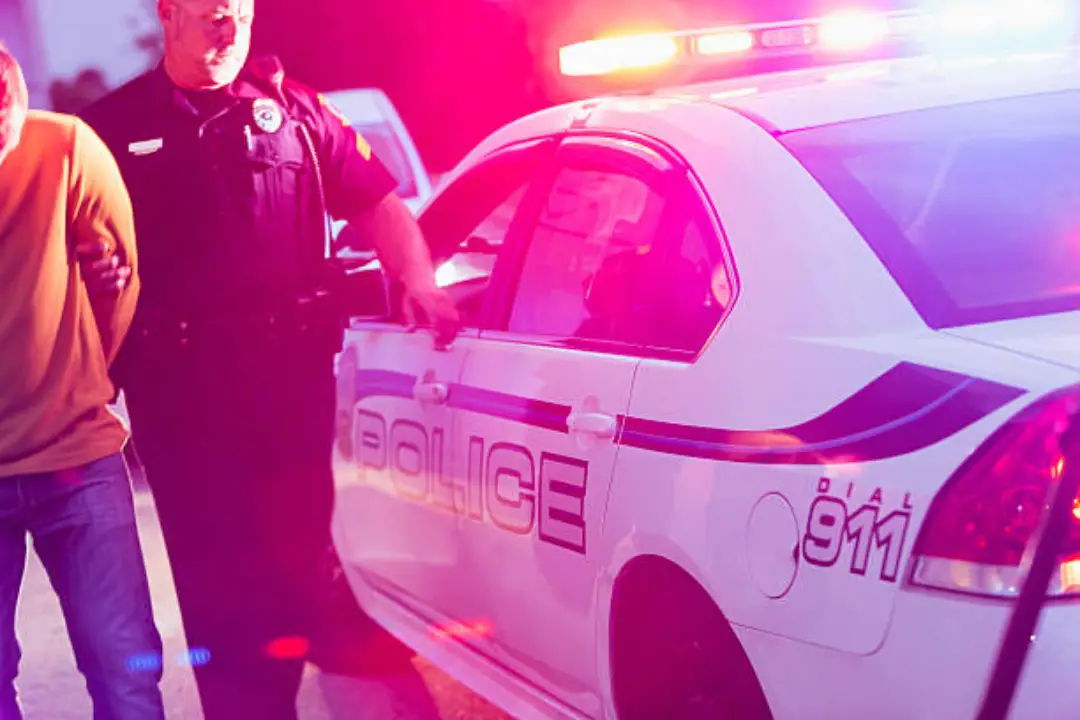
Twenty minutes later, Blackwood Manor was lit up like a crime scene, which I suppose it was. Red and blue lights from three police cruisers painted our white colonial exterior in alternating colors, turning our home into a surreal light show. Neighbors’ lights were coming on up and down our street, faces appearing in windows to see what disaster had befallen the Davis family.
Officer Miller sat in our living room, his weathered face carrying the expression of someone who’d seen enough of humanity’s ugliness to be surprised by very little. He was a twenty-year veteran of the force, and his eyes held a particular kind of tired skepticism as he looked around at our expensive furniture and our carefully curated image of respectability.
Outside, I could see the forensics team photographing my Honda. Even from inside, I could see the damage—the crumpled hood, the shattered passenger-side headlight, the dark smears across the white paint that I knew was blood mixed with blue paint from a bicycle frame.
Beatrice sat on the sofa wearing her grief like a designer coat, dabbing at dry eyes with a handkerchief. Her performance was Academy Award-worthy.
“Officer, I just… I can’t believe this is happening,” she said, her voice trembling with precisely calibrated emotion. “Elena came home about thirty minutes ago, absolutely hysterical. She was shaking, crying, could barely get the words out. She told us she’d hit something on Route 9 near the old bridge. We were horrified. We told her immediately that she had to call the police, that she had to do the right thing no matter how scared she was.”
She pressed the handkerchief to her mouth as if holding back sobs. “We’re a family that believes in accountability, Officer Miller. In doing what’s right even when it’s difficult. That’s how we raised both our daughters.”
Chloe sat beside our mother, wrapped in a cashmere throw blanket despite the warmth of the house. She looked small and fragile, her eyes red from genuine tears she’d cried for herself.
“My sister has always been… troubled,” Chloe added, her voice barely above a whisper. “She has these dark moods, these impulsive moments. I’ve tried to talk to her about being more careful when she drives, but she never listens. I think… I think she feels so overlooked that she stops caring about consequences.”
Officer Miller turned his attention to me. I sat in the wingback chair across from him, my hands folded in my lap, my face deliberately neutral. I felt like I was watching this scene from outside my body, like I was a spectator at my own execution.
“Elena,” Officer Miller said, his voice professionally neutral. “Is what your mother and sister are saying accurate? Were you driving your Honda Civic on Route 9 at approximately 2:00 AM this morning?”
Under the coffee table, I felt Beatrice’s foot shoot out and connect with my shin, hard enough to bruise. The message was clear: Confess. Take the fall. Protect the golden child.
“Tell him the truth, sweetheart,” Beatrice urged, her voice dripping with false compassion. “Clear your conscience. It’s the only way you’ll be able to live with yourself.”
I looked at Officer Miller, then at the two other officers standing near the foyer, their hands resting near their belts in that casual way that suggested they were ready for anything. Then I looked back at the kitchen, where a fourteen-year-old boy’s life was being weighed against my sister’s social calendar.
“Officer Miller,” I said quietly, “before I answer that question, can you tell me about the victim? Is he—are they okay?”
Officer Miller’s expression softened slightly, though whether from surprise or respect, I couldn’t tell. “The victim is a fourteen-year-old boy named Leo Martinez. He has an early-morning paper route. He’s currently in the ICU at Saint Jude’s Hospital in critical condition. His parents are there now. He hasn’t regained consciousness.”
Fourteen years old. A child. A boy riding his bicycle in the dark to earn money, probably saving up for something important to him. And Chloe had hit him, heard him scream, and fled the scene while laughing about how I could take the fall.
“Elena!” Beatrice’s voice cracked like a whip. “Stop stalling and tell the officer what you did! Confess so we can all start to heal from this tragedy!”
“She’s in shock,” Chloe added, fresh tears streaming down her face. “She knows what she did was horrible. She just doesn’t want to face the reality of how this will affect our family’s reputation.”
I reached into the pocket of my cardigan and pulled out my phone.
“Officer Miller,” I said, my voice cutting through the room with unexpected clarity, “I was not driving my car tonight. I have not left this house since approximately 6:00 PM yesterday evening. I have time-stamped server logs from my freelance work that can verify my location and activity for the entire night.”
The room went dead silent. I could hear the clock ticking in the kitchen, the hum of the refrigerator, the distant sound of the forensics team outside.
Beatrice stood up so fast she knocked over her water glass. “She’s lying! She’s lying to save herself! Officer, my daughter is a computer programmer—she can fake anything digital! She’s always been jealous of her sister, and now she’s trying to destroy her!”
“Mrs. Davis, sit down,” Officer Miller said, his voice carrying a note of command that made even my mother pause. “Elena, do you have any other evidence to support your claim that you weren’t driving?”
“I do,” I said. “I have video evidence with audio. Multiple angles. Time-stamped and uploaded to the cloud in real-time, so it can’t have been edited or faked.”
Beatrice lunged toward me, her face contorted with rage. “Give me that phone! She’s probably doctored the footage! She spends all her time on computers doing God knows what!”
Officer Miller moved with surprising speed for a man his age, positioning himself between my mother and me. “Mrs. Davis, I need you to sit down right now, or I will have you removed from this room. Do you understand?”
The authority in his voice stopped her mid-lunge. She sank back onto the sofa, her chest heaving, her carefully maintained composure cracking like aged paint.
I handed my phone to Officer Miller, my hands steadier than I’d expected. I didn’t look at my mother or my sister. I looked at the family portrait hanging over the fireplace—a professional photo from two years ago where I’d been positioned at the edge of the frame, half out of the shot, like even the photographer had understood my role in this family.
“The dashcam starts recording when it detects motion or impact,” I explained. “It has a wide-angle lens that captures the interior of the vehicle as well as the road ahead. The audio is clear. You’ll want to watch from approximately 1:45 AM.”
Officer Miller pressed play, and the small speaker on my phone filled our expensive living room with sounds that would haunt my dreams.
First came the music—bass-heavy pop music turned up too loud, distorting slightly through the phone’s speaker. Then Chloe’s voice, slurred and off-key, singing along.
“I’m in the fast laaane, from LA to Tokyoooo… James is gonna love this dress, he’s gonna love me so much…”
I watched my mother’s face drain of color. I watched Chloe’s mouth fall open as she heard herself, drunk and careless.
Then came the sound that made everyone in the room flinch: a sickening crunch of metal on metal, the thud of impact, a scream that was cut horrifyingly short.
“Oh my God!” Chloe’s voice on the recording, suddenly sharp with panic. “Oh shit, oh shit, I hit him! Why was he even on the road? Move, you stupid kid!”
The engine revving. Tires squealing. The sound of flight.
And then, Chloe’s voice again, breathless and calculating: “It’s okay, it’s okay. Mom will fix this. She always fixes everything. Just get Elena’s stupid car home. Make Elena take the fall. God, she’s such a loser anyway. Nobody cares about her. She’s worthless. She has no life. This won’t even matter for her—it’s not like she has a future to ruin.”
Officer Miller paused the video. The silence that followed was absolute and suffocating. It was the sound of a carefully constructed lie collapsing under the weight of irrefutable truth.
He looked at Chloe, his expression a mixture of disgust and grim professional duty. “Ms. Davis, you fled the scene of a serious accident involving a minor. You were clearly intoxicated while driving. And you, along with your mother, conspired to frame an innocent person for a crime that carries a potential prison sentence of fifteen years.”
“No!” Chloe shrieked, jumping to her feet and sending the cashmere blanket to the floor. “That’s fake! She edited it! She’s a programmer, she can make anything! Mom, tell him! Tell him she’s lying!”
But I wasn’t finished. I swiped to the next file on my phone—a voice recording I’d made on my phone while standing in the kitchen, pretending to finish the dishes, while they’d huddled in the foyer planning my destruction.
Beatrice’s voice came through crystal clear: “You, Elena, look at you. You have no future anyway. You’re worthless. Say you were driving. Tell them it was an accident. Chloe is the face of this family—she has a real future worth protecting.”
Chloe’s voice: “She already looks guilty, doesn’t she, Mom? Like a criminal. Maybe prison would actually be good for her. Give her some actual life experience for once.”
The laughter that followed was the sound of casual cruelty, of two people so certain of their superiority that they couldn’t imagine consequences.
Officer Miller stood, and when he looked at my mother, the contempt on his face was palpable. “Mrs. Beatrice Davis, you are under arrest for conspiracy to commit fraud, obstruction of justice, and attempted coercion of a false police report.”
“Me?” Beatrice gasped, her hand flying to the pearls at her throat. “I was protecting my daughter! A mother has the right—the duty—to protect her children!”
“You have two daughters,” Officer Miller said quietly. “But you were willing to destroy one to protect the other. That’s not maternal instinct, Mrs. Davis. That’s something else entirely.”
He nodded to his fellow officers. “Cuff them both. Separately. And read them their rights.”
As the metallic click of handcuffs echoed through the foyer, Beatrice turned to look at me. Her face was a mask of pure, undiluted hatred—the kind of loathing that can only come from someone who’s been exposed for exactly what they are.
“You ungrateful little bitch,” she hissed. “After everything I’ve given you. I gave you life!”
I looked at her—really looked at her—and felt absolutely nothing. No anger, no satisfaction, no sadness. Just a vast, peaceful emptiness where her power over me used to live.
“You gave me a life you told me I didn’t deserve,” I said quietly. “I’m just returning the favor by telling the truth.”
The media descended on our quiet Connecticut town like locusts within twenty-four hours. The combination of a hit-and-run involving a child, a prominent family, and a connection to Senator Sterling made it irresistible to every news outlet from local stations to national networks.
The dashcam footage leaked—not from me, but from someone within the police department who apparently believed the public had a right to see exactly who Chloe Davis really was. Within forty-eight hours, the “Golden Child of Westport” had been rebranded as the “Route 9 Monster” across every social media platform and news site.
The Sterling family moved faster than I’d thought possible. Within thirty-six hours of Chloe’s arrest, they issued a formal statement dissolving the engagement and citing “fundamental incompatibility of core values.” Senator Sterling himself held a press conference where he claimed he’d never actually approved of the relationship and that his son had been “deceived by individuals of questionable character.”
Beatrice was denied bail. The judge—a woman who, in a twist of cosmic irony, had once been insulted by my mother at a charity gala—cited flight risk and the severity of the charges. She would await trial from a county jail cell, sleeping on a thin mattress and eating food that no one had bothered to make look pretty.
I stayed at Blackwood Manor for exactly three days, just long enough to pack my life into four suitcases and two boxes. It was strange walking through those rooms without the oppressive weight of my mother’s judgment, without the constant anxiety of being found inadequate. The house felt different—lighter, emptier, like a stage set after the play has closed.
On the second day, I went into my mother’s private office, the room I’d been forbidden to enter my entire life. In the back of her closet, behind winter coats that cost more than some people’s cars, I found a floor safe. The combination was her wedding anniversary—the only date she’d ever treated as sacred.
Inside was over two hundred thousand dollars in cash, along with statements for offshore accounts I’d never known existed. This was the “family fortune” she’d always claimed was dwindling, the money she’d said didn’t exist when I’d asked about college tuition or needed help with medical bills. She’d hoarded it like a dragon hoards gold, all while telling me I was a financial burden.
I took fifty thousand dollars. Not as theft, but as payment for twenty-three years of unpaid labor, emotional abuse, and systematic psychological destruction. I considered it back wages.
On my final night in the house, I drove my dented Honda—released from the police impound—to Saint Jude’s Hospital. I didn’t go inside. I couldn’t face Leo’s parents, couldn’t look them in the eye knowing that my silence, even for thirty minutes, had delayed help for their son. But I left an envelope at the front desk with twenty-five thousand dollars in cash and a note that said simply: “For Leo Martinez. From someone who’s sorry they didn’t speak up sooner.”
The trial happened four months later. I was the prosecution’s star witness, though by the time I took the stand, there wasn’t much left to prove. The dashcam footage was irrefutable. The voice recordings were clear. The physical evidence—the damage to my car, Chloe’s blood alcohol level taken hours after the accident, the paint transfer from Leo’s bicycle—all supported the same narrative.
Chloe took a plea deal: twelve years for vehicular assault, fleeing the scene, and conspiracy. Beatrice went to trial and was convicted on all counts, receiving five years for conspiracy and obstruction of justice.
I sat in the courtroom gallery during sentencing, watching as my mother was led away in handcuffs. She looked smaller somehow, diminished, like someone had let the air out of her. The pearls were gone, replaced by a county-issued jumpsuit. The perfect hair had grayed and thinned. The woman who had loomed over my entire life like a colossus now looked like what she actually was: a bitter, small person who had built an empire of cruelty on the broken foundations of her daughters’ self-worth.
She looked at me once as they led her away. I thought she might say something—an apology, a curse, some final word to try to wound me one last time. But she said nothing. She just looked at me with empty eyes and walked away.
One year later, I stood on the balcony of my new apartment in Chicago, twenty-two stories above the city, watching Lake Michigan stretch out toward the horizon like hammered silver. The wind was cold and sharp and felt clean in a way that Connecticut air never had.
I wasn’t the basement library worker anymore. I was the Lead Security Architect for a cybersecurity firm that specialized in digital forensics and whistleblower protection. It turned out that the skills I’d used to document my family’s crimes were highly marketable in a world where truth is often the scarcest commodity.
My phone buzzed with a news alert. I’d set up a Google alert for my hometown, mostly out of morbid curiosity.
UPDATE: Leo Martinez, now 15, returns to school after year-long recovery. Family grateful for anonymous donation that covered medical costs.
There was a photo of Leo standing outside his high school, thinner than he probably was before, but smiling. Alive. Walking. The article mentioned that he’d beaten the odds, that his doctors had called his recovery remarkable.
I smiled and deleted the alert. I didn’t need updates anymore. I didn’t need to know what happened to Beatrice in prison or whether Chloe had found religion or remorse behind bars. Their lives were no longer my concern.
My phone chimed again, this time with a text from my friend Aisha: Rooftop bar in 20 minutes. Don’t be late. We’re celebrating your promotion!
I grabbed my jacket—a nice one that I’d bought for myself with money I’d earned through my own work—and headed for the door.
As I waited for the elevator, I thought about the girl I used to be. The one who believed her mother when she said she had no future. The one who accepted being called worthless because she’d heard it so many times it sounded like truth. The one who was so desperate for crumbs of approval that she would have let herself be destroyed to protect people who saw her as disposable.
That girl was gone. She’d died on Route 9, crushed under the weight of a lie she’d refused to carry.
The woman in the elevator mirror—confident, successful, free—was someone new. Someone who’d learned that the future isn’t something people give you as a gift. It’s something you build yourself, piece by piece, in the darkness when no one is watching.
Beatrice had been right about one thing: the old Elena had no future.
But she’d been wrong about everything else.
The new Elena’s future was just beginning.

Ethan Blake is a skilled Creative Content Specialist with a talent for crafting engaging and thought-provoking narratives. With a strong background in storytelling and digital content creation, Ethan brings a unique perspective to his role at TheArchivists, where he curates and produces captivating content for a global audience.
Ethan holds a degree in Communications from Zurich University, where he developed his expertise in storytelling, media strategy, and audience engagement. Known for his ability to blend creativity with analytical precision, he excels at creating content that not only entertains but also connects deeply with readers.
At TheArchivists, Ethan specializes in uncovering compelling stories that reflect a wide range of human experiences. His work is celebrated for its authenticity, creativity, and ability to spark meaningful conversations, earning him recognition among peers and readers alike.
Passionate about the art of storytelling, Ethan enjoys exploring themes of culture, history, and personal growth, aiming to inspire and inform with every piece he creates. Dedicated to making a lasting impact, Ethan continues to push boundaries in the ever-evolving world of digital content.