The Day My Family Called Me “Vindictive” for Refusing to Pay for My Sister’s Crimes
The last time I saw my mother, she was sobbing in a courtroom.
Not the delicate, dab-your-eyes crying she used at weddings or Christmas services. This was raw, ugly weeping – shoulders shaking, mouth opening soundlessly like she was drowning in air, mascara bleeding into the lines around her eyes.
And none of it was for me.
She wasn’t crying about what had happened to me: the seventy-eight thousand dollars of fraudulent debt, the destroyed credit score, the lost apartment, the months of panic and sleepless nights. She was crying because a judge had just asked her a question she couldn’t answer.
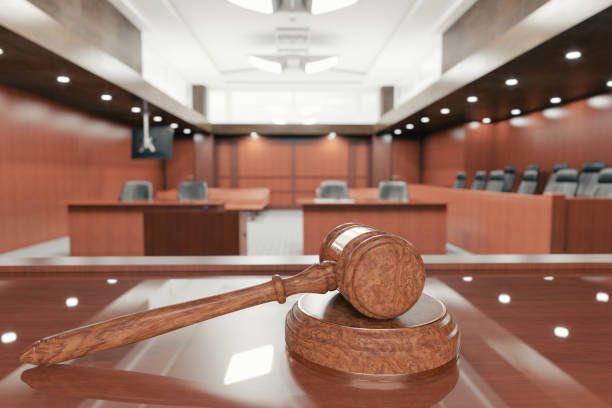
We sat in one of those generic courtrooms that all look identical – blonde wood, beige walls, humming fluorescent lights. Arizona’s state seal loomed over the judge’s bench like a watchful eye. The air smelled of stale coffee, old carpet, and broken dreams.
I sat in the witness section wearing my best navy blazer like armor, hands folded so tightly my knuckles had gone white. Across the room at the defendant’s table, my sister Briana looked small and defeated in a gray cardigan that made her seem like a faded version of herself. Her expensive lawyer sat beside her, all silver hair and tailored confidence.
Behind her in the front row sat my parents like a personal cheering section. When they’d first walked in, some stupid part of me thought they were there for me – for support, for their younger daughter whose identity had been stolen and future derailed.
Then they walked straight past my row without a glance and took seats directly behind Briana. Mom reached forward to squeeze her shoulder. Dad leaned in to whisper to her lawyer.
They didn’t look at me once. I might as well have been invisible.
The Charges
The arraignment moved quickly at first. The clerk read the charges in a monotone voice that made felonies sound like a grocery list.
“Count one: identity theft. Count two: fraudulent use of credit card. Count three: fraudulent use of credit card…”
Seven credit cards. Two personal loans. All opened in my name. All maxed out or in default.
When asked for her plea, Briana’s voice was barely audible.
“Not guilty.”
It should have made me furious. Instead, I just felt tired – like I’d been holding my breath for weeks and my lungs were finally giving up.
Then her lawyer stood and changed everything.
“Your Honor, we have character witnesses who’d like to speak on Ms. Carter’s behalf. Her parents, Richard and Linda Carter.”
The prosecutor didn’t object. Character witnesses were unusual at arraignment, but not forbidden. Judge Patricia Coleman glanced at the file, then nodded.
“Very well. Mrs. Carter, please take the stand.”
Mom moved like someone stepping into a spotlight she’d always known was hers. She smoothed her pale blue dress, squared her shoulders, and walked to the witness box with practiced grace.
Then she placed her hand on the Bible and began to lie.
The Character Assassination
“My daughter Briana made a mistake,” Mom said, her voice trembling with just the right amount of emotion. “She’s not a criminal. She’s a good girl who got in over her head.”
My jaw clenched at those words. Good girl. They dug under my skin like splinters.
“And my other daughter, Opal…” Her eyes found mine across the courtroom, suddenly hard and cold. “Opal has always been vindictive. She holds grudges. She doesn’t forgive. She’s using this situation to destroy her sister – to destroy our family – over money.”
Vindictive.
The word hit like a physical slap. My ears rang. I stared at the woman who had packed my school lunches, brushed tangles from my hair, kissed scraped knees better. The woman who’d told me countless times how “independent” I was, how “strong,” how “low maintenance.”
Now she was looking at me like I was the villain in her story.
Dad’s testimony was shorter but cut just as deep.
“Briana was going to pay it back,” he said firmly. “She told us she would. Opal never gave her a chance. She went straight to the police without trying to work things out as a family.”
A complete lie. I had tried to work it out. I had begged them to help.
But witnesses don’t get to stand up and shout objections, so I sat there swallowing the metallic taste of betrayal while my own parents rewrote history.
When Dad stepped down, the courtroom fell silent. Judge Coleman leaned back in her chair, removed her glasses, and studied the file in front of her with careful attention.
“Mr. and Mrs. Carter,” she said finally. “Please remain standing.”
Something in her tone made every hair on my neck stand up.
My parents stood side by side, hands almost touching, ready to defend their position. Mom’s chin lifted with familiar defiance. Dad stared at the judge’s chest, avoiding direct eye contact.
“I’ve heard your testimony,” Judge Coleman said evenly. “You believe your daughter Briana made a mistake and deserves leniency. You believe your daughter Opal is acting out of vindictiveness rather than legitimate grievance. Is that correct?”
“Yes, Your Honor,” Mom said quickly. “That’s exactly—”
“I wasn’t finished, Mrs. Carter.”
The interruption cut through the air like a blade. Mom’s mouth snapped shut.
The judge adjusted a paper on her desk, then looked up with sharp, tired eyes – the eyes of someone who’d witnessed this exact scene too many times to count.
“I have one question for both of you.”
The entire courtroom seemed to lean forward. Even the air felt thinner. My heart hammered so loudly I was sure everyone could hear it.
“If you believe your daughter Opal is being vindictive for reporting this crime,” she said slowly, “if you believe she should have handled this privately within the family…”
She paused, letting the words hang heavy in the air.
“At any point in the last four weeks, did either of you offer to pay off the seventy-eight thousand dollars of debt that your daughter Briana created in Opal’s name?”
The Question That Changed Everything
The question landed like a bomb in the silent courtroom.
For a moment, Mom looked genuinely confused, like the judge had suddenly started speaking in tongues. Her lips parted but no sound came out. She turned to Dad as if he might have the answer written on his forehead.
Dad’s gaze dropped to the floor.
Five seconds passed. Ten. The silence stretched unbearably.
The judge didn’t move. She just waited.
“We—we don’t have that kind of money,” Mom finally stammered, mascara beginning to smear at the corners of her eyes. “We can’t just—”
“I didn’t ask if you have the money,” Judge Coleman said quietly. “I asked if you offered.”
My mother froze like a deer caught in headlights.
The judge’s voice remained calm, controlled. “Did you offer a payment plan? Did you offer to cosign a loan? Did you offer anything at all to help your daughter Opal – the one whose credit was destroyed, whose future was put on hold, whose identity was used without consent?”
Mom’s lower lip began to quiver. Her hands, clenched at her sides, started shaking visibly.
“Did you even ask,” the judge continued relentlessly, “how she was doing?”
That’s when my mother completely broke down.
Not the calculated tears she’d shed while talking about poor, fragile Briana. This was raw, full-bodied sobbing. Her shoulders jerked. Her breath hitched. Ugly, wet sounds tore from her chest, echoing off the courtroom walls.
For the first time in my memory, she looked completely lost.
And sitting there watching her finally stripped of her script, I felt something warm flood through me.
Validation.
Someone had finally said out loud what I’d been screaming inside my head for weeks: You didn’t help me. You didn’t even try.
Four Weeks Earlier
I hadn’t always known that truth. Once upon a time, I truly believed I could count on my family – on my parents, on my sister, on the thin rope of “family loyalty” to catch me when I fell.
That life felt like it belonged to someone else now, but it wasn’t long ago.
Four weeks, to be exact.
Four weeks earlier, my phone buzzed on a Tuesday morning while I was brushing my teeth in my tiny Phoenix studio apartment. The screen lit up with a notification I usually ignored:
CREDIT SCORE ALERT: YOUR SCORE HAS CHANGED.
I’m the kind of person who reads privacy policies for fun, balances her checking account to the penny, catches three-dollar errors on restaurant bills. My credit score was like my resting heart rate – steady, predictable, boring.
Still, habit made me tap the notification.
The number that appeared made me drop my toothbrush in the sink.
My brain tried to convince me I was reading it wrong. Maybe the numbers had somehow rearranged themselves. Maybe this was an elaborate glitch and my real score – my careful, hard-earned 780 – was hiding somewhere just off-screen.
It wasn’t.
The number staring back at me was 412.
Credit scores don’t fall 368 points because you forget a phone bill. That kind of catastrophic drop meant something terrible had happened.
With shaking fingers, I pulled up my full credit report.
Seven credit cards I’d never opened. Two personal loans I’d never applied for. All in my name. All maxed out or in default. Total outstanding debt: $78,047.
The numbers blurred as panic set in. I sat heavily on my closed toilet seat because standing suddenly felt impossible.
I called the first number on the report – Capital One customer service.
“There’s been a mistake,” I told the pleasant-voiced woman who answered. “My credit report shows I have an account with you, but I don’t. I’ve never had a Capital One card in my life.”
After getting my information, she returned with devastating news: “Ma’am, I show seven open accounts under your Social Security number. One with us, four with other major issuers, two personal loans. All in good standing until about two months ago.”
My stomach lurched. “I didn’t open any of those. Can you read me the billing address on file?”
Another pause. Then: “The primary billing address is…” She read off my parents’ address. The house I’d grown up in.
The room began to spin.
The Trail of Evidence
By afternoon, I’d called every creditor. Same story everywhere: accounts in my name, under my Social Security number, billing address at my parents’ house, charges dating back eighteen months.
By 4 PM, I’d spoken to my mortgage broker. The pre-approval for the modest condo I’d been planning to buy – the one with a tiny balcony and a sliver of sky – had been rescinded. My credit score was now too low to qualify for any loan.
By 6 PM, I’d accessed one of the credit card accounts online using my personal information – information someone clearly already had.
The transaction history read like a luxury lifestyle blog.
Nordstrom. Sephora. A resort in Sedona. First-class flights to Vegas. High-end spas. Designer restaurants. Boutique shopping sprees.
For a while, confusion protected me from the full horror. Maybe it was identity theft by a stranger who happened to know my parents’ address.
Then I opened Instagram.
Briana’s profile was public, naturally. She’d never met attention she didn’t crave. I scrolled back through months of carefully curated posts.
A charge at Nordstrom on March 15th. A selfie from March 16th: Briana in a mirror wearing a cashmere sweater with tags still attached, captioned “Treat yourself ✨”
A resort charge in Sedona in June. An Instagram story from that same weekend: champagne glasses clinking against red rock views, captioned “Canyon dreams and poolside fantasies “
Over and over, the dates on my fraudulent statements matched her posts exactly. New shoes, spa days, weekend getaways, shopping hauls spread across her bed like confetti made of money and selfishness.
She hadn’t even tried to hide it.
Then I found the transaction that shattered something inside me.
September 23rd – my birthday. A $3,200 charge at Gucci in Scottsdale.
My throat constricted. I scrolled through her posts with shaking hands until I found it: September 24th, Briana posing with a gleaming Gucci bag, sunlight catching the gold hardware. Her caption: “Sometimes you just have to spoil yourself #LivingMyBestLife”
She’d bought that bag on my birthday. With a credit card in my name.
I worked sixty-hour weeks. I packed lunches, used coupons, said no to friends’ weekend trips because I was saving every penny for a down payment. I’d worn the same pinching black heels to professional events for three years because they were still “technically fine.”
I had sacrificed so much, for so long, to build something stable.
And my sister had treated all that work like her personal ATM.
The Confrontation
I drove to my parents’ house that night, gripping the steering wheel so tightly my fingers cramped. Her silver hatchback sat in the driveway next to Dad’s truck.
I used my key – Mom had insisted I keep one “for emergencies.”
This qualified.
Briana was sprawled on the living room couch scrolling her phone, feet up on the coffee table I’d helped Dad refinish one Christmas. She glanced up when I walked in, her expression shifting from relaxed to wary.
“Hey,” she said carefully. “What are you doing here?”
I didn’t sit. I didn’t take off my shoes. I stood on the threshold between the tile entryway and carpet and felt something inside me crystallize.
“Did you open credit cards in my name?”
Her face flickered through confusion, recognition, calculation – all in the space of a heartbeat. Then she laughed, the sound brittle and false.
“What? No. That’s crazy. Why would I do that?”
“The billing address for all of them is this house,” I said. “The application IP addresses trace here. The purchases match your Instagram posts perfectly.”
I held out the printed statements and screenshots I’d prepared.
Briana’s eyes slid to the papers, then back to my face. Her smile vanished completely.
“Oh my God, Opal, you’re being so dramatic,” she said. “Fine, okay. Yes, I opened one card. Maybe two. I was going to pay them back.”
“Seventy-eight thousand dollars,” I said, my voice eerily calm. “You stole seventy-eight thousand dollars using my identity.”
“You don’t understand how hard it’s been for me,” she snapped, color rising in her cheeks. “My hours got cut. My car needed repairs. Rent went up. I was drowning!”
“So you bought a Gucci bag on my birthday.”
The accusation hung in the air between us. Her face flushed deeper.
“I wanted something nice!” she burst out. “You have a real job! You have savings! You never help me, Opal. You just sit on your money and judge me while I struggle.”
“I don’t sit on my money,” I said. “I worked for every dollar. I saved it. That’s the entire point.”
“You’re my sister,” she said, desperation creeping into her voice. “It’s not stealing if it’s family.”
Behind me, I heard footsteps on tile.
“What’s going on?” Mom’s voice carried from the kitchen, sharp with concern. “Why are you shouting?”
She appeared a moment later with Dad trailing behind, both looking alarmed by the tension crackling through the room.
“Opal?” Mom said, scanning my face. “What’s wrong?”
“She’s accusing me of stealing,” Briana choked out, tears flooding her eyes on cue – a skill she’d perfected by age seven. “Can you believe that? Her own sister.”
“I’m not accusing you,” I said steadily. “I’m telling you what you did. Seven credit cards, two loans, seventy-eight thousand dollars. All in my name. I have documentation tying everything to this address.”
The room fell silent except for the hum of the ceiling fan.
Mom looked at me, at the papers in my hand, at Briana’s tear-streaked face.
“Briana,” she said slowly. “Is this true?”
For one desperate moment, I hoped this would be it – the moment my parents would step up and say what parents are supposed to say: “This is wrong. You have to fix it. You can’t treat your sister like this.”
Instead, Briana sniffled and whispered, “I opened a few cards. But I was going to pay them back. I just needed time. I didn’t think it would matter. Opal always lands on her feet.”
I watched Mom’s heart tilt toward her like a flower toward sunlight.
“She didn’t steal anything,” Mom said, turning to me with that familiar dismissive tone. “She borrowed without asking, yes, and that’s wrong, but—”
“Without asking, using my Social Security number, for eighteen months,” I interrupted. “That’s not borrowing. That’s identity theft.”
“Opal,” Dad said, stepping forward with his hands raised. “Lower your voice.”
“No,” I said. The word felt huge in my mouth. “You don’t get to shush me. She destroyed my credit. I lost my apartment – the one I’d been saving for for years. Do you understand that? Years of work, gone.”
Dad’s eyes darted away uncomfortably. Mom frowned like I’d complained about a hangnail.
“Credit can be fixed,” she said. “There’ll be other apartments. We can handle this quietly, as a family.”
“Quietly?” I repeated. “How?”
Mom glanced at Briana, then back at me. “You can pay it off slowly. You make good money, Opal. This doesn’t have to be a catastrophe.”
The world went very still. I heard the refrigerator hum, the ceiling fan tick, a car pass outside. And underneath it all, something familiar and hollow bloomed in my chest – that old feeling of being the child who would always “figure it out.”
“Okay,” I said carefully. “If you don’t want me to go to the police, then help me. Sign a legal agreement that Briana will pay me back. You, Dad, and Briana together. Get it notarized. Give me some accountability without criminal charges.”
Mom recoiled like I’d suggested carving the agreement into her skin.
“We don’t have that kind of money,” she said. “We can barely cover our own bills.”
“I’m not asking for a lump sum,” I said, fighting to keep my voice level. “I’m asking for a plan. Some kind of responsibility.”
“I can’t sign anything,” Briana cut in, her tears magically dried. Her eyes were flat now, calculating. “I’m not committing to something when I don’t know if I can follow through. What if I lose my job? You’d sue me? Drag me to court?”
“You already made me a victim of multiple felonies,” I pointed out.
Dad shifted uncomfortably. Mom stared at the carpet. The silence stretched unbearably.
“So your solution is what?” I asked finally. “I pay for everything? I sacrifice years of my life, my plans, my future, so Briana doesn’t face any consequences for committing crimes?”
Mom sighed the way she always did when she thought I was being unreasonable.
“You’ll figure it out, Opal,” she said. “You always do.”
The Breaking Point
That sentence was a time machine, flinging me back through decades of being the “easy” child, the one who didn’t need attention or money or comfort. The daughter who could be ignored because she’d “figure it out.”
They’d said it like a compliment my whole life. Like being low-maintenance was a virtue. I’d worn it like armor, thinking it made me special.
Now I realized it had just made me invisible.
“You’re right,” I said, my voice suddenly calm. I picked up my keys from the side table. “I will figure it out. Just not the way you want me to.”
I looked at each of them – my mother comforting the daughter who’d committed crimes, my father too cowardly to meet my eyes, my sister with her arms crossed and contempt written across her face.
“I’m done being the family’s shock absorber,” I said. “I’m done being the one who sacrifices so everyone else stays comfortable.”
I walked to the door. Nobody followed me.
Taking Action
The next morning, I took my lunch break and walked down the hall to see Marcus Reeves, a colleague who’d passed the bar exam and specialized in legal compliance.
I told him everything – the credit alert, the fraudulent accounts, the Instagram evidence, the confrontation, my family’s refusal to help.
“What your sister did is a crime,” he said when I finished. “Multiple felonies. The fact that you’re related doesn’t make it legal or less serious.”
He gave me the number for Phoenix PD’s Financial Crimes Unit.
I stared at that number for hours before finally calling.
Detective Angela Ford met me in a small office that smelled of coffee and disappointment. I handed over credit reports, screenshots, text messages where Briana had collected my personal information under false pretenses.
“This is a clear pattern,” she said after reviewing everything. “We’ll open a case. Once we have enough evidence, we’ll send it to the DA for charges.”
“How long will that take?”
“A few weeks. But there’s plenty to work with here.” She looked up at me seriously. “This is going to get difficult. Family cases always are. People change their minds about testifying.”
“I’m not changing my mind,” I said.
She studied me for a long moment. “Good. You’re doing the right thing.”
The Family’s Reaction
It didn’t feel like the right thing when Mom called me two days later, screaming.
“You did what?” Her voice crackled through my phone like static. I was standing in a grocery store produce section, hand frozen over a pile of avocados.
“I filed a police report,” I said quietly. “I had to—”
“She’s your sister!” Mom snapped. “You don’t send your own sister to prison!”
“I’m not sending anyone anywhere. I’m reporting crimes. They’ll decide what happens next.”
“I can’t believe this,” she said. “After everything we’ve done for you. We raised you better than this.”
The irony was almost funny. “You raised me to put everyone else first. To be the ‘easy one.’ To clean up messes I didn’t make while calling it love.”
“If you don’t drop those charges,” her voice turned icy, “you’re no longer welcome in this family.”
For a second, I couldn’t breathe. Then something cracked cleanly inside my chest.
“Okay,” I said.
She hadn’t expected that. “Okay?”
“Those are your terms. I’m choosing mine.”
I hung up before she could respond.
Three days later, Dad texted: Family meeting. Sunday, 2 PM. Please come.
The Tribunal
I almost didn’t go. But some small, hopeful part of me wondered if maybe they’d reconsidered. Maybe they’d apologize and say the words I’d been waiting for: We’re sorry. We believe you. We’ll help.
When I walked into their living room, it was packed.
Not just Mom, Dad, and Briana. Aunt Carol perched on the loveseat with thin lips and folded arms. Uncle Pete hulking in Dad’s recliner. Grandma June in her wheelchair, eyes already narrowed in judgment. Cousin Derek leaning against the wall. Other relatives I only saw at holidays.
A tribunal.
“Sit down, Opal,” Mom said flatly.
I stayed standing.
“We’ve all heard what you’re doing,” Aunt Carol began without preamble. “Dragging your sister through the mud. Involving courts. It’s disgraceful.”
“Briana made a mistake,” Uncle Pete chimed in. “We all make mistakes. You’re going to ruin her life over money?”
“Money can be replaced,” Grandma added. “Family can’t.”
I scanned the room, hoping for one sympathetic face. There weren’t any.
Briana sat by the window backlit by afternoon sunlight, tears glistening strategically. Mom hovered beside her like a bodyguard.
“Look at her,” Mom said, pointing. “Look what you’re doing to your own sister. She’s a wreck. She can’t sleep or eat properly.”
I looked at the woman who’d spent eighteen months using my identity like a credit card. Who’d refused to sign a single document promising repayment when confronted.
“I didn’t do this to her,” I said. “She did it to herself.”
“You went to police without coming to us,” Dad said accusingly.
“I did come to you. I asked for help with a repayment plan. You refused.”
“That’s not fair,” Mom snapped. “We told you we don’t have that money.”
“I didn’t ask for cash. I asked you to stand beside me. To tell Briana what she did was wrong.”
Silence filled the room except for the ceiling fan’s soft ticking.
“Why are you being so vindictive?” Aunt Carol finally asked.
“Because I refuse to pay for crimes I didn’t commit,” I said. “Not for anyone. Not even family.”
“You’re destroying this family,” Mom whispered.
“If the only way this family survives is by me being financially destroyed, then it’s not a family. It’s a parasite. And I’m tired of being the host.”
Dad’s face crumpled momentarily before smoothing out again. “Can’t you drop it… for me? For my peace of mind?”
There it was. Not for justice. Not for what was right. For his comfort.
“No,” I said. The word came easier this time.
“If you walk out that door,” Mom said, pointing dramatically, “don’t come back. You are no longer part of this family.”
I looked around the room one final time – at faces that resembled mine but had turned away, at people who found it easier to call me vindictive than call my sister accountable.
“I’ve been the daughter who doesn’t need anything my whole life,” I said. “You’ve loved that about me because it made me easy to ignore. But I will not be the daughter who pays for crimes she didn’t commit just to keep everyone else comfortable.”
I picked up my bag and walked to the door. No one followed.
As it closed behind me, I heard Mom start crying – loud, ragged sobs that sounded like grief.
Not grief for me. Grief for the collapse of a story where Briana was fragile and I was the uncomplaining safety net.
The Investigation
In the weeks that followed, there was only silence from my family. No calls, no messages. Briana blocked me on every platform like I was the criminal.
The only person who called was Detective Ford.
“We’ve completed our investigation,” she said one afternoon. “The DA is moving forward with charges. Your sister’s arraignment is next Thursday.”
My heart hammered against my ribs. “What’s she being charged with?”
“Identity theft, multiple counts of credit card fraud, attempted mail fraud. She redirected billing statements to a PO box for a while.” Angela paused. “There’s something else. We found another victim.”
The world tilted. “What?”
“A former roommate from six years ago. Same pattern, smaller scale. Few thousand dollars, same methods. That victim never pressed charges – wrote it off as a ‘falling out.'”
I gripped my phone tighter. “So it wasn’t just me.”
“No. You’re just the first one who said ‘enough.'”
Back to the Courtroom
Which brings me back to that courtroom, watching my mother cry as Judge Coleman’s question hung in the air like an accusation.
Did you offer to help her?
The answer was written in Mom’s tears, in Dad’s inability to look up, in the weeks of silence after I’d begged them to stand beside me.
“In all the testimony I’ve heard today,” Judge Coleman continued, still looking at my parents, “I’ve heard about how you feel about Briana’s future. I’ve heard almost nothing about Opal’s.”
Mom’s shoulders shook harder.
“You’ve asked this court to show mercy to the daughter who committed fraud,” the judge said. “But I see no evidence you showed mercy to the daughter who was defrauded. That is… troubling.”
She turned to Briana then. “Ms. Carter, you’ve pled not guilty. The evidence against you is substantial. This case will proceed to trial. I strongly suggest you speak with your attorney about a plea agreement.”
Her tone made it clear that “suggestion” meant “inevitability.”
Bail was set with conditions: no contact with me, regular check-ins, surrender of passport. The gavel came down.
As the room buzzed back to life, Briana finally turned to look at me. There was no apology in her eyes. No shame. Just cold, hard hatred, like I was the one who’d broken into her life.
In that moment, whatever was left of the sister I thought I had died completely.
Justice Served
Six weeks later, Angela called with news.
“She took the deal,” she said. “Pled guilty to identity theft and credit card fraud. Two years suspended sentence, five years’ probation, 200 hours community service, and full restitution.”
“Full restitution?”
“She has to pay you back. The entire seventy-eight thousand plus interest, structured as monthly payments. At her current income, you’re looking at ten years, maybe more.”
There was also a no-contact order. Any attempt to reach me would activate her suspended prison sentence.
“And the felony conviction?”
“It’s permanent. Background checks, job applications, rental applications – she’ll feel this for a long time.”
I thought of the Gucci bag, the resort weekends, the casual way she’d tossed around “treat yourself” like a life philosophy.
“Good,” I said. The flatness of my own voice surprised me.
Rebuilding
Three days after sentencing, Dad called.
“Can we talk?” he asked, his voice smaller somehow. “Just us. No one else.”
We met at a coffee shop halfway between our houses. He looked older, more fragile, like someone had erased parts of his familiar outline.
“I’m not here to speak for your mother,” he said as soon as I sat down. “She’s not ready. May never be.”
I waited.
“I just needed to tell you – I know I failed you. At the house, in court. I should have stood up for you at least once. I knew what Briana did was wrong. I knew what we were asking you to accept was impossible. I just didn’t know how to fix it.”
“You didn’t need to fix it,” I said quietly. “You just needed to stand beside me.”
He winced. “I know. And I didn’t. I’m sorry, Opal. It’s not enough, but I am.”
It wasn’t the cinematic apology I’d fantasized about in weaker moments. He didn’t defend Mom or condemn Briana. He sat in the uncomfortable middle where reality lives.
I told him my boundaries: “I won’t attend anything where Briana’s present. Holidays, birthdays, whatever. You can call me. We can try to build something. But we’re not discussing her. And if Mom wants to talk, it has to be without blaming me.”
He nodded, eyes shiny. “Okay. I can respect that.”
We sat sipping lukewarm coffee, each holding the edges of a relationship that had been damaged but not completely destroyed.
Moving Forward
In the months that followed, my life slowly began to uncoil from the knot it had been twisted into.
The first restitution check arrived – $472, an almost comically small amount against the total debt. But I deposited it into my savings account and felt something shift inside me.
My credit score crawled upward with agonizing slowness. 412 became 460, then 520, then 580. Each incremental climb felt like rebuilding a wall that had been demolished, brick by careful brick.
I started therapy. We talked about childhood, about being labeled “the independent one” at nine years old, about learning that love meant being invisible and calling it strength.
“Why do you think Briana did what she did?” my therapist asked one session.
“Because she’s selfish,” I said automatically.
“Do you really believe that?”
I thought about Briana at six, clinging to Mom’s leg over dried-out glitter glue. At twelve, failing a test and watching Mom storm into school to argue with teachers instead of helping her study. At sixteen, not making varsity cheer and having our parents spend weeks soothing her disappointment.
“I think she’s broken,” I said slowly. “She’s never had to build anything real. Mom and Dad always made sure she didn’t hit the ground. When things got hard, she reached for what she’d always done – someone else to carry her.”
“That doesn’t excuse what she did.”
“I know. Understanding isn’t the same as forgiving.”
At work, my boss called me into her office one day.
“I heard you had a rough few months,” she said. “I don’t need details. I just wanted to say I’m impressed by how you handled it. Most people would have disappeared. You kept showing up, communicated with HR, asked for help when needed. That takes integrity.”
She offered me a promotion – senior staff accountant with a raise and more authority in risk management meetings.
I accepted without hesitation.
Six months after sentencing, I sat at my kitchen table filling out paperwork for a different condo. Not the one with the balcony I’d lost, but another. Smaller, farther from downtown, but with a patch of sky that would be mine.
My credit wasn’t perfect yet, but it was enough. The lender looked me in the eye and said, “We can work with this.”
As I signed my name, something in my chest finally unclenched.
The Question That Matters
People ask me sometimes if I regret it. If I regret filing the report, pushing when family begged me to back down, watching my mother cry in a courtroom as a judge held up a mirror to her choices.
Some nights, when the silence from Mom aches like a missing tooth, I do wonder if there was another way. Maybe if I’d been more patient, more forgiving.
Then I remember sitting on my bathroom floor staring at that 412 credit score. I remember Mom saying “You can pay it off slowly.” I remember the tribunal pointing fingers and calling me vindictive for refusing to be financially destroyed.
And I remember that question in the courtroom: Did you offer to help her?
They hadn’t. They wouldn’t have. If I had chosen to “keep the peace,” the only peace I would have preserved was their comfort while I carried the weight in silence.
Now, when people call me vindictive for protecting myself, I ask them the same question Judge Coleman asked my parents:
What did you offer to help me?
If the answer is nothing, you know everything you need to know.
I have my own place now. A mortgage in my name only. Quiet evenings with city lights flickering on my ceiling. I hum while cooking dinner for one and feel, for the first time in my life, truly at home.
Not because everyone around me is comfortable, but because I am safe. Because I chose myself.
And if there’s one lesson I want anyone reading this to take away, it’s this:
You are allowed to stop being the “easy one.” You are allowed to say no to people who share your DNA. You are allowed to walk away from anyone who looks at your life – your savings, your stability, your peace – and sees a resource instead of a person.
They will call you vindictive for protecting yourself. They will call you heartless, ungrateful, dramatic.
Let them.
Ask them what Judge Coleman asked my parents.
What did you offer to help me?
If the answer is silence, you already know who the real villain in your story is.
Sometimes the people who should protect us are the ones we need protection from. Sometimes walking away isn’t abandonment – it’s survival. And sometimes the most loving thing you can do is refuse to enable someone else’s destructive choices, even when that someone is family.

Lila Hart is a dedicated Digital Archivist and Research Specialist with a keen eye for preserving and curating meaningful content. At TheArchivists, she specializes in organizing and managing digital archives, ensuring that valuable stories and historical moments are accessible for generations to come.
Lila earned her degree in History and Archival Studies from the University of Edinburgh, where she cultivated her passion for documenting the past and preserving cultural heritage. Her expertise lies in combining traditional archival techniques with modern digital tools, allowing her to create comprehensive and engaging collections that resonate with audiences worldwide.
At TheArchivists, Lila is known for her meticulous attention to detail and her ability to uncover hidden gems within extensive archives. Her work is praised for its depth, authenticity, and contribution to the preservation of knowledge in the digital age.
Driven by a commitment to preserving stories that matter, Lila is passionate about exploring the intersection of history and technology. Her goal is to ensure that every piece of content she handles reflects the richness of human experiences and remains a source of inspiration for years to come.