Three Empty Seats
The PowerPoint slides glowed in the darkness of my Boston studio apartment.
It was 4:03 a.m. My laptop balanced on three textbooks because I’d never bought a proper desk riser. On the screen: slide 42 of 46. “Future Directions: Translational pathways for neural interface rehabilitation.”
The content was sharp, polished—months of research distilled. But it wasn’t the science that made my stomach knot. It was who I’d imagined sitting in the front row.
Three seats.
I could see them: Mom in a floral dress, Dad awkward in a suit, Christopher slouched but secretly proud.
My gaze drifted to the framed shadow box on my bookshelf. Three printed tickets lined up side by side. Above them, a kindergarten photo—five-year-old me in a paper cap, holding a certificate. Written in marker: “I’m going to be the smartest scientist ever!” Mom’s handwriting.
I remembered that day. Church basement, orange juice, glue sticks. Mom had crouched to my height and laughed at my declaration. “Our little genius. You’ll show them all, Izzy.”
Twenty-two years later, I’d done it. PhD in biomedical engineering from MIT at twenty-seven, youngest in my cohort. Research on neural interfaces that could help paralyzed patients walk again. Job offers with salaries that made my loans look manageable.
And three front-row tickets.
Tickets I’d mailed six months earlier with a carefully worded note. Then I’d framed the extras like a talisman. Proof I’d invited them.
My phone buzzed.
Christopher: Hey sis. Crazy news. I’m proposing to Amber tomorrow.
Tomorrow. My graduation.
Christopher: Mom’s throwing a surprise party after. You’ll be done with your thing by 3, right? Party starts at 4.
My “thing.” My PhD graduation where I was valedictorian.
I opened my calendar. Ceremony: 2:00 p.m. Would run until 4, probably later. Then reception—crucial for career connections.
Me: Chris, my ceremony goes until at least 4. The reception is really important for my career. It’s my PhD graduation.
Three dots appeared, disappeared, appeared.
Christopher: Don’t be selfish. It’s a huge day for Amber. We’ve been planning this forever.
Selfish.
The word sliced through me like a scalpel, sharp and precise.
I sat there in the darkness, phone glowing in my trembling hand, and thought about everything I’d been called over the years. Driven. Intense. Nerdy. Overachiever. Selfish was a new and devastating addition to the collection.
Selfish.
Like spending my entire twenties in laboratories while my family posted beach selfies from vacations I never had time to join because experiments don’t pause for holidays.
Selfish.
Like missing three Christmases in a row because my research protocols ran on schedules that didn’t care about family traditions or roasted turkey or opening presents.
Selfish.
Like choosing to fly to an international biomedical engineering conference in Boston when they’d said, voices full of regret but no offers to help, “Money’s tight right now, honey. We’ll cheer you on from home.”
I could see it all suddenly, a montage of missed moments overlaying the present like a double exposure: the time I’d won the prestigious National Science Foundation graduate research fellowship and gotten a congratulatory text message sandwiched between seventeen messages about Christopher’s baseball game; the way Mom’s face lit up like stadium lights when she talked about his promotions at work, his girlfriends who might be “the one,” his wedding plans, as if my achievements were interesting but somehow supplementary, like optional footnotes to the main text of our family story.
Golden boy and invisible girl. The family narrative, written early and revised only reluctantly, edited only in the margins.
My thumbs hovered above the keyboard, paralyzed by everything I wanted to say.
I wanted to write: You’re proposing to your girlfriend on my graduation day?
I wanted to write: How did Amber’s birthday party become more important than my doctorate?
I wanted to write: Do you even understand what this degree cost me? Do you understand that I haven’t had a full night’s sleep in three years? Do you know how many times I’ve cried in lab bathrooms? Do you have any idea what I sacrificed?
Instead, I stared at the shadow box on my shelf. At the three tickets that would go unused. At five-year-old me beaming at the camera with nothing but absolute belief in the world’s fairness and goodness.
I typed:
Me: I’ll try.
A lie. We both knew it. A polite fiction we maintained for appearance’s sake.
I set my phone down and went back to slide 42, but the words had lost all meaning. Closed-loop feedback, neural plasticity, signal fidelity—they blurred into nonsense syllables, into sounds without substance. For the first time in months, I saved my work automatically and shut my laptop with more force than necessary. The room plunged into darkness so complete it felt like drowning.
I lay back on my bed, staring at the faint cracks in the ceiling that looked like a map of some undiscovered country, and listened to my own breathing. In, out. In, out. The rhythm of survival.
I thought about the ways we measure love, the metrics we use. Some people count hugs received and given. Others count gifts exchanged, their monetary value carefully calibrated. I’d learned over the years to count miles driven, plane tickets purchased, time taken off work, games attended, recitals watched, ceremonies witnessed. I measured love in presence, in showing up, in being there when it mattered.
By that metric, my family’s ledger had always been catastrophically lopsided.
When sleep finally came, it arrived in restless fragments. I dreamed of an auditorium filled with strangers, my voice echoing in a vast empty space, bouncing off hollow, unoccupied chairs that stretched infinitely in all directions.
Graduation morning began with light and silence in equal measure.
The light came first, thin and watery through the slats of my blinds, the kind of uncertain spring light that couldn’t decide if it wanted to be warm or cold. Then the silence sank in, denser and more complete than anything I’d known in months. No alarms—I’d disabled those last night, trusting my body to wake itself. No clatter of my neighbor’s industrial-strength coffee grinder—apparently even he respected graduation day sleep-ins. No traffic noise from the street below, as if the city itself was holding its breath.
My phone blinked on the nightstand. Five notifications. Emails, social media reminders, calendar alerts. One text message.
I knew before I opened it. Some part of me had known since Christopher’s message last night, had been bracing for this inevitable conclusion.
I showered, letting the water run hotter than comfortable until my skin turned pink, and blow-dried my hair for once instead of twisting it into the wet bun that had become my default style. I set out my makeup on the tiny bathroom counter like surgical instruments arranged before an operation. Foundation, concealer, mascara, eyeliner, the berry-colored lipstick my labmates had insisted I buy last month “for special occasions when you need to look like you have your life together.”
“This is a special occasion,” I muttered to my reflection, trying to convince myself as much as the woman staring back at me from the mirror.
MIT’s red and gray doctoral hood lay neatly folded on my bed beside the black gown and mortarboard cap. They looked heavier than they actually were, as if nine years of effort and sacrifice had been woven directly into the fabric itself, as if the weight of all those sleepless nights and failed experiments had physical mass.
As I drew a careful line of eyeliner along my lid, my phone buzzed against the counter.
Mom.
My stomach clenched even before I read the message, even before I saw the words that would confirm what I already knew in my bones.
Mom: Honey, small hiccup.
The first three words told me everything.
I kept reading anyway, unable to stop myself, like probing a sore tooth with your tongue.
Mom: Amber’s family can only do the party at 2. We’ll watch your graduation online! Dad set up the computer and everything. We’re so proud of you!
The mirror reflected a face caught between expressions—lipstick half-applied, eyeliner wing slightly uneven, eyes wide and blank with shock that shouldn’t have been shock at all.
They weren’t coming.
Again.
After all the promises, after all the carefully mailed tickets, after all my pathetic hoping—they weren’t coming.
I sat down heavily on the closed toilet lid because my knees suddenly didn’t feel reliable, didn’t feel capable of supporting my weight. The tile was cold through the thin fabric of my pajama shorts. My phone felt impossibly heavy in my hand, as if disappointment had actual measurable weight.
They weren’t coming to MIT. They weren’t coming to see me walk across that stage. They weren’t coming to see me become Dr. Isabella Martinez. They were going to a surprise engagement party for my brother’s girlfriend instead, a woman who’d been in our family for exactly eight months.
I scrolled up through our text conversation, as if some earlier message would contradict this one, as if I could find evidence that this was a mistake or a bad joke. Wedding photos of Christopher’s teammate’s ceremony last summer. A picture of Mom’s cousin’s new baby. A blurry action shot from a baseball field taken from the bleachers. Then, from six months ago, a message from me: Hey, just mailed your tickets for my graduation!! with three exclamation points that now looked desperate and pathetic.
Mom’s reply: Wouldn’t miss it for the world ❤️
Apparently “the world” included Amber’s party schedule.
I opened my keyboard, thumbs hovering over the glass screen.
I typed: You promised.
Deleted it.
Typed: I reserved front row seats for you.
Deleted it.
Typed: I’m hurt. I’m so incredibly hurt.
Deleted that too.
What came out instead, after several false starts, was:
Me: Oh. Okay. The auditorium will be packed. Hope the livestream works okay.
I stared at the fake cheerfulness, at the accommodating tone, until the words blurred. Then I hit send before I could second-guess myself.
I finished my makeup with mechanical precision, my hands steady even when my breathing wasn’t. Foundation blended, powder set, blush applied. I slicked on the berry lipstick, blotted it carefully with tissue, and smiled experimentally at my reflection like I was practicing for a performance.
“You did this for you,” I told the woman in the mirror, trying to make the words mean something. “You did this for the kid in the garage building robots out of scrap metal and wire. You did this for the patients who can’t walk yet but might someday because of your research. You did this for every person who told you science was too hard, too lonely, too much sacrifice.”
The woman in the mirror looked unconvinced but determined.
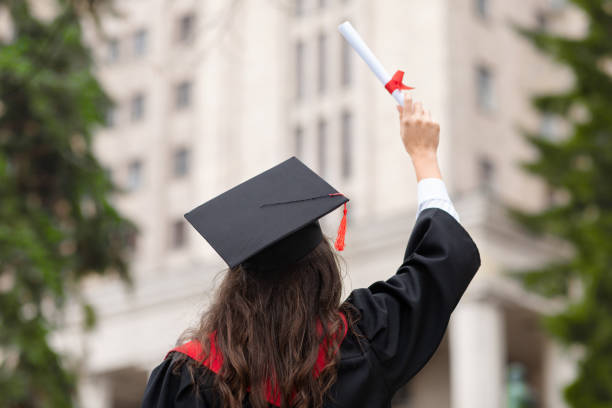
I pulled on the gown, feeling the unfamiliar weight settle over my shoulders like a mantle of responsibility. The hood followed, red and gray against black, the colors of the institution that had been simultaneously my crucible and my sanctuary for nine years. When I placed the cap on my head, securing it with bobby pins that bit into my scalp, the image of my kindergarten paper hat flashed unbidden across my mind. Full circle, except nothing felt complete.
By the time I left my apartment, my phone had lit up with messages from friends and labmates.
Sarah: Meet by the dome at 1?
Marcus: Proud of you, Doc!!
Rachel: We’re going to scream SO loud when you walk across that stage.
I clung to those messages like lifelines, like oxygen masks in a depressurizing cabin.
Outside, Cambridge was its usual chaotic self—bicycles weaving between cars with reckless confidence, tourists stopping at inopportune places to take photos, students in various states of hangover or existential panic. As I walked across campus in my flowing gown, strangers smiled at me. People I’d never met nodded in recognition of what the robes meant. Some gave thumbs up or called out congratulations.
“Way to go!” a woman called from a park bench, pushing a stroller with one foot while bouncing a fussy baby.
“Thank you,” I said, and meant it more than she could possibly know.
At the auditorium entrance, a volunteer handed me a glossy program. My name was there in small black letters among hundreds: Isabella Rosa Martinez, PhD, Biomedical Engineering, Valedictorian.
I traced the letters with my thumb, trying to make them feel real.
My adviser, Dr. Lila Williams, met me backstage near the heavy red velvet curtains that separated preparation from performance. She was a dignified woman in her fifties with sharp cheekbones, kind eyes, and an unshakeable belief in her students that had pulled me through more dark nights than I could count.
“There’s my star,” she said, pulling me into a quick hug that was careful of my hood placement.
“Hi, Lila,” I said, my voice coming out more fragile than I’d intended.
She pulled back, taking me in with one quick assessing sweep that missed nothing. “You look like you haven’t slept in a week.”
“I haven’t slept properly in nine years,” I joked weakly.
She smiled, then glanced past me toward the auditorium where bodies were finding seats, the murmur of a thousand conversations building. “Where’s your cheering section? I’ve been looking forward to meeting the family responsible for this brilliant menace I’ve been supervising.”
My throat tightened painfully.
“They had a conflict,” I managed. “They’re watching the livestream.”
Her expression changed subtly, like a cloud passing over the sun. She’d met my parents exactly once—nine years ago during freshman orientation when they’d dropped me off with a trunk full of secondhand clothes, a plastic bin of toiletries, and a case of off-brand ramen noodles. They’d stayed for under an hour. “We don’t want to cramp your style,” Dad had joked, already backing toward the car.
“Oh, honey,” Lila said now, her voice dropping to that particular tone of sympathy that made my eyes prickle with tears I refused to shed.
“It’s fine,” I lied automatically, the words coming out practiced from years of use. “They’re very excited. They just couldn’t make the drive today.”
“No,” she said firmly but not unkindly. “It’s not fine. But you know what is fine?”
“What?”
“You,” she said, her hand warm on my shoulder. “You and that speech you’re about to give. It’s going to be brilliant. Because that’s who you are, Isabella. That’s what you do.”
I thought of the five drafts I’d written over the past month. The first four were exactly what people expected at a ceremony like this—platitudes about perseverance and determination, carefully worded gratitude to faculty members, hopeful musings about the future of biomedical engineering and what our generation might accomplish. They were safe, polished, completely forgettable.
The fifth draft was something else entirely.
The fifth was the truth, unvarnished and uncomfortable.
I’d printed that one and folded it into the inner pocket of my gown. Even now, I could feel the crisp edges against my side like a challenge, like a dare.
“Isabella?” a stagehand called, clipboard in hand. “You’re up right after Dean Foster’s opening remarks.”
I glanced one more time toward the auditorium, toward the rows of families already settled in their seats, craning necks, waving, holding flowers and cameras and handmade congratulatory signs. My eyes found and fixated on the three empty seats in the front row, left side, exactly where I’d requested them. Reserved placards on the backs. No coats draped over them, no purses holding places, no half-eaten snacks or water bottles marking territory.
Just empty.
Then the lights dimmed, and there was no more time for thinking.
“Distinguished faculty, honored guests, fellow graduates, and the families who love them,” the dean intoned, his amplified voice echoing off the rafters. “Today we celebrate not just individual achievement, but resilience, curiosity, and the relentless pursuit of knowledge…”
His words blurred into a comforting hum, like the familiar background noise of a laboratory. I stood just behind the curtain, hands gripping the edges of my speech, my heart hammering so hard I could feel it pulsing in my fingertips and throat.
I had a choice.
I could give the safe speech, the first one I’d written, the one that wouldn’t make anyone uncomfortable or start difficult conversations. Or I could give the one that had kept me awake at night, the one that had poured out of me in a single furious hour after I’d framed those tickets and understood with terrible clarity that they would never be used.
I thought of five-year-old me declaring her impossible dream in that church basement while her parents beamed with uncomplicated pride.
I thought of fourteen-year-old me building robots from garage sale electronics while my parents sat in bleachers across town cheering for Christopher’s Little League championship. They’d forgotten to ask how my regional science fair went. I’d won first place.
I thought of twenty-one-year-old me microwaving leftover Chinese food in an empty dormitory kitchen on Thanksgiving while my family carved turkey two states away because flights were “too expensive last minute.” We’d do Christmas instead, they’d promised. We hadn’t.
I thought of the three empty seats.
The dean wrapped up to warm applause. My name echoed through the speakers with strange resonance: “Please welcome our valedictorian, Dr. Isabella Martinez.”
I stepped out into the lights.
The auditorium was a galaxy of upturned faces, shimmering in the stage brightness. A thousand people at minimum. The wooden stage creaked softly under my shoes. I walked to the podium with legs that felt simultaneously numb and hyperaware, smoothed my notes with trembling hands, and looked up.
The empty seats pulled my gaze like gravitational force.
My heart stuttered, skipped, nearly stopped.
Then, deliberately, I let my eyes travel beyond them—to the rows and rows of strangers and colleagues, to faces turned up to me with varying expressions of expectation, curiosity, polite boredom, genuine excitement. Somewhere in the back, a baby made a gurgling sound. Someone coughed. Life continued.
I took a breath that felt like the first breath after nearly drowning.
“When I started writing this speech,” I began, my voice surprisingly steady despite the adrenaline flooding my system, “I did what we’re all trained to do in academia. I drafted something that sounded very… correct.”
A polite ripple of laughter.
“I thanked the professors who deserved thanks. I talked about perseverance and late nights and living on instant ramen. I quoted some philosophers I honestly had to look up on Wikipedia at three in the morning. It was a perfectly acceptable valedictorian speech.”
More laughter, louder this time, people relaxing into their seats.
“But as I worked on it over the past few weeks, something kept bothering me about that draft. It felt fundamentally dishonest. Not because gratitude and perseverance aren’t important—they absolutely are—but because there was an elephant sitting in the front row of this auditorium. Three of them, actually.”
I turned slightly and gestured toward the empty seats with their reserved placards.
“In those three chairs,” I said clearly, “are the people I reserved seats for six months ago. The tickets I mailed with return receipt confirmation. They’re not here today.”
The polite laughter died immediately. You could feel the atmosphere in the room change, shift, become alert.
“My family,” I said without inflection, “is at a surprise engagement party this afternoon. For my brother’s girlfriend. They texted me this morning to let me know they’d be watching the livestream instead.”
I heard a soft collective intake of breath ripple through the audience. In the front row, a woman’s hand flew to her mouth.
“I spent nine years at this institution,” I continued. “Nine years of experiments that failed more often than they succeeded. Nine years of equipment malfunctions and paper revisions and staring at data until I thought my vision would permanently blur. Nine years of choosing the lab over parties, over vacations, sometimes over basic human necessities like sleep and regular meals. In those nine years, my family has attended exactly zero of my academic milestones.”
The truth hung there in the air, raw and unadorned.
“Now,” I said, my voice steady, “I didn’t tell you that for sympathy. I’m telling you this because I know—looking out at all of you right now—that I’m not the only person in this room with empty seats today. I’m not the only one whose ‘we’re so proud of you’ arrived as a text message instead of a hug. I’m not the only one whose achievements have been consistently penciled into the margins of someone else’s story as if they were footnotes rather than main text.”
A graduate halfway back nodded slowly, eyes suddenly bright. Another looked down at their lap, shoulders shaking slightly.
“My research,” I said, “focuses on neural interfaces—building technological bridges where biological connections have been severed, teaching electrical signals to leap across gaps they were never evolutionarily designed to cross. The irony isn’t lost on me that I can engineer solutions for broken spinal cords, but there are some ruptures I cannot fix. Because nervous tissue, when given proper conditions, desperately wants to reconnect.” I paused deliberately. “Some relationships don’t.”
Real silence settled over the auditorium now, so complete I could hear the faint buzz of the microphone and my own heartbeat pounding somewhere behind my ribs.
“Here’s what I’ve learned through nine years of scientific training,” I said, my voice softening but not weakening. “Disappointment is data. Painful data, yes. Data you wish you could exclude from your analysis as outliers. But it’s data nonetheless. It shows you what systems are reliable and which ones consistently fail. Who shows up when showing up matters and who finds reasons not to. What matters deeply to you and registers as barely a blip for someone else.”
My gaze found Lila standing near the aisle, hands clasped tightly together, eyes suspiciously bright.
“But this data also reveals something else,” I went on. “It reveals where your actual support system exists. For some people in this auditorium, that looks like a picture-perfect family sitting in reserved front-row seats. For others of us, it looks very different. It looks like a professor who answers panicked emails at two in the morning. It looks like labmates who bring you coffee before your dissertation defense. It looks like friends who attend your poster presentation even though they don’t understand half the technical terminology on it.”
A low murmur of recognition and agreement moved through the graduates like a wave.
“To those of you whose families are here today—cheering, crying, documenting every single second on multiple devices—I am genuinely happy for you. Truly. You are fortunate. Cherish that. But to those of you with empty seats, with parents who said ‘it’s too far to drive’ or ‘we’re too busy’ or ‘we’ll definitely catch the next one’—this part is especially for you.”
My throat tightened with emotion I no longer felt the need to hide. Letting them see it felt necessary, honest.
“We learned somewhere along the way to be our own cheering section,” I said. “We learned to applaud first for ourselves because no one else consistently remembered to. We learned to stop shrinking our victories down to fit other people’s limited attention spans.”
I could feel tears pressing at the back of my eyes now. I blinked deliberately, and one slipped free. I let it fall unchecked.
“I stand here today,” I said, my voice carrying to every corner of the auditorium, “as someone whose research may someday help paralyzed patients walk again. My family is missing this moment because they’re attending a birthday party for someone who has been in my brother’s life for eight months.”
There was an audible gasp from somewhere behind the faculty section.
“And here’s the extraordinary thing,” I continued, voice steady despite the tears. “I’m finally, truly okay with that. Because I’m not doing this work for them anymore. I haven’t been for a long time. I’m doing it for the fourteen-year-old girl who built robots from scrap metal in her garage while her parents attended every single one of her brother’s baseball games without question. I’m doing it for my undergraduate self who spent Thanksgiving alone in a dormitory because going home meant hearing exclusively about Christopher’s latest promotion. I’m doing it for every person in this room who chose excellence over easy acceptance and got called selfish for making that choice.”
A tear slid visibly down someone’s cheek in the second row. A man standing in the back nodded vigorously, as if hearing his own suppressed thoughts spoken aloud for the first time.
“We are not selfish,” I said, the words emerging from somewhere deep and certain. “We are not selfish for pursuing our potential to its fullest extent. We are not wrong for outgrowing people who never made any effort to grow alongside us. We are not obligated to dim our light just because it makes others uncomfortable with their own darkness.”
I turned my head deliberately and looked straight into the camera mounted at the back of the auditorium—the one feeding the livestream to living rooms and phones and party venues.
“Mom,” I said quietly but clearly. “Dad. Christopher. I know you’re watching. Or maybe you’re not. Maybe the party is too loud and distracting. Either way, I want you to know this: I made it. Without your support. Despite your consistent absence. And that accomplishment—succeeding anyway—that might actually be the real achievement here.”
For one suspended heartbeat, no one moved.
Then the applause hit like a physical force.
It started somewhere on the right side of the auditorium—one person clapping, then another—and then it spread rapidly, rolling through the crowd like thunder following lightning. People stood. Some shouted encouragement. Others wiped their eyes while still applauding. The sound rose and rose, filling spaces I’d been convinced would only echo with emptiness.
I stepped back from the podium, genuinely dazed, as the standing ovation washed over me. For the first time all day, those three empty seats didn’t look like a verdict or a judgment. They looked like data points in a study I was finally, finally ready to publish.
The aftermath came in waves.
My phone started buzzing before the ceremony even ended, a persistent vibration against my leg as I sat on stage with other doctoral candidates, our caps slightly askew, hoods draped carefully. Names were called methodically. When they called mine, the applause swelled again—I wasn’t imagining it.
Afterward, the reception dissolved into chaos. People kept approaching me with shining eyes.
“That speech,” a woman in her sixties said, gripping my hand tightly. “My daughter is in medical school. Her father and I missed her white coat ceremony for a cruise we’d already paid for. I’m calling her tonight.”
“Thank you,” a young man murmured, voice thick. “My parents said they’d ‘celebrate properly’ when I bought a house. They didn’t come today. Hearing you helped.”
Finally, alone in my parked car with my phone, I looked at the screen.
Forty-seven missed calls. Three hundred and twelve text messages.
Someone had clipped the livestream and uploaded it. “MIT PhD Valedictorian Calls Out Absent Parents in Viral Speech.”
The view count climbed in real time.
From Christopher: What the hell is wrong with you? You humiliated us.
From Dad: Take that video down NOW. Family matters are private.
From Mom: I am devastated. How could you twist things like that?
But also messages from strangers: My parents missed my graduation because they “didn’t want to deal with traffic.” Your speech made me sob. Thank you.
Within a week, the video hit five million views.
I turned down every interview request. I’d already said what mattered most.
Instead, I started my job at Neuralink, threw myself into the work.
Six months later, Mom called. I almost didn’t answer.
“We’re doing a fundraiser for Aunt Martha,” she said. “She’s sick. Cancer. We thought maybe you could speak. Since you’re… famous now. It would help us raise money.”
The ask.
“Family wasn’t important enough to attend my graduation,” I said quietly. “But now that my platform could benefit you, suddenly it is?”
“That’s not fair,” she protested. “You blindsided us.”
“What I said was true. If the world thinks that looks bad, maybe that’s not on me.”
“You’ve changed,” she whispered.
I looked at my diploma on the wall. “I’ve grown. There’s a difference.”
I hung up.
Years passed. The speech resurfaced every graduation season. Millions more views. Messages from strangers about empty seats and absent families.
I didn’t reconcile with my parents in any storybook way. We drifted into distant politeness. They never mentioned the speech again.
At a cousin’s wedding years later, Christopher said, “When my kid has a recital someday, I won’t miss it for anything.”
“Good,” I said. “They deserve that.”
He nodded. “Guess you’re done saving seats for us?”
“I’m done saving seats for people who never sit in them,” I replied. “But if someone shows up and stays… I’ll make room.”
On my office wall now, three things hang side by side.
My PhD diploma. A screenshot of my speech mid-gesture toward empty seats. Messages from strangers thanking me for making them feel seen.
Together, they tell our story.
Because broken connections aren’t always the end. Sometimes you build new bridges. Sometimes you reroute signals along entirely new pathways.
But you never let the absence convince you the system itself is worthless.
Every year on the anniversary, someone tags me in the speech again. I’ll watch for a moment, remember that electric terror, that steadying of my voice.
Then I put my phone down, pull on my lab coat, and return to work teaching signals to cross impossible gaps.
Because that’s what I do.
I built a bridge that day—between isolation and solidarity, between shame and validation.
And every time someone messages, “I thought I was the only one,” I know the signal got through.
That matters far more than any front-row seat that stayed empty.

Lila Hart is a dedicated Digital Archivist and Research Specialist with a keen eye for preserving and curating meaningful content. At TheArchivists, she specializes in organizing and managing digital archives, ensuring that valuable stories and historical moments are accessible for generations to come.
Lila earned her degree in History and Archival Studies from the University of Edinburgh, where she cultivated her passion for documenting the past and preserving cultural heritage. Her expertise lies in combining traditional archival techniques with modern digital tools, allowing her to create comprehensive and engaging collections that resonate with audiences worldwide.
At TheArchivists, Lila is known for her meticulous attention to detail and her ability to uncover hidden gems within extensive archives. Her work is praised for its depth, authenticity, and contribution to the preservation of knowledge in the digital age.
Driven by a commitment to preserving stories that matter, Lila is passionate about exploring the intersection of history and technology. Her goal is to ensure that every piece of content she handles reflects the richness of human experiences and remains a source of inspiration for years to come.
God bless you Lila Hart.