The House That Remembered
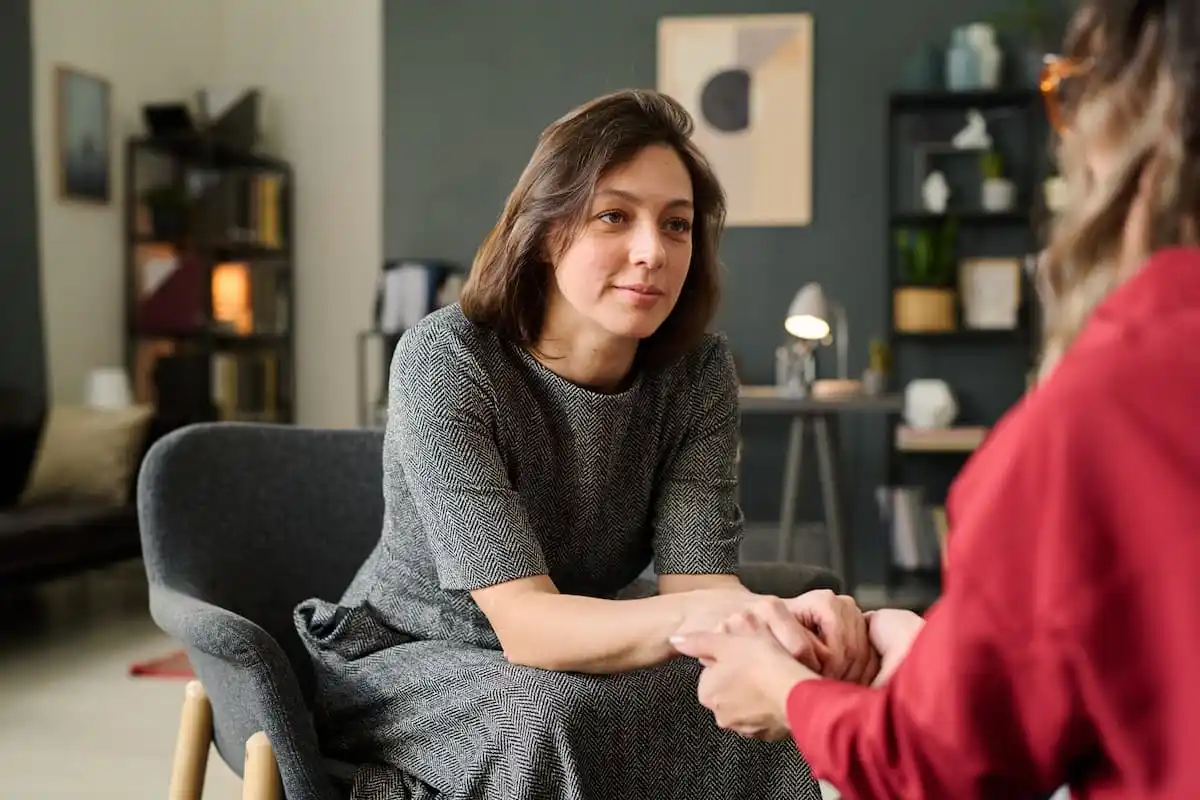
‘We’ve got the paperwork done,’ my sister smiled on Monday. ‘Your million-dollar house is now in my name—you have to move before Friday.’ My parents stood behind her, nodding as if everything was settled. I didn’t argue. I just said, ‘Yes.’ They still thought I was easy to bully. Two days later, they arrived with a moving truck… and a stranger with a thick stack of documents appeared on my porch.
I remember the moment my parents decided I no longer belonged in my grandparents’ house with the kind of clarity usually reserved for accidents and emergencies.
There was no shouting. No slammed doors. No thunderbolt of revelation.
Just my sister standing in the living room, already measuring the walls with her eyes like she was mentally placing her furniture, and my parents behind her, wearing matching expressions of calm certainty.
“We fixed the paperwork,” my sister said, like she was talking about a typo on a form, not the place where I slept, cooked, grieved, and breathed. “The house is in my name now. You’ll be out by Friday.”
She smiled when she said it.
My mother’s smile was softer, the kind she used whenever she thought she was breaking bad news kindly enough that I wasn’t allowed to be upset.
“It’ll be easier this way, sweetheart,” she added. “You know how things are. It’s not personal.”
My father folded his arms and nodded as if we were all reasonable people agreeing on a reasonable decision.
“You have your life in the city,” he said. “This place needs someone who can really manage it.”
Someone. Not you. Never you.
They were so sure of themselves that the only thing I felt, standing in that sunlit living room with its familiar salt-and-pine smell, was an odd, hollow calm. It sat right behind my ribs, steady and cold, like a stone that had been growing there for years.
I didn’t cry. I didn’t argue. I just nodded once and stepped aside, like I was holding the door open for them to walk into the future they’d already planned.
“Okay,” I said.
One word. The one they were counting on.
I watched their shoulders relax in sync.
My sister’s fingers loosened around the papers. My mother exhaled, relieved. My father’s gaze drifted, already moving on to logistics.
They thought the conversation was over.
They thought they’d won.
What they didn’t know—what they never thought to ask—was what I had done quietly, legally, and permanently two weeks after my graduation. Long before their smiles, long before their moving truck, long before they stood in this house and tried to erase me with a stack of signatures and blue ink.
Two days after they told me to be out by Friday, they came back with movers.
And that’s when they learned why some doors only look unlocked at first.
—
If you want to understand how we got there, you have to start earlier.
You have to see the small things.
The First Thing I Learned
The first thing I learned in my family was how to shrink.
No one gave me instructions. No one sat me down and said, “Sophia, in this house, you take up as little space as possible.” But kids are good at reading the rules no one writes down. And in my family, love wasn’t given—it was distributed. Compared. Ranked.
My younger sister, Ava, never had to ask. Not really.
If she wanted something, it somehow became a necessity.
She needed the new phone because “all her friends have one, and we don’t want her left out.” She needed to go on that school trip because “it’s such an important opportunity.” She needed extra money for clothes because “she’s at that age where appearances really matter.”
When I wanted something, it turned into a lesson instead.
I asked to join a summer art program when I was fourteen. My mother smiled and said, “You know, you’re very capable, Sophia. Why don’t you look into scholarship options? It’s good to learn to support what you want.”
When I asked about driving lessons, my father clapped a hand on my shoulder.
“You’re smart,” he said. “You’ll figure it out. Learn the bus routes. It’ll build character.”
If you ever want to know which child is favored, listen to the verbs people use on them. One is helped. One is taught.
I was the one being taught.
From the outside, we looked normal.
We had holiday photos with coordinated outfits and strained smiles. We had birthday cakes on the dining table, candles lined up, frosting smudged at the edges. We had weekend dinners where my father talked about work and my mother talked about relatives and my sister scrolled through her phone under the table, her leg pressed easily against my mother’s.
Neighbors saw us loading the car for vacations. They waved and said things like, “You’re such a close family. It’s nice to see.”
Inside, the closeness was selective.
Attention flowed in one direction, and I learned early how to survive on what was left over. I learned to ask myself the question first: Is this worth the tension? Does this matter enough to justify the look that will pass between my parents, the sigh, the “We’ll see,” that really means no?
Most of the time, the answer was no.
So I nodded. I smiled. I swallowed disappointment and called it maturity. I told myself that keeping the peace was worth it, that being “low-maintenance” was something to be proud of. That if I was good enough, helpful enough, understanding enough, someone would notice.
Someone did.
But it wasn’t my parents.
It was my grandparents.
The House by the Sea
Their house sat in a small coastal town where the air always smelled faintly of salt and pine, like the ocean and the woods had decided to share custody of the place.
The first time I stepped onto their porch, I was eight. I remember the way the boards creaked under my sneakers and how the wind pushed my hair into my face. Seagulls called somewhere above us, and my grandmother wiped her hands on her apron before pulling me into a hug that somehow squeezed all the bus ride jitters out of my chest.
“There’s my girl,” she said, like I’d been gone for years instead of a few weeks.
My grandfather didn’t say much that first visit. He just reached for my backpack, slung it over his shoulder, and gave me a nod.
“Come on,” he said. “We’ll let your grandmother interrogate you at the table.”
Later that night, in the small guest room that would eventually become my room, I lay awake and listened. The house made different sounds than our place in the city. Here, the refrigerator hum was softer. The clock in the hallway ticked with slow, patient confidence. And underneath it all, if you listened carefully, you could hear the waves.
I remember thinking, I could fall asleep to this every night.
I remember thinking, I don’t feel like I’m in the way.
At their house, no one sighed when I asked for help. No one rolled their eyes when I forgot something. No one told me I was “too sensitive” when my voice shook or my eyes stung.
My grandmother sat with me at the kitchen table and asked questions that didn’t have a point other than to know me.
“How’s school?” she’d say. “What are you reading? Still drawing? Show me.”
She listened as if every answer, even the small ones—especially the small ones—mattered. When she laughed, she laughed with her whole face, not just the polite stretching of lips, but crinkled eyes and a soft, pleased sound that made my shoulders relax without my permission.
My grandfather showed his care differently.
At first, it was small errands.
“Think you can handle a grocery run?” he’d ask, holding out a list and some cash. “Bread, milk, and whatever cookies you like. Don’t tell your grandmother I said that part.”
I’d come back with the list fulfilled and a bag of cookies, and he’d check the receipt with exaggerated seriousness, nodding like I’d just closed some important business deal.
“As expected,” he’d say, sliding the cookies toward me. “Competent.”
As I got older, the errands changed.
“Call the plumber and set up a time for him to come,” he’d say. “I always end up with someone who doesn’t show up. You have better judgment.”
“Can you look over this bill?” my grandmother would ask, passing me an envelope. “They raised the rate again. I want to know what we’re actually paying for.”
They trusted me with the boring tasks first—appointments, bills, the details that pile up like leaves around older people’s lives. The things my parents always seemed too busy or too tired to help with.
Over time, the house shifted in my mind from “Grandma and Grandpa’s place” to something closer to refuge. A place where I wasn’t an afterthought.
I didn’t just visit for holidays. I came for long weekends. Then for a week in the summer. By the time I was in high school, I spent more nights there than at my parents’ house.
My parents didn’t object. Not really.
“It’s good that you help them,” my mother said one afternoon, scrolling through her phone. “They adore you.”
She said it like it was convenient. Like my presence there was one less thing she had to worry about.
At the time, I told myself it was complicated. That maybe this was just how some families were. Some kids needed more. Some kids needed less. And I, apparently, was the second kind.
When my grandparents’ health started to decline, my visits blurred into something closer to caretaking.
I was the one who noticed the unopened pill bottle in the bathroom cabinet, the one that should have been half empty. I was the one who realized my grandfather’s handwriting had become almost unreadable, and so I started filling out checks for him to sign.
At twenty-one, while other people in my program were doing internships in glass buildings and posting rooftop photos on Instagram, I was sitting in a small office in our coastal town, updating their Medicare forms and double-checking that the automatic payment for the electricity had actually gone through.
“Are you sure you’re okay doing all this?” my grandmother asked once, her brow creased.
I’d smiled at her, and it wasn’t a lie when I said, “Yes.”
The Conversation That Changed Everything
The conversation happened on a Tuesday afternoon in late spring.
My grandmother had made lemonade, the kind with actual lemons and too much sugar, and we were sitting on the back porch watching the light change over the water. My grandfather sat in his chair with the newspaper folded in his lap, though I’d noticed he hadn’t turned a page in twenty minutes.
“Sophia,” he said finally. “We need to talk about the house.”
I set down my glass.
“We’re not getting any younger,” my grandmother added, her voice gentle. “And we’ve been thinking about what happens after.”
After. The word hung in the salt air between us.
“Your parents have been mentioning that Ava might like the place someday,” my grandfather continued. “That she’s always loved visiting.”
I almost laughed. Ava had been to the house maybe four times in her entire life, and each time she’d complained about the lack of cell service and the “old people smell.”
“But that’s not what we want,” my grandmother said firmly. “This house is yours, Sophia. It’s always been yours. We want to make sure it stays that way.”
Something tight loosened in my chest.
“We’ve talked to a lawyer,” my grandfather said. “A good one. We want to transfer the deed to you now, while we’re still here. No waiting. No will that can be contested. Just clean and legal.”
“But—” I started.
“No buts,” my grandmother interrupted. “You’ve earned this. Not because you helped us, though God knows you have. But because this is your home. You’re the one who loves it. You’re the one who’ll take care of it.”
Two weeks later, I sat in the lawyer’s office—a woman named Patricia Chen with sharp eyes and a no-nonsense handshake—and signed my name on more documents than I’d ever seen in one place.
“Your grandparents are smart people,” Patricia said, sliding the final paper across her desk. “They’re doing this the right way. The house is yours. Legally. Irrevocably. No one can take it from you.”
She looked at me over her glasses. “Do your parents know?”
“Not yet,” I said.
She nodded slowly. “In my experience, it’s better to tell them sooner rather than later. But that’s your choice to make.”
I decided to wait.
Not out of spite, though I’d be lying if I said there wasn’t a small, sharp pleasure in having something that was mine alone. But because I knew what would happen when I told them. I knew the looks, the questions, the careful recalibration of who I was in their eyes.
For once, I wanted to hold something close before it got pulled apart and examined.
My grandparents passed within six months of each other.
My grandmother went first, quietly in her sleep, like she’d simply decided she was done and closed her eyes one last time. My grandfather followed as if he’d only been waiting for permission to go.
The funeral was small. A handful of neighbors, some people from their church, my parents and Ava standing in black with appropriate expressions of grief.
I stood by the graveside and felt the coastal wind pull at my hair, the same way it had that first day I’d stepped onto their porch. The same way it had every morning I’d woken up in that house, every evening I’d sat on the porch with lemonade and conversation.
After the service, my mother pulled me aside.
“You’ll need to start thinking about the house,” she said. “We should probably get it appraised. The market’s good right now.”
I just nodded.
I didn’t tell them. Not then. Not in the weeks that followed when my mother sent me links to real estate agents and my father mentioned how the money could be “put to good use” for “the whole family.”
I didn’t tell them when Ava started sending me Pinterest boards of apartments in the city, captioned with things like “wouldn’t this be perfect for you??” as if she were being helpful.
I moved into the house full-time instead.
I took the remote job I’d been offered, set up my laptop in my grandmother’s old sewing room, and let the sound of the ocean replace the sound of traffic. I learned which floorboards creaked and how to coax the ancient furnace through another winter. I painted the guest room and planted tomatoes in the garden and fixed the porch railing that had been wobbling for years.
For six months, I lived in my house. My name on the deed. My life in every room.
And my family had no idea.
The Reckoning
That’s when my sister showed up with her smile and her paperwork.
“We fixed it,” she said, like she’d done me a favor.
I remember thinking, as I stood there watching her confident face, how easy it must have been for them to believe this would work. How natural it must have felt to assume I’d simply fold, the way I always had.
I’d spent so many years being accommodating that they’d forgotten I had a spine.
“Okay,” I said.
And I watched them relax.
Two days later, they came back with the moving truck.
I was sitting on the porch when they pulled up, my hands wrapped around a mug of coffee, the morning light catching the water in the distance. The truck rumbled to a stop, and my sister got out first, followed by my parents and two men in work uniforms.
Ava walked up the steps with a clipboard and that same confident smile.
“We’ll try to make this quick,” she said. “The movers are charging by the hour.”
“I’m sure they are,” I said.
My father came up behind her. “Sophia, we know this is hard, but it’s for the best. You’ll see.”
I took a sip of my coffee and said nothing.
That’s when the second car pulled up.
Patricia Chen got out, her briefcase in one hand and a look on her face that could have frozen the ocean. Behind her, a younger man in a suit followed, carrying what looked like a banker’s box full of files.
“Good morning,” Patricia said pleasantly. “I’m Patricia Chen, Ms. Reeves’ attorney.”
The smile on my sister’s face flickered.
“Her attorney?” my mother repeated.
“That’s correct.” Patricia climbed the porch steps and stood beside me. “I’m here regarding the illegal trespass and attempted fraud currently in progress.”
“Fraud?” my father sputtered. “Now wait just a minute—”
“No, you wait,” Patricia said, her voice sharp as broken glass. “That paperwork your daughter is holding? It’s worthless. Completely and entirely worthless.”
Ava looked down at her clipboard like it had betrayed her. “But we had it drawn up by—”
“By someone who didn’t do their due diligence,” Patricia finished. “This house hasn’t been part of your parents’ estate for over a year. It was legally transferred to Sophia Reeves on May 14th of last year, while her grandparents were still alive. The deed is filed with the county. The taxes are in her name. The title is clear.”
She pulled a folder from her briefcase and held it out. “This is a copy of the recorded deed. This is the title insurance. These are the property tax records. Would you like to see them, or would you prefer to just stop wasting everyone’s time?”
The silence that followed was spectacular.
My mother’s face had gone pale, the color draining from her cheeks like water from a tipped glass. My father’s jaw worked soundlessly, opening and closing as if the right words might materialize if he just kept trying. And Ava—Ava looked like someone had pulled the floor out from under her, her clipboard hanging limp at her side.
The movers exchanged glances and took a subtle step back toward their truck.
“That’s not possible,” my mother whispered. “They wouldn’t have—they were our parents. They knew the house should stay in the family—”
“It did stay in the family,” I said, setting down my coffee with deliberate care. “I’m family. Or did you forget that part?”
“You know what I mean—”
“Do I?” I stood up, and I felt taller somehow, like I’d been carrying a weight I hadn’t noticed until it was gone. “Because from where I’m standing, it seems like ‘family’ only counted when it was convenient for you.”
“Sophia,” my father said, his voice taking on that warning tone he used to use when I was thirteen and asking too many questions. “Don’t be dramatic.”
Patricia’s expression didn’t change, but I saw her fingers tighten slightly on her briefcase. A lawyer watching a train wreck, I thought. She’s seen this before.
“I’m not being dramatic,” I said quietly. “I’m being honest. Maybe for the first time in my life with all of you. And you don’t like it because it doesn’t fit the story you told yourselves about who I am.”
“What story?” Ava demanded, her voice sharp with defensiveness.
“The one where I’m the easy daughter. The one who doesn’t need anything. The one who’ll just go along with whatever you decide because that’s what I’ve always done.” I looked at each of them in turn. “The one where I’m invisible unless you need something.”
“That’s not fair—” my mother started.
“Isn’t it?” I felt something crack open inside me, something that had been sealed tight for so long I’d forgotten it was there. “When was my last birthday you actually remembered without Facebook reminding you? When was the last time you asked me about my life and actually listened to the answer?”
Silence.
“That’s what I thought,” I said softly.
“Wouldn’t have what?” I continued. “Wouldn’t have given me something that was rightfully mine? Wouldn’t have made sure the person who actually took care of them got to keep their home?”
“You manipulated them,” Ava said, her voice rising. “You—you must have tricked them when they were old and confused—”
“Careful,” Patricia said softly. “That’s slander. And my client’s grandparents were in perfect mental health when they made this decision. I have the medical records and the notarized statements to prove it.”
“This is ridiculous,” my father said, his face reddening. “We’re your family. They were our parents. This house should go to all of us—”
“Should it?” I stood up. “Tell me, Dad, when was the last time you visited them? Actually visited, not just stopped by on holidays?”
He opened his mouth. Closed it.
“I was here every week,” I continued. “I paid their bills. I took them to doctor’s appointments. I sat with Grandma when she couldn’t sleep and helped Grandpa when he couldn’t remember if he’d taken his pills. Where were you?”
“We were busy—” my mother started.
“You were busy,” I agreed. “Busy with Ava’s college tuition and her apartment deposit and her car payments. Busy making sure she had everything she needed while I learned to figure things out on my own.”
I looked at my sister. “And you. You didn’t even like this place. You said it was boring. You said it smelled like old people. But now that it’s worth money, suddenly you can’t wait to move in?”
Ava’s face was scarlet. “You’re being incredibly selfish—”
“I’m being selfish?” I laughed, and it came out sharper than I intended. “I’m the one who actually earned this. Not by manipulation. Not by being the favorite. But by showing up. By caring. By being there when it mattered.”
“We’ll fight this,” my father said. “We’ll take you to court—”
“Please do,” Patricia said cheerfully. “I would love to see you try to explain to a judge why you think you’re entitled to property that was legally transferred to someone else a year before the owners died. Especially when there’s a paper trail showing that Ms. Reeves was their primary caretaker for years.”
She pulled out another document. “Oh, and this? This is a cease and desist letter. If any of you attempt to enter this property without Ms. Reeves’ explicit permission, she will pursue charges for trespassing. If you continue to make fraudulent claims about the ownership of this house, she will pursue charges for attempted fraud. And if you harass her in any way, we will seek a restraining order.”
The young associate behind her stepped forward and handed a copy to each of my parents. They took them like the papers might bite.
“You have five minutes to leave the property,” Patricia said. “After that, we call the police.”
I watched them process it. Watched the realization settle in like sediment. Watched them understand that this time, I wasn’t going to fold.
My mother’s eyes filled with tears. “How could you do this to us? We’re your family.”
And that, finally, was what broke something loose inside me.
“You’re right,” I said quietly. “You’re my family. And for my entire life, I waited for you to see me. Actually see me. Not as the easy one. Not as the one who doesn’t need anything. Just as your daughter.”
I took a breath. “Grandma and Grandpa saw me. They saw me every single day. They saw me when I was eight and lonely. They saw me when I was sixteen and didn’t know where I belonged. They saw me when I was twenty-one and tired of being invisible. And they gave me the one thing I never had in our house.”
“What’s that?” my father asked bitterly.
“A home.”
The movers had already started walking back to the truck.
My parents stood there for another moment, as if waiting for me to take it back, to apologize, to smooth things over the way I always had.
But I didn’t.
I just stood on my porch, Patricia beside me, and waited.
Finally, my mother turned and walked away, my father following. Ava was the last to leave, and she paused at the bottom of the steps.
“You’re going to regret this,” she said.
“Maybe,” I allowed. “But it’ll be my regret. In my house.”
She left.
The truck pulled away.
And I stood there in the sudden silence, the sound of the ocean filling the spaces where their voices had been.
Patricia stayed for another hour, making sure there were no stragglers, no last-minute attempts at persuasion or guilt. When she finally left, she shook my hand and said, “You did good. This was always yours. Don’t let them convince you otherwise.”
After she drove away, I walked back into the house and closed the door behind me.
Epilogue: Six Months Later
I’m writing this from the back porch, the same spot where my grandmother told me this house would be mine.
The tomatoes are doing well this year, fat and red and splitting their skins with sweetness. I fixed the wobbling step and repainted the shutters the same shade of blue my grandfather always liked—a color my grandmother called “morning ocean,” somewhere between sky and water. I’ve made the house mine in small ways and large ones—new curtains in the kitchen that let in more light, a bookshelf in the living room built from reclaimed wood I found at a salvage yard, a better desk in what’s now my office, positioned so I can see the water while I work.
I joined the town council last month. The meetings are exactly as boring as my grandfather warned me they’d be, but there’s something grounding about caring for the place that cared for me. I know the woman at the post office by name now. I know which restaurant has the best clam chowder and which hardware store will actually help you instead of just pointing vaguely toward the aisles.
I’m building a life here, the kind that has roots.
My parents and I don’t talk much anymore. My mother sends occasional text messages, carefully neutral, asking how I am. “Hope you’re doing well.” “Thinking of you.” Never anything specific. Never anything that would require her to acknowledge what happened or why.
I respond the same way. Polite. Distant. Brief.
The relationship we have now is probably the most honest one we’ve ever had. There’s no pretending anymore that we’re close. No performance of family unity for neighbors or relatives. Just the truth, plain and unadorned: we are related by blood, but not much else.
Ava blocked me on everything. I found out through a mutual cousin that she tells people I stole her inheritance, that I manipulated our grandparents when they were vulnerable, that I was always jealous of her and this was my revenge.
I don’t bother correcting the story anymore. The people who matter know the truth, and the ones who believe her version were never really listening to begin with.
Sometimes, late at night when the house is quiet and the only sound is the clock in the hallway and the distant rhythm of waves, I wonder if I should feel guilty. If I should have handled it differently. If I should have been kinder, more understanding, more willing to share.
If I should have been smaller.
But then morning comes, and I wake up in my bedroom—my grandparents’ room, the one with the window that faces east so you can watch the sunrise over the water. I make coffee in my grandmother’s favorite mug. I walk through these rooms that smell like home and remember what it felt like to finally have something that was unquestionably, irrevocably mine.
I remember my grandmother’s laugh, bright and full, when I’d tell her about my day. I remember my grandfather’s quiet nod of approval when I balanced their checkbook or fixed a leaky faucet or simply sat with him in comfortable silence. I remember every time I made myself smaller to fit into spaces that were never meant for me, every time I swallowed my hurt and called it maturity, every time I pretended not to need anything because needing things made me a burden.
And I remember that some things are worth protecting.
Last week, a young woman knocked on my door. She was maybe twenty-two, wearing a backpack and looking uncertain. She said she was the granddaughter of my grandmother’s best friend, that she’d just graduated and was looking for a quiet place to work on her first novel.
“Mrs. Chen mentioned you might have a room to rent,” she said. “I can’t pay much, but I’m quiet and clean and I make really good bread.”
I thought about the guest room upstairs, the one that used to be mine before this whole house became mine. I thought about being twenty-two and looking for a place that felt safe. I thought about all the ways a house can hold you when nothing else does.
“How do you feel about tomatoes?” I asked.
She blinked. “I… like them?”
“Good. The garden’s overgrown and I need help with the harvest. You can stay in the upstairs room. First month is free while you settle in. After that, we’ll figure out something fair.”
Her eyes went wide. “Really?”
“Really. But I have rules. No drama. No lying. And if you eat the last of the cookies without telling me, we’re going to have words.”
She laughed, and it reminded me of myself at that age. Uncertain. Hopeful. Looking for a place to land.
She moved in three days later.
Her name is Maya, and she bakes sourdough on Wednesdays. She leaves notes on the kitchen counter when she uses the last of the milk. She asks before she borrows books from my shelves. And sometimes, in the evening, we sit on the back porch and don’t talk at all, just exist in the same space while the ocean breathes beyond the trees.
It’s not the same as having my grandparents here. Nothing will ever be the same as that.
But it’s good. It’s real. It’s mine.
The house still smells like salt and pine. The floorboards still creak in the same familiar pattern—three quick squeaks in the hallway, one long groan in front of the bathroom, a soft sigh near the kitchen door. And when I fall asleep at night, I can still hear the ocean, steady and sure, reminding me that I’m exactly where I belong.
They thought I would always be easy to push around.
They thought wrong.
And now I have a house by the sea, a life that fits me, and a family history that finally includes my name in permanent ink. I have tomatoes in the garden and a tenant who makes bread and a future that I get to build myself, one careful decision at a time.
I think my grandparents would be proud.
I know I am.
Some doors only look unlocked at first.
Mine is closed now to the people who tried to take what wasn’t theirs.
But it’s open to the ones who understand that a home isn’t about blood or inheritance or who deserves what.
It’s about who shows up.
Who stays.
Who cares.
And I’m still here, in the house that remembered me when my own family forgot.
Still here, where I always belonged.
THE END

Lila Hart is a dedicated Digital Archivist and Research Specialist with a keen eye for preserving and curating meaningful content. At TheArchivists, she specializes in organizing and managing digital archives, ensuring that valuable stories and historical moments are accessible for generations to come.
Lila earned her degree in History and Archival Studies from the University of Edinburgh, where she cultivated her passion for documenting the past and preserving cultural heritage. Her expertise lies in combining traditional archival techniques with modern digital tools, allowing her to create comprehensive and engaging collections that resonate with audiences worldwide.
At TheArchivists, Lila is known for her meticulous attention to detail and her ability to uncover hidden gems within extensive archives. Her work is praised for its depth, authenticity, and contribution to the preservation of knowledge in the digital age.
Driven by a commitment to preserving stories that matter, Lila is passionate about exploring the intersection of history and technology. Her goal is to ensure that every piece of content she handles reflects the richness of human experiences and remains a source of inspiration for years to come.